Iga
Iga is the home of the ninja. It’s a town in Mie Prefecture, and you’ll often see it listed as Iga Ueno, the name of the old town that grew up around the castle.
Few international tourists make it out here yet, and it’s worth the trip if you want to see Japan’s more mysterious, rural side, with ninjutsu demonstrations, places linked to the poet Basho, and trails that take you deep into nature, past spectacular waterfalls and hot spring villages.
Contents
Learning the mysterious ninja arts
The inland part of Mie Prefecture, with its small villages and fields tucked away in the mountains, has long been seen as the home of the ninja. This is where the ninja developed their martial arts and ninjutsu, the art of espionage, and where the Iga school was born. In the feudal era it was one of Japan’s two main schools, along with the Koka school in Shiga Prefecture.
For centuries the ninja kept their base here, and Japan’s feudal lords hired them as spies and assassins.
Today all of this lives on only in history books and novels, but Iga has turned it into one of its biggest draws by opening a Ninja Museum. You can learn about the history of these “shadow warriors,” but you can also watch demonstrations, join activities that teach you their techniques, and have fun with interactive exhibits and games. The highlight is the ninja house, a genuine period house that was taken apart and rebuilt here. Guides dressed as kunoichi take you past revolving walls, hidden doors and trapdoors in the floor, triggering the secret mechanisms one after another. In the exhibition rooms there’s a collection of original tools, from grappling hooks to the ciphers used to send messages.
Castles and forest trails, ninja style
After the museum, walk over to nearby Ueno Castle, where feudal lords once ruled and gave the ninja their orders. Besides touring the castle and the museum it houses, you get lovely views over the town. The castle stands in a large park with paths winding through gardens and cherry trees, and in spring it’s one of the best places in town to see the cherry blossoms, which usually bloom in early April. The park also has a couple of museums, including one dedicated to the poet Basho Matsuo and the Danjiri Museum, devoted to the town festival of the same name.
What’s left of the castle Todo Takatora built is mostly its stone walls. The western wall is almost 30 meters high, one of the tallest in Japan, and you can look over the edge from the top with no railing, so watch your step. The keep you see today isn’t old, but it isn’t concrete like so many others either: it’s a wooden reconstruction from 1935, and you can tell from the creaking stairs and the top-floor ceiling, decorated with paintings and poems donated by artists of the time.
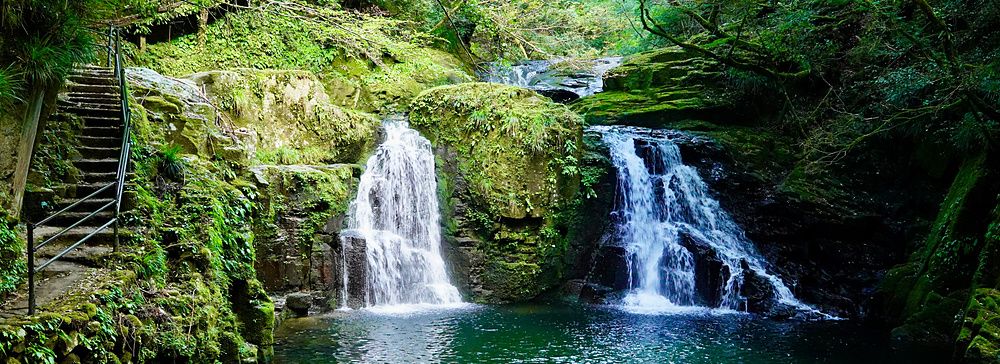
If you want to carry on exploring the world of the ninja, head into the mountains south of town to the Akame 48 Waterfalls. You can join a ninja training course in the same places where the ninja once trained or, if you’re into hiking and nature, go for pleasant walks past the area’s beautiful waterfalls.
In Basho Matsuo’s footsteps
Iga is also the birthplace of one of Japan’s greatest poets, Basho Matsuo, who lived in the early Edo period. The town honors him by opening his birthplace and a memorial museum to the public and by holding the Basho Festival every year on October 12.
His birthplace is near the castle and has been restored and furnished with period pieces to recreate a typical home of the time. Near the station you can also see Minomushian, the only one of Basho’s five retreats still intact. Local rumor, never backed up by any real evidence, has it that Basho was a ninja and a spy for the Tokugawa clan, which certainly adds to people’s curiosity about him.
The castle park is also home to the Haiseiden, an octagonal hall built for the 300th anniversary of the poet’s birth. It’s shaped like Basho setting off on a journey: the roof is his straw hat and the walls are his traveling cloak. Inside is a statue made of Iga pottery that’s shown to the public only on October 12, the day of the festival.
Trying your hand at local crafts
Not far from the castle, at the Iga Center for Traditional Culture (Iga Dento Densho-kan), you can learn about and try a traditional craft that’s still little known, kumihimo. Kumihimo are decorative braids made from cords and ribbons, used to trim clothes and kimono but also to make bracelets and other items popular in Japanese culture. At the center you can learn more about the history of this old technique, then take a workshop and go home with a beautiful bracelet or keychain you made yourself.
Iga pottery
Iga is also one of the historic centers of Japanese pottery. Iga-yaki is made from the clay of this valley, which in ancient times was the bottom of a lake. It’s porous and stands up to direct flame, which makes it perfect for stovetop pots, or donabe. They’ve been made here for centuries and they’re still the most practical souvenir to take home.
The historic kilns are clustered in Marubashira, south of town, where a dedicated center brings together a museum, workshops and a shop. You can recognize the oldest pieces by the green drips left by wood ash, with no glaze added.
Relaxing in the onsen
Yunoyama Onsen is a picturesque hot spring village in northern Mie Prefecture, a couple of hours from Iga, where you can unwind in the hot waters of the local onsen. Several traditional ryokan dot the village, and they let you use their baths even if you’re not staying the night. A cable car takes you up Mount Gozaisho, where you’ll find hiking trails, ski slopes and amazing views.
The town’s festivals
If you can choose when to come, Iga is at its best twice a year. From early April to early May the town holds the Iga Ueno Ninja Festa. For five weeks half the town walks around dressed as ninja, shops rent out costumes, and you can try throwing shuriken and shooting a blowgun in the castle park, especially on weekends and holidays.
Then on October 23, 24 and 25 comes the Ueno Tenjin Matsuri, a UNESCO-listed festival. Nine danjiri floats parade through the streets of the old town, followed by the Hyakki Yagyo, a procession of more than a hundred masked demons. This is the same festival the Danjiri Museum in the park is about.
Getting There
The heart of Iga is Uenoshi Station, on the small Iga Railway. From there the castle park, with the Ninja Museum and the Basho sites, is a five-minute walk north.
From Osaka, the easiest route is the Kintetsu Osaka Line to Iga-Kambe, where you change to the Iga Railway. The whole trip takes about an hour and a half. From Kyoto it's better to go by JR, changing at Kusatsu and Tsuge to reach Iga-Ueno Station, then taking the Iga Railway for the last stretch. Allow a good two hours. From Nagoya it takes about the same time, whether you go by Kintetsu or JR.
The Akame waterfalls are a separate day trip. Get off at Akameguchi Station on the Kintetsu Osaka Line and take a bus for about ten minutes.
Useful Info
- Uenoshi Station (Iga Railway): closest to the castle and the Ninja Museum
- Iga-Kambe Station (Kintetsu Osaka Line): change here if you're coming from Osaka or Nagoya
- Iga-Ueno Station (JR Kansai Line): change here if you're coming from Kyoto
Map
This place is on MarcoMaps
Iga
My map of Japan: over 4,000 places I've tried myself, each with photos, rating, and hours. Filter by category and rating, find veg-friendly spots and places near you with GPS. No sign-up, right from your phone.
- 4,000+ places
- Rating, photos, and hours
- Veg friendly
- Near me (GPS)
- Favorites without login
- Works offline

