 260 m
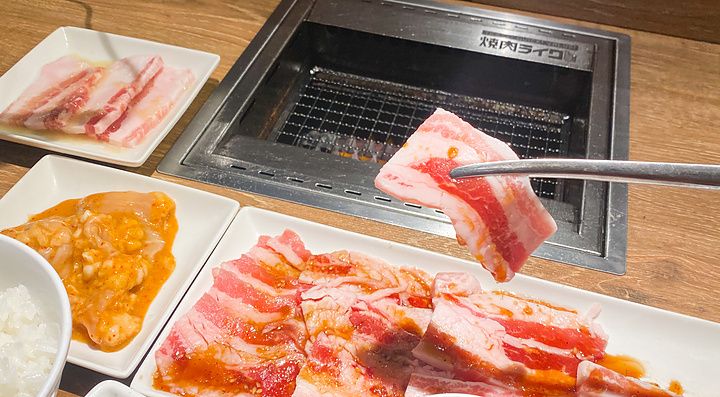
Yakiniku Like260 m
Quick grilling at solo seats.
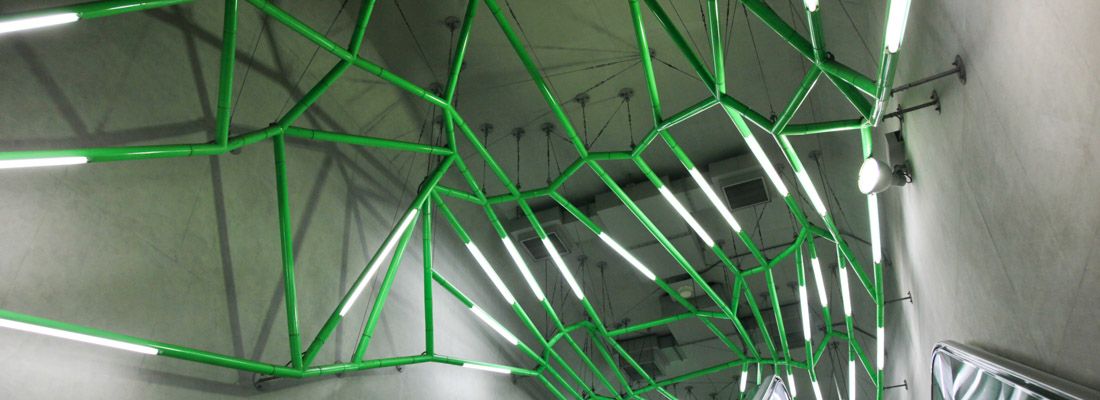
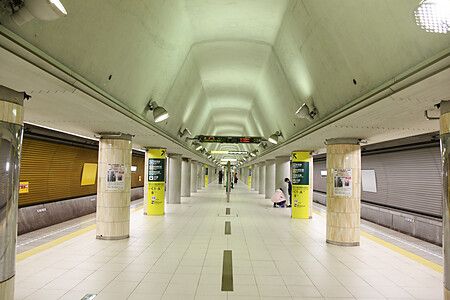
Nobody would guess that an unremarkable station on the Oedo Line could be this interesting.
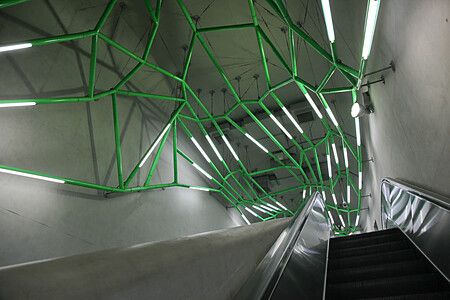
At Iidabashi, the ceiling above the stairs has been taken over by a web of green tubes called the Web Frame. It’s more than a kilometer of steel in a computer-generated design by architect Makoto Sei Watanabe, and it’s the drop ceiling, the structure and the lighting system all at once.
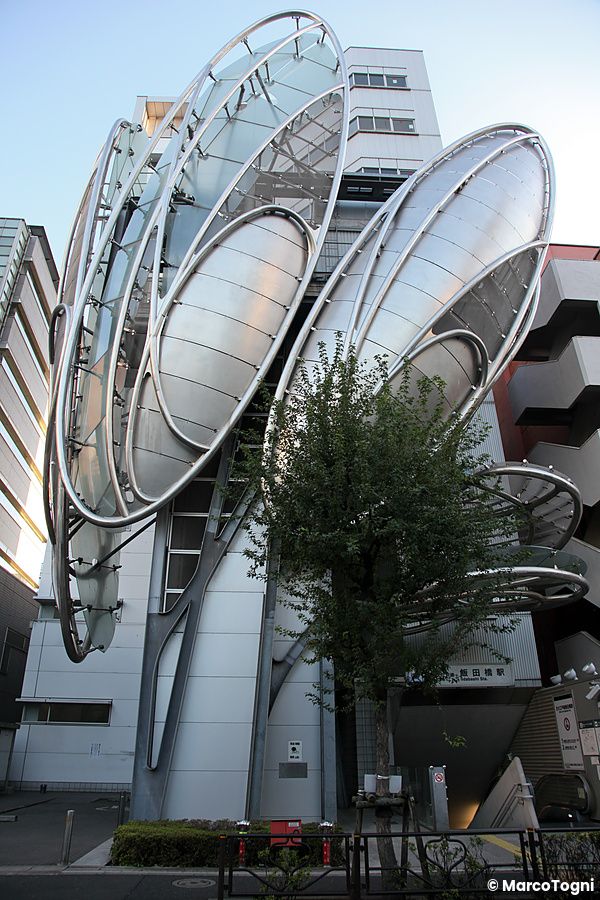
The same project resurfaces at street level as a steel-and-glass ventilation tower. If you’re passing through, stop and have a look. It’s a station that can really surprise you.
The easiest way to get there is by subway. The green web hangs over the escalators that run down from the Oedo Line ticket gates to the platform, so you'll see it just by following the normal flow of passengers.
If you arrive at Iidabashi on JR or Tokyo Metro, follow the signs for the Oedo Line. The connecting corridors are long and the platform is very deep underground, so allow several minutes' walk underground.
Up on the street, the other half of the project, the steel-and-glass ventilation tower, is at exit C3. It's best to come out there so you can see it before or after you go down.
This place is on MarcoMaps
Iidabashi Station
My map of Japan: over 4,000 places I've tried myself, each with photos, rating, and hours. Filter by category and rating, find veg-friendly spots and places near you with GPS. No sign-up, right from your phone.


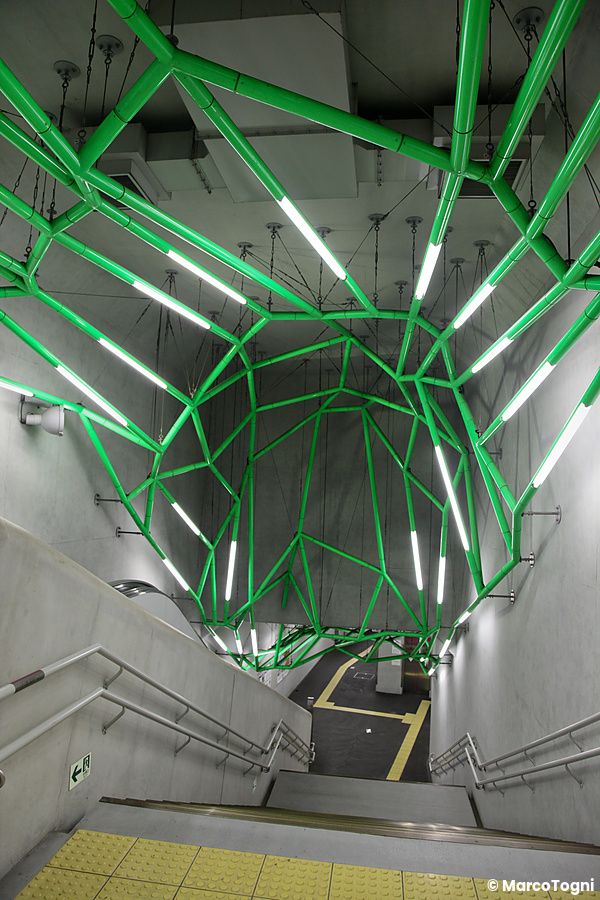
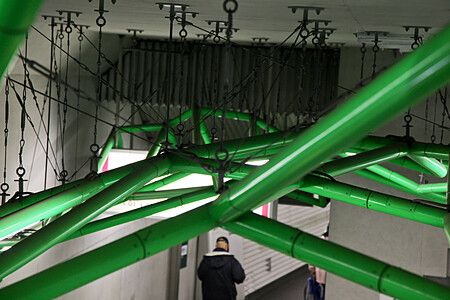
The ceiling over the Oedo Line’s stairs and escalators is covered by a web of green tubes known as the Web Frame. It’s made of more than 1,300 meters of steel tubing just under 8 centimeters across, welded to steel spheres at around a thousand joints and spread over an area of about 50 meters by 15.
The fluorescent green isn’t just for looks. Light fixtures run inside the weave, so the structure is both ceiling and chandelier, and it hides the mechanical systems and the bare concrete. That’s why, when you look up, you won’t see a single cable.
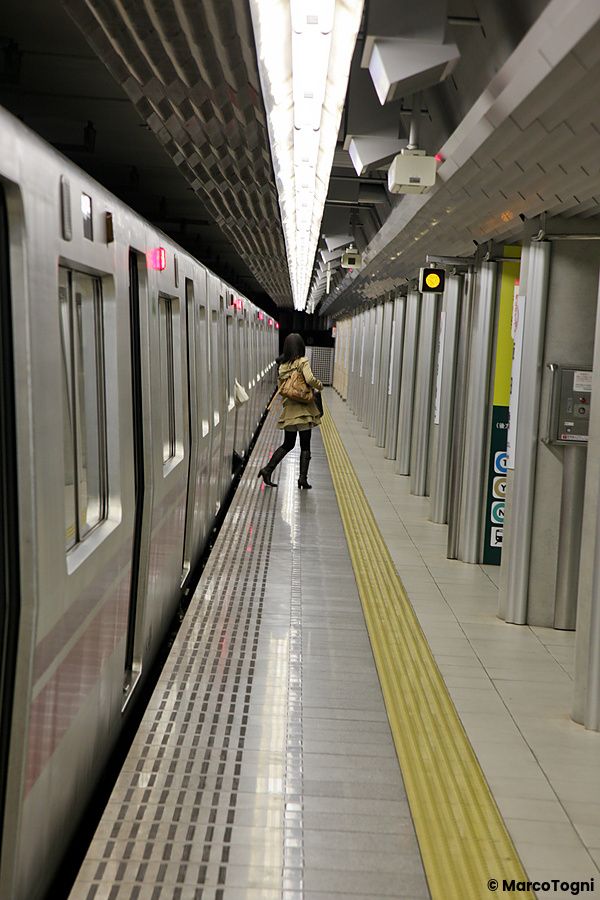
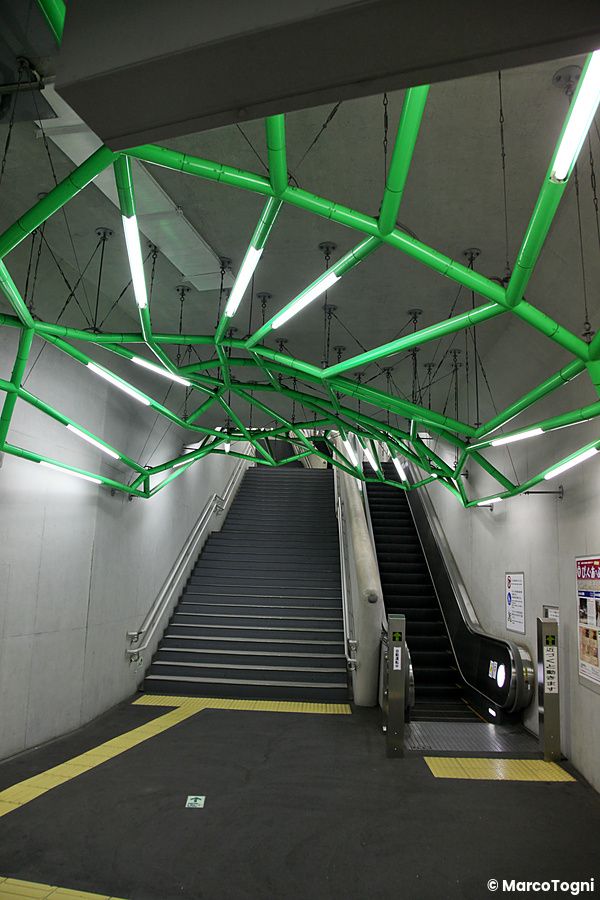
The most surprising thing is that nobody drew that web by hand. Makoto Sei Watanabe wrote a program, fed it the rules and constraints of the space, and let the computer generate the shape. That’s why the weave looks random but actually follows a precise order, and never repeats itself.
The idea behind it is to overlay two networks: the train lines that cross beneath Iidabashi, and the network of information that runs through the city. The project won one of Japan’s most important architecture awards, which is how a station people just pass through ended up in books on contemporary architecture.
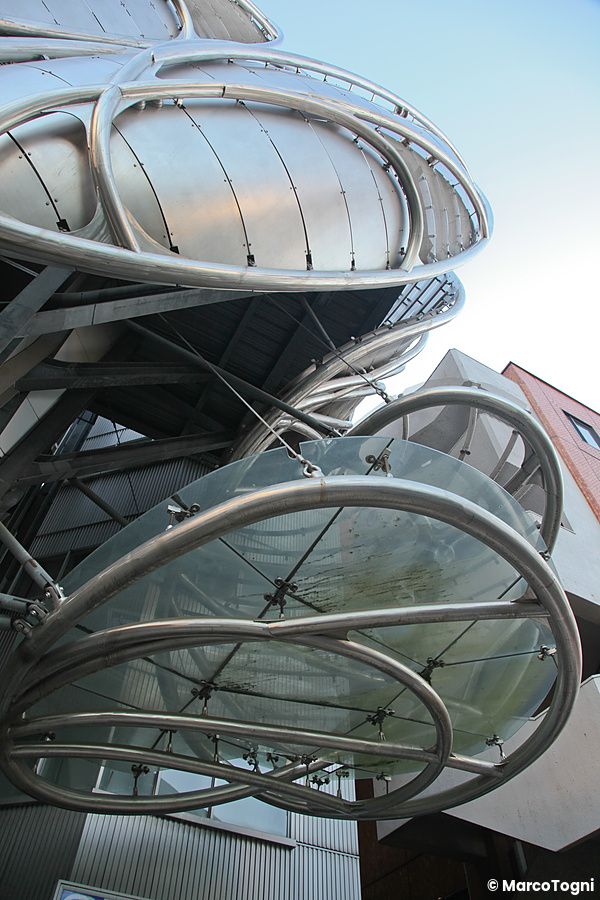
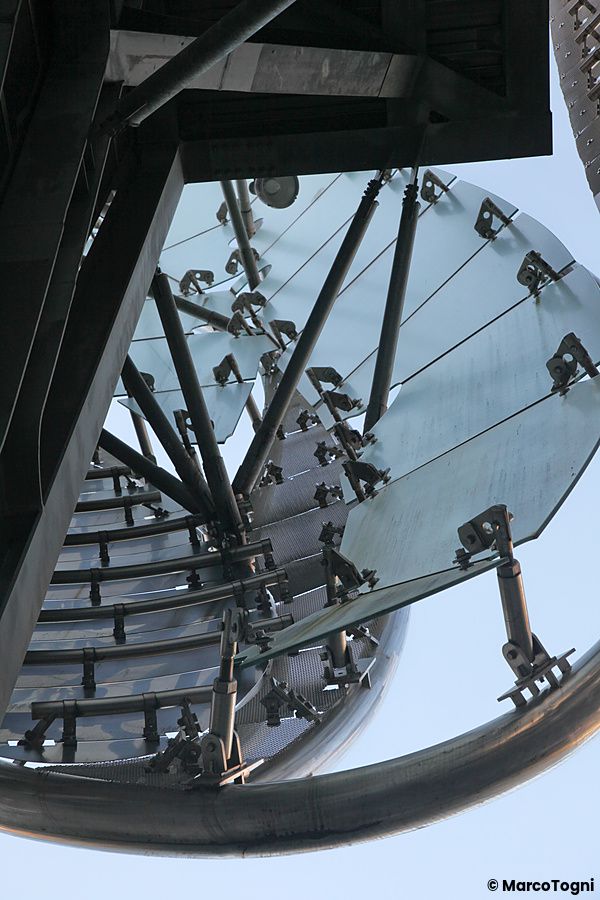
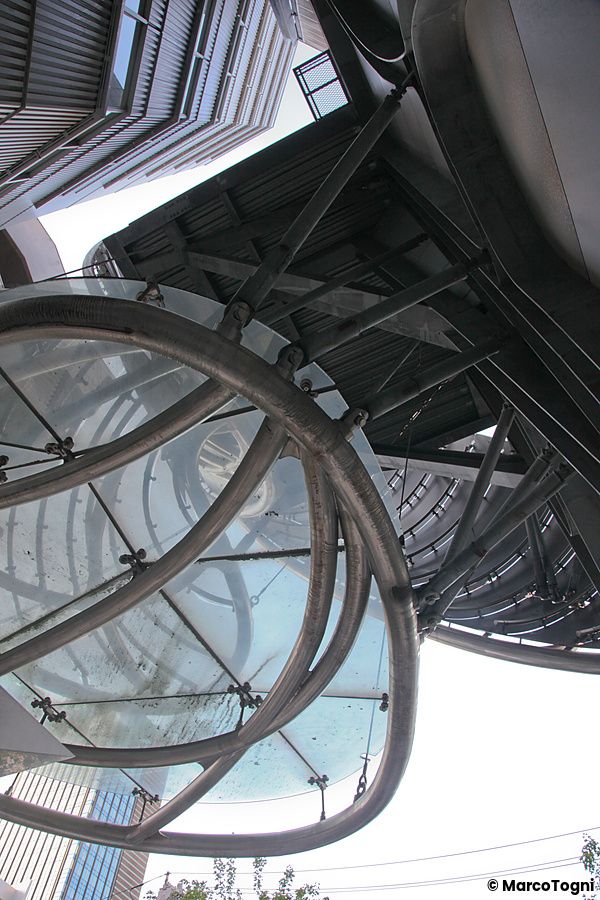
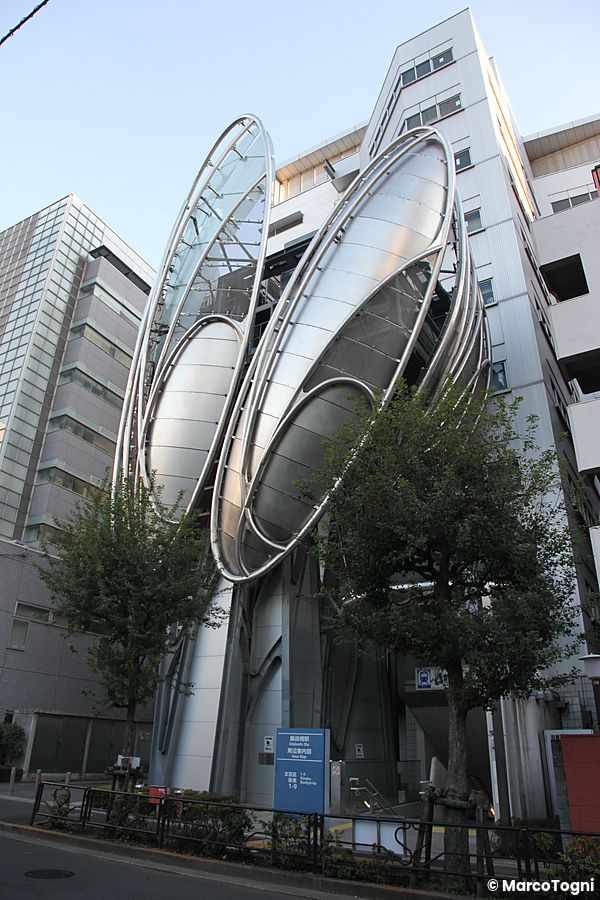
The project doesn’t stop underground. At exit C3 there’s a ventilation tower made of huge steel-and-glass wings, and its job is to let the whole station breathe. Tokyoites have nicknamed it the giant insect’s wings, and it’s one of the few subway exits worth looking at from the outside.
What ties the two halves together is the image of a sprouting plant: the green web underground is the roots, and the glass tower on the street is the part that breaks out into the light. Once you know that, the tubes start to make sense, and they stop looking like a purely decorative flourish.
Iidabashi Station - nearby you will find:
260 mQuick grilling at solo seats.
 285 m
Cheap kaiten sushi.
 336 m
Good, cheap standing sushi.
 411 m
Mixology, gin, and Italian food.
 527 m
Bakery with sweet and savory croissants.
 783 m
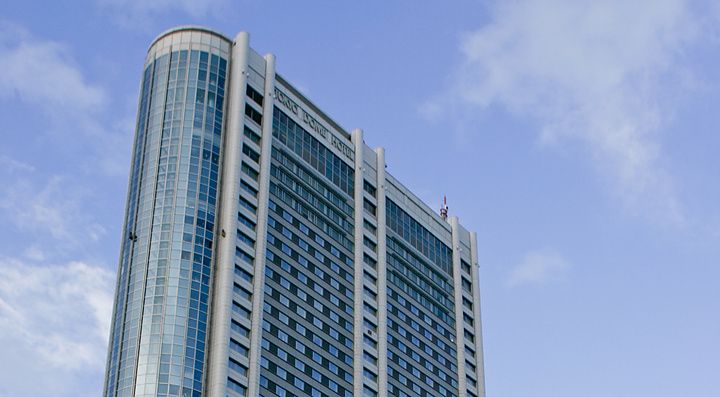
Premium rooms and breakfast with a view.