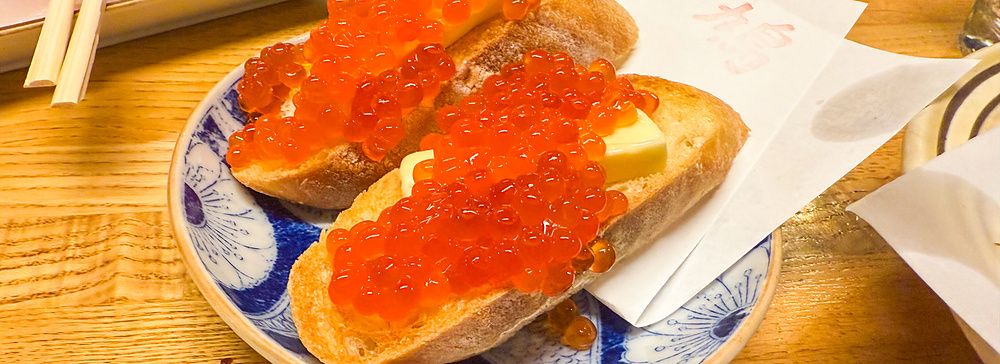
What Is Ikura (Salmon Roe)
Ikura is one of the small pleasures of Japanese cuisine, and it’s easy to spot: shiny, translucent orange beads that pop in your mouth and leave a salty taste of the sea.
Japan has lots of different kinds of fish roe, from the pink sacs of mentaiko to the crunchy little grains of tobiko, and each one has its own specific use. Ikura, or salmon roe, is the one you’ll see most often on sushi and rice bowls. It has a peak season and comes in a soy sauce version and a salted one. A few other kinds of roe look so much like it that they’re easy to mistake for it at the market.
Contents
What ikura is
Ikura is salmon roe separated into individual eggs, cleaned of the membrane that holds them together and usually marinated. Each egg is about the size of a small pea, with a thin skin and a thick, almost oily liquid inside.
The name isn’t Japanese. It comes from the Russian word ikra, which in Russia means fish roe in general, caviar included. The word reached Japan in the early 1900s, along with the practice of separating the eggs and preserving them, and in Japanese it came to mean salmon roe only.
When the eggs are still held together in their sac, they’re called sujiko. It’s the same product in a different form. Sujiko is salted and sold whole or in slices, and people often eat it with plain rice or inside onigiri. Ikura is the loose roe taken out of the sac, and it’s more delicate and more expensive.
You can taste the difference. Sujiko is firmer and saltier, and ikura has a softer skin that pops more easily between your teeth.
Soy sauce or salt
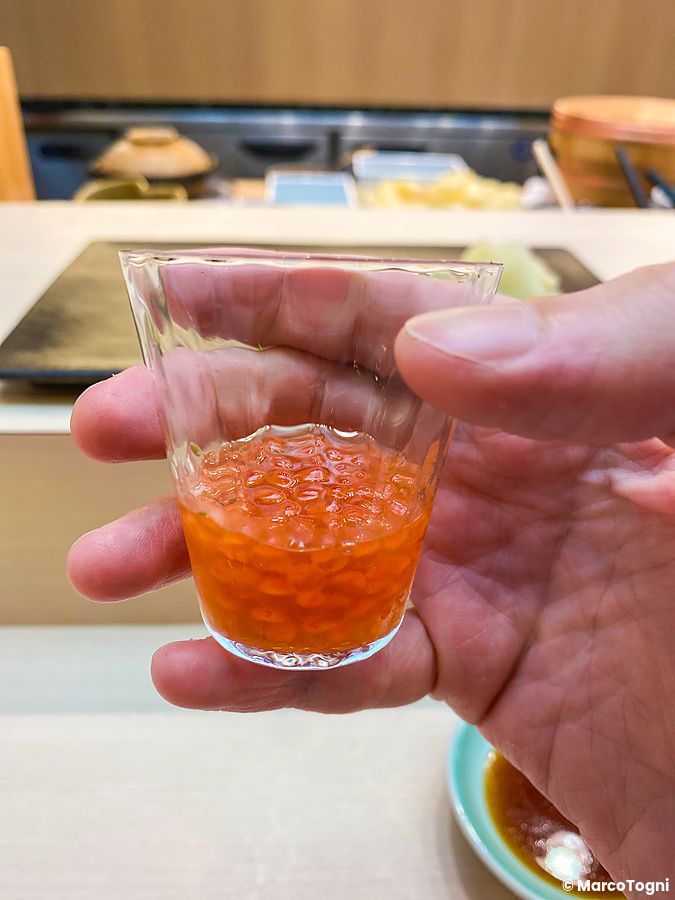
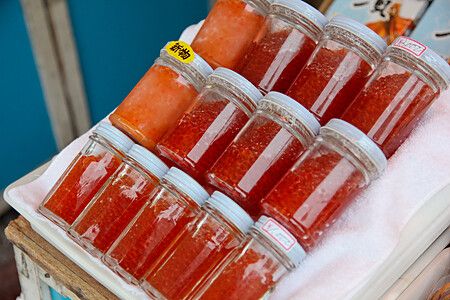
In Japan you’ll mostly find ikura in two versions, and it helps to know which one you’re eating. The more common one is shoyuzuke, marinated in soy sauce with a little sake and mirin. The marinade gives it a darker color and a rounder flavor with a hint of sweetness.
The other one is shiozuke, which is just salted. Its color stays lighter and brighter, the flavor is cleaner and you taste the fish more.
Sushi restaurants and supermarkets mostly stick to the soy sauce version, because almost everyone likes it. The salted one is easier to find in Hokkaido and at places that want you to taste the pure flavor of the roe.
Honestly, I like both, but if you’re trying it for the first time I’d go with shoyuzuke, because it’s less salty and the fish flavor is gentler. Since it’s already seasoned, ikura doesn’t need soy sauce, and many sushi chefs deliberately serve it without.
When it’s in season
You can find ikura year-round, but fresh ikura has a definite season: fall. From September to November salmon swim up the rivers of northern Japan, especially in Hokkaido and Tohoku, and nama sujiko shows up at the markets. These are the raw roe sacs, before anyone has processed them.
The rest of the year people eat frozen ikura. It’s still good, but you can tell it apart from freshly made ikura, which has thinner skins and bigger, plumper eggs.
At that time of year Japanese supermarkets sell trays of raw roe sacs by weight, right next to the fall salmon fillets. A lot of families, especially up north, buy nama sujiko and make ikura at home.
It’s simple to do, but it takes patience:
- Put the sac in warm salted water, about as warm as a hot bath, so the membrane softens.
- Use your fingers, or rub the sac over a wire kitchen rack, to separate the eggs one by one without crushing them.
- Rinse them several times until the water runs clear and all the little bits of white membrane are gone.
- Marinate them in the fridge in soy sauce, sake and mirin for at least half a day, then keep them for a few days or freeze them in small portions.
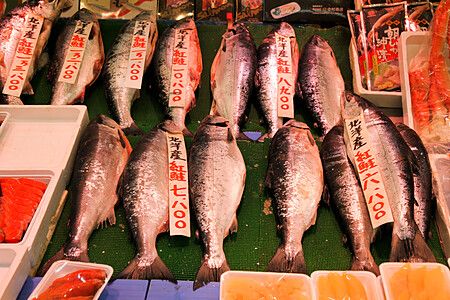
If you’re in Japan in the fall and you have a kitchen, it’s worth trying at least once. You’ll spend a lot less than you would on ready-made ikura, and it’s pretty satisfying to see a bowl full of shiny ikura that you made yourself.
Ikuradon and sushi
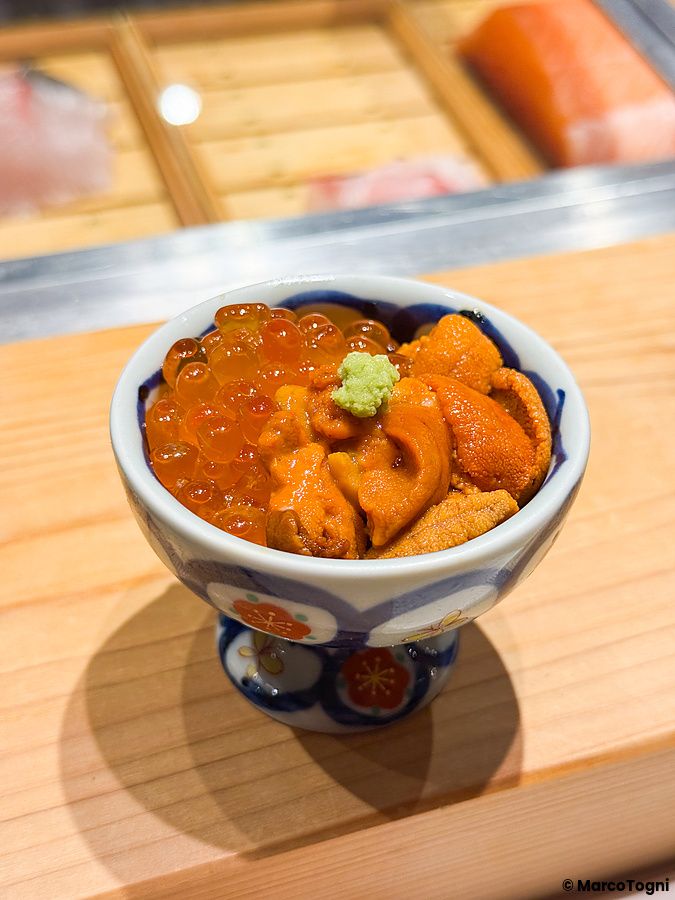
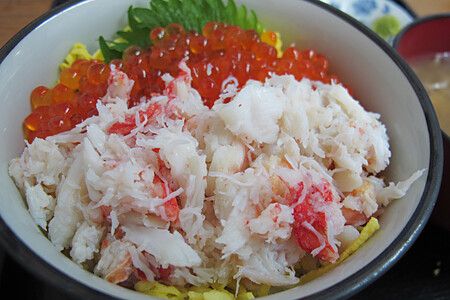
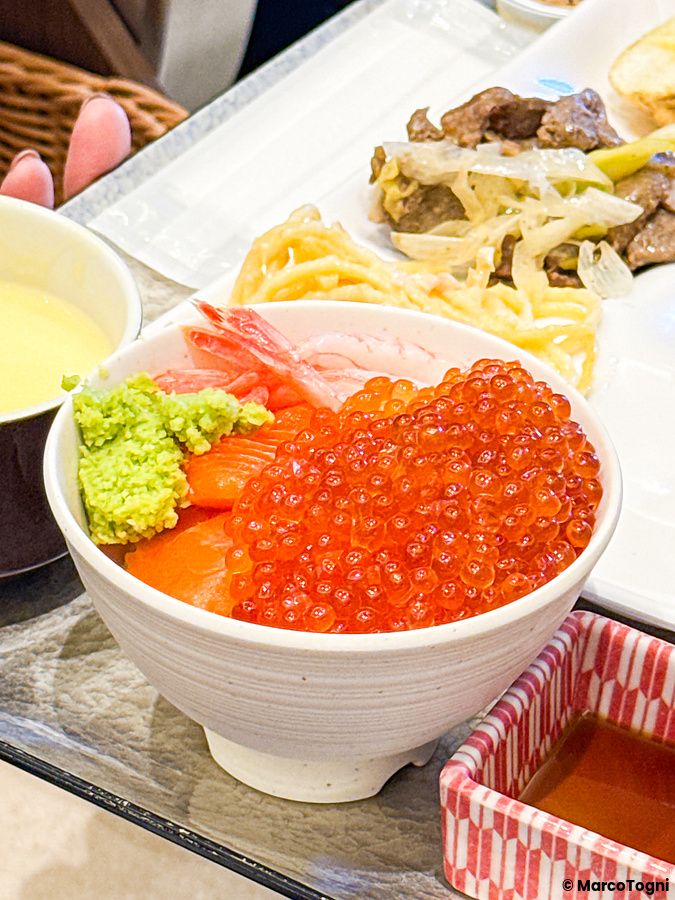
The simplest way to eat it, and the one people love most, is ikuradon: a bowl of hot rice covered in ikura, sometimes with a little finely shredded nori or a dab of wasabi. The hot rice warms the eggs up a little and brings out their aroma, and this dish makes many Japanese people think of breakfast at harbor eateries in Hokkaido.
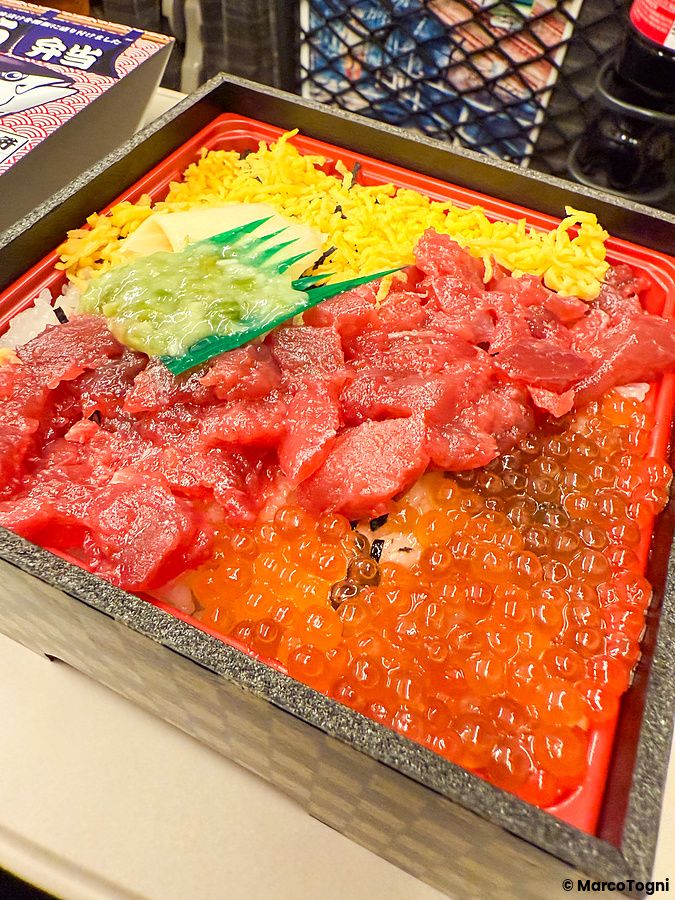
A very common variation is the seafood oyakodon, with raw salmon and ikura in the same bowl. Oyako means parent and child, and the whole point is to serve the fish together with its own eggs.
At sushi places ikura is almost always served as gunkanmaki, a ball of rice wrapped in a strip of seaweed that forms a rim and keeps the eggs in place. At kaitenzushi, the conveyor-belt sushi places, it’s one of the most popular plates and it’s cheap, usually around 100–300 yen a plate.
At more serious sushi restaurants the quality goes way up, and in the fall some chefs make their own ikura with their own marinade. That’s where you really notice the difference between big, thin-skinned eggs and tougher factory-made roe.
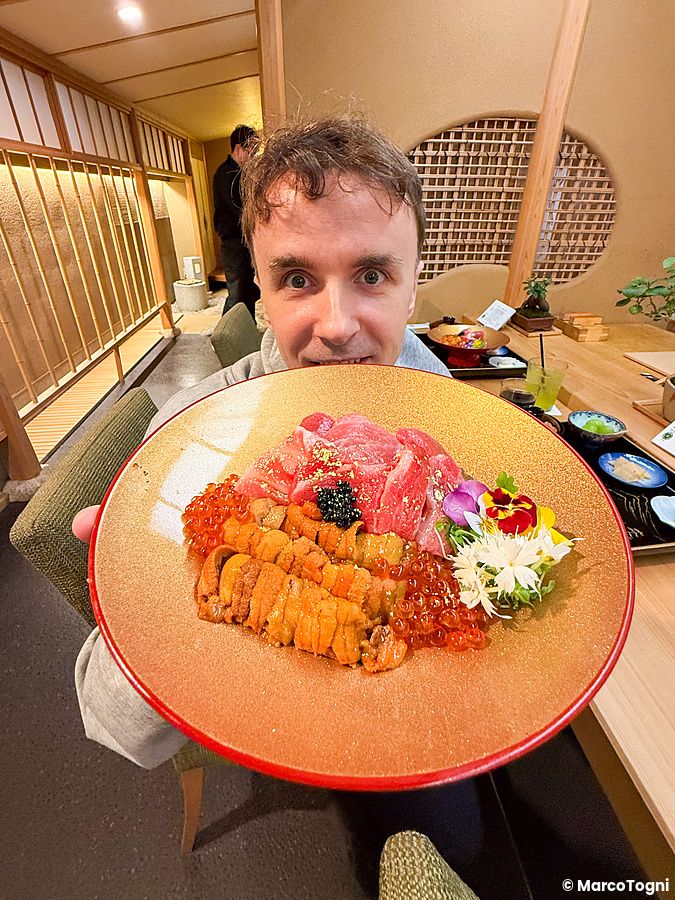
Then there’s kobore ikura, which literally means overflowing ikura. At the places that do it, the chef keeps pouring eggs onto the sushi or the bowl until they spill onto the plate, often while the staff cheer. It’s more of a show than anything else, but it’s a big hit with people who love taking photos. If you see it on the menu, I’d order it at least once. Just keep in mind that you’re paying for quantity more than finesse.
Where to eat it
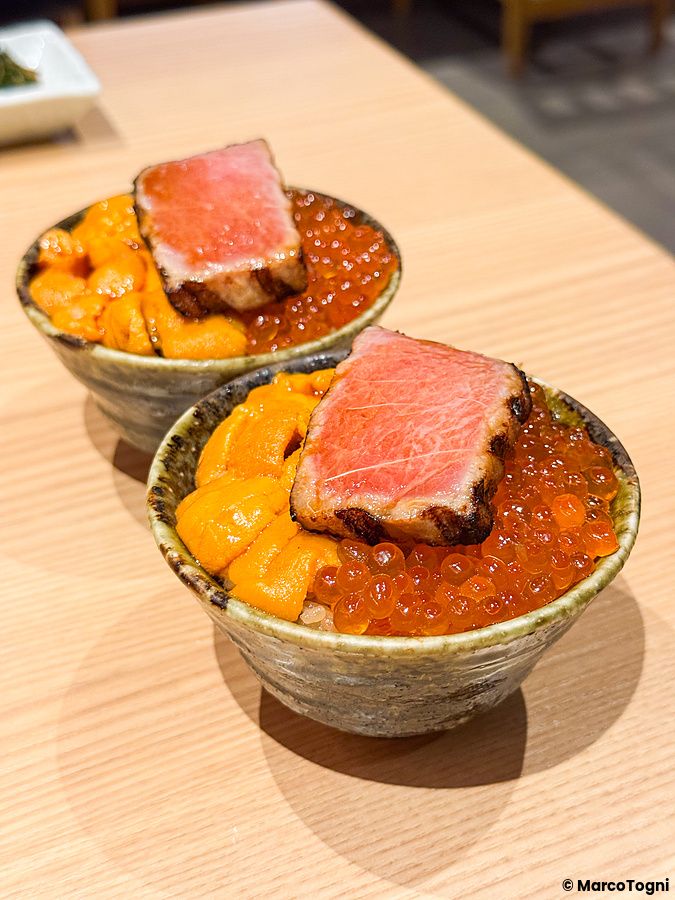
If there’s one place where you should eat ikura, it’s Hokkaido. At the Hakodate morning market, near the station, dozens of small eateries serve ikuradon from early in the morning, and some also serve it with crab (kani) and sea urchin (uni).
In Kushiro, on the eastern side of the island, Washo Market is home to katte don. You get a bowl of rice, walk around the stalls and pick your toppings one by one, ikura included.
At Hokkaido’s fish markets an ikuradon usually costs between 2,000 and 4,000 yen, depending on how much ikura you get and what else you add. That’s not a cheap meal by Japanese standards, but you get a lot more ikura than you would in the city.
In Tokyo you’ll find ikuradon at the Tsukiji outer market and at seafood eateries near the harbors, and for sushi any decent kaitenzushi will do. I’ll be honest with you: in the fall, even ikura from a good Japanese supermarket, eaten at home on freshly cooked rice, beats what you get at a lot of touristy restaurants.
Other kinds of roe in Japan
Ikura is just one of many kinds of fish roe people eat in Japan. Plenty of people mix them up, but they have very different flavors and uses:
- Tarako is the roe sac of Alaska pollock. It’s salted and pale pink, and people eat it with rice, in onigiri or in Japanese-style spaghetti.
- Mentaiko is tarako marinated with chili pepper and other seasonings, and it’s a Fukuoka specialty. You’ll find it everywhere, even in pasta sauces and on Japanese-style pizza.
- Tobiko is flying fish roe. The eggs are tiny and crunchy, often orange but sometimes dyed green or black, and they’re used a lot on sushi rolls.
- Kazunoko is herring roe still held together, firm and crunchy, and people eat it mainly at New Year’s as a wish to have children.
- Karasumi is a salted, dried mullet roe sac, a pricey delicacy from Nagasaki that’s similar to bottarga.
Then there’s masuko, trout roe, which looks like ikura but has smaller eggs and a deeper orange color. It’s cheaper, and supermarkets and budget sushi places sometimes use it in place of ikura. There’s nothing wrong with that, but if you want the salmon version, check the label. It should say sake no ikura or shake.
Prices and buying
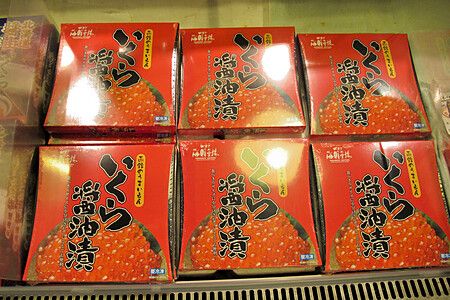
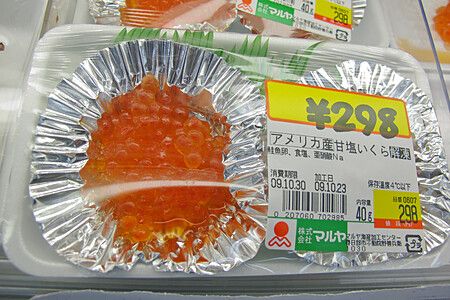
Ikura isn’t cheap in Japan, and the price changes a lot depending on the season and that year’s catch. Supermarkets sell it in small trays, often frozen and then thawed, that cost a few thousand yen for a few hundred grams.
In department stores, on the basement food floor, you’ll see it in jars or fancy gift boxes, because Hokkaido ikura is also a classic holiday gift.
If you want to buy some to eat at your hotel or in an apartment, keep a few things in mind:
- Keep it in the fridge and eat it within a couple of days of opening, because it goes bad quickly.
- Trays labeled kaitou have already been thawed and shouldn’t be refrozen.
- In the evening supermarkets put a discount sticker on a lot of fish products, and sometimes on ikura too.
- Bringing it home on a long trip isn’t a good idea. Depending on your country, fish products for personal use may be allowed within certain limits, but ikura has to stay cold the whole time and could easily spoil on the way.
How to eat it
At a sushi place you can eat ikura gunkanmaki with your hands or with chopsticks, ideally in a single bite. If you want a little soy sauce, just dab the edge of the seaweed, or use a piece of ginger as a brush. Don’t flip the sushi upside down, or all the eggs will end up in your soy sauce dish.
Wasabi is optional, and many people find it unnecessary because it covers up the taste of the eggs.
At home Japanese people also use ikura in ways most tourists don’t know about. They put it on onigiri, spoon it on top of chirashizushi for special occasions, or use a little to garnish fish dishes or chawanmushi, the steamed egg custard.
What I like about it is that you don’t need much. A spoonful of ikura on a bowl of hot rice is already a full meal. If you’re allergic to fish or fish roe, be careful. Ikura is one of the allergens Japan recommends listing on packaging, but listing it isn’t mandatory and small restaurants don’t always mention it, so ask.
Is it worth trying?
Ikura is a bit divisive among travelers. People who are used to raw fish usually love it from the first bite, but others are put off by the texture, the way the eggs pop in your mouth, and by the saltiness.
I often tell people to start with gunkanmaki at a kaitenzushi. It costs very little and it’s gone in one bite, so you’ll know right away whether it’s for you without having to finish a whole bowl.
If you like it, plan something for the fall and, if you can, head up to Hokkaido. At a morning market, an ikuradon made with in-season roe and steaming rice is something else entirely.
If it’s not for you, oh well. You still have mentaiko, tobiko, and tarako to try. If I were you, I’d sample them all, one at a time.