 123 m
The City Bakery123 m
Hearty breakfasts.
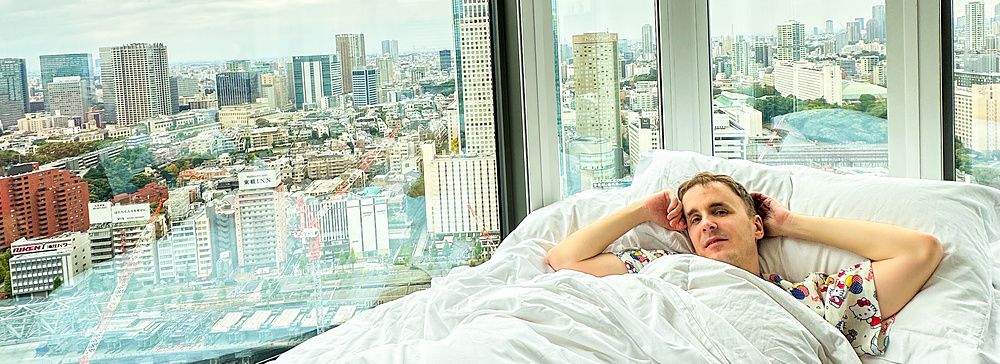
A luxury hotel in Tokyo’s Shinagawa district where every room is above the 26th floor, so you can lie in bed and look down on the city below, with trains sliding past underneath by day and the towers lit up at night. InterContinental the Strings Tokyo is one of the best places to sleep in Tokyo, especially if you get a corner room with lounge access.
I’d recommend it to a couple who want a special night, and to anyone wrapping up a trip to Japan who wants a last evening to remember. It also works if you’re traveling for work and need quiet, a real desk and a breakfast that brings you back to life.
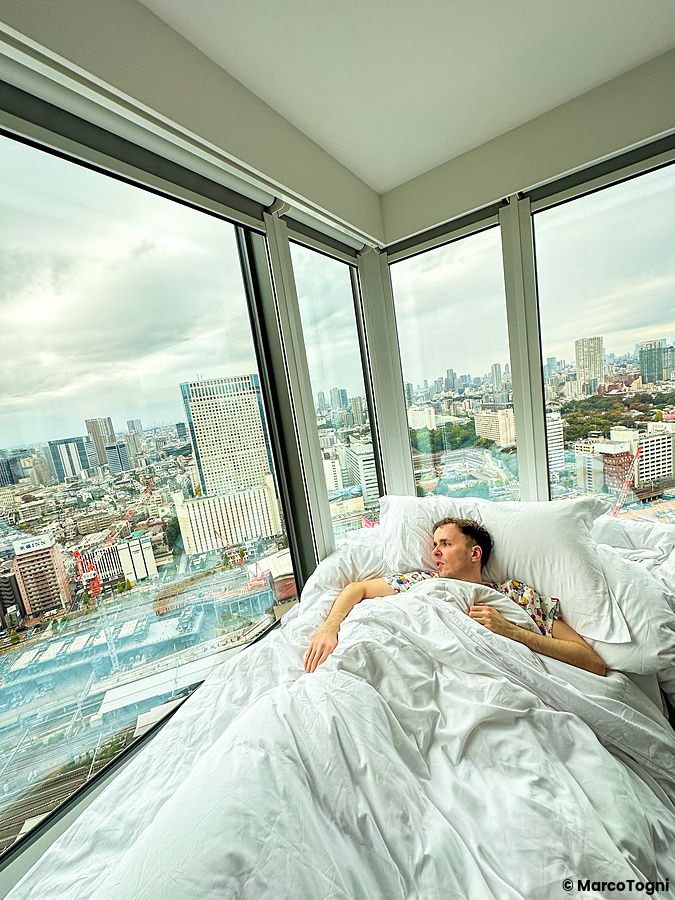
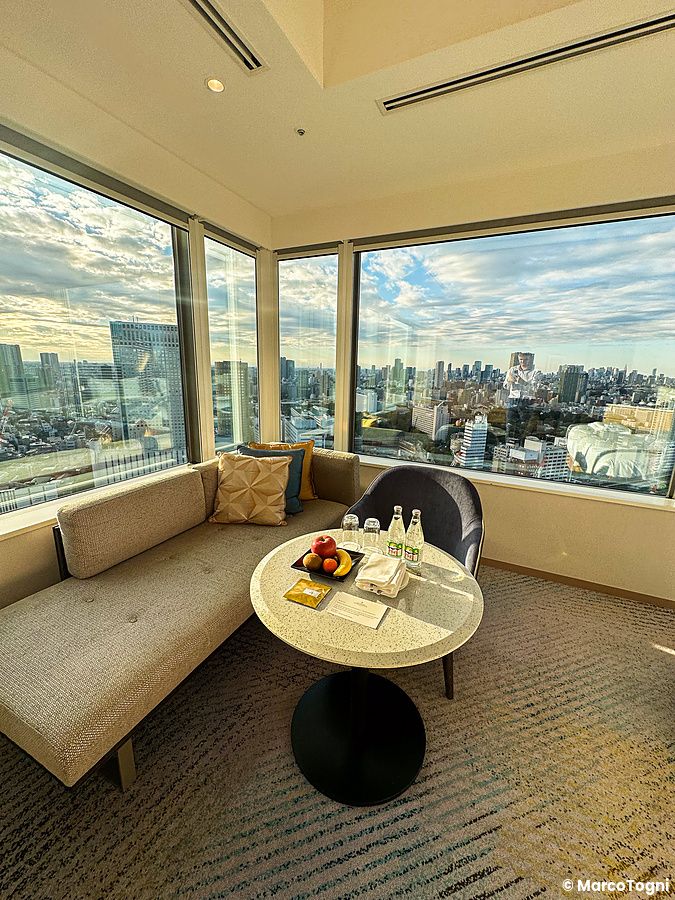
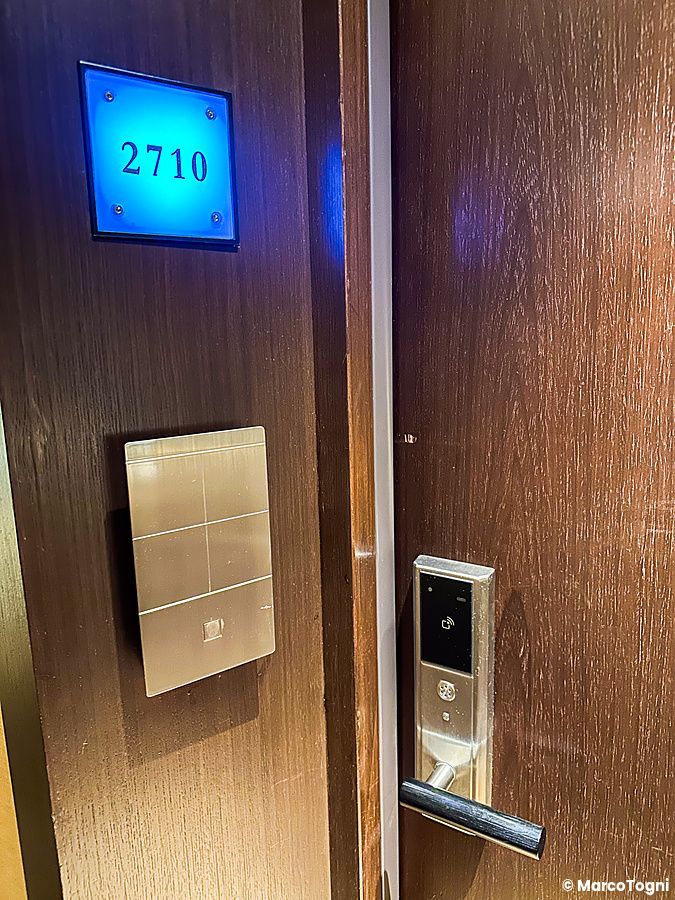
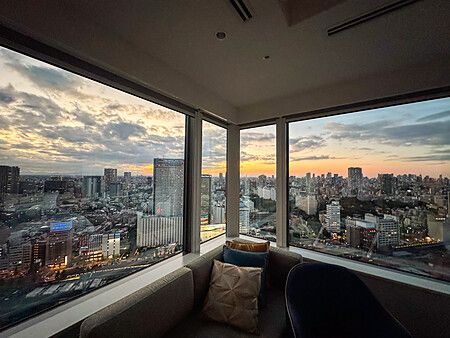
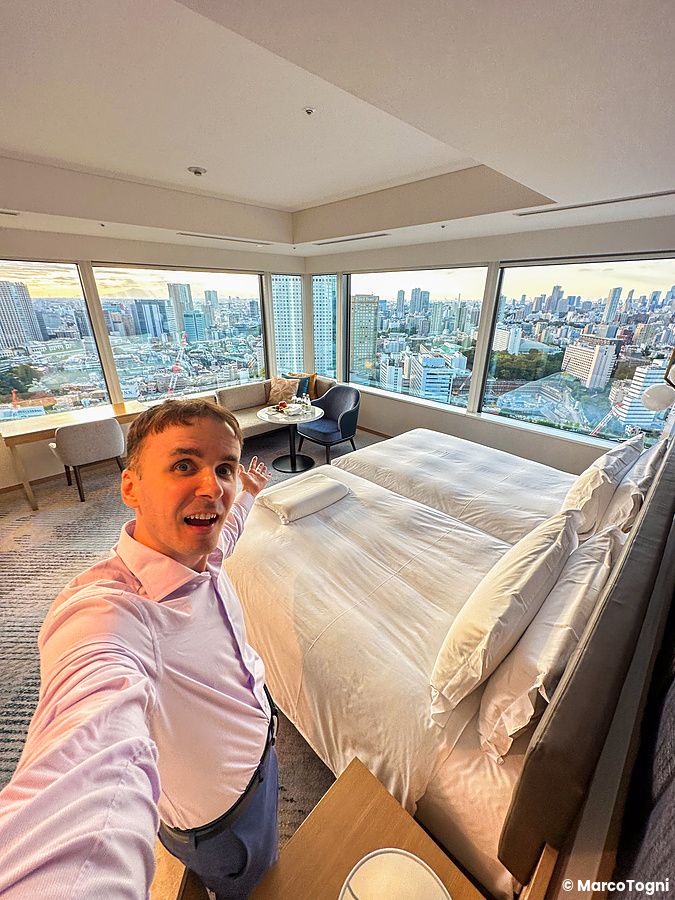
I booked the Premium twin with lounge access, in a corner room on the 27th floor. Open the dark wood door and you’re facing two glass walls that run from floor to ceiling and meet at the corner, and the first thing you do is drop your suitcase and go to the window. Right below is Shinagawa Station, with its tangle of tracks and trains pulling in and out, and all around it Minato’s skyscrapers stretch to the horizon.
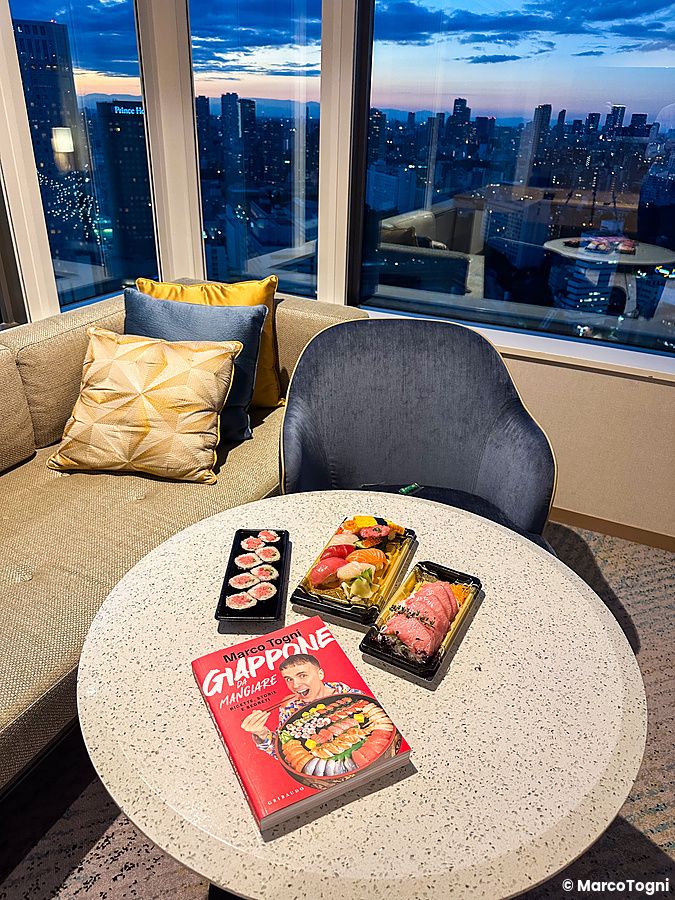
The two twin beds face the glass, so you can take in the city lying down, propped up on a pillow. Right under the windows, a built-in sofa with cushions runs along the corner, with a round coffee table and a blue velvet armchair in front of it. That’s where you spend the evening, with a drink or with sushi you picked up downstairs.
At sunset the room fills with orange light, and once the towers light up, the view keeps changing. More than anything else, the corner view is the best thing about this hotel.
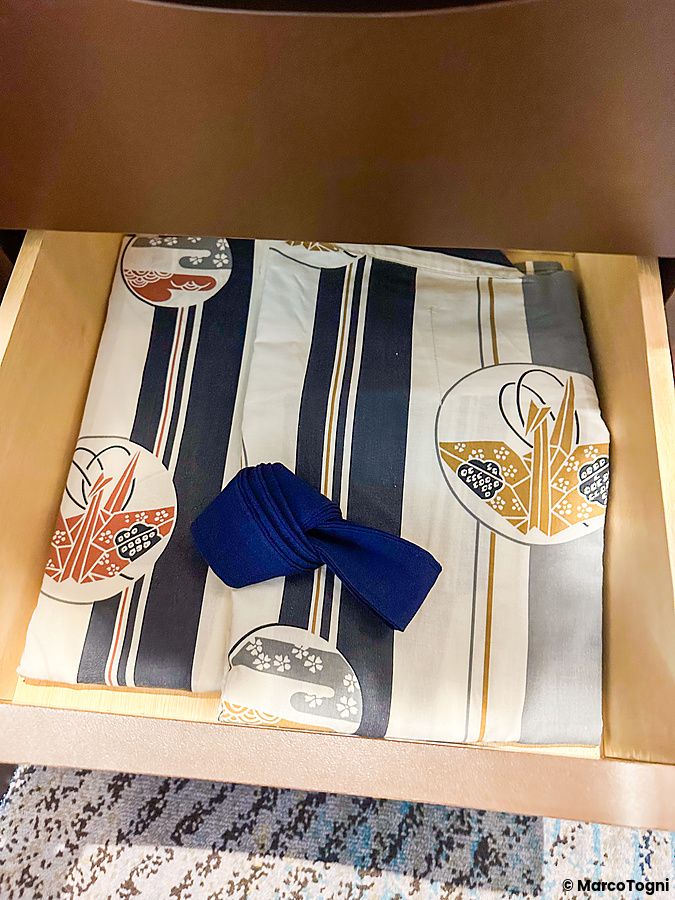
There’s also a wooden desk along the window, wide enough for a laptop and papers, and a chair you can actually work in. When you arrive, you’ll find a tray of fresh fruit, water and a welcome card on the coffee table, and in a drawer there’s a folded yukata with its belt to wear in the room at night.
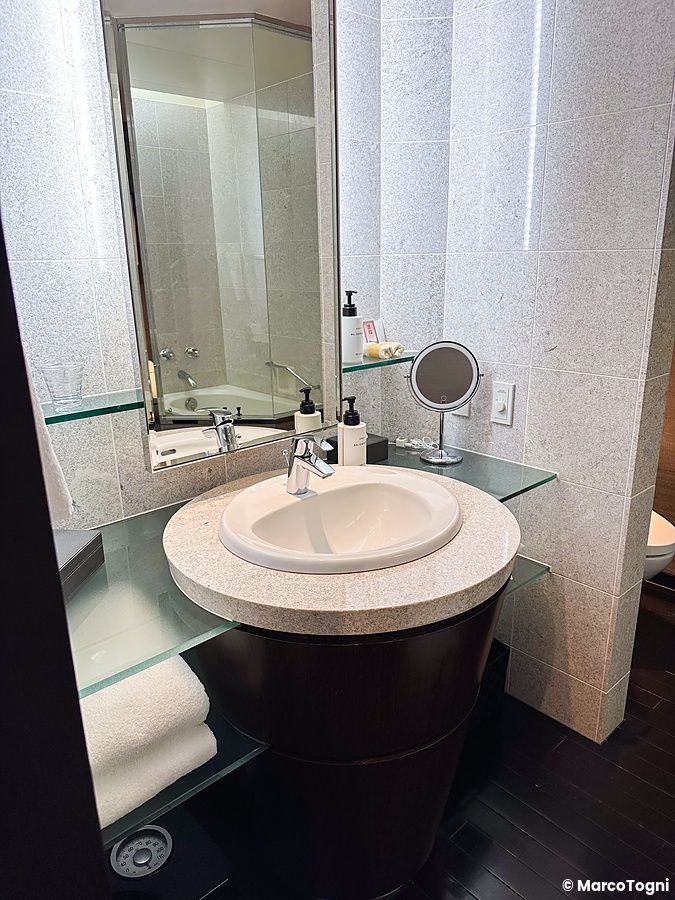
A door separates the bathroom from the room. The sink is set into a dark round counter, with a mirror above it, glass shelves and a magnifying mirror, and the toilet has the usual Japanese bidet seat.
The room also has a coffee machine, and the beds have pocket-spring mattresses that are just the right firmness.
Here’s how the rooms break down:
The corner isn’t a separate room type. It’s a location within the same category, and it changes everything, because you go from one window to two glass walls. Ask for one when you book, along with a high floor.
If there are two of you and one goes to bed early, the twin is more practical than the double, since the other can read or work at the desk without disturbing anyone. The curtains are heavy, and when they’re closed very little light from the city gets in, so you can sleep even with everything lit up outside.
This isn’t the right hotel if you’re after tatami, futons and a traditional Japanese feel. Inside, you could be in any big city, and Japan is something you look at through the window.
I won’t sugarcoat the prices. This is a high-end hotel, and the room with lounge access costs quite a bit more than a regular Premium. It’s not only for people with big budgets, though. Even if you’re not rich, you can decide to splurge on just one night, for an anniversary or before your flight home, and come away happy.
Book early, and avoid cherry blossom season, Golden Week, Obon and New Year’s. There are only a few corner rooms with lounge access, they go fast, and prices climb during those periods.
When someone asks me where to spend their last night in Tokyo, this is the first name I give. You eat in the lounge, head back to the room, sit on the sofa and watch the city below until you get sleepy. That’s why I keep coming back, and I never regret it.
The club lounge is on the 26th floor, the same as the lobby, behind a glass door that only opens with your room key. That door is also where check-in goes wrong, and it was the one hiccup of my stay. Guests with club access are sent to check in at the lounge, but the door is locked from the outside and, of course, you don’t have a key yet.
You end up standing there with no idea where to go, in a place where everything else runs like clockwork. My advice is not to waste time on it: go straight to the desk in the lobby and have someone walk you over.
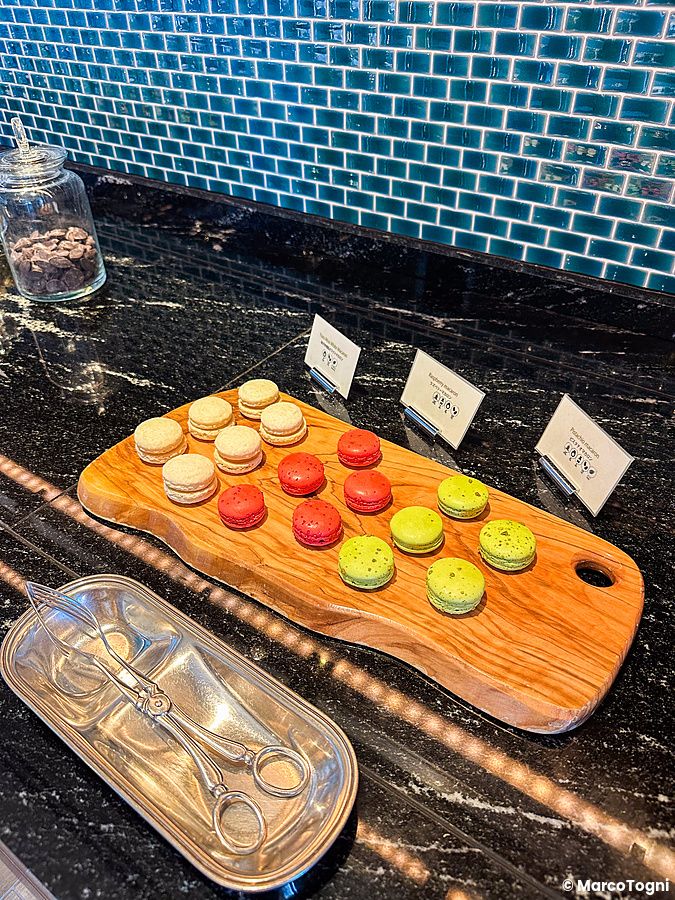
In the afternoon the lounge is at its weakest. On the black marble counter there are a few colorful macarons, a couple of mediocre scones and not much else, plus tea and coffee. It’s fine for a break when you get back, but not for a proper afternoon snack.
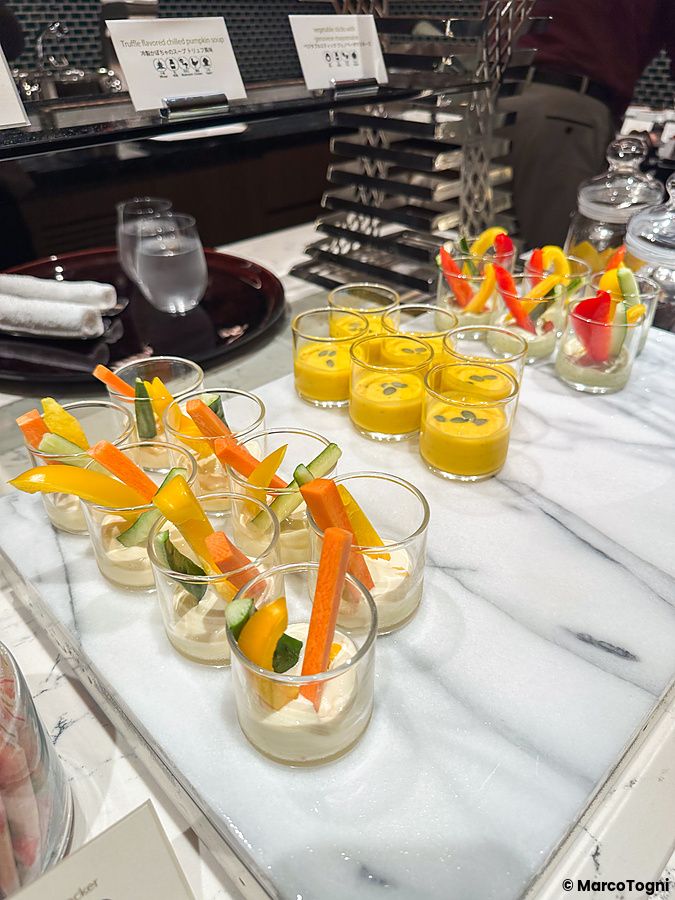
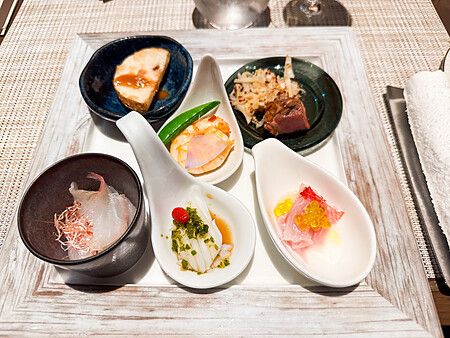
In the evening, though, it feels like a different hotel, and you’re tempted to ask the staff what happened in the meantime. The buffet has caprese with cherry tomatoes in several colors, cold cuts, little glasses of dip with raw vegetable sticks standing in them, pumpkin soup topped with seeds, and nuts in jars. Then they bring a tasting tray from the kitchen to your table, with sashimi, shellfish served in porcelain spoons and small appetizers, and all of it is good.
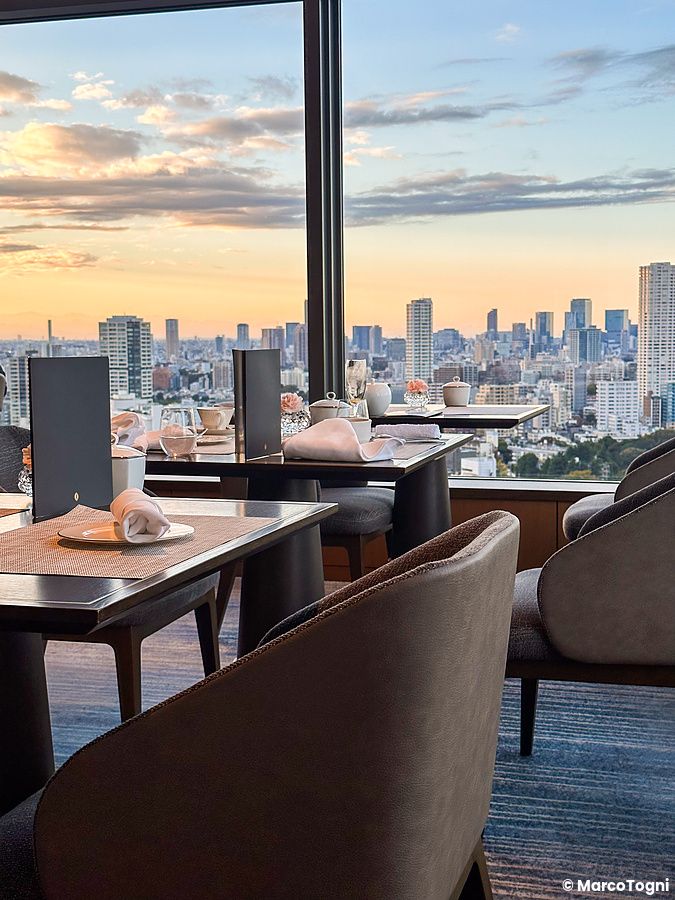
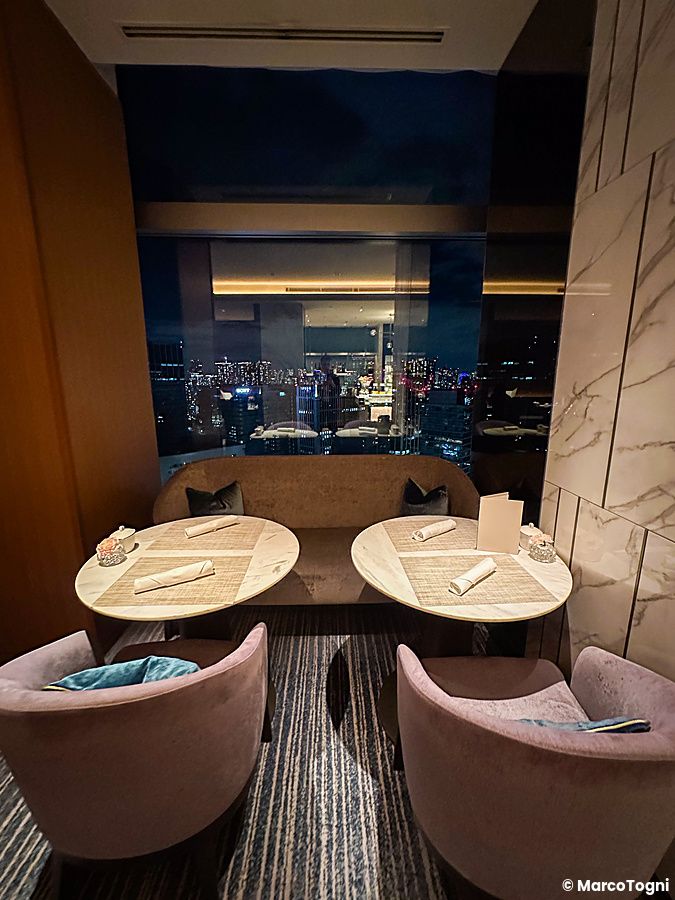
The cocktails are well made, and you drink them at marble tables by the window as the lights come on outside. It’s basically a light dinner: after an evening in the lounge I don’t bother going out to eat.
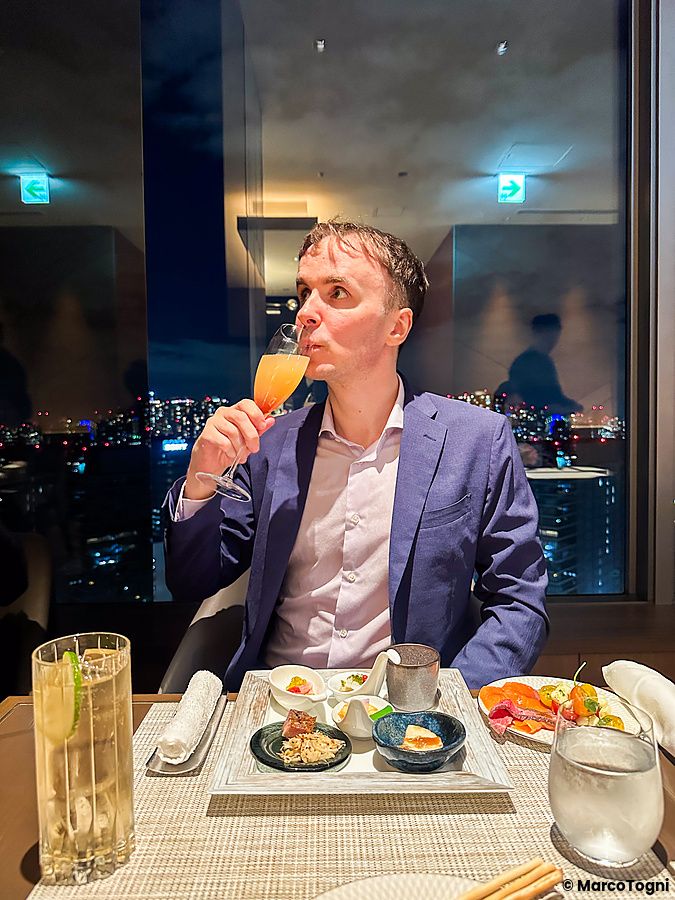
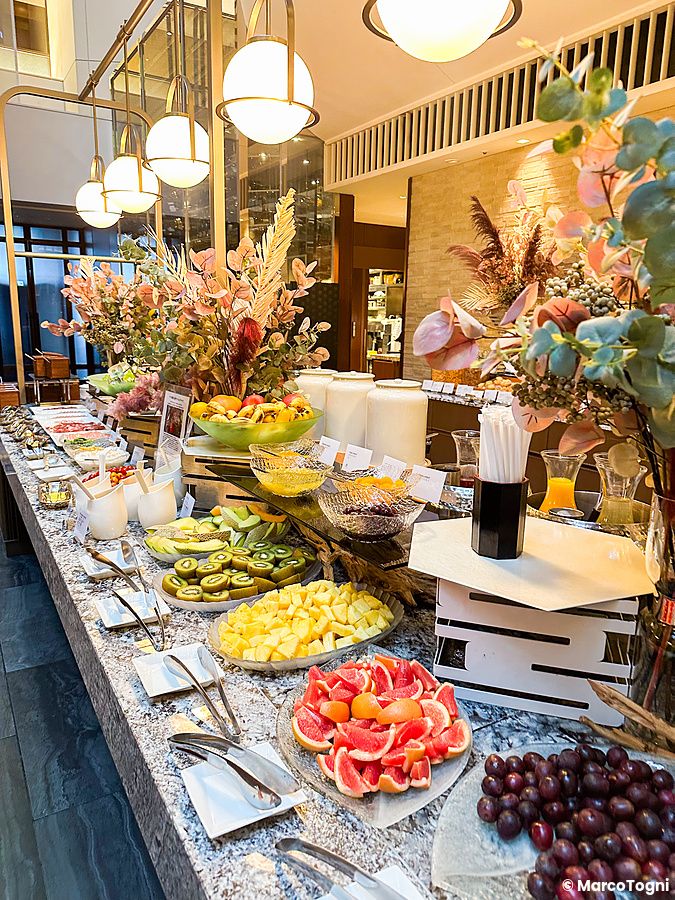
If your room comes with lounge access, you have breakfast there, with the city already awake outside the windows and the tables set out on blue and gray striped carpet. The buffet has smoked salmon, cured meats, cheeses, salads, falafel, ratatouille, cut fruit, yogurts in different flavors in the fridge and juices already poured into glasses, plus a pitcher of water with hibiscus and mint. There are lots of baked goods, with fruit danishes, cinnamon rolls, muffins and sandwich bread, next to jars of peanut butter and sweet spread.
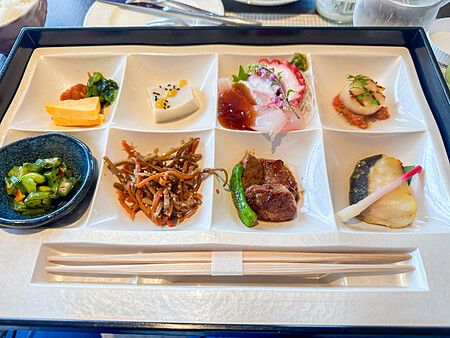
The best part, though, is what you order off the menu, which they bring to your table. You can get eggs any way you like, omelets included, pancakes with cream, syrup and jam, or a Japanese tray with compartments holding sashimi, grilled fish, tamagoyaki and stir-fried vegetables.
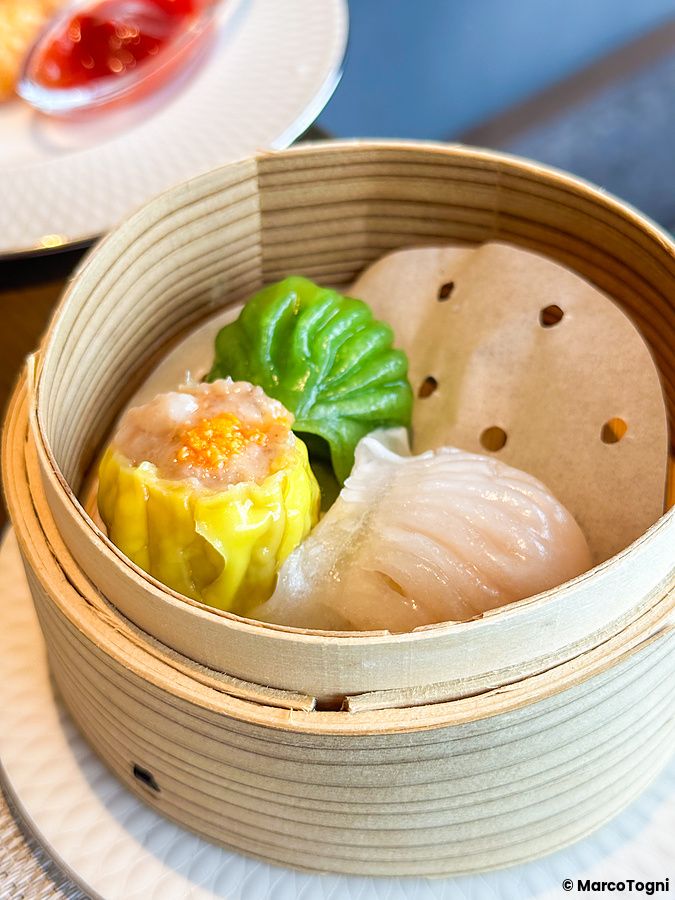
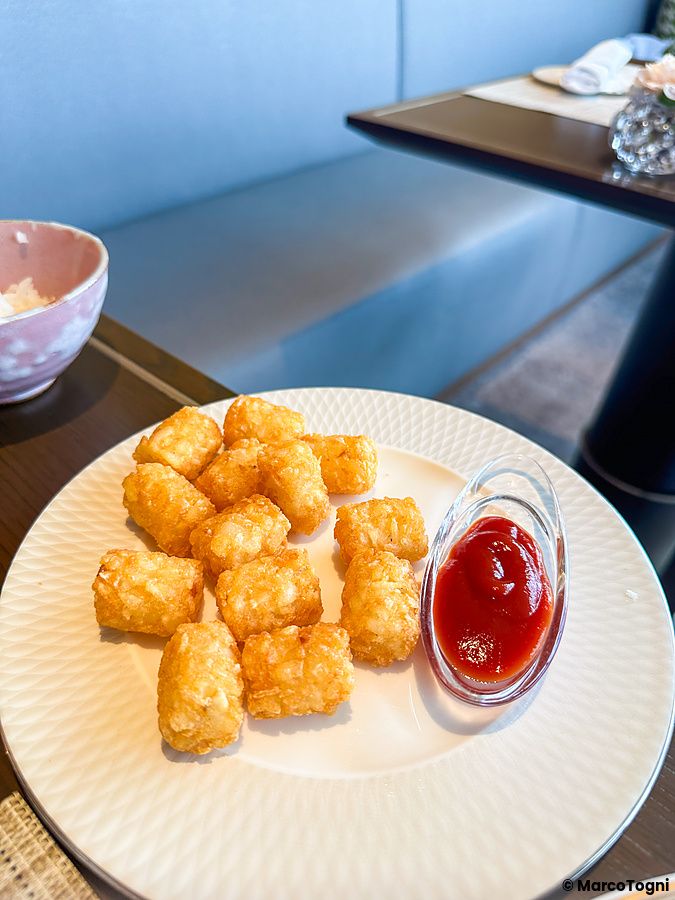
They also bring dim sum in a bamboo basket and potato croquettes with ketchup, which you don’t expect at breakfast but always disappear. For me it’s a really solid breakfast, the kind that means you won’t need lunch before two.
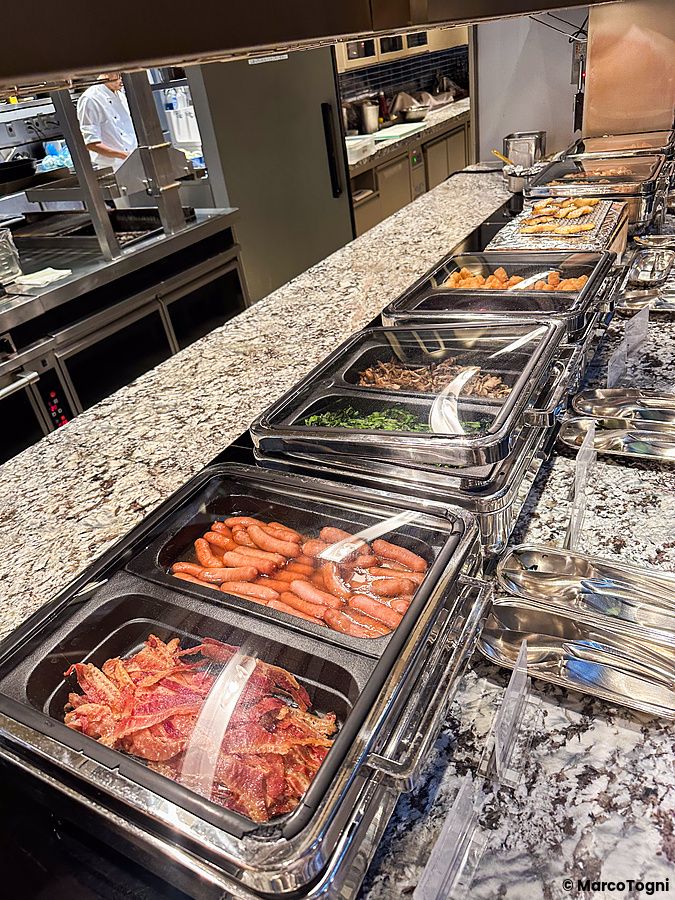
If you don’t have club access, you have breakfast at Melodia, the Italian restaurant in the atrium. You pick a main dish from the menu, and there’s also a buffet with fruit, breads and hot dishes like bacon and sausages.
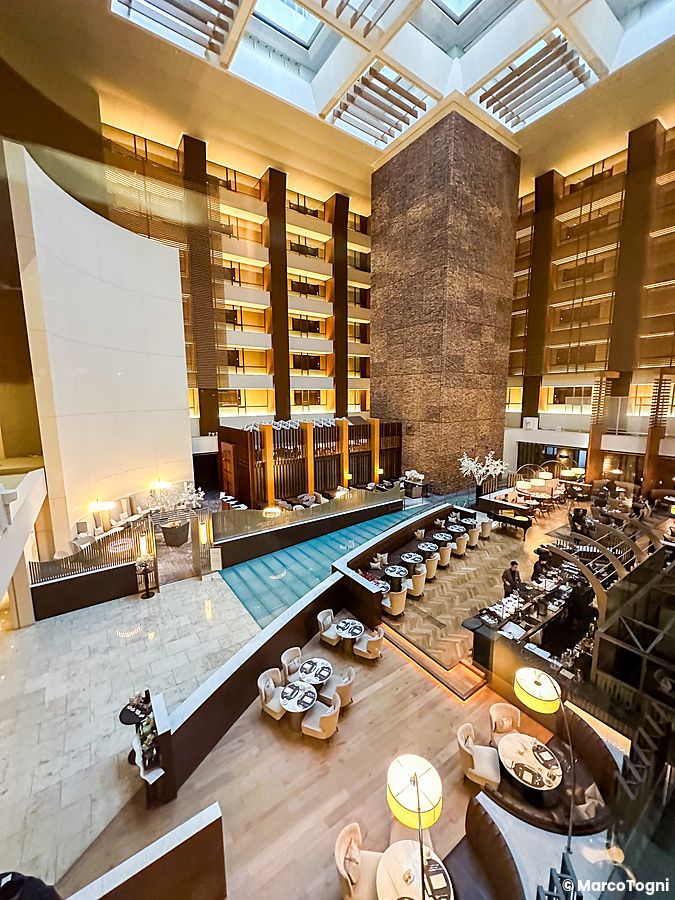
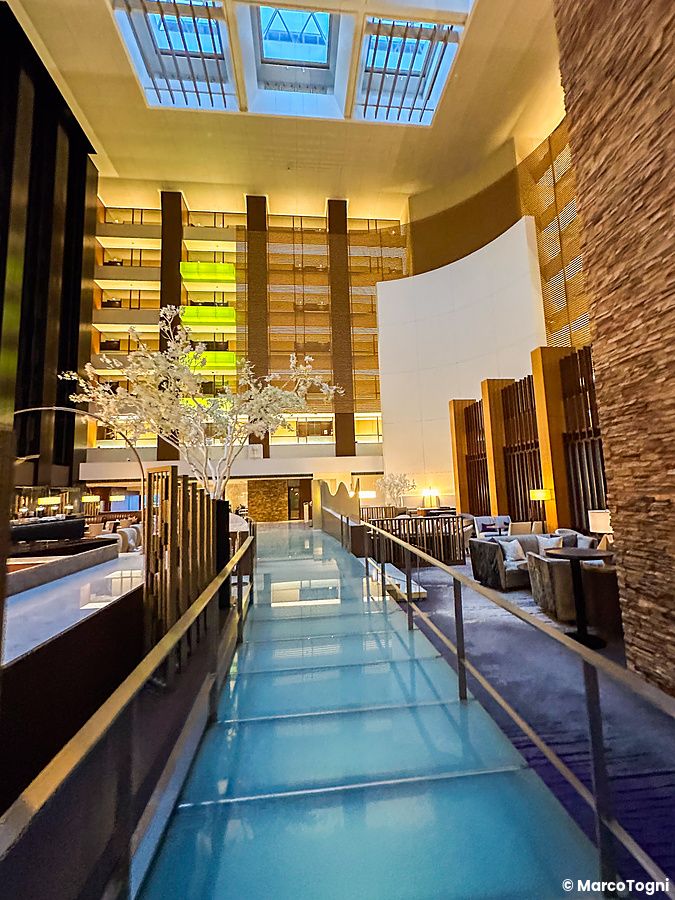
When you step out of the elevator into the lobby, your eyes go straight up. The atrium rises seven floors to the skylights, with wood and metal walls, a big column clad in dark stone, and a glass bridge over a small pond decorated with cherry blossom branches. The restaurants around the atrium have small sofas, round tables and armchairs with yellow cushions, and in the evening you get a mix of people in suits fresh out of meetings, couples out for dinner and the occasional Japanese family celebrating something.
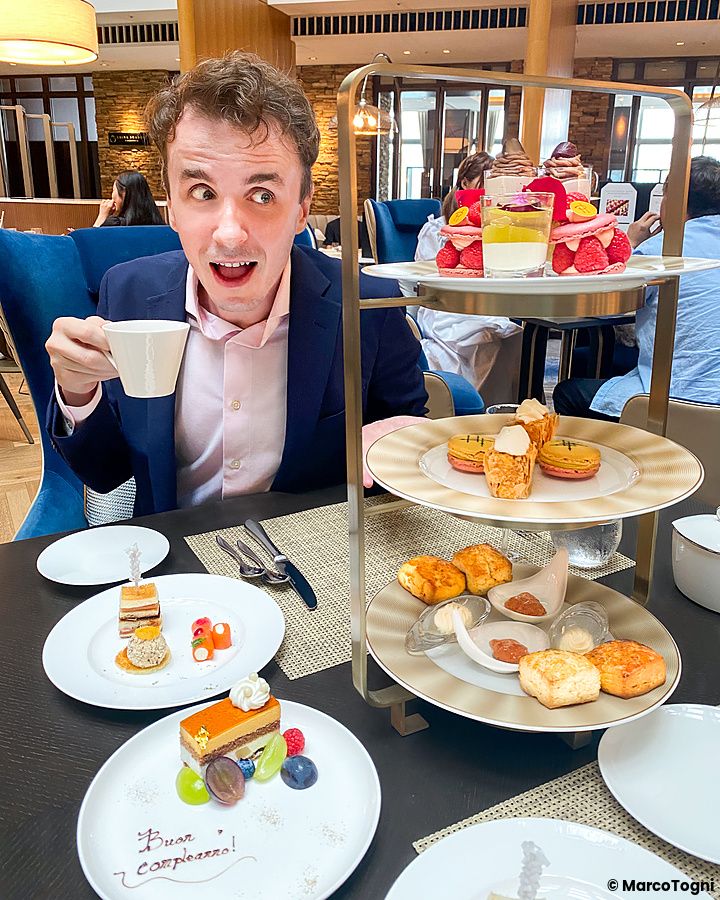
The hotel’s afternoon tea, which has nothing to do with the one in the lounge, is served at Melodia, the Italian restaurant overlooking the atrium. It comes on a three-tier stand of pastries, with a theme that changes with the seasons. For me it’s excellent, and I’d say it’s a reason to come all the way up here even if you’re not staying.
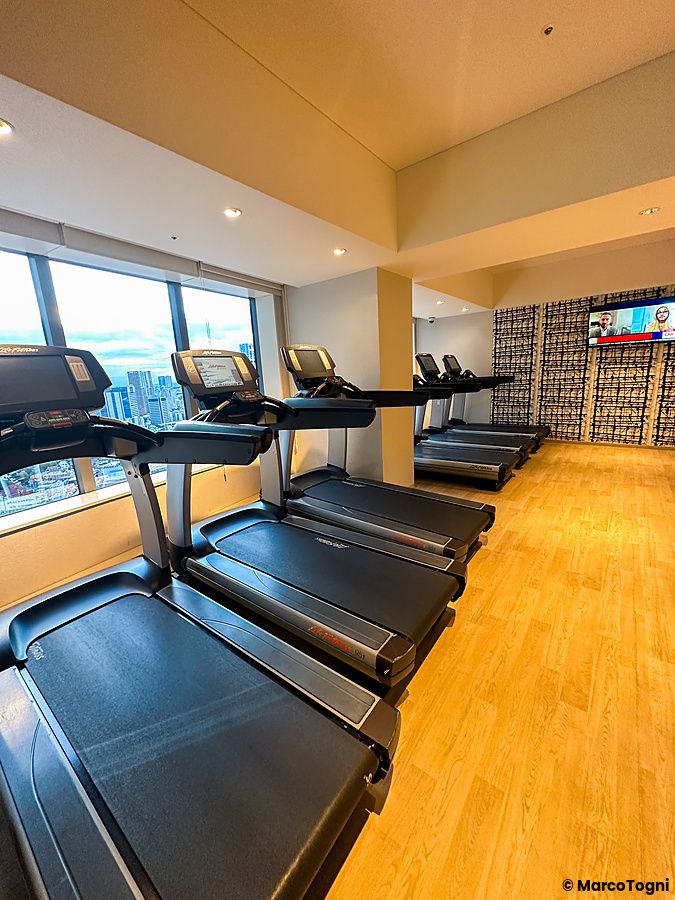
There’s also a gym with treadmills lined up along the window, looking down on the city, and it’s free for hotel guests. There’s no pool or spa, though, so if you want to swim at a hotel of this level, you’ll have to look elsewhere.
Outside, Shinagawa is mostly office towers and the big station, and it’s not the Tokyo of lantern-lit alleys. For a night out you go to Shibuya, Ginza or Roppongi, not around here.
When you come back late, after the chaos of the station, you ride the elevator up and leave all of it below. In the room you can’t hear a thing, and the only sign of the trains is the lights moving far off in the distance.
Pros:
Cons:
Best for: couples celebrating something, travelers spending the last night of a trip, anyone working who wants quiet and a real desk
Room to ask for: a corner Premium twin with lounge access, on the highest floor you can get
Atmosphere: a towering atrium full of light, wood and dark stone, and at night the towers lit up behind the glass
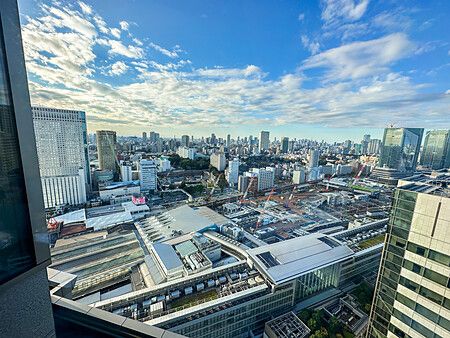
What sticks with you after you leave is the morning. You wake up, open the curtain, and the first train at Shinagawa slides along the tracks below your feet, as small as a toy train, while the sun slants across the towers. You stand there for a minute in your yukata, coffee in hand, not wanting to do anything at all, and it’s the best minute of the day.
Get the corner room, go up to the lounge when the sky turns orange, then come back down and watch the city light up. Book a night up here at least once.
The hotel is practically attached to Shinagawa Station. Follow the signs for the Konan Exit (East), turn right and cross the pedestrian bridge. The East One Tower is the first building on the right, a couple of minutes' walk away.
The hotel elevators take you straight up to the 26th-floor lobby, where you check in.
From Haneda Airport, the Keikyu Line gets you to Shinagawa without changing trains, and from Narita there's the direct Narita Express.
This place is on MarcoMaps
InterContinental the Strings Tokyo
My map of Japan: over 4,000 places I've tried myself, each with photos, rating, and hours. Filter by category and rating, find veg-friendly spots and places near you with GPS. No sign-up, right from your phone.


InterContinental the Strings Tokyo - nearby you will find: