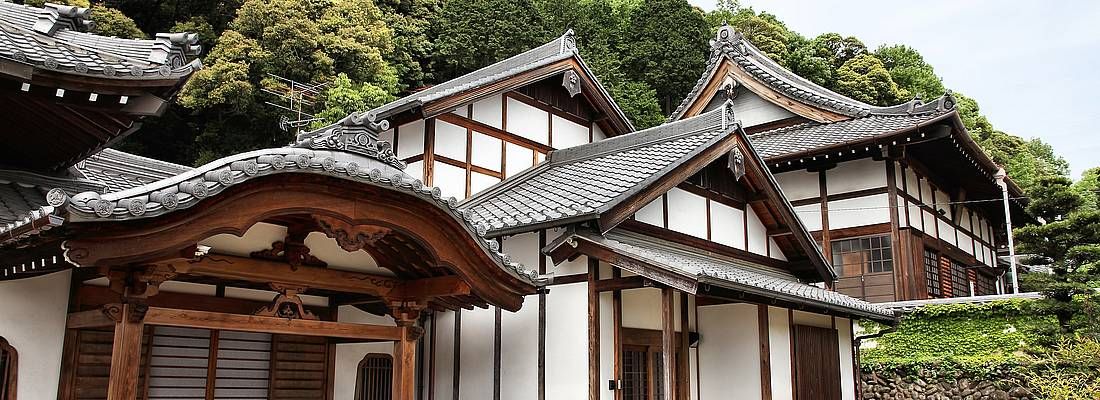
Inuyama
Inuyama, whose name means “dog mountain,” is a small town on the banks of the Kiso River in Aichi Prefecture, just a short trip from the big city of Nagoya. It’s a town that smells of cherry blossoms and tea, where time has stood still and people still practice ancient traditions like cormorant fishing.
Above it all rises Inuyama Castle, one of the oldest wooden castles in the country, which survived wars and earthquakes to become the town’s symbol. Close to Nagoya and compact, Inuyama makes a perfect day trip.
Contents
Things to do in Inuyama
Inuyama Castle
Completed in 1537, Inuyama Castle is a beautiful example of Momoyama-period military architecture. There’s a history museum inside, but the real draw is the view: the castle sits right on top of a hill, and from up there you can look out over the Kiso River and the whole town.
Jokamachi
Jokamachi is the charming street that leads up to the castle, lined on both sides with traditional wooden houses that now hold shops and restaurants. It’s the place to pick up souvenirs and try local food like tofu dengaku, a skewer of grilled tofu coated in red miso paste, along with some delicious handmade ice cream. Near the top of the climb, a few steps from the castle entrance, you’ll find Sanko Inari Shrine, with a row of vermilion torii one behind the other and hundreds of pink heart-shaped ema left by people hoping for luck in love. There’s also a spring where you wash your coins for prosperity, and it’s one of the most photographed spots in all of Inuyama.
Next door is the much plainer Haritsuna Shrine, which the town festival honors.
Meiji Mura
One of Inuyama’s main attractions is Meiji Mura, a lovely open-air museum that recreates a large town from Japan’s more recent past, starting in the late 1800s, when Western styles began to shape the country’s architecture. The village isn’t made of replicas, though. It’s made up of many real historic buildings that were moved here from different parts of the country to preserve them.
Cormorant fishing
Every year from June to mid-October, the banks of the Kiso River fill up in the evenings with tourists and onlookers who come to watch cormorant fishing, a thousand-year-old practice recognized as part of Japan’s cultural heritage. The master fishermen work from traditional boats, catching fish with the help of a team of cormorants by the light of blazing torches under a starry sky. The visitors’ boats pull up alongside the fishing boats, so the birds are working just a few meters away: they dive in tethered to a long cord and come back up with ayu, small river fish that the ring around their necks keeps them from swallowing. Before you board, the usho, the master fisherman, talks about his craft on the pier.
If a night out on the river isn’t your thing, you can also watch the fishing on the Kiso during the day, with the castle in the background.
Temples and museums
Inuyama has plenty of temples and museums, worth a look if you’re into culture, history and religious architecture. On the way up to the castle is the small Karakuri Exhibition Room, a museum devoted to the intricate karakuri dolls, which move thanks to a kind of automation invented in the Edo period. The dolls are the stars of the Inuyama Festival, when they ride on the parade floats through the streets of town. At the Inuyama Artifacts Museum you can learn about the history of the festival, the town’s most popular, and see some of the floats on display.
A short walk south of the station, still heading toward the castle, is the Jinai-cho Temple Town area, a maze of narrow lanes lined with old houses and a string of temples from different periods.
But the town’s most prestigious temple is probably Narita-san Temple, a Shingon Buddhist temple and a branch of the temple of the same name in Narita, in Chiba Prefecture. It opened in 1953 and stands on a steep, wooded hill, which makes it a great spot to take in the view of the Kiso River and Inuyama Castle from above.
The Inuyama Festival
If you’re in town on the first weekend of April, you’ll find a different Inuyama. The Inuyama Matsuri has been held since 1635, and it brings out thirteen floats up to eight meters tall, pushed by hand through the old town to Haritsuna Shrine. On each one, karakuri dolls move to the sound of flutes and drums, operated from above by people who still know how these mechanisms work.
The best part comes after sunset, when every float lights up with paper lanterns and rolls through the dark under the cherry blossoms along the Kiso. The floats are UNESCO-listed, and for those two days the town fills up with people from all over Japan.
Urakuen Garden
Not far from the castle, Urakuen Garden is a lovely Japanese garden that gets especially crowded in fall, when people come for the autumn colors. The highlight, though, is the Jo-an teahouse, one of the most famous and historic in the country and a designated National Treasure. You can only see it from the outside, but in another teahouse in the garden you can have matcha with the sweet that comes with it.
Getting There
The easiest way is by train from Nagoya: from Meitetsu Nagoya Station, right next to the JR station, direct trains take about 30 minutes to Inuyama Station. From there the old town, the castle and Urakuen are all within walking distance, twenty minutes at most, and the town is also nice to get around by bike.
If you stay on one more stop to Inuyama-Yuen, you'll be even closer to the castle and the banks of the Kiso River.
With a Japan Rail Pass you can take the JR Takayama Line to Shin-Unuma and switch to the Meitetsu there: it takes just under an hour and only saves you a few yen, so it only makes sense if you're already traveling on that line.
Useful Info
Inuyama Castle: closed December 29 to 31
Meiji Mura: closed some weekdays in winter and a few days in summer, check the official calendar
- Inuyama Station (Meitetsu Inuyama, Komaki and Hiromi lines): west exit for the old town, east exit for buses
- Inuyama-Yuen Station (Meitetsu Inuyama Line): the closest to the castle and the river
- The Meitetsu bus to Meiji Mura leaves from Inuyama Station and takes about 20 minutes
Map
This place is on MarcoMaps
Inuyama
My map of Japan: over 4,000 places I've tried myself, each with photos, rating, and hours. Filter by category and rating, find veg-friendly spots and places near you with GPS. No sign-up, right from your phone.
- 4,000+ places
- Rating, photos, and hours
- Veg friendly
- Near me (GPS)
- Favorites without login
- Works offline

