Irabu Bridge
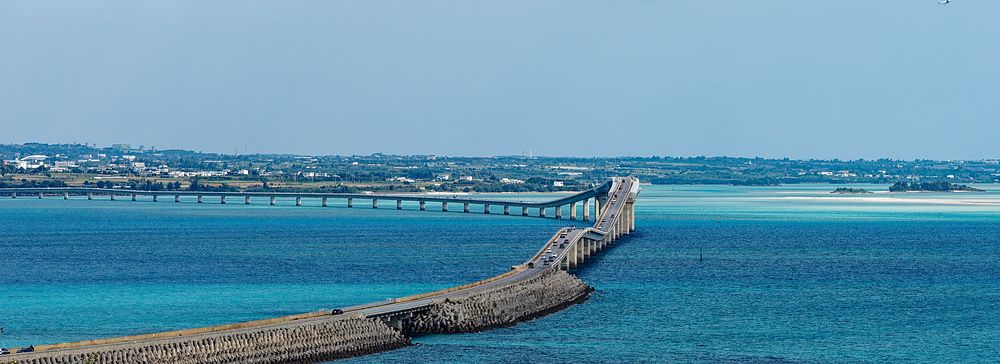
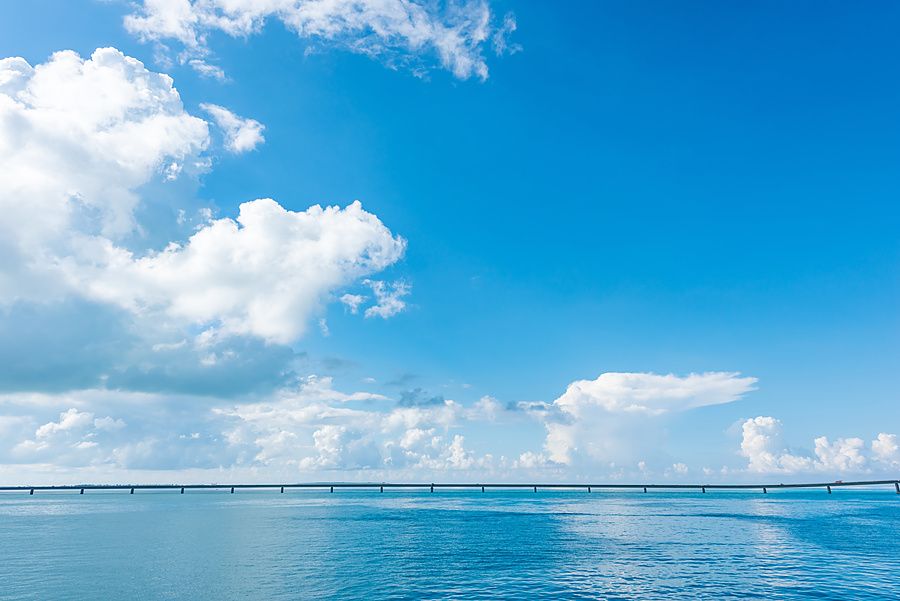
A three-and-a-half-kilometer bridge that runs from Miyakojima, in Okinawa, across open sea to Irabu Island. You come here to drive over emerald-green water where you can see all the way to the bottom from above, with the sand and the dark patches of coral. Irabu Bridge is what sticks with you most on the whole island, and not just because of the crossing itself. There are parking areas at both ends where you can see the entire bridge, and on Irabu there’s a high point where you can take in the bridge’s whole shape at once.
It’s the right place if you’re driving around Miyakojima, if you feel like walking or biking over the sea, or if you want to watch the sun go down behind a row of pillars.
Contents
What you’ll see
The bridge is the sight, but it isn’t just one view. It looks very different depending on where you’re standing.
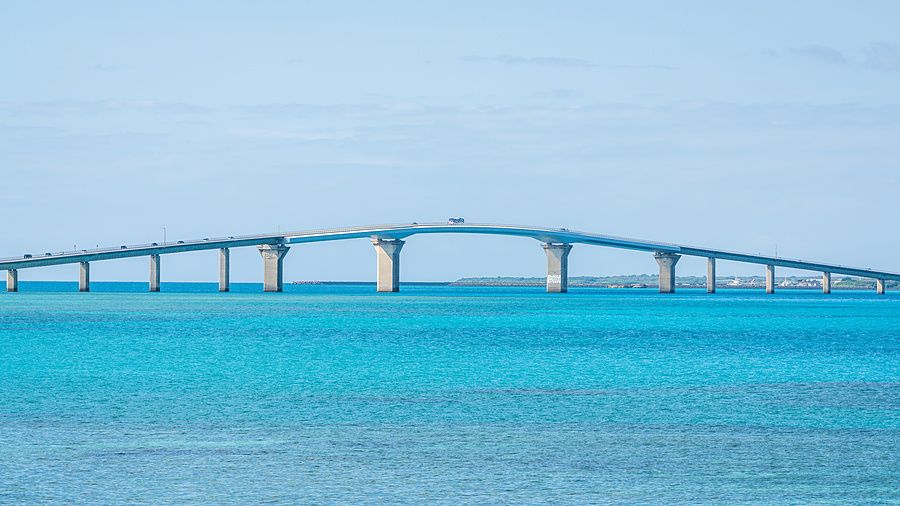
- The raised middle section: halfway across, the bridge climbs so ships can pass underneath and then comes back down. This is where the sea opens up on both sides all the way to the horizon.
- The low stretches on the Irabu side: here the road runs almost at water level, and at high tide it feels like you’re driving through the sea rather than over it.
- The lot at the foot of the bridge, on the Miyakojima side: this is where the sign with the bridge’s name is, and from here you can photograph the whole line of the bridge heading off toward Irabu.
- Irabu Ohashi Umi no Eki, right after the crossing: a raised parking area and an upstairs terrace, with the entire bridge in front of you.
- The Makiyama observation deck, the highest point on Irabu Island: the building is shaped like a hawk with its wings spread. From up there you see the whole bridge stretched out, Miyakojima across the water and, on a clear day, Kurima and Ikema islands too.
- Miyako Sunset Beach, on the Miyakojima side: white sand, the bridge out in front, and the sun going down right behind it.
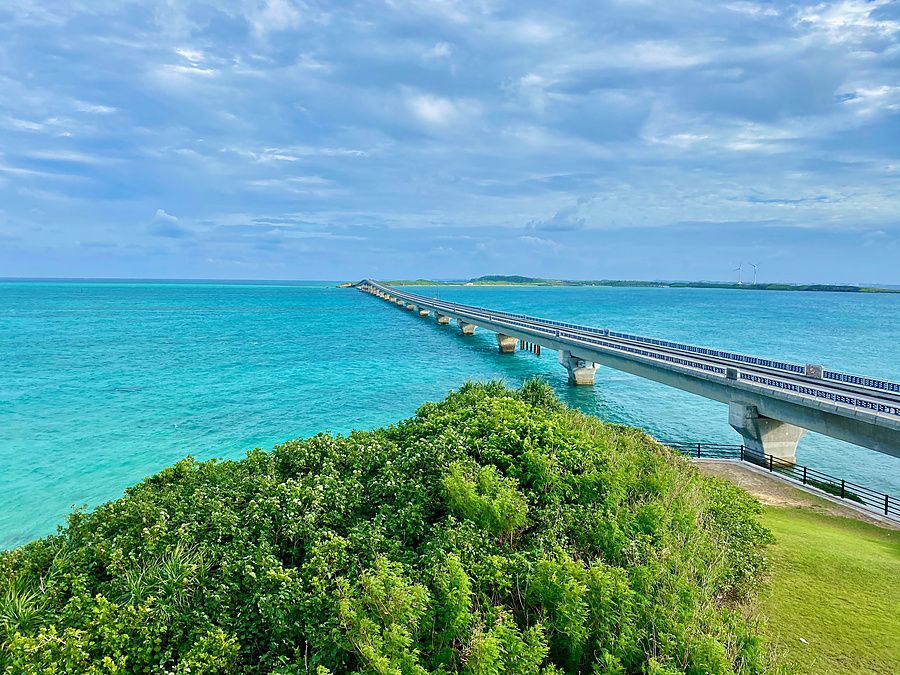
From a car, the side railing blocks half the view. The driver sees the road and not much else, and even from the passenger seat you get more of a hint of the water’s color than a real look at it. To actually see it, you have to cross on foot or by bike, or take it in from one of the spots above.
Then there’s the weather, and it matters a lot. Under overcast skies the green and blue disappear, and you’re left with a gray bridge over a gray sea that could be anywhere. If the day you’d planned turns out cloudy and you can move things around, put it off and go do something else.
When the lots at both ends are full, some people pull over on the bridge’s shoulder to take a photo. You can’t stop there, and it’s not a rule someone made up to be fussy: the shoulder is narrow and trucks come through.
The bridge delivers everything it promises, in full. It isn’t one of those places that look amazing in photos and fall flat in person. In person it hits even harder, because a photo can’t show you that the color is all around you for three and a half kilometers straight.
Every time I’m back on Miyakojima I drive out to Irabu just so I can cross back the other way, because in that direction the bridge rises up in front of you and then lets you drop straight down toward the green water. I do it even when I’ve got nothing to do on Irabu.
How the bridge changed Irabu
Until 2015 you could get to Irabu only by ferry. The bridge put the island a few minutes’ drive away, and the ferry service to Miyakojima was discontinued.
At 3,540 meters, it’s the longest bridge in Japan that you can cross without paying a toll, so you can go back and forth as many times as you like.
When to go
The best time is the middle of the day, with the sun high. That’s when the water really lights up and you can tell the pale patches of sand from the dark patches of coral, even well out from the bridge. Early morning is nice for a different reason: there’s less traffic and the sea is smooth.
Save the Makiyama deck for the afternoon, though. In the morning the bridge is backlit, and in photos it comes out as a black strip on a white background.
Sunset is the other big moment, and you watch it from the Miyakojima side, at Miyako Sunset Beach. Get there a good half hour before the sun touches the water, because the sky starts changing color earlier, and that’s the best part.
You won’t be alone. There are families on the sand, couples sitting on towels and people with their tripods set up, but there’s plenty of room and nobody crowds you.
Spring through early fall has the most days with clear skies, and this place is at its best under a clear sky.
Summer has its downsides, though: oppressive heat, a sun that beats down hard and the chance of typhoons, which aren’t a minor detail here and can shut everything down for a couple of days. In winter the weather is less predictable, and above all there’s a constant wind that takes the fun out of anything you do outside the car.
You notice weekends and Japanese holidays in the parking lots more than on the bridge. Traffic on the crossing keeps moving, but at both ends you end up circling for an open spot.
On foot or by bike
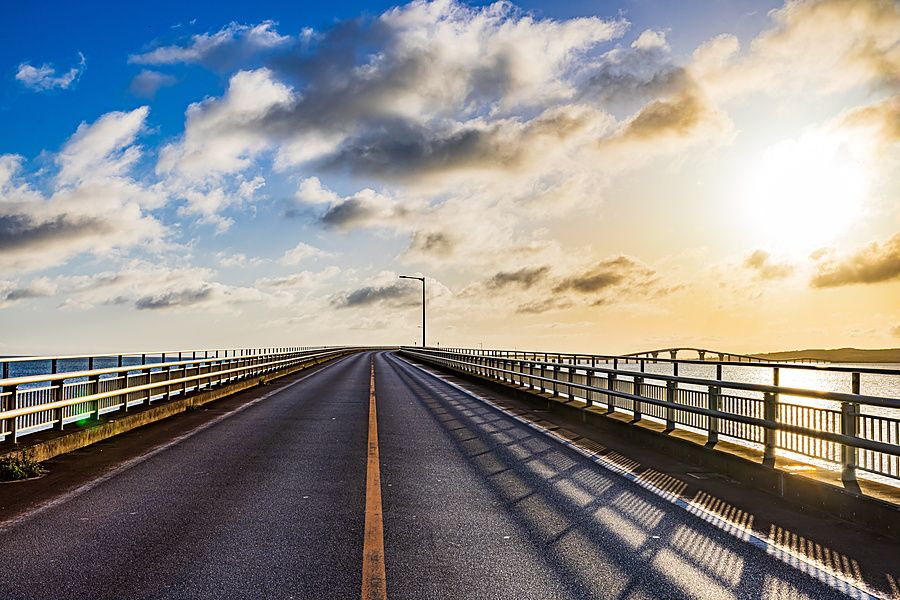
Crossing under your own power is more of a challenge than it looks. There’s no sidewalk, just a shoulder a little over a meter wide, marked off by a painted line, with no barrier between you and the cars. You really feel the trucks going by, and the first time it’s a bit unnerving.
Then there’s the wind. The bridge stretches out across open sea, and the wind almost always hits it from the side. Hats fly off, bikes get pushed sideways, and if two of you are walking side by side, you have to raise your voices to hear each other.
There isn’t a single patch of shade from one end to the other. Bring water, cover your head and put on sunscreen, because the glare reflecting up off the water burns you even under the chin.
If it rains, there’s nowhere to take cover, and with that wind and the cars right next to you, an umbrella is more of a hazard than a help.
What you get in return is the thing you miss from the car: you stop wherever you want, look down and stay as long as you like. When you’re standing still you can see the shades shift meter by meter, and every now and then a turtle’s head pops up for air and then sinks back down.
If you’ve got small kids, a stroller or a wheelchair, skip the walk across and stick to the viewpoints, which are easy to get to. The Makiyama deck is a few minutes’ walk from the parking lot, with hardly any stairs, and grandparents can easily make it up there too.
The best shot
Each viewpoint gives you a different shot. From the lot at the foot of the bridge on the Miyakojima side, put the sign with the bridge’s name in the foreground with the whole line of the bridge running off across the water. It’s the spot where the most people line up, but the wait is short.
From the Umi no Eki terrace on the Irabu side you get the bridge head-on, with the hump right in the middle of the frame.
My favorite is the one from the top of Makiyama in the afternoon. You can see the entire bridge from start to finish, with the greens and blues shifting as the water gets deeper, and Miyakojima’s outline in the background.
At sunset, from Sunset Beach, you get something else entirely: black pillars in silhouette, orange water and the sun disappearing behind the bridge.
On the bridge itself, you can take photos only on foot or by bike. Not from a car, so don’t even try.
At a glance
- Highlight: driving or walking three and a half kilometers over clear water, with the hump in the middle as the high point.
- When to go: when the sun is high and the sky is clear, from spring to early fall; Makiyama in the afternoon, Sunset Beach toward evening.
- Best for: anyone driving around Miyakojima, anyone who likes walking or biking in wide-open places, and anyone looking for a sunset over the water.
- Atmosphere: open sea on every side, nonstop wind, few people on the bridge and small crowds at both ends.
Final thoughts
You come here for something you won’t find anywhere else in Japan: the color of the sea, seen from above, up close and for as long as you like, with no boat and no wetsuit. It’s worth the detour even if you have to rearrange your day, as long as the sun is out.
If you’re traveling without a car and don’t feel up to tackling that shoulder on foot or by bike, you’ll have to settle for the viewpoints on land, which are nice but only half the story.