494 m
Nara Park494 m
Home to Japan's famous deer.
In central Nara, Japan’s former capital, an enchanting garden full of color and fragrance takes you back to the days when this ancient city was at its peak. This is Isuien Garden, a beautiful green retreat that today ranks as one of Japan’s best-known scenic spots.
If you’re in Nara, don’t miss it. The city is proud of this garden, and that’s why it has been kept in excellent condition ever since it was created in the Edo period. The name Isuien literally means “garden founded on water,” and you’ll understand why as soon as you start walking among its many ponds, which are fed by the Yoshikigawa River.
From Kintetsu Nara Station it's an easy walk of about fifteen minutes. Head toward Todai-ji and you'll find the garden entrance just before it, on a quiet side street.
From JR Nara the walk is longer (a good twenty minutes). If you'd rather save your legs, take a loop-line bus and get off at Oshiagecho, a short walk from the gate.
If you're already visiting Todai-ji or Kofuku-ji, you're practically there: both are ten minutes away on foot.
This place is on MarcoMaps
Isuien Garden
My map of Japan: over 4,000 places I've tried myself, each with photos, rating, and hours. Filter by category and rating, find veg-friendly spots and places near you with GPS. No sign-up, right from your phone.


The story begins in 1670, when Kiyosumi Michikiyo, a wealthy merchant, bought what is now the western part of the garden. The land had originally belonged to Manishu-in, a small temple. Kiyosumi began remodeling the garden and added two thatched-roof buildings, Sanshu-tei (house of the three wonders) and Teishu-ken, which at first were used as residences.
The eastern part is more recent. It dates from 1899 and is the work of businessman Seki Tojiro, who gave the renowned garden designer Horitoku the job of combining the garden’s natural beauty with man-made techniques, and the result was a masterpiece with no equal.
The two areas started out as separate gardens. The merchant Jyunsaku Nakamura later bought both and joined them, and that’s how Isuien Garden came to be.
The garden covers 13,500 square meters. Coming in through the main entrance, you’ll pass the Neiraku Museum, which opened in 1969. If you have time, go inside to see the bronzes, mirrors and seals from ancient China along with the Korean ceramics, the real highlight of the collection put together by the garden’s founder. Museum admission is already included with your ticket to the garden.
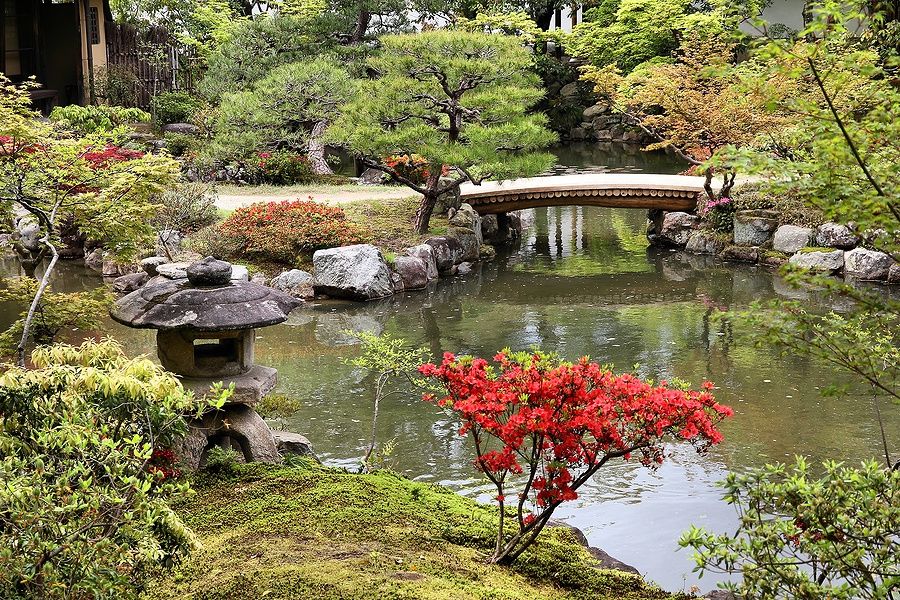
Once you’re through the main gate, you’ll feel like you’ve entered a faraway world, a magical place where time seems to stand still. Right in front of you is the garden’s central pond, with two small islands rising from the water that represent a crane and a turtle, animals that stand for long life in Japanese culture. Beside the pond stands the Sanshutei tea house. It’s the visitors’ favorite spot and turns up in a lot of their photos. Take your time walking around this beautiful setting, enjoying the view and snapping a few pictures.
Isuien is also a place where you can sit down for a meal. Sanshutei, the thatched-roof building in the front garden, serves as both a restaurant and a tea house. Almost everyone orders mugitoro, barley rice topped with grated Japanese yam, simple and delicate. If you just want a short break, you can have matcha and something sweet.
The best part is that you eat looking out at the greenery, with the pond and the stones right outside. Make time for this stop instead of rushing to the exit, because it’s one of the best moments of the visit.
From here, carry on toward the eastern part of the garden. Picture the businessmen and important guests who gathered here to read poetry or to take part in the tea ceremony at the Hyoshin-tei tea house. It was built by the famous architect Kimura Seibei, of the Urasenke school. You’ll see his skill the moment you look at the landscape around the tea house, which uses the shakkei technique, or “borrowed landscape.”
Among the things the view takes in are the roof of Todai-ji Temple’s south gate and the three hills that overlook Nara: Wakakusa, Kasuga and Mikasa. The trees of Himuro Shrine to the south and Todai-ji Temple to the north frame the whole scene. As you look, you’ll notice how everything in the garden and everything in the background blend together so smoothly that they look like a single landscape.
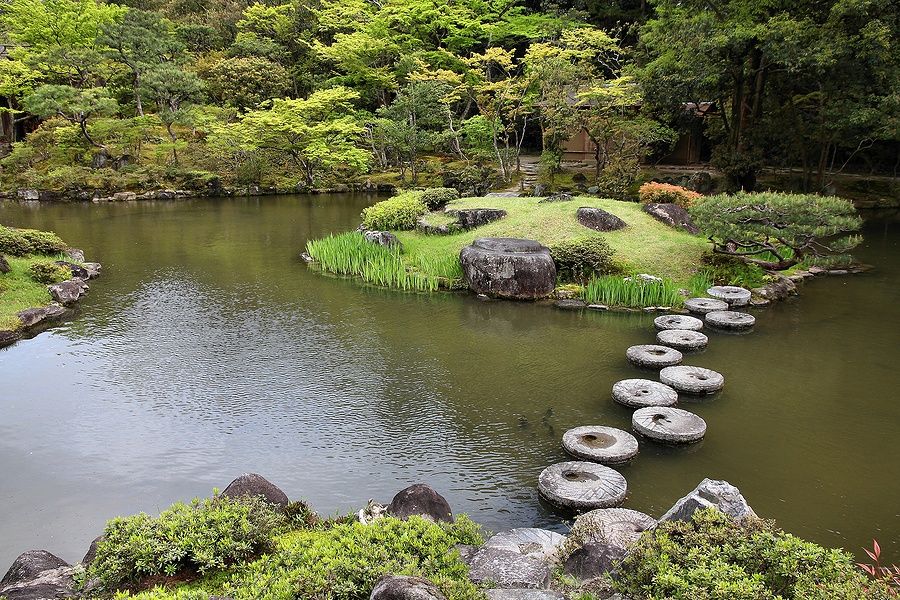
In this area you can walk beside another lovely pond, shaped like the kanji for mizu, meaning water. This one also has a small island in the middle, and you can reach it by crossing the stones that link it to the shore. As you walk through the rest of the garden, you’ll see some of the decorative stones that were widely used in the Meiji era. Look closely at the stepping stones, too: many of them are old millstones, reused to make a path across the water. It’s a detail that says a lot about the spirit of this garden, where nothing is there by chance. All around, hand-tended moss carpets the ground and stays green even when everything else changes color.
Isuien changes its look with each of the four seasons, and the season you visit shapes a lot of what you take away from it. In spring, cherry blossoms brighten the new green, and soon after them come the azaleas that color the edges of the ponds. Summer brings wisteria, irises and water lilies on the ponds, and the well-kept moss spreads like a carpet.
Autumn is the season people photograph most: the maples turn red and are reflected in the pond, while the hills in the background change color along with the garden. In winter you’re left with the camellias and a rare kind of quiet, and when it snows, the borrowed landscape becomes something you won’t forget.
Isuien Garden - nearby you will find: