Iwakuni
Iwakuni is a quiet, picturesque small town that foreign visitors often overlook, but it has some wonderful surprises for anyone who makes the trip. The cherry trees in its gardens, the elegant curves of Kintai-kyo Bridge and the sweeping views from the castle hill are just some of what it has to offer. It’s only a short ride from Hiroshima, so it works well as a day trip or a longer stay.
Contents
Kintai-kyo Bridge
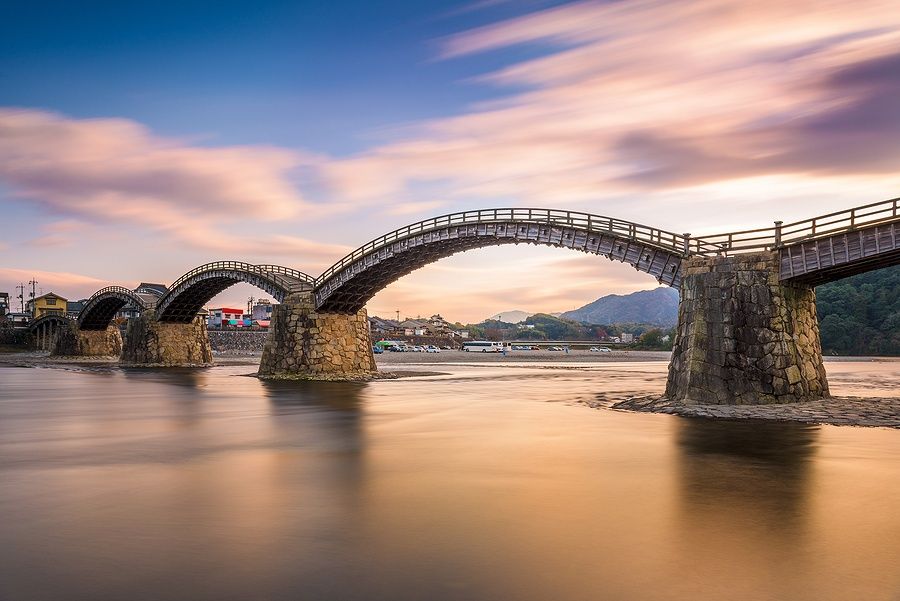
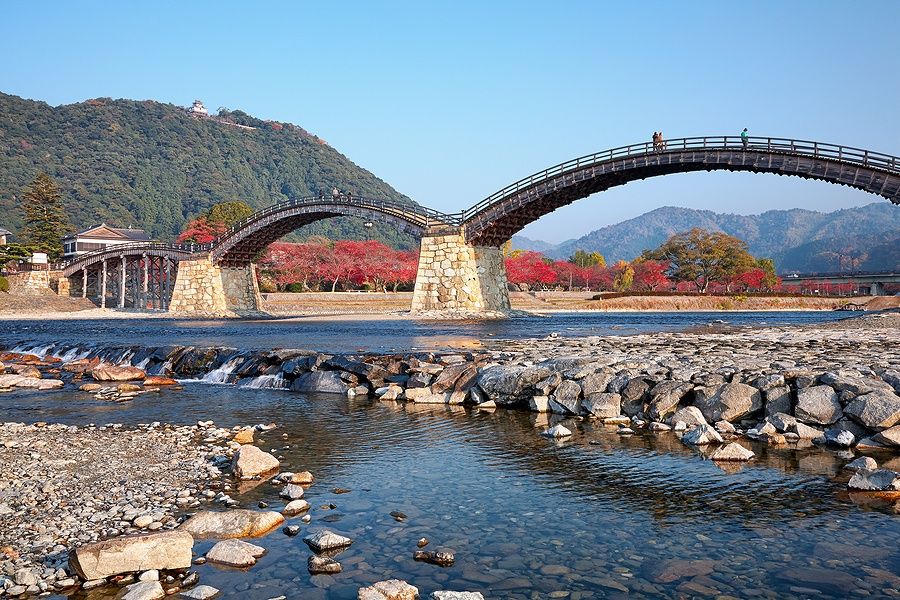
Kintai-kyo Bridge is considered an engineering masterpiece, and its refined five-arch design over the Nishiki River is truly one of a kind. It’s beautiful in every season, but it’s at its most striking in spring, when the cherry trees along the riverbanks are in bloom.
The lord of Iwakuni built the first Kintaikyo in 1673, after he got tired of watching every flood carry away his wooden bridges. The five arches stay up almost entirely thanks to the interlocking joints in the wood. Every few decades they’re taken apart and rebuilt from scratch, and the technique gets passed down from one generation to the next. In 1950 a typhoon swept the whole bridge away, so the one you walk across today is a faithful reconstruction built in the 1950s.
Views from Iwakuni Castle
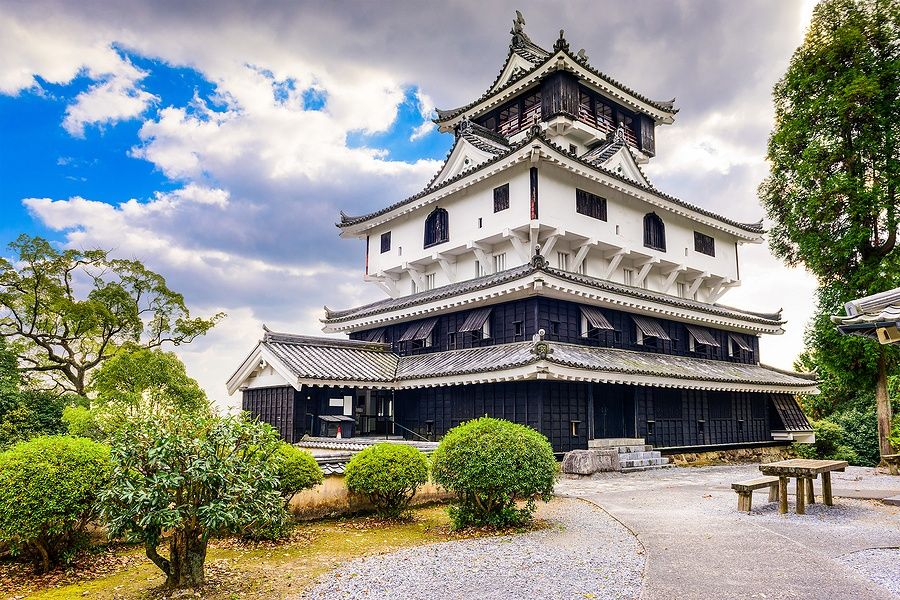
You can reach Iwakuni Castle on foot or by cable car. The castle is a reconstruction, but it’s a symbol of where the town began, and its museum has a beautiful collection of artifacts and samurai armor. From the top floor you also get wonderful views over the whole town and the countryside around it.
Cherry blossoms and history in Kikko Park
Kikko Park was once part of the residence of the town’s feudal lord, Kikkawa Hiroyoshi. In spring it gets packed, as locals and tourists come to see the cherry blossoms and have a picnic. It’s a perfect place to take a stroll or just relax, and it’s also home to several cultural and historical sites, with three museums and two former samurai residences.
One of the most interesting museums in the park is the Kashiwabara Museum, which has a large collection of swords, armor and other samurai artifacts. There’s also a big section on local art and crafts, with ceramics, glass, lacquerware and much more.
Iwakuni’s legendary white snake
Iwakuni is also known as the home of a very rare white snake called the shirohebi. It’s completely harmless and has been designated a Natural Monument of Japan. The shirohebi was once worshipped as a deity, since these snakes are said to be messengers of Benten, the goddess of wealth. If you’re curious to learn more, you can visit the White Snake Museum near Kintai-kyo Bridge.
Cormorant fishing on the Nishiki River at night
From June to early September, once it gets dark, braziers are lit on the boats on the Nishiki. This is ukai, fishing with cormorants, and in Iwakuni it’s been going on for centuries. You board a covered boat that glides under the arches of the Kintaikyo, and from your seat, just a few meters from the water, you watch the fishermen handle the birds on long ropes.
Seats on the boats are limited and you need to book, so if you’re in Iwakuni in summer, it’s worth planning your day so you can stay into the evening.
Trying Iwakunizushi
A visit to Iwakuni isn’t complete without trying the local specialties, and Iwakunizushi is a particularly famous one. It’s a type of sushi shaped into a rectangle and built up in layers like a cake. Colorful ingredients like pickled lotus root, mushrooms, egg and more go into the layers, which makes it look even more like a cake.
Iwakuni is also getting better known among ice cream fans, who can stop at the shops next to Kintai-kyo Bridge for creamy scoops made with green tea and seasonal ingredients. The two long-established shops sit side by side at the foot of the bridge. At Musashi, the name tags on the wall list over two hundred flavors, from sake to soy sauce to wasabi. Next door, Sasakiya Kojiro, the shop that started the soft-serve craze in Iwakuni, has a shorter menu and focuses on local flavors like lotus root.
Getting There
The easiest way is from Hiroshima. Local trains on the JR Sanyo Main Line get you to Iwakuni Station in just under an hour, and buses to the Kintaikyo leave from the square in front of the station. In about twenty minutes you're at the bridge.
By shinkansen you get off at Shin-Iwakuni, 15 minutes from Hiroshima, but from there the buses to the bridge only run once or twice an hour, so it's only worth it if the connection lines up.
If you fly into Iwakuni Kintaikyo Airport, a bus takes you to Iwakuni Station in about ten minutes, and there you change for the bridge.
Useful Info
- Iwakuni Station (JR Sanyo Main Line, JR Gantoku Line): buses to the Kintaikyo leave from the square out front every 10-15 minutes
- Shin-Iwakuni Station (Sanyo Shinkansen, served by Kodama and some Hikari trains): buses to the Kintaikyo, 1-2 an hour
- Iwakuni Kintaikyo Airport: bus to Iwakuni Station in about 10 minutes
Map
This place is on MarcoMaps
Iwakuni
My map of Japan: over 4,000 places I've tried myself, each with photos, rating, and hours. Filter by category and rating, find veg-friendly spots and places near you with GPS. No sign-up, right from your phone.
- 4,000+ places
- Rating, photos, and hours
- Veg friendly
- Near me (GPS)
- Favorites without login
- Works offline

