Japan Immigration Checks for Tourists
Entering Japan as a tourist is almost always quick and easy, but immigration checks can be strict.
Italy’s foreign ministry published a press release about Japan on its ViaggiareSicuri site that shows how strict the checks on arrival can be. Some Italian tourists were refused entry and sent back to Italy.
Below you’ll find what they usually check, what you should have with you and how you come across, so you don’t get any nasty surprises.
Contents
- The press release
- What they check
- Travel agencies and tour operators
- Common sense
- How you come across
- Be careful what you bring
- Being questioned
- Who might get stopped
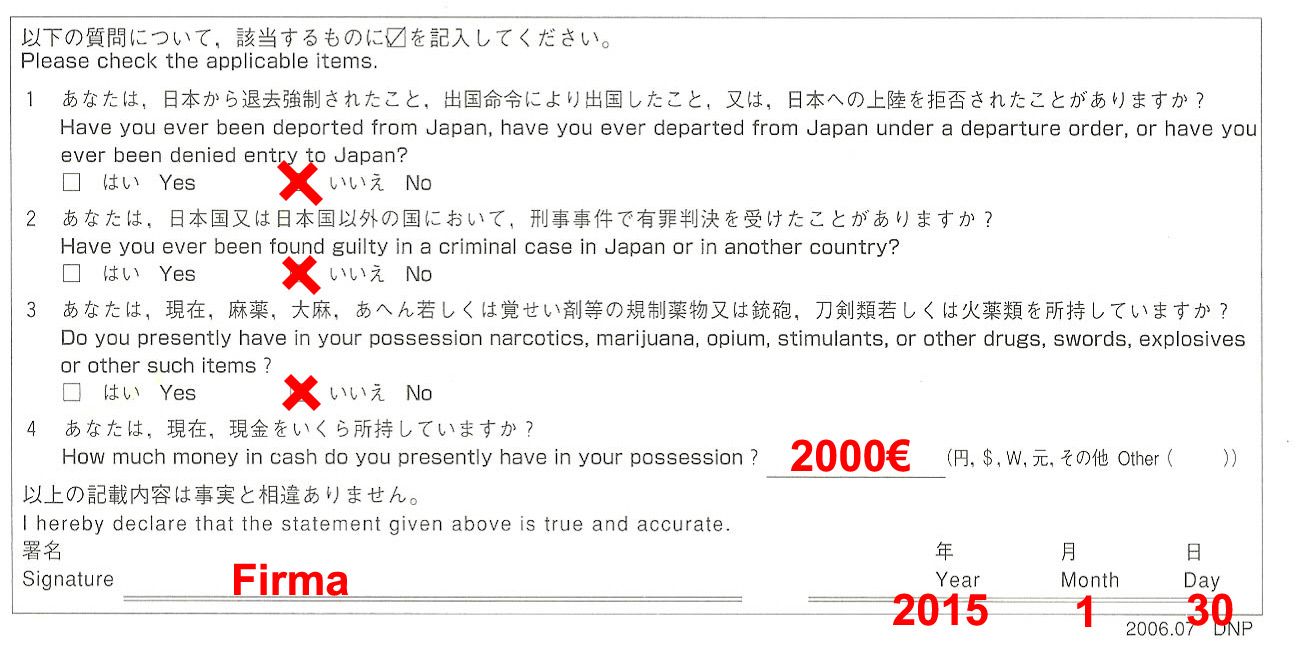
- The arrival form
- Click here to see this form in high resolution!
- Click here to see this form in high resolution!
- Video: Living in Japan: How Long Visas Last
The press release
From ViaggiareSicuri.it: Italian nationals traveling to Japan should be aware of how strictly local authorities carry out immigration checks on foreign tourists entering the country, at both major airports and seaports. This is borne out by repeated cases of Italian tourists recently stopped at the border because they couldn’t give immigration authorities precise details about where they were going and/or their hotel bookings, or couldn’t show a return ticket or enough cash for their stay (credit cards are not taken into account in these cases).
You should also know that if immigration authorities confirm the refusal of entry, the tourist has to reimburse the Japanese government in full for whatever it spends while the person is held at the border, and also pay for a new plane ticket or for changing the date on any return ticket they already have.
To avoid the risk of being refused entry and possibly deported, tourists who aren’t traveling on an organized tour or through a travel agency are advised to think carefully before going to Japan, and to go only if they can actually show everything listed above.
What they check
Checks don’t always happen, but as with any border crossing, it’s better to know what they might ask for so nothing catches you off guard.
- Where you’re going: have a rough itinerary ready. You can’t just say “Uh, I’ll see, I don’t know yet…”
- Where you’re staying: you should have a hotel booking at least for the start of the trip, and ideally for the whole trip. Plenty of people still sleep in internet cafes, but that’s not what immigration officers want to hear. Some foreigners have even been stopped from sleeping in internet cafes. These are isolated cases, but it has happened.
If you write down some random Japanese person’s address, they might contact that person to ask about you, and if you have a printed hotel booking they might call the hotel to check there’s a reservation in your name. - Why you’re in Japan: the reason should simply be “tourism.” Don’t make up anything else, like “looking for work.”
- How much money you have: as a rule, they only count cash, not credit cards. So bring some cash to be safe. From what I’ve heard, they don’t count cards anyway if you don’t know where you’re sleeping, don’t have a return ticket and so on.
- How long you’ll be in Japan: arriving without a return ticket looks suspicious. Depending on your passport, you may be able to stay in Japan for up to 90 days without a visa, but anyone who stays that long still looks “suspicious.”
- How many times you’ve been to Japan before: if you’ve been to Japan 8 times in the last 5 years for 2-3 weeks each time, that’s not a problem. But if you’ve been 3 times in the last 2 years for a total of, say, 8 months, they may think you’re coming back to work illegally.
Travel agencies and tour operators
As the press release recommends, it’s better to go to Japan through a travel agency or tour operator.
Common sense
I don’t work for Japanese immigration, but I imagine they use common sense when deciding whether to turn a tourist away. If it’s your first trip and you show up with no cash but three gold credit cards and everything else in order, they’re not going to refuse you entry for that.
What matters is following all six points above and trying not to slip up on too many of them.
How you come across
This is my opinion, based on things that actually happened to me in other countries and things I’ve seen with my own eyes: I think how you come across at Japanese immigration matters too.
Picture a man in a jacket and tie arriving in Japan with his wife, who’s also smartly dressed, and both of them answer the immigration officers’ questions politely. Now picture a 20-year-old guy in shorts with a tattoo on his leg, looking scruffy, maybe goofing around loudly with his friends and giving cocky answers.
Maybe the 20-year-old has everything in order (cash, bookings, return ticket and so on) and maybe the man in the jacket and tie has a suitcase full of drugs, but who do you think they’ll pull aside for a closer look? The cocky kid, obviously.
So whenever you arrive in any country in the world, Japan included, remember this example.
Be careful what you bring
There are very clear rules on what you can bring into Japan. For example, you can’t bring in cured meats or meat products, not even a tiny amount. Bags get searched often, so don’t try any tricks to hide things. Customs officers can open everything, and even break things open if they’re sure something is hidden inside.
If they find you with items you’re not allowed to bring, they may dig deeper, and if they then find other problems, they’d be right not to let you in.
Being questioned
It’s never happened to me, but in very rare cases immigration officers take tourists into a small room and ask them detailed questions about their trip. It can last over an hour. If that happens, stay calm and just explain everything.
Who might get stopped
1) Some people work illegally in Japan, and they’re the reason the checks are so strict. A common way to keep living and working illegally in Japan is to stay 3 months, leave the country for a few days, then come back for another 3 months. It might work once or twice, but the next time you risk being stopped.
A few years ago I stayed for 3 months, went back to Italy for 25 days and then returned to Japan. The immigration officer stopped me and asked why I was back in Japan. I explained the situation as best I could, and he didn’t make a fuss and let me in with no trouble at all. But it doesn’t go that way for everyone.
2) A while ago I got a message from a young Italian guy. He’d met a girl online, and she told him she could try to get him a visa to work at the place where she works.
He wants to fly to Japan on a tight budget with a flexible-date plane ticket (those cost a lot more than fixed-date ones). He’d spend the first few days in internet cafes to save money, then move in with the girl, ask for a job where she works and try to get the visa.
With his budget, he says he can’t wait more than a couple of weeks to land the job. It could work, provided he’s met a girl with a heart of gold who works for a fantastic owner who happens to need a flawless, low-paid Italian waiter. Unfortunately, I think there are too many things that could go wrong, and Japanese immigration doesn’t expect to see people arriving who haven’t figured out where they’re going, how long they’re staying, what they’ll do and so on.
3) I read about someone who wanted to bring several kilos of cured meats into Japan hidden in their suitcase. Since it’s prohibited, my personal opinion is that if you’re caught smuggling something like that, there’s a good chance they’ll search you thoroughly and send you home.
4) If someone goes to work or study in Japan for, say, 9 months, they can’t arrive, stay 3 months as a tourist, leave Japan (going to Korea) and then come back expecting another 3 months. Lots of people use this trick, and sometimes it works the first time without anyone saying anything, but it doesn’t always work.
The arrival form
I’ve already covered the form you fill out when you arrive in Japan in detail in the Japan visa section.
On the front you fill in your personal details, and on the back there are three questions: the first asks whether you’ve ever been deported from Japan or refused entry, the second whether you’ve ever been convicted of a crime in Japan or another country, and the third whether you’re carrying drugs. Ideally, of course, you’d answer NO to all three. If you’d rather, you can enter the same information before you leave on Visit Japan Web, the Japanese government’s official website. The questions are the same, and when you arrive you show a QR code instead of the paper form.
Answer them just as honestly, because they count just as much as handwritten ones.
The customs declaration then asks whether you’re carrying more than 1,000,000 yen in cash. There’s no import limit on currency: above that amount you simply have to declare the cash to customs, or it could be seized.
I doubt many tourists arrive in Japan with that much cash, but be careful to check the right box and avoid silly mistakes.
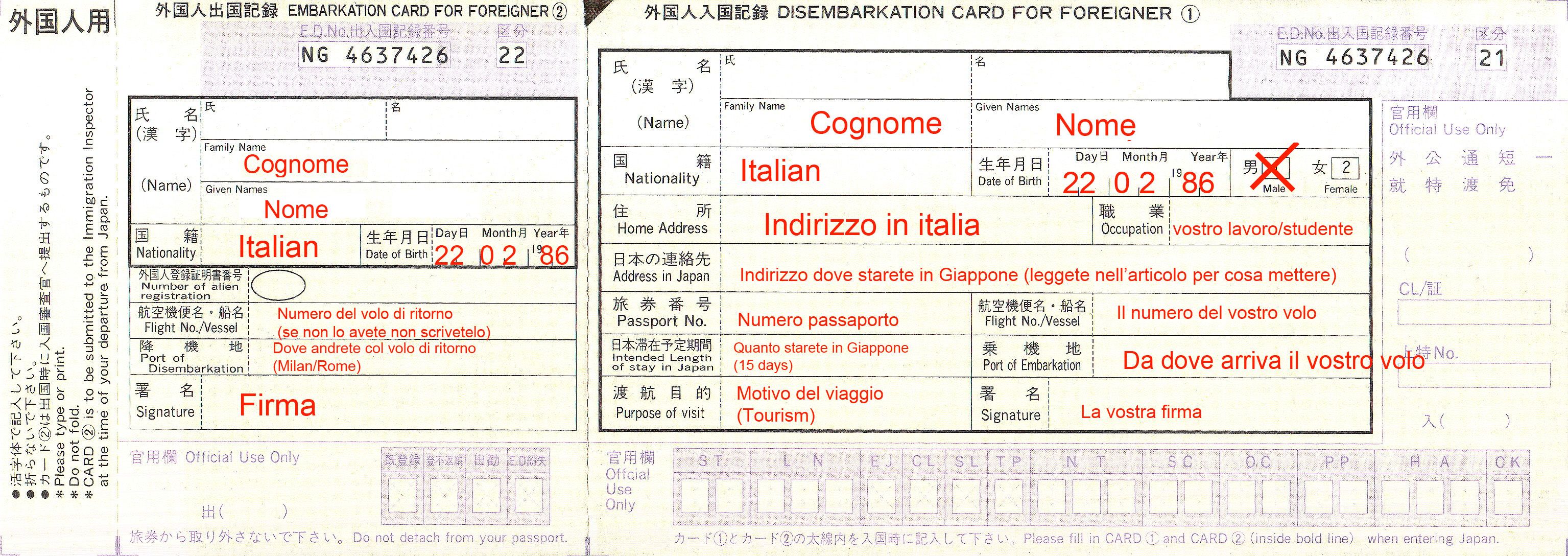
Click here to see this form in high resolution!