Japan and Thailand Trip
Combining Japan and Thailand in a single trip is the kind of experience that stays with you for years. They’re two completely different countries. Thailand is spiritual and chaotic, while Japan is disciplined and surreal. That contrast is exactly why the pairing works: one warms your heart, the other opens your mind.
The trip doesn’t even need to be very long. A few days in Bangkok before heading on to Japan is enough for an incredible trip, and if you have more time you can add Thailand’s beaches.
Below I’ll walk you through how to structure the itinerary, where to start, what to see and how much to spend.
Contents
- Why combine Thailand and Japan
- How many days you need
- When to go
- Where to start: Thailand or Japan?
- Starting in Thailand
- Starting in Japan
- Bangkok in 3 days
- Adding Thailand's beaches
- Flying between Thailand and Japan
- Japan itinerary after Thailand
- Tokyo
- Kyoto
- Osaka and Nara
- Beach before or after Japan?
- Cultural differences between Thailand and Japan
- How much a Japan and Thailand trip costs
- The most well-rounded trip in Asia
Why combine Thailand and Japan
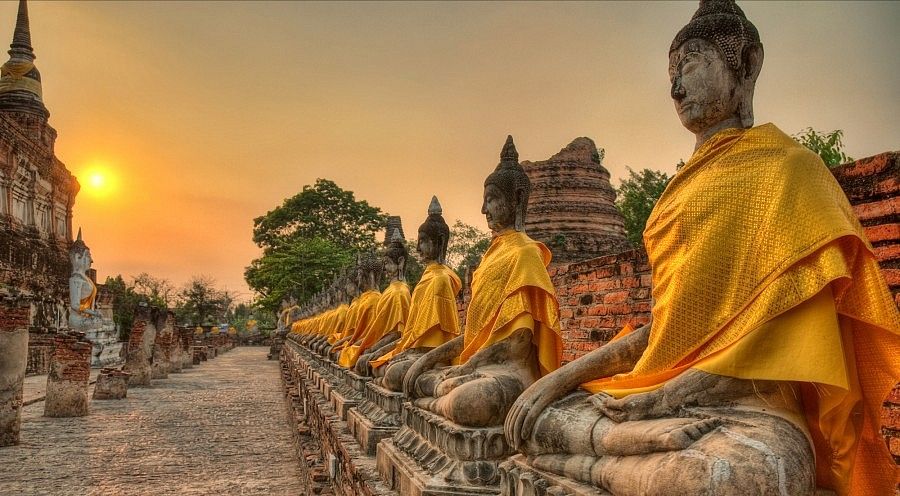
Going from one to the other feels like switching worlds in a few hours, and the contrast works really well. After Bangkok’s urban jungle, landing in Tokyo with its quiet subway and on-time trains feels almost like a scene from a movie. It works the other way around too: after days in Kyoto among Zen temples, an evening in Chiang Mai full of lanterns and scooters hits all your senses at once.
How many days you need
- With 10–12 days, you can do Bangkok and Tokyo-Kyoto, sticking to the main cities.
- With 14–16 days, you can fit in 3 stops in Japan and add some beach time in Thailand.
- With 18–20 days, you can add Ayutthaya, Chiang Mai, and islands like Koh Samui or Phuket, or spend longer in Japan.
My advice is don’t cram in too many stops. Focus on a few cities and really take your time with them. Even just Bangkok + Tokyo + Kyoto is an itinerary that works great.
When to go
Timing matters a lot, because the two countries have very different climates and you need to find a period that suits both. In Thailand the dry season runs roughly from November to April, while May to October is monsoon season, especially on the Andaman Sea coast (Phuket, Krabi, Koh Lanta). Koh Samui is the exception: there, the rainiest stretch is usually between October and December.
In Japan the best seasons are spring and fall. Summer is extremely hot and humid, and between August and September there’s a risk of typhoons.
If I had to pick, I’d say November and March. In Japan you’ll catch the fall colors or the start of cherry blossom season, and in Thailand it’s already good beach weather. Winter works too, with Japan cold but clear and Thailand perfect for ending the trip somewhere warm.
Where to start: Thailand or Japan?
A lot of people wonder about this, and there’s no single answer. Here are a few things to think about.
Starting in Thailand
Many people prefer to start in Bangkok because:
- It eases you in more gently: you dive straight into the urban jungle, the markets and the temples
- The atmosphere is more relaxed, so you can take the first few days more slowly
Then, once you’ve settled in, you fly to Japan for the more organized, intense part of the trip.
Starting in Japan
If you start in Japan instead:
- The trip kicks off at a fast pace, with lots of trains and lots to see
- You can unwind at the end in Thailand, maybe on the islands or with massages in Chiang Mai
- It’s great if you want to end the trip with the beach and cocktails at sunset
Personally, I recommend this second option, because Japan takes more energy. After all that moving around, relaxing in Thailand is the perfect way to wrap up.
Bangkok in 3 days
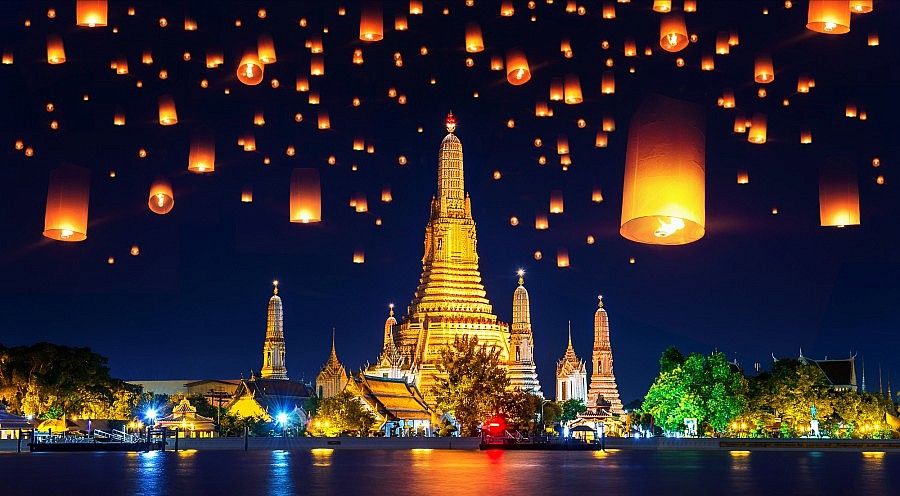
- Visiting Wat Arun and Wat Pho, the city’s two best-known temples
- Spending an evening at the Ratchada night market and, if it’s the weekend, browsing Chatuchak market during the day
- Taking a boat ride on the Chao Phraya River
- Exploring Chinatown and trying some wild street food
Then unwind with a Thai massage, have a drink at one of the city’s most spectacular rooftop bars and watch the sun go down over a city that never stops.
Even just 48 hours in Bangkok, if you make the most of them, give you a concentrated dose of Asia you’ll never forget.
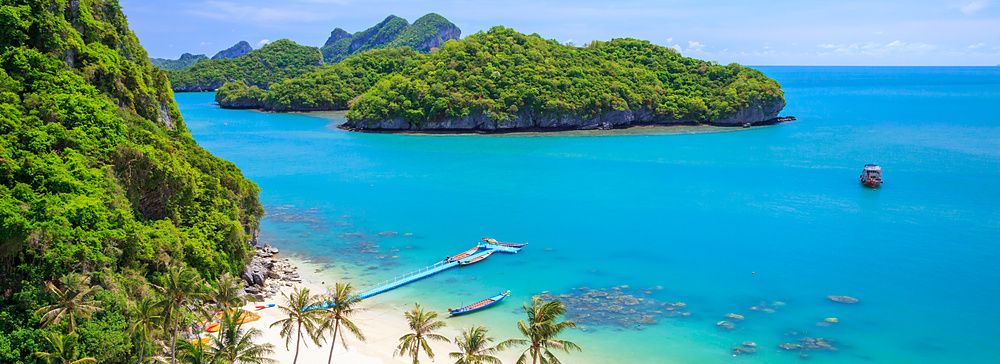
Adding Thailand’s beaches
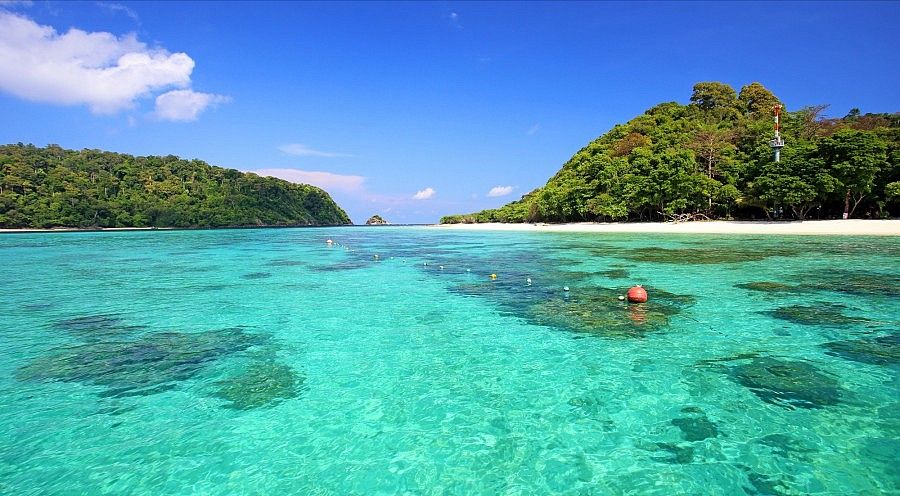
- Phuket, if you want resorts, comfort and frequent flights
- Koh Samui, for a more laid-back vibe
- Krabi, for spectacular scenery and postcard-perfect sunsets
- Koh Lanta, if you’re looking for peace and a place that still feels genuine
There are direct flights from Bangkok to all of them. Adding 3–4 days is all it takes, and the whole trip changes tone. You get a few days of pure peace, perfect if you’re coming from Tokyo after days of trains and walking.
Flying between Thailand and Japan
The two countries are very well connected. The main routes are:
- Bangkok – Tokyo (Haneda or Narita)
- Bangkok – Osaka
- Bangkok – Fukuoka (if you want to start in southern Japan)
- Phuket – Tokyo (at certain times of year)
The best airlines on this route are Thai Airways, ANA, JAL, AirAsia X and VietJet. For comfort, go with ANA or JAL. If you want to save money, AirAsia or Zipair are great too.
Japan itinerary after Thailand
Arriving in Japan after Thailand is like going from an old film reel to 4K. Everything changes: the sounds, the pace, the people. Even the air seems quieter. If you have 7 to 10 days for Japan, I recommend a compact but well-rounded itinerary, similar to the ones in my articles “14 Days in Japan” or “Japan Spettacularis”, just shortened.
Tokyo
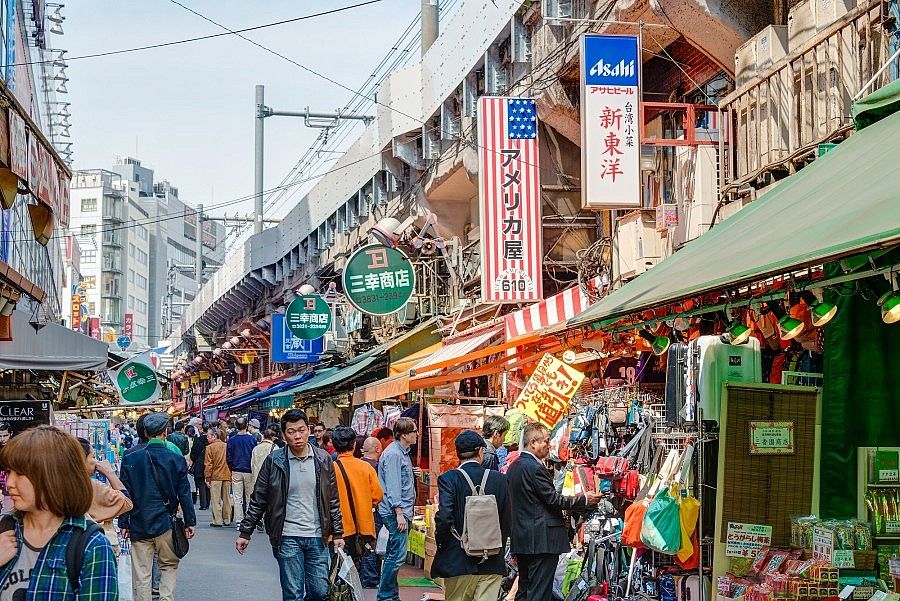
- Day 1: Asakusa, Ueno Park, Ginza
- Day 2: Odaiba, Shiodome, Shinjuku
- Day 3: Akihabara, Harajuku, Shibuya
- Day 4: optional, for Kamakura, Yokohama or less touristy neighborhoods
Tokyo is a city you don’t get right away. It reveals itself slowly over time, with multistory arcades, temples squeezed between buildings and stations that feel like airports.
Kyoto
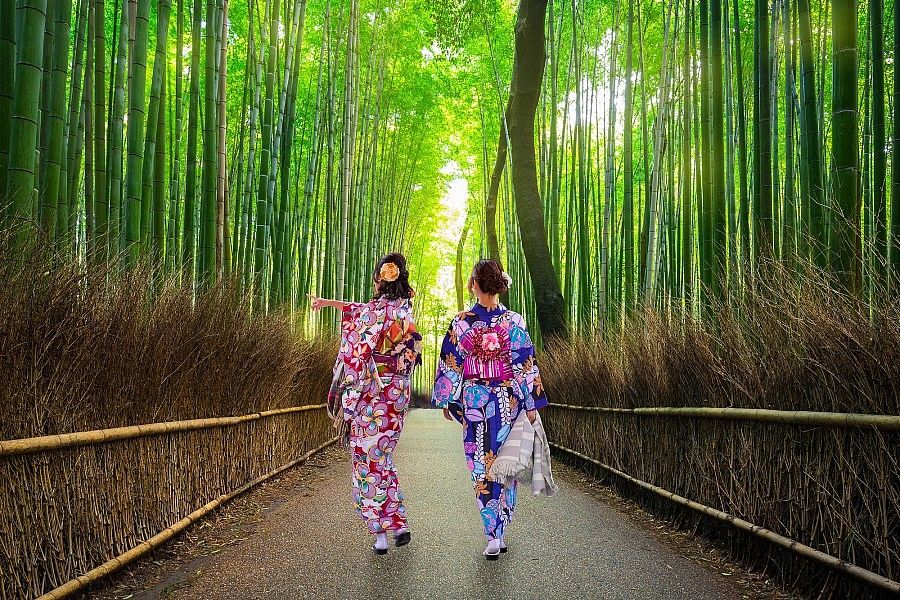
From Tokyo, take the shinkansen to Kyoto, the city of temples, shrines and silence. I’d stay at least two nights, or three if you can. The places not to miss:
- Fushimi Inari Taisha at dawn
- Kinkaku-ji (the Golden Pavilion)
- The historic Gion district
- An evening walk along the Kamo River
Kyoto is an experience for all the senses: tatami, yukata, incense and slowly falling leaves.
Osaka and Nara
From Kyoto you can take a day trip to Nara and then spend the evening in Osaka. Everything is very close together, so you can:
- See Nara’s Great Buddha and its free-roaming deer
- Eat takoyaki and kushikatsu in Dotonbori
- Feel the contrast between Kyoto’s refinement and Osaka’s easygoing energy
If you start in Tokyo and leave from Osaka (or the other way around), you can plan a more efficient route and save time.
Beach before or after Japan?
Then there’s the question of whether it’s better to hit the beach before or after Japan.
My answer is clear: after. As beautiful as Japan is, a trip there takes a lot of energy. You walk a lot, you move around often, and every day is packed. If you end with 3–4 days on a Thai island, you’ll actually get some rest.
The only reason to flip it and go beach → Japan → home is if you’re coming off a stressful period or want a gentler start.
Cultural differences between Thailand and Japan
At first glance they might both look like “Asian, spiritual” countries, but they couldn’t be more different.
In Thailand everything is open, informal and direct. People smile a lot, chat easily with anyone, eat on the street and go with the flow. There’s respect, but it’s a softer kind, shown through more instinctive gestures.
In Japan, every gesture has a set way of being done, an unwritten rule, a code of etiquette. Respect is silent. You show it through body language, through pauses, through what you hold back.
Both countries are safe, welcoming and full of beauty, but in completely different ways. And it’s exactly this back-and-forth between chaos and silence, incense and neon, tuk tuks and shinkansen that makes this trip so fascinating.
How much a Japan and Thailand trip costs
Here’s a realistic idea of the costs, which of course vary depending on how you like to travel:
- Flight Bangkok – Tokyo/Osaka: €100–250
- Hotels in Thailand: €30–50 a night for something good
- Hotels in Japan: €50–80 a night on average
- Getting around: cheap in Thailand, more expensive in Japan (for a Tokyo-Kyoto-Osaka route, individual shinkansen tickets usually work out better than the Japan Rail Pass)
- Food: €5–10 in Thailand, €10–15 in Japan
With 15–16 days, you can travel well on €2,000–2,500 per person without giving up too much comfort or too many experiences, but the total depends a lot on which country you’re flying from.
The most well-rounded trip in Asia
If there’s one trip I recommend to anyone who wants to experience the real Asia, it’s this one: Thailand and Japan together. It’s not just a change of destination. It’s a whole different world, with a different pace and different sounds. It’s the perfect back-and-forth between spirituality and technology, chaos and order, eating with your hands and handling chopsticks as if it were a ritual.
And even if you’re short on time, Bangkok followed by Tokyo is already a combination that will change the way you see things.
If you want a starting point for the Japan part of the trip, take a look at my itineraries “14 Days in Japan” and “Japan Spettacularis”. They work just as well when shortened, adapted or tailored to your trip.