Japanese Convenience Stores
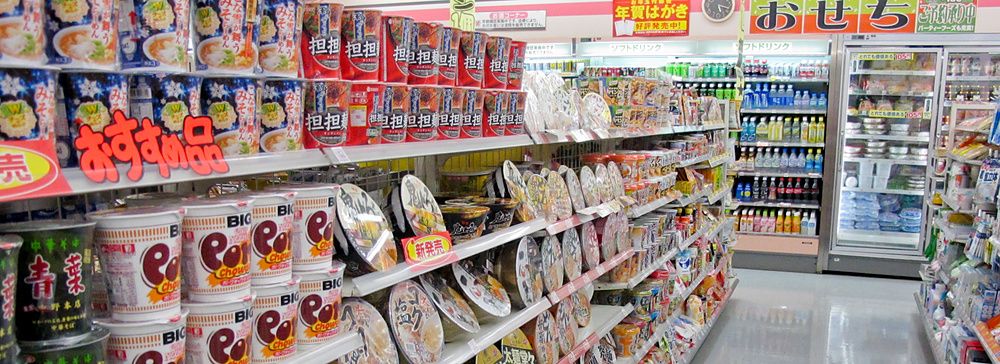
Walking into a convenience store in Japan is one of those things that make you fall for the country on the spot. In a few square meters you’ll find quirky snacks, every drink you can think of, ready-to-eat meals, sweets and a thousand small details that tell you more about everyday life here than plenty of guidebooks.
Conbini are small shops that are almost always open, but above all they make a handy pit stop when you travel. They’re perfect for a quick breakfast or a makeshift dinner in your hotel room, less so as a substitute for home cooking. On vacation they work beautifully, and in my opinion the best way to enjoy them is as a pit stop, not your default.
Contents
- What they are
- The main chains
- Conbini in everyday life
- Not a supermarket
- Ready-to-eat food
- Eating in the store
- Quick breakfasts
- Coffee and fried chicken
- Beer and alcohol
- 7-Eleven bakery corners
- Daily Yamazaki
- Is conbini food healthy?
- Useful services
- Using conbini when you travel
- Making the most of them
- Final thoughts
What they are
Conbini are neighborhood mini-marts that carry a bit of everything: ready-to-eat food, drinks, sweets, toiletries, magazines, batteries and umbrellas, and they also offer bill payment services. The idea is simple. You get everything you need right now without a trip to a big supermarket. You’ll usually find them on street corners, near stations, on the ground floor of office buildings and in residential neighborhoods.

Compared with the mini-marts some people are used to in other countries, Japanese conbini stand out right away for how tidy, clean and well organized they are. The shelves are usually immaculate, the staff greet you, and every inch of space is put to use. These aren’t shops for tourists. They’re a completely ordinary part of daily life, and to me that’s exactly what makes them so interesting to shop at.
The main chains
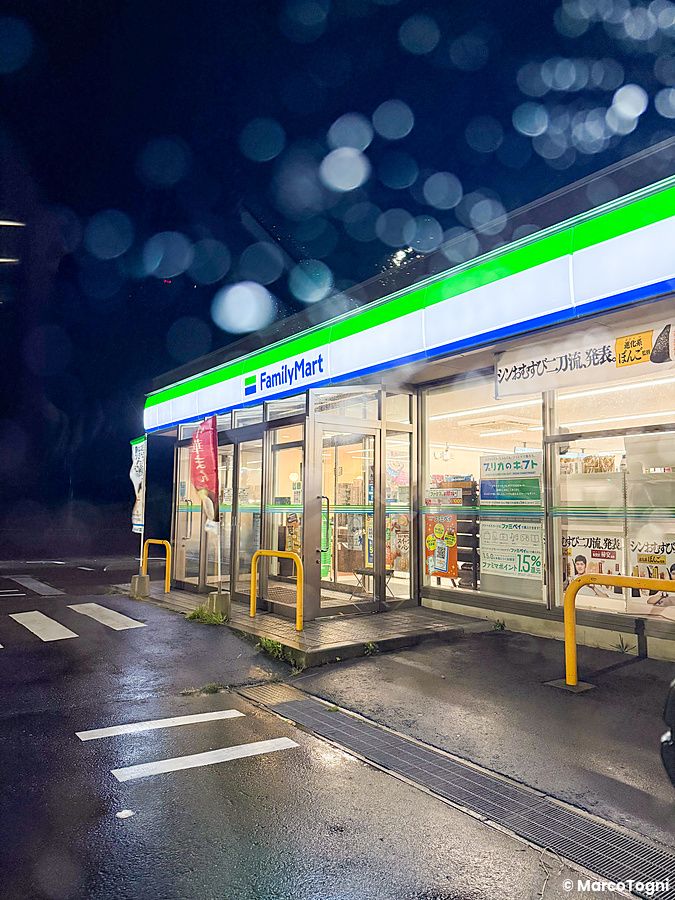
The signs you’ll see everywhere basically belong to three big chains: 7-Eleven, FamilyMart and Lawson. They’re pretty similar, but each one has its signature products and its fans. Some people only go to 7-Eleven for the onigiri, some hunt down Lawson’s desserts, and others end up at FamilyMart mostly out of habit.
Then there are the less common chains, which are fun to try. Ministop often has a corner where you can sit and is big on soft-serve ice cream, Daily Yamazaki is all about bread, and in Hokkaido there’s Seicomart, a local chain with hot dishes made in the store. I think it’s worth mixing it up instead of always going to the same one: switching chains is the easiest way to see how different they are once you look past the surface.
Conbini in everyday life
People who live in Japan use conbini as pit stops throughout the day: a quick snack, a hot drink in winter, a fast lunch to take back to the office, a bottle of water before getting on the train. I think of them as a sort of extension of the fridge. You don’t have everything, but there’s always something ready when you need it.
At the same time, they’re not meant to be your kitchen for three meals a day, every day, for months. I’ll be honest with you: some things are good, convenient and even better than you’d expect from a shop like this, but home-cooked food with fresh ingredients is a different story. Conbini meals often contain preservatives, sugar, fat and ingredients chosen more for shelf life and convenience than for health.
For a traveler, things are different. If you’re in Japan for two weeks or a month, eating conbini food often is perfectly acceptable, as long as you pay a little attention to what you pick. I usually suggest using them for breakfast, snacks and the odd quick dinner when you’re too tired to go out to a restaurant, and mixing in meals at izakaya, ramen shops, sushi places and so on. That way you get the convenience without turning the conbini shelves into your everyday menu.
Not a supermarket
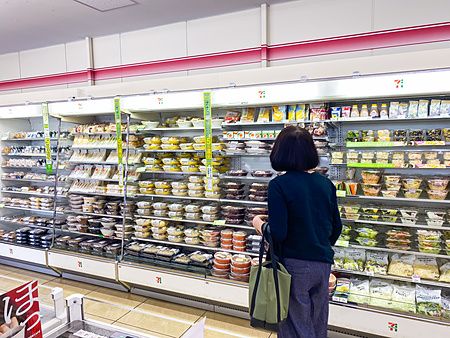
Something many travelers don’t get at first is that conbini aren’t supermarkets. The main difference is the kind of shopping you do there. You go to a supermarket to stock your pantry, and to a conbini to grab what you need right now or very soon.
You can see this in what’s on the shelves. At a conbini you’ll find:
- single portions or small packs
- ready-to-eat meals, prepackaged onigiri, salads, snacks
- cold and hot drinks, often in small bottles or cans
- a few basics (milk, bread, eggs), but not much choice when it comes to pantry staples
What’s missing is the whole range of fresh food in large quantities: a wide selection of fruit and vegetables, cuts of meat, raw fish, entire shelves of detergents and household products. A conbini is for today or tomorrow, not for filling your kitchen for weeks.
The way I see it, if you want to do real everyday grocery shopping, look for a proper supermarket or a neighborhood store. If you need something quick, practical and ready to eat (or nearly), the conbini is perfect. Let’s be honest: using it as your main supermarket is convenient, but over time it can mean a lot of packaged food and very little real cooking.
Ready-to-eat food
The heart of the conbini is the ready-to-eat food section, and this is where the temptation starts. The fridges are full of ready-made bento with rice, meat, fish or vegetables, onigiri with all kinds of fillings, salads, Japanese-style pasta dishes, instant soups and desserts. Every chain has its own recipes, but the idea is always the same: grab, pay, heat, eat.
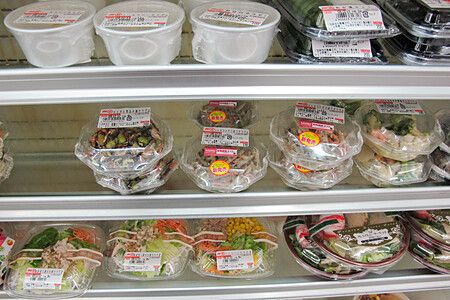
If you want to eat a bit lighter, there are prewashed salads, packaged cooked vegetables, tofu and small portions of typical Japanese side dishes. It’s no organic paradise, but you can find some balance. A plain onigiri, some vegetables, maybe a yogurt or a packaged piece of fruit, and you’ve got a decent meal without completely wrecking your diet.
I usually tell people not to go for the heavier dishes too often, the saucy and deep-fried ones. They’re tasty, sure, but if they become an every-night habit, your stomach will let you know before long. As with everything, the key is to use a little common sense.
Eating in the store
Once you’ve bought all this, you need somewhere to eat it. Many conbini have a corner with a few stools and a counter facing the window, the so-called eat-in area, where you can sit down with your freshly heated bento. Not all of them have one, though. Smaller stores in the city simply don’t have the space, and then you make do with a bench or your room.
The other lifesaver is the trash cans. You’ll hardly ever find one on the street in Japan, but at the conbini entrance or near the register there are almost always separate bins for each type of trash. The unwritten rule is that they’re for the packaging from what you bought in that store, not for the bags you’ve been carrying around for half the day. If you bought something and ate it there, that’s fine.
Quick breakfasts
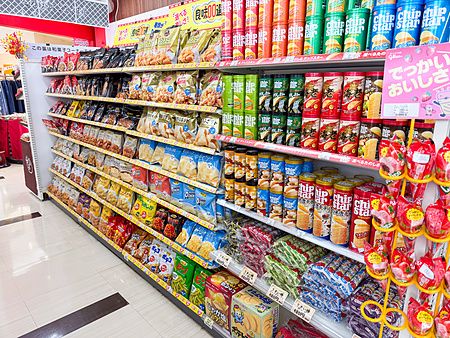
For breakfast the conbini is a gold mine, especially if you’re short on time in the morning or breakfast isn’t included at your hotel (or doesn’t appeal to you). You’ll find packaged pastries, Japanese-style sweets, yogurt, flavored milk, fruit juice, ready-to-drink iced coffee, simple sandwiches and lots of savory things that are perfect for starting the day a little differently than usual.

Honestly, I find it the ideal solution when you have a packed schedule. Instead of wasting an hour at a café, you pick everything up at the conbini, eat at your own pace wherever you like and get going. It’s obviously not the dream breakfast you’d get at a ryokan, but as a quick, practical breakfast when you’re traveling it works well, and it lets you try a bunch of odd products you won’t see anywhere else.
Coffee and fried chicken
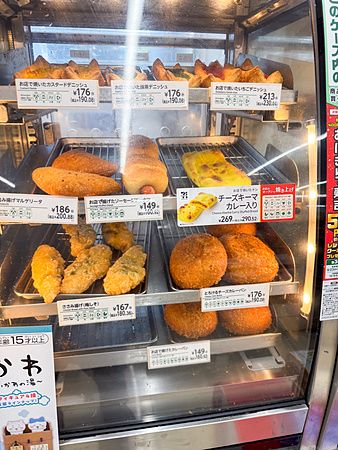
Where conbini really go head to head is coffee and fried chicken. It sounds like an odd pairing, but anyone who lives here knows it’s a hot topic: 7-Eleven and FamilyMart in particular are locked in a battle over who has the best coffee and the tastiest fried chicken.
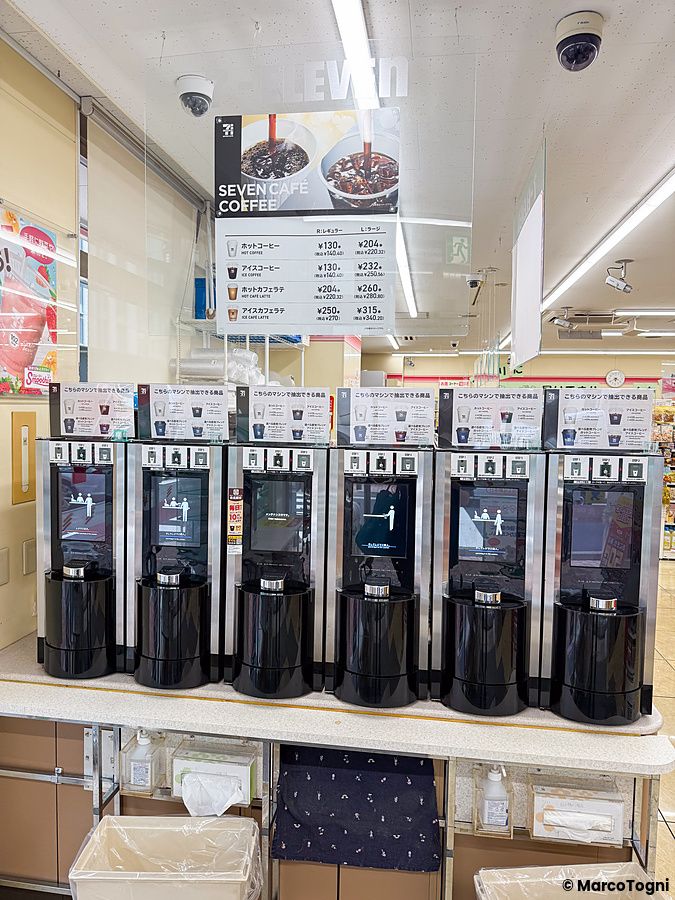
The coffee works in a similar way. You pay at the register, they hand you a cup, and you go to the machine and choose your drink. For a quick, cheap coffee it’s surprisingly decent. There are hot and iced versions, lattes, cappuccinos and so on. I’d say try the coffee at 7-Eleven and FamilyMart, maybe on different days, and stick with the one you like best. On a trip it almost becomes a morning ritual.
I’ll be honest with you: don’t expect a perfect espresso, but for value and convenience they’re hard to beat when you’re out all day.
Beer and alcohol
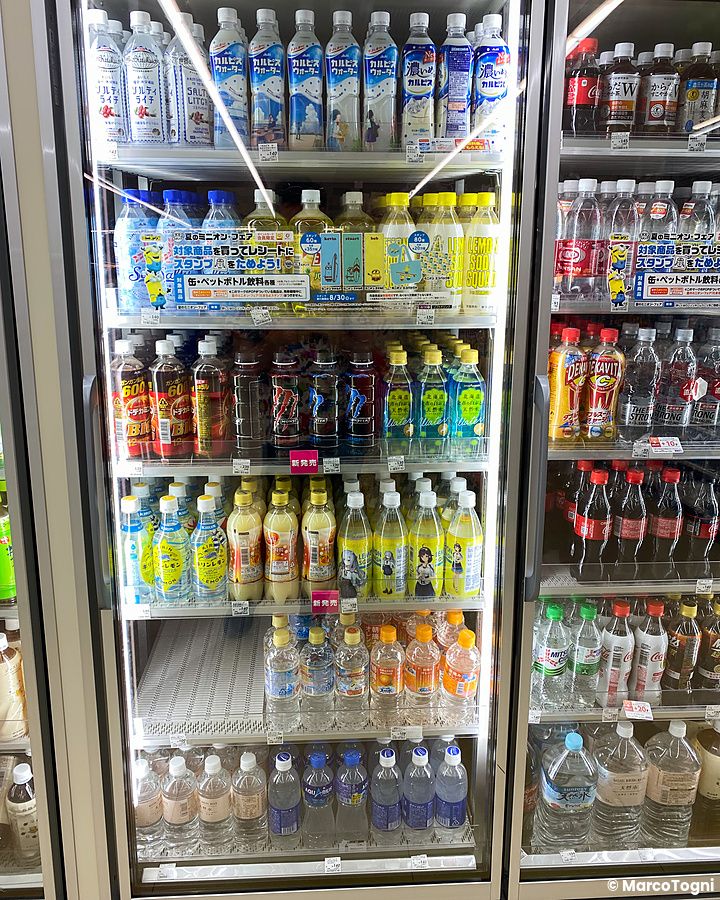
Japanese conbini almost always have an entire fridge of alcohol, with canned beer, fruit chuhai, small bottles of sake, whisky and a few bottles of wine. You can buy it at any hour, and it costs much less than at a restaurant.
At the register, the screen will ask you to confirm your age. You just tap the button, and usually nobody asks for ID. Drinking outdoors is allowed in Japan, so a can from the conbini often ends up in the hands of people leaving the office or spending an afternoon in the park during hanami. Be careful in some city centers, though, where local rules ban drinking on the street in the evening. When in doubt, you’re better off drinking in your room.
7-Eleven bakery corners
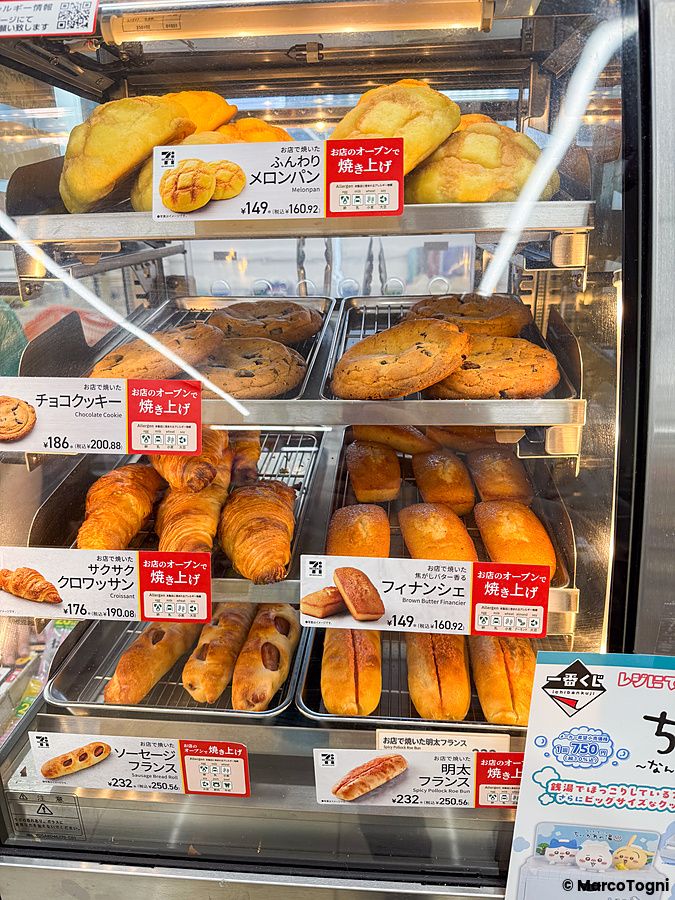
In some areas, 7-Eleven goes a step further and turns into something close to a small bakery. I don’t just mean the usual packaged stuff. I mean bread and pastries baked on site, and the smell of fresh baking hits you as soon as you walk in.
You might find soft chocolate cookies, croissants, melonpan, sweet and savory buns and other things made right there, and the quality is surprisingly good. I wouldn’t compare it to a big artisan bakery, but for a conbini the quality is really high. If you come across a 7-Eleven with a bakery corner, I think it’s worth stopping and grabbing at least one pastry to try.
Fresh baking makes the conbini a lot more interesting for breakfast or an afternoon snack. If you’re staying in the same area for a few days and find a 7-Eleven with a good bakery, you’ll end up going back often. That’s exactly why I like it: it combines the convenience of a conbini with something that feels a bit like a neighborhood bakery.
Daily Yamazaki
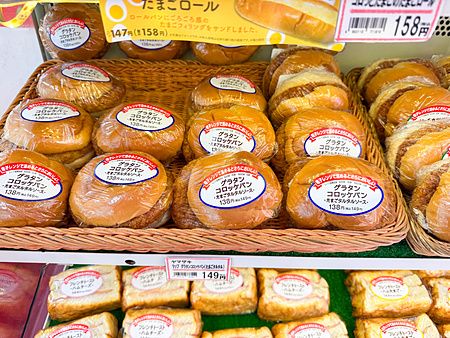
You can’t talk about bread and sandwiches without mentioning Daily Yamazaki. The chain is a bit less well known among first-time visitors to Japan, but it has a clear focus on bread, sweets and baked goods, often with buns and pastries that are a lot like the ones in traditional Japanese bakeries.
One of the most typical sights at Daily Yamazaki is the row of plastic-wrapped sandwiches lined up on the shelves. They’re soft sandwiches with all kinds of fillings, from egg and potato salad to tuna and quirkier local-style options. You’d know them anywhere: neatly arranged, each one in its own clear wrapper.
If the idea of a bakery-conbini appeals to you, Daily Yamazaki is the one to keep an eye out for. It isn’t everywhere the way 7-Eleven or FamilyMart are, but when you do find one, it can be a great option for a different kind of breakfast or a quick lunch, especially if you like soft Japanese-style buns and pastries.
Is conbini food healthy?
Then there’s the tricky question of how “healthy” it is to eat conbini food often. The short answer is that it depends on what you buy and how much you rely on them. On a trip it’s normal to indulge a little, but if you start relying on conbini for every meal for weeks, sooner or later your body will feel it.
Many products are heavily processed, with sugar, fat and preservatives meant to make the food last and keep its flavor even after hours in the fridge. It isn’t “junk food” in the most extreme sense, since you can also find fairly balanced dishes, but it’s not home cooking made with fresh ingredients either.
I usually suggest a simple approach:
- use conbini for breakfasts and snacks
- pick simpler options: onigiri with basic fillings, salads, vegetable dishes
- mix in meals at restaurants, izakaya and ramen-ya, so you also get food cooked to order
If you live in Japan, I think it really makes sense to treat conbini as a backup or emergency option, not as the place you get every meal, every day. There’s nothing wrong with picking up a ready-made bento now and then because you’re tired, but making it the rule means giving up the variety of home cooking and all the little neighborhood restaurants that deserve far more of your time.
If you’re traveling for a few days or a few weeks, though, I wouldn’t worry too much. Just don’t let “trying something out of curiosity” turn into a habit, and you’ll be fine.
Useful services
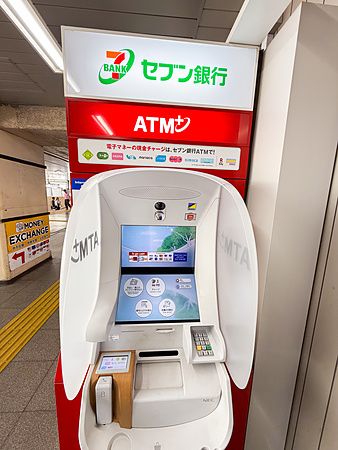
- ATMs that work with international cards
- machines for printing documents and photos and making copies
- ways to pay bills and local taxes (handy if you live here)
- the option to ship packages or pick up deliveries
- tickets for events, concerts and long-distance travel (depending on the conbini)
For travelers, the most useful part is usually the ATM that takes foreign cards, along with printing e-tickets, reloading prepaid cards and the like. At some point you might need a paper copy of a booking or a document, and suddenly the conbini becomes your makeshift office.
Conbini also carry emergency items like umbrellas, phone chargers, socks, small toiletries, tissues and face masks. Nothing fancy, but exactly the kind of thing you need when something goes wrong and you don’t feel like hunting for a specialty shop. Travelers are also relieved to find that many conbini have a restroom, usually at the back of the store and free to use. At most you might let the staff know you’re using it, and it’s almost always as clean as the rest of the store. It’s not a hard rule, because in some small stores or in very central areas the restroom is closed to the public, but along with stations and department stores, conbini are one of the most reliable options when you’re out all day. One small courtesy that people here really notice: if you use the restroom, buy something.
Using conbini when you travel
When you’re traveling, conbini are a kind of pit stop that’s always open. I often suggest using them:
- to stock up on drinks before heading out
- to buy snacks to keep in your backpack, especially if you have kids
- for a quick dinner when you get back to the hotel late and have no energy left
- to fill the gaps between meals with quirky snacks you wouldn’t find anywhere else
Conbini often have seasonal products and limited editions, so going back again and again doesn’t get boring: snack flavors, unusual drinks and themed sweets keep changing. If you enjoy exploring Japan’s pop side, just look at the shelves and you’ll see how much creativity and variety goes into even the snack aisle.
I swear that after a few days, walking into a new conbini turns into a game: looking for a different sweet, an iced tea flavor you’ve never seen, a weird ice cream. It’s an easy way to add small moments of discovery to your day without spending much.
Making the most of them
Using conbini well means finding a balance between convenience and curiosity, without going too far either way. My advice:
- try them right away, as soon as you arrive, to see what they offer
- decide what you’ll always get there, for example breakfast, snacks and drinks
- have your main meals at restaurants, izakaya, ramen-ya and sushi-ya when you can
- use conbini as a plan B when something goes wrong or plans change
Keep in mind that they’re no substitute for a supermarket. If you’re staying in an apartment with a kitchen and actually want to cook, you’re better off finding a large supermarket, maybe a little outside the most central area. The conbini is still your go-to for the moments between stops.
Let’s be honest: part of the appeal of a trip to Japan is getting lost in these details of everyday life too. Conbini are part of that picture, but they aren’t the answer to everything. Use them for what they do best: giving you something tasty and convenient, right away, at any hour.
Final thoughts
Conbini are one of the easiest ways to get a feel for everyday life in Japan, see what people buy, discover new flavors and make life on the road much easier.
I honestly can’t imagine staying in Japan anymore without knowing there’s a conbini close by. At the same time, I always try to remember that real food that someone took their time cooking is something else and deserves its own place. For people who live here, I think the rule is clear: conbini are convenient, but they can’t replace a home kitchen forever. For travelers, on the other hand, they’re a real ally. Use them freely, just with a bit of common sense.
For me, the perfect conbini moment goes like this: getting back to the hotel after a packed day, stopping at the conbini around the corner, grabbing some fried chicken that’s still hot, some quirky dessert, maybe a coffee or an unusual drink, and eating while looking out the window at the city lights. It’s not fine dining, but it’s one of those small moments that become part of how you remember Japan. And to me, that’s exactly when conbini are at their best.