Japanese Instant Noodles
Instant noodles are one of the most fun things to discover in Japan, and I mean that. Here they’re not sad broke-student food. They’re a whole world, with hundreds of flavors, limited editions, collaborations with famous ramen shops and even two museums devoted entirely to them.
Faced with all the cup noodles, packet ramen, yakisoba and cup udon on a Japanese supermarket shelf, anyone can feel overwhelmed. You only need to know a few things to find your way around: the companies that make them, the classic flavors to start with, and the two museums where you can make your own custom cup.
Contents
Where it all began
Instant noodles were born in 1958 in Ikeda, a small city just outside Osaka. The inventor was Momofuku Ando, the founder of Nissin, who spent months working in a small wooden shed behind his house. What he wanted was simple: noodles you could have ready in a few minutes and keep for a long time without a fridge.
His solution was to season the noodles first and then fry them in hot oil. The water evaporates and leaves tiny holes in the noodles, so when you pour boiling water over them they rehydrate quickly. His first product was Chicken Ramen, a block of noodles already flavored with chicken broth. It’s still sold today and is practically identical to the original.
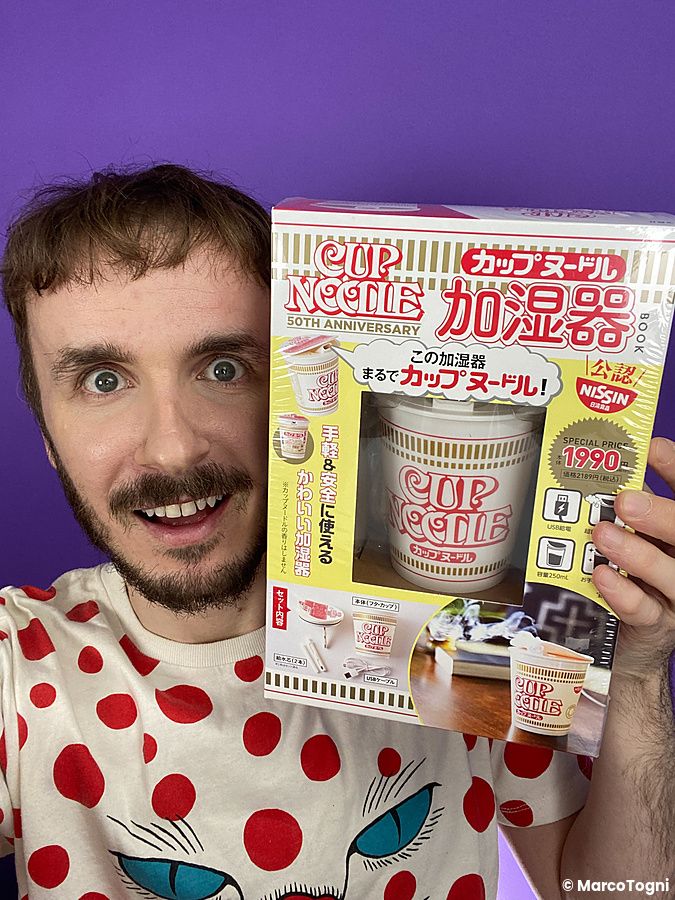
Cup Noodle arrived in 1971: ramen that came already in the cup, shown in the first ads with a fork instead of chopsticks. Ando came up with it after a trip to the United States, where he’d seen buyers break the noodles into a cup because they had no bowls on hand.
From there, instant noodles took off all over the world, and the usual figure today is over 100 billion servings eaten every year. In Japan instant noodles are considered one of the most important inventions of the 20th century, and Japanese people are genuinely proud of them.
The main brands
At the supermarket you’ll keep running into the same names, and knowing them makes choosing a lot easier. Each company has its own style and its own signature products.
- Nissin is the giant of the industry. Besides Cup Noodle and Chicken Ramen, it makes Donbei (udon and soba in a cup), UFO yakisoba and the Raoh line, whose non-fried noodles are closer to what you’d get at a restaurant.
- Toyo Suisan, under the Maruchan brand, is known for Akai Kitsune and Midori no Tanuki, which are udon with fried tofu and soba with tempura, plus the Maruchan Seimen line for anyone who wants firmer noodles.
- Sanyo Foods makes Sapporo Ichiban, one of the all-time best-selling packet ramen brands, especially in the shio and miso versions.
- Myojo, part of the Nissin group, has Charumera in packets and Ippei-chan yakisoba, which comes with a little packet of mayonnaise.
- Acecook is the home of Super Cup, the big cups for when you’re really hungry, and of many regional editions.
Then there’s Maruka Shokuhin with Peyoung, the square-cup yakisoba that’s an institution in and around Tokyo, plus brands like House Foods.
You’ll also see plenty of Korean products on the shelves, especially Nongshim’s Shin Ramyun, but if the Korean brands are easy to find where you live, I’d give the Japanese brands priority.
The classic flavors
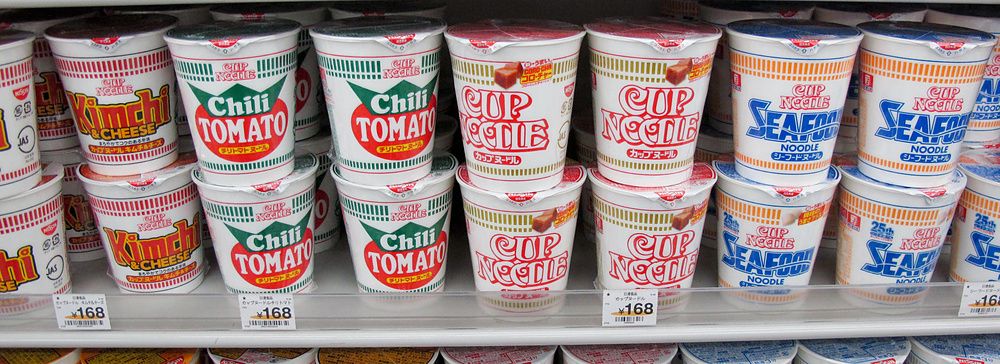
The original Cup Noodle, with its soy sauce broth and bits of meat, egg and shrimp, is the first one to try, if only to understand where it all comes from. Right behind it are the Seafood version, with a paler broth that tastes of the sea, and the curry one, which is very thick and almost like a hot winter dish.
Of Nissin’s cups, I honestly think Seafood is the best, while the curry mostly appeals to people who like rich flavors. There’s also chili tomato, tangier and spicier, which really divides people.
Packet ramen is a different story, because you cook it in a pot and can add whatever you like. Sapporo Ichiban shio is the classic to keep in the pantry. The broth is light, with sesame seeds in the seasoning packet, and it turns into a proper meal once you add an egg, some green onion and a few vegetables.
Chicken Ramen, on the other hand, is made right in a bowl with boiling water. The best-known way to eat it in Japan is to make a little well in the middle of the noodle block and crack a raw egg into it. After three minutes with the lid on, the egg is half-cooked and mixes into the broth.
Beyond ramen
A huge part of the market isn’t ramen at all but other kinds of noodles, and I think these are the ones that are most rewarding for anyone visiting from abroad. Nissin’s Donbei Kitsune Udon and Maruchan’s Akai Kitsune come with a big piece of sweet fried tofu that soaks up the broth. It’s one of those flavors you don’t usually find outside Japan.
The soba versions with tempura, like Midori no Tanuki, have a crispy fritter instead, which you can eat right away or leave to soften in the broth, depending on how you like it.
Donbei and Akai Kitsune also come in different versions for eastern and western Japan. Around Tokyo the broth is darker with a stronger soy flavor, while around Osaka it’s lighter and dashi-based.
Donbei cups usually have a small E or W printed next to the product code. If you happen to be traveling between Tokyo and Osaka, buying both and comparing them is an experiment I recommend to everyone.
Then there’s instant yakisoba, which works differently. You pour in boiling water, wait, drain the water through an opening in the lid and add the sauce, and you end up with stir-fried noodles with no broth.
Nissin’s UFO is the best known, Peyoung has its most devoted fans right in Tokyo, and Ippei-chan comes with mayonnaise on the side, which changes the flavor quite a bit. Just be careful not to pour the noodles out along with the water when you drain it. It’s a more common mistake than you’d think.
Limited editions and collaborations
What keeps instant noodles in Japan so lively is the constant stream of new releases. Every week new cups show up in konbini, along with seasonal editions and weird flavors that disappear after a couple of months.
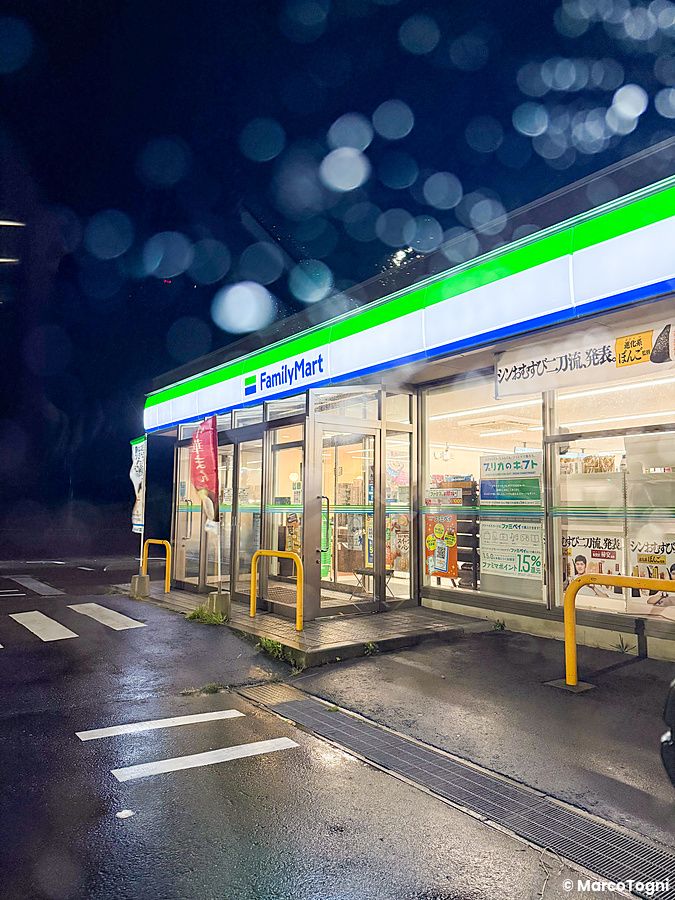
Chains like Seven-Eleven, Lawson and FamilyMart also have their own private-label lines, often made in collaboration with famous ramen shops. You’ll find cups that recreate the style of well-known places, with thick tonkotsu broth, Sapporo miso or light Tokyo-style shoyu.
These collaborations are the cheapest way to get a feel for the different styles of Japanese ramen without lining up outside the shops. They’ll never be the same as handmade ramen, but some come surprisingly close, especially the ones with non-fried noodles.
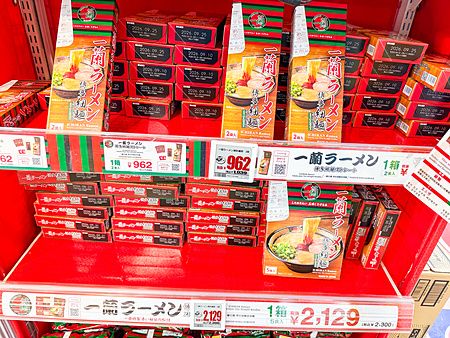
Chains like Ichiran also sell boxed or packet versions in their own shops and at airports, and they make a much-appreciated gift to bring home. They cost quite a bit more than a regular packet, but they’re meant as souvenirs in the first place.
Prices and where to buy
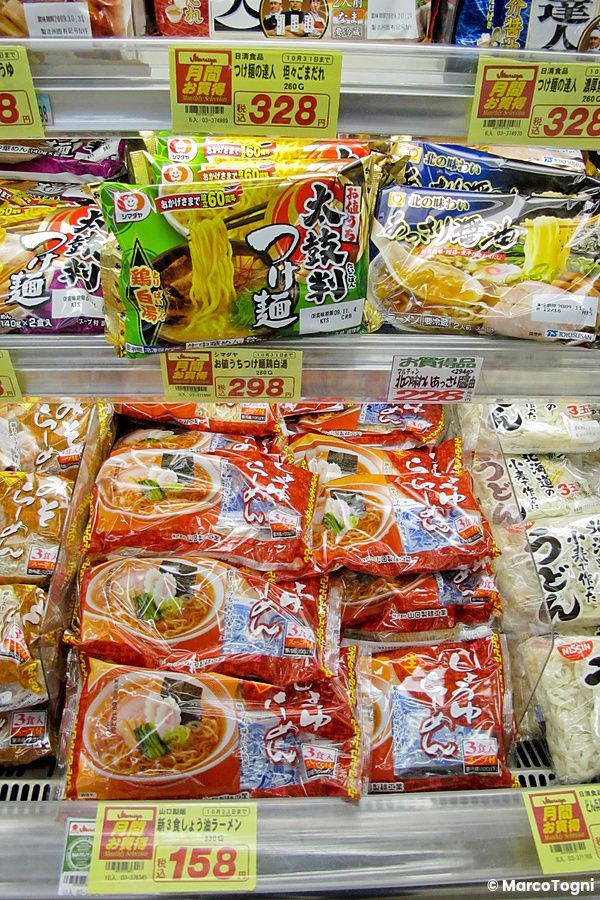
A regular cup at a konbini usually costs around 200–300 yen, while premium cups and collaborations cost a bit more. Supermarkets and drugstores sell the same products for less, and packet ramen often comes in five-packs at a really low price.
If you want to stock up to take home, I’d go to neighborhood supermarkets or big discount chains like Don Quijote, which have entire shelves of them and plenty of multipacks. It’s still a good idea to check current prices, since they vary a little from store to store.
Konbini almost always have a hot water dispenser near the register or counter, so you can make your cup as soon as you’ve paid for it. Some stores also have an area with stools where you can eat; otherwise people take it back to their hotel or office.
A few practical tips so you don’t get it wrong:
- Check the waiting time printed on the lid, because it isn’t always three minutes: some udon need five, and certain thin noodles only one or two.
- Read the instructions on the packets inside, because some go in before the water and others after, and the marks on the lid tell you which to do first.
- Don’t throw away the yakisoba lid before you drain the noodles, because that’s what you use to let the water out.
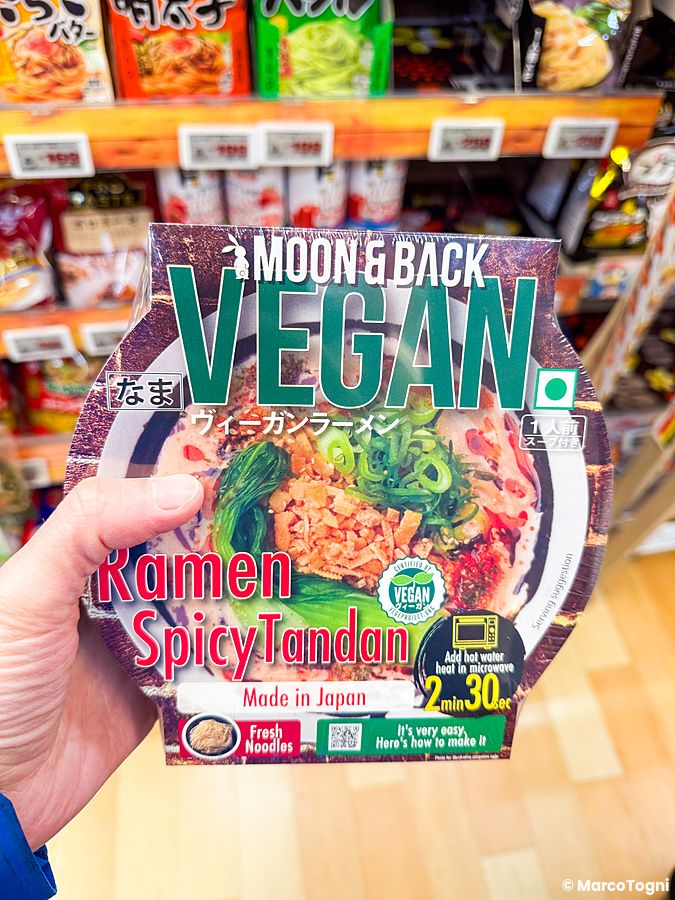
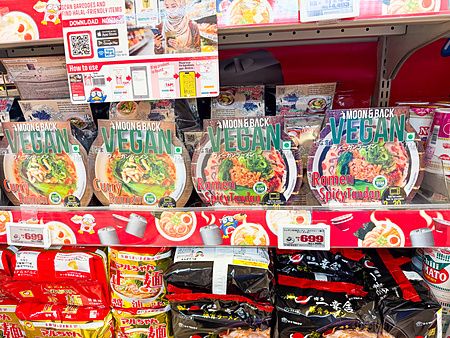
- If you’re vegetarian, be careful: almost all the broths contain meat or fish extract even when you can’t see any, so there are very few options that work. Your best bet is to look for packages labeled vegan.
The Cup Noodles Museum
The best-known place devoted to instant noodles is the Cup Noodles Museum in Yokohama, in the Minato Mirai area, a few minutes’ walk from the bay. It tells the story of Momofuku Ando and his invention, with a huge wall covered in every package Nissin has made over the years and a reconstruction of the shed where Chicken Ramen was born.
Admission is cheap, and the reason almost everyone goes is the My Cup Noodles Factory. You buy an empty cup and decorate it however you like with markers, then choose one of four soup flavors and four toppings out of about a dozen.
At the end they seal the cup in front of you and put it in an air-filled bag that you hang around your neck, and it’s a souvenir that kids and adults both love. On weekends and during Japanese holidays the wait can be long, so I’d go early on a weekday.
There’s also the Chicken Ramen Factory, a workshop where you knead the flour, roll out and cut the noodles, season them and fry them. It takes longer and has to be booked in advance. On the top floor is the Noodles Bazaar, a sort of little market with small portions of noodles from different Asian countries, which is a nice way to have lunch during your visit.
The Ikeda museum
The other museum is in Ikeda itself, the city where it all started, about twenty minutes by train from central Osaka. It’s called Cup Noodles Museum Osaka Ikeda and it’s the older of the two, smaller than the one in Yokohama but set up the same way.
Here too you’ll find the reconstruction of Ando’s shed, a gallery with all the historic packages and the chance to make your own custom cup, plus the Chicken Ramen workshop by reservation. Admission is free, and you only pay for the cup activity.
I think it’s worth going if you’re staying in Osaka for a few days and have half a day free, maybe combined with a walk around town. It’s more relaxed than Yokohama and less crowded, although lots of families come during school holidays.
If you’re in Tokyo, on the other hand, Yokohama is easier to get to and has more to offer. Either way, you don’t need to visit both, because the experience is very similar.
Which ones to try first
If it’s your first time and you want to get a feel for Japanese instant noodles without feeling overwhelmed, I’d start with a mix of different categories rather than ten cups of the same kind.
Here’s a simple starter set:
- An original or Seafood Cup Noodle, to get a sense of the classic that started it all.
- A Donbei or an Akai Kitsune, to try udon with sweet fried tofu. Few flavors are more Japanese than that.
- A UFO or Peyoung yakisoba, to try noodles without broth.
- A premium cup made in collaboration with a famous ramen shop, chosen at the konbini depending on the style you’re most curious about.
- A bag of Sapporo Ichiban or Chicken Ramen, to take home and cook without rushing.
Honestly, after a while in Japan you end up with your own favorites and keep buying the same ones, but the real fun is trying the new releases. Whenever I spot a new cup at the konbini, it’s hard not to grab it, even when I know it might turn out to be a disaster.
What I’d recommend
Japanese instant noodles are no substitute for a bowl at a restaurant, and nobody here really thinks they are. They’re part of everyday culture, though, and they say a lot about how people in Japan eat: fast and well, with an absurd amount of choice.
If you have a free afternoon in Yokohama, go to the museum and make your own cup. Otherwise, walk into any supermarket, grab a basket and fill it with five different flavors. Which one would you start with?