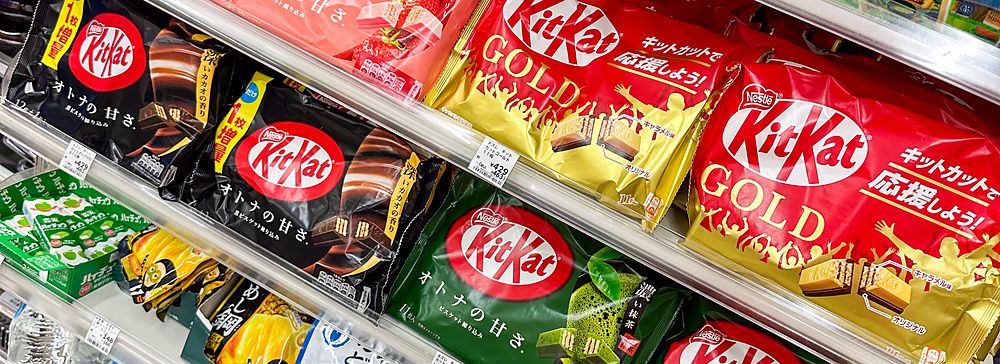
Japanese Kit Kat Flavors
Japanese Kit Kat flavors are among the most fun things to bring home, and to try as you travel around the country.
The bar itself is the same one you can buy anywhere in the world, the usual wafers covered in chocolate. Here, though, it has grown into a little world of its own, with regional flavors, seasonal editions, luxury versions and boxes made for gift-giving. If you’ve ever wondered why so many friends come back from Japan with suitcases full of green, pink and purple packs, it comes down to three things: a lucky pun, the Japanese habit of giving sweets as gifts, and flavors you can only find in certain regions.
Contents
How it all started
Kit Kat arrived in Japan in the early 1970s. At first it was sold by the Japanese candy maker Fujiya, and later Nestlé took it over. Nestlé has also been making it at a factory in Japan for decades. For a long time it was just another snack, until a quirk of language changed everything.
In the dialects of Kyushu, the southernmost of Japan’s four main islands, there’s an expression that sounds like kitto katsu to, which roughly means “you’ll make it for sure,” or “you’ll definitely win.” It sounds almost exactly like Kit Kat, and students, on their own initiative, started giving each other Kit Kats before university entrance exams, which in Japan are a big deal for the whole family.
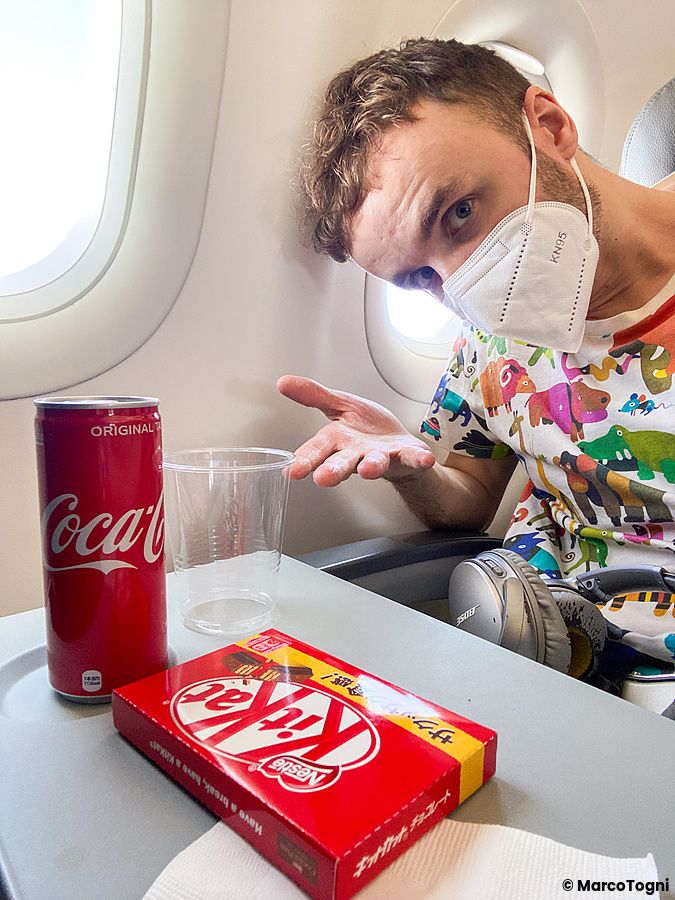
From there, the Kit Kat turned into a good luck charm. The company built entire campaigns around it, with packs that have a blank space for writing a message of encouragement. In January and February, when the exams take place, gift boxes pop up in supermarkets pretty much everywhere.
That’s why in Japan a Kit Kat isn’t just a snack but also a little something you give someone. And it’s this habit of giving sweets, which runs deep in Japan, that has pushed the brand to keep inventing new flavors.
How many flavors there are
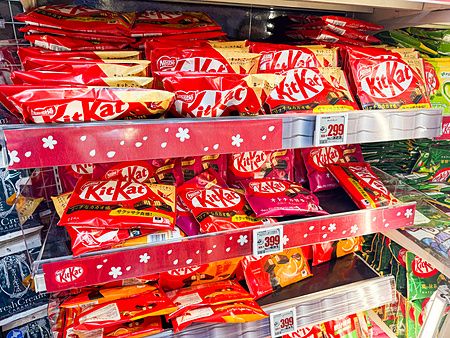
Over the years Japan has seen more than 400 varieties, a number no other country comes anywhere near. Many lasted only a few months; others have come back several times, and some have become permanent classics.
The easiest way to make sense of them is to split them into four groups, since each one is sold in different places and at different prices:
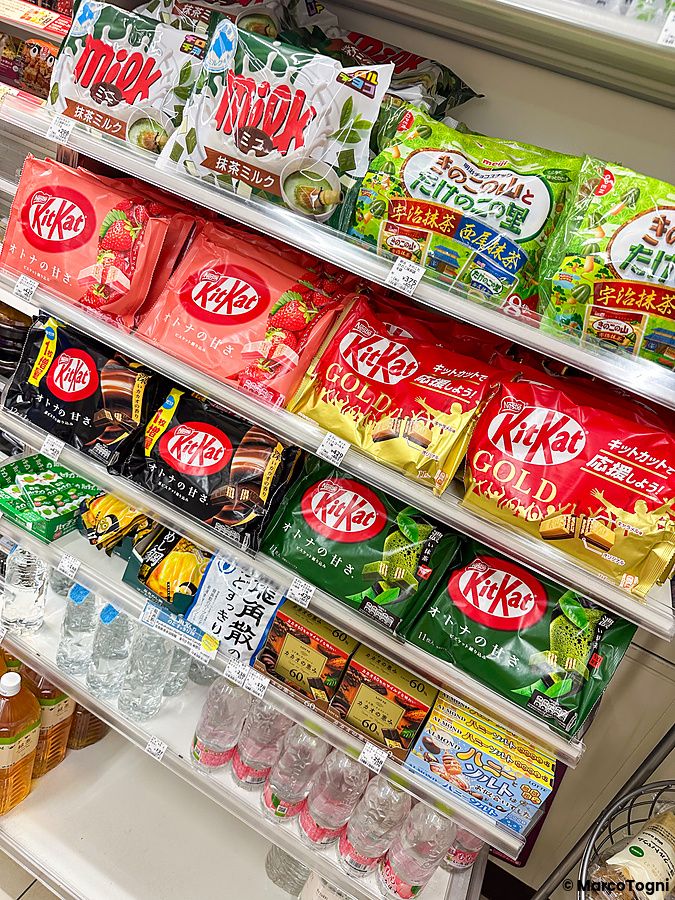
- The everyday flavors, like the original milk chocolate, the less sweet dark chocolate called Otona no amasa, and matcha green tea, which you’ll find in any supermarket or konbini.
- The regional flavors, each tied to a local product and sold mostly at train stations, airports and souvenir shops in that region.
- The seasonal flavors and limited editions, which come out for a specific time of year, like cherry blossom season in spring, or winter, and then disappear from the shelves.
- The high-end versions, thicker and more elaborate, sold in the handful of stores dedicated to the brand.
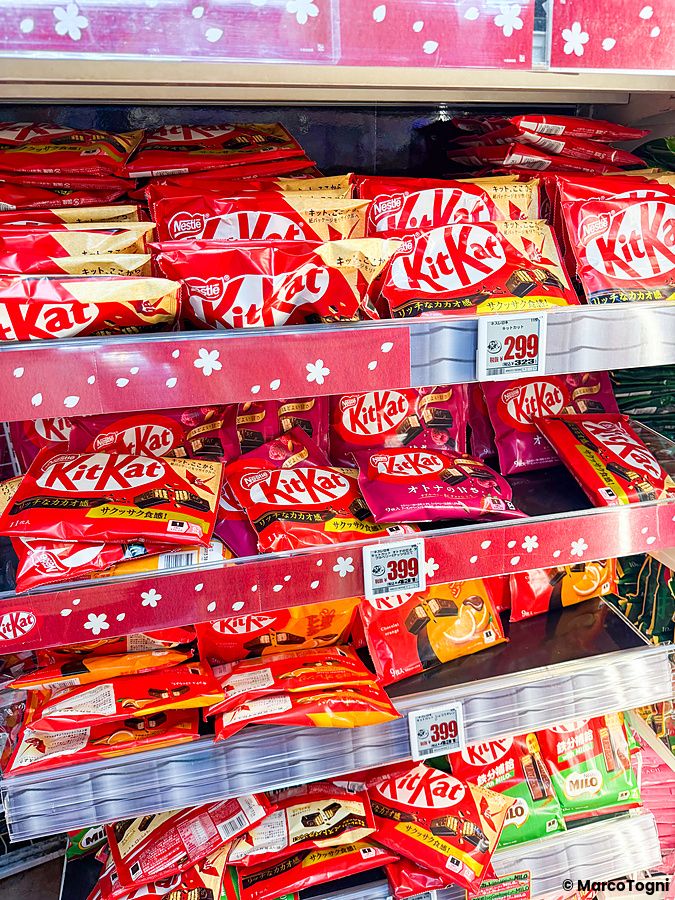
Matcha deserves a few words of its own, because it and the original are the best-selling Kit Kats in the country. The tea-flavored white chocolate has a slightly bitter aftertaste that balances out the sugar, and people who usually find Kit Kats too sweet are often won over by this one.
I recommend trying the matcha version made with Uji tea at least once. Uji is the area near Kyoto famous for its green tea, and compared to the supermarket version this one is darker in color and tastes much more strongly of tea.
Regional flavors
Regional Kit Kats, called gotochi in Japanese, are the most fun part of the whole thing. Each area has its own flavor, tied to a local ingredient or sweet, and you’ll rarely find it anywhere else.
Each flavor takes a good while to develop, because the company works on it together with local producers, and it shows. These aren’t random flavorings but real ingredients, like fruit powders or tea paste.
These are some of the ones you’ll come across most often:
- Shizuoka wasabi, which sounds scary but is actually mild. The heat comes afterward, like a little tingle in your nose, and it makes the white chocolate less cloying.
- Kyoto matcha and hojicha, meaning powdered green tea and roasted tea. Hojicha has an almost nutty aroma and is one of my all-time favorites.
- Okinawa purple sweet potato, with a color you can spot from a mile away and a mellow, not very sweet flavor.
- Apple from Nagano, the area known in Japan as Shinshu, with milk chocolate and a slightly tart note.
- Amaou strawberries, a very famous variety from Fukuoka in Kyushu, and versions made with azuki red beans from Hokkaido or the Nagoya area.
- Sake Kit Kat, made with sake from the Kobe area, which has a light boozy aroma and is a big hit with adults.
These flavors usually come as minis, in boxes of about ten individually wrapped pieces, and cost around 800–1,000 yen a box. That’s more than a supermarket pack, but as a souvenir to hand out at the office or among friends, it’s hard to beat.
Keep in mind that the lineup changes: some flavors get discontinued and replaced by others.
Where to buy them
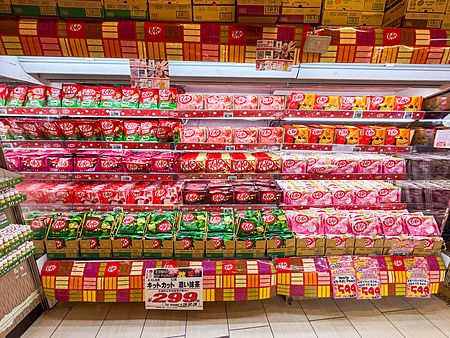
For the everyday flavors, the most convenient place is the supermarket, not the konbini. The 24-hour konbini almost always have Kit Kats, but usually just one or two flavors at full price. Supermarkets and big discount chains like Don Quijote have a wider selection, and their family packs cost less.
Big drugstore chains like Matsumoto Kiyoshi are another underrated place to look. They sell sweets too, and you’ll often find seasonal flavors there at a discount.
For regional flavors, it’s a different story. Shinkansen stations and airports almost always have a souvenir corner with the local Kit Kats, and often ones from other regions too.
The international terminals at Narita and Haneda airports are packed with Kit Kats, which is handy for some last-minute shopping before your flight. The selection there tends to focus on the most touristy flavors, though, and the prices are never a bargain. My advice is to buy as you travel, whenever you see a flavor you’re curious about, instead of leaving it all for the airport and hoping you’ll find it there.
At Don Quijote and many souvenir shops in tourist areas you can shop tax free by showing your passport, as long as you spend more than the minimum amount. With sweets that’s easy, but remember that you pay full price in the store and the tax is refunded when you leave, after the customs check at the airport. So any sweets you buy tax free have to leave Japan with you, not get eaten during the trip.
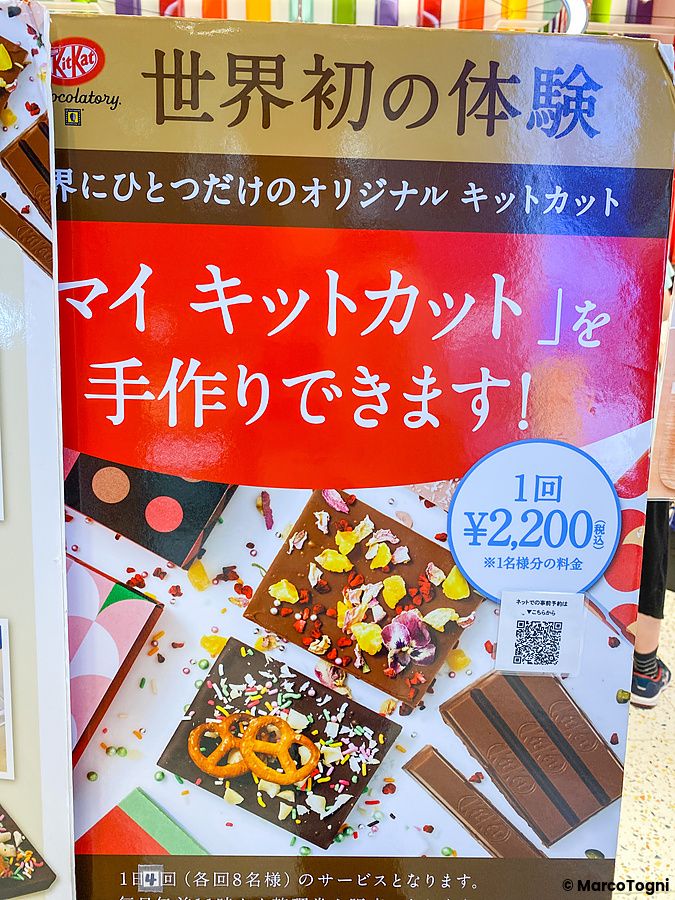
Kit Kat Chocolatory
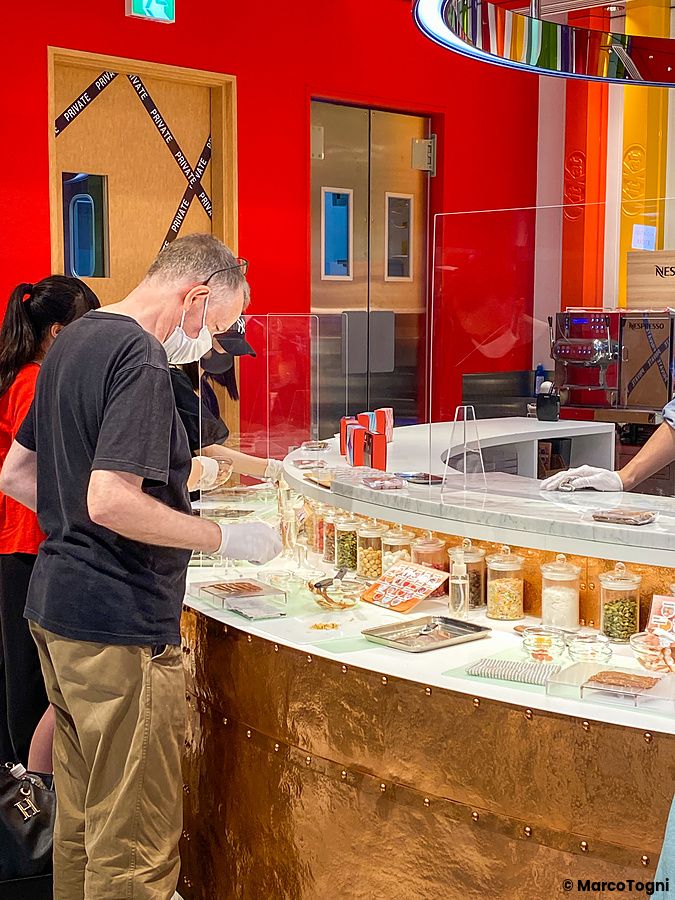
Kit Kat Chocolatory is the name of the brand’s own high-end specialty stores, created in collaboration with Japanese pastry chef Yasumasa Takagi. Here the Kit Kat becomes a gift-worthy treat, with elegant packaging, thicker individual bars and flavors developed as carefully as fine chocolates.
The best-known line is called Sublime. Its bars cost much more than a regular Kit Kat, around 400–500 yen each, and they’re coated in high-quality chocolate, sometimes topped with nuts or pieces of dried fruit.
There are only a few stores, and most of them are inside department stores, on the basement food floor, for example in the Ikebukuro area and in Yokohama. Pop-up shops open every now and then, and some locations have closed over time, so before going out of your way to visit one I recommend checking the current list on the official website.
Honestly, if you need a gift that really counts, say for someone who’s hosting you, a Chocolatory box makes a great impression. But if you just want to try the weird flavors and have fun with them, the regional ones sold at train stations are a lot more satisfying, and they cost less.
Seasonal and limited-edition flavors
In Japan a lot of what people buy depends on the season, and Kit Kat follows the calendar like all sweets do. Spring brings cherry blossom versions, often paired with matcha. Summer brings citrus and tropical fruit, and fall brings chestnut and sweet potato.
Then there are collaborations with other brands or well-known shops, which last just a few weeks. Over the years, for example, there have been versions inspired by famous regional sweets, like Hiroshima’s maple-leaf-shaped cakes.
So if you see a seasonal flavor you like, buy it right away. There’s no guarantee you’ll find it again the following week, and no way of knowing in advance how long it’ll stay on sale.
I see lots of people walking around Tokyo with a detailed list of flavors they found online, only to find out that half of them no longer exist. You’re better off walking into a supermarket with no expectations and picking whatever they have.
Which ones to try
Let’s be honest: not all the weird flavors are good. Some are more of a novelty to photograph than a treat you’d actually finish, and you do risk bringing home a box nobody eats.
If you’re short on suitcase space and don’t want to take chances on flavor, I’d go for these:
- Uji matcha, which almost everyone likes and is the flavor that best represents Japan.
- Hojicha, for tea lovers who find matcha a bit bitter.
- Purple sweet potato, which is mild, won’t scare anyone off and has a color that gets people curious.
- The less sweet dark chocolate, if you want a cheap supermarket option you can only find here.
I’d save the wasabi and sake ones for people who want to try something different, or as a joke gift for friends. They’re fun, not gross, but they’re not the kind of candy you eat one after another in front of the TV.
Packing them
Kit Kats are chocolate, and chocolate doesn’t handle heat well. Summers in Japan are very hot and humid, and a box left for a few hours in a backpack in the sun will turn into a melted mess.
A few precautions will save you some nasty surprises:
- Keep the boxes away from heat sources, and don’t leave them by the window in your room.
- Pack them in the middle of your suitcase, cushioned by your clothes, because the cardboard gift boxes get crushed easily.
- If you’re traveling in summer, buy your souvenirs in the last few days, so they spend as little time as possible being carried around.
- Always check the expiration date. It’s usually a few months away, but on clearance items it can be close.
The big packs of Japanese Kit Kats are wrapped in paper instead of plastic, and the back has instructions for folding the wrapper into an origami crane. Kids absolutely love it, and it’s a small detail that makes the pack more Japanese than it looks.
Is it worth it?
If you think of Kit Kat as the snack you grab at the corner store back home, then yes, here it’s something else entirely. The basic recipe is the same. What’s different is the variety, and the way people treat it here: as a gift, not a vending-machine snack.
I’d recommend it most if you need to bring a little something back for a lot of people without spending a lot. A box of regional minis is easy to split up, and every piece is individually wrapped. It’s not what I’d suggest if you’re after traditional Japanese sweets, wagashi made with bean paste and rice. For those, go to the confectionery counters in department stores. Kit Kat is just a bit of extra fun.
When I have guests from abroad, I almost always take them to an ordinary supermarket. Seeing a shelf of Kit Kats in ten different colors is more fun for them than plenty of souvenir shops. If I were you, I’d pick up a Uji matcha Kit Kat for myself, a couple of regional boxes to give away and one truly bizarre flavor to get your friends to try when you’re back home. Then let’s see who’s brave enough to try the wasabi one.