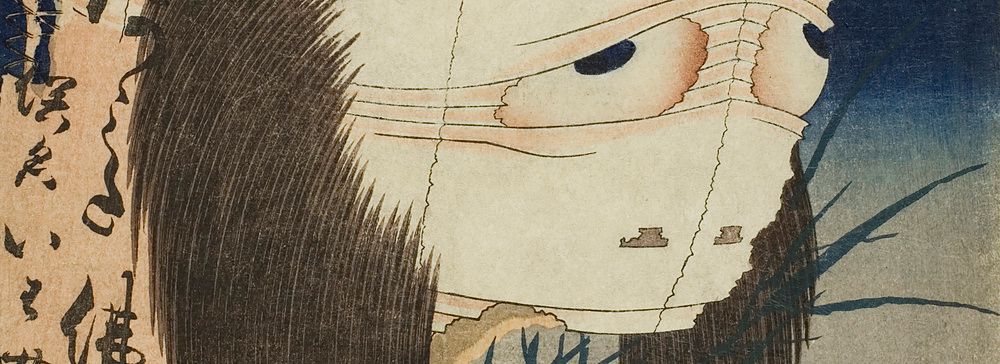
Japanese Mythology and Folklore
Japanese mythology is one of the best ways to get to know this country. Behind almost any shrine, cave or rock with a straw rope tied around it there’s a specific story, full of names, family feuds and gods playing tricks on each other.
Then there are the yokai, the strange creatures that tradition says live in rivers, forests and old houses. You can still visit the places behind many of these stories, from a gorge in the southern mountains to a street lined with statues of monsters, and you don’t have to believe any of it to have a good time.
Contents
Where the myths come from
The story of Japan’s origins is told in two books, the Kojiki and the Nihon Shoki, both written in the early eighth century on the orders of the imperial court. They aren’t scripture the way the Bible or the Quran are. They’re collections of oral traditions put down in writing, and their stated purpose was to trace the imperial family back to the gods.
Of the two, the Kojiki reads more like a story, with lots of dialogue and scenes that are almost comic. The Nihon Shoki is closer to an official chronicle, and it often gives two or three versions of the same episode one after the other, without deciding which one is right.
Keep this in mind when you visit shrines. If one place tells you a story about a god and another place tells you a different one, it’s not a mistake. That’s simply how it works. Shinto has a huge number of gods, the kami, and they go by different names from region to region and sometimes blend into one another.
It also helps to know that the kami aren’t all-powerful, and they aren’t perfect either. They get things wrong, they take offense and they play nasty pranks, and that’s a big part of why Japanese mythology is so much fun to read.
Izanagi and Izanami
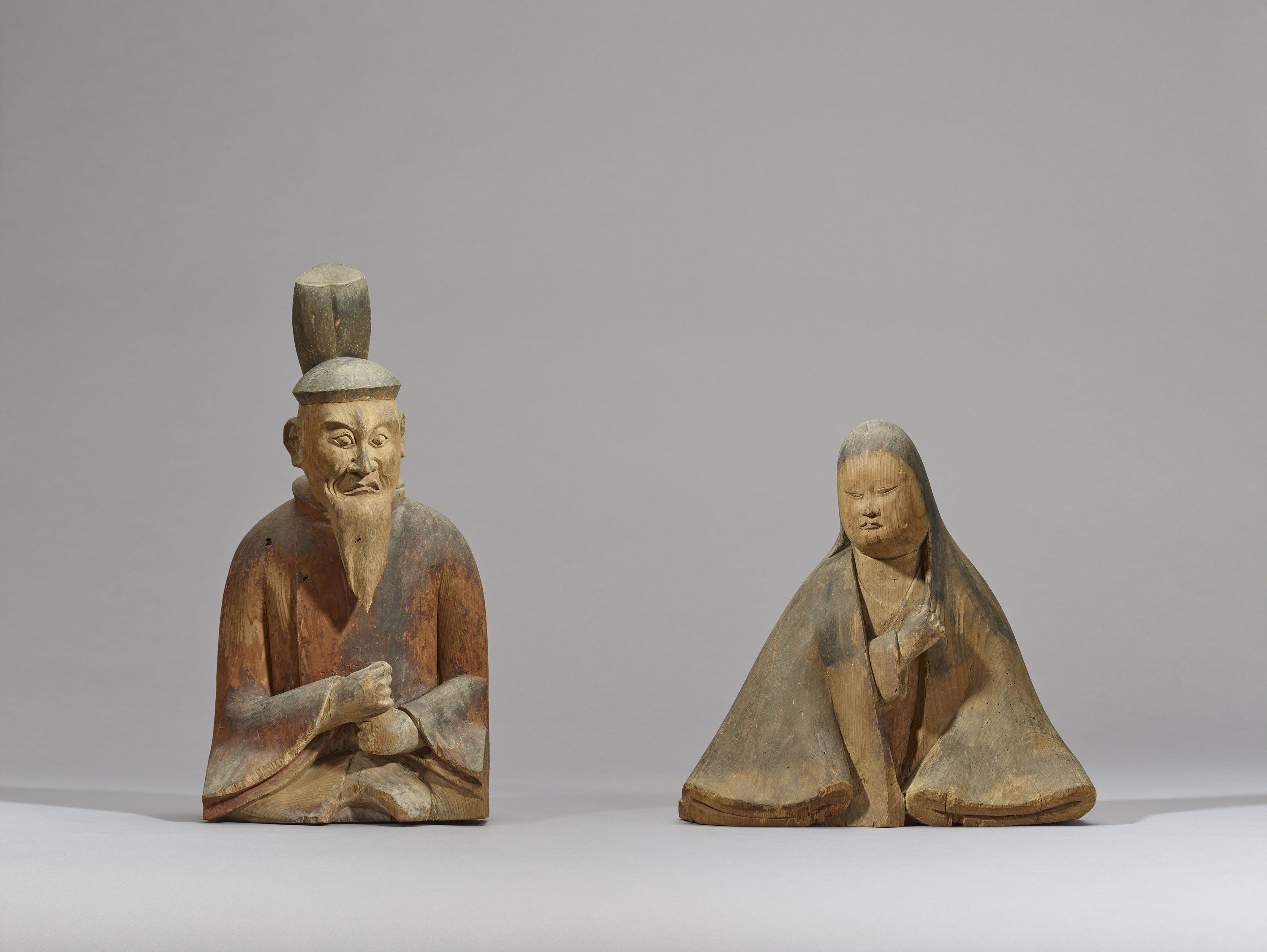
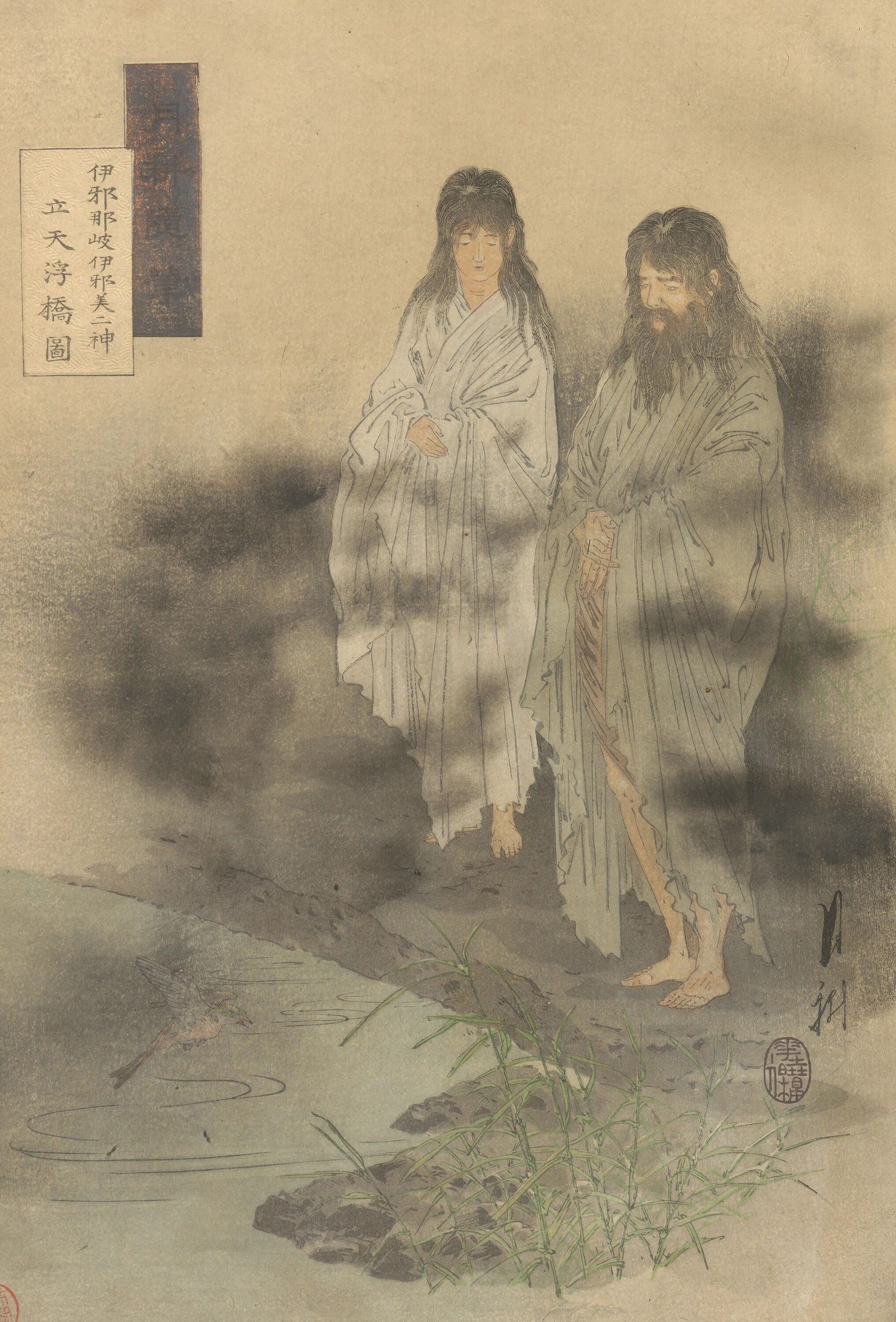
It all starts with two gods, Izanagi and Izanami, sent down from heaven to give shape to the world. They’re given a jeweled spear, which they dip into the still-formless sea and stir. The drops that fall from the tip become the first island.
The pair go down to the island, build a house and marry by walking around a pillar. The first time around she speaks before he does, and the story says that’s why their first child is born deformed and gets set adrift in a reed boat. They do the ritual again in the right order, with him speaking first, and after that the islands of Japan are born one by one, followed by dozens of gods.
Then the story turns dark. Izanami gives birth to the god of fire and dies from her burns, and Izanagi, desperate, goes down into the land of the dead to bring her back.
She tells him to wait outside and not to look at her. He sets fire to one of his comb’s teeth for light, finds her decomposing and runs, with the creatures of the underworld after him. To slow them down he throws combs, bamboo shoots and finally three peaches behind him. He seals the passage with a huge boulder, and that’s where the two part for good: she swears she’ll kill a thousand people a day, and he answers that he’ll make sure fifteen hundred are born.
People still point out the spot where that boulder is supposed to have been placed. It’s in an area of Matsue in Shimane Prefecture, on a narrow country road with almost nothing there except a sign and a few rocks. Only go if this story really grabs you. Still, the fact that it has an address at all tells you a lot about how tied to real places the myths are here.
The birth of Amaterasu
When Izanagi gets back from the land of the dead, he feels unclean and goes to wash in a river. That matters more than you might think, because it’s where the idea of purifying yourself with water comes from, the one you’ll find at the entrance to every shrine. The basin with the ladles where you rinse your hands before you go in is the everyday version of the same idea.
More gods are born while he washes, and the three most important come from his face. Amaterasu, the sun goddess, comes from his left eye and Tsukuyomi, the moon, from his right. Susanoo, who’s linked to the sea and storms, comes from his nose.
Amaterasu is the central figure in all of Japanese mythology, and she’s a goddess, which is no small detail. The imperial family traces its line back to her, and Ise Jingu in Mie Prefecture, the country’s most important shrine, is dedicated to her.
The inner shrine holds a mirror, one of the three sacred objects of the imperial regalia along with a sword and a comma-shaped jewel. Nobody ever sees it. It’s never displayed and there are no photos of it, and that’s all part of it too.
Amaterasu’s cave
The best-known episode is the one where the sun disappears. Susanoo runs riot in his sister’s realm, wrecking the rice paddies and throwing a flayed horse into the weaving hall. Amaterasu, terrified and furious, locks herself in a cave and blocks the entrance with a rock.
The world goes dark, the crops die and evil spirits run loose. So all the gods meet on a riverbed to figure out what to do.
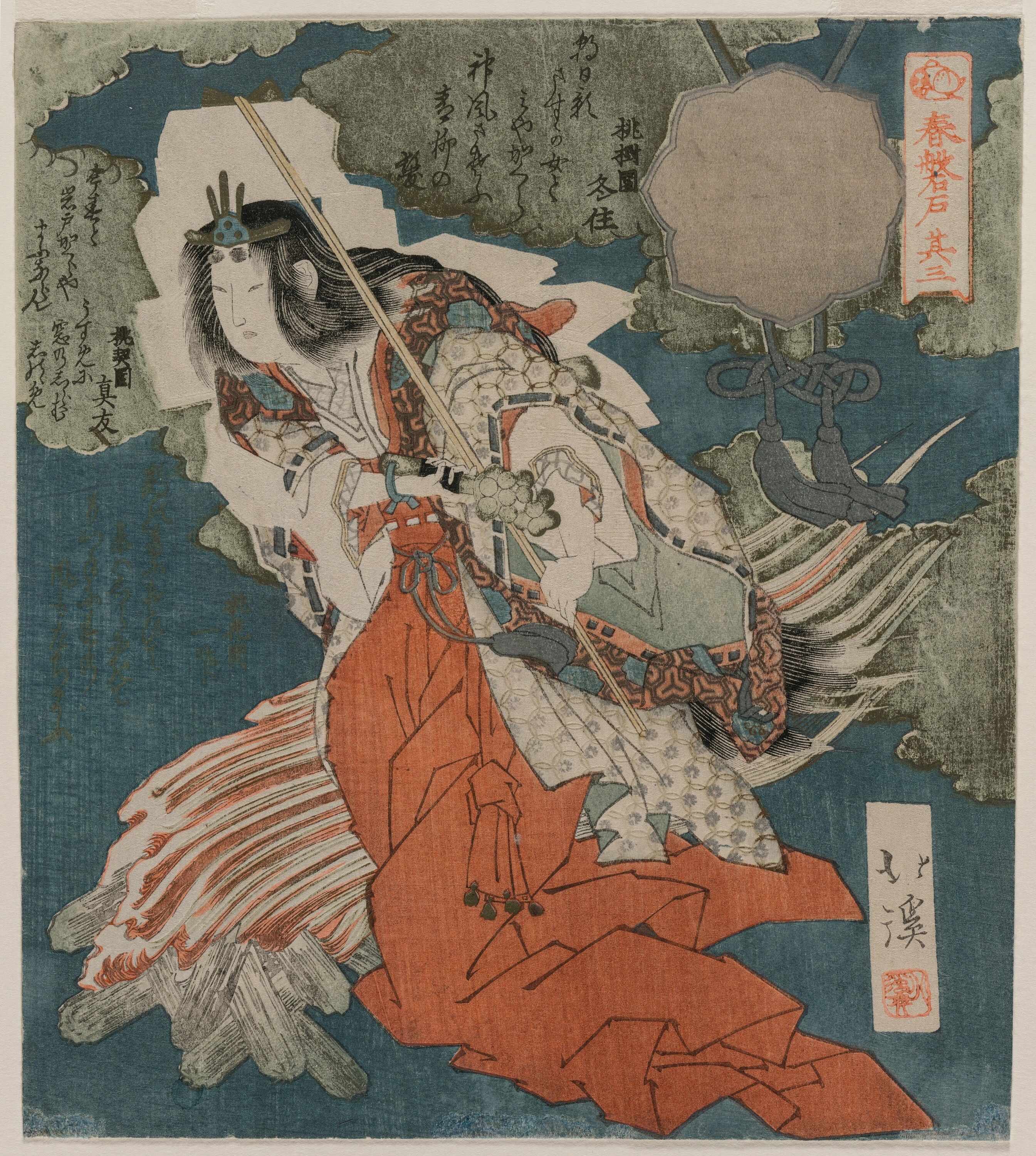
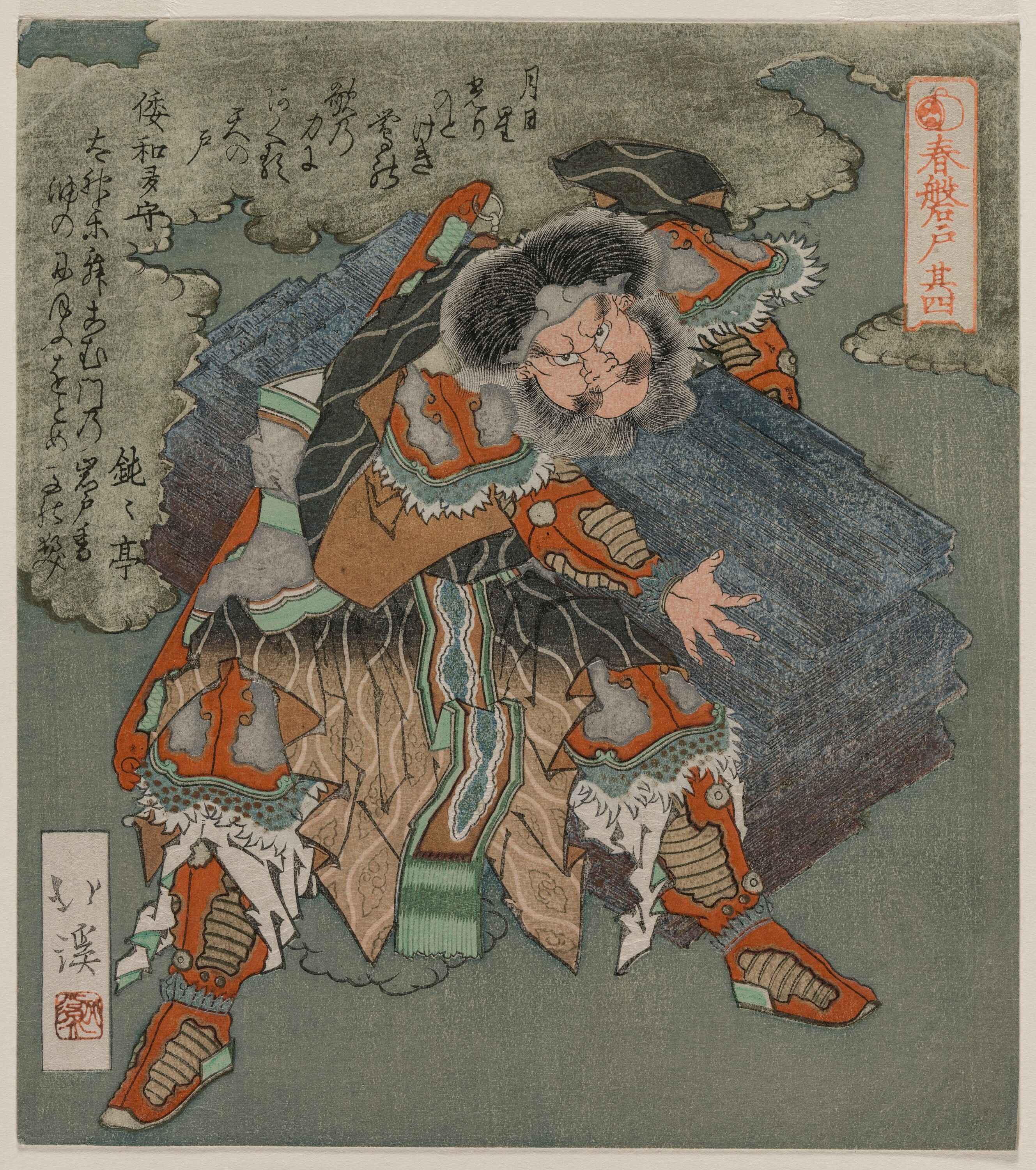
Their plan is dead simple. They get the roosters crowing, hang a mirror and jewels on a tree outside the cave, and send the goddess Ame no Uzume to dance on an upturned tub. Her dancing gets wilder and cruder until the gods burst out laughing, and Amaterasu, wondering how anyone can laugh while the world is dark, opens the entrance a crack.
She sees her own reflection in the mirror and leans forward, and a god with enormous muscles pulls her out by force while another one seals the cave with a straw rope. Two things you see all over Japan come from that moment: the braided ropes that mark sacred places, and the ritual dances called kagura.
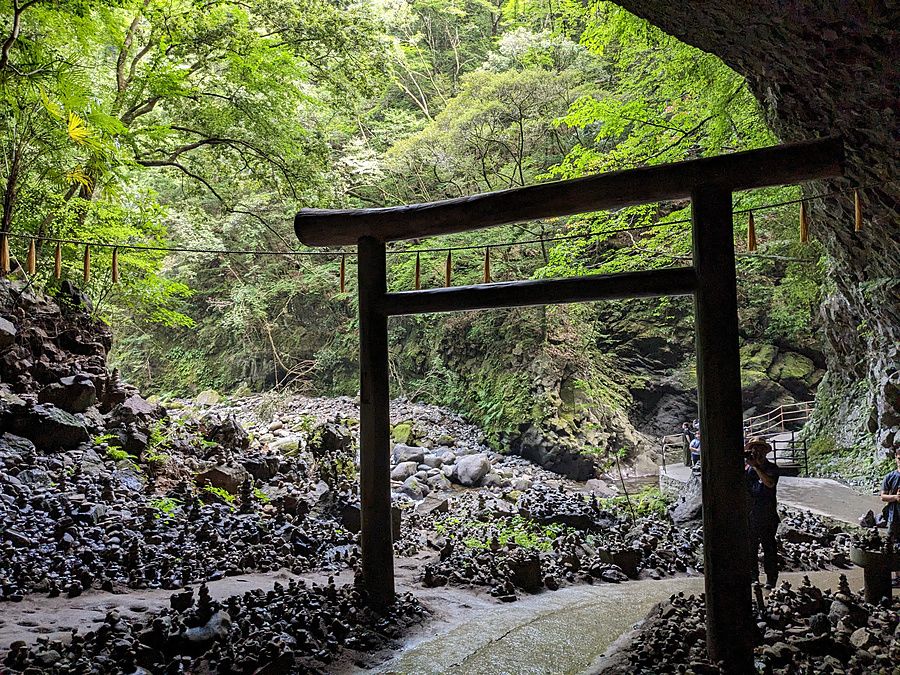
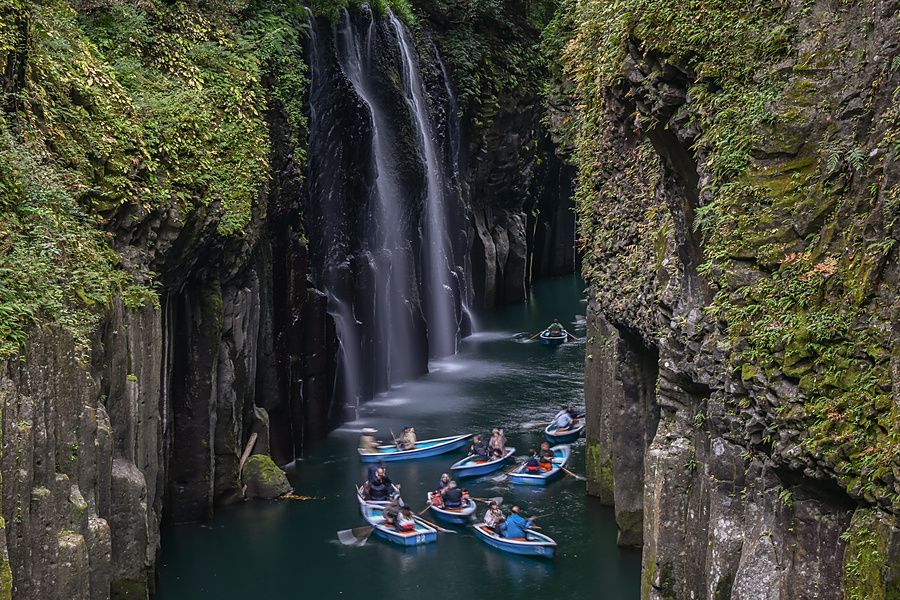
If you want to see this story up close, go to Takachiho, deep in the mountains of Miyazaki Prefecture. Amano Iwato Shrine sits across the gorge from the cave in the myth. You can’t visit the cave, but a priest takes you to a viewpoint where you can catch a glimpse of it.
Walk about ten minutes farther along the river and you reach Amano Yasukawara, a cavern around forty meters wide where the gods are said to have met. The ground in front of it is covered with thousands of stacks of stones that visitors have piled up one on top of another, and it’s not something you expect to see.
In the evening, Takachiho Shrine puts on a kagura performance. It lasts about an hour and features four dances chosen from the thirty-three in the local repertoire, including the one about the god who opens the cave. The full, traditional night kagura takes place in homes and hamlets during the cold months, and it goes on all night.
Susanoo and the serpent
After all the trouble he’s caused, Susanoo gets thrown out of heaven and lands in Izumo, in what’s now Shimane Prefecture. There he comes across an elderly couple in tears. An eight-headed serpent has already eaten seven of their daughters and is about to take the last one, Kushinada.
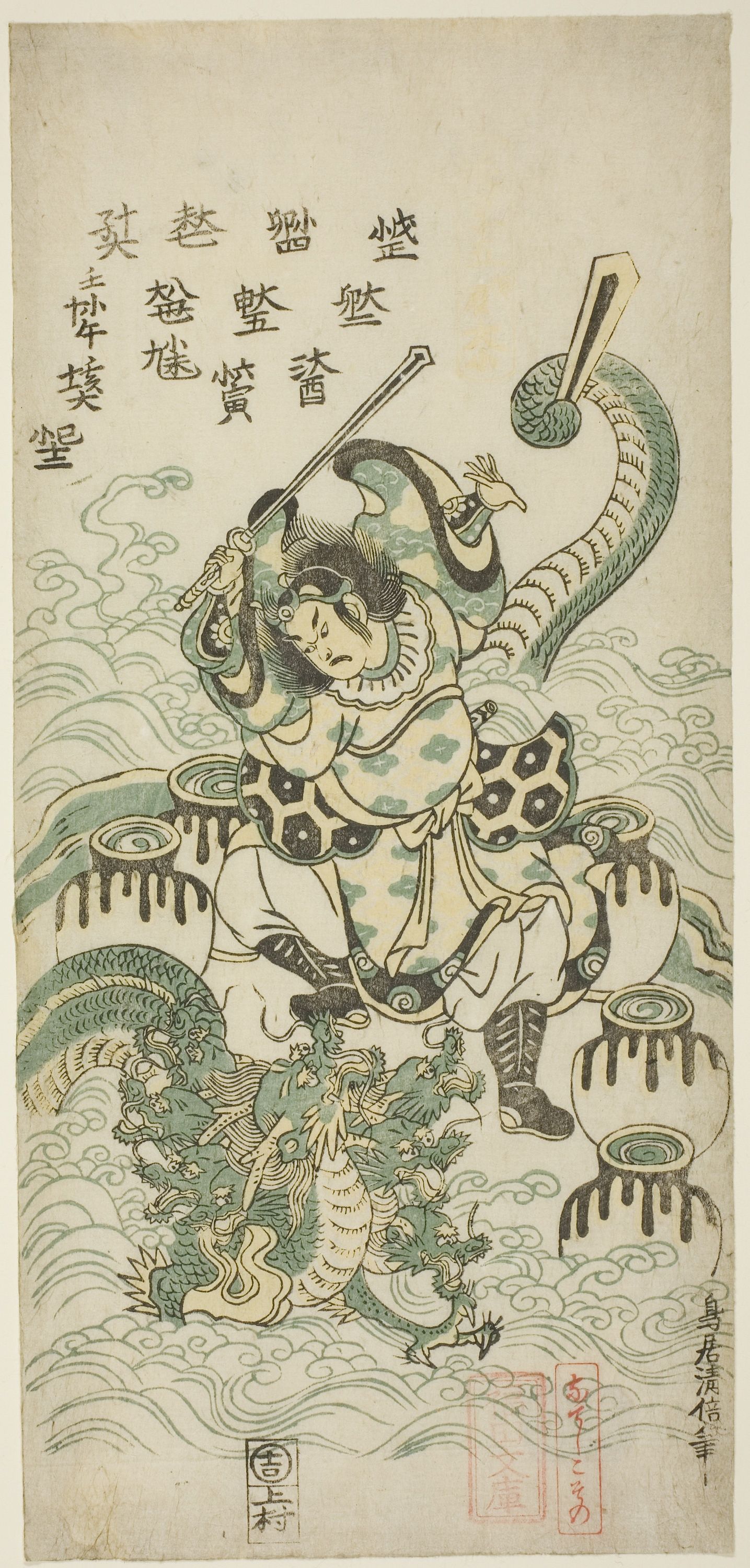
Susanoo has them prepare eight tubs of very strong sake. The serpent dips a head into each one, gets drunk and collapses, and Susanoo cuts it to pieces. Inside the tail he finds a sword, which he later sends to his sister as a peace offering, and it’s the same sword that becomes one of the three imperial treasures.
There’s one reading of this story that I really like. Izumo was one of the areas of ancient Japan where people worked iron the traditional way, and some see the serpent with its red entrails as the rivers polluted by the furnaces, and the sword pulled from its tail as control of metalworking.
Once he’s won, Susanoo marries the girl he saved and composes what’s considered Japan’s oldest poem, about the eight clouds rising over Izumo. Yaegaki Shrine in Matsue is linked to this marriage, and it’s one of the places people go to pray for luck in love.
The handover of Izumo
Susanoo’s descendant Okuninushi is the hero of a set of stories with a completely different tone. When you first meet him, he’s the youngest and most picked-on of a whole crowd of brothers, and he’s treating a skinned hare the brothers had tricked. The grateful hare predicts that he’ll be the one to marry the princess they’re all courting.
After that, Okuninushi builds and organizes the country together with a tiny god who’d arrived from the sea. But when heaven decides that the land has to go to Amaterasu’s descendants, it sends envoys to ask him for it.
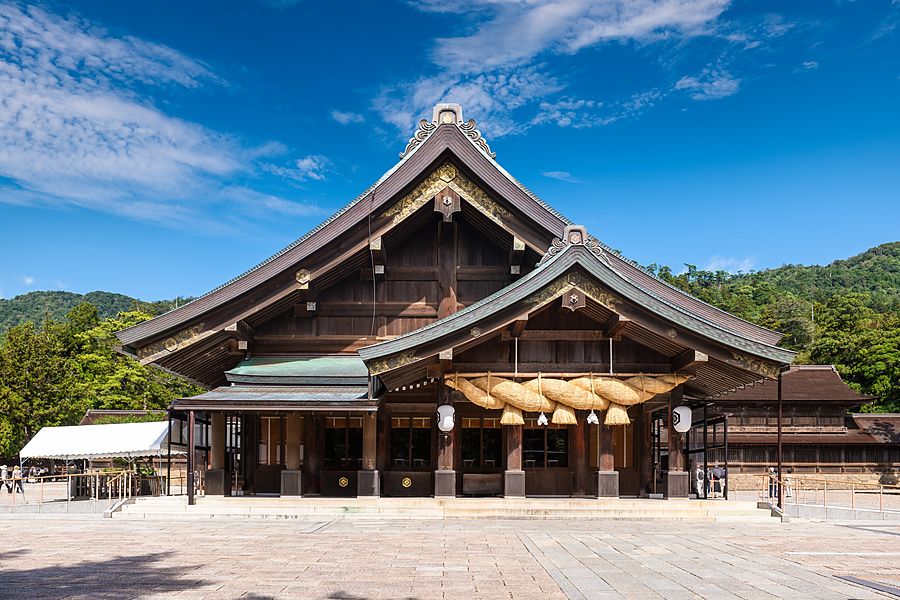
In the end Okuninushi hands over control, but on one condition: they have to build him an enormous palace to retire to. Tradition says that palace is Izumo Taisha, and old records describe it as the tallest building in Japan at the time, standing on giant pillars with an extremely long staircase.
Today people come to the shrine to pray to find the right person, because Okuninushi is said to be the god who ties people’s destinies together. A few things to know before you go:
- The ritual is different: you clap four times instead of the usual two, so it’s two bows, four claps and a final bow.
- The giant straw rope isn’t on the main hall but on the big kagura hall a short distance away, and lots of people look in the wrong place and leave without ever seeing it.
- In the lunar month that roughly corresponds to October, all the gods of Japan are said to gather here to decide the year’s marriages, so in Izumo it’s the month with gods. Everywhere else in the country, that month is called the month without gods.
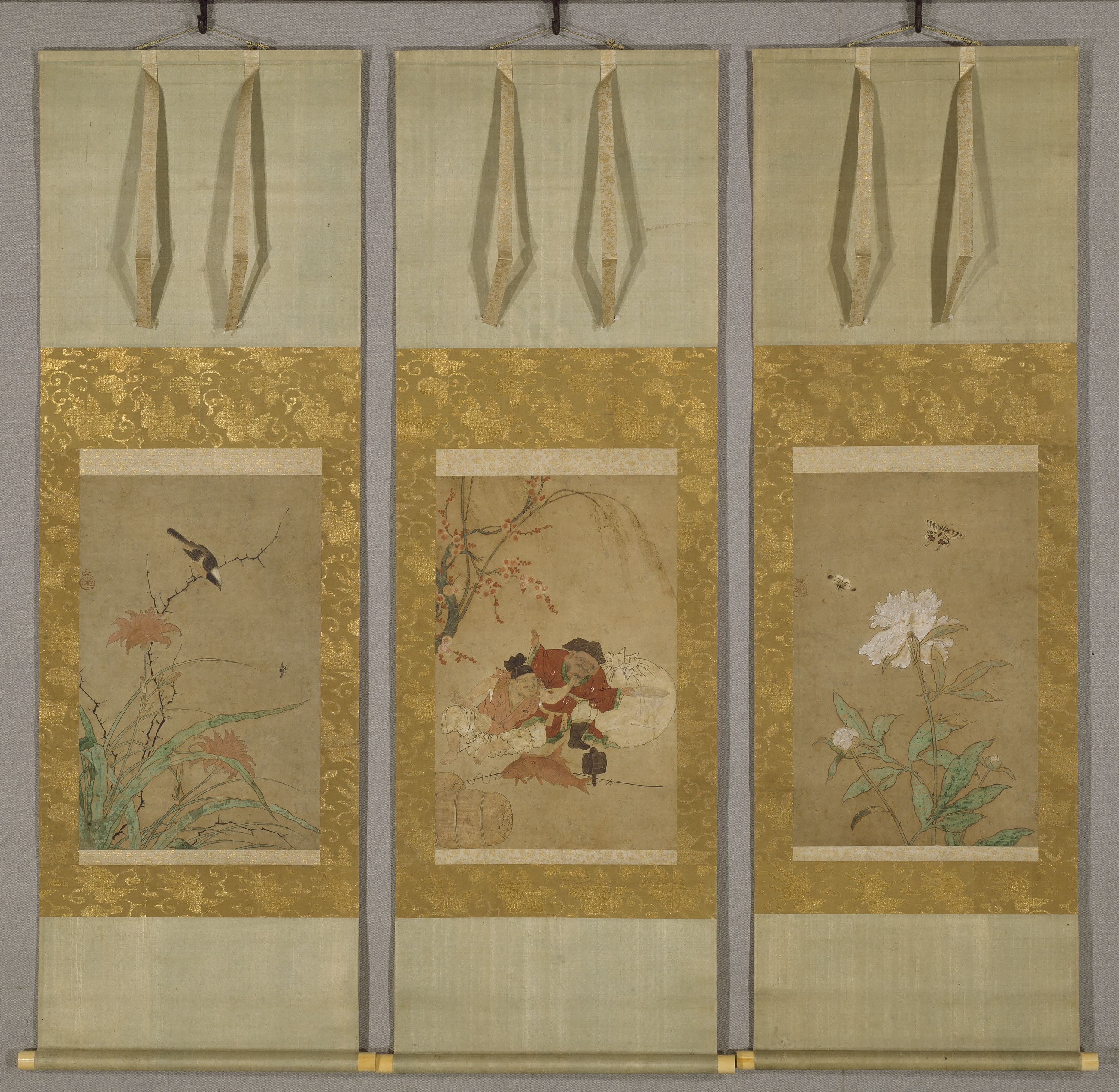
- The same belief says a few gods stay behind to keep watch, usually Ebisu, the one you see in shops with a fishing rod and a sea bream under his arm.
From kami to yokai
In Japan the line between gods and monsters is a lot blurrier than you’d think. A kami that people stop worshipping can come down in the world and turn into a mischievous creature, while a yokai that’s especially feared can be placated with rituals until it ends up with a shrine of its own.
Originally the word yokai didn’t even refer to characters. It meant strange phenomena, things that happened with no explanation: a noise in the woods, a fire appearing over the water, a sudden illness. Only later did those phenomena take physical form and get a name and a face.
Yokai aren’t the same thing as ghosts. Ghosts, the yurei, are the spirits of dead people who stay tied to this world out of resentment or love, and in the classic image they have loose hair, a white kimono and no feet.
Yokai come from nature instead, from objects and from in-between places: bridges, crossroads, mountain passes, the hour of dusk. They aren’t anybody’s soul. They’re the world itself acting strangely.
The big three
If you ask people which creatures are the most famous, you’ll almost always hear the same three names. They’re a good starting point for making sense of all the rest.
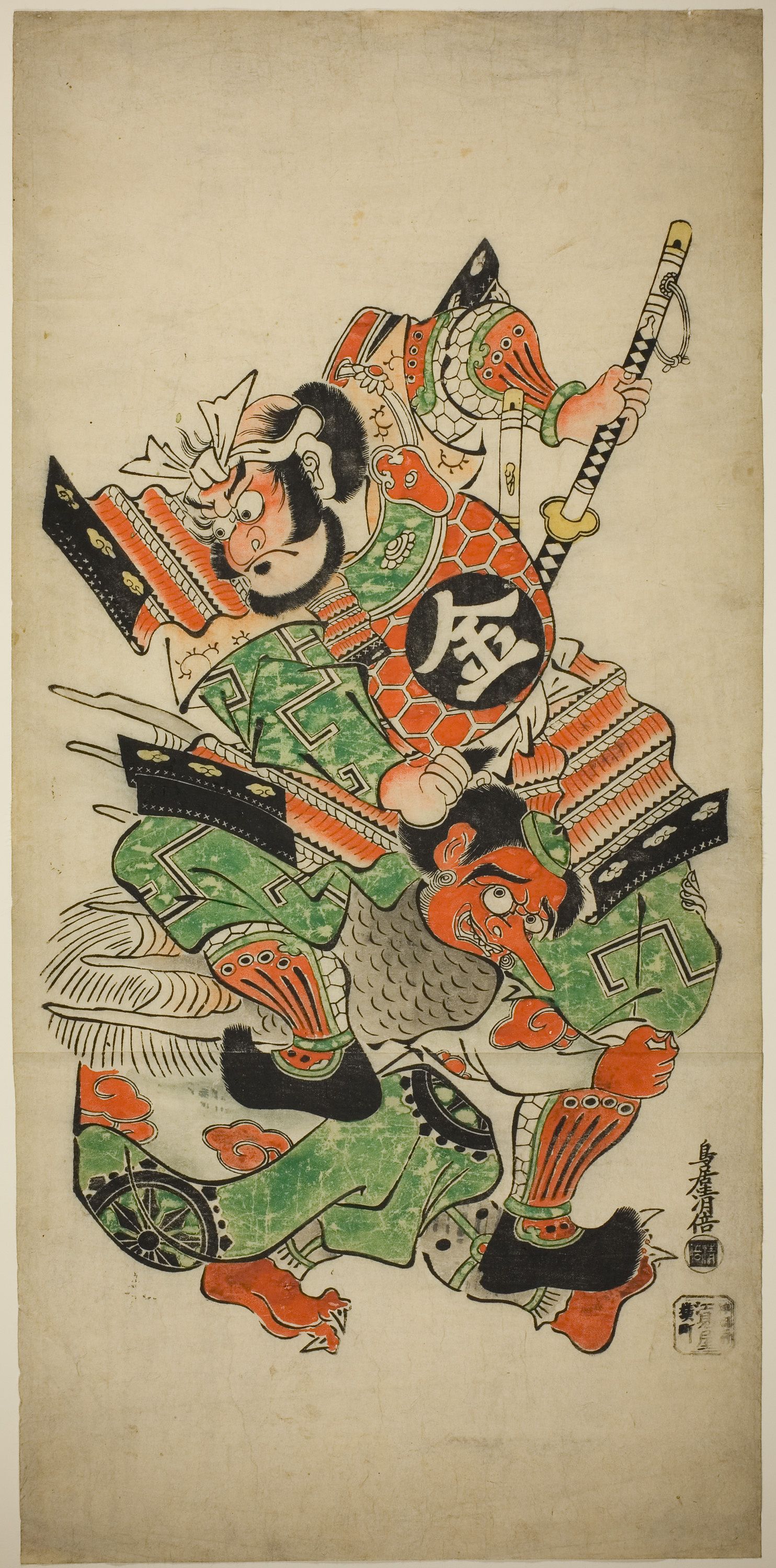
- The tengu lives in the mountains and has a red face with either an enormously long nose or a bird of prey’s beak, and he’s often dressed like a mountain ascetic. He’s strong, proud and touchy, but he’s also a teacher: legend has it that the young Minamoto no Yoshitsune, one of the tragic heroes of Japanese history, learned swordsmanship from a tengu on Mount Kurama, north of Kyoto.
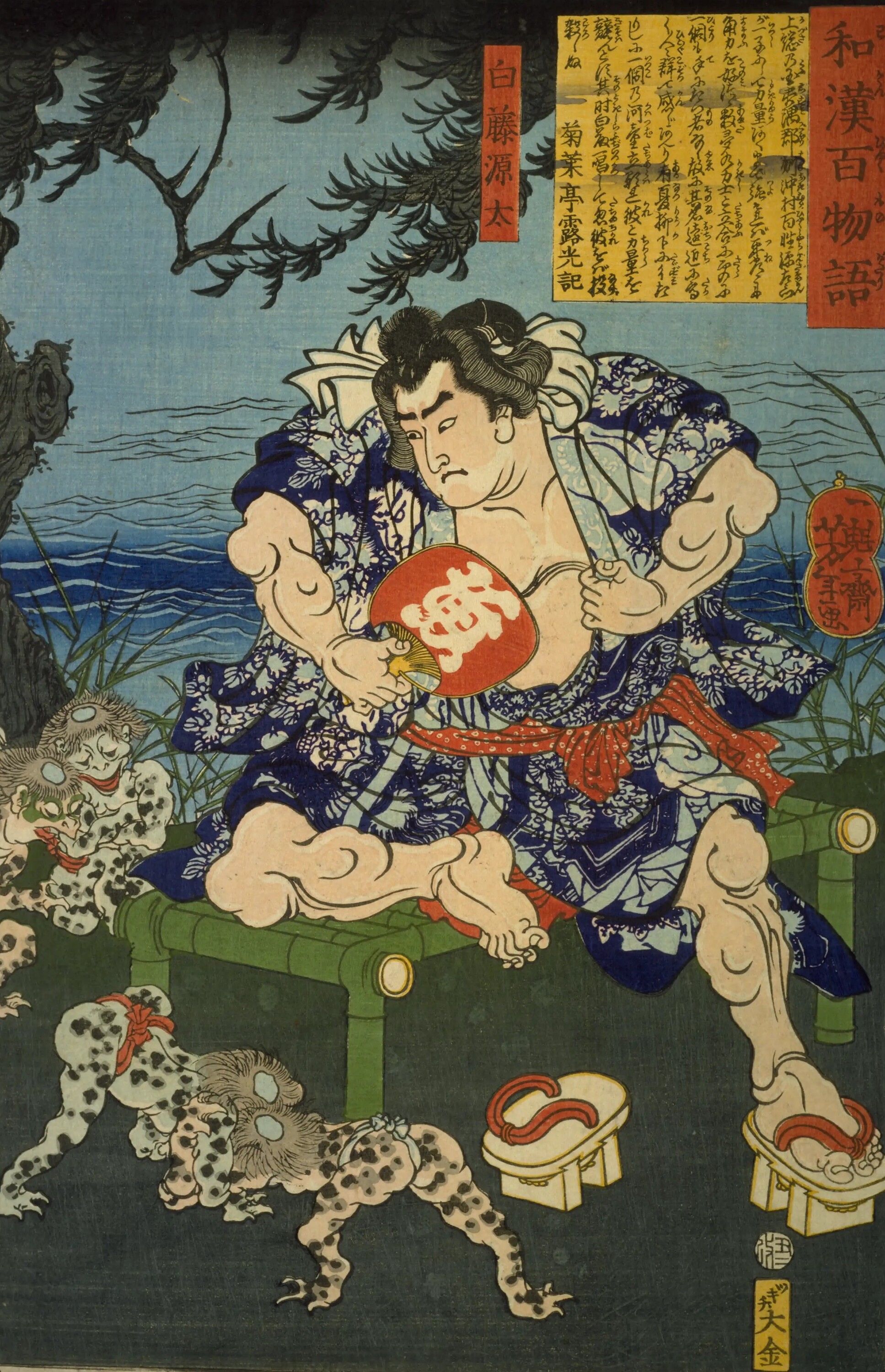
- The kappa lives in rivers and ponds. He has a turtle shell, webbed hands and a dish of water on top of his head that has to stay full, or he loses his strength. He drags children and horses into the water, but he’s also absurdly polite: if you bow to him, he bows back and tips his dish over.
- The oni is the closest thing to an ogre: huge, with red or blue skin, horns, a spiked club and a loincloth made of tiger skin. The horns and the tiger are there for a reason. In the old calendar, the northeast, the direction considered dangerous for a house or a city, corresponds to the signs of the ox and the tiger.
That northeast, the kimon, explains a lot of things you’ll notice as you walk around: notched corners in the walls around temples, shrines placed on that exact side to stand guard, and the huge Enryakuji complex sitting on the mountains northeast of Kyoto.
The oni is also the star of setsubun, when people throw soybeans out the door in February, shouting “demons out, luck in.” Every kindergarten has a teacher in costume who gets pelted with beans, and for the kids it’s the highlight of the year.
Foxes and tanuki
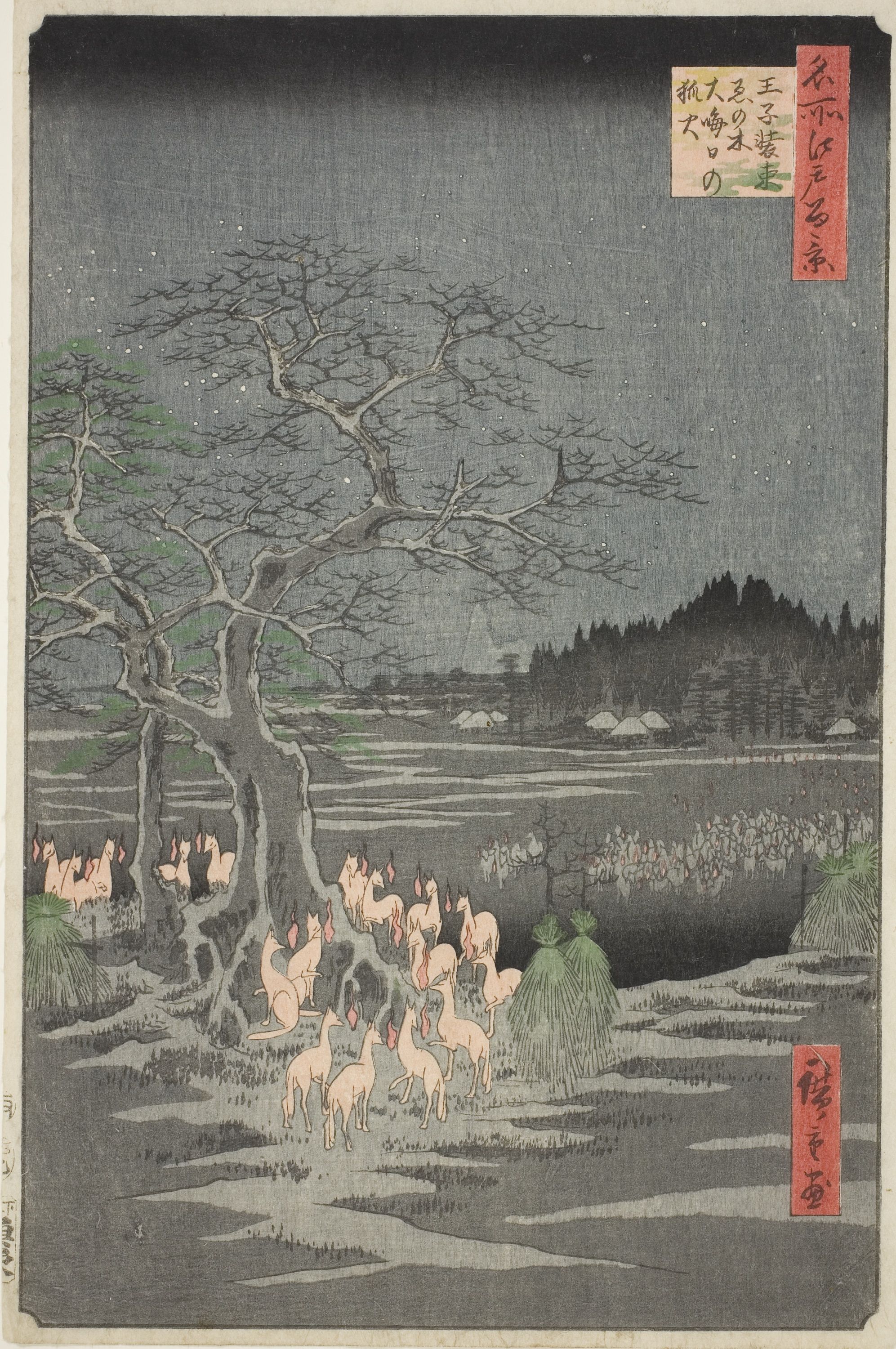
In the Japanese countryside there are two main animals that trick people, and they have opposite personalities. The fox is elegant, clever and vengeful. She can turn into a woman and live a human life for years before anyone finds out, and the most powerful ones can have as many as nine tails.
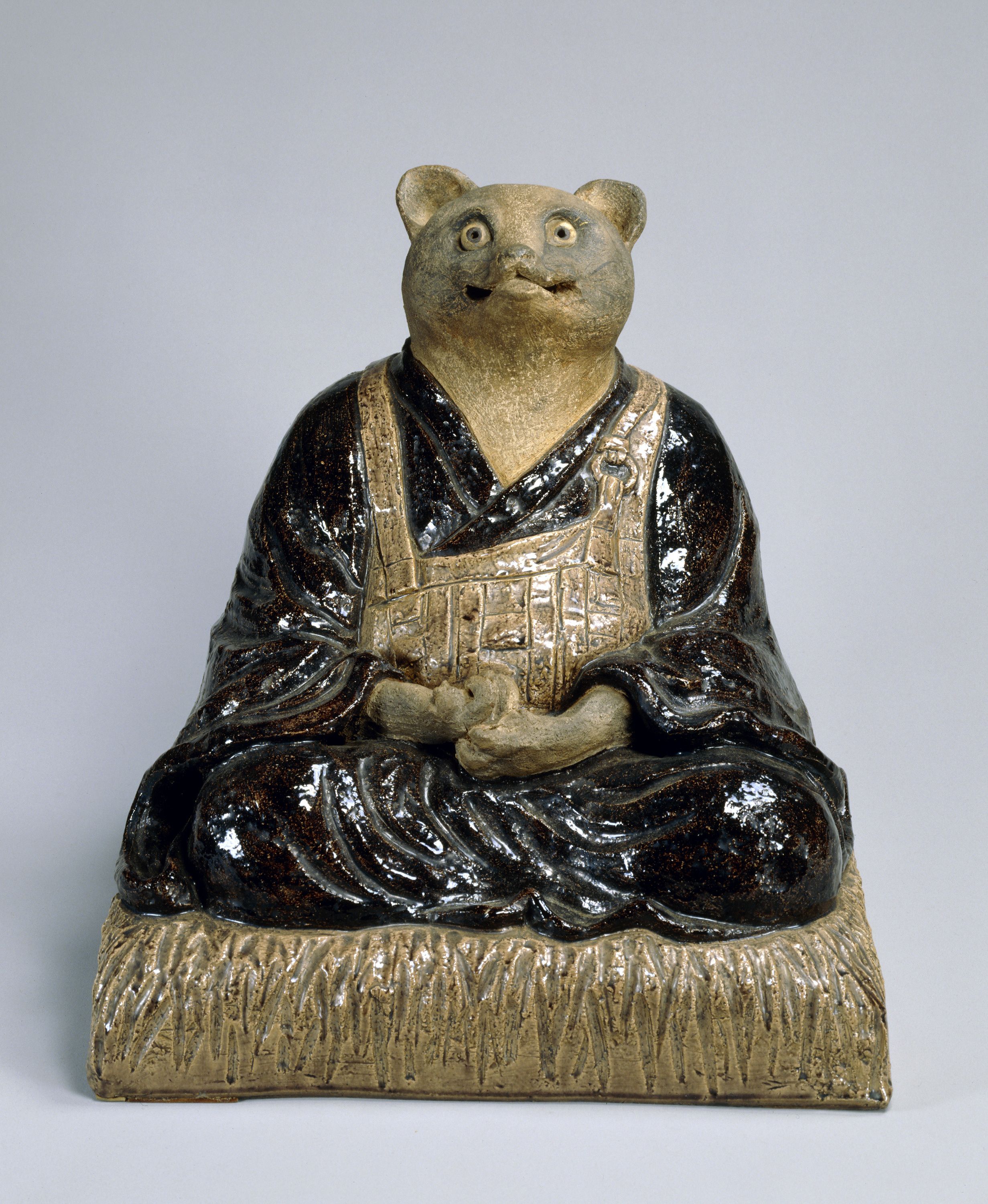
The tanuki, the raccoon dog, is the clown of the pair: big belly, a bottle of sake in hand, and a shape-shifting talent he uses mostly for small-time scams. Almost all the tanuki statues you see outside restaurants come from the Shigaraki kilns in Shiga Prefecture.
Foxes also have a serious religious role, because they’re the messengers of Inari, the god of rice and business. That’s why you find them in pairs, holding a key or a ball in their mouths, in front of the thousands of Inari shrines around the country, starting with Fushimi Inari in Kyoto.
In Tokyo, around Oji, there’s a story I’m really fond of. People used to say that on the last night of the year all the foxes in the region gathered under a big tree, lined up and walked in procession to the local Inari shrine, lit by their own foxfires. Hiroshige turned it into one of his best-known prints, and for a few decades now the people of the neighborhood have been recreating the procession dressed as foxes between New Year’s Eve and January 1.
Objects that come to life
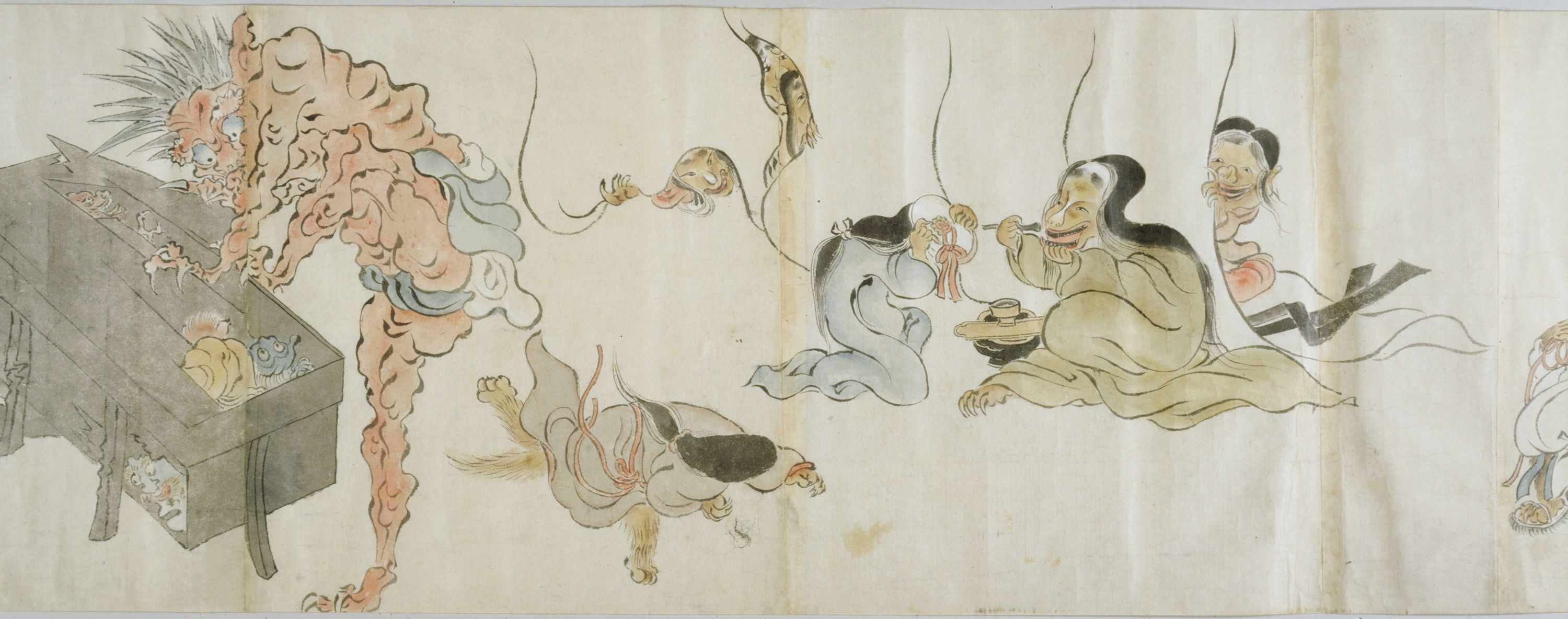
There’s one category of yokai I find more fun than all the others: objects. According to tradition, an object that reaches a hundred years of age can wake up, grow arms and eyes, and wander off on its own.
One-legged umbrellas, paper lanterns that split open into a mouth, sandals, pots, musical instruments. The story often takes an almost moral turn, with the objects angry because they were thrown away with no respect after a lifetime of work.
That’s where the image of the night parade of a hundred demons comes from: a line of creatures that crosses the city in the dark, and that no human should ever cross paths with. In Kyoto the parade was said to follow one specific street, Ichijo, in the north of the city not far from Kitano Tenmangu shrine.
Today there’s a neighborhood shopping street there, Daishogun, that took the legend and built its whole identity around it. The shopkeepers have put handmade yokai figures outside their stores, each one tied to the shop’s trade, and in the fall there’s a costume parade that recreates the procession. It isn’t a big tourist attraction and you shouldn’t treat it as one. It’s a couple of ordinary neighborhood blocks, with a butcher and a tatami shop, where someone came up with a way to get people strolling down the street again.
Sekien’s catalog
The way everyone now pictures these monsters comes largely from an Edo artist, Toriyama Sekien, who published a series of illustrated collections in the second half of the 18th century. One plate per creature, the name next to it, a short note. It was basically the first illustrated encyclopedia of yokai.
The books were a huge success at a time when prints were the main form of popular entertainment. Some of the creatures he drew came from old oral traditions, while others he put together himself out of wordplay and old paintings, and they joined the repertoire as if they’d always been there.
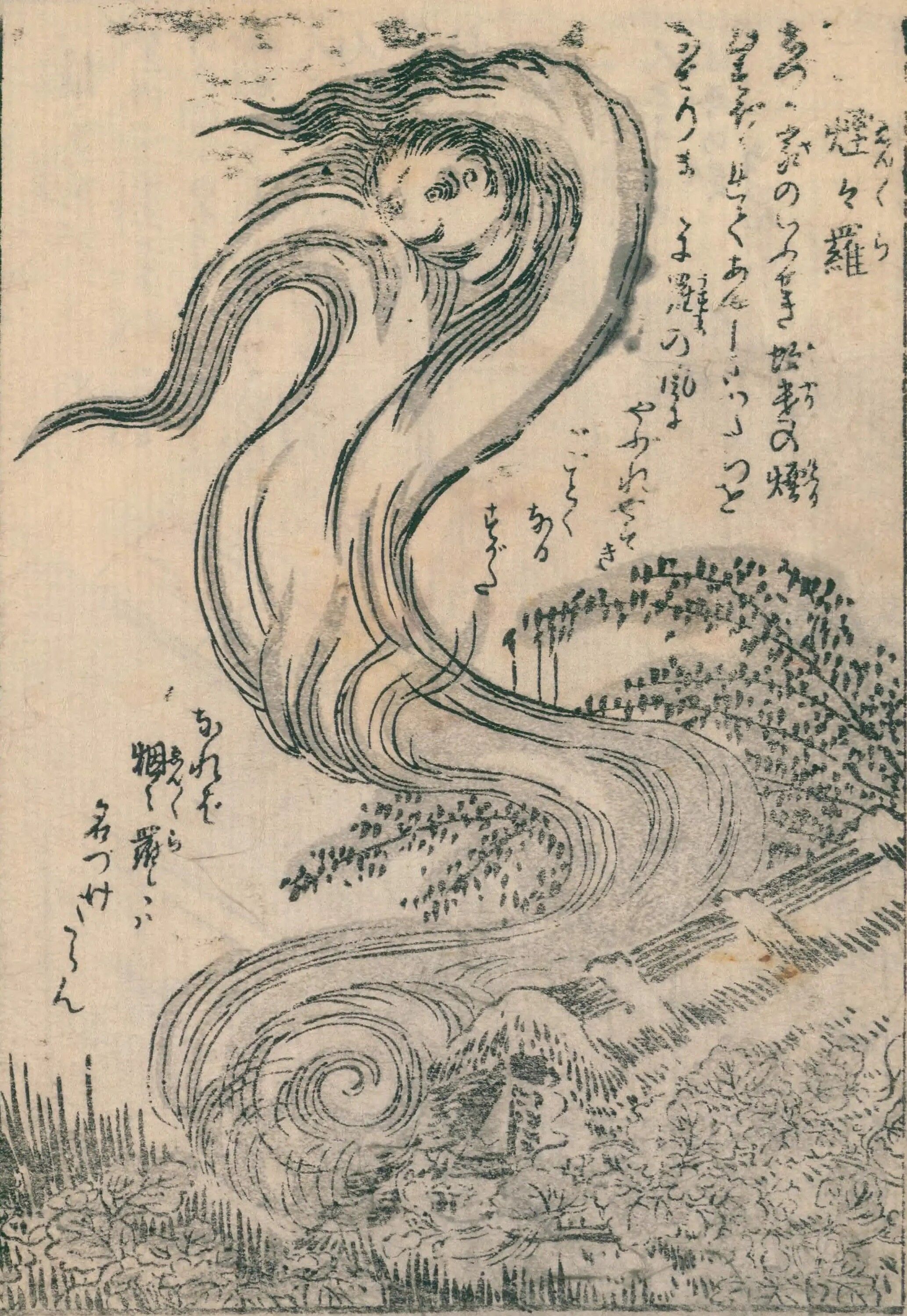
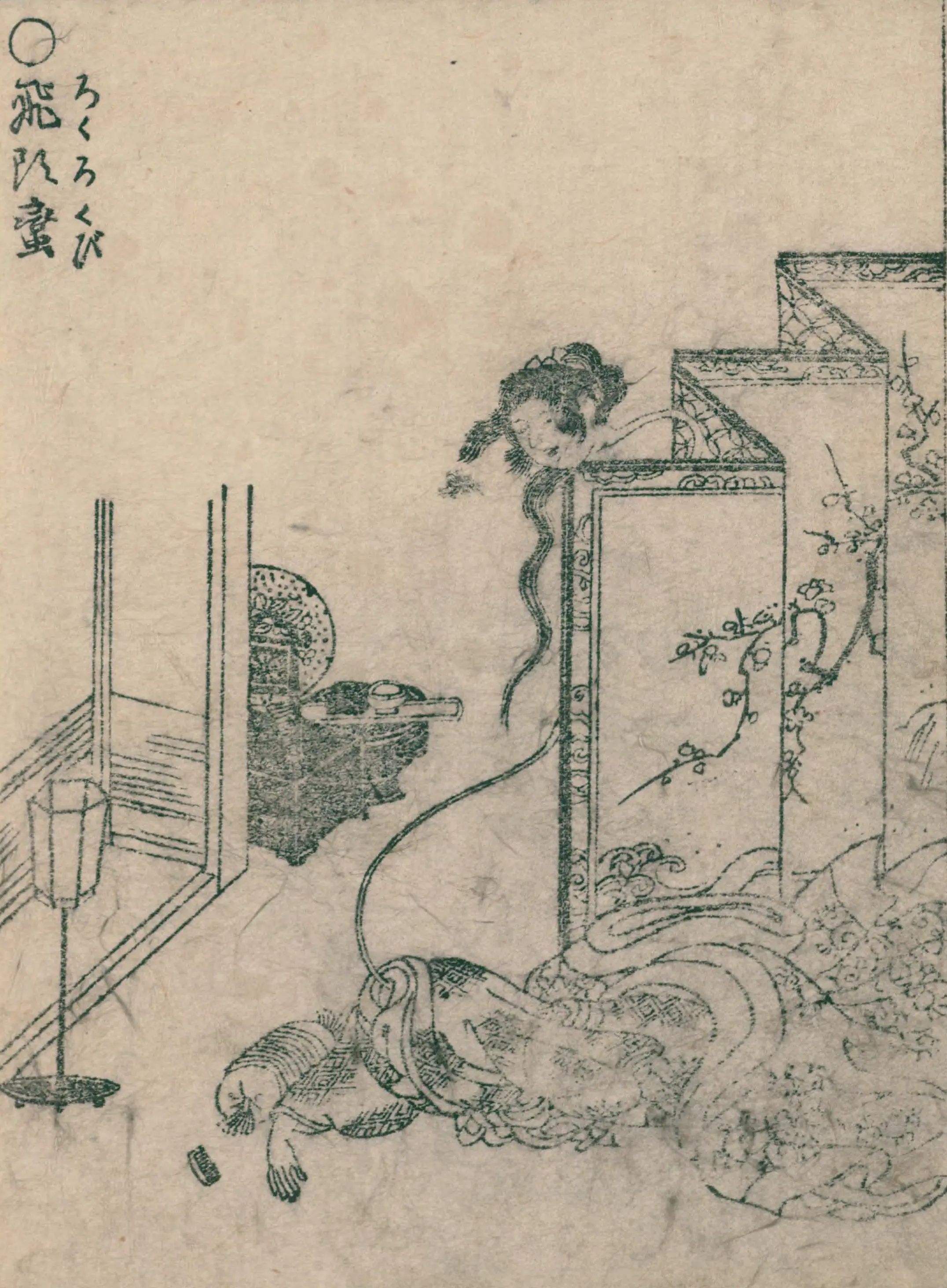
From then on yokai became entertainment in every sense: picture books, kabuki plays, children’s card games with monsters in place of the face cards. It’s the same thing that happens today with manga and video games, only more than two centuries earlier.
Many of those plates have been digitized in the archives of Japan’s National Diet Library, and if you ever browse through them you’ll recognize lots of characters you’ve already seen in some cartoon without knowing where they came from.
Yanagita and Tono
The second big moment came in the early 20th century, when Yanagita Kunio published a collection of folk tales from the Tono area in Iwate Prefecture, in the north of the country. A local man, Sasaki Kizen, had told him the stories, and Yanagita wrote them down as 119 very short fragments, almost like notes.
They aren’t fairy tales with a moral. They’re episodes told like news reports: a woman who vanished in the mountains, a child who sees something in the back room, a horse dragged into the river. The book is considered the founding text of folklore studies in Japan.
Tono is still a rural town, with rice paddies, houses with pitched roofs and mountains all around, and it has built much of its image on those stories. If you go, these are the things worth doing:
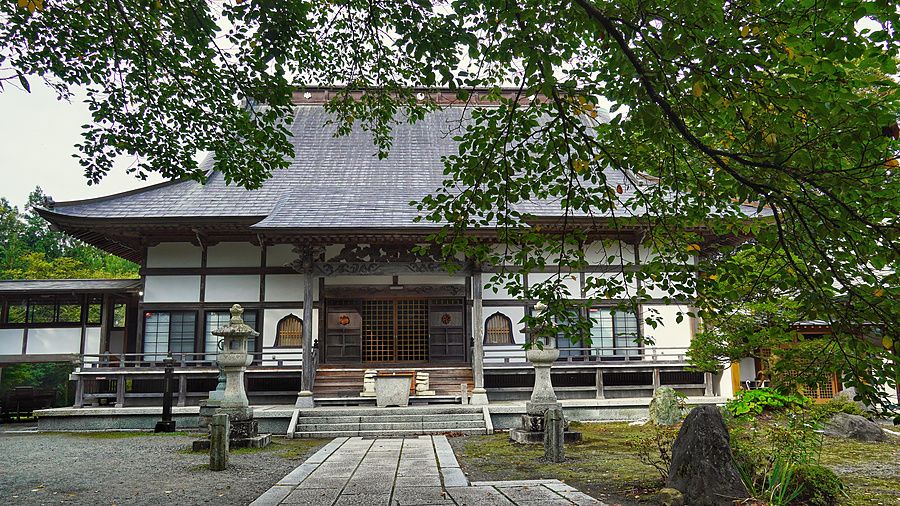
- Kappabuchi is a stretch of stream behind a Zen temple founded in the late 15th century, where kappa were said to live. Here they’re described as red instead of green.
- In the temple grounds there’s a guardian statue with a round hollow in its head that collects rainwater, just like a kappa’s dish.
- You can buy a kappa-catching permit at the town’s tourist facilities. It costs around 200 yen and has seven rules on the back, including not spilling the water from the creature’s dish.
- With the permit in your pocket you can fish for kappa from the little bridge, using a cucumber as bait. Nobody ever catches one, and that’s fine.
- Denshoen is a group of relocated farmhouses where you’ll find the stories about the zashiki-warashi, the child spirit that brings luck to whatever house it settles in.
You’ll need your own wheels to get around, because the sights are a few kilometers apart and the buses don’t run very often. I’d set aside a full day rather than shuttling back and forth from the station.
Mizuki Shigeru
The third chapter of this story comes down to one name: Mizuki Shigeru, the artist who after the war brought yokai into everyone’s home with his Kitaro series, about a ghost boy. Before him, yokai were old folks’ stuff. After him, they became something every generation shares.
Mizuki grew up in Sakaiminato, a port in Tottori Prefecture on the Sea of Japan coast, and the town has paid him back with interest. From the station, a street about 800 meters long is lined with more than 170 bronze statues of yokai planted along the sidewalks, and at the end there’s a museum dedicated to him.
What makes the place so enjoyable is that the theme doesn’t stop at the statues. The local line’s trains are decorated with the characters, the signs on banks and offices follow the theme, and even the manhole covers do. Whole families come with notebooks to collect the stamps along the way.
If you’re staying in Tokyo, there’s a scaled-down version. Mizuki lived for more than fifty years in Chofu, in the western part of the Tokyo area. On the Tenjin-dori shopping street, a short walk from the station, there’s a Kitaro-themed café with desserts inspired by the characters, and statues of his yokai pop up along the sidewalks of the same street. From there a bus takes you to Jindaiji temple, surrounded by greenery and famous for its soba, so it makes for a relaxed half day even if you’re not into manga.
If you’re really serious about it, there’s an entire museum on the subject in Miyoshi, inland in Hiroshima Prefecture. It grew out of the collection of a scholar, Yumoto Koichi, and displays painted scrolls, prints and objects. At its center is a local story from the Edo period about a boy who was supposedly visited by a different monster every night for a whole month, and in the end beat them all simply by toughing it out.
Ghost stories are for summer
In Japan, scary stories are a summer thing, not something for fall. The easy explanation is that getting the chills cools you down. The real reason has to do with obon, when the dead are believed to come home. It’s the time of year when the wall between the two worlds wears thin.
Every summer, kabuki theaters still put on the great ghost plays, amusement parks open their haunted houses, and TV schedules fill up with chilling stories.
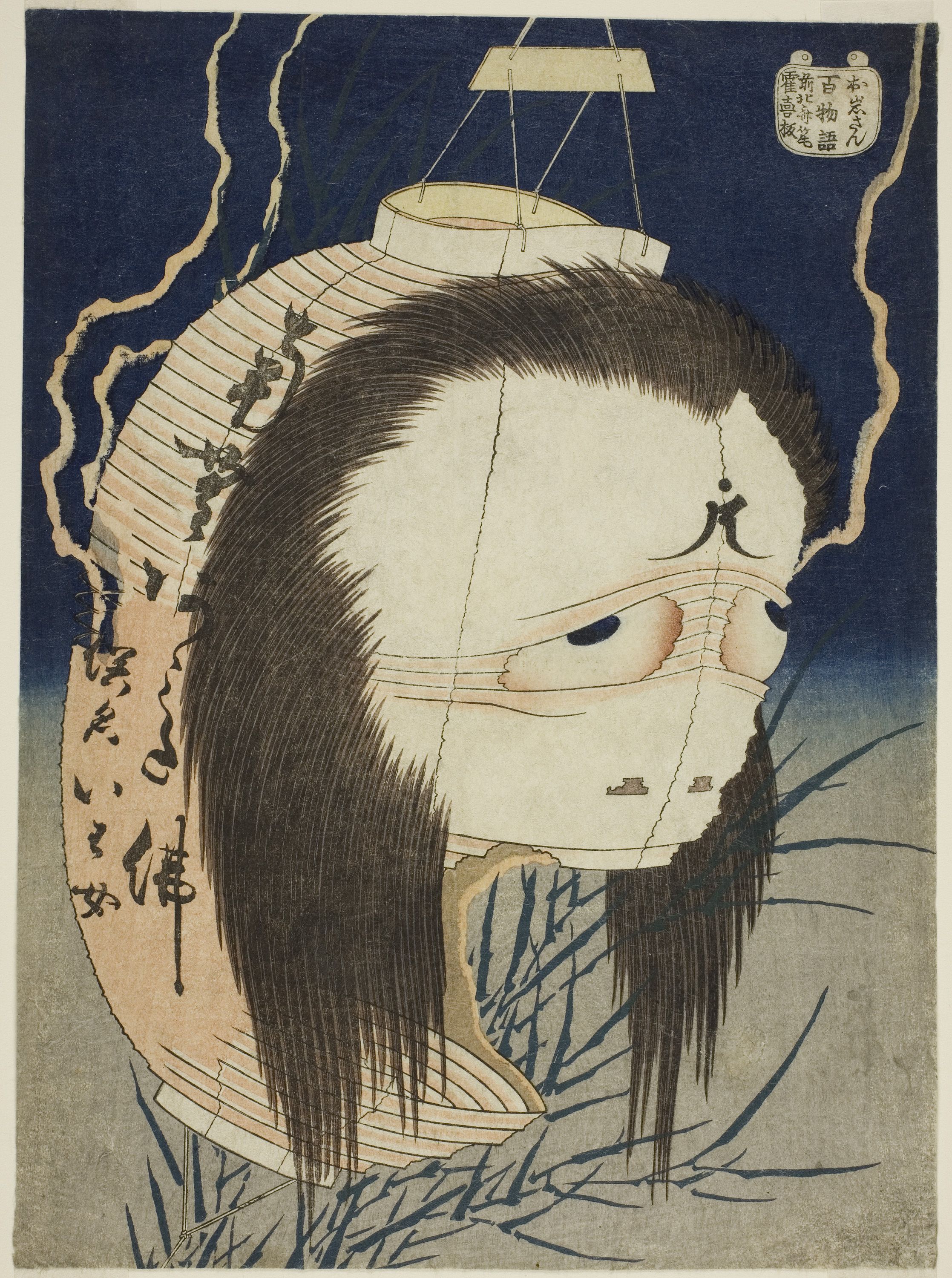
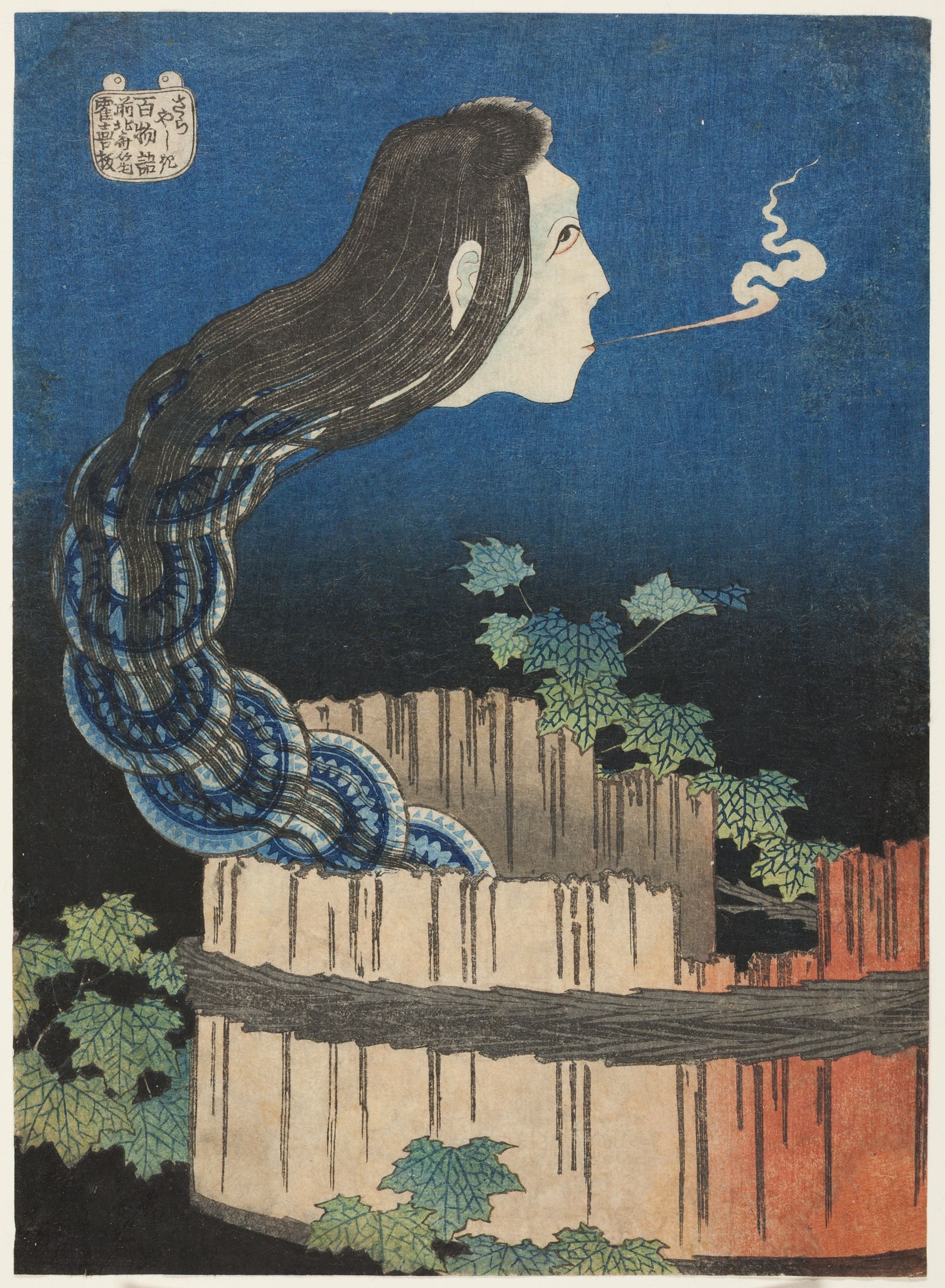
The three classic tales all share the same basic plot: a woman betrayed or killed by a man comes back to settle the score. Oiwa, disfigured by poison her husband gave her, comes back with her face deformed. Okiku, a servant thrown down a well, counts plates every night, gets to nine, and screams because the tenth one is missing. Otsuyu, a young woman who died of a broken heart, returns to her lover on summer nights, announced by the clack of wooden clogs and a lantern decorated with peonies.
These stories are tied to real places in Tokyo. In Yotsuya, not far from Shinjuku, there’s still a small shrine dedicated to Oiwa, and theater companies go there to ask permission before they stage her story. It’s tiny and squeezed in between houses, so unless you’re looking for it, you’ll walk right past.
There was also a game, which later gave its name to a whole genre. People got together at night and lit a hundred candles. Each person told a scary story, and after every story one candle was put out. When the last one went out and it was completely dark, something was supposed to happen. Let’s face it, it’s not hard to see why the idea stuck.
Planning the trip
Putting together a trip around these themes is easier than it sounds, because the areas are well defined and none of them needs more than a couple of days.
The south, with Takachiho and the Miyazaki coast, is where you go for the origin myths. You’re better off with a car there, since it’s mountain country and public transportation is slow. Shimane, with Izumo and Matsue, is the Susanoo and Okuninushi part of the trip. It’s easy to get around on local trains and a few buses, and you also get Matsue Castle and the hot springs by the lake.
Tono, up north, is for anyone interested in rural folklore. Sakaiminato and the museum in Miyoshi are the pop culture side, and that’s the part kids like best.
One last thing about costs, since that’s what people always ask me about. Visiting shrines and walking among the statues costs nothing, or close to it. The themed museums are priced like most small museums in Japan, so a few hundred yen. The real expense is transportation: these areas are a long way from the big cities, so you need long-distance trains or a rental car. Always check current prices and schedules before you go, because in rural areas trains and buses don’t run often.
My pick
If you could only pick one place, I’d say Takachiho. Standing in front of that gorge as the mist rises, with the story of the goddess hiding in the cave in your head, is worth the hassle of getting there.
What stays with me most from all of this, though, is something else. It isn’t the folklore you see in museums. It’s the idea that an old umbrella can have feelings and a fox can trick you for years. Living here, you realize that way of seeing things is still everywhere: in cartoons, in the names of sweets, in stones with a rope tied around them in the middle of a field.
So who would you rather tangle with, a tengu or a kappa?