
The Japanese Salaryman
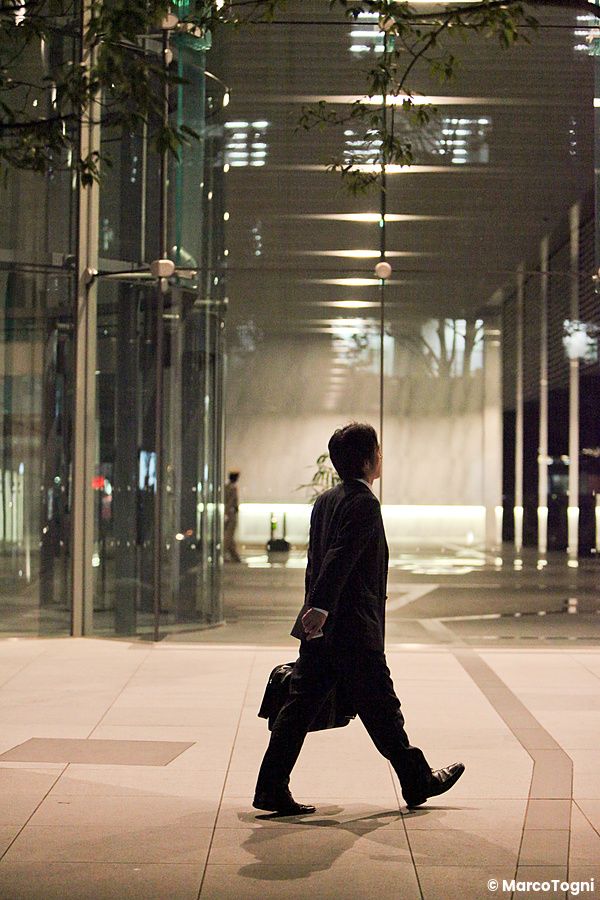
When most people picture Japan, they see a man in a suit and tie carrying a hard-sided briefcase, and for once the cliché gets something right. Japanese salarymen make up a huge share of society, and once you understand how they live, a lot of scenes you notice as a traveler but can’t quite explain start to make sense: the packed trains at eight in the morning, the groups of coworkers laughing late at night in izakaya, Japan’s casual pubs, and the fast-moving lines at the soba stands inside train stations.
Behind the image there’s a word coined here rather than in the West, a path into the job that’s nearly the same for everyone, and a set of habits you’ll notice just walking around the city.
Contents
Who counts as a salaryman
A salaryman isn’t just anyone with a paycheck. The word means an office worker on a fixed salary at a company, usually a mid-sized or large one, hired as a permanent employee and on a career track built around staying at the same place for years. It doesn’t cover doctors, lawyers, accountants, top executives or senior government officials. They get a salary too, but nobody would use that word for them.
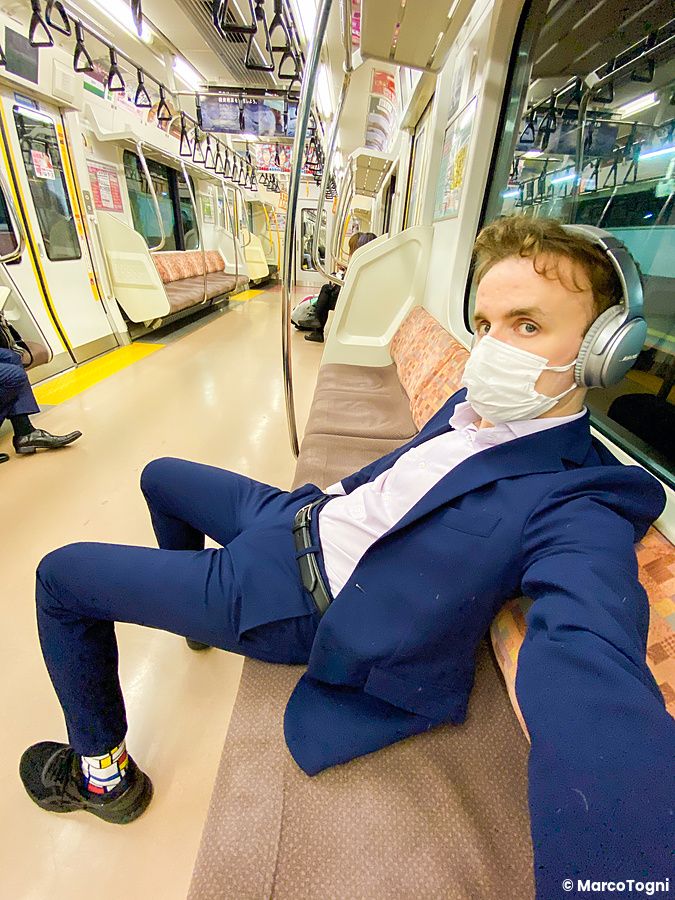
Japanese also has kaishain, which means company employee. It’s a neutral term, fine for filling out a form. Sarariman, on the other hand, comes with a very specific image: the dark suit, the briefcase, the same train at the same time every day, the meetings, the dinners with coworkers that nobody really chose to go to.
Where the word comes from
The word was made in Japan, not in the West, and it only looks like English: it’s just salary and man stuck together. It caught on in the 1920s, when cities were growing, offices were multiplying and a fixed monthly salary was a novelty compared with farm work or day labor.
Before that, people used a more bureaucratic expression for someone paid by the month. The new word won out partly thanks to a book of short stories about office life that came out around then and was quite a hit.
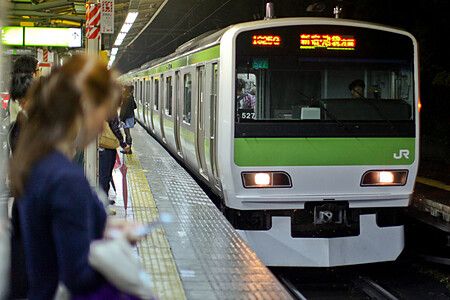
I always love telling people this one: salary comes from Latin, from the money the ancient Romans gave soldiers to buy salt. It’s a long way from there to the guy with the black briefcase running for the Yamanote Line, but the root is the same.
Getting hired
The process is far more standardized than you’d think. Big companies hire new graduates in a single batch, once a year, and new hires actually start in spring, when the Japanese fiscal year begins in April. If you miss that round, it’s harder to get back into the system, which is one reason job hunting here feels like a second set of final exams.
The process goes roughly like this:
- The hunt starts while you’re still in school, with job fairs, written tests and a series of interviews that can drag on for months.
- If you’re picked, you get a job offer, confirmed in the fall with a small ceremony at the company.
- Everyone starts on the same day, with an entrance ceremony followed by weeks of in-house training before you even see a desk.
- There’s a suit just for interviews, dark and with zero personality, and it’s the same for everyone: same white shirt, same bag, same shoes.
If you’re in Tokyo in spring and see hundreds of young men and women dressed exactly alike, all walking toward the same building, you’re watching their first day at the company.
The everyday uniform
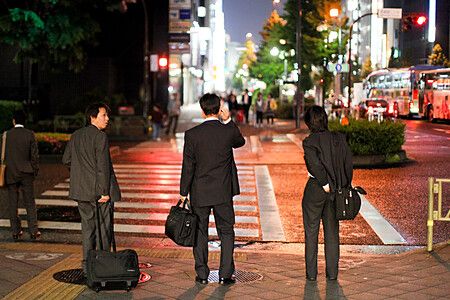
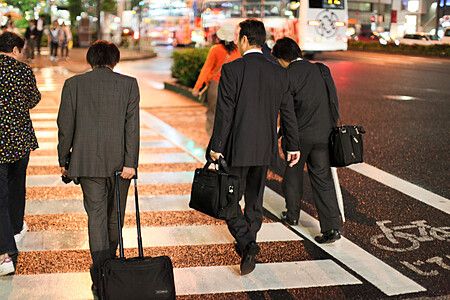
Once you’re hired, you can ditch the interview suit, but the suit stays. White or light blue shirt, dark pants, black shoes, a bag that stands up on its own when you set it down. Nobody mandates a particular look, and yet the result is an unwritten uniform you can spot from a block away.
Things loosen up a lot in summer, because at 40°C with sky-high humidity a tie becomes unbearable. In lots of offices people spend the hot months in short-sleeved shirts with open collars, and the thermostats are set warmer to save energy.
What always strikes me is the care that goes into small details: a handkerchief in the pocket for mopping sweat, shoes still shiny after an hour on the train, an ID badge on a company lanyard. It’s not vanity. Looking sloppy in front of a client reflects badly on the whole company.
Lifetime employment and seniority
The classic model rests on three pillars: a job that lasts your whole working life, pay that rises with years of service, and a union organized inside the company rather than across the industry. In exchange for that security, the company expects enormous flexibility: department changes decided from above, duties that can change completely from one year to the next, transfers to another city with just a few weeks’ notice.
In the vast majority of cases it’s the company that decides on these transfers, not the employee, and at the biggest firms they affect a good share of full-time staff. That’s how you end up with something you rarely see in Europe: the transferred employee who leaves home and family where they are and goes to live alone near the new office, sometimes for years, coming back on weekends. Japanese has a specific name for this, tanshin funin, meaning a solo transfer. The reasons people give most often for not moving the whole family are the kids’ schools, a house they’ve already bought and elderly parents who need looking after.
Companies make up for it with company housing at rock-bottom rents, commuting allowances and various reimbursements. I’ll be honest with you: the deal has a logic to it, but it only holds up as long as the promise of a secure job is kept.
A typical day
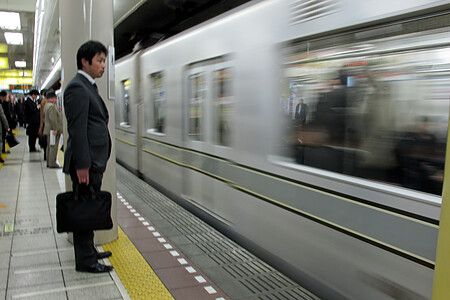
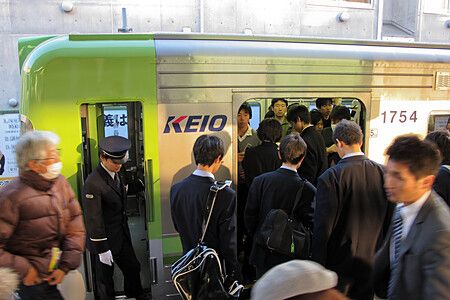
The alarm goes off early, because commuting here is no joke. In the Tokyo area the average one-way commute is around an hour on the train, and people living in the neighboring prefectures easily hit an hour and a half. Rush hour is concentrated between 7:30 and 9:00, and on the busiest lines trains run well over their official capacity, with cars so packed you don’t need to hold on to anything.
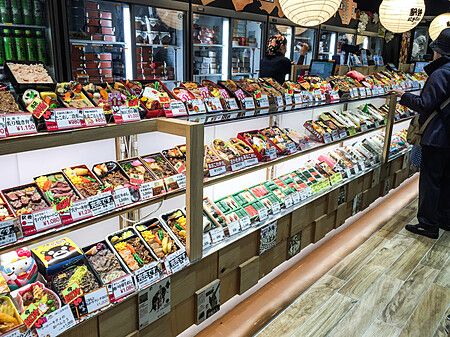
At the office the day often starts with a few quick announcements, everyone on their feet, and then people work in open offices where the bosses can see everybody. Lunch is almost always at noon sharp. It’s short and people eat near the office: the lunch special at a small restaurant, a bento from the supermarket or konbini, or soba eaten standing up in five minutes inside the station.
In the evening people rarely all leave at the time in their contract. They wait for the department to empty out and wrap up the last few things, and anyone who has plans with coworkers moves on to part two of the day.
Salary and pocket money
The average employee in Japan earns around 4.5 million yen a year before tax, and workers in full-time permanent positions earn noticeably more. On top of that come bonuses, usually twice a year, which can be worth several months’ pay and which many families use for big expenses or put into savings.
One detail says a lot about how Japanese households work: in many homes the paycheck goes into an account the wife manages, and the husband gets a monthly allowance for his own spending. Surveys that come out every year put it at around 40,000 yen a month, and the biggest chunk goes to lunch, which runs about 600 to 800 yen a day.
With numbers like that, you can see why lunch specials for just under 1,000 yen in office districts are a whole industry, and why the guy in a suit bringing a bento from home is far from the only one. These figures shift over the years, so take them as a ballpark.
Drinking after work
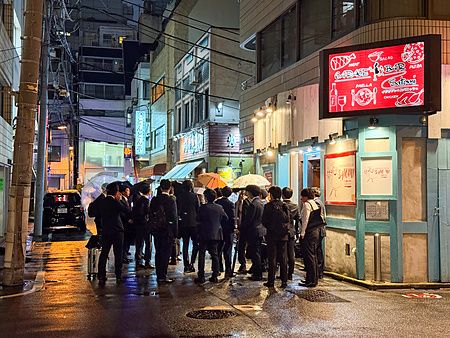
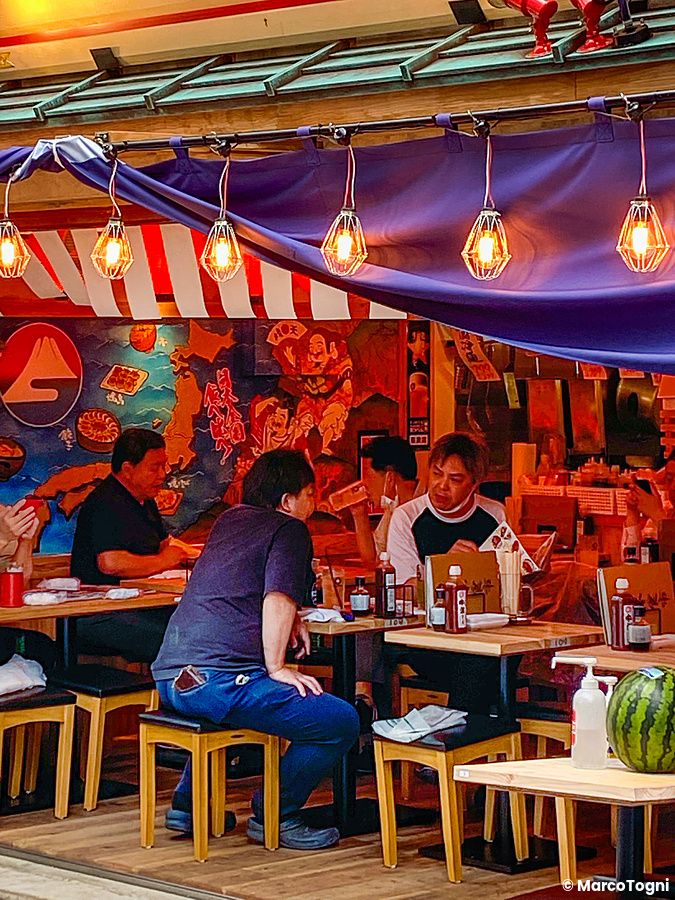
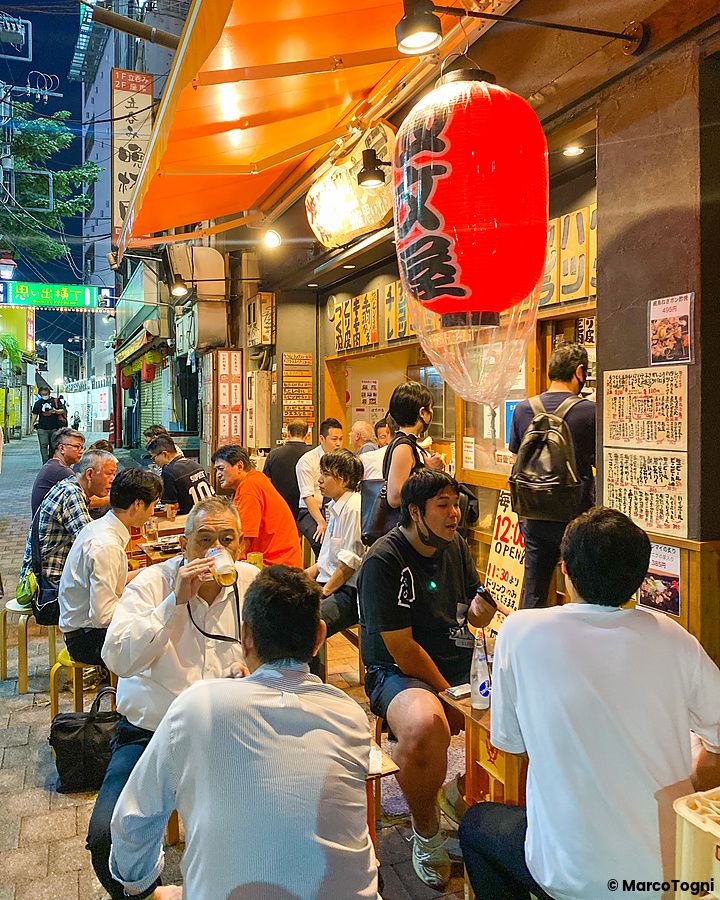
A nomikai is a dinner or drinking session with coworkers, and for decades it was considered part of the job. There’s even a word that blends drinking and communication, because the whole idea is that over a beer people say things they’d never say in a meeting: what the boss really thinks, who’s getting moved, how to fix a problem between two departments. That word is nominication, a cross between nomu, which means to drink, and the English word communication. It’s half joke and half truth, like everything about the nomikai.
The rules are always the same. You order drinks for everyone right away so nobody’s left waiting, you pour into other people’s glasses and never your own, and you sit according to a pecking order nobody explains but everyone knows. In December comes the season of year-end parties, when bars and restaurants are full every night.
Not everyone is on board anymore, though. In surveys more than six in ten people say they’d happily skip these evenings, and it’s not necessarily the young ones complaining. In some polls it’s actually people in their fifties who are the most reluctant, because they feel they’re being judged there too.
Overtime and karoshi
Overtime is the real problem. The law caps extra hours with a monthly limit and a yearly maximum, plus thresholds beyond which the situation is considered dangerous: at around 80 hours of overtime a month, averaged over several months, you cross what’s known here as the karoshi line, karoshi being death from overwork.
The trouble is the huge gap between the hours in the official statistics and the hours workers report in surveys, because part of that extra time never gets recorded. There’s even a dedicated expression for unpaid overtime, and it’s become part of everyday language without anyone getting too worked up about it.
Karoshi isn’t some myth from a documentary. It’s a recognized problem, with a national law devoted to preventing it and cases that regularly make the news. It’s a similar story with vacation: every year a good share of paid days off simply goes unused, because taking all of them feels like dumping work on your coworkers. That expression for unpaid overtime, by the way, is sabisu zangyo, literally service overtime, meaning hours you give the company for free.
What they’re called
Japanese has a remarkably rich vocabulary for all the nuances of this life, and the words tell you more than any statistic could.
Shachiku combines the words for “company” and “livestock.” The result is corporate livestock, a jab at people who can no longer tell what they want from what the company wants, and people often use it to describe themselves. Madogiwazoku is the window-seat tribe: people with a desk by the window and nothing to do, sidelined but not fired.
Kigyo senshi, the corporate soldier, and moretsu shain, the gung-ho employee, a term that came from a late-1960s ad, sound like something from a heroic era. Datsusara is someone who gives it all up and goes into business for themselves.
People joke about this world a lot, too. For decades a major insurance company has run a contest for short comic poems about office life. It started as an in-house game and grew into a national event, and reading a few in translation is the fastest way to get the bitter humor you find in Japanese offices.
Not just men
The word salaryman makes you picture a man, and that’s no accident. For a long time, a long-term company career was designed with men in mind. Women were labeled OL, short for the English “office lady,” and given support roles, with an unspoken expectation that they’d leave once they married.
Today things have opened up. There are women in technical, sales and management roles, and you hear the word OL much less. But real obstacles remain: couples where both partners work run into transfers decided by the company, and coming back after maternity leave is still the point where many careers slow down.
To me, this is the most interesting question in Japanese working life, more than overtime. As long as the model expects you to be available anywhere, anytime, anyone with a family to take care of starts out behind.
What’s changing
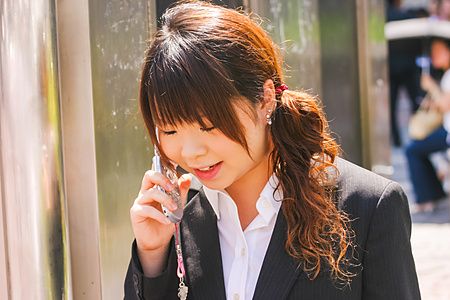
A guaranteed job for life isn’t the rule for everyone anymore. Switching companies mid-career is no longer seen as a failure. Several companies have brought in job grading systems based on role rather than seniority, and others have started cutting back on forced transfers by relying on remote work and short business trips.
The expectation of total loyalty has softened too. Among younger people it’s fairly common to join a company already knowing it won’t be the last one. Retirement doesn’t mean the end of work anymore either, since plenty of people stay active well past retirement age, often rehired by the same company on different terms.
What isn’t changing is everything around it: respect for hierarchy, being careful not to cause trouble for the group, the struggle to say no to a boss. Honestly, I don’t think that will go away. It isn’t a company rule; it’s simply how people relate to each other here.
Where to see them
If you want to watch this world up close without intruding, there are places and times that will show you more than any explanation:
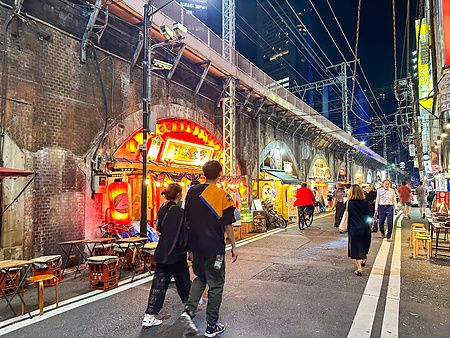
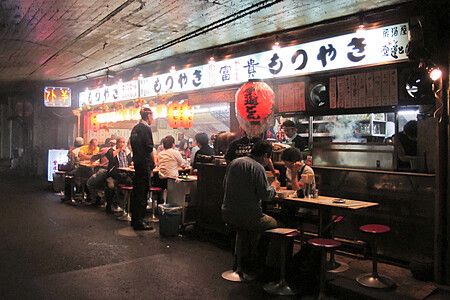
- Shinbashi in Tokyo is the neighborhood that sums it up: offices upstairs, cheap places to eat and drink below and around the tracks, and in the evening groups of coworkers in shirtsleeves filling up the tables. It’s also where TV crews go to interview people as they leave work.
- The alleys under the tracks between Yurakucho and Ginza, with tables outside, smoke from the skewers and trains rumbling right over your head.
- The standing soba counters inside the big stations, where you walk in, order from a machine, eat in five minutes and you’re on your way.
- The last train, between midnight and 1:00: loosened ties, people running up the stairs, lines of taxis and capsule hotels filling up with the ones who really did miss it.
One practical tip: avoid squeezing onto the subway with luggage during the two busiest hours of the morning.
It isn’t dangerous. It’s just a level of crowding that’s not worth putting up with on vacation.
If you work with them
Anyone who comes to Japan for work quickly finds out that the unwritten rules matter as much as the contract. You hand over and accept a business card with both hands, actually read it and set it on the table in front of you, and you never shove it straight into your pocket. In meetings, seating goes by rank. Decisions get worked out beforehand in informal talks, so the meeting itself is often there to confirm them, not discuss them.
When you eat and drink together, remember three things: wait for the opening toast, pour drinks for others and let them pour yours, and don’t disappear without saying goodbye.
The phrase you’ll hear a thousand times is otsukaresama desu, something between “thanks for your hard work” and “have a good rest of your day.” People say it when they come in, when they leave and when they answer the phone. Learning it by heart will win you more goodwill than any speech.
My take
Looking at a salaryman and seeing only a victim of the system is an easy shortcut, and the wrong one. Under that uniform are people who’ve built up their skills in a single place for twenty years, who know their coworkers better than their own relatives, and who, over a skewer on a Friday night, show a likable side you’d never have guessed at the office.
Sure, the hours are long, and the morning trains are what they are. But I swear the scene that sticks with me most isn’t one of exhaustion. It’s a table of six coworkers laughing their heads off at eleven at night, jackets hanging behind them and ties half undone.
Next time you walk past a packed izakaya, stop for ten seconds and look inside. You’ll understand more that way than by reading another ten articles.