Japanese Whisky
You can enjoy Japanese whisky anywhere, but in Japan it takes less effort to make sense of it. Here it isn’t just the collector’s bottle you read about when it goes up for auction. It’s the tall glass packed with ice that lands on your table at an izakaya, the Japanese pub, before the food even shows up. It’s the can you grab at a 24-hour convenience store, and it’s the wooden counter where the bartender asks what you like, then disappears to dig a bottle out from the back of the shelf.
Behind all this there’s more than a century of history, a wood you’ll only find here and a way of drinking that has little to do with Scotch. And enjoying it doesn’t have to break the bank.
Contents
How it started
It all goes back to two men in 1920s Japan who wanted to do something nobody had ever done. Shinjiro Torii sold wine and spirits in Osaka and had built a small empire on a sweet flavored wine. With that money he put up the country’s first malt distillery in Yamazaki, a valley between Osaka and Kyoto that he picked for its water and for the mist rising off the rivers. Torii’s company would later become Suntory.
The other man was Masataka Taketsuru, who came from a family of sake brewers near Hiroshima. He was sent to Scotland to study chemistry and ended up working at Scottish distilleries with a notebook in hand. He came home with his notes and a Scottish wife, and he was the one who got production going at Yamazaki for Torii.
The two parted ways over climate. Taketsuru wanted the north, cold and damp like Scotland, while Torii preferred to stay close to the big markets of Kansai, the region around Osaka and Kyoto.
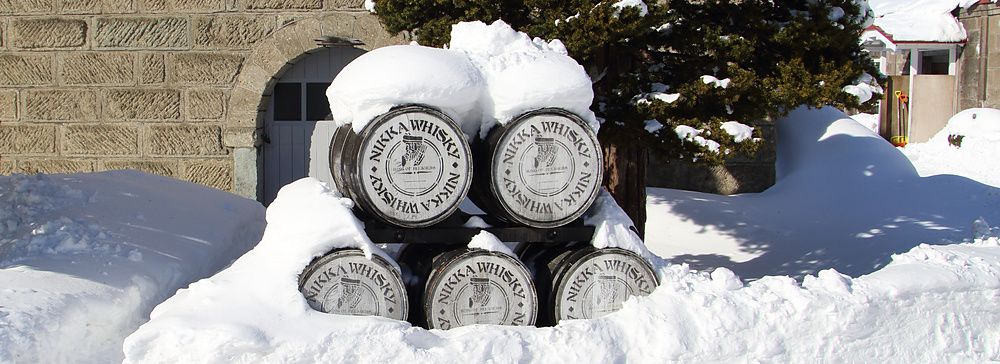
In the 1930s Taketsuru moved to Yoichi, a town on the coast of Hokkaido, Japan’s big northern island, and founded the company now called Nikka. That split gave Japanese whisky its two personalities, and almost a hundred years later you can still tell them apart in the glass.
What it tastes like
If you’re expecting a copy of Scotch, the first sip will catch you off guard, almost always in a good way. Japanese whisky is usually cleaner, drier and less smoky. It was made to go with food, not to sit on its own by the fireplace.
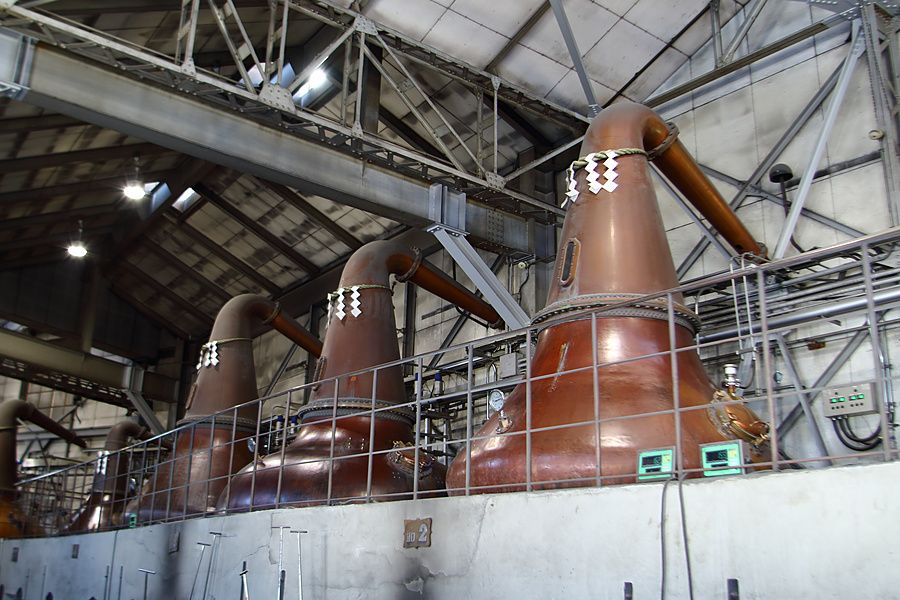
That doesn’t mean it’s watered down. Yoichi turns out oily, slightly salty whiskies with a hint of smoke that reminds you of the Scottish islands. Hakushu, Suntory’s distillery in a forest at the foot of the Japanese Alps in Yamanashi Prefecture, makes green, herbal whiskies that taste almost like a freshly torn leaf.
What really sets it apart, though, is the wood, its true signature. Mizunara is an oak that grows in Japan: slow-growing, with a crooked trunk and porous wood. That makes for terrible casks, because they leak, and for years coopers cursed it.
But after many years in that wood, the spirit picks up an aroma you won’t find anywhere else, something between sandalwood and temple incense. Bottles aged only in mizunara are rare and expensive, but the best-known blends do carry that note, added in small doses the way you’d add a spice.
There’s also a technical difference that changes everything. Scottish distilleries trade spirit with each other, and Japanese ones almost never do. Each company has to make every flavor it needs in-house, so a single Japanese distillery works with more types of stills, yeasts and casks than is normal elsewhere.
Reading the label
On store shelves you’ll also find bottles that have Japanese-looking designs but are full of spirit bought abroad. The industry has agreed on shared rules with specific requirements for putting “Japanese whisky” on the label.
There are four points, all easy to remember, and knowing them will keep you from bringing home a souvenir that’s Japanese only on the label:
- The water has to be sourced in Japan, and the ingredients must include malted barley, with other grains allowed.
- Fermentation and distillation have to take place at a distillery in Japan, not anywhere else.
- The whisky has to age for at least three years in wooden casks in Japan.
- It has to be bottled in Japan at no less than 40% ABV.
Producers who blend in imported spirit have to say so, and plenty of famous labels do carry the words “world blended whisky.” That doesn’t make them bad. Some blends of this kind actually win awards and cost a lot.
It just means you’re buying something else. If you’re after real Japanese whisky, I’d check the text in Roman letters on the back and be wary of bottles with no distillery name that sell for next to nothing in tourist shops.
Bottles worth knowing
The place to start is Kakubin, the square bottle with diamond-patterned glass that you’ll see in every izakaya in the country. It dates back to the 1930s, costs around 2,000 yen for the large size and is one of the cheapest spirits at the supermarket. On its own it’s nothing special, but with soda it becomes a different drink.
One step up is Nikka From the Barrel, a squat, square little bottle, strong and concentrated. Outside Japan it has a small cult following, while here you can find it without much trouble. I like it precisely because it’s cheap for what you get in the glass.
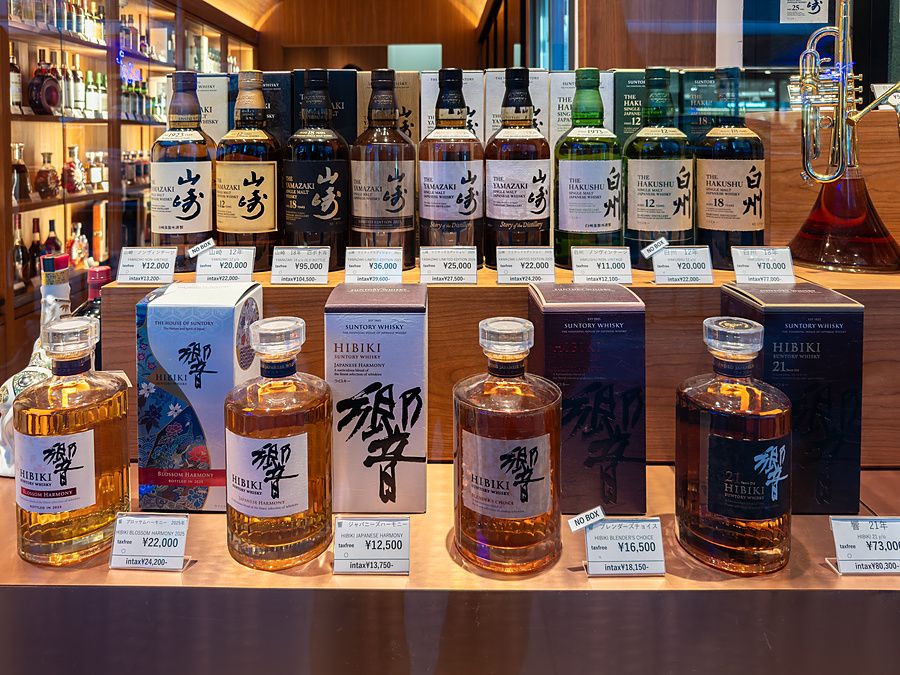
Then you move into gift territory. Hibiki Japanese Harmony, Suntory’s elegant blend, is smooth and comes in a 24-sided bottle. It’s the classic one to bring home for someone who doesn’t drink whisky every day. Its list price is now over 8,000 yen, and in stores it almost always costs more.
No-age-statement Yamazaki and Hakushu are the two bottles everyone’s hunting for, which is exactly why they’re the hardest to get at a fair price. If you want to look past the big names, try Ichiro’s Malt from the Chichibu distillery, in the mountains northwest of Tokyo, or the single grain from the distillery at the foot of Mount Fuji. It’s incredibly smooth, with a sweet finish that wins over even people who say they don’t like whisky.
Why it’s so expensive
The reason is boring, but it explains everything. In the 1990s, nobody in Japan wanted whisky anymore. Consumption collapsed, companies cut production and some distilleries shut down completely.
A 12-year-old whisky, though, has to go into the cask twelve years before you can sell it, and those casks simply never got filled. When the international boom came, with wins at blind-tasting competitions and exports dozens of times higher than before, the warehouses were half empty.
That’s where the no-age-statement releases, the discontinued bottles and the constant price hikes come from. Yamazaki 12 already has a high suggested retail price, over 15,000 yen, and in regular stores it can cost nearly double that.
If you want it at list price, you have to enter a lottery. Department stores, electronics chains and supermarkets run draws you can sign up for, and you almost always lose. Honestly, it’s not worth planning your trip around chasing it. Drink the older whiskies by the glass at a bar, where the price difference hurts a lot less, and take home bottles from small distilleries that nobody would ever think of flipping at auction.
The everyday highball
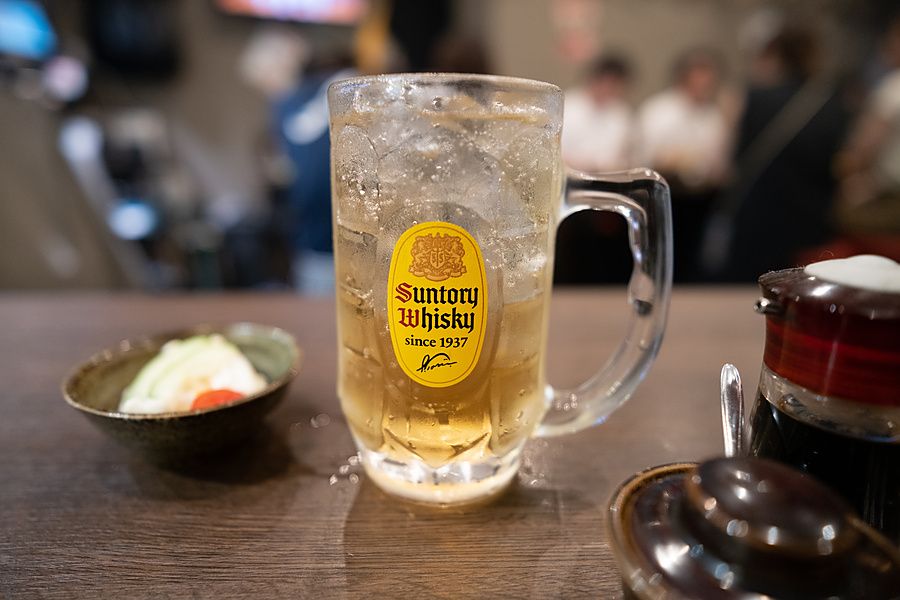
In Japan, the word highball means only one thing: whisky and soda in a tall glass, with ice to the brim. The classic ratio is one part whisky to four parts soda, with the soda poured slowly so the bubbles don’t escape.
It’s not a cocktail-bar trend. It’s the national after-work drink. Izakaya chains serve it at low prices, often from a dedicated tap, and convenience stores have a whole wall of ready-to-drink cans in different strengths.
Drinking whisky this way also changes how you eat. A highball cuts through fried food better than beer and doesn’t fill you up, which is why you see it next to chicken skewers, karaage, tempura and anything greasy and salty.
If you get the chance, order it somewhere that serves it properly ice-cold, with a chilled glass, cold whisky, cold soda and no lemon slice unless you ask for one. When I want something simple after work, it’s the first thing I think of, and it costs about as much as a medium beer.
Neat, on the rocks or with water
The highball isn’t the only way to drink whisky, and at the counter it helps to know the right words. Straight means neat, and rokku means on the rocks, usually over a single large hand-carved ice ball that melts slowly.
Mizuwari is whisky cut with cold water and ice, then stirred for a long time. It’s the most Japanese way of all to drink it, meant to last through a whole dinner without tiring you out.
For serious tasting, ask for twice up, half whisky and half room-temperature water. That’s how master blenders work, and it brings out aromas that ice hides.
Bars in Tokyo
Whisky bars in Japan are small places, often on the third or fourth floor of a narrow building, with ten stools and a man in a jacket behind the counter. The one I always recommend to anyone who’s serious about whisky is Zoetrope, a few minutes from the west exit of Shinjuku Station.
It’s on an upper floor of a building that gives nothing away from the street, and it has hundreds of Japanese whiskies, many of which you can’t buy anywhere anymore. The owner is such a movie lover that he projects old films on the wall. In Ginza, the upscale shopping district, there’s Bar High Five, which leans more toward cocktails but has a serious collection and a bartender who’ll choose a drink for you if you give him two adjectives.
Before you walk in, it’s worth knowing how the bill works, because that’s what surprises people most often.
- Almost every bar charges a cover, usually between 500 and 2,000 yen per person, which includes a small snack.
- You pay for each glass, and prices vary a lot: they start at just over 1,000 yen and climb quite a bit for discontinued bottles.
- In very small bars, group size matters: if there are four or five of you, ask first whether there’s room instead of just showing up at the door.
- Cards are accepted almost everywhere, but at neighborhood bars cash is still the easiest option.
The etiquette is less strict than people make it sound. Keep your voice down, don’t hold a seat at the counter for hours on a single drink, and don’t sniff your glass like you’re taking an exam. If you don’t know what to order, describe what you like and let the bartender choose. It usually works out better than any menu.
Visiting a distillery
Getting inside a distillery is the part I enjoy most, but it takes some planning, because almost all of them require an online reservation and some assign spots by lottery. The rules vary a lot from one place to the next:
- Yamazaki, about half an hour by train from Osaka or Kyoto, doesn’t let anyone in without a reservation, not even for the shop. There’s a fee for the guided tours with tastings, and spots are assigned by lottery, so plan well ahead.
- Yoichi, in Hokkaido and just over an hour by train from Sapporo, is the most generous: the guided tour is free and runs a good hour, walk-through and tastings included, and inside there’s a bar where you pay for special pours. You need to book here too.
- Kirin’s distillery near Gotemba, at the foot of Mount Fuji, runs a paid tour with bookings opening about a month ahead, and it’s an easy bus ride from Tokyo.
- Mars Shinshu, up in the mountains of Nagano, is free to visit without much red tape, with paid tastings and a few bottles you can only find there.
- Chichibu, the small distillery that made Japanese craft whisky known around the world, isn’t open to the public: the only way in is during the festival the town holds once a year.
One practical tip that applies to all of them: if you’re driving, don’t drink, and I really mean it. Japan has zero tolerance for drinking and driving, and police really do run checks near the distilleries.
At the distilleries you can reach by train, a lot of visitors come in pairs and one of them skips the drinking, since the tasting counters also sell small sample bottles to take home.
Where to buy it
Specialty liquor stores are still the best place to shop, because they stock whisky from small distilleries too and the staff know what they’re selling you. Department stores have well-organized sections and gift boxes, but prices are a bit higher.
Late-night discount chains like Don Quijote have an entire wall of whisky. That’s where you’ll find the common bottles at good prices, while the rare ones almost always sit in a glass case with an inflated price tag. Convenience stores are great for cans and small bottles to try back at the hotel.
There are two things to plan for on the way home. Bottles go in your checked bag, padded with clothes, unless you buy them after airport security. And the duty-free allowance for spirits is low almost everywhere, often one liter per person, so loading up on six bottles isn’t a great idea.
At participating stores you pay the consumption tax at the register and get it back when you leave by showing your passport and purchases at customs before check-in. These stores carry a decent selection, but rarely the hard-to-find labels. Check prices before you go, because whisky prices move fast.
My advice
If you had to pick just one thing, forget about hunting down a museum-piece bottle. An evening on a stool in a small bar, with three different glasses lined up and someone explaining why the second one tastes like incense, will teach you more than any collection packed in a suitcase.
Then, on your way back, maybe stop by the shop downstairs from your hotel and pick up an everyday bottle, the kind that’s cheap here and vanishes from shelves outside Japan. If it were me, I’d have a highball at the table in the evening, a proper tasting at a bar, and an ordinary bottle in the suitcase. Where would you start?