Japanese Wind Chimes (Furin)
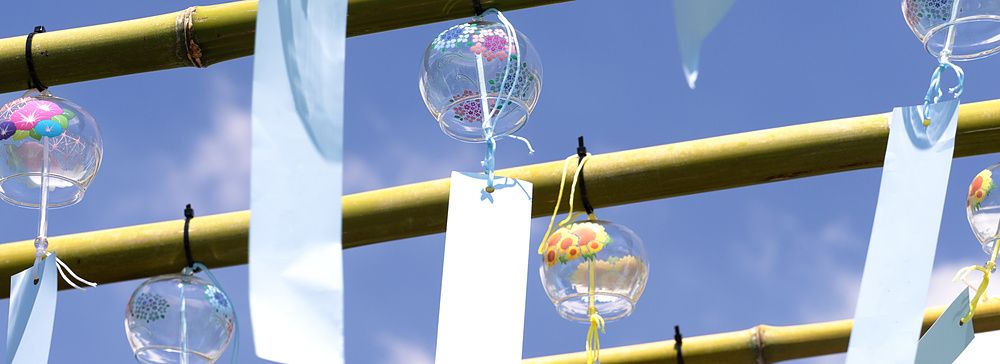
The sound of a furin is how I know summer has really arrived. Furin are Japanese wind chimes: small glass bells, or metal ones, that you hang outside the window. Whenever a breath of air comes through, they give a short, clear ring that people in Japan instantly associate with coolness.
A furin costs very little, weighs nothing and fits in a corner of your suitcase, which makes it one of the best souvenirs you can buy here. What I like about it is that it’s a completely ordinary object with a long history behind it, its own season and even its own etiquette when it comes to the neighbors.
Contents
- What a furin is
- From China to the temples
- Glass arrives
- How an Edo furin is made
- Why the rim is left rough
- Painted on the inside
- Iron, bronze and ceramic
- Why it actually feels cooler
- The Kawasaki Daishi furin market
- Temples full of furin
- Painting your own
- How much they cost
- Getting it home in one piece
- Where to hang it
- My advice
What a furin is
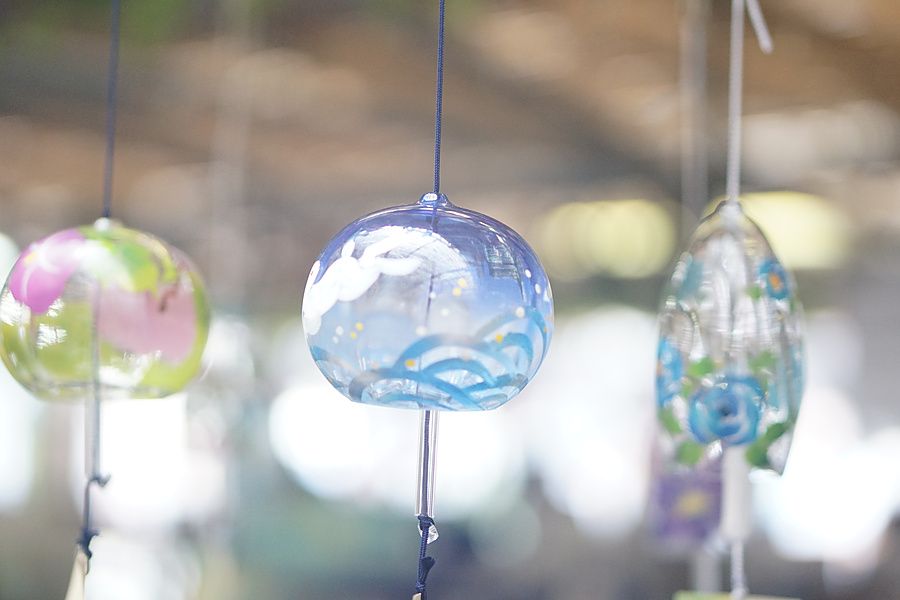
A furin is a small upside-down bell, open at the bottom, with a clapper hanging inside on a string. Below the clapper hangs a thin strip of paper or wood called the tanzaku, and its job is to catch the wind. The paper moves first, pulls the string and knocks the clapper against the inside wall.
What you hear is a single, crisp note, nothing like the tubular wind chimes you see in other countries. A furin doesn’t play a chord. It rings once and then goes quiet, and that silence is exactly what people want from it.
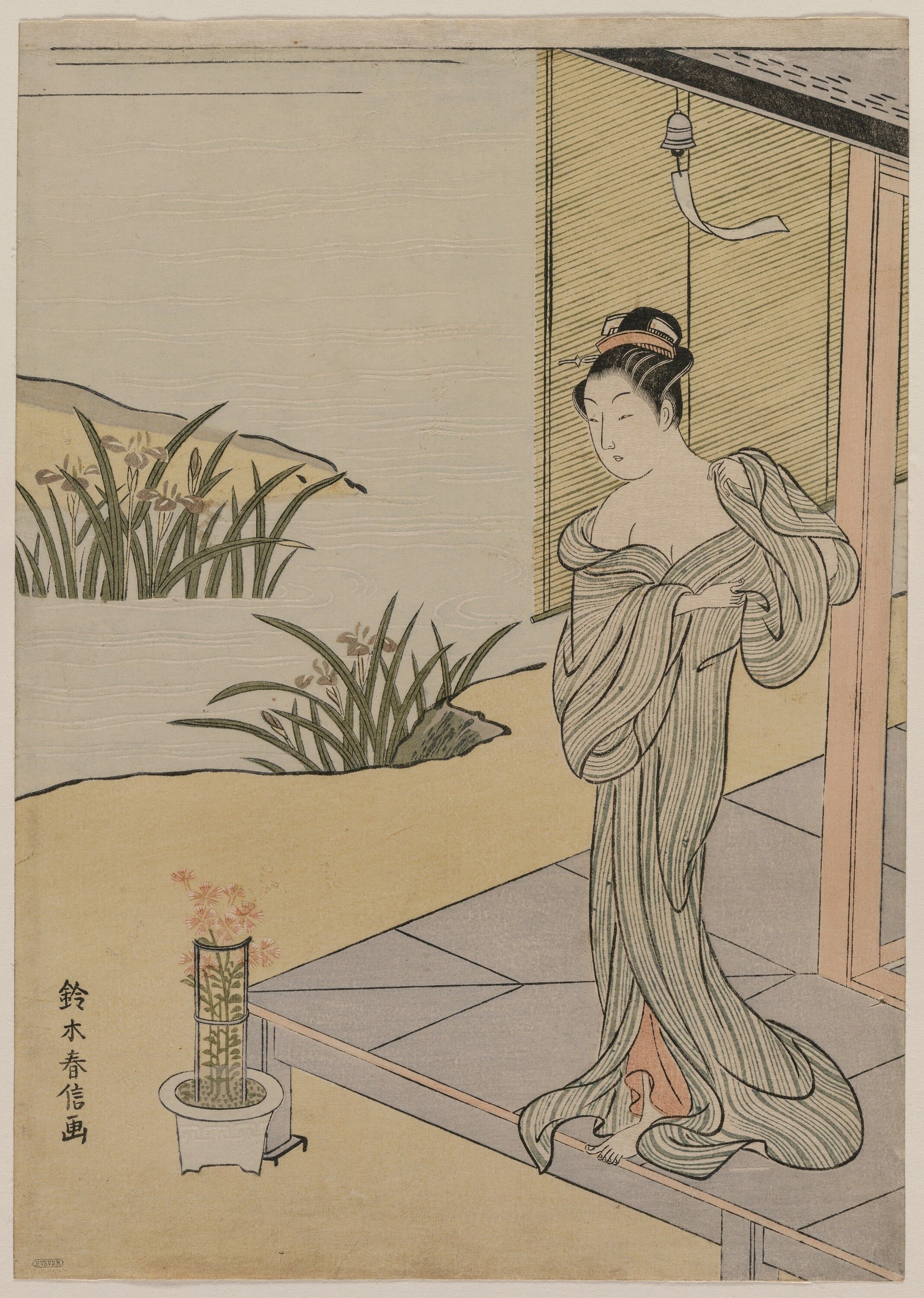
It’s a seasonal object, not an ornament you leave up all year. People bring it out when the muggy heat starts, keep it hanging until the end of summer and then put it away, the same way they do with mosquito nets or hand fans. In Japanese poetry it’s one of the words that signal summer, and shops only give it pride of place during the hot months. In winter you have to go looking for one.
From China to the temples
The furin’s ancestor had nothing to do with keeping cool. People used it to tell the future. In China, around two thousand years ago, they hung pieces of stone or jade in bamboo groves, then read the direction of the wind and the way the pieces knocked together to tell whether good or bad times were coming.
Monks brought the practice to Japan along with Buddhism. Here it became the futaku, the bronze bells hung at the four corners of temple eaves, painted red because red was the color that kept evil away.
The bells weren’t there for decoration. The sound marked a boundary, and anywhere you could hear it, you were protected. The name furin, which is still used today, comes from Honen, a monk from the Kamakura period.
This origin explains something that would otherwise seem odd: why so many furin are still sold at temples, in shapes tied to good luck, from daruma to goldfish. They aren’t tourist trinkets that ended up there by chance. They’re amulets for the home.
Glass arrives
Glass furin first show up in written records in the mid-Edo period. Glassmakers from Nagasaki were traveling between Osaka, Kyoto and Edo at the time, giving public demonstrations of how glass is blown, and the furin was one of the things they showed off. Back then it was a luxury very few could afford, priced well out of reach for ordinary people.
That changed when Edo started making its own glass, in the first half of the 1800s. The furin became an everyday item, and in the hot months street vendors sold them around town, carrying their chimes on a pole balanced across their shoulders.
The name Edo furin is much more recent than it sounds. A Tokyo craftsman came up with it around the 1960s to distinguish the pieces still made the old way, in the city where that method was born. It isn’t a historic name but a registered trademark, and only licensed workshops can use it.
Only two workshops are left that make real Edo furin, both in Tokyo. One is in Edogawa, on the east side of the city. The other is a few minutes from Ueno, on a neighborhood shopping street that no tourist ends up on by chance. The names are similar because both come from the same family of craftsmen: the one in Edogawa is Shinohara Furin Honpo, and the one near Ueno is Shinohara Maruyoshi Furin. If you want a genuine Edo furin, those are the two names to remember.
How an Edo furin is made
The glass is gathered on the end of a long pipe and blown freehand, without a mold. That’s the biggest difference from almost all factory-made glass chimes. The blower’s breath and hands decide the shape, and the whole piece is made in one go, in a couple of minutes, while the glass is still hot enough to work.
As a result, two furin from the same workshop, of the same size and with the same design, never sound exactly alike. When you buy one in a shop, they’ll let you pick it up and ring it. They aren’t just being polite: it’s the right way to choose.
The method hasn’t changed in about three centuries, and it shows in the flaws too. The walls aren’t the same thickness all the way around, the shape is rounded but not perfect, and on the bottom you can see the marks left where it was separated from the pipe.
If you want perfect symmetry and smooth surfaces, you’re looking for a factory product. Those exist and cost less, but they sound flat.
Why the rim is left rough
Up close, the bottom rim of an Edo furin looks like a mistake. It’s uneven, a little jagged and sharp to the touch. That’s on purpose.
When the body of the furin is separated from the part of the glass used to blow it, the rim comes out raw, and the craftsman leaves it that way instead of smoothing it. This means the clapper doesn’t only make the classic ting when it hits the wall. Even its smallest movements make a very faint rustle, and the sound as a whole gets richer.
Two practical tips follow from this. Don’t run your finger along the rim to check how well it’s finished, because you can cut yourself. And don’t try to tidy it up with sandpaper thinking you’ll improve it, because you’ll rob it of half its voice.
If you have kids at home, my usual advice is to hang it up high or get a metal one, which doesn’t have this problem.
Painted on the inside
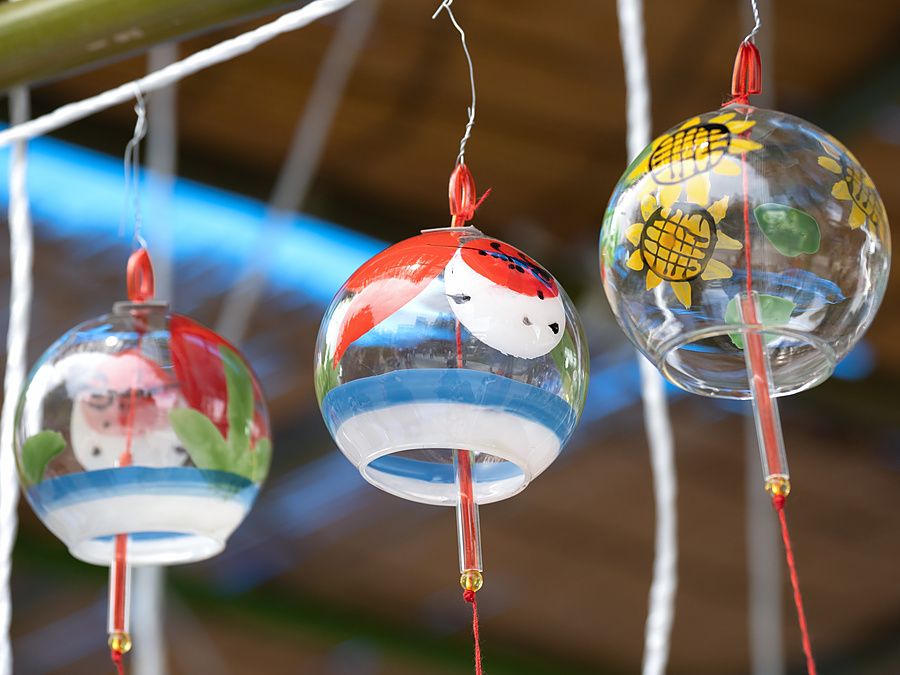
The designs on glass furin are hand-painted on the inside, not the outside. The brush goes in through the opening at the bottom and works in reverse, which is much harder than it sounds: you have to think backwards as you paint, and you’re laying the colors onto a curved surface.
It’s done this way because the furin hangs outdoors, exposed to rain, sun and wind. With the paint on the inside, the design doesn’t wear off and the colors stay bright under the glass, which also gives them a shine they wouldn’t have on the outside.
The motifs aren’t random, and each one has a meaning. Goldfish stand for luck and money, and fireworks started out as protection against misfortune. Then there are bellflowers, dragonflies, Mount Fuji and fans.
If you’re buying one as a gift, it’s perfectly normal to ask the shop what the design means, and they’ll be happy to tell you. It makes the souvenir much more interesting than one you picked just for the color.
Iron, bronze and ceramic
Tokyo glass is the best known, but furin are made all over Japan in completely different materials, and the material makes a huge difference to the sound. Glass sounds clear and fades quickly, while metal has a harder note but keeps ringing for a long time.
If you can only pick one, decide first what kind of sound you want to hear and then choose the material, not the other way around.
- Nanbu tekki, the iron from Iwate, gives a high, clean note that rings on for a very long time. In summer they hang these chimes along the platform at Mizusawa Station, in the north of the country, and that sound made the official list of 100 Japanese soundscapes worth preserving.
- Odawara chimes made of sahari, a bronze alloy high in tin, are the high end: the sound lingers for quite a while, and some people say these chimes get better with age instead of deteriorating.
- Ceramic chimes vary by region, from Kyoto’s Kiyomizu to Tokushima’s Otani, and their sound is duller and rounder, less bright than metal.
- Glass doesn’t just mean Tokyo: Aomori has the colorful Tsugaru bidoro, Fukuoka has Hakata glass, and in Okinawa they even use seashells.
Why it actually feels cooler
Researchers have run proper experiments on the cooling sensation a furin creates, with thermal cameras pointed at people’s skin. When people who grew up in Japan hear that sound in a hot room, their skin tends to cool slightly. People who grew up elsewhere don’t react that way, and in some cases their skin temperature even goes up, because they just hear it as something relaxing.
That’s because in Japan the link between the sound, the wind and the cool air is learned in childhood and becomes automatic, a reflex. A furin doesn’t lower the temperature of the room. It tells you that the air is moving.

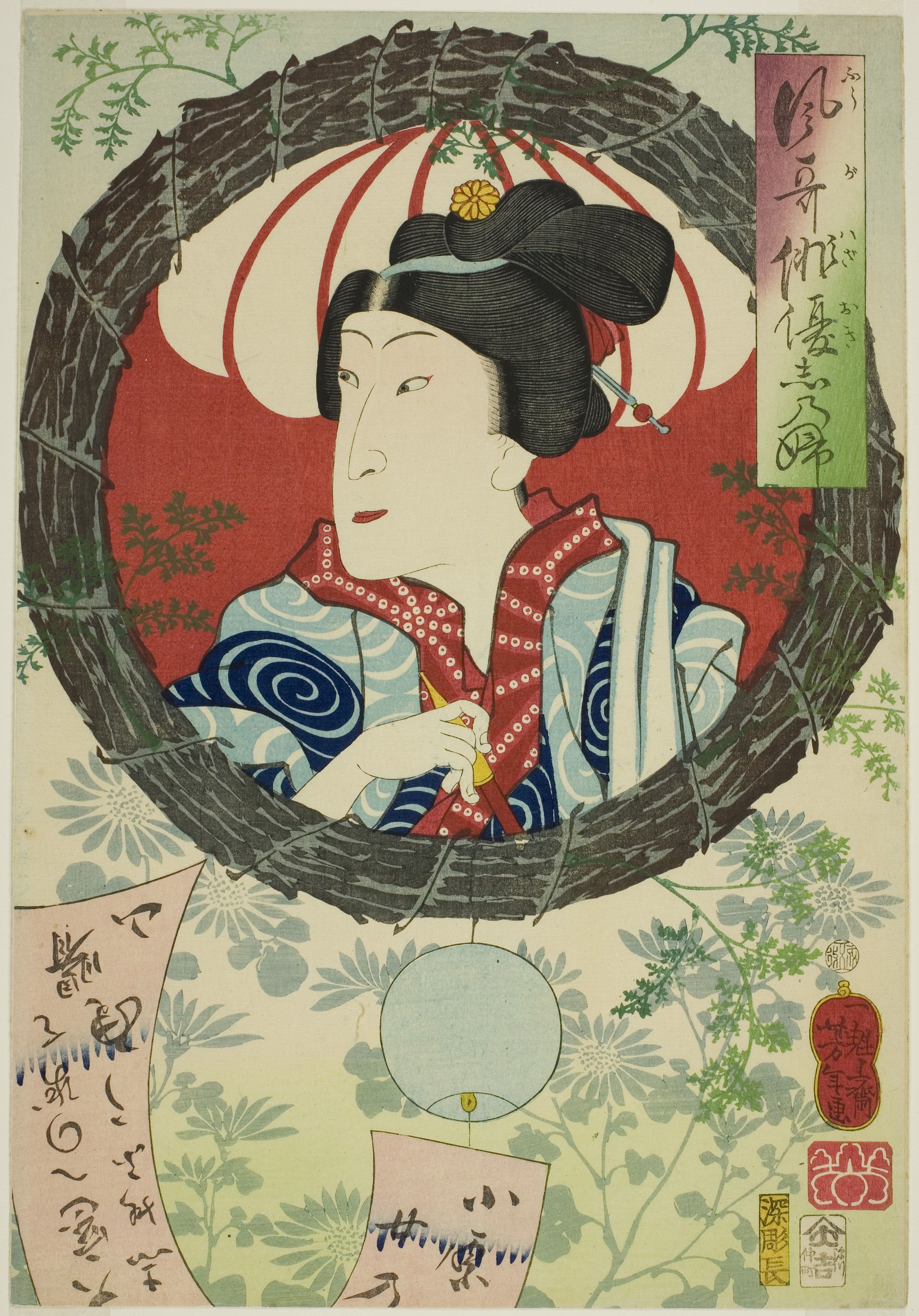
This also explains why traditional furin play a single note. People hear short single notes as cool, while a wind chime with ten tubes ringing together sounds musical, which is pleasant but different.
For the same reason, a furin hanging in your home far from Japan might not do much for you at first. There’s nothing wrong with it. The mental association has to be built, and after a summer or two it starts working on you too.
The Kawasaki Daishi furin market
If you’re in Tokyo in July, the furin market at Kawasaki Daishi temple is the place to go. Kawasaki sits between Tokyo and Yokohama, about half an hour away, and for a few days the temple grounds fill up with stalls selling furin from every prefecture in the country. We’re talking about hundreds of different kinds and tens of thousands of chimes hanging together.
All those chimes at once don’t make a delicate sound. They make a dense, nonstop din you can hear from far away. It’s beautiful to look at and pretty tiring to listen to, so don’t expect a zen atmosphere.
The temple also has its own furin, a glass daruma meant to ward off bad luck, made by one of the Edo furin craftsmen. It sells out fast, as limited pieces always do.
Two practical tips. Go early in the day, because later on the heat and the crowds make it hard to even get near the stalls, and bring cash, since temporary stalls won’t necessarily take cards. The vendors wrap fragile pieces in paper, but if you have a towel in your bag, that’s even better.
Temples full of furin
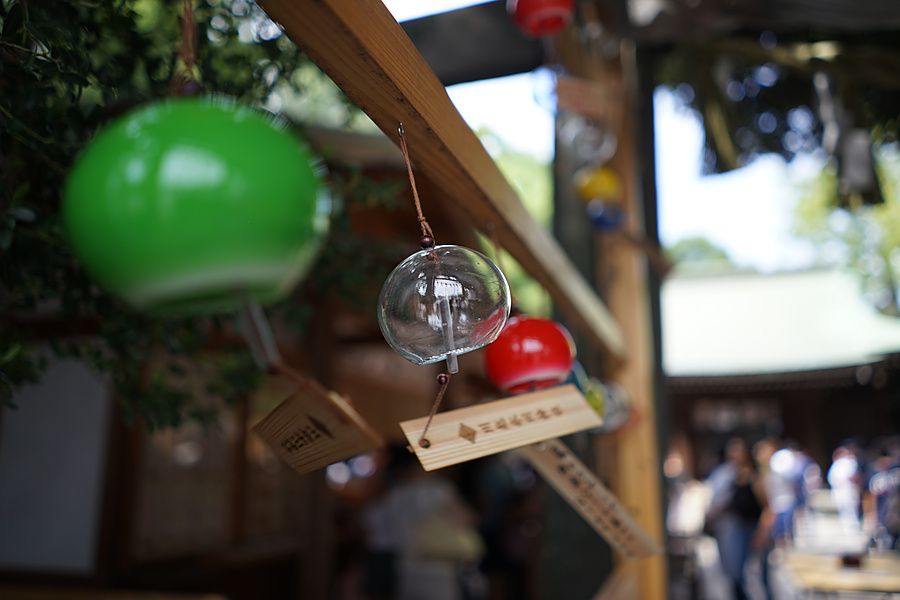
To see furin without a market crowd, try a shrine or temple. Many hang them by the thousands over the summer, and there you can hear them one at a time. Each place offers a different experience, so it’s worth picking based on where you’ll be.
- At Hikawa Shrine in Kawagoe, a historic town just over half an hour from central Tokyo, they hang about 2,000 Edo furin, and there’s a corridor covered entirely in chimes. You write a wish on a wooden tablet and tie it to your furin, and in the evening they light up the stream in the garden.
- At Ofusa Kannon Temple in Kashihara, near Nara, the furin festival runs from July to the end of September, with more than 2,500 chimes from every region of Japan. The garden is free to visit, and there’s a small fee for the main hall.
- Up north, at Mizusawa Station, iron furin hang on the platform all summer. It’s not a festival, just station decor, and to me it’s the loveliest version because nobody put them there for visitors.
Painting your own
In Tokyo you can paint your own furin at a workshop, and it’s one of the easiest hands-on activities to do even if you don’t speak a word of Japanese. They give you a glass bell that’s already been blown, plus paints and brushes, and you hold it in your hand and paint it from the inside. You’re done in under an hour.
At the workshop near Ueno you can also blow the glass yourself, not just paint it, and that takes a bit longer. Reservations are required and spots are limited, so email or call before your trip, not on the day.
It costs around 2,000 yen per person, a little more if you add the glassblowing. Given what you take home, it’s one of the cheapest things you can do in the city. Keep in mind that freshly painted glass has to be left to dry, and that the workshops work flat out for the season in the hottest months, so it’s easier to get a spot outside summer.
It also works well with kids, since there are no furnaces or flames in the painting part and you still end up with a real object.
How much they cost
A hand-painted Edo furin runs about 2,000 to 3,000 yen, and the bigger or more elaborate models cost more. For something handmade by one of the only two workshops left, that’s a low price. It’s one of those things in Japan where craftsmanship still comes at a reasonable price.
The iron furin from the north sit roughly in the same range, a bit more for the big pieces. Regional ceramic ones are cheap, often cheaper than painted glass.
Odawara’s sahari bronze is a different story. It’s a real step up, easily into the tens of thousands of yen, and you buy it for the sound, not as a souvenir. Unless you’re really into furin, it’s not the one to start with.
At temple markets most stalls charge under 3,000 yen, and that’s where you want to go if you’re buying several as gifts. Prices change over time, as always, so check current prices before you go.
Getting it home in one piece
Hand-blown glass is thin and the rim is uneven, so if you pack it like anything else it’ll arrive in pieces. I’ve seen too many broken ones not to keep stressing this.
Your best bet is to have the shop wrap it and then add more protection yourself, because the little cardboard box they give you guards against small knocks, not against getting crushed on a baggage conveyor.
- Stuff the inside of the chime with some soft paper so the clapper doesn’t bang against the sides the whole trip.
- Put it in the middle of your suitcase, surrounded by clothes, never in the side pockets or on top.
- If you buy more than one, keep them separate rather than nesting one inside the other, even if they seem to fit together nicely.
- The paper tanzaku creases and stains easily, so take it off and pack it separately. It goes back on in two seconds.
Iron and bronze ones don’t have these problems, but they’re heavy, and if you’re traveling with carry-on only you’ll feel the difference. If you’re buying several as gifts, honestly, metal is the safer choice.
Where to hang it
The classic spot is under the eaves or outside a window, but what matters is that it catches a breeze. Hang a furin where the air doesn’t move and it won’t ring; it just turns into an ornament. Indoors you can hang it at a window or from the curtain rod with an S-hook and some nylon thread, and a tabletop stand works too. It’s easy to find, and it solves the problem if you don’t want to drill holes in the wall.
If the sound bothers you at certain times, you don’t need to take it down. Just pull the tanzaku up and tie it, and the chime stays where it is without ringing.
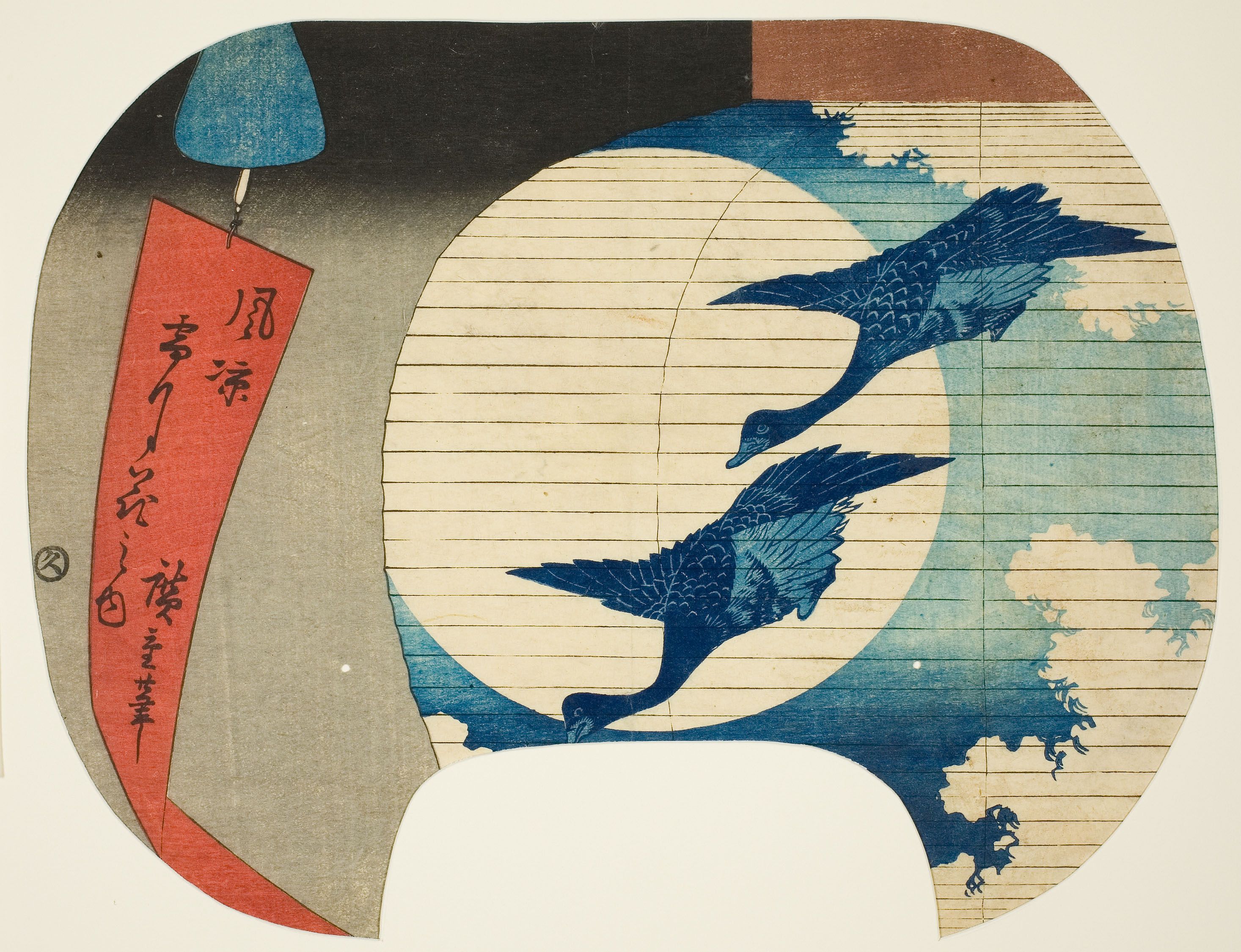
Then there are the neighbors, and in Japan that’s anything but a theoretical issue. Furin are on the list of household noises that city governments flag, and in apartment buildings arguments over a chime on a balcony come up every summer. In strong wind it doesn’t just tinkle now and then; it rings nonstop for hours, at night too.
The old habit was to hang it during the day and bring it in at night or when the weather turned. If you live in an apartment where the balconies are right next to each other, that’s still the way to go, and on very windy days keep it inside altogether.
My advice
If I could only buy one, I’d get a hand-painted Edo furin from one of the Tokyo workshops, and first I’d ring five or six in a row so I could pick the one that sounds best, not the one with the prettiest design. You look at the design for two days; you hear the sound for years.
And if you have half a day free in the city, go and paint one. It costs less than lunch, and you walk away with something you made yourself.
There’s one thing you’ll only discover at home. The first year, that tinkling will remind you of Japan. From the second year on, the moment you hear it you’ll know the heat has arrived before you even look at the thermometer.