Japanese Writing System
The Japanese writing system is one of the most beautiful things to look at while you’re here. It looks like a secret code, but it actually follows a clear logic. It won’t suddenly become readable by magic, but if you’re curious you can learn a couple of basics and start recognizing bits of Japan everywhere, from menus to signs.
The way I see it, most of the writing you come across on your trip will look unreadable, and that’s normal. But if you pick up a few basic tools (especially for katakana), you’ll have more fun and feel more independent when it comes to the practical stuff.
Contents
- Four scripts
- At a glance
- Vertical or horizontal
- The kana
- Hiragana
- Katakana
- How sounds get adapted
- Marks that change the sound
- Small characters
- Handwriting
- Romaji
- Kanji
- Kanji when you travel
- Furigana
- Stations and trains
- Restaurants and menus
- Supermarkets and conbini
- Why it looks unreadable
- Learning just for fun
- Translating with your phone
- Wrapping up
- Video: How Japanese writing works
- Video: Why won't Japan give up kanji?
- Video: How many kanji do you need to get by in Japan?
Four scripts
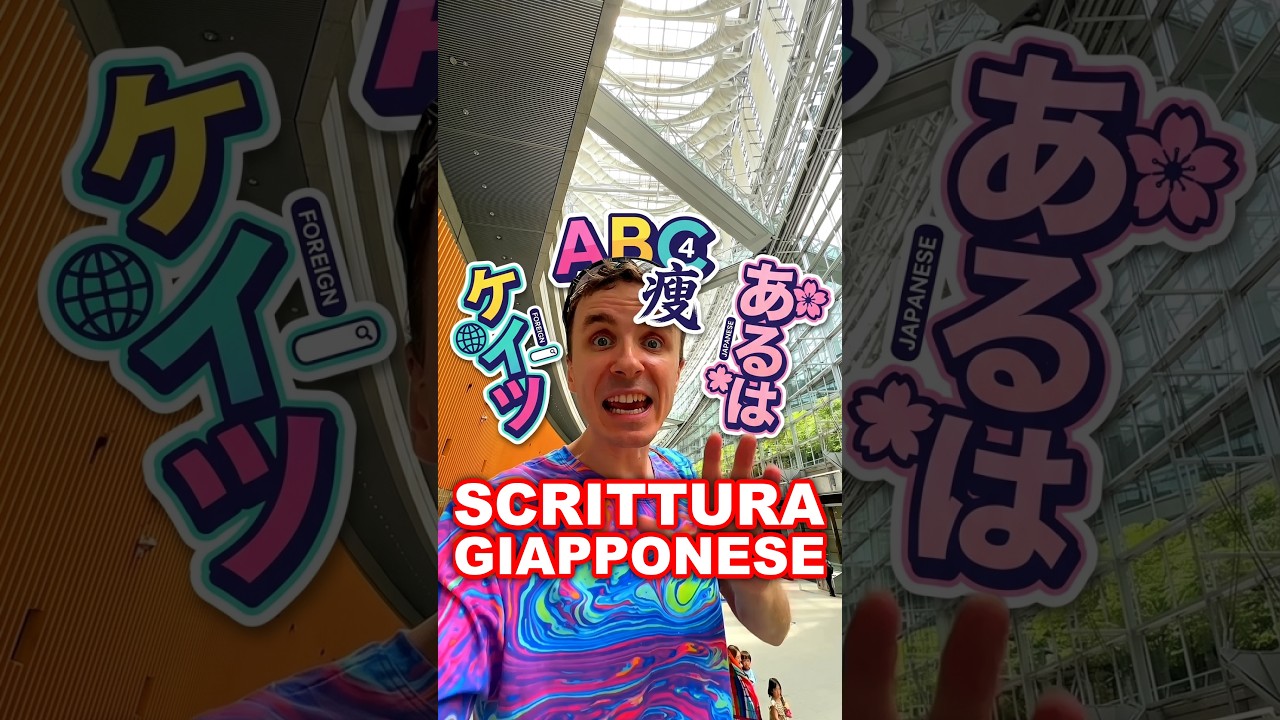
Japan uses four scripts: hiragana, katakana, kanji and romaji.
- Hiragana: soft, rounded characters, used for lots of Japanese words and for grammar.
- Katakana: more angular characters, used mostly for foreign words adapted to Japanese.
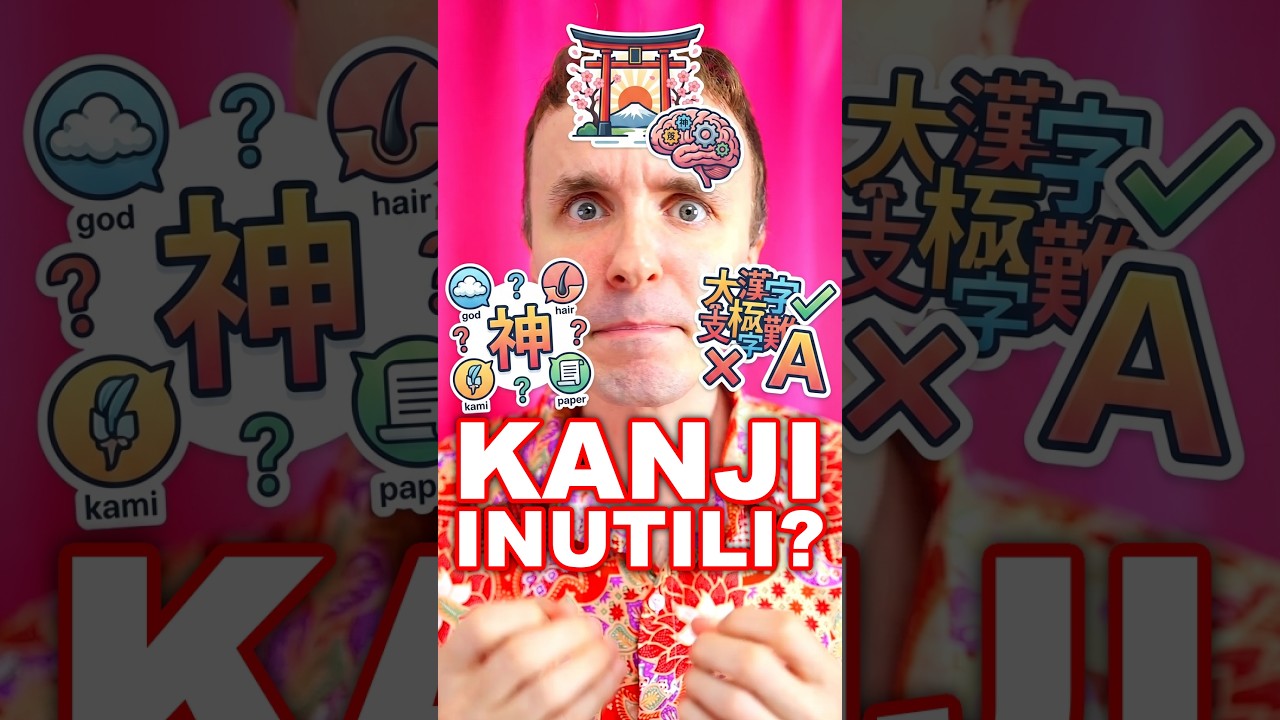
- Kanji: complex characters that carry a meaning, not just a sound.
- Romaji: our alphabet (Latin letters), which you’ll find in plenty of tourist spots but not everywhere.
A Japanese sentence usually isn’t written in just one script. It’s a mix, and that mix is exactly why, if you haven’t studied, it’ll often look like one big wall of symbols.
At a glance
If you’re not studying Japanese, the first useful skill is recognizing what you’re looking at. Not so you can translate it, but so you can get your bearings.
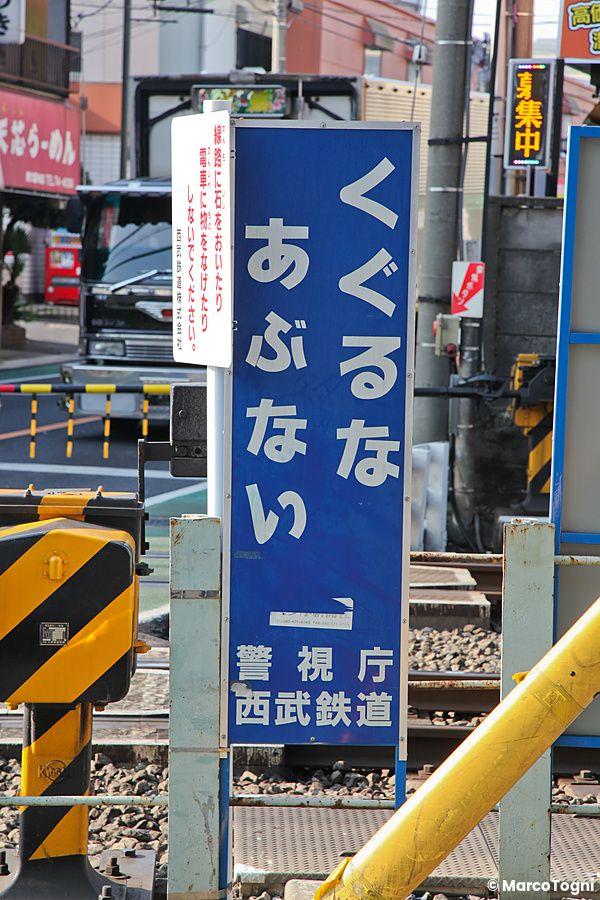
- Hiragana: rounded shapes and flowing strokes. Even when you can’t read them, they “look soft.”
- Katakana: straight lines and corners, with a sharper, more geometric look.
- Kanji: very dense, with lots of strokes. They look like tiny, intricate drawings.
- Romaji: obviously, these are our letters.
Here’s what I suggest: when you see some writing, just ask yourself whether it’s made of simple characters that repeat or of complex characters that all look different. If it’s the first, you’re almost always in hiragana or katakana territory. If it’s the second, you’re looking at kanji. That alone changes how you see it, and it stops being a shapeless blob.
Vertical or horizontal
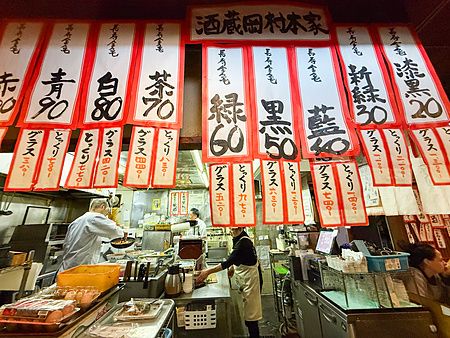
One thing that always throws people off is that Japanese is written in two directions: horizontally from left to right, the way you’re reading this, or vertically from top to bottom, with the columns running from right to left.
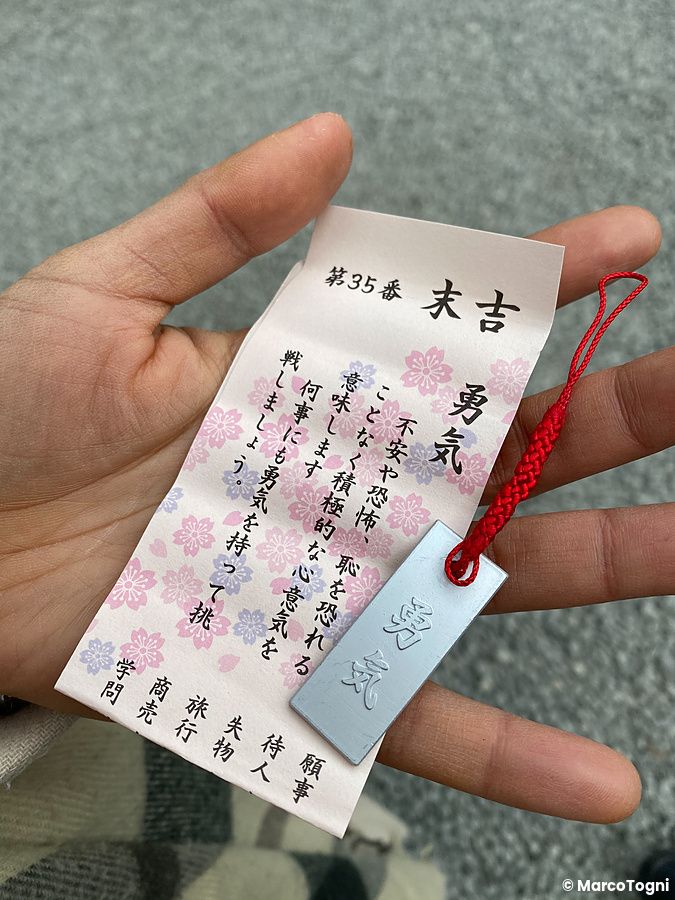
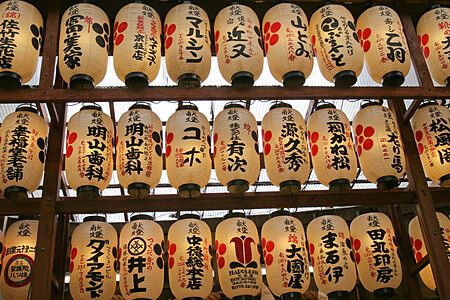
On a trip you don’t need to know why one or the other gets chosen. You just need to know that it happens a lot, especially on traditional signs, on the curtains over restaurant and bar entrances, on brush-written menus and on shrine fortune slips.
In practice, if you try to read it the wrong way, nothing adds up, even when you recognize the characters. When the writing runs vertically, start at the top and work your way down; if there are several columns, the first one is the one furthest to the right. The same goes for books and comics, which open from the opposite side to what you’re used to, so you turn the pages the other way.
It took me a while to get used to it, and I think it’s one of those moments when Japan feels less familiar. Then it becomes second nature, and you even start noticing when a place uses vertical writing to look more traditional.
The kana
Hiragana and katakana are two syllabaries: each symbol stands not for a letter but for a whole sound. Sometimes it’s a vowel (a, i, u, e, o), sometimes it’s an n sound, and otherwise it’s a syllable like ka, shi, mo or yu.
There are 46 basic symbols. That doesn’t mean you can read Japan once you know those 46. It just means the system isn’t endless. If you feel like playing a little game before your trip, you can learn to recognize a few characters and then have fun spotting them around town.
Honestly, if you’re not studying the language, I wouldn’t aim to “learn it all.” I’d aim for this level: I can tell a word is in kana, I read it slowly, and maybe I can guess what it might be.
Hiragana
Hiragana are the round ones. When you travel, though, they’re less useful than many people think.
That’s because hiragana are used to write Japanese words and the grammatical bits. If you read a word in hiragana but don’t know that word, you’re still none the wiser.
Where they do get interesting is as a visual clue:
- You can tell the writing is purely Japanese and not a foreign loanword.
- In some places (small chalkboards, little restaurants, simple labels) you’ll find writing entirely in hiragana, because Japanese people read it at a glance and it looks softer.
- When you see hiragana attached to kanji, they’re usually the part that holds the sentence together.
If you’re curious, learning even just a few helps you pick up patterns. If you’re not, you aren’t missing the key to your trip. I’ll be honest with you: for the average traveler, hiragana is more of a game than a tool.
Katakana
Katakana, on the other hand, can give you a few practical wins even if you don’t study Japanese.
It’s used mostly for foreign words: terms taken from English, Italian, French and, more broadly, from outside Japan. They aren’t translated but written to fit Japanese sounds.
And that’s the point. If you can read katakana, you can often guess words you already know. They may be a bit bent out of shape, stretched or adapted, but you can still recognize them.
Where you’ll see it a lot:
- menus at cafés, chains and restaurants with lots of “international” dishes
- drinks, snacks, packaged products
- cosmetics, pharmacy items, packaging with product names
- modern signs, services, notices tied to brands or imported terms
If you want something concrete, katakana is what I’d recommend: it’s the one most likely to make you go “Oh, OK, got it” even if you don’t know Japanese.
How sounds get adapted
Katakana words aren’t perfect copies of the original word. They’re adapted to the sounds Japanese has, and that leads to two very common effects.
First, words get longer. Japanese tends to prefer consonant-plus-vowel syllables, so filler vowels creep in, and a short word can end up a lot longer.
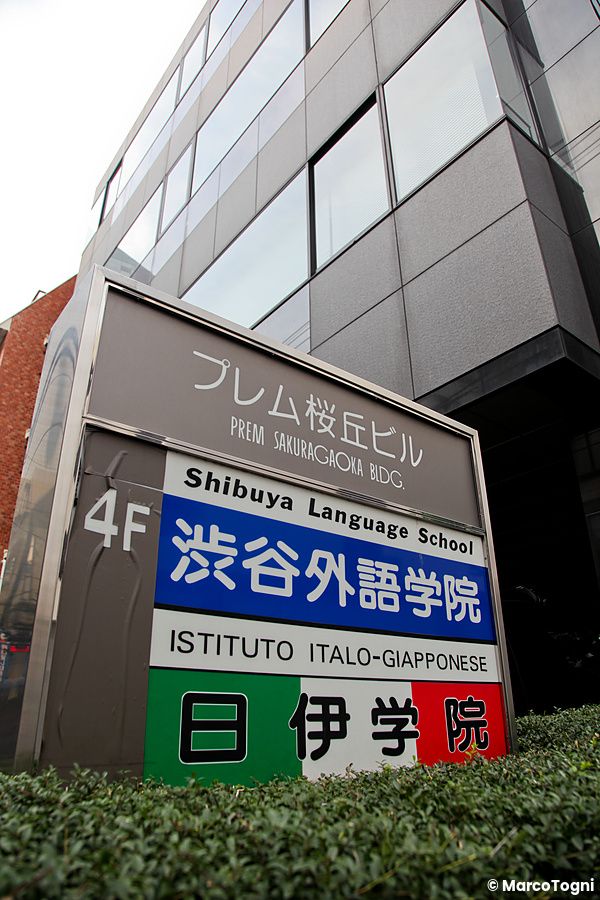
Second, some sounds change because certain consonants don’t exist in Japanese the way we know them. L, for example, isn’t a separate sound and tends to turn into an R. That’s why Italia comes out closer to “Itaria.” It’s not “bad pronunciation.” It’s simply the word going through the filter of Japanese sounds.
If you read a katakana word and nothing comes to mind, here’s what I’d try: read it slowly, syllable by syllable, without worrying about getting the accent right. Sometimes the word only pops out because you’re “hearing” it. There’s another catch, too: in Japan, a lot of words borrowed from English get cut short. A computer becomes “pasokon,” a convenience store “konbini,” a TV “terebi,” a department store “depaato.” You read every syllable correctly and still don’t get it, because half the word is missing.
Then there are terms made up in Japan from bits of English that don’t exist in English: a buffet is “baikingu,” an office worker is “sarariiman.” When a katakana word just won’t click, this is often why.
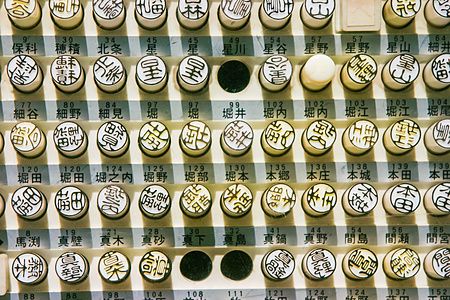
Marks that change the sound
In kana you’ll often see two small marks that change how a character is read. You don’t need to know their technical names, just to recognize them.
- The “quotation marks” (two small strokes) make the sound harder: ka becomes ga, sa becomes za, and so on.
- The small “circle” on some rows turns the sound into a P.
Yes, it’s a detail. But it’s also why a word you read once and thought was clear looks different the second time around: change one syllable and the whole word changes.
Something else you’ll see a lot is the long dash in katakana, which stretches out the vowel. It’s everywhere on drinks and product names. If you ignore it, you’ll usually still understand. If you take it into account, you’ll get closer to the actual pronunciation.
Small characters
There’s one more complication you don’t need to study for a trip, but it’s useful to know it exists: some characters written smaller change the sound.
- A small “tsu” in the middle of a word marks a pause, like a double consonant.
- A small “ya/yu/yo” (written smaller after certain syllables) changes how the sounds combine.
If you’re having fun decoding katakana on a menu and a word doesn’t make sense, that’s often where the problem is: there’s a small character you read as a normal one.
I wouldn’t let it stress you out. I’d just keep it in the back of my mind: “OK, small characters exist too, so if I don’t get it, maybe I’m not reading the word right.”
Handwriting
Even after you’ve learned the kana, there’s another reason you’ll look at some writing and not recognize a thing: the shape of the characters changes quite a bit depending on how they’re drawn.
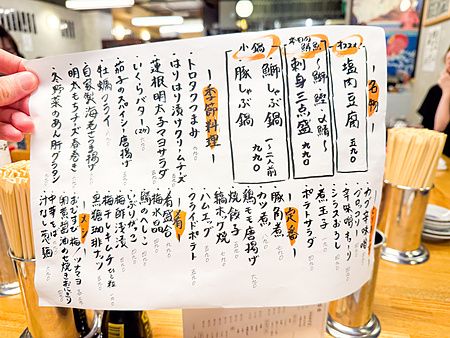
On printed signs, on trains and on packaged products, the characters are clean and regular, just like the ones you studied. On restaurant chalkboards, brush-written menus and the signs of long-established shops, though, the strokes stretch out, run into each other and lose their corners.
Katakana suffers the most, because it’s all about corners: if the brush rounds them off, it looks like something else entirely. Add logos and decorative fonts, where the characters are distorted on purpose, and you can see why sometimes your phone gives up.
All I’ll say is this: if some handwriting doesn’t make sense to you, it’s not your fault. Look for the same thing in print, on a label or a sign, and you’ll often find the word again.
Romaji
Romaji is our alphabet. You see it all the time in tourist areas and big stations, on maps and in brand names. It’s handy, and it often saves the day.
The catch is that it’s not guaranteed.
- In lots of traditional restaurants the menu is only in Japanese.
- In less central neighborhoods, the signs may be almost all in Japanese.
- Sometimes there’s writing in romaji, but it isn’t meant to be understood at a glance: it’s a transcription, not English.
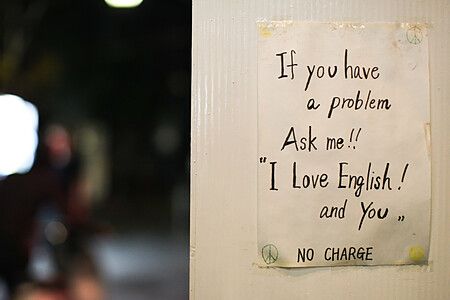
I think it’s important to go in with the right expectation: romaji helps you with the big stuff. With the everyday details, it often doesn’t. What’s also confusing is that the same name can be spelled in different ways. You’ll see Shinbashi and Shimbashi, Otemachi and Ohtemachi, long vowels marked on one sign and ignored on the next. These aren’t mistakes. They’re different ways of spelling Japanese in our alphabet, used side by side.
On a trip it doesn’t change much, but keep it in mind when you look up a place on your phone. If the name doesn’t come up, try swapping or adding a letter, usually an m instead of an n, or an extra h.
Kanji
Kanji are the complex characters, and this is where Japanese writing gets serious, the part that takes real study.
Each kanji carries an idea: water, mountain, station, exit, eat, big… It isn’t always that direct, but that’s the principle. The catch is that knowing the idea isn’t enough. A single kanji can have several readings, and kanji combine into words that you simply have to know.
There are tens of thousands of kanji, but day to day only a much smaller number get used. People often point to around 2,000 as the baseline for reading newspapers and everyday texts. That’s still a huge number, and it’s not something you learn to get ready for a trip.
If you’re curious, what you can do is learn a handful and spot them when you’re out and about. Even seeing two or three characters that keep coming up and thinking “hey, I’ve seen this one before” is a small pleasure, and it makes you feel a bit less like an alien.
Kanji when you travel
When you’re traveling, kanji matter in two ways.
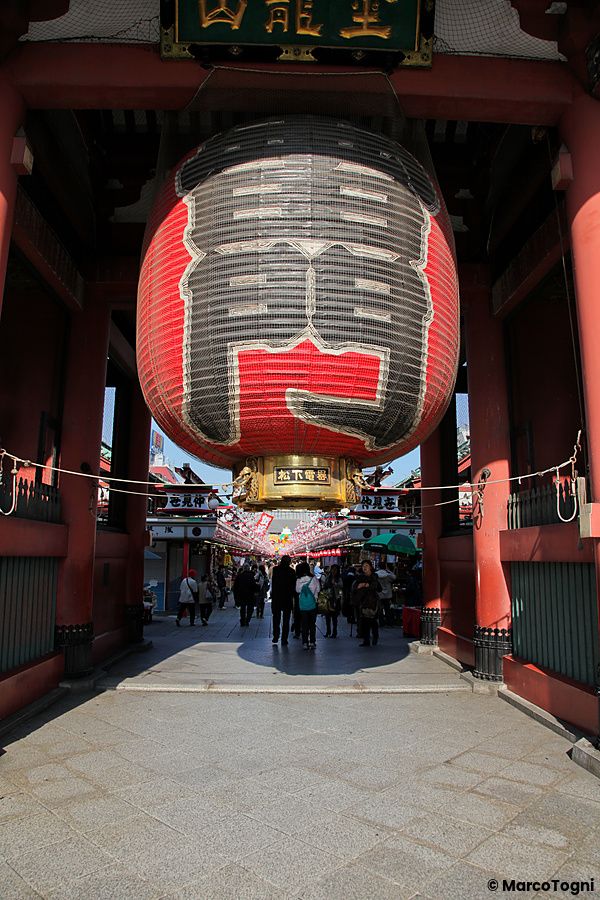
First, they dominate the information you actually run into: signs, notices, traditional shop signs, documents, traditional menus. If you don’t study, they’ll almost always stay a closed book.
Second, because they stand out so much, kanji become visual landmarks. Even without reading them, you start noticing that a place always has the same two characters in its name, or that certain signs always repeat one big character in the same spot.
I wouldn’t sell this as “it helps you find your way easily.” It only helps with how things feel: things stop looking all the same, and you start seeing differences. That alone is a step forward.
Furigana
Sometimes Japan meets you halfway with furigana, small hiragana printed next to or above kanji to show how they’re read.
You’ll see them most often:
- in tourist spots and museums
- on signs meant for kids too
- on some thoughtfully designed menus
- in reader-friendly information materials
When you do find them, they’re useful for one concrete thing: pronunciation. And being able to pronounce things helps in Japan. Even if the person in front of you doesn’t speak English, they’ll often understand you if you say the name of a dish or a place more or less correctly.
Stations and trains
Stations are a good example of how writing really works here.
At the big hubs, you’ll usually get:
- the name in kanji
- the reading in kana
- romaji
So yes, you can get around at the major stations. The trouble starts when you need precision: the right exit, the right stop, the right platform, the secondary signs.
At that point the signs go back to being almost all Japanese, and for a lot of travelers it’s a wall. I think that’s completely normal. If you go in with that expectation, you’ll handle the hiccups better too.
The sanest way to deal with it is to use what’s there: exit numbers, line colors, icons, station maps and, when you need it, your phone to translate or look up the name of the place.
Restaurants and menus
Menus are where katakana sometimes hands you a small win.
Modern menus use katakana for foreign words, the ones for drinks, desserts, “international” ingredients and dishes that came from abroad. If you’ve learned katakana, it’s fun. You read slowly, and you often recognize the word.
Traditional menus, on the other hand, are dominated by kanji. You won’t decode anything there, so you rely on other tools to choose:
- photos and plastic food models outside the restaurant
- set menus with pictures
- words in romaji, when there are any
- pointing at a dish you saw on a nearby table
- asking for the simplest or most common option, if you can get by with a couple of words and a smile
My advice is not to let the idea of “if I can’t read it, I can’t order” hold you back. In Japan you can order without reading a thing, and it happens a lot more often than you’d think.
Supermarkets and conbini
In supermarkets and conbini, the writing is a constant mix. Something interesting happens here: after a few days, even people who don’t study Japanese start recognizing the look of certain products.
Katakana helps with:
- snacks and drinks with foreign names
- brands and product lines
- “international” flavors written as loanwords
Kanji, though, almost always remain a barrier unless you use camera translation. And that’s perfectly fine. I don’t see it as a defeat. It’s simply how things are with a writing system that’s this different.
Why it looks unreadable
If you don’t study Japanese, that “unreadable” feeling sticks around for a simple reason: it’s not just writing, it’s language.
Reading hiragana and katakana lets you pronounce words, but pronouncing them doesn’t mean understanding them. Understanding comes once you have some vocabulary, even a small one, and a bit of grammar. Without that, you’re just reading sounds.
That’s why I’d rather be honest about it. Kana are a clever bit of fun, one more thread tying you to the country. They’re not the key to reading everyday life in two weeks.
Katakana is the only partial exception: you already know a lot of the foreign words, so sometimes the sound and the meaning line up.
Learning just for fun
If you like the idea of learning something before you go, I’d keep it very simple: not all of it, just a small piece.
- Learn to recognize the most common katakana.
- Learn the five vowels and a few basic syllables, enough to read slowly.
- Learn the two marks that change the sound, so you don’t keep tripping over the same spots.
- If you feel like it, add 3–5 super-common kanji like “entrance/exit” and “yen,” just for the fun of recognizing them.
What matters is the method: visual recognition, not endless drills. Look at real writing, like labels, menus and signs. All you need is to start seeing that those characters aren’t all the same.
Translating with your phone
Camera translation is incredibly useful, and yes, when you travel it often ends up being the practical solution.
I see it as a tool you should use without feeling embarrassed, but with realistic expectations:
- it can get things wrong with unusual fonts or decorative lettering
- it sometimes goes haywire with handwritten chalkboards
- with long, formal sentences, the translation comes out stiff
When it works, it gives you the general meaning. When it doesn’t, the basics come in handy: spotting where there’s katakana (foreign words), where the numbers and prices are, and where big kanji tell you what it’s about.
It won’t turn you into someone who reads Japanese. It only gets you past the practical hurdles.
Wrapping up
At first you only see “writing.” Then you see different kinds of writing. Then maybe you start thinking “that’s a foreign word” or “I’ve seen this character before.”
I like it because it’s a gentle way into a country without pretending to understand it. You stay a traveler, without having to become a student. But you still come home with something concrete: a little visual literacy.
And when you recognize a katakana word on a menu, or a kanji you’ve seen ten times at the station, you can’t help smiling. It’s not because you’ve “cracked Japan.” It’s just that, for a moment, it feels less far away. I think that’s a nice way to travel: curiosity, zero anxiety and a bit of clever fun.