227 m
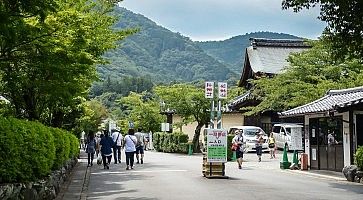
Nison-in Temple227 m
With beautiful maple trees.
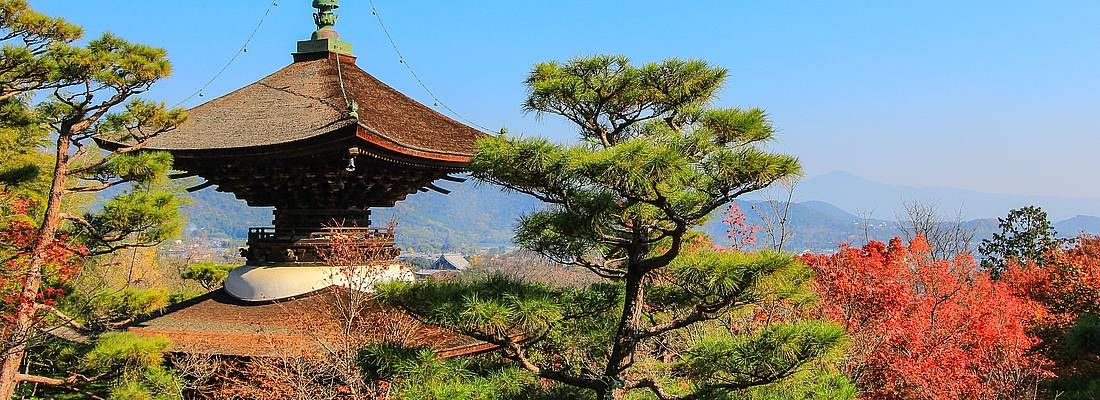
Most of the year Jojakko-ji Temple is empty and quiet, but it comes alive in the fall, when the 200-plus maples that surround it light the place up with warm colors and draw plenty of photography enthusiasts and fall foliage fans. The rest of the year, Jojakko-ji Temple is a peaceful, quiet escape, a place to reconnect with nature and with your deepest thoughts, get away from the tourist crowds at Arashiyama‘s best-known sights, and enjoy beautiful views of the area and the city.
Tucked into the greenery of Mount Ogura, Jojakko-ji Temple was founded in the late 1500s by the monk Nisshin, who was then head of Honkoku-ji Temple.
Mount Ogura isn’t just any hill. Tradition says this is where the poet Fujiwara no Teika had his villa and put together the Ogura Hyakunin Isshu, a collection of one hundred poems by one hundred different poets that Japanese kids still study in school and that’s still the basis of a card game people play today.
In the temple garden you’ll find the spot identified as the site of the villa, Shigure-tei, and a small shrine dedicated to the poets, with wooden statues of Teika and Fujiwara no Ietaka. Nobody will ever know if this was the exact spot, since several temples in the area make the same claim. But standing in this quiet corner among the maples, you understand why a poet would have made his home here.
The temple is a small group of buildings, and you enter through a traditional Niomon gate with a thatched roof, guarded by two Buddhist figures, one on each side. Past the gate you reach the heart of the temple: a main hall that houses a statue of the Buddha, and the gorgeous 12-meter Tahoto pagoda, its silhouette standing out among the trees. The pagoda is the temple’s main draw, thanks to its elegant, richly decorated architecture and the many religious statues inside. It was built in 1620 and is listed as a cultural property of national importance. Climb the steps to the pagoda and the terrace above it and you’ll get beautiful views of Kyoto.
Next to the temple’s main entrance you can also visit the Kadokura history museum, which has an interesting exhibition on the Kadokura, a wealthy merchant family with close ties to the temple. You’ll learn more about the family and its history, and you can see a nice collection of documents, tools, and personal belongings that once belonged to the Kadokura family.
Thanks to its spot on the mountainside, the temple gives you beautiful views of Arashiyama and the surrounding mountains, where nature puts on a spectacular show in every season. Fall is all about the red maples. In winter, the snow that blankets the area and the temple adds a touch of magic, while in the warmer months the bright green leaves fill the place with energy and life.
Jojakko-ji Temple is at its best in the second half of November. The maples usually turn their deepest red between the middle and the end of the month, a few days earlier or later depending on the year. It’s the only time when quite a lot of people make it up here too, but the temple still feels far less crowded than the bamboo grove and Arashiyama’s other sights.
If you’re after green momiji instead, come in late spring: from the end of April on, the same maples form a tunnel of bright green over the stone steps, and that’s when the temple is truly empty.
From JR Saga-Arashiyama Station it's about a 15-minute walk. You cross central Arashiyama and take the narrow road that climbs toward Nison-in, where the area already gets much quieter and more secluded.
If you come on the Randen tram to Arashiyama Station, allow about 20 minutes, almost all of it a gentle uphill.
The last stretch and the whole temple are steps and slopes on the side of Mount Ogura, so it's not a good place for anyone who has trouble walking or uses a wheelchair.
This place is on MarcoMaps
Jojakko-ji Temple
My map of Japan: over 4,000 places I've tried myself, each with photos, rating, and hours. Filter by category and rating, find veg-friendly spots and places near you with GPS. No sign-up, right from your phone.


Jojakko-ji Temple - nearby you will find: