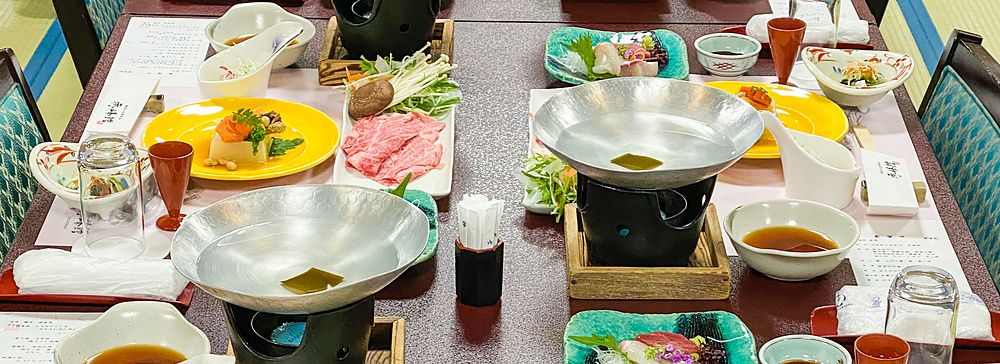
Kaiseki
Kaiseki is one of the best ways to see how seriously Japan takes the seasons. It’s a long dinner made up of lots of small courses that come out one after another. Each one arrives on its own plate or in its own bowl, with its own colors, and each is built around an ingredient picked because it’s in its prime.
Plenty of people try it for the first time at a ryokan, while others seek it out in Kyoto. Many show up a little nervous, worried about all the rules, the unfamiliar food and the big bill.
The logic behind it is fairly simple, though. Once you understand how the dinner unfolds, the rules and the bill are much less intimidating.
Contents
Two kinds of kaiseki
In Japanese, kaiseki is written two different ways, and that alone tells you a lot. The first, 懐石, means roughly “stone against the belly.” It refers to the habit Zen monks had of keeping a warm stone under their robes, at stomach level, to stave off hunger while fasting.
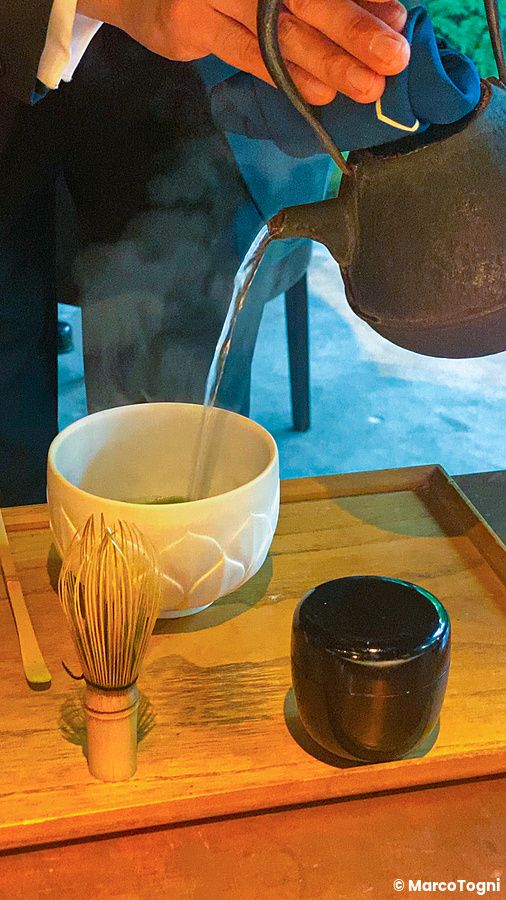
That’s where cha-kaiseki comes from. It’s the light meal served before the tea ceremony, and it took shape in the 16th century under great tea masters like Sen no Rikyu. The point was to prepare the stomach for thick tea, matcha, without weighing it down. The meal followed a pattern called ichiju sansai, one soup and three dishes, with rice and miso served at the start.
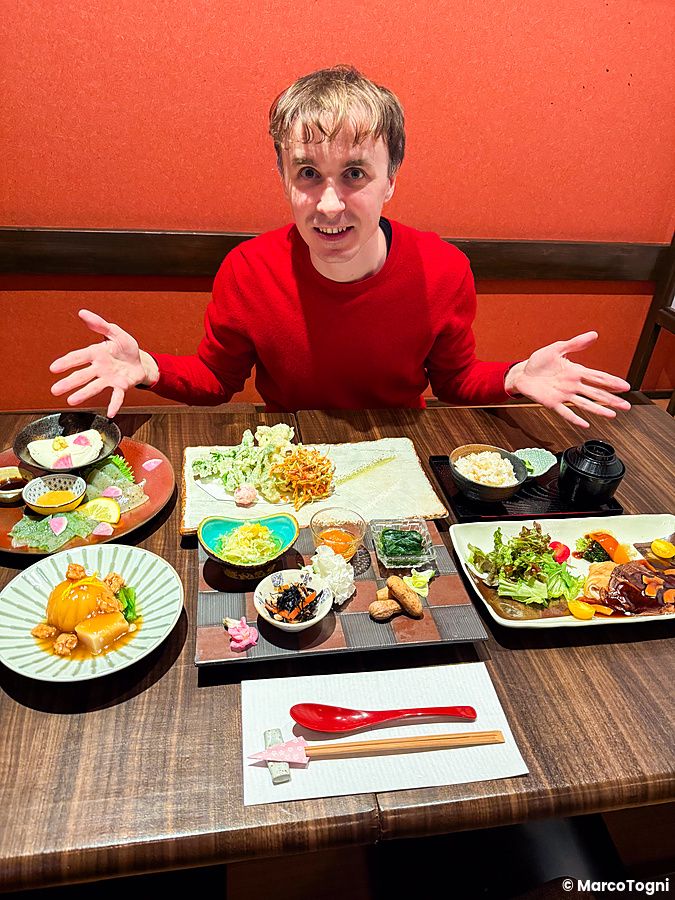
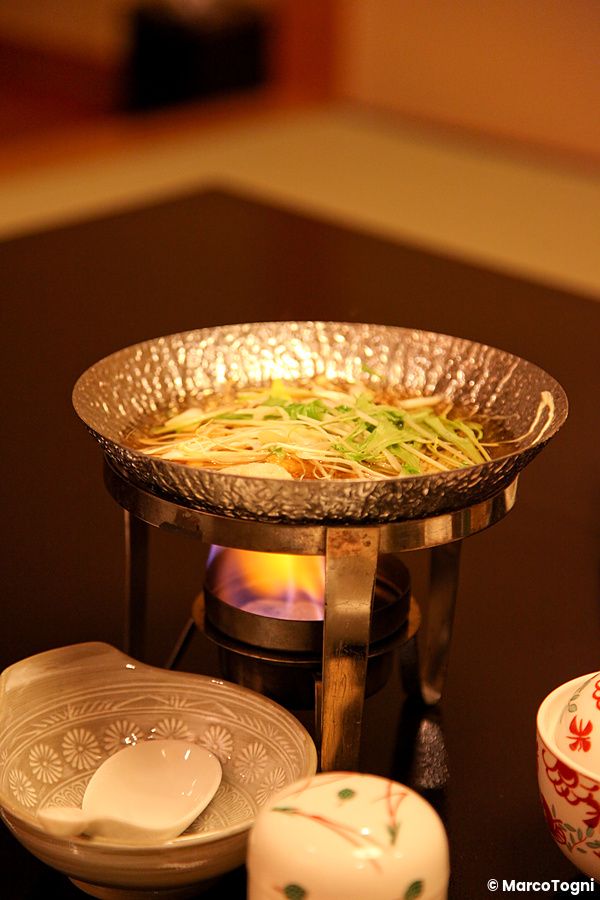
The second way of writing it, 会席, means something like “gathering at the table.” It refers to the banquet cuisine that developed in the Edo period, when high-end restaurants served long dinners with sake. This is the version you’ll find almost everywhere today, from ryokan to Kyoto restaurants.
In practice the difference is simple. At a banquet-style kaiseki you drink from the start, so the rice, miso soup and pickles come at the end to close the meal. When an English menu just says kaiseki, it almost always means this version.
Eating with the seasons
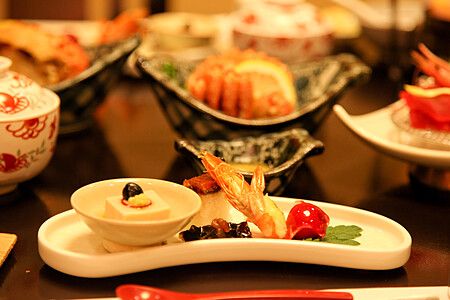
Everything rests on shun, the moment when an ingredient is at its best. A kaiseki chef actually distinguishes three phases: the first ingredients of the season, the ones at their peak, and the last ones just before they disappear. Often all three end up on the same menu.
That’s why a kaiseki menu is never fixed. It changes every month, sometimes every two weeks, and if you go back to the same restaurant at a different time of year you’ll get a completely different dinner.
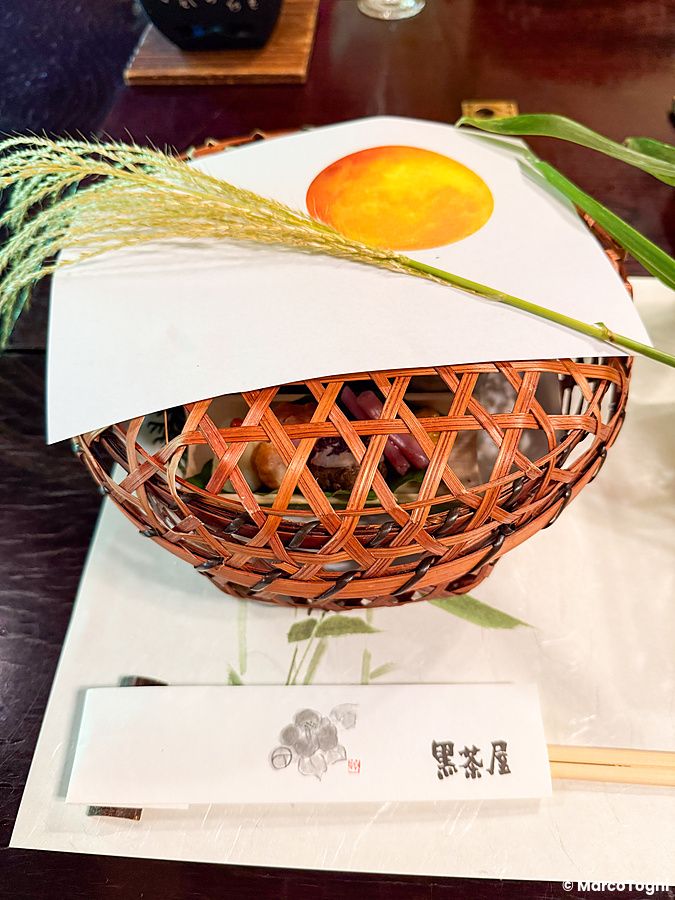
A few examples make this clearer. Spring brings bamboo shoots, slightly bitter mountain vegetables and pickled cherry blossoms. Summer in Kyoto means hamo, a sea eel cut so finely that the bones melt away, and ayu, a river fish grilled whole.
Fall is matsutake mushroom season, the time for chestnuts and for maple leaves used as decoration, while winter brings crab, pufferfish and thicker soups.
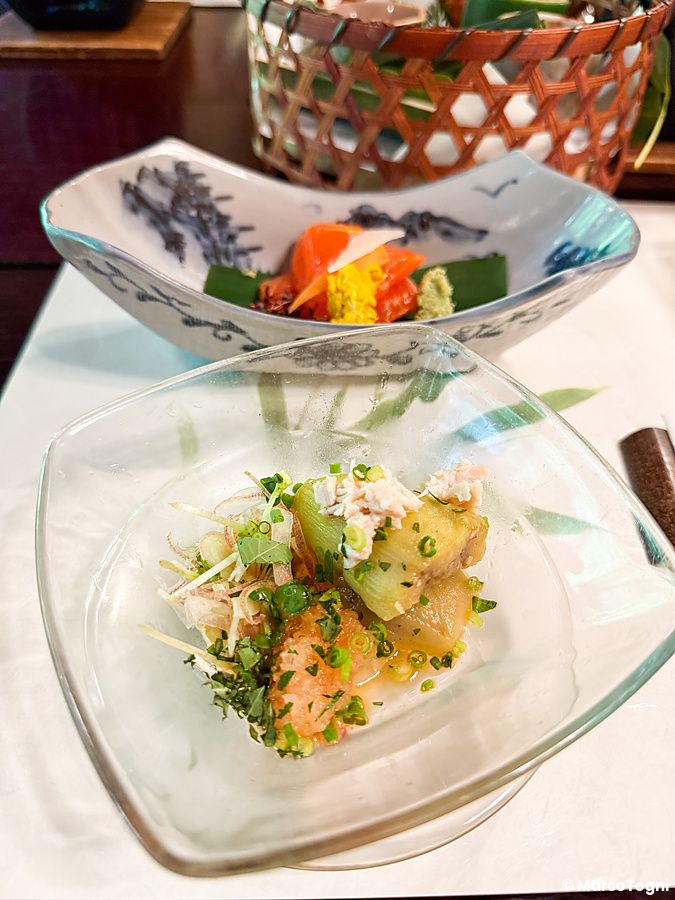
You can see the season in the tableware too. In summer you get pale ceramics and glass to make everything feel cool, and in winter thicker, darker bowls that hold in the heat.
How the dinner works
A kaiseki dinner usually lasts two to three hours, at a slow pace, one course after another. The order varies from chef to chef and not every dish always appears, but the basic structure looks like this:
- It opens with sakizuke, a small appetizer that comes with the first sip of sake and sets the seasonal tone right away.
- Next comes owan, a clear soup in a covered lacquer bowl. Many chefs see it as the hardest test, because everything depends on the dashi broth.
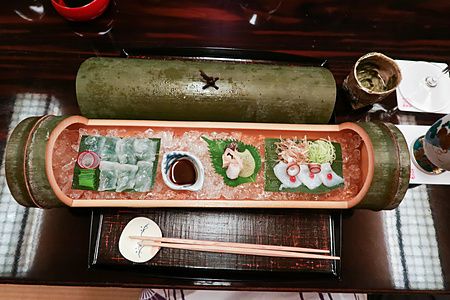
- Then there’s mukozuke, the sashimi, usually two or three kinds picked from the best fish of the day.
- Hassun is the seasonal platter, with small bites representing the sea and the mountains. This is when everyone pulls out their phone for a photo.
- The hot dishes come next: grilled fish, vegetables cooked in broth, sometimes something fried or steamed, and something sweet and sour to cleanse the palate.
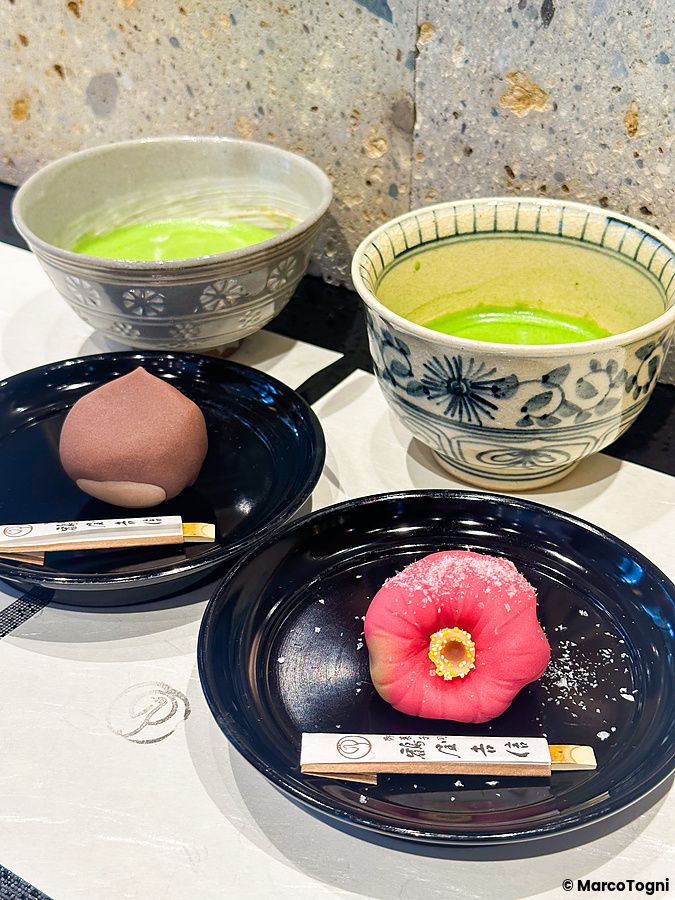
- The last savory course is always rice, miso soup and pickles, followed by fruit or a light dessert, often with green tea.
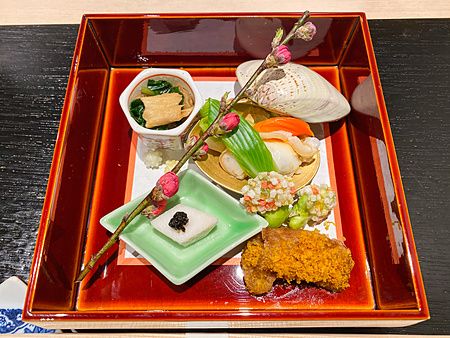
The portions are small, but by the end you’ll be full, sometimes too full. If your ryokan brings the final rice in a large bowl for you to serve yourself, I’d suggest you go easy on it. That’s when a lot of people realize they’ve eaten more than they planned.
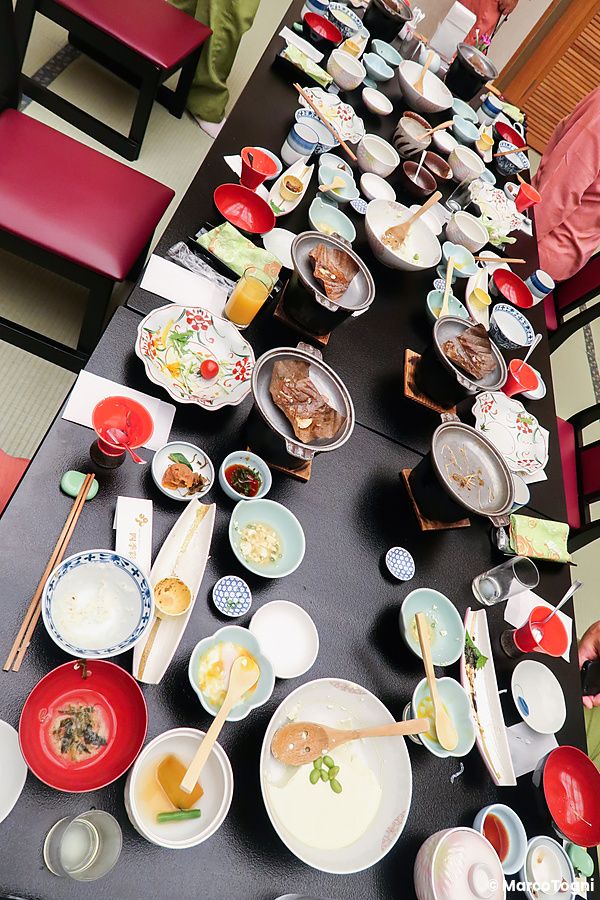
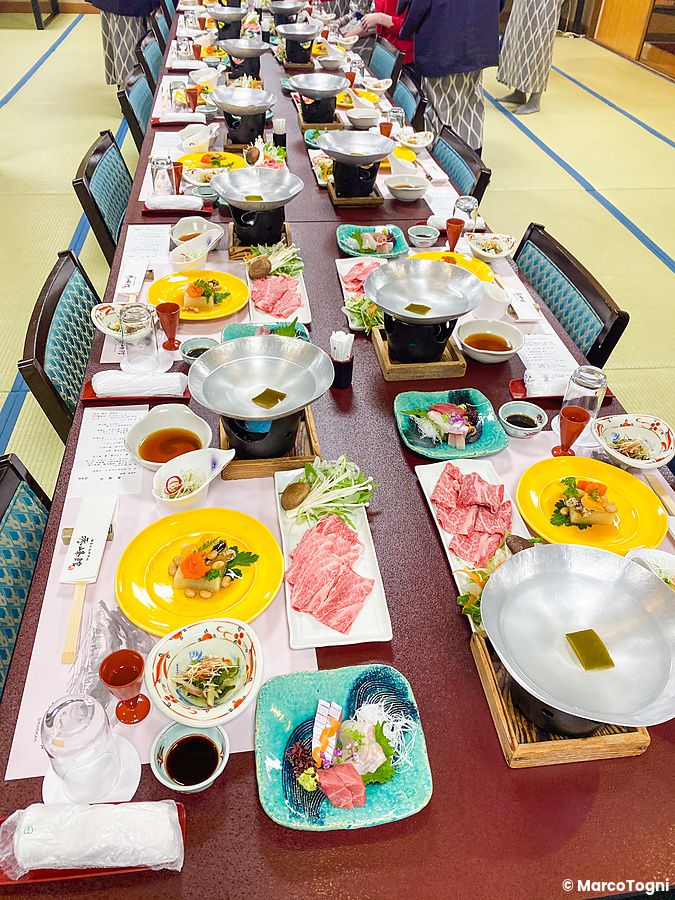
Each course arrives once you’ve finished the one before, and the staff keeps an eye on your pace. If you’re talking a lot or eating slowly, the kitchen waits. Ryokan, especially the bigger ones, often work differently. Many of the cold dishes are already on the table when you sit down, and only the hot dishes, the rice and dessert come out afterward. You lose some of the surprise of each course, but you can eat at your own pace.
Tableware and setting
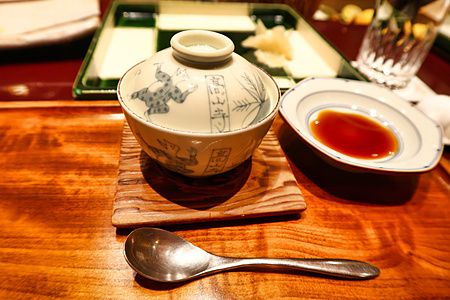
At a kaiseki dinner the ceramics matter almost as much as the food. Every course is served on a piece chosen specifically for it, and the pieces vary in shape and color. At the top restaurants you may find yourself eating off antique pieces or ceramics by well-known artisans.
There’s no matching set like you’d get with Western tableware. In a single meal you go from red lacquer to glass, from rough earthenware to painted porcelain, and every pairing is meant to bring out the color of the food on it.
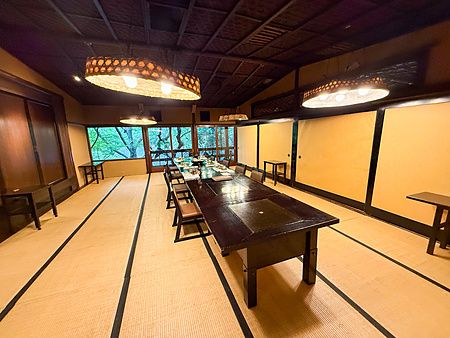
The room itself is part of the meal as well. At traditional restaurants you often eat in a private room with a tatami floor, an alcove holding a hanging scroll and a flower, and a window onto the garden. The scroll and the flower change with the seasons, just like the menu.
Many places have a light wood counter in front of the kitchen instead, where the chef prepares the dishes right in front of you. Honestly, that’s what I prefer: you can watch the chef work, you understand what you’re eating, and the chef will often explain a few things, even in just a few words of English.
Where to try it
You can find kaiseki in very different kinds of places, and your choice makes a big difference to both the experience and the bill. These are the main options:
- At a ryokan, kaiseki dinner is almost always included in the room rate and is served either in your room or in a dining room. It’s the most natural way to try it for the first time.
- Ryotei are the most exclusive traditional restaurants, with private rooms and gardens. In Kyoto and Tokyo many have been around for generations, and they’re the most expensive option.
- Restaurants with counter seating are smaller and a bit less formal. You talk directly with the chef, and the menu depends on what’s at the market that day.
- Restaurants inside big hotels and department stores are less charming but convenient, with English menus and staff used to foreign guests.
Kyoto is still the city most closely tied to this cuisine, thanks to its tea ceremony tradition and local products like its vegetables and tofu. There people talk about Kyo-ryori, or Kyoto cuisine, which has a more delicate flavor and lighter colors than Tokyo’s.
That doesn’t mean you eat worse in Tokyo. Far from it: the city has dozens of excellent kaiseki restaurants, especially in Ginza, Akasaka and Kagurazaka. The style is just a little bolder, with darker sauces and a heavier hand with soy sauce.
How much it costs
Kaiseki is never a cheap dinner, but the range is huge. The easiest way to spend less is to go at lunchtime: lots of restaurants, even famous ones, offer a shorter lunch menu that costs a fraction of the dinner price.
Kaiseki lunches at good restaurants start in the 5,000–8,000 yen range and can reach 15,000–20,000 yen at the better-known places. Dinner usually starts at 15,000 yen and easily goes past 30,000, and at the most prestigious historic ryotei you’ll pay over 50,000 yen per person, not including drinks.
Ryokan pricing works differently, because dinner is included in the room rate along with breakfast. The same ryokan often offers several plans with different menus, and the price difference comes almost entirely from the main ingredients, like wagyu beef, crab or lobster.
Also factor in drinks, which can add up quickly, the service charge some places add to the bill, and an extra fee for private rooms. Prices change often, so check the restaurant’s website before you book.
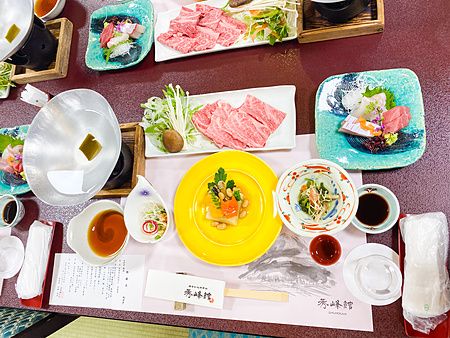
Table manners
Nobody at a kaiseki dinner expects a foreigner to know every rule, and the staff is used to explaining things. Still, a few things make a real difference:
- Skip strong perfume, because it covers up the delicate aromas of the broth and the fish, and at the more traditional restaurants it’s considered genuinely rude.
- When you open a lacquer bowl, hold it steady with one hand and lift the lid with the other. When you finish the course, put the lid back on facing the same way.
- You can lift small bowls to your mouth, while wide plates stay on the table and you eat from them with chopsticks.
- Don’t stick your chopsticks upright in the rice and don’t pass food from one pair of chopsticks to another, because both are associated with funeral rites.
- Always ask before taking photos, especially if there are other guests in the same room or you’re at the counter with the chef in front of you.
What you wear matters too. You don’t need a jacket, but at the more elegant places it’s best to avoid shorts and flip-flops. If you’re eating on tatami you’ll have to take your shoes off, so wear presentable socks: people notice right away.
Kneeling for two hours is hard on anyone who isn’t used to it. Sitting cross-legged is perfectly fine, and many restaurants have low chairs with backrests or a recessed space under the table for your legs.
Booking and allergies
Kaiseki restaurants always require reservations, and the best-known ones have to be booked weeks in advance. Many places won’t take phone reservations from foreigners because they’re afraid of last-minute cancellations, so they rely on booking sites or on hotel concierge desks instead.
Cancellation policies are strict. If you don’t show up, you’ll almost always pay the full price of the meal, because the ingredients were bought for you that same morning. Restaurants take showing up late just as seriously: the courses run on a schedule, so one late table causes problems for the whole kitchen.
Tell the restaurant about allergies and dietary restrictions when you book, not once you’re at the table. The chef plans the menu days ahead, and last-minute changes often aren’t possible.
If you’re vegetarian, it gets complicated, because almost everything is built on dashi, the broth made with dried bonito, and it’s there even when you can’t see it. Trust me, even a soup that looks like it’s made only from vegetables usually isn’t. If you don’t eat fish or meat, I’d suggest shojin ryori, the cuisine of Buddhist temples, instead. It follows a similar structure and is entirely plant-based.
Is it worth it?
You’ll only really enjoy kaiseki if you bring some curiosity and you’re not in a hurry. It’s not for anyone who wants big portions and bold flavors, and it’s not a good choice for small children either, since they get bored after an hour.
I do recommend it if you want to understand Japanese food beyond sushi and ramen. In a single evening you see the work that goes into the broth, the respect for the season, and how each dish is chosen.
Honestly, if it’s your first trip, there’s no need to go straight for the most famous ryotei in Kyoto. A night at a good ryokan with dinner included, or a kaiseki lunch at a restaurant with counter seating, teaches you almost everything there is to know, at a much more reasonable price.
If you like it, go back on your next trip in a different season, and you’ll find it’s a different dinner altogether. Here’s what I’d do: lunch at the counter in Kyoto in the fall, when mushrooms and chestnuts are in season, and an evening at a ryokan to see the difference.