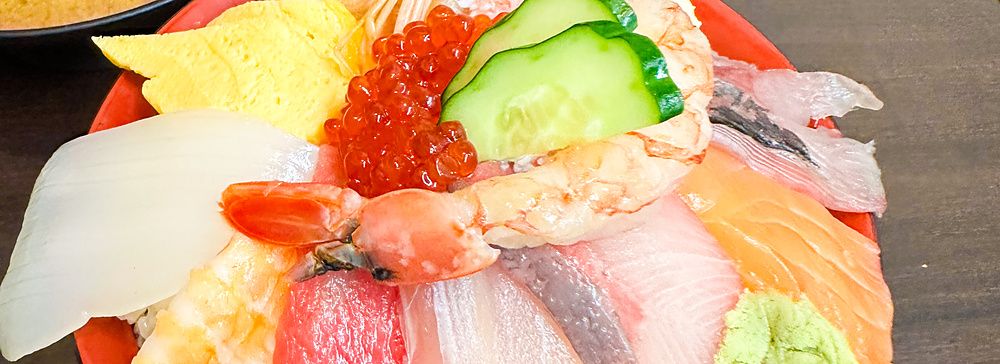
Kaisendon
Kaisendon is one of the dishes I recommend most often to first-time visitors to Japan who want raw fish without going to a formal sushi restaurant. It’s a bowl of rice topped with fresh fish: tuna, salmon, salmon roe, scallops, shrimp, sometimes sea urchin. You eat it slowly, with chopsticks and a little soy sauce.
You’ll find it at fish markets, in train stations, at little places near the ports and even at the supermarket. Every part of Japan has its own version, from Hakodate’s squid cut into thin strands to the bowl you put together yourself at the market in Aomori.
Contents
What is kaisendon
The name is easy to break down. Kaisen means seafood or fresh fish, and don is short for donburi, a bowl of rice with something on top. That puts it in the same family as gyudon with beef or katsudon with a pork cutlet, except that here the topping is raw fish, sliced or cubed.
Unlike so many Japanese dishes with centuries of history behind them, kaisendon is fairly young. It caught on after World War II, mostly in the north, in Hokkaido and the Tohoku region, where huge amounts of fresh fish come in every morning. During the economic boom, as more people took the train north, the market bowls became a reason to make the trip, and from there they spread across the whole country.
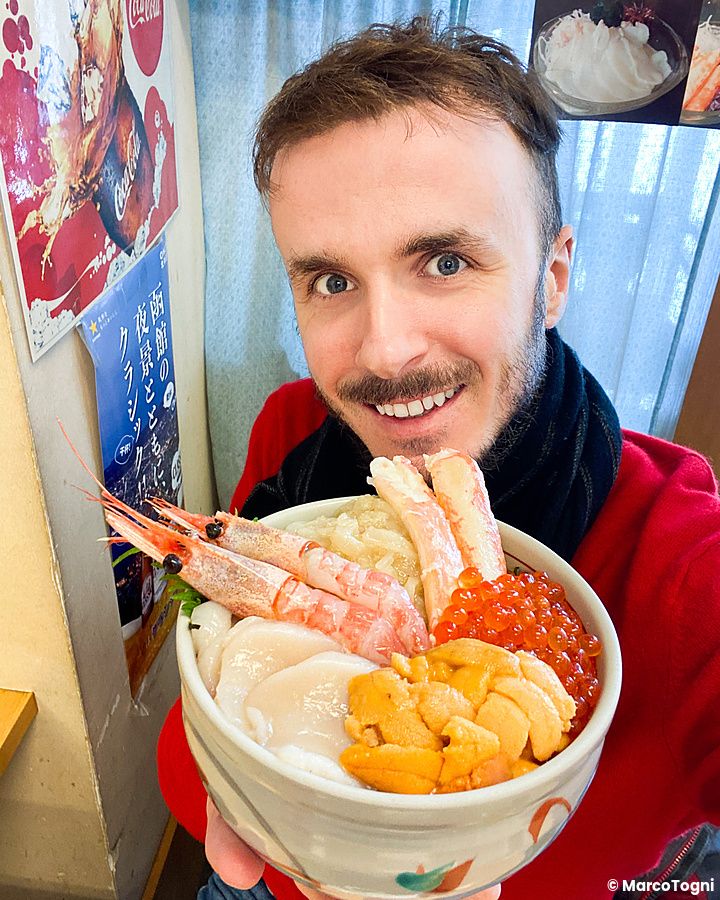
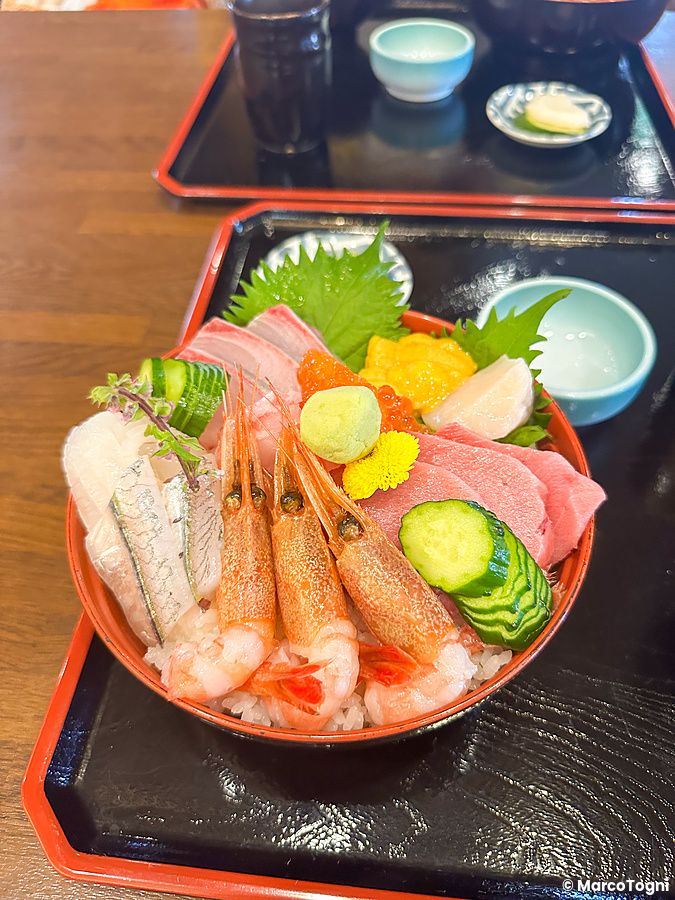
Today kaisendon is an everyday meal in Japan and also a little luxury when you travel. Office workers eat it at lunch at a chain near the office, and families on a day trip wait in line for an hour at a market famous for its crab bowl. That’s why the same word can mean a bowl that costs a few hundred yen or one that costs almost 10,000.
Kaisendon vs. chirashi
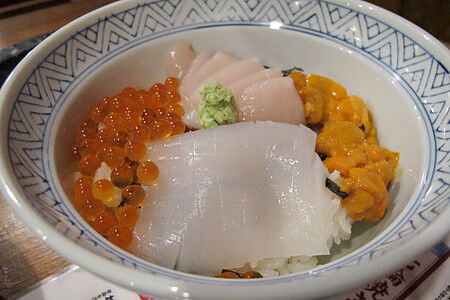
People often ask me whether kaisendon is the same thing as chirashi sushi. They’re very similar, but the difference is all in the rice. Chirashi uses sushi rice, seasoned with vinegar, sugar and salt, while basic kaisendon uses plain white rice, hot or warm.
In practice the line is blurrier than the books make it sound. Many restaurants, especially in the cities, put sushi rice under their kaisendon anyway because it goes better with raw fish, and the menu often says so clearly. At the markets up north, on the other hand, you’re more likely to get plain white rice, sometimes served still hot, so you get a contrast between the cold fish and the steaming rice.
If you’re not a big fan of vinegared rice, I’d suggest looking for words like sumeshi (sushi rice) or shiromeshi and gohan (white rice) on the menu. In a lot of places you can also ask to switch the rice, and just as often you can choose the portion size: regular, large or small, sometimes with a small discount if you go smaller.
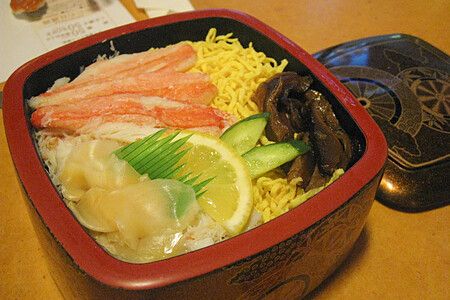
Typical toppings
There’s no set recipe. Each place builds the bowl out of whatever is fresh that day, and you’ll often see a daily special at a lower price, made with the fish the chef bought at the market that morning.
These are the ingredients you’ll see most often:
- Tuna in all its forms, from the dark red lean cuts to the fatty belly, which is paler and much more expensive.
- Salmon and salmon roe (ikura), which pops in your mouth and is the star of Hokkaido bowls.
- Scallops, sweet shrimp (amaebi) and squid cut into thin strips, which is very common in the northern ports.
- Sea urchin, or uni, almost always the most expensive ingredient in the bowl, along with crab.
- Garnishes like the sweet omelet called tamagoyaki, cucumber, shiso leaves, shredded nori and pickled ginger.
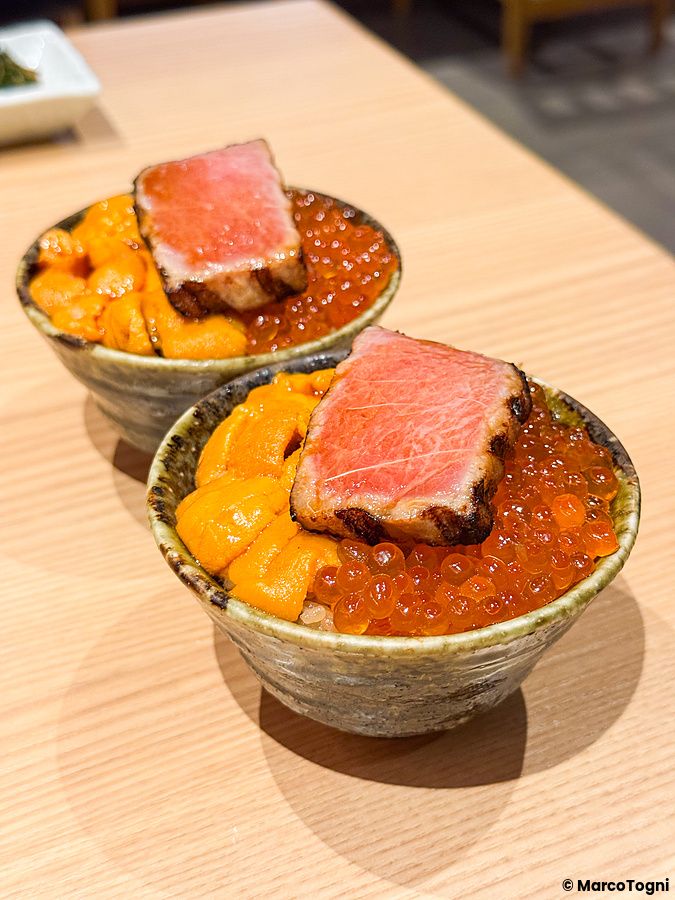
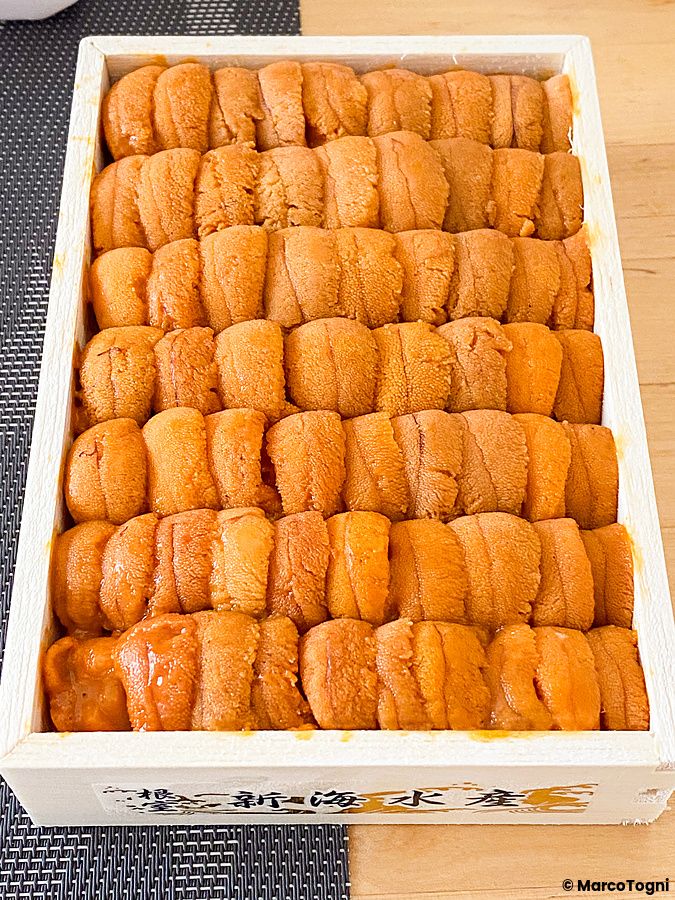
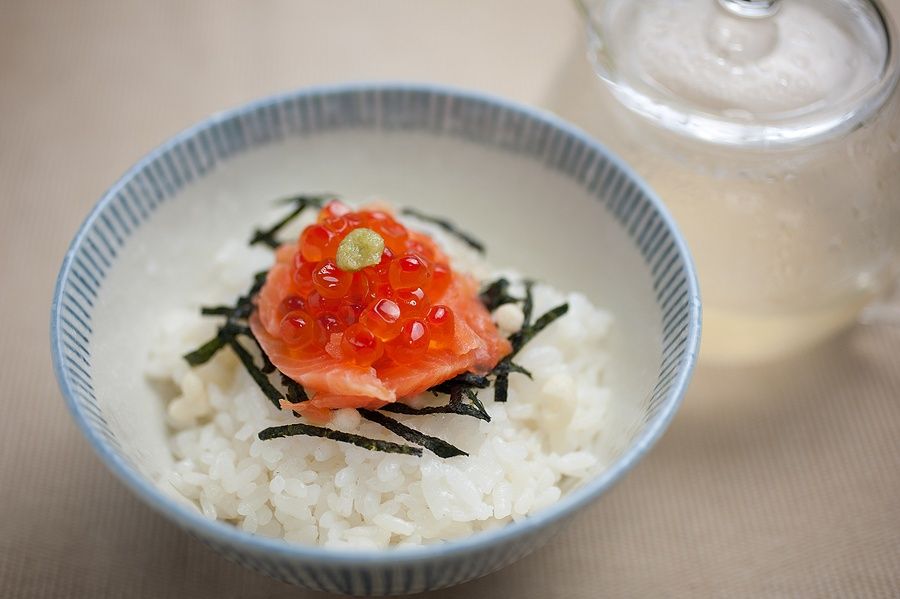
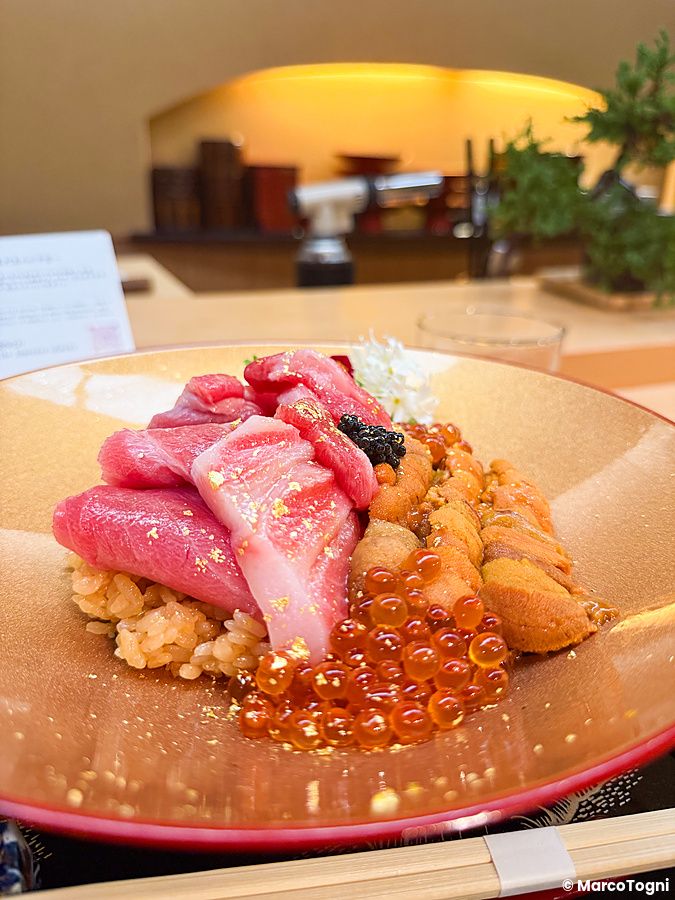
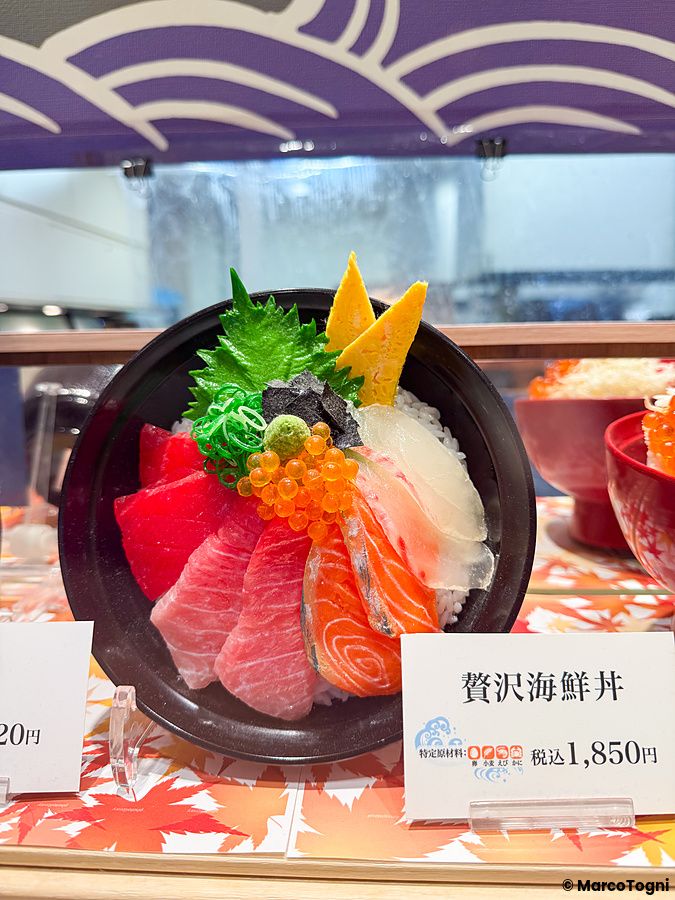
Then there are the specialty bowls, which have names of their own. Negitorodon is made with minced tuna and green onion, maguro-zuke-don with tuna marinated in soy sauce, and ikura-don is nothing but salmon roe. The versions with two or three toppings, like uni and ikura, are the most photographed at the markets. When a bowl has lots of different kinds of fish, it’s sometimes called zeitaku-don, meaning luxury bowl.
How to eat it
Kaisendon almost always comes with a small dish for soy sauce, a bit of wasabi and sometimes a bowl of miso soup. The classic mistake is to pour the soy sauce straight over the bowl and mix it all up: the rice at the bottom gets soggy and salty, and the fish on top ends up with no flavor.
The cleanest way is to put a little wasabi in the dish or right on the slice of fish, dip the piece in the soy sauce, then set it back on the rice and eat it together with a mouthful of rice. That way every bite gets the right amount of seasoning and the bottom stays dry. Some people prefer to drizzle a little soy sauce in a circle over the fish, without overdoing it, and that’s fine too. Nobody’s going to judge you.
One thing I always tell people is to start with the more delicate fish, like squid or scallop, and save the fattier, richer ones, like fatty tuna or salmon, for later. If you start with the fatty tuna, everything else tastes bland.
At some places, especially the high-end ones, they bring you hot broth at the end of the meal to pour over the leftover rice, turning the last part of the bowl into a kind of ochazuke. If they offer it, say yes. The fish cooks lightly in the hot broth, and that completely changes the flavor of the bowl.
Prices
The price of kaisendon varies enormously, and it’s good to know that before you sit down. At chains and places that cater to office workers, a simple bowl runs about 1,000–1,500 yen, often with miso soup included. At the most famous tourist markets the average goes up, and for a bowl with several kinds of fish you should budget 2,000–3,500 yen.
With a generous helping of sea urchin, or with crab or fatty tuna, you can easily hit 4,000–6,000 yen, and even more in some places. The price of uni in particular changes a lot with the season and with conditions at sea, and some menus just say market price, which changes from day to day.
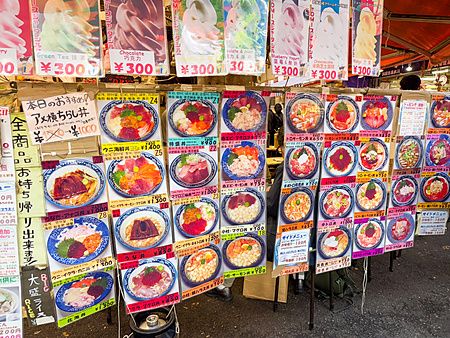
I’ll be honest with you: at the most touristy markets you sometimes pay an inflated price for what actually ends up in the bowl. That doesn’t mean the fish isn’t good, but a 5,000-yen bowl at a market packed with tour groups isn’t necessarily better than a 2,000-yen one at a neighborhood place where only locals eat. Always check the photos on the menu posted outside, and if the price is listed as market price, ask how much it is before you order.
Where to eat it in Tokyo
In Tokyo, the place most travelers associate with kaisendon is Tsukiji’s outer market. The wholesale market moved to Toyosu, but the outer part, with its stalls and small restaurants, stayed where it was and is still full of places serving fish bowls from early in the morning.
By late morning the streets are packed and the lines outside the best-known places get pretty long, so it’s best to get there early, around opening time, or after the lunch rush. A lot of places close in the early afternoon, once the fish runs out.
Toyosu Market has its own restaurants inside the market buildings too, and the crowd there is a mix of tourists and workers. There are still lines, though, and it isn’t cheap.
Away from the markets, when I want kaisendon without waiting in line, I usually go to the small places for office workers near the big stations, in department store basements or in office districts like Nihonbashi and Shinbashi. At lunch, many sushi restaurants and izakaya offer kaisendon as a daily special at a lower price, and it’s the cheapest way to eat top-quality fish in Tokyo.
Hokkaido and the north
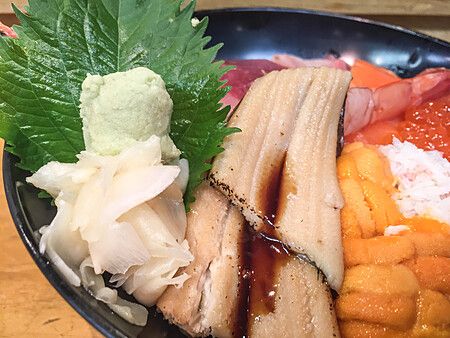
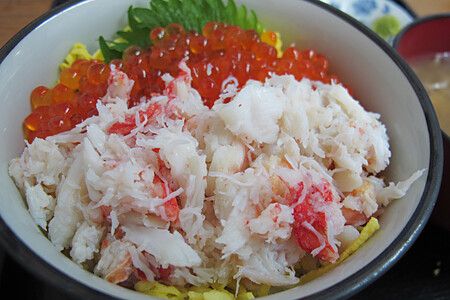
If kaisendon has a home, it’s Hokkaido. Hakodate’s morning market, the asaichi, is a short walk from the station, and it has an entire covered street lined with nothing but rice-bowl restaurants, the Donburi Yokocho. The specialties here are super-fresh squid cut into thin strands, salmon roe and crab. At some stalls you can even catch a live squid from a tank and have it sliced on the spot.
In Otaru, a short train ride from Sapporo, the place to go is Sankaku Market, a small market right next to the station with a handful of restaurants packed side by side. It’s a cramped, crowded place, with only a few tables in each restaurant and lines forming in the corridor, but the fish is excellent.
Sapporo’s best-known market is Nijo Market, downtown. There’s also the outer market next to the wholesale market, a bit out of the center but often with fairer prices. While you’re in Hokkaido, I recommend trying a bowl with uni and ikura together at least once. It’s the most famous combination, and for good reason: few things in Japan are as sweet and creamy as sea urchin from the north. If you can pick when to go, keep in mind that Hokkaido sea urchin is at its best in midsummer, when the season opens in many fishing areas and the day’s fresh uni starts showing up on menus. In winter, crab season takes over, and the bowls change accordingly.
Nokkedon in Aomori
Aomori, the capital of the northernmost prefecture on Japan’s main island, has a version of kaisendon I like precisely because you build it yourself. It’s called nokkedon, which roughly means a bowl you pile whatever you want onto, and you put it together inside Furukawa Market, a few minutes’ walk from Aomori Station.
At the entrance you buy a booklet of meal tickets. One or two tickets get you a bowl of rice, regular or large, and then you walk around the stalls trading the rest of your tickets for the slices of fish you like. Each stall shows how many tickets each piece of fish costs, and when you’re done you sit down in the shared seating area to eat your bowl.
You only need to know a few useful things before you go:
- The standard booklet is enough for a decent bowl, but if you want sea urchin or fatty tuna you’ll need extra tickets, which are sold individually.
- The rice runs out: the market gets going early in the morning, and by the afternoon there may be none left.
- Before you spend your tickets, walk the whole market, because the same fish costs a different number of tickets from one stall to the next.
- Some stalls also sell miso soup and small cooked side dishes, handy if you want to finish the meal with something hot.
Kanazawa and Omicho
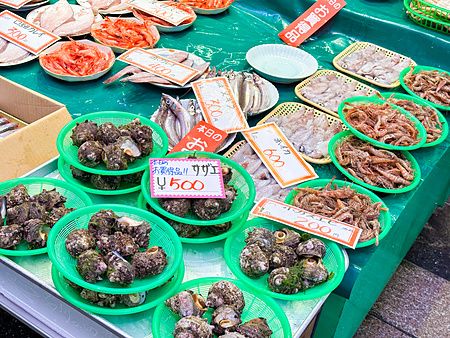
On the Sea of Japan side of the country, kaisendon is almost a standard stop in Kanazawa, home of Omicho Market. It’s a covered market in the city center, with dozens of fish stalls and a good number of restaurants serving bowls, many of them topped with local crab in winter and the area’s sweet shrimp, which are especially large here.
Prices vary a lot at Omicho, from under 1,500 yen for a simple bowl to 3,500–4,000 yen for a huge one with fifteen kinds of fish. The lunch lines are long, so I’d go in the late morning, well before noon.
Supermarkets and konbini
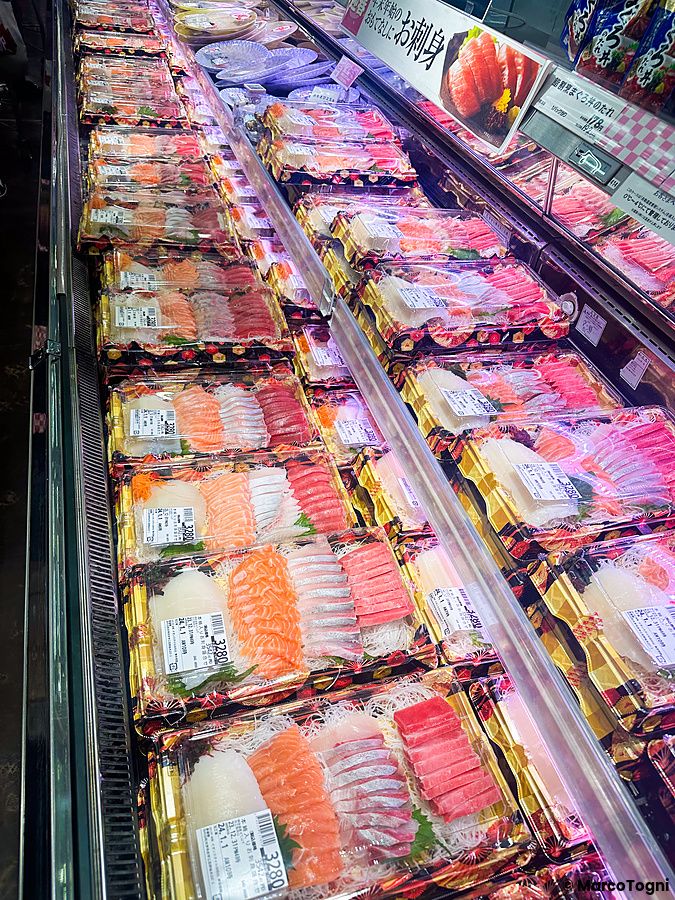
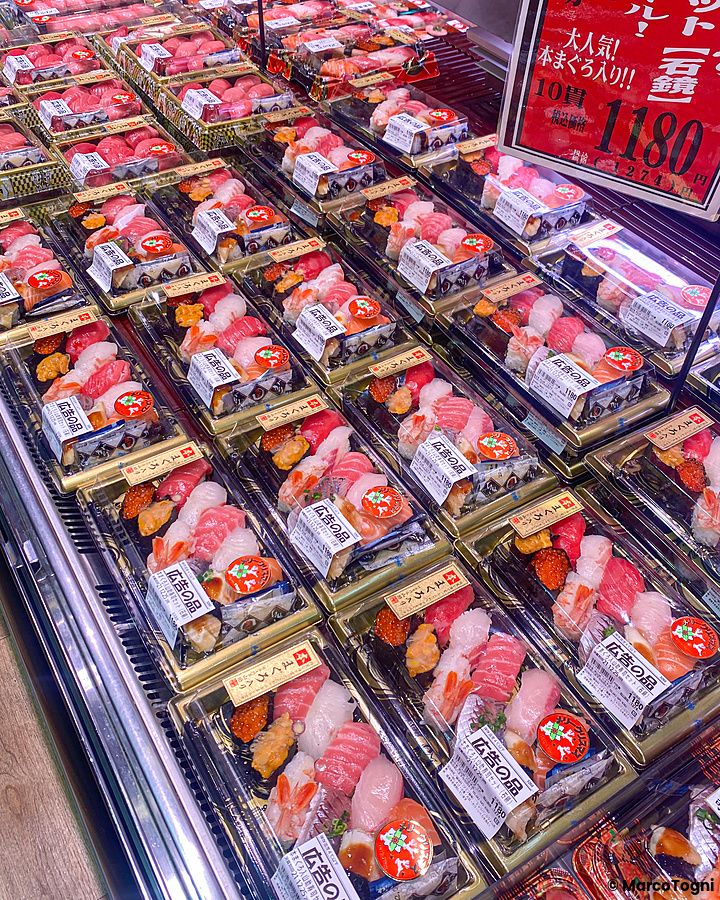
Kaisendon isn’t only a restaurant dish. In the fish section of any Japanese supermarket you’ll always find ready-made bowls of kaisendon, sometimes really good for the price, costing around 500–1,200 yen depending on the area and how much fish is on them.
Toward evening many supermarkets put discount stickers on fresh food, and raw fish is one of the first things to get marked down, usually by 20, 30 or even 50%. I often suggest this to people traveling on a tight budget and to anyone who wants to eat dinner in their room after a long day.
Kaisendon is rare at konbini, and when you do find it, it’s not great: the raw fish sits in the fridge for hours and suffers for it. If you want raw fish that’s already prepared, a supermarket or the food floor of a department store, the depachika, is a much better choice.
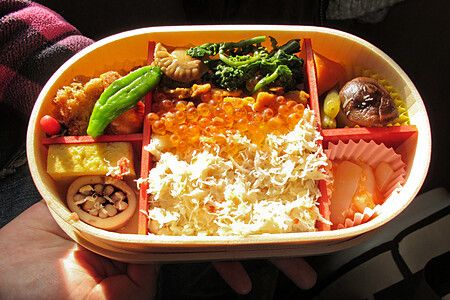
Big stations also sell ekiben, the bento made for train rides, including seafood versions, but the fish is usually marinated or cooked because the boxes have to last a few hours. Bowls with salmon roe and Hokkaido crab are among the best-known ekiben in the country.
Common mistakes
Almost all the mistakes I see people make with kaisendon come from not knowing how these places work in Japan. None of them are serious, but some are easy to avoid:
- Showing up at the famous markets at lunchtime: the longest lines are between 11:00 and 13:00, and at many places the best fish is already gone.
- Ordering without checking the price when the menu says market price, especially for sea urchin and crab.
- Drowning the bowl in soy sauce, which ruins the rice and covers up the taste of the fish.
- Only eating at the place with the longest line, when the empty one next door often has the same fish from the same market.
- Forgetting cash at the smaller markets, where many stalls and restaurants don’t take every card.
Then there are allergies and personal tastes. If there’s a fish you don’t like, at many places you can ask them to leave it out or swap it for something else, but at very busy places that isn’t always possible. You’re better off picking a bowl that already has the ingredients you like than asking a cook to change things when they have thirty orders waiting.
My advice
If it’s your first trip and you’re staying in Tokyo, I honestly wouldn’t go hunting for the perfect kaisendon. Have one at lunch in a place where office workers eat, in Nihonbashi or Shinbashi, and then another at Tsukiji early in the morning, so you can taste the difference between the everyday dish and the market version.
But if your trip takes you north, to Hakodate, Otaru or Aomori, kaisendon becomes something else entirely up there, with fish that was in the sea a few hours earlier and rice that’s still warm. If I had to pick just one bowl in all of Japan, it would be a bowl of uni and ikura at a market in Hokkaido, at eight in the morning.