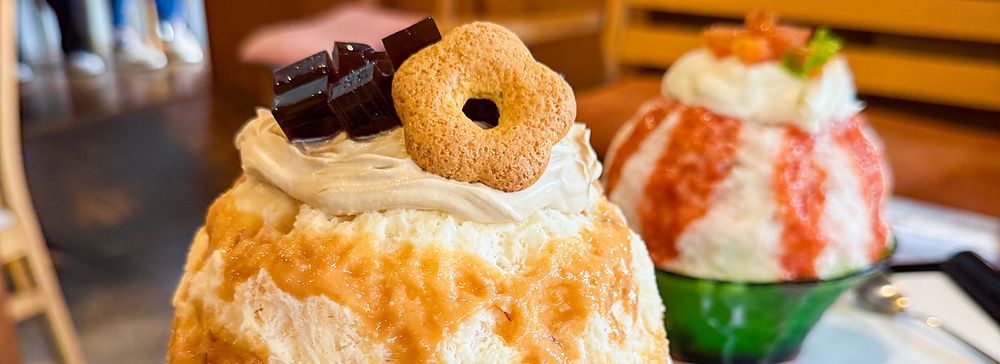
Kakigori
Kakigori is one of the simplest and nicest ways to get through a Japanese summer. You get very finely shaved ice, a syrup poured over the top and a small spoon. Put that way, it sounds like a granita, but it’s something else entirely, both in texture and in everything behind it.
Some versions are sold at neighborhood festivals for next to nothing. Others come from specialty shops where people wait an hour in line, even in February. Kakigori has a thousand years of history behind it, and there are a handful of small rules worth knowing before you sit down. In some cases the ice is still made the old way, in open-air basins up in the mountains.
Contents
What kakigori is
Kakigori is ice shaved off a block and covered in syrup, sometimes with condensed milk, fruit or Japanese sweets on top. The name comes from the verb kaku, to scrape, and kori, ice, so it literally means scraped ice.
That’s where it differs from granita. Granita starts as a liquid that’s already sweetened and gets stirred while it freezes. Kakigori starts from plain ice, which is cut into paper-thin shavings and only then flavored. When it’s done right it’s as light as fresh snow. It doesn’t crunch between your teeth, and it melts almost as soon as it hits your tongue.
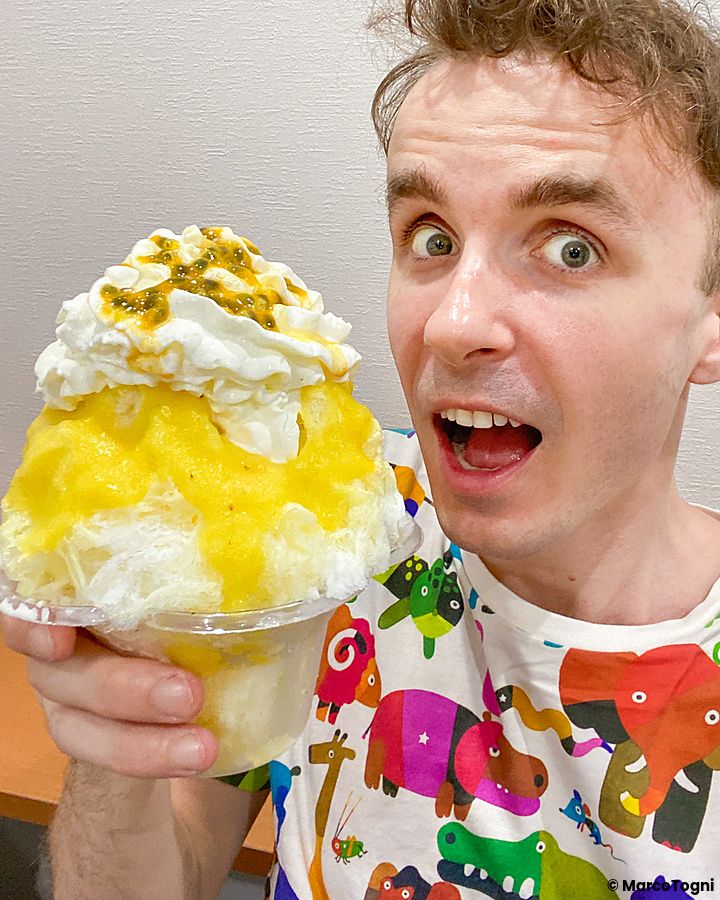
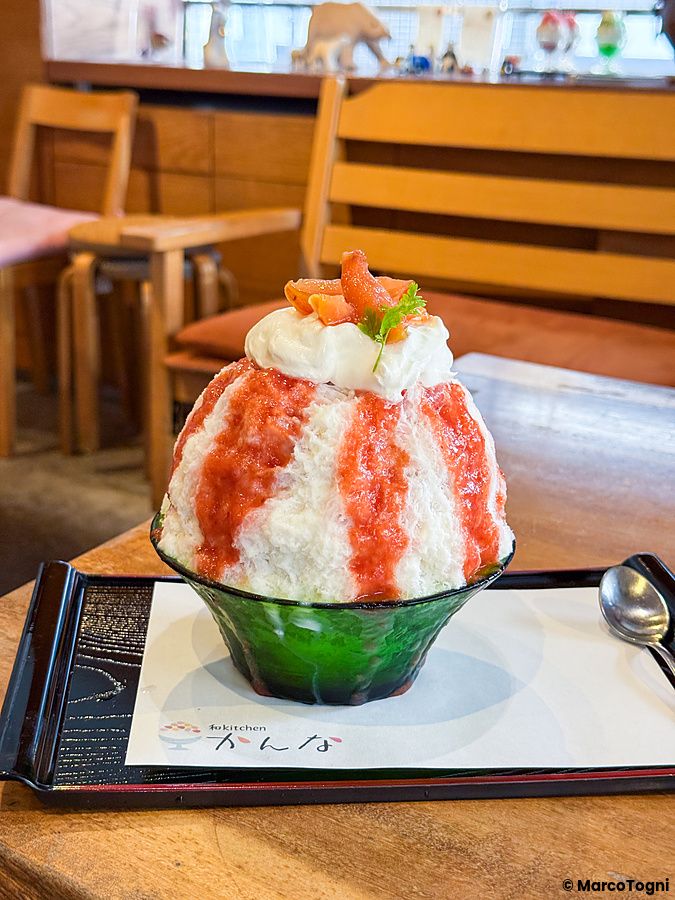
It looks different too. Kakigori arrives as a tall mountain, often bigger than a child’s head, and many travelers’ first reaction is to wonder how they’re supposed to finish it alone.
In fact it’s almost all air. A huge kakigori weighs much less than it looks, and if the ice is shaved well it goes down easily.
A thousand-year-old dessert
The earliest written record of kakigori is in the Makura no Soshi, the notebook kept by the court lady Sei Shonagon around the year 1000, during the Heian period. In a list of elegant things she includes ice cut with a knife, topped with amazura, a sweet syrup made from a climbing plant, and served in a new metal bowl.
Back then it was an enormous luxury. People collected ice in winter and stored it in caves or in straw-covered pits called himuro, and as early as the Nara period there was a system for delivering it to the imperial court. In summer, only the nobility got to eat it.
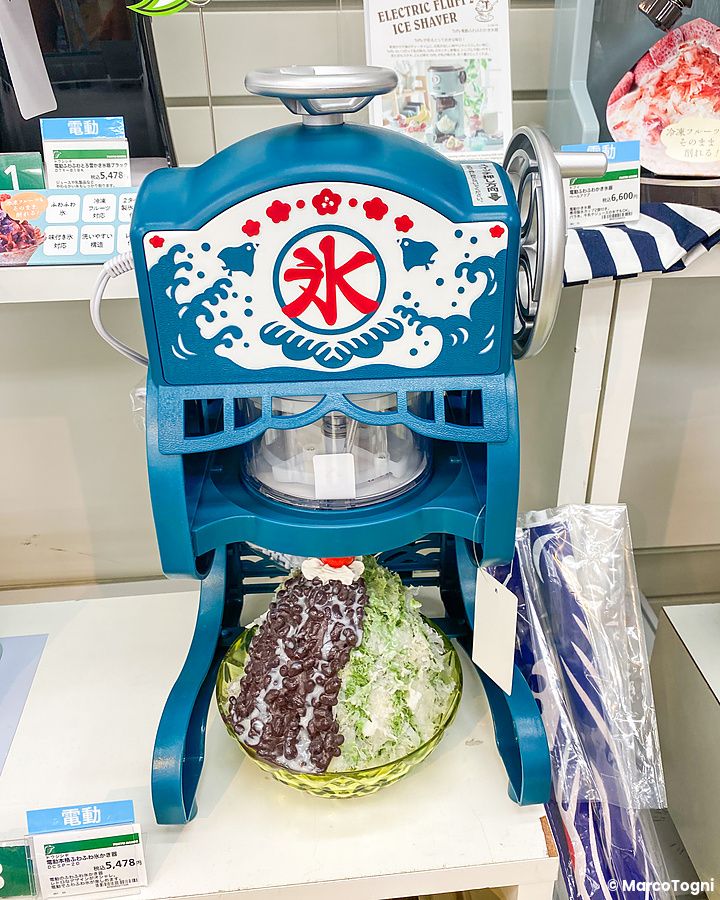
Kakigori only became something anyone could have much later, starting in the Meiji period, when ice factories opened and prices collapsed. Hand-cranked machines caught on after that, followed by electric ones, and shaved ice made its way into cafés, pastry shops and summer festival stalls.
The symbol you still see outside many shops dates from this time. It’s a small white cloth flag showing the character for ice in red, along with blue waves and sometimes little birds. When you see one hanging outside a shop, it means they make kakigori inside.
It’s all about the ice
What separates an ordinary kakigori from a memorable one is the ice, first and foremost. Specialty shops use large blocks frozen slowly. These are denser and clearer than ice cubes from the freezer, so they can be sliced paper-thin without crumbling.
The best ice of all is tennen-gori, natural ice. A few mountain areas still make it the old way, mostly around Nikko and in Chichibu. In winter, producers let spring water freeze in large open-air basins and clear the snow and leaves off the surface. Then they cut the ice into blocks and keep them in storehouses until summer.
Natural ice forms over weeks instead of a few hours, so it has fewer bubbles and impurities, is harder, and melts more slowly. That means it can be shaved into even finer flakes. It’s also why kakigori made with it doesn’t give you the brain freeze you get from very cold food, or at least gives you much less of it.
Only a few places make natural ice, and only in small amounts, so shops that use it put it where you can’t miss it. If you see the word tennen or the characters 天然氷 on the menu, that’s the ice I’m talking about.
The machine matters too, and even more so the skill of the person using it. At serious shops they let the ice rest outside the freezer until it reaches the right temperature, then adjust the blade to suit the block.
If you shave the ice when it’s too cold, it comes out grainy, and if it’s too warm, it turns watery. I often walk past shops where the owner turns the bowl under the blade to build the mountain in layers. Halfway up, they add more syrup so the flavor reaches all the way to the bottom.
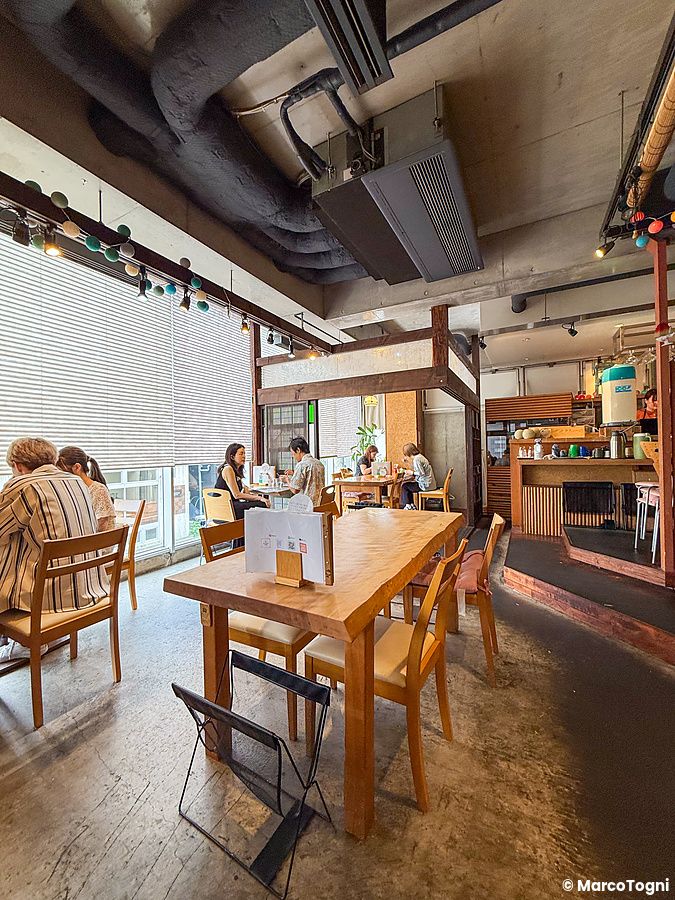
Classic flavors
The most traditional kakigori is the festival kind. It’s just ice and a brightly colored syrup. These are the flavors you’ll find almost everywhere:
- Ichigo, strawberry, the all-time favorite, often with a drizzle of condensed milk on top.
- Melon, bright green, which tastes more like melon candy than real melon.
- Lemon, yellow and a bit more refreshing than the rest, popular with people who don’t want anything too sweet.
- Blue Hawaii, an almost fluorescent blue, which doesn’t taste like anything in particular but is every kid’s favorite.
- Ujikintoki, with matcha syrup and azuki, the sweet red beans, sometimes with mochi balls. It’s the Kyoto classic, and it’s the one I’d recommend if you want something more Japanese.
There’s a bit of trivia about the colored syrups that Japanese people themselves love to bring up. In the cheap versions, the base syrup is basically the same for every flavor, and only the coloring and the flavoring change.
Your brain fills in the rest from the color and the smell. If you close your eyes and pinch your nose, strawberry and melon taste almost identical. That’s no reason to skip them, though. If anything, it’s part of the fun.
Then there are regional versions. The most famous is shirokuma from Kagoshima, in southern Kyushu. It’s kakigori made with condensed milk and covered in fruit, azuki and colorful jellies, which are often arranged to make the face of a polar bear, and that’s where the name comes from.
The place people consider the home of shirokuma is in the Tenmonkan district of Kagoshima, and it serves gigantic portions. You can also buy shirokuma as packaged ice cream in supermarkets all over Japan, but the freshly made kind is something else entirely.
Modern kakigori
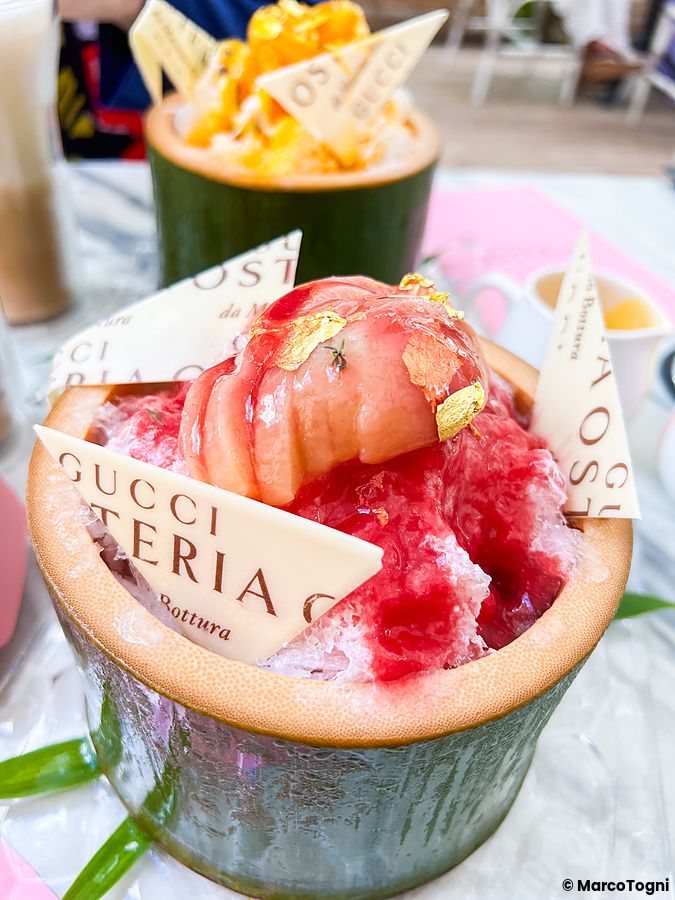
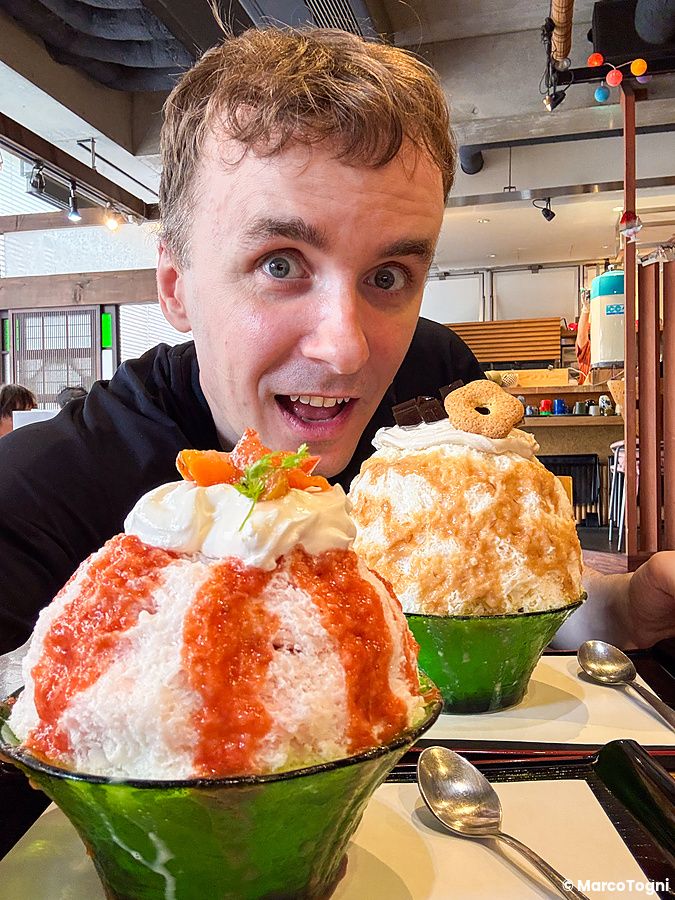
Alongside the traditional version there’s a very different kind of kakigori. It was born in the specialty shops you now find all over the big cities. These shops skip the factory-made syrups and use house-made sauces with fresh fruit instead, along with milk foam, creams and ingredients you’d never expect to see on ice.
You’ll find kakigori with crushed strawberries and milk, with whole white peaches in season, with mascarpone cream or a cheese-based cream, with coffee, black tea or sesame, and even with chocolate or slightly salty sauces. There’s often a surprise under the outer layer, like a center of whipped cream, pudding or jam that you hit halfway down.
These shops change their menus constantly depending on what fruit is in season, and some rotate flavors almost every day. Many have one bowl that never leaves the menu and has become their signature, and that’s almost always the one I’d suggest trying first.
Honestly, I love them, though I understand people who find them too elaborate. Compared to the festival-stall kakigori, this is a proper dessert, with the kind of work behind it you’d expect from a pastry shop.
Where to eat it
You’ll find kakigori in places with very different styles, and each one shows you a different side of it. These are the main ones:
- Stalls at summer festivals and fireworks shows, where you eat it standing up from a paper cup, with your choice of colored syrups and very low prices.
- Kanmidokoro, tea rooms that serve Japanese sweets. In summer they make kakigori with matcha, azuki and mochi, and they’re often right by temples.
- Specialty shops, open year-round, where people go specifically for modern kakigori and where there’s almost always a line.
- Cafés and pastry shops in luxury hotels, which in summer serve really eye-catching versions with premium fruit, at special-occasion prices.
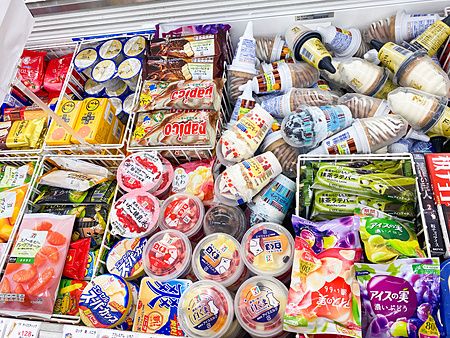
- Konbini and supermarkets, where the freezers have cups of shaved ice that already have the syrup in them. They’re nothing like the fresh stuff, but they’re perfectly fine for a break on a 35°C day.
In Tokyo, the Yanaka area near Ueno is one of the best known for kakigori, because it’s home to one of the city’s most famous shops, with natural ice shaved by hand and a very long list of flavors. The shop I mean is Himitsudo, which uses natural ice from Nikko and shaves it on an old hand-crank machine in front of the customers.
It’s also one of the places where a line is almost guaranteed, so everything I say about lines further down applies here.
These days, though, you’ll find specialty shops in almost every neighborhood, from Shibuya to Asakusa, as well as in Kyoto, Osaka and tourist towns in the mountains. Around Nikko, where the natural ice is made, some producers also have a shop where you can eat kakigori made with their own ice. If you’re in the area in summer, I think it’s worth the stop.
Lines and house rules
At the most famous shops lines are the norm, and on summer weekends the wait can be over an hour. Some shops hand out numbered tickets early in the morning, some take online reservations, and others just have people line up at the door.
Before you go, I’d suggest checking the shop’s official channels to see how they handle entry, because it varies a lot from place to place. Getting there at opening time on a weekday is almost always the easiest way to get in without losing half a day.
There are also a few customs that first-timers don’t know about:
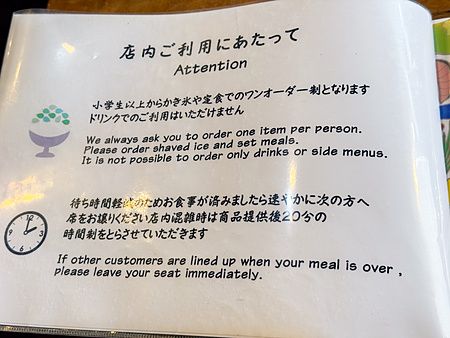
- Many specialty shops have a one kakigori per person rule, so two people can’t order one to share.
- Kakigori has to be eaten right away, without spending too long on photos, because fine ice melts fast and the mountain collapses.
- It’s best to dig in from the sides and the top while turning the bowl, rather than plunging your spoon into the middle, or everything slides off onto the table.
- It often comes with a small pitcher of syrup or milk on the side for you to pour as you go. Save it for the second half, when the ice starts to lose its flavor.
- Many places bring a cup of hot tea with the kakigori, and it’s there specifically to warm your mouth back up halfway through.
If you get brain freeze anyway, just slow down for a moment and press your tongue against the roof of your mouth for a few seconds.
When to go
In summer kakigori is everywhere, and Japan even has a day just for it, July 25. The date comes from a play on words: one of the old names for kakigori is natsugori, summer ice, and the syllables na, tsu and go can be read as the numbers 7, 2 and 5.
The best time is June through September. That’s when the stalls open, the kanmidokoro put out their kakigori flags and the specialty shops start offering summer fruit like peaches, mango and melon.
The specialty shops don’t close in winter, though, and eating kakigori in the cold months has become a habit among fans. The ingredients change too, with strawberries, citrus, chestnuts and sweet potatoes coming in, and some shops also do versions with warm sauces.
Lines are shorter and the shops are heated, so it isn’t as strange as it sounds. Honestly, if you want to try one of the most famous places without a long wait, winter is the time to go.
How much it costs
The price depends entirely on where you eat it. At festival stalls a kakigori with syrup costs a few hundred yen, which makes it one of the cheapest sweets you can buy in Japan.
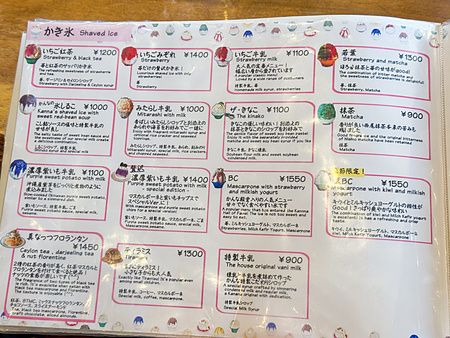
At kanmidokoro and traditional cafés you’ll usually pay around 700–1,200 yen, especially for an ujikintoki with matcha and azuki. At specialty shops the typical range is roughly 1,000 to 2,000 yen, and the seasonal fruit versions sit at the top of it.
Luxury hotels and high-end fruit shops charge a lot more, up to several thousand yen, but there you’re mostly paying for the fruit and the setting. Menus change often, so it’s a good idea to check current prices before you go.
Is it worth it?
Yes, but don’t stop at the stall version and assume you know what kakigori is like. You should have one at least once at a summer festival, surrounded by people in yukata and the sound of drums, because it’s as much a part of summer in Japan as fireworks are.
After that, sit down at a specialty shop, even if it means standing in line for a while, and try a kakigori made with good ice and real fruit. That’s where you see the difference.
If I had to pick just one kakigori for someone on their first trip to Japan, it would be an ujikintoki at a kanmidokoro near a temple on a hot afternoon, with tea served alongside it. And if you still have room, go for the strawberry milk at a specialty shop the next day.