Kamata
Kamata is one of those neighborhoods hardly any tourists put on their itinerary, and I think that’s a shame. It sits at the far southern edge of Tokyo, in Ota Ward, a short hop from Haneda Airport, and it feels like a real working town, with covered arcades full of people, small workshops, public baths and neighborhood restaurants.
I like coming here when I’m in the mood for everyday Tokyo, the kind where you can eat and drink in the evening without lining up for a table. It’s not a postcard kind of place, but it has a personality of its own, and if you’re flying in or out of Haneda it’s a smart place to stop.
Contents
Restaurants
Nearby neighborhoods
Shinagawa
Haneda
Two stations called Kamata
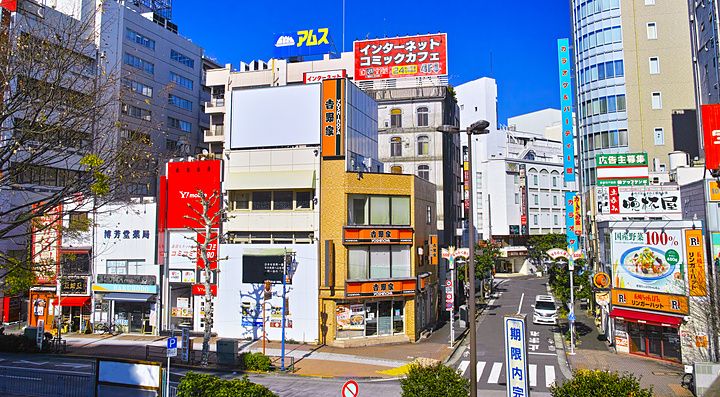
The first thing to know is that there are two stations, and that matters more than it sounds. The area’s two big stations, Kamata and Keikyu Kamata, are about 800 meters apart, and walking from one to the other takes about ten minutes. They’re run by different companies, so figure out ahead of time which one you need, or you’ll end up dragging your suitcase the wrong way.
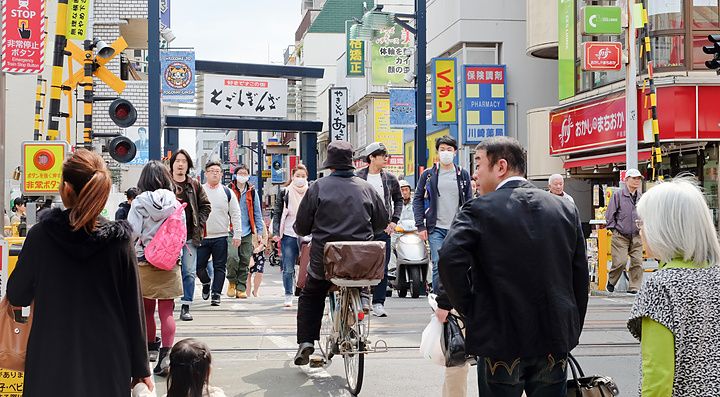
Right off the west side of the JR station, two covered shopping arcades run side by side. Come out of the west exit and you’ll find the Sunrise arcade on your right and Sunroad on your left. Since the walkways are covered, it’s easy to wander around even when it rains. This is where you see what Kamata is really like, with its small shops and locals doing their grocery shopping.
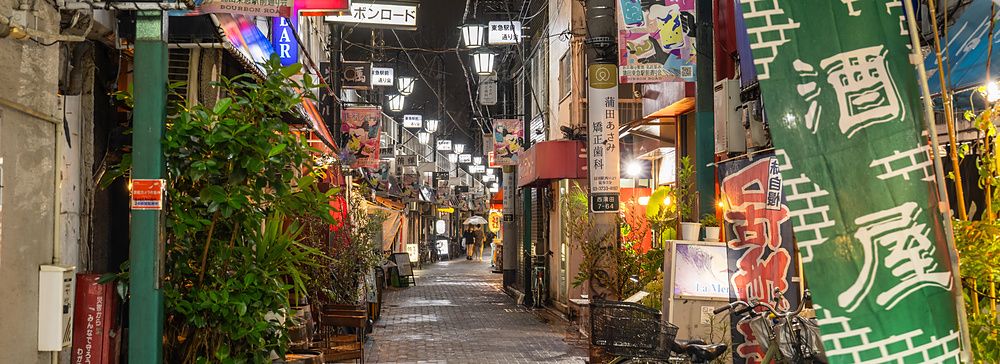
Bourbon Road
If you want to see how people really drink around here, head for the elevated tracks on the west side of the JR station in the evening. Along the railway runs a row of tiny places that everyone calls Bourbon Road. About sixty of them are packed side by side, from izakaya and yakitori joints to Chinese food counters and four-stool bars, and they have the feel of Japan fifty years ago, something that’s all but disappeared from central Tokyo.
It’s a tight squeeze and you’ll often order by pointing, but in one evening you can make three or four stops without walking more than fifty meters. This is the alley where the neighborhood lets its hair down. It’s noisy, friendly and full of locals, and for me it’s the best way to end a day in Kamata.
Black water baths
Kamata is one of Tokyo’s public bath capitals, and what sets it apart is that the water here is black. That’s not because it’s dirty—far from it. This is kuroyu, fossil water pumped up from more than a hundred meters underground, and its color ranges from dark brown to black. It catches you off guard the first time, and then you realize that’s exactly what makes it worth coming all the way out here.
The color comes from ancient organic matter dissolved in the water. It feels soft on your skin, and the warmth stays with you for a long time. Some of these baths don’t dilute the hot spring water, so you’re soaking in exactly what comes out of the source.
Many of them are family-run, stay open late and cost a few hundred yen, which makes this one of the cheapest experiences you can have in Tokyo. I’d bring a small towel, even though you can usually rent or buy everything at the front desk, and I’d go at the end of the day. That’s when you’ll find mostly elderly locals inside, and it feels like a real small-town sento in the middle of the city. It’s worth trying more than one, because the shade of black is never quite the same. Each bath draws from its own well, and some have water the color of strong tea while others pump up something almost like ink. Ota has more public baths than any other ward in Tokyo, so you can hop from one sento to the next even in a single evening.
Gyoza and Haneda
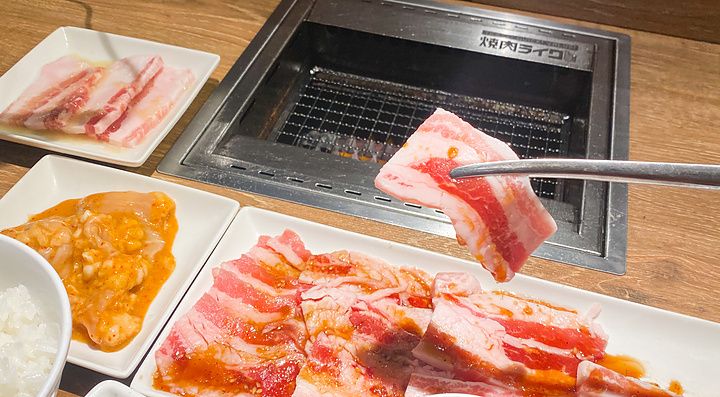
If there’s one food reason to stop in Kamata, it’s the gyoza. The local specialty is hanetsuki gyoza, dumplings with a crispy wing. As they cook, a thin film of flour and water spreads across the pan and turns into a delicate lace of crispy batter that joins them together. They were first made right here, at three Chinese restaurants known collectively as the big three of winged gyoza, and spread from there. I always have them with a beer in the evening, at one of those narrow places where you sit elbow to elbow.
Evening is when Kamata is at its best. The arcades stay lively, the izakaya fill up with people getting off work, and prices are what you’d pay in a working-class neighborhood, not downtown.
There’s also a practical reason to spend the night here, especially if you’re stuck with awkward flight times. With Haneda a few minutes away by train, Kamata makes a smart base for the night before a dawn flight or after a late-night landing, and its hotels are cheaper than in the central areas. Don’t expect monuments or views to photograph. You come here to eat, have a hot bath and stay somewhere convenient near the airport, and for me that’s more than enough.
Kamata’s movie past
Kamata has a piece of history you wouldn’t expect. For about fifteen years starting in 1920, it was the capital of Japanese film, with Shochiku’s big studios right in the middle of the neighborhood and actors walking these streets between takes. Then production moved to Ofuna, and almost nothing is left of the studios. Ota’s concert hall now stands on the site, and in the lobby you can still see a pillar from the bridge that led to the studio entrance.
You hear that past before you see it, though. At the JR station, the jingle that announces departing trains is the Kamata March, a song from those very years. It’s a small detail, but it speaks volumes about a neighborhood that used to be far more famous than it seems today.
Getting There
From central Tokyo, the Keihin-Tohoku Line takes you to Kamata's JR station in just over twenty minutes from Tokyo Station, or about ten from Shinagawa. Take the west exit and the covered arcades are right in front of you.
If you're coming from Haneda, the Keikyu Line gets you to Keikyu Kamata in under ten minutes. That's the station you want if you've got a suitcase and a flight coming up.
Make sure you don't mix up the two stations. They're about 800 meters apart, and getting from one to the other means walking about ten minutes through the neighborhood streets.
Useful Info
Name: Kamata
Time needed: A couple of hours for the arcades, half a day if you add dinner and a public bath
Tips: Keep your evening free. Start with gyoza with a crispy wing at one of the long-established places, then soak in the black water of a neighborhood sento. Look for the ones where the kuroyu isn't diluted, because that's the experience that makes it worth coming all the way out here.
Getting there:
- Kamata Station (JR Keihin-Tohoku, Tokyu Ikegami, Tokyu Tamagawa): west exit for the covered arcades
- Keikyu Kamata Station (Keikyu Line, Keikyu Airport Line): the most convenient for Haneda
Map
MarcoMaps100% free
This place is on MarcoMaps
Kamata
My map of Japan: over 4,000 places I've tried myself, each with photos, rating, and hours. Filter by category and rating, find veg-friendly spots and places near you with GPS. No sign-up, right from your phone.
- 4,000+ places
- Rating, photos, and hours
- Veg friendly
- Near me (GPS)
- Favorites without login
- Works offline

