
Kameido
Kameido has the feel of old downtown Tokyo east of the river, and it’s one of the places I think of when I want to walk without crowds. The big draw is Kameido Tenjin shrine, with its humpback bridges and spring wisteria, but around it there’s a whole working-class neighborhood with a life of its own, and the Skytree poking up behind the rooftops.
The name has a turtle in it, and the more you wander, the more turtles you spot: on shrine details, on shop signs, pretty much everywhere. You don’t need half a day here, but it’s an area to explore slowly. I’ll tell you how to get there, when it’s really worth the trip and what to combine it with.
Contents
Nearby neighborhoods
Oshiage
Kiba
The train to Kameido
There’s a bit of railroad history at Kameido Station that hardly anyone notices. The Tobu Kameido Line is a very short branch line between Kameido and Hikifune, just a few stops on a little local train that tourists never take. If you like poking around, though, it’s worth heading up to the platform.
From the station to the shrine you walk along a straight road lined with a few small shops and old low-rise houses. The area right around the station is more commercial, and its shopping center is handy if you want to grab a bite before setting off on foot.
Wisteria and plum blossoms
Kameido Tenjin looks different from season to season, and I’d suggest timing your visit for one of its blooms. The shrine is dedicated to Sugawara no Michizane, the patron of scholars. Students pray to him before their entrance exams, so you’ll always find young people hanging up plaques with their wishes on them.
These are the times when I think the trip out here pays off most:
- Late winter for the plum blossoms: more than 250 trees on the grounds and the plum festival between February and early March.
- Spring for the wisteria: the real reason the place is known all over the city.
- The rest of the year: for the two curved red bridges and the turtle pond, quiet and almost empty.
Nobody’s exaggerating about the wisteria. Kameido Tenjin is considered the best place in Tokyo to see it in bloom, and under the trellises a small pond reflects the purple clusters. Here’s a story I like to tell. Hiroshige’s print of the Kameido plum garden is one of his best-known works outside Japan because Van Gogh copied it in an oil painting. You’re walking where Hiroshige stood and looked almost two centuries ago, and it costs nothing to get in. The catch is that the garden itself is gone. Kameido Umeyashiki was a private plum park not far from the shrine, famous for a twisted tree that looked like a dragon lying on the ground, and the 1910 flood swept the park away. All that’s left today is a memorial stone among the houses.
The plum trees you see at Kameido Tenjin are different ones, planted on the shrine grounds, but late winter around here still has the same festive mood.
Bridges and turtles
The red bridges aren’t there just to look good in photos. The grounds are modeled on Dazaifu Tenmangu in Kyushu, and to reach the shrine you cross three bridges in a row over the pond. The first, high and curved, stands for the past, the flat one in the middle for the present and the second arch for the future. The original idea was that crossing them in the right order lets you arrive at the shrine feeling lighter.
The first bridge is also steeper than it looks in pictures, and from the top you get the best view of the trellises, the water and the tower all at once. Down below, on the rocks sticking out of the water, you’ll see turtles sunning themselves. In a neighborhood named after them, that’s hardly a coincidence.
On to the Skytree
On its own, Kameido fills a couple of hours, no more, so I always pair it with something else. The obvious choice is the Skytree. Kinshicho is one train stop away, about two minutes, and from there it’s a short walk to the tower. You can also walk the whole way and let the Skytree, rising above the rooftops, point you in the right direction.
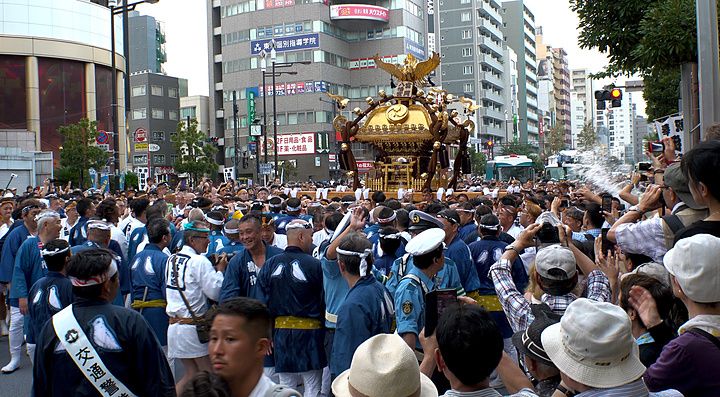
Before you move on, though, take a stroll around the everyday neighborhood. Not far from the Tenjin there’s a second shrine, Katori, which is much older and associated with victory and sports, with a festival in May. A radish variety named after the area was also first grown around here. The Kameido daikon became famous in the Meiji era, and you’ll still see it used as a motif around the shrine. Most people come to Katori for the victory charm that athletes and teams from all over Japan buy, the one with a small white stone inside. On May 5 the festival also brings a parade of people in armor through the neighborhood streets.
The radish gets its moment in March, when local schools bring their harvest to the shrine and it’s handed out to worshippers. There’s even a stone monument to it on the grounds.
Don’t expect skyscrapers or flashy shop windows. Kameido is an old downtown neighborhood in the middle of a revival, like a lot of areas on the east side that are quietly coming back to life. You come here to walk slowly, not to shop. If I had a free half day near the Skytree, that’s exactly how I’d spend it: Kameido’s red bridges and wisteria first, then the tower. Where would you start?
Getting There
The easiest way is the Sobu Line, the yellow trains that cut across Tokyo from east to west. From Akihabara or Shinjuku it's one transfer at most. At Kameido take the north exit and walk about 15 minutes along the straight road to Kameido Tenjin.
If you're coming from the Skytree you can get off at Kinshicho, again at the north exit. The walk takes about the same time.
If you like train trivia, the little Tobu Kameido Line train runs from Hikifune and ends its run right at Kameido Station.
Useful Info
Name: Kameido
Time needed: A couple of hours for the shrine and a short walk around the neighborhood, half a day if you add the Skytree
Tips: If you're coming for the wisteria, come back after sunset. On the evenings of the late-April festival the trellises stay lit until 21:00, and the clusters reflected in the dark water look completely different from the way they do in the afternoon.
Getting there:
- Kameido Station (JR Sobu, Tobu Kameido): north exit
- Kinshicho Station (JR Sobu, Tokyo Metro Hanzomon): north exit, handy if you're coming from the Skytree
Map
MarcoMaps100% free
This place is on MarcoMaps
Kameido
My map of Japan: over 4,000 places I've tried myself, each with photos, rating, and hours. Filter by category and rating, find veg-friendly spots and places near you with GPS. No sign-up, right from your phone.
- 4,000+ places
- Rating, photos, and hours
- Veg friendly
- Near me (GPS)
- Favorites without login
- Works offline

