

 350 m
Noh Museum350 m
A good way to really understand this art form.
 ©Takeshi Nishio - Dreamstime
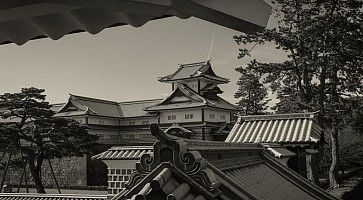
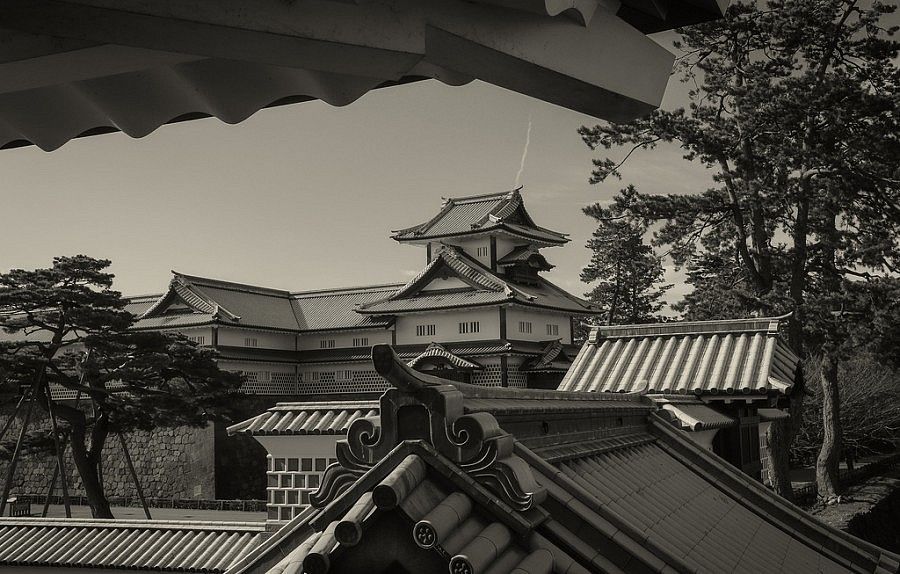
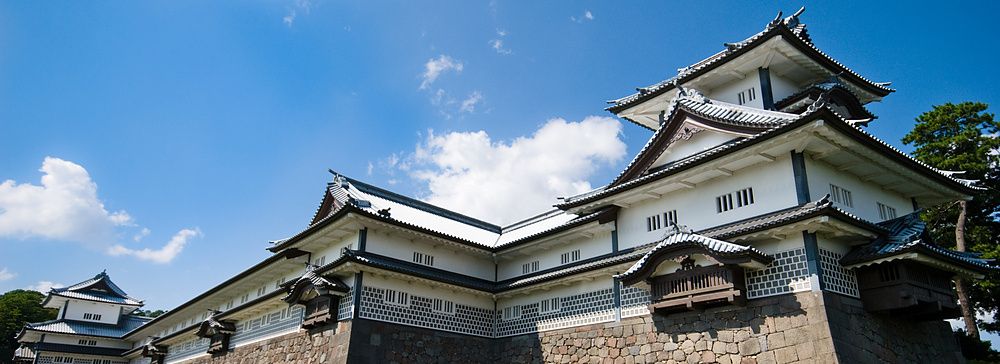
In Kanazawa, right next to the famous Kenroku-en garden, stands the imposing Kanazawa Castle. Within its walls you can trace the history of the Maeda clan, who lived and ruled here for over 200 years. The castle sits in central Kanazawa on high ground between the Sai and Asano rivers, a strategic position that gave it extra protection against attacks.
The buildings you see today are the remains of the original castle, which wars and fires partly destroyed, and they’re now part of Kanazawa Castle Park. Because of its immense historical value, the site is one of Japan’s most important cultural properties.
You can’t tell the story of Kanazawa Castle without telling the story of the Maeda family, who ruled the Kaga area, Kanazawa included, for a long time. In the 16th century Japan was divided into domains, each governed by a lord called a daimyo. A daimyo had to follow the shogun’s rules, but otherwise ran his domain independently and organized it however he saw fit. Toshiie Maeda became daimyo in the late 1500s. Under his rule Kanazawa grew and reached the height of its prosperity, to the point where it was compared with cities like Madrid and Rome. The population grew, and Toshiie Maeda tried to attract craftsmen and merchants by offering them very favorable conditions for doing business.
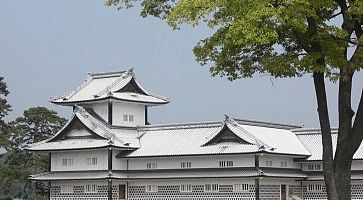
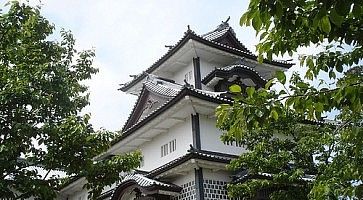
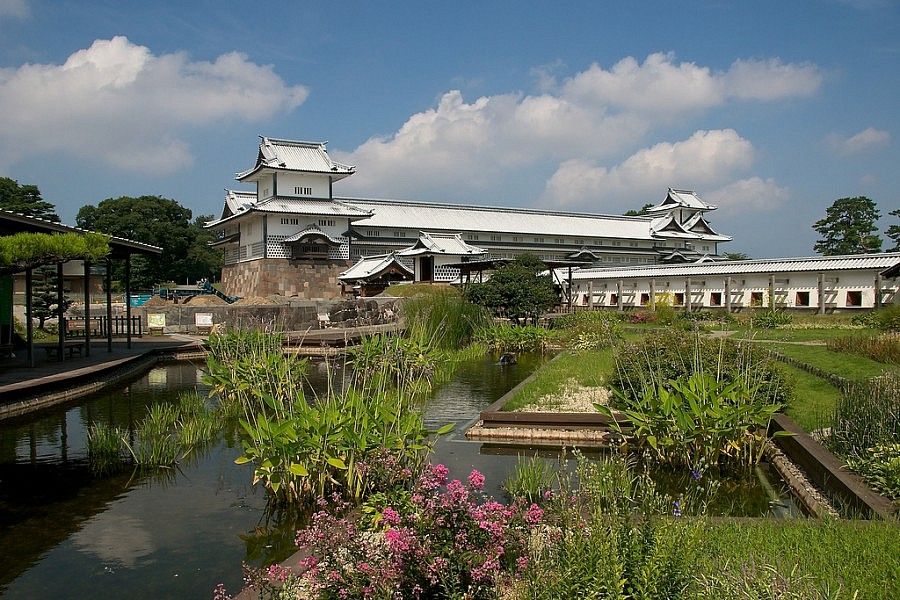
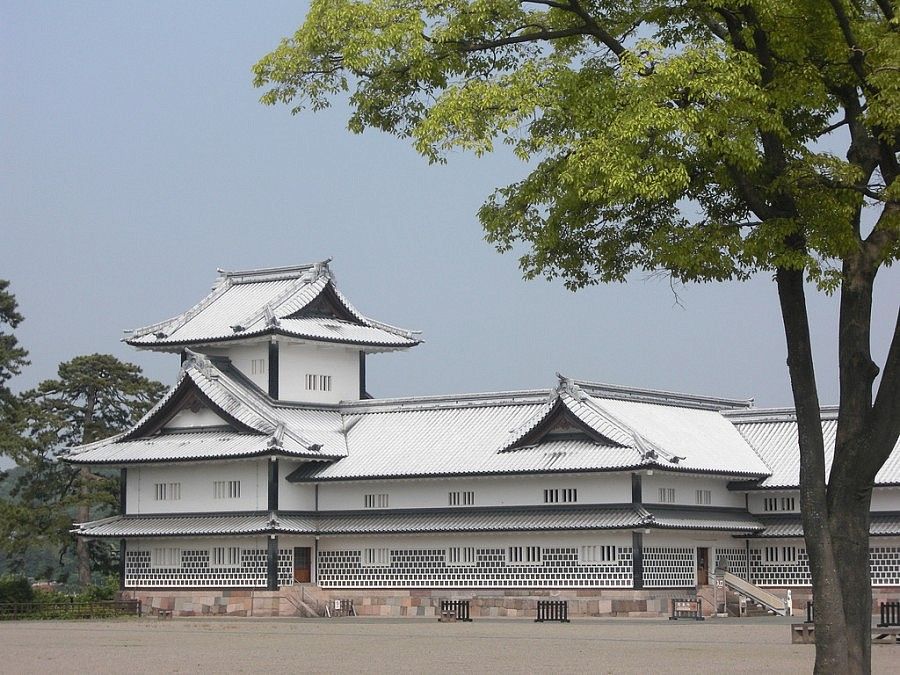
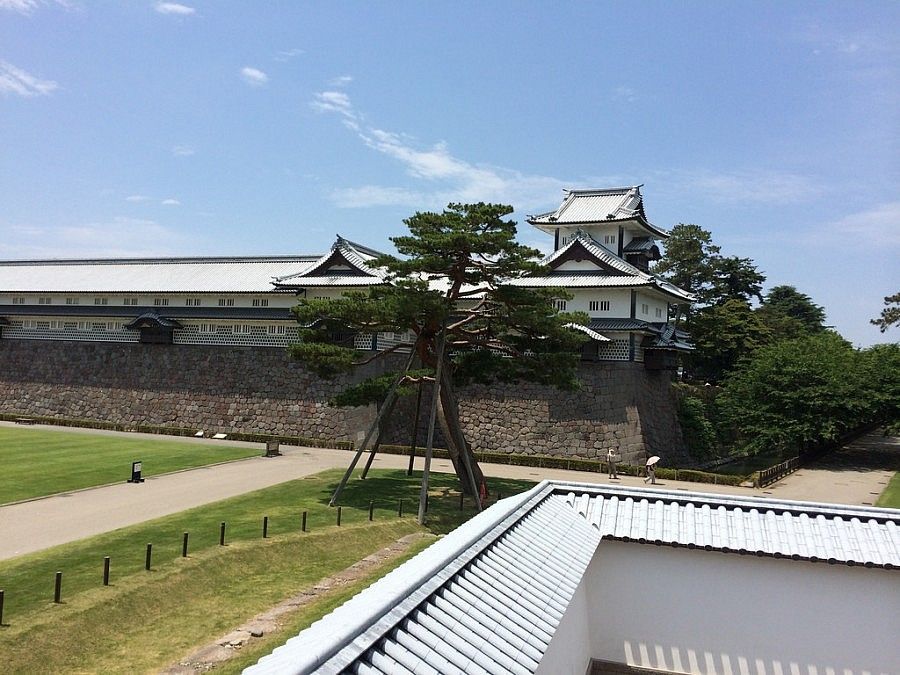
Over the centuries fires and wars damaged the castle again and again, and at times destroyed it. It lost many of its structures, and some of them, like the castle keep, were never rebuilt. A wide moat and high walls originally surrounded the castle to protect it from enemy attacks. One of the castle’s most distinctive features is the white tiles on its roofs. They were made of lead so they would resist fire, though many legends say that during attacks the tiles were melted down to make bullets. Other buildings standing today, like Ishikawamon Gate and the Sanjikken Nagaya storehouse, were restored. More recently, other structures have been rebuilt to match the originals as closely as possible: the Hishi Yagura and Hashizume-mon Tsuzuki Yagura turrets and the Gojikken Nagaya storehouse.
The castle has also served several purposes over the years. The Japanese army used it as a military base in wartime, and Kanazawa University used it as its campus.
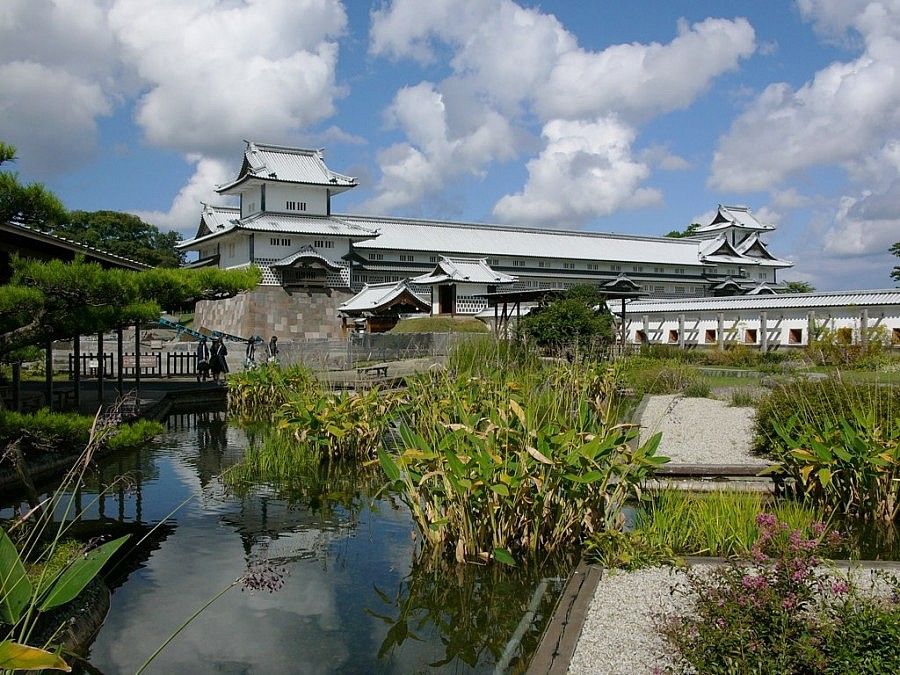
The castle covers a very large area. It’s split into several sections, and each one has its own walls, gates and buildings. The Maeda family lived in the main compound, called the honmaru. In the early 1600s lightning struck the main keep, which burned down and was never rebuilt. A three-story tower went up in its place, but the great fire of 1631 destroyed that too. After that disaster the Maeda abandoned the honmaru and moved their seat of power to the ninomaru, where the daimyo’s huge palace stood. Today the honmaru is the quietest part of the park. It’s all dense woods now, and as you walk in the shade you can barely tell where the buildings used to be.
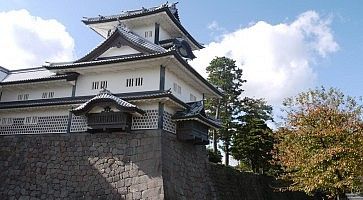
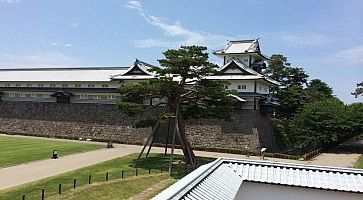
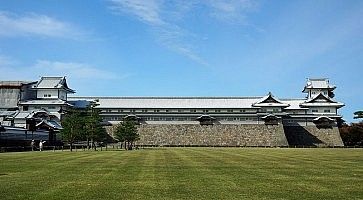
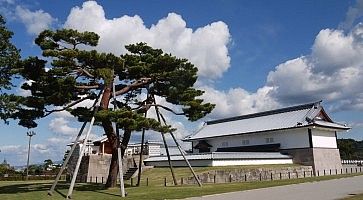
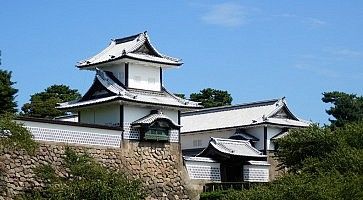
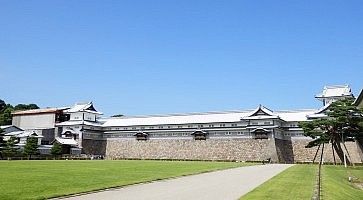
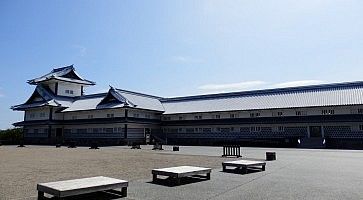
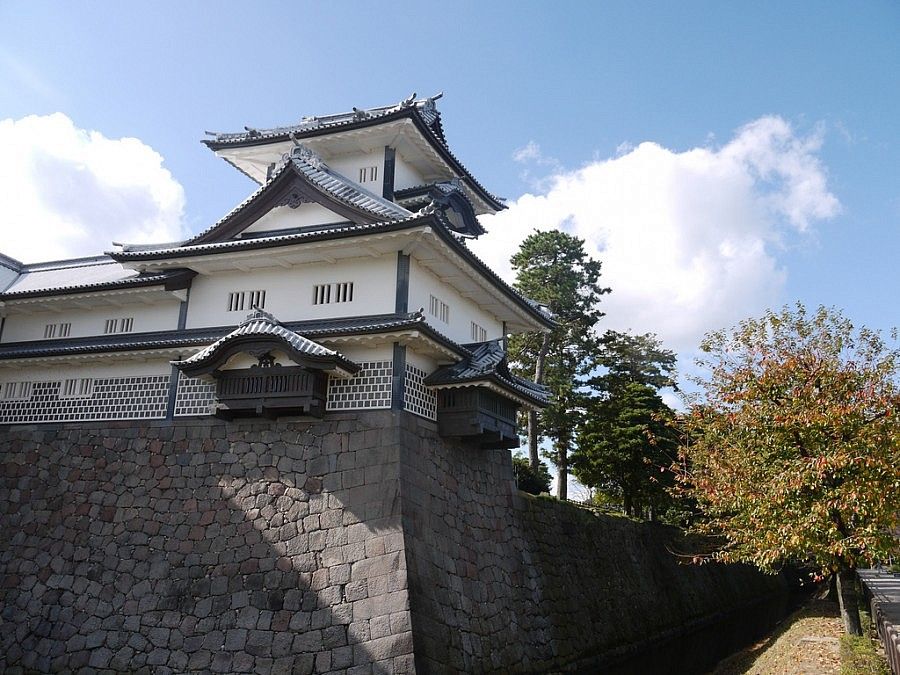
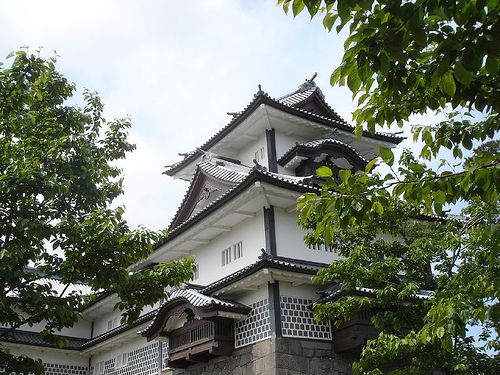
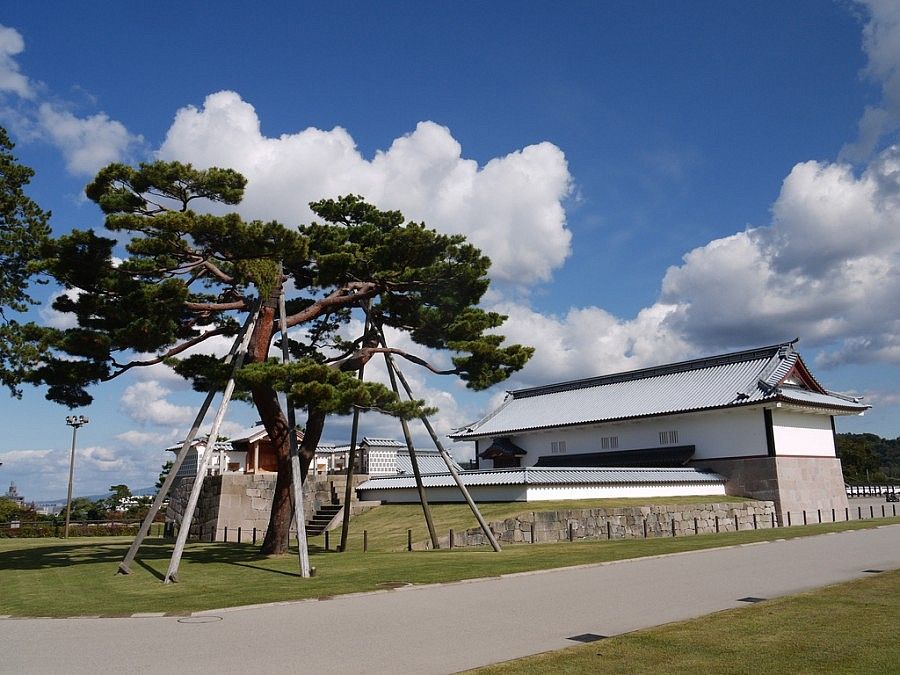
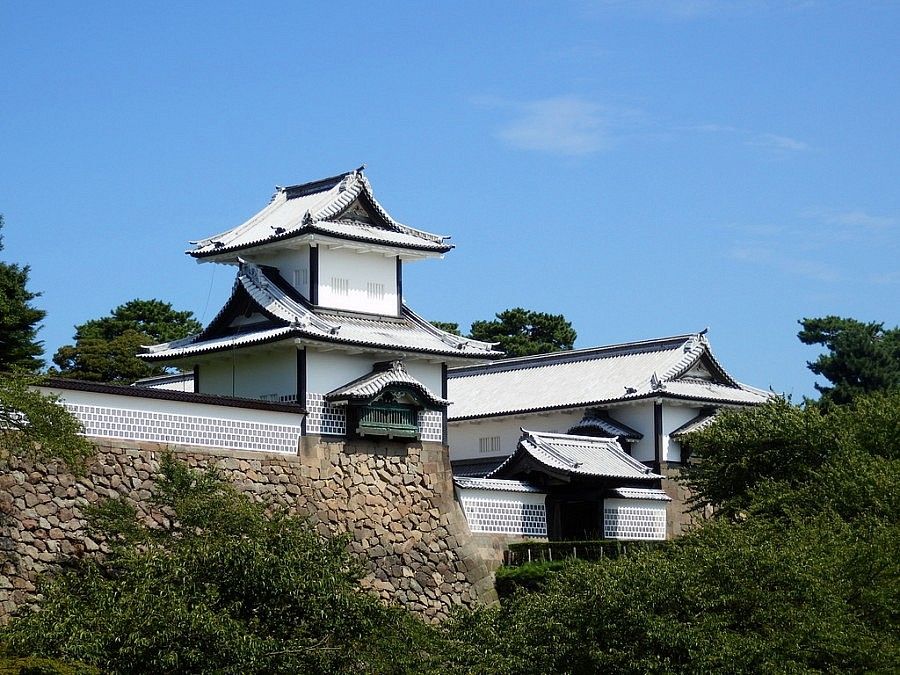
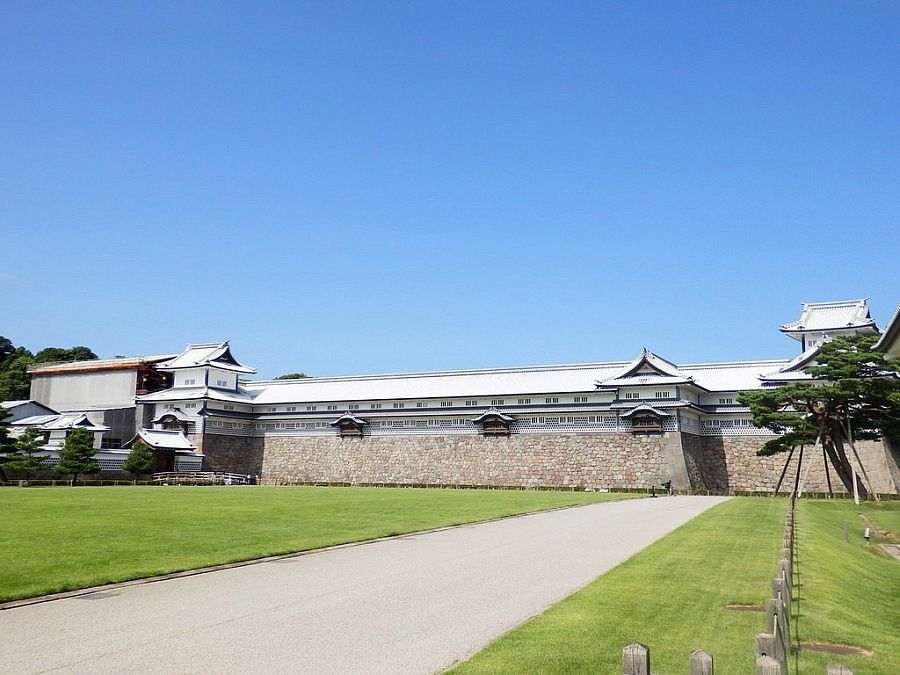
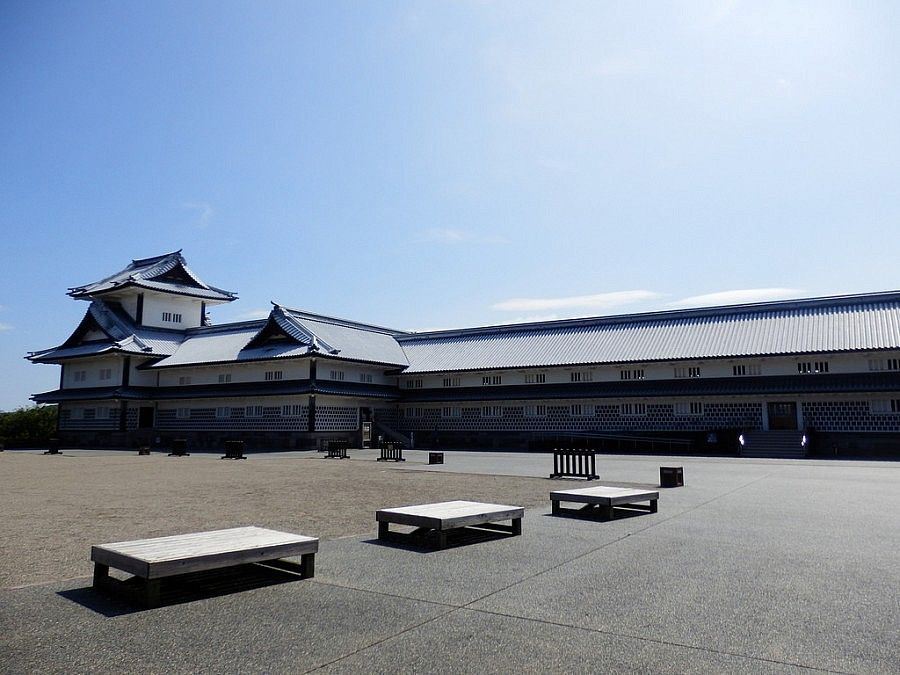
You can enter the castle through several gates. One of the main ones is Ishikawamon, across from the entrance to Kenroku-en garden. It’s a beautiful wooden gate with a lead-tiled roof, and the stone walls on either side were built with two different techniques. The gate has enormous historical value. Ishikawamon, Kahokumon and Hashizumemon are the castle’s three main gates. Kahokumon is a reconstruction of the castle’s old main gate, which burned down in the late 1800s, and you can go inside for free. The Hishiyagura and Hashizumemon Tsuzuki Yagura turrets, on either side of Hashizumemon, are also well worth seeing. Hishiyagura is a beautiful watchtower with an unusual diamond-like shape. It has three stories and stands almost 20 meters tall. Both turrets were rebuilt in wood as faithful copies of the old turrets that once guarded the gate. They’re connected to the Gojikken Nagaya, a two-story building that was used as a storehouse. You can go inside all of these buildings and let your imagination run wild, picturing the sentries taking turns guarding the castle.
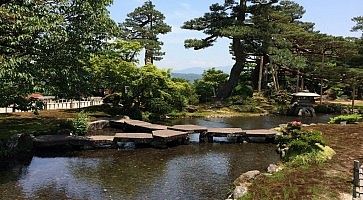
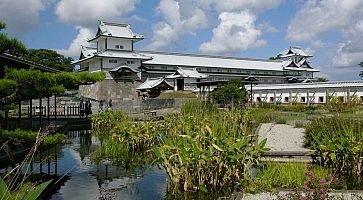
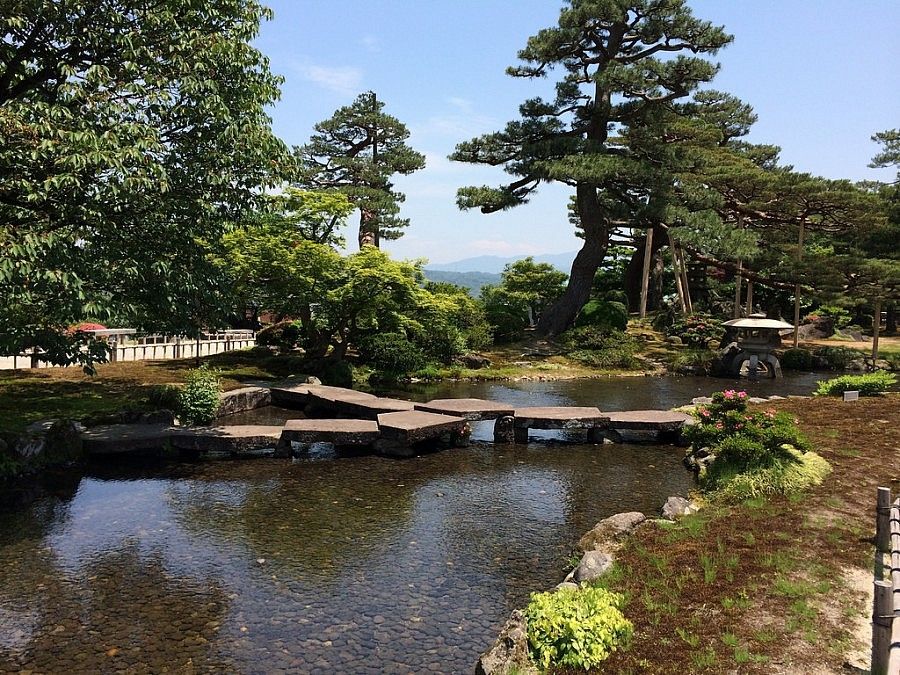
On the west side of the park, where the slope runs down toward Oyama Shrine, you’ll find Gyokusen’inmaru Garden. It was rebuilt based on excavations and old drawings. It’s a stroll garden with a pond in the middle and a big height difference between its upper and lower sections, and it was designed so the Maeda lords could admire it from above as well.
The real highlight here is the stone walls behind the garden. There’s the mosaic wall called shikishi-tanzaku, where square, rectangular and hexagonal stones fit together like a work of art, and there’s the V-shaped stone channel where, in the Edo period, a nine-meter waterfall plunged down.
These walls aren’t a one-off. Kanazawa Castle is nicknamed the museum of stone walls, because along its paths you’ll find construction techniques from different periods side by side, from the roughly shaped boulders of the early years to blocks cut and fitted together perfectly. Notice the color too. The stone comes from Mount Tomuro, just outside the city, and depending on the vein it’s reddish or bluish, so the shade changes from one stretch of wall to the next.
From Kanazawa Station, leave by the east exit, the one with the big wooden gate, and get on any of the many buses headed for Kenrokuen. In about 15 minutes you'll get off at the Kenrokuen-shita stop. From there it's a five-minute walk uphill to Ishikawamon Gate, the most convenient entrance of all if you want to see the garden on the same visit.
If you're coming from the Korinbo area or Omicho Market, you're better off entering from the opposite side, through Gyokusen'inmaru Garden or Kuromon Gate. Both are a five- to seven-minute walk from their bus stops.
You can also walk to the park from the station in half an hour, and the route goes right past Omicho Market.
This place is on MarcoMaps
Kanazawa Castle
My map of Japan: over 4,000 places I've tried myself, each with photos, rating, and hours. Filter by category and rating, find veg-friendly spots and places near you with GPS. No sign-up, right from your phone.


Kanazawa Castle - nearby you will find:
350 mA good way to really understand this art form.
 405 m
Really interesting and quirky.
 415 m
One of the most beautiful gardens in Japan, in Kanazawa.
 468 m
Unbeatable tonkatsu.
 576 m
A store that sells everything. Great.