
Kanda
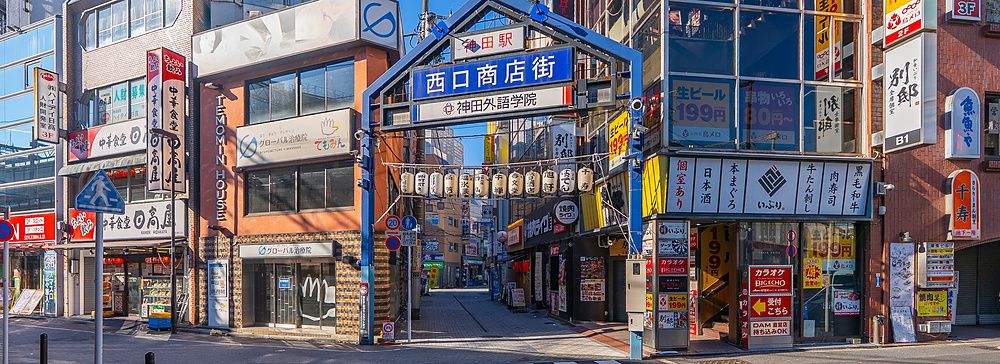
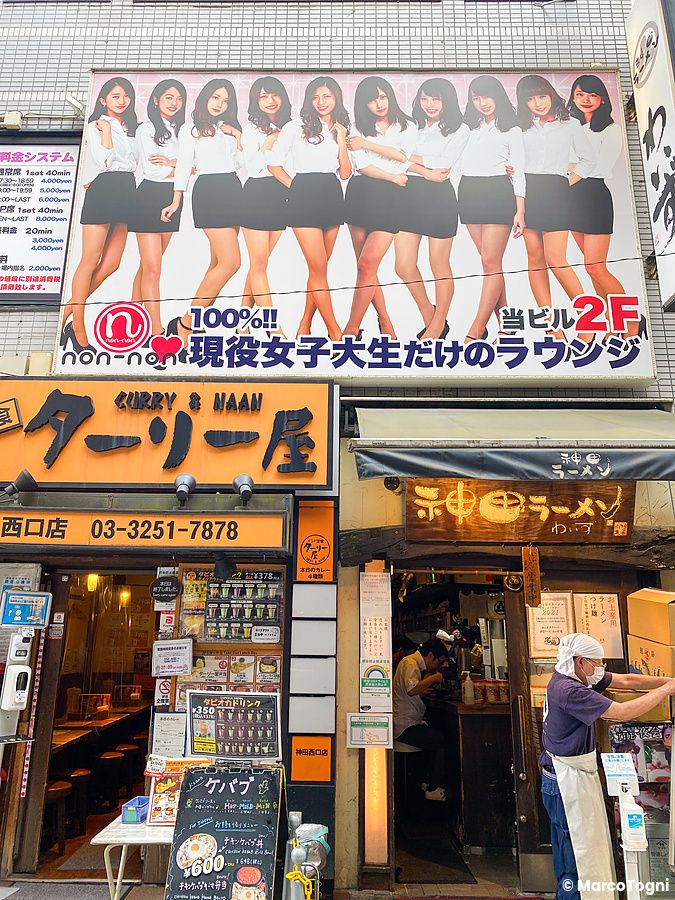
Kanda is one of those areas that hardly anyone puts on their list, and that’s exactly why I like writing about it. It’s wedged between Tokyo Station, Akihabara, and Ochanomizu, a part of the city where by day you see office workers in suits and at night the red lanterns of the izakaya under the tracks light up.
The name means something like rice field of the gods, and you can still feel a bit of that old soul in the old soba shops, the shrines, and the low buildings the bombs missed. You don’t come here for photos. It’s a place to wander through slowly. I’ll tell you what to look for, where to eat, and why I think it’s worth a detour.
Contents
Restaurants

Nearby neighborhoods


Yaesu
The ski shop street
Here’s something that surprises anyone who stumbles on it: a row of winter sports shops in the middle of Tokyo, nowhere near a mountain. The stretch of Yasukuni-dori between Surugadai-shita and Kanda-Ogawamachi is packed with sporting goods stores, selling everything from ski and snowboard gear to equipment for sports the rest of the year.
You’ll find multistory chain stores alongside small shops, and the interesting part is that they often sell models from past seasons at lower prices.
Honestly, if you’re not into skiing, this street isn’t worth the trip on its own. But if you’re planning a trip to the slopes in Japan and want gear without spending a fortune, it’s worth stopping by and comparing a couple of shops before you buy. Prices change quite a bit with the season, so it’s best to take a look when you’re already in the area for something else.
Kanda’s soba shops
Kanda is also soba territory, and has been for a long time. Around the Awajicho intersection you’ll find two of Tokyo’s best-known soba shops: Kanda Yabu Soba, opened in 1880, and Kanda Matsuya, which opened four years later.
Yabu Soba burned down in a fire and was rebuilt just as it was, with its horseshoe-shaped counter and waitresses who sing out the orders to the kitchen. Matsuya is in a wooden house put up after the Great Kanto Earthquake, with shared tables and the clatter of people eating in a hurry.
If you have to pick one, Yabu Soba is more refined and elegant, while Matsuya is more down-to-earth and lively. At either one, keep your order simple: a cold seiro and nothing else. That simplicity is exactly where you taste the difference.
Blessings for your electronics
Kanda Myojin sits on top of a small hill, and it goes back a long way. The shrine was founded in 730 near what’s now Otemachi and moved here during the Edo period, so it has almost 1,300 years of history.
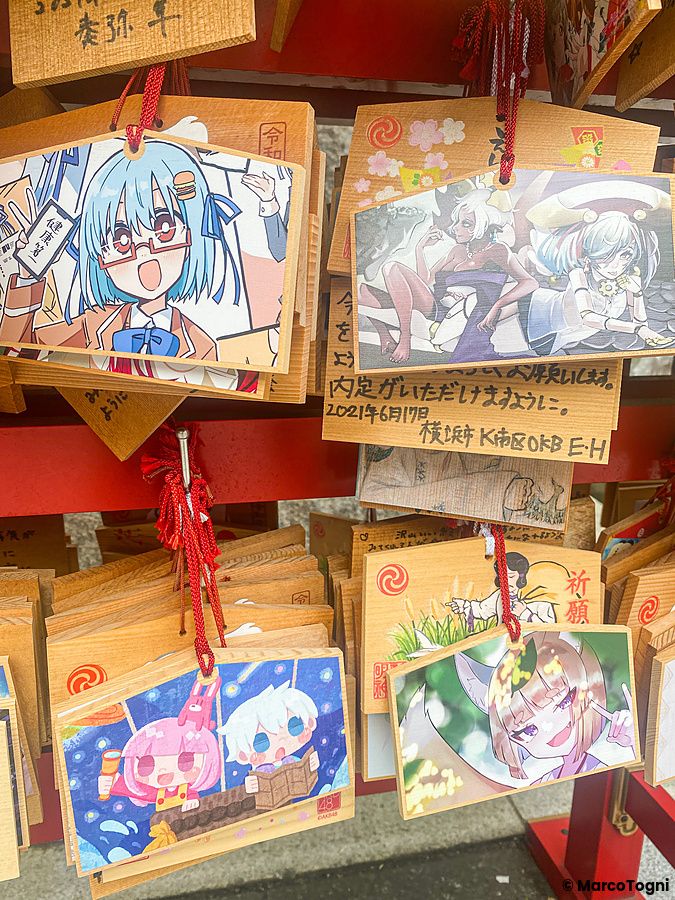
But what I love about it is something else, and it’s thoroughly modern. Because it’s so close to Akihabara’s electronics district, the shrine is associated with blessing electronic devices and has hosted tech-related events.
This isn’t folklore for tourists. Many IT and electronics companies come here for an official visit and a blessing. You’ll find charms meant to protect hard drives and data, hanging next to the traditional ones for luck or business.
I’m always happy to walk up here when I’m in Akihabara. A five-minute walk takes you from the stores’ fluorescent lights to the quiet of the red courtyard. Go in the morning, when there aren’t many people yet and you can take your time browsing the charm stalls. On one side of the grounds there’s also a modern building belonging to the shrine, with a shop and a café. Inside you’ll find traditional omamori next to anime tie-in items, and the hall upstairs hosts concerts and presentations. It sums up the whole place: an ancient shrine that keeps up with the neighborhood around it.
Kanda Matsuri
If you’re in Tokyo in mid-May of an odd-numbered year, Kanda turns into a completely different place. The Kanda Matsuri is one of Edo’s three great festivals, and it starts right at Kanda Myojin. On Saturday a long procession makes its way through Otemachi, Nihonbashi, and Akihabara, and on Sunday the neighborhood mikoshi arrive, dozens of them, carried on people’s shoulders between the office buildings.
In even-numbered years there’s a scaled-down version that’s much quieter. It’s nice, but you don’t get the full surge of people and energy.
What sticks with me most doesn’t happen inside the shrine grounds. It happens out on the street, when the procession moves through the stopped traffic and office workers come out of their buildings to watch.
Curry country
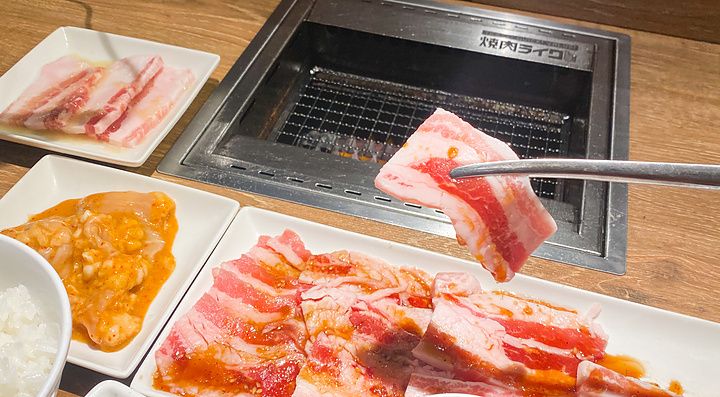
The other surprise in Kanda is that there’s curry everywhere. Between Kanda and Jimbocho there are hundreds of places serving it, from tiny eight-seat counters to long-established restaurants, and here curry is mostly a lunch thing. You walk in, eat, and walk out in twenty minutes, just like the office workers waiting in line with you.
The area is so proud of it that it holds an official competition. Every fall there’s the Kanda Curry Grand Prix, where the finalists cook in a public square and the crowd votes. In the months before, there’s also a stamp rally around the participating restaurants, and it’s the easiest way to see how many different styles of curry exist side by side in just a few streets.
Getting There
At Kanda Station, take the west exit and you're straight into the maze of alleys under the tracks, with Akihabara a 15-minute walk away.
For Kanda Myojin, you're better off getting off at Ochanomizu and taking the Hijiribashi exit. From there it's five minutes uphill. For the sporting goods stores, get off at Ogawamachi or Jimbocho, which leave you on the right stretch of Yasukuni-dori.
If you're coming from the south, you don't even need the train: from Tokyo Station it's a ten-minute walk, cutting between the office buildings.
Useful Info
Name: Kanda
Time needed: 2-3 hours to walk around, half a day if you stop for a meal
Closed: It's an office district: many restaurants and izakaya close on Sundays and quite a few on Saturdays too, while the sporting goods stores stay open on weekends
Tips: At the Kanda Myojin charm counter, ask for the one for data protection. It's meant for computers and hard drives, and it's the strangest souvenir you can take home from this neighborhood, and the one that says the most about it.
Getting there:
- Kanda Station (JR Yamanote, Chuo, and Keihin-Tohoku lines; Ginza subway line): west exit
- Ochanomizu Station (JR Chuo-Sobu Line; Marunouchi subway line at Awajicho): Hijiribashi exit for Kanda Myojin
- Ogawamachi-Awajicho Station (Shinjuku and Marunouchi subway lines): for the sporting goods street
Map
MarcoMaps100% free
This place is on MarcoMaps
Kanda
My map of Japan: over 4,000 places I've tried myself, each with photos, rating, and hours. Filter by category and rating, find veg-friendly spots and places near you with GPS. No sign-up, right from your phone.
- 4,000+ places
- Rating, photos, and hours
- Veg friendly
- Near me (GPS)
- Favorites without login
- Works offline

