 774 m
Sushiro774 m
Cheap kaiten sushi.
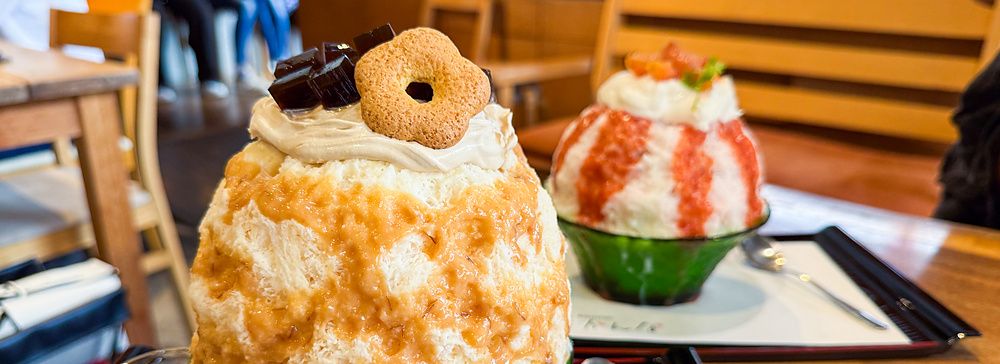
A Japanese restaurant in Sangenjaya best known for its kakigori, shaved ice with syrup poured over the top, made the way a chef would make it and not the way a summer festival stall would.
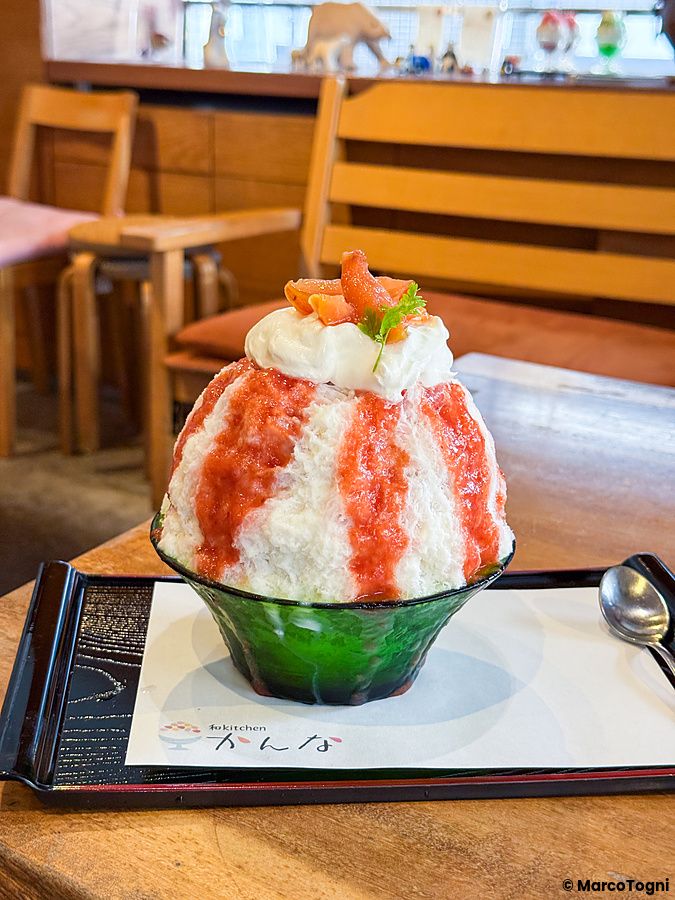
At Wa kitchen Kanna every syrup is made in-house with seasonal fruit, and soy sauce, mirin and dashi go into them too. The ice comes piled into a mound shaped a bit like a rugby ball, and it melts the moment it hits your tongue, without the brain freeze that usually makes you put the spoon down.
There’s savory food too, Japanese set meals, but people climb the stairs for the ice. It’s a good place for a slow afternoon snack, and it’s comfortable even on your own.
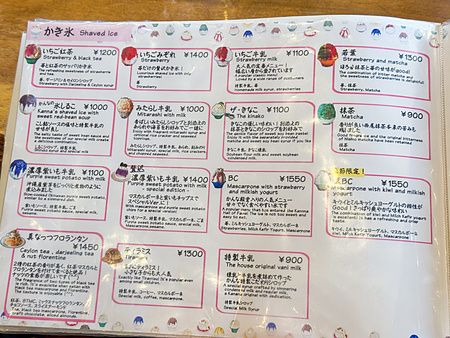
The regular menu has about fifteen flavors, plus a handful of seasonal ones that change with the fruit. Kakigori run around 850–1,500 yen, and a few of the more elaborate seasonal ones go a little higher. Add a drink and you’ll spend about 1,000–1,800 yen per person.
For what you get, that’s a mid-range price, and to me this is one of the few desserts in Tokyo where the price makes sense the moment you see how it’s put together.

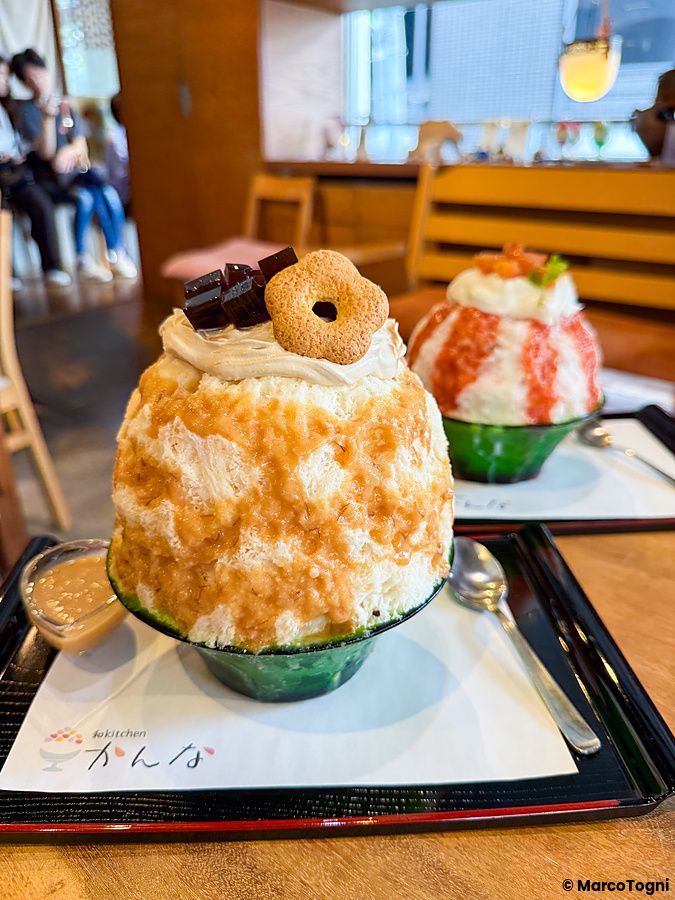
The matcha is seriously bitter, so if you want something full and rounded, go for the purple sweet potato or the tiramisu, or you may end up disappointed.
Eat from the top and dig your way down. If you go in from the side, the structure gives way and your plate ends up flooded. The ice won’t wait either: spend ten minutes taking photos and what’s in front of you turns into a runny cream, still good but not the same dessert.
I have no doubts about the value. You pay what a slice of cake costs at any café, and they bring you a dessert made with a technique very few people have mastered. When I want something sweet that won’t weigh me down, I go back for the tiramisu, because for just over 1,000 yen I get something I can’t find in Tokyo’s cafés at any price.
The syrups are never cloying, so you reach the last spoonful without the sugar fatigue that usually kicks in halfway through.
The block is frozen for 48 hours at around -10°C, then moved between fridges set to different temperatures before it goes under the blade. It sounds like obsessive detail, but you notice it with the first spoonful: there are no lumps and no hard flakes hiding at the bottom, and the texture stays the same from the top of the mound to the base.
They also shave it differently from top to bottom, finer at the top to keep it light and a little thicker at the bottom, so the mound can hold its own weight and doesn’t collapse while you eat.
You can choose between pure ice and natural ice from Shogetsu Himuro, an old ice house in Nikko. The natural ice is rounder and less sharp and goes better with the fruit syrups, while the pure ice is more neutral and lets the flavor of the syrup come through.
It’s not just for show. Try them both and you’ll taste the difference.
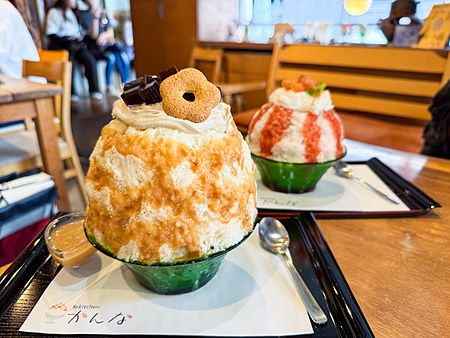
The chef has a background in Japanese cooking, and you can tell from the way the syrups are built. The salt in them is there on purpose, not to make them salty but to bring out the sweetness, exactly the way it’s added to the anko in traditional sweets.
That’s why a flavor like mitarashi, which sounds odd on paper, makes perfect sense once you taste it. Sweet soy sauce and milk do the same job as salted caramel and cream, just from a different starting point.
It’s also why the place is worth the detour even if shaved ice isn’t your favorite dessert.
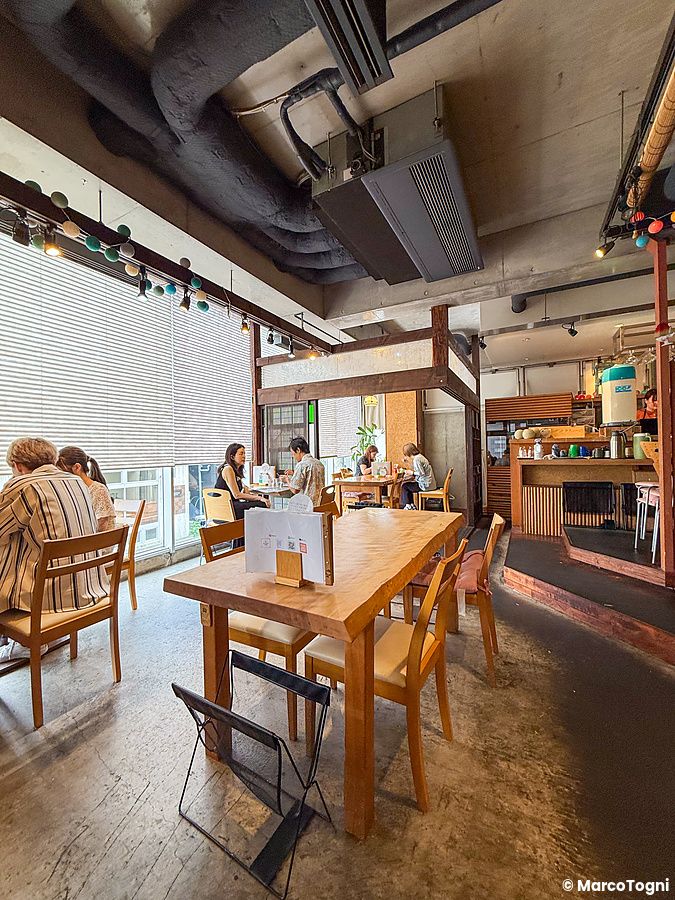
The space is large and bright, with wide wooden tables and frosted glass that softens the light, nothing like the cramped counters where you eat kakigori in so many other places in Japan. There are about thirty seats with real space between the tables, so you won’t end up with your neighbor’s elbow in your bowl.
There’s nothing but houses around it, and inside all you hear is the clink of spoons and the occasional quiet conversation.
The crowd is mixed: couples, families with kids, and plenty of people on their own who bring a book and take their time. Nobody rushes you once you’re seated, though the staff move fast when they need to. The ice goes from the kitchen to your table in seconds, because any longer and it would be ruined.
Eating in silence by the window is the most normal thing in the world here.
Outside the summer months there’s also a savory side to the menu: set meals with fish, rice and soup, cooked with the same approach as the syrups. Once summer is in full swing, the savory dishes disappear and only the ice is left.
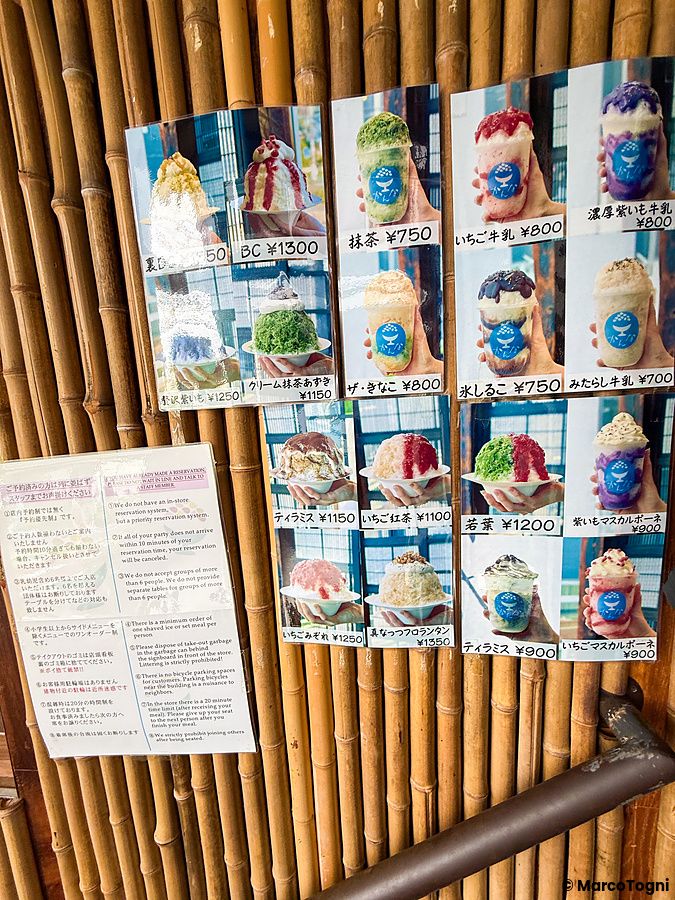
A line at the door is the norm, not the exception. On weekends the wait can be long, and in summer the place stays full all day without ever really emptying out.
If you go on a scorching day, expect to stand in line for a while before you get a seat.
Weekdays are a different story, and you get in sooner, especially earlier in the day. They serve kakigori year-round, and in winter you’ll find the same flavors with far fewer people around and the savory menu available too.
Eating kakigori when it’s cold out sounds crazy, until you try the azuki bean flavor with hot tea on the side and understand why they keep it on the menu in December.
Pros:
Cons:
Best for: a long afternoon snack with no rush, or anyone who wants to see how far a shaved-ice dessert can go
What to order: tiramisu for the most well-rounded flavor, purple sweet potato and milk for the most indulgent

Atmosphere: bright room with wood and frosted glass, hushed voices, couples and people reading on their own
You walk out with one very specific memory: ice that melts in your mouth without ever feeling truly cold, and syrup sliding slowly down the sides of the mound. If you only go once, get the tiramisu, because bitter coffee against mascarpone shows better than any other flavor how this chef thinks.
Make room for it in your day the way you would for a special lunch, not as a break squeezed in between two stops. Sit down, take your time and look at it for a moment before you dig in. Tokyo has hundreds of kakigori places, and this one is in a different league. Go.
This place is on MarcoMaps
Kanna
My map of Japan: over 4,000 places I've tried myself, each with photos, rating, and hours. Filter by category and rating, find veg-friendly spots and places near you with GPS. No sign-up, right from your phone.

