Karuizawa
At the foot of Mount Asama in Nagano Prefecture, Karuizawa is an elegant mountain resort town that has drawn Western residents of Japan since the late 1800s, and today plenty of wealthy families keep a second home here. It works well for a weekend of relaxation, sports, shopping and the outdoors at any time of year. Sitting at 1,000 meters, it’s the perfect place to escape the summer heat, and in winter the heavy snowfall brings in fans of snow sports.
The Hokuriku Shinkansen stops here, so Karuizawa is easy to reach from many major cities, and from Tokyo the trip takes just over an hour.
Contents
An international destination
It all started in 1886, when the Canadian missionary Alexander Croft Shaw came to the area looking for relief from the summer heat. That was the start of Karuizawa’s popularity: it first became a favorite retreat for foreign tourists, and later for Japanese travelers too. More and more gorgeous villas, shopping centers and boutiques sprang up to cater to the summer crowd. Plenty of Western visitors still come here today, since they can get service in English and enjoy places like Karuizawa Kogen Church, the Karuizawa Prince Shopping Plaza outlet mall and the Karuizawa Museum of Modern Art, which have given the town new appeal.
Karuizawa also has a love story that’s famous all over Japan. In the summer of 1957, on the tennis courts in Kyu Karuizawa, the future Emperor Akihito met Michiko Shoda, and the newspapers of the day called it the tennis court romance. The imperial couple has often come back here on vacation since then, and for Japanese people that alone explains the town’s prestige.
Karuizawa in winter
When the Karuizawa Prince Hotel Ski Area opens for the season, it draws lots of snow lovers to Karuizawa, especially from Tokyo, since it’s so close. There are several runs for every level, open until the end of March. Even if skiing isn’t your thing, you can ride the chairlifts for the snowy views and then unwind in one of the town’s onsen.
Karuizawa’s ties to winter sports go back a long way. The town hosted curling at the 1998 Nagano Olympics and, more than thirty years earlier, the equestrian events of the 1964 Tokyo Games, which made it the first place in the world to host events at both a Summer and a Winter Olympics. The ice arena from those events is still open, and in winter you can try throwing a curling stone yourself.
Karuizawa in autumn
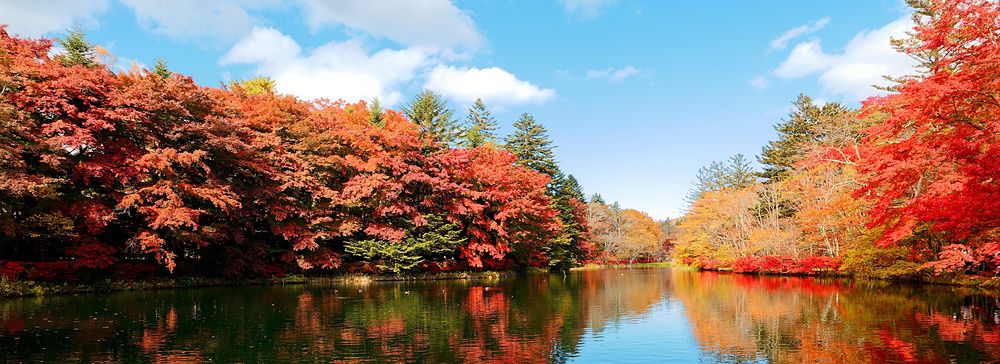
Karuizawa sits along what’s known as “Japan’s Romantic Road,” a route people love for its beautiful scenery, which is even better in autumn. If you’re the nostalgic type and want to photograph the leaves as they slowly fade, the best time to visit Karuizawa is from mid-October to early November, when the whole town turns gold and red.
Karuizawa in summer
In the warmer months, Karuizawa’s pleasantly cool temperatures make you want to head out on foot and take in the sounds and colors of nature at their liveliest. Lakes and waterfalls are hidden in the lush forests, and they make perfect stops along your hiking routes. One of the most popular spots for an outing is nearby Onioshidashi Park, a striking landscape of dark rock left by a violent eruption of Mount Asama in 1783.
Karuizawa’s neighborhoods
Karuizawa is fairly compact, but it’s made up of several areas, each with its own feel and its own places to see.
Shin-Karuizawa is the area around JR Karuizawa Station, a very elegant residential neighborhood full of villas, some rented out for vacations and others owned by wealthy families. Right next to the station is the huge Karuizawa Prince Shopping Plaza outlet mall, with hundreds of shops looking out onto lawns and ponds.
Two kilometers north of the station is Kyu Karuizawa, where you’ll find high-end hotels and resorts. Several of the town’s main sights are here, including the Karuizawa Ginza shopping street, where you can wander among boutiques, restaurants and cafés, and the small memorial chapel dedicated to Alexander Croft Shaw. Kumoba Pond, along the road that climbs from the station up to Kyu Karuizawa, is a pretty spot, its water ringed by trees and thick greenery, and the paths around it let you stroll and see it from different angles.
Naka Karuizawa is the best area if you want to relax Japanese-style, since most of the hot spring baths and ryokan with onsen are here. The area is also known for its waterfalls, which you can reach on easy hiking trails, and Shiraito is the most famous. You’ll also find historic buildings like the Kyu Mikasa Hotel, an old Western-style hotel that’s now a museum, and places to shop like Harunire Terrace, a stylish shopping area with lovely cafés, restaurants and bakeries. Karuizawa Kogen Church, a wooden chapel in the woods that’s a favorite for weddings, is also in the Hoshino area.
Minami Karuizawa is the area around Lake Shiozawa, in the southern part of town. It has an elegant charm all its own, with rose gardens and art museums that draw artistic and romantic types.
What to eat in Karuizawa
Karuizawa’s Western heritage still shows up in its food, and you’ll mostly find it in things you can eat as you walk around. Along Kyu Karuizawa Ginza, long-established shops sell artisanal jams made from berries and rhubarb, German-style hams and smoked sausages, and bread from French Bakery, which has been baking since the 1950s.
Getting the coffee soft-serve at Mikado Coffee, the famous mocha soft, is practically a ritual. It was John Lennon‘s favorite when he spent his summers at the Mampei Hotel and rode around town on a bicycle. For something hot, you’re in Nagano Prefecture, which is soba country, and you’ll find it at just about every restaurant in the area.
Getting around
Karuizawa isn’t very big, so you can reach the main sights on foot from the main station. Some places are a bit outside the center, though, and for those you’ll need local transportation, or you can rent a car or a bicycle. Karuizawa Station, on the shinkansen line, isn’t the only station in town: there’s a second, smaller station at Naka-Karuizawa, connected to the main one by the Shinano Railway line.
The bus network covers the whole town and links both stations to the main sights. For sightseeing, the most useful lines are run by Kusakaru Kotsu. They leave from Karuizawa Station and head toward Kusatsu Onsen, stopping at places like Kyu-Karuizawa Ginza, the Kyu Mikasa Hotel and Shiraito Falls. Seibu buses run less often but stop at Kyu-Karuizawa Ginza and Naka-Karuizawa.
The Karuizawa Free Pass gives you unlimited rides on the town’s buses. It comes as a one-day or two-day pass, starting at 2,500 yen.
If you’re visiting in the warmer months, renting a bicycle is a practical and fun way to get around. You’ll find most rental shops near the stations and around Karuizawa Ginza.
Getting There
From Tokyo, take the Hokuriku Shinkansen from Tokyo Station (it also stops at Ueno) and in just over an hour you get off right at Karuizawa, with no transfers. The train is covered by the Japan Rail Pass. Coming from Nagano or from the Kanazawa side, you ride the same line in the opposite direction, and it takes just under half an hour from Nagano city.
If you want to spend less, there are direct buses from Ikebukuro Station, but they take about three hours.
Useful Info
Ski lifts run from early November to the end of March
- Karuizawa Station (Hokuriku Shinkansen, Shinano Railway): north exit for Kyu Karuizawa, south exit for the outlet
- Naka-Karuizawa Station (Shinano Railway): Hoshino area, onsen and Harunire Terrace
- Kusakaru Kotsu buses leave Karuizawa Station for Kyu Karuizawa Ginza and Shiraito Falls
Map
This place is on MarcoMaps
Karuizawa
My map of Japan: over 4,000 places I've tried myself, each with photos, rating, and hours. Filter by category and rating, find veg-friendly spots and places near you with GPS. No sign-up, right from your phone.
- 4,000+ places
- Rating, photos, and hours
- Veg friendly
- Near me (GPS)
- Favorites without login
- Works offline

