




 411 m
Noh Museum411 m
A good way to really understand this art form.
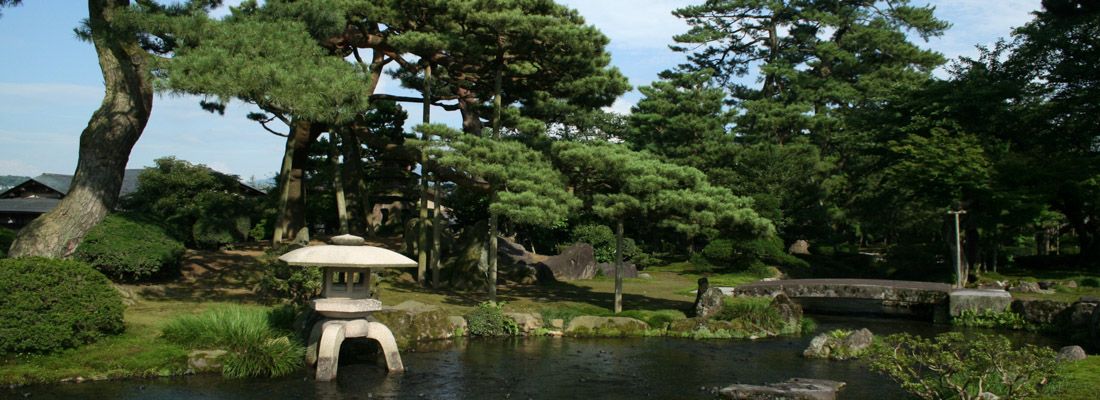
Spread across the hills in central Kanazawa is one of Japan’s natural wonders. Kenroku-en is considered one of the country’s three most beautiful gardens, along with Kairaku-en in Mito and Koraku-en in Okayama, and it’s one of those places you really shouldn’t miss on a trip to Japan.
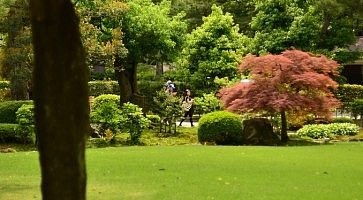
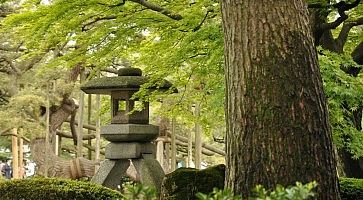
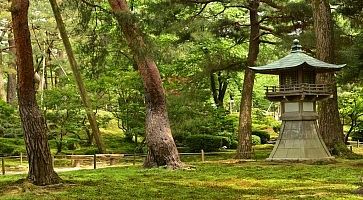
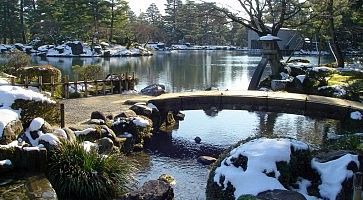
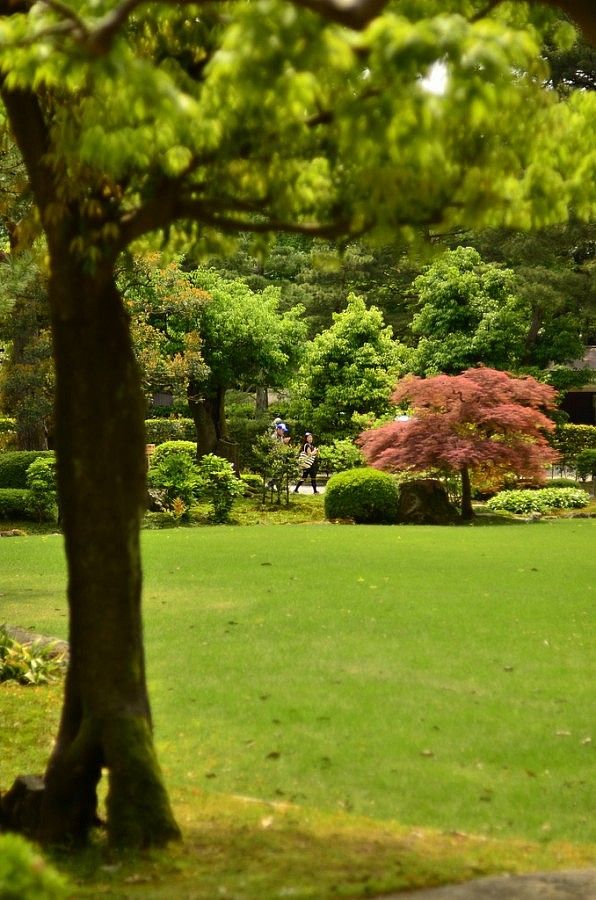
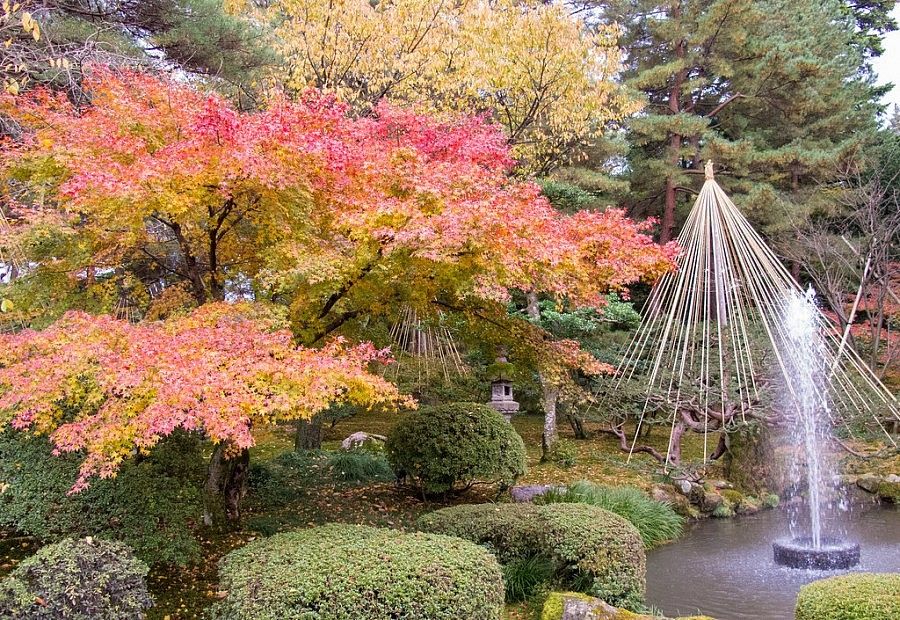
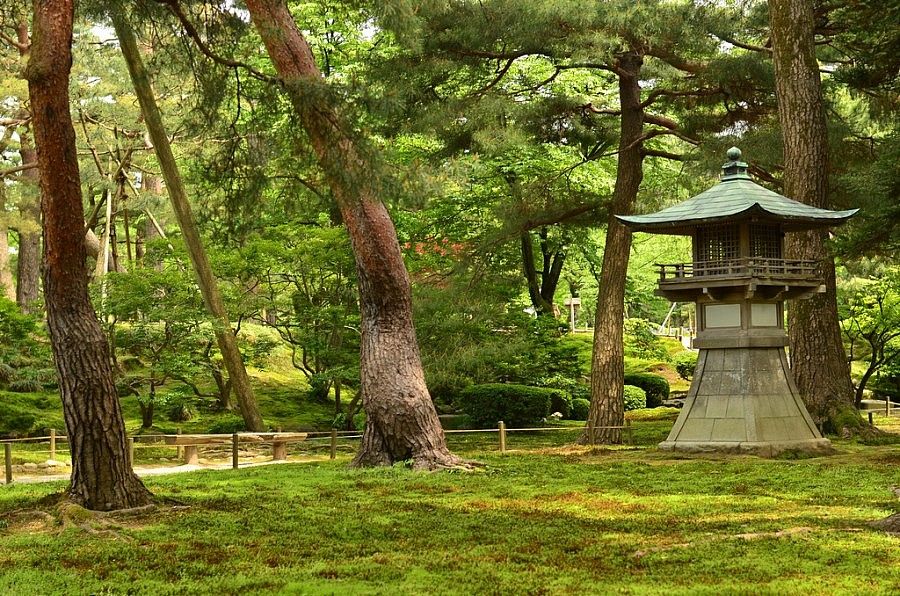
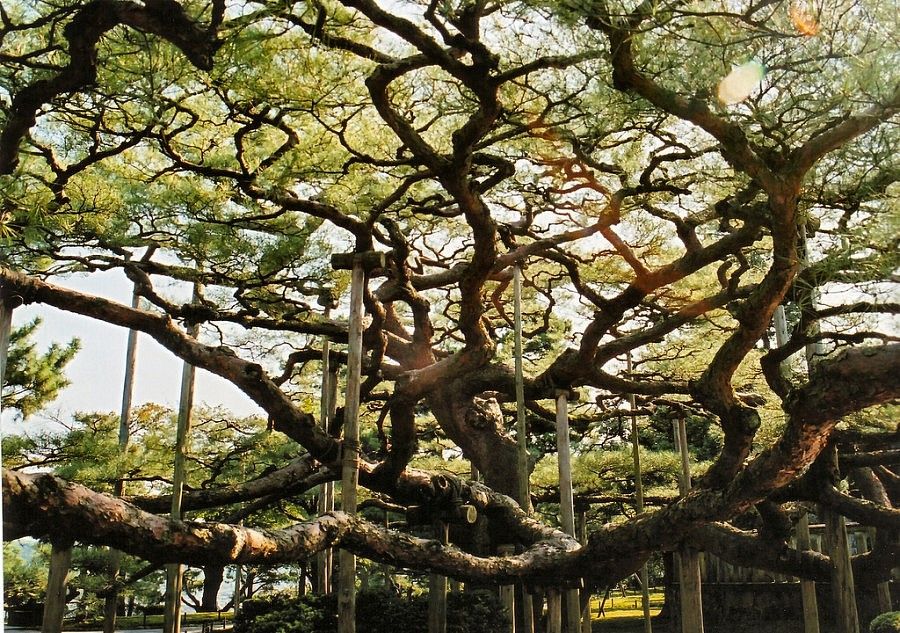
Whatever time of year you come, it’s a beautiful and atmospheric place. In spring you reach the entrance along an avenue of cherry trees in bloom, with their scent and color all around you. In summer the garden turns into a peaceful, green refuge, the perfect place to get away from the noise of the city. In winter it looks almost like a fairy tale, with snow over everything and the trees draped in yukitsuri, a system that protects the pines from the snow. Kenroku-en originally belonged to Kanazawa Castle, right next door, but it was opened to the public in 1874, and every year it draws lots of visitors who come for the beautiful scenery and the quiet atmosphere.
From Kanazawa Station, take the east exit (it's actually called Kenrokuen-guchi) and get on any bus heading downtown. In about fifteen minutes you'll be at the Kenrokuen-shita stop at the bottom of the hill, and from there a short walk uphill takes you to the Katsurazaka entrance.
If you get off at the 21st Century Museum of Contemporary Art stop instead, you'll go in from the other side, through the Mayumizaka entrance. That's the easiest one if you're coming from the Korinbo area.
If you visit the castle first, you won't need any transportation: from the castle park you walk past the Ishikawamon gate and straight into the garden. Walking from the station takes a good half hour.
This place is on MarcoMaps
Kenroku-en Garden
My map of Japan: over 4,000 places I've tried myself, each with photos, rating, and hours. Filter by category and rating, find veg-friendly spots and places near you with GPS. No sign-up, right from your phone.


Nobody knows exactly how the garden began. Some documents show it existed in the early 1600s, so historians believe Kenroku-en started taking shape around then under the name Renchitei (literally “lotus pond”). Over the next 200 years it was expanded and looked after by the powerful Maeda family, who led the Kaga clan. The garden was where the aristocracy liked to spend most of their time, contemplating nature or attending the outdoor parties held there.
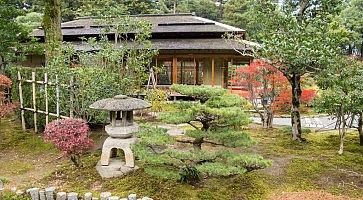
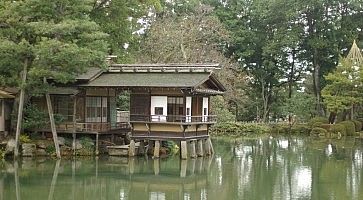
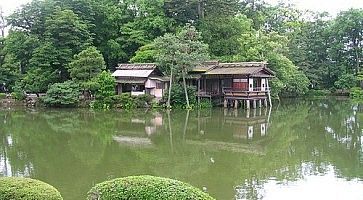
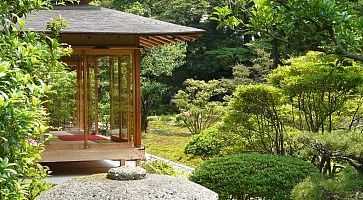
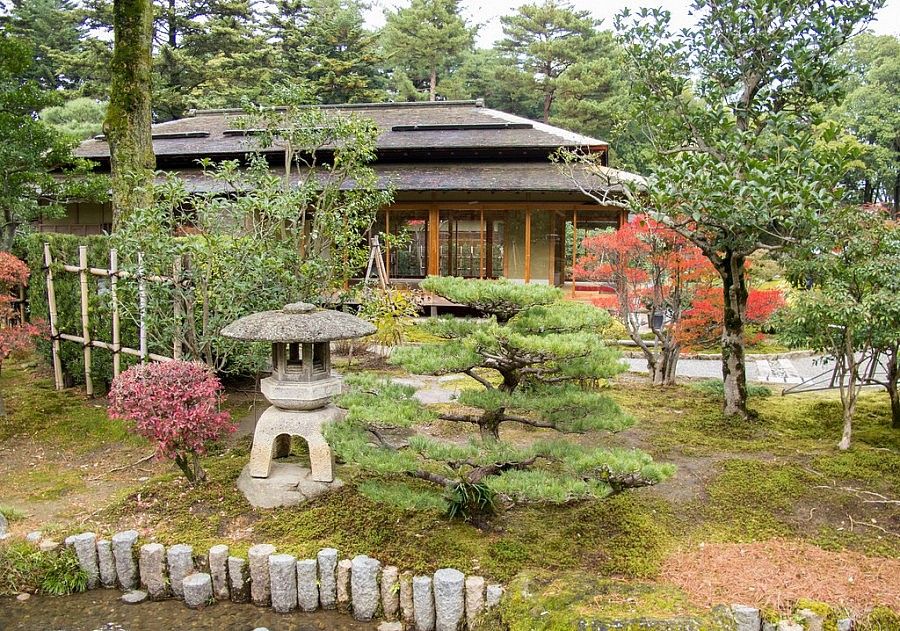
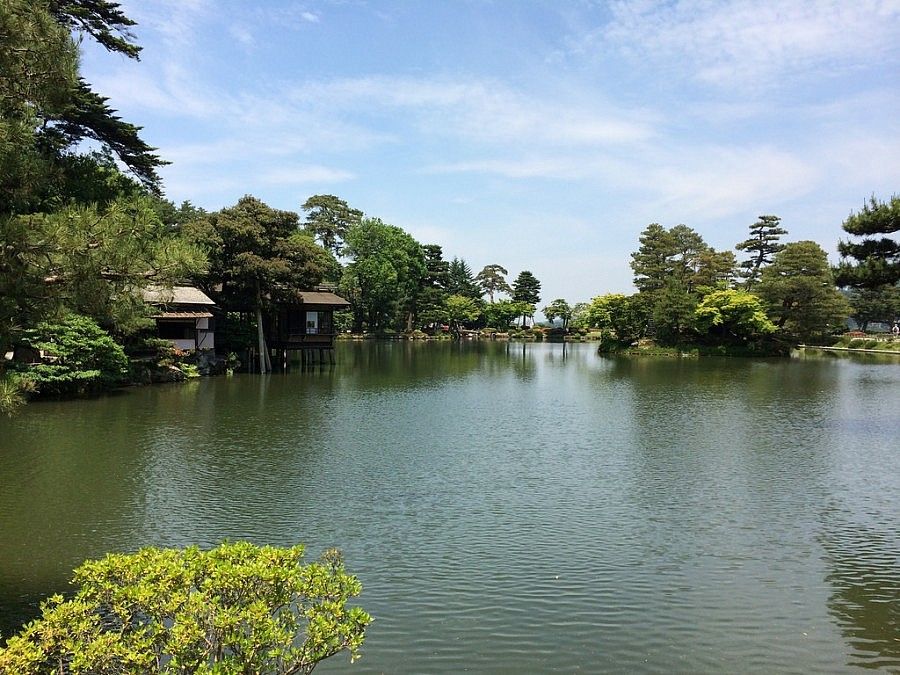
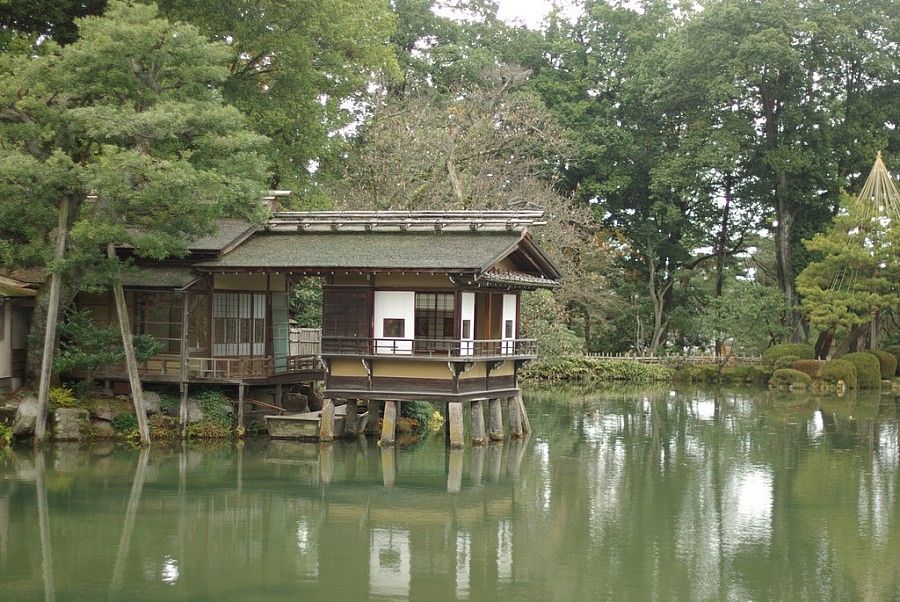
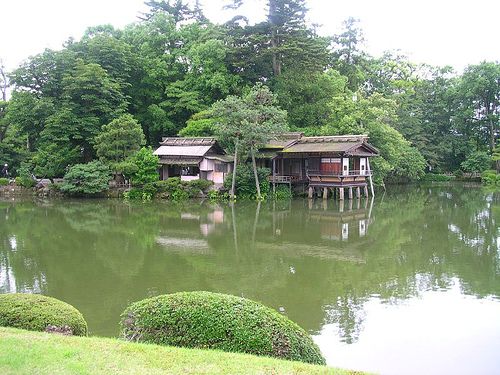
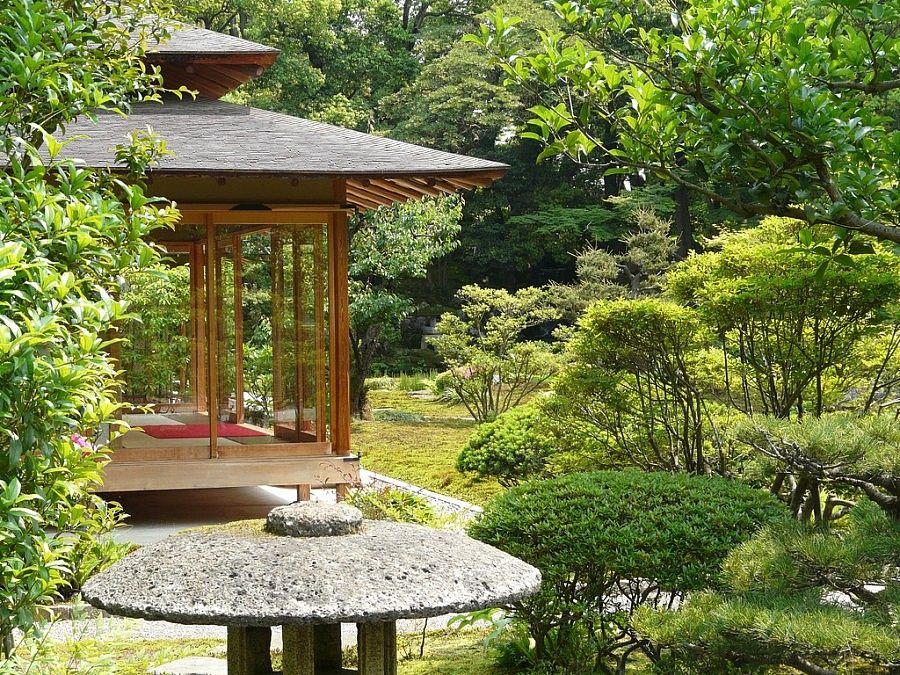
In 1759 a fire destroyed the garden along with almost all of its buildings. The Shigure-tei teahouse you see today is a faithful reconstruction of the original, and it’s still a reminder of the importance of the tea ceremony. After the fire the garden was restored over many years, and several new features were added, including the Midori waterfall and the Yugao-tei teahouse, which is now the oldest building in the garden. Kenroku-en also gained a number of streams that made the landscape even prettier, and the Kasumiga-ike pond was enlarged. Once all this work was finished, the garden was opened to the public in 1874.
The name comes from a book by the Chinese poet Li Gefei, “Records of the Famous Gardens of Luoyang,” and literally means “garden of the six sublime qualities.” According to Chinese tradition, the perfect garden has to have six essential features: spaciousness, seclusion, artifice, antiquity, watercourses and views.
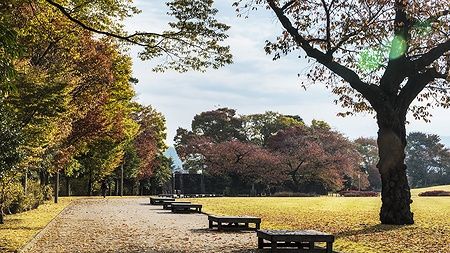
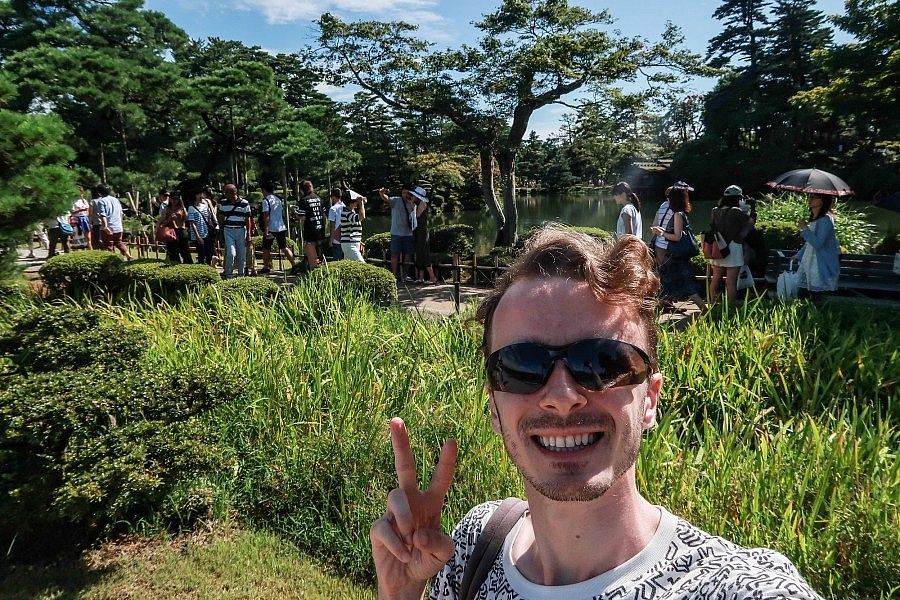
Kenroku-en has lots of viewpoints and sights. These days it gets absolutely mobbed by tourists, but it covers about 100,000 square meters, so if you want to get away from the crowds you can still find quiet corners to yourself. One of the best places to take in the view and relax in peace and quiet is the top of either of the two hills overlooking the center of the garden. To reach the first one, Yamazaki Yama, you just go past the Kasumiga-ike pond and keep walking straight ahead. The other, Sazae Yama, is at the end of a fairly winding path that starts near the Uchihashi-tei tea room. The climb is fairly tiring, but the view over the garden and Kanazawa is spectacular and well worth the effort.
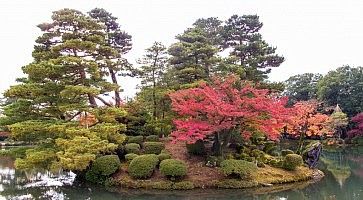
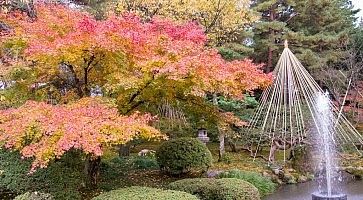
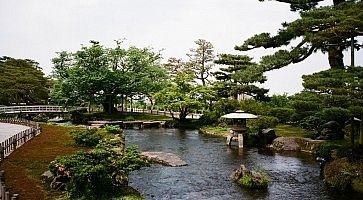
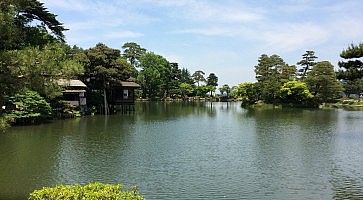
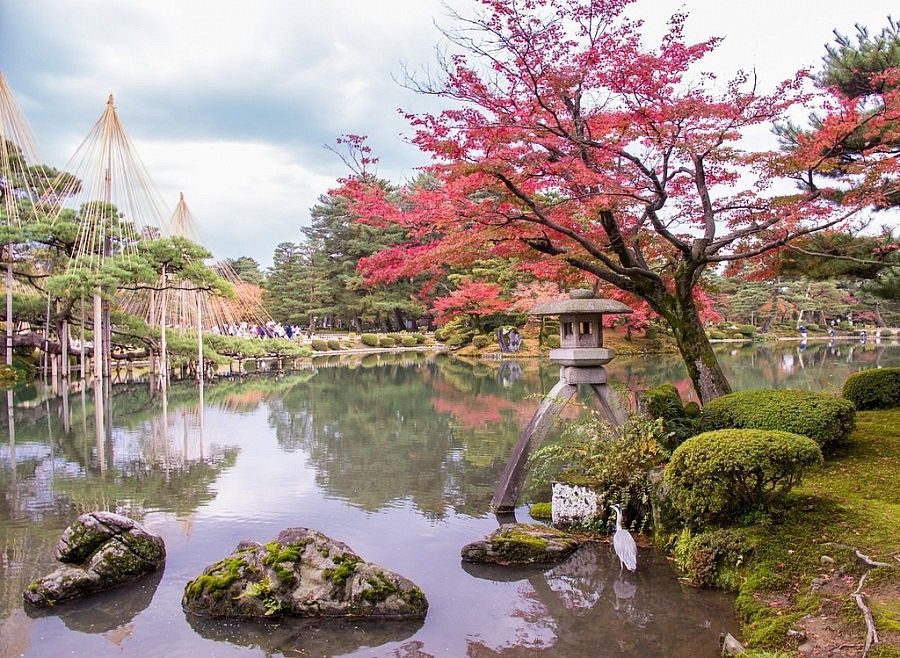
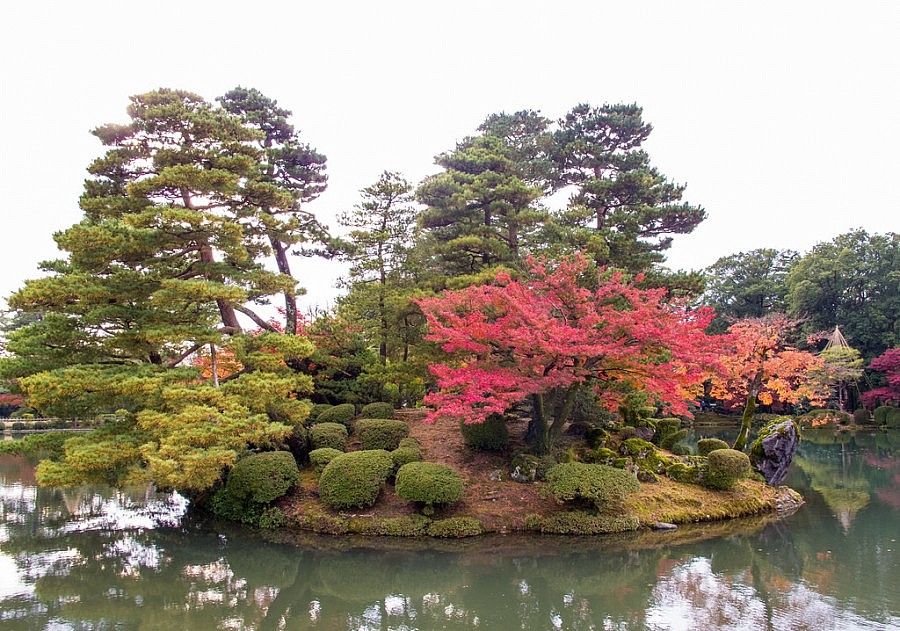
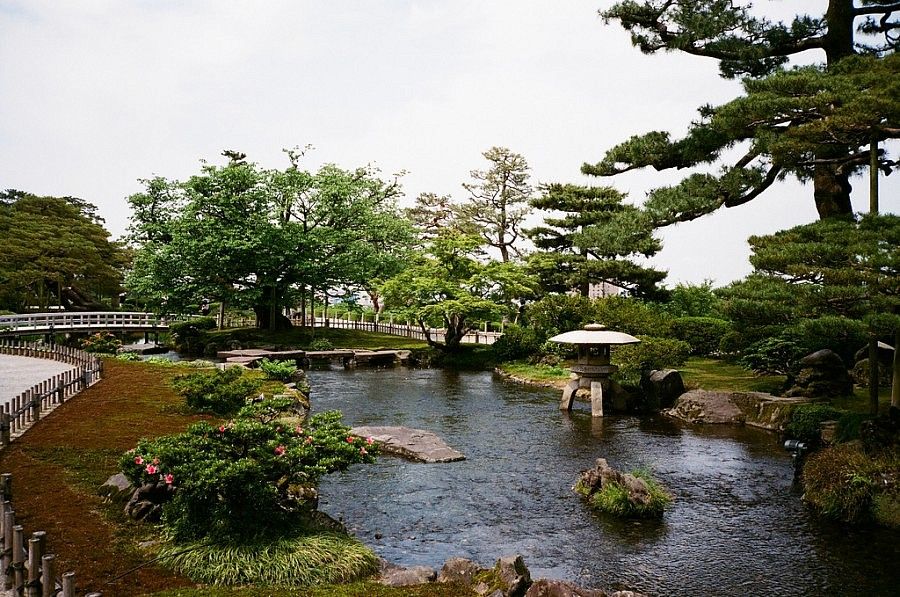
Kenroku-en has plenty of ponds, streams, bridges and teahouses, plus a huge variety of flowers, plants and trees. Its largest and best-known pond is Kasumiga-ike, and you see it at its best if you come in over the Ishikawamon bridge. There are plenty of legends about this pond: some say a hermit with incredible powers once lived on the little island you can see rising out of the water today. Just below, fed by Kasumiga-ike itself, is what’s considered Japan’s oldest fountain. It dates back to 1861 and has no pump: the water shoots up three and a half meters simply because the pond sits higher than the fountain. Most people rush right past it, but it’s a bit of engineering from another age that still works perfectly.
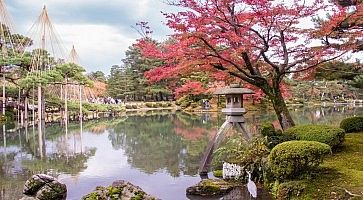
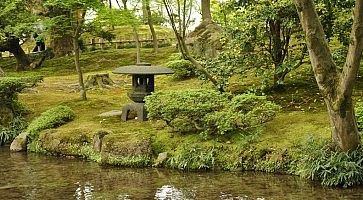
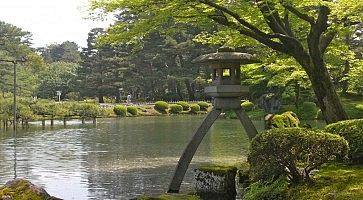
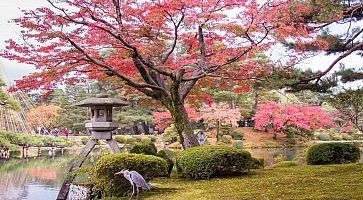
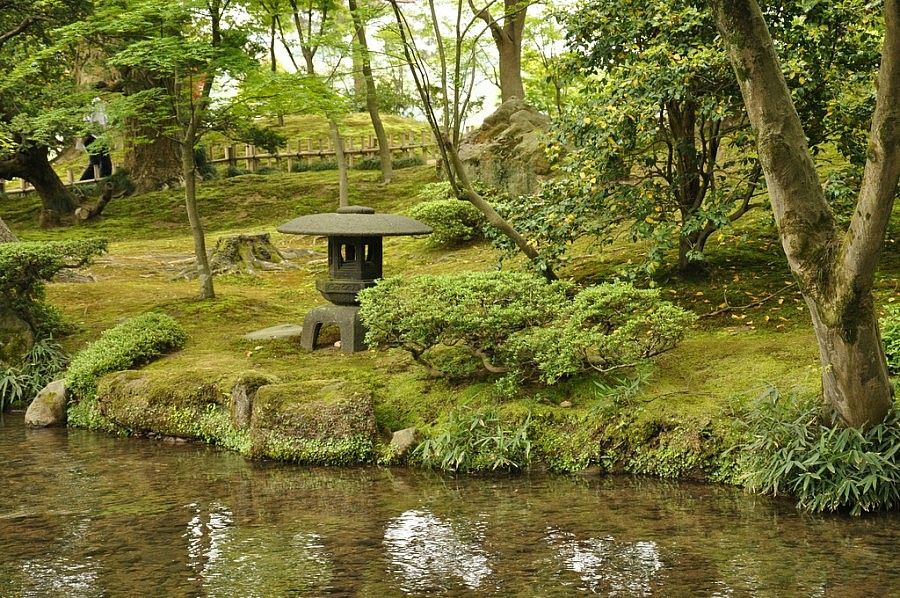
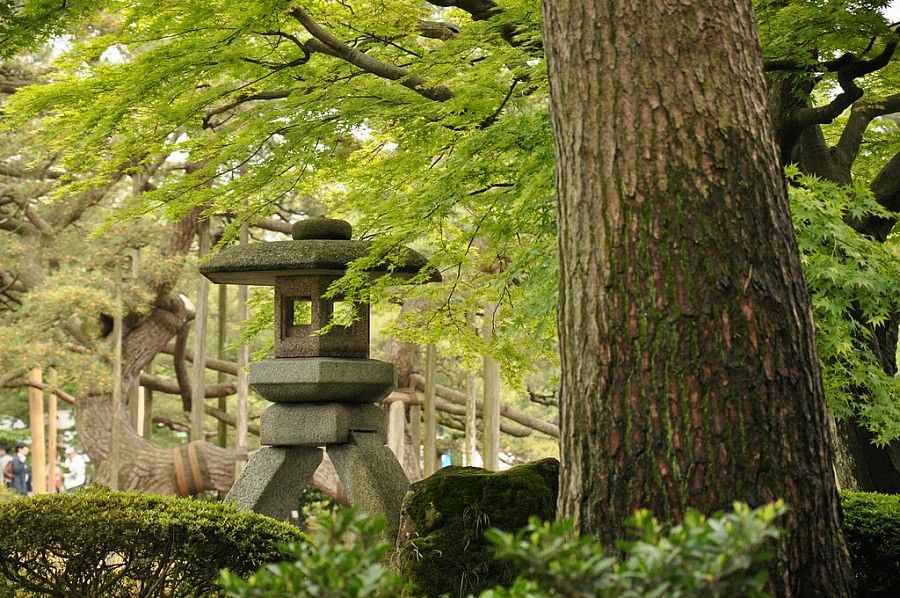
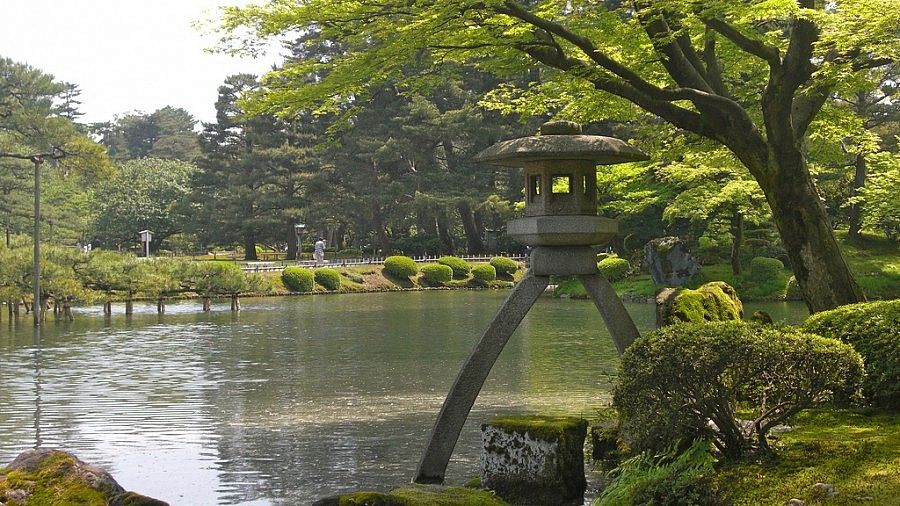
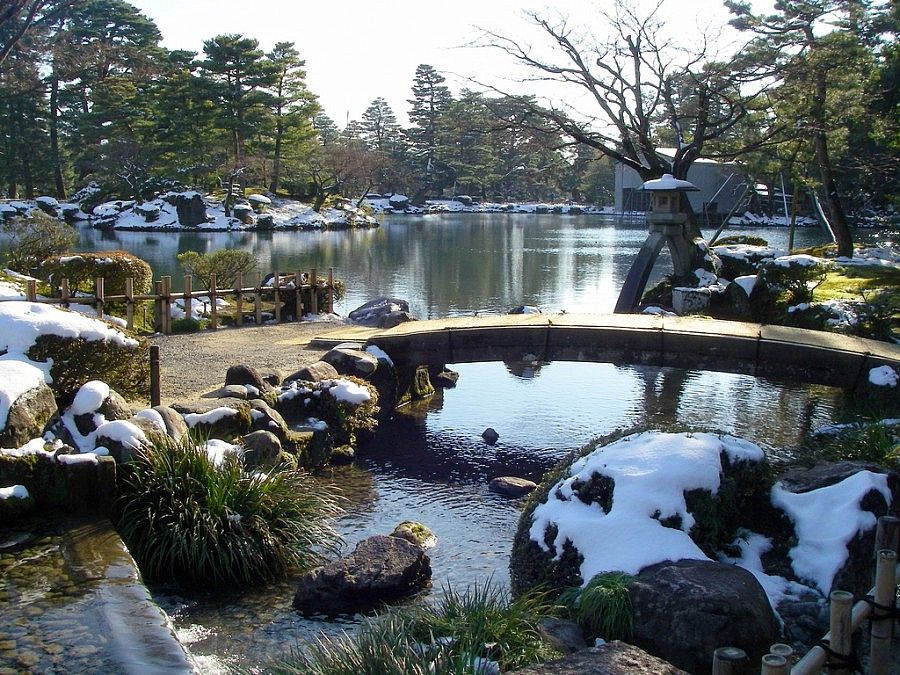
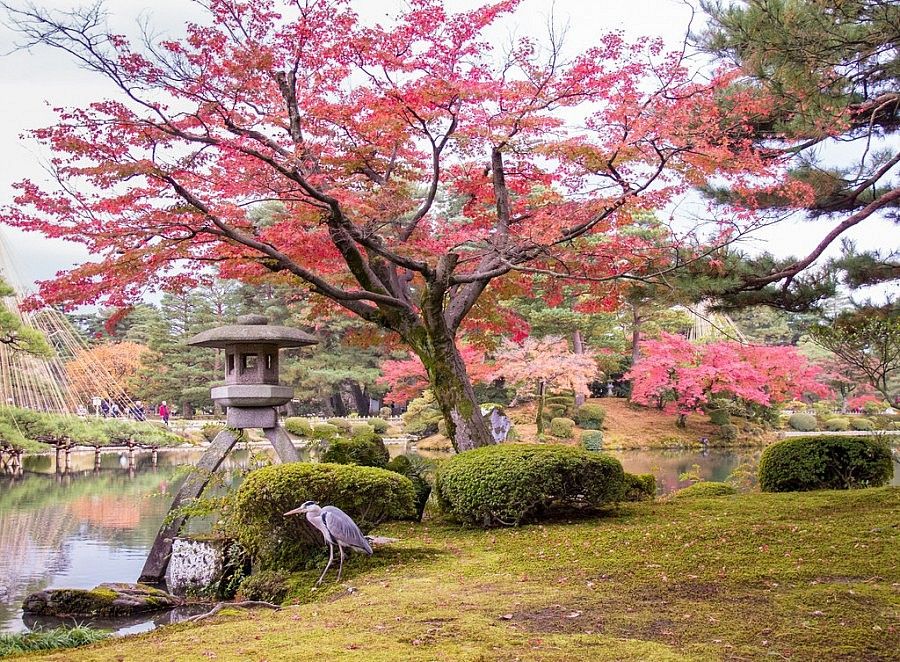
Next to the pond you’ll also see the famous Kotoji-toro stone lantern, which is unlike any other because its two legs are different lengths: one stands on the ground and the other on a stone at the water’s edge. Over time it’s become a symbol of the garden and of Kanazawa as a whole. The lantern is named for its resemblance to a koto bridge, the little stand that holds up the instrument’s strings. The best place to see it from is the stone bridge right next to it, with the pond behind you: that’s the shot you’ll find on every postcard of Kanazawa.
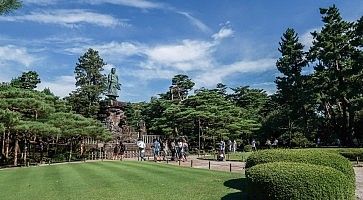
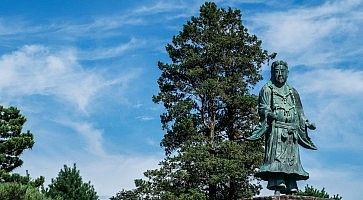
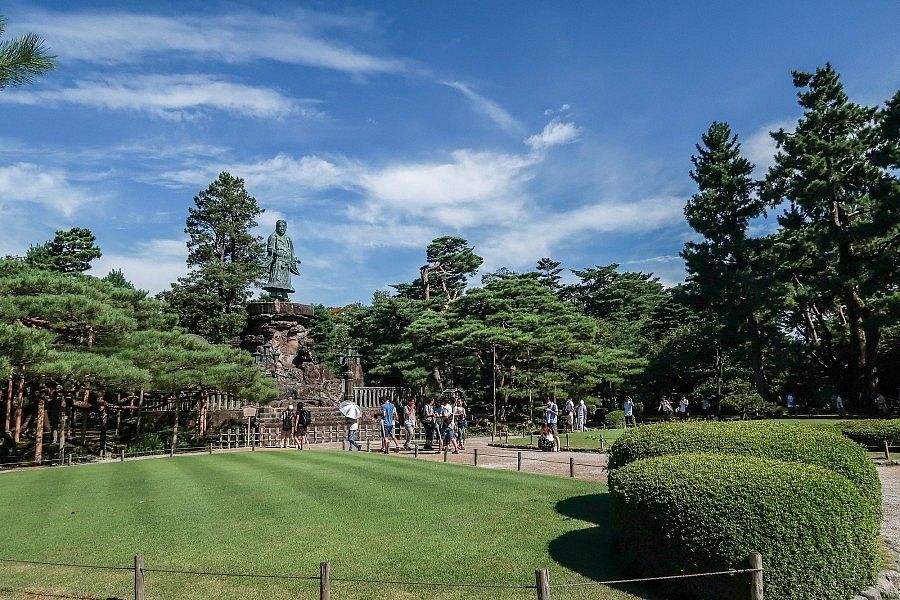
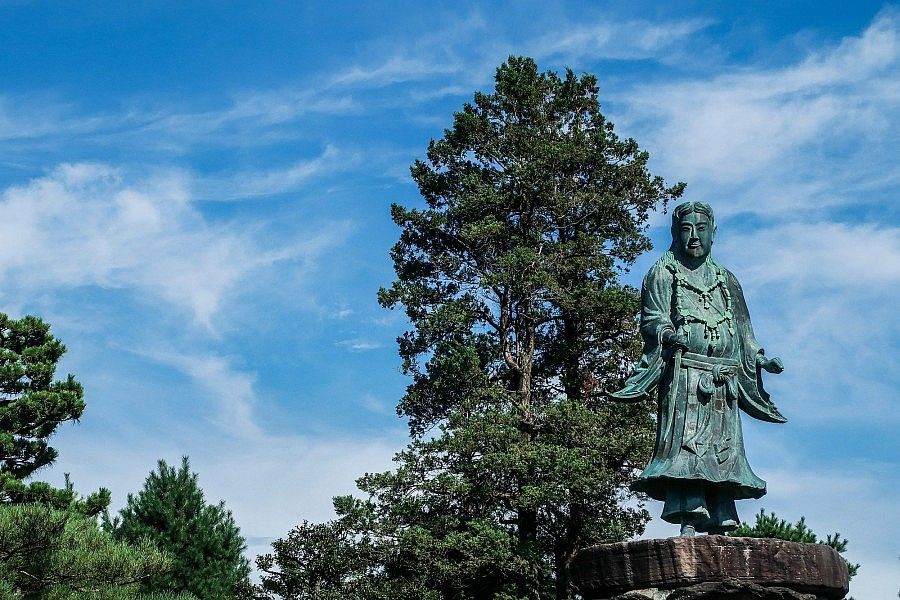
Farther along you’ll come to the Meiji Memorial, which honors those who died in the Satsuma Rebellion of 1877.
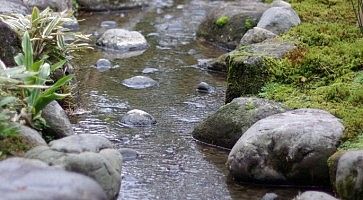
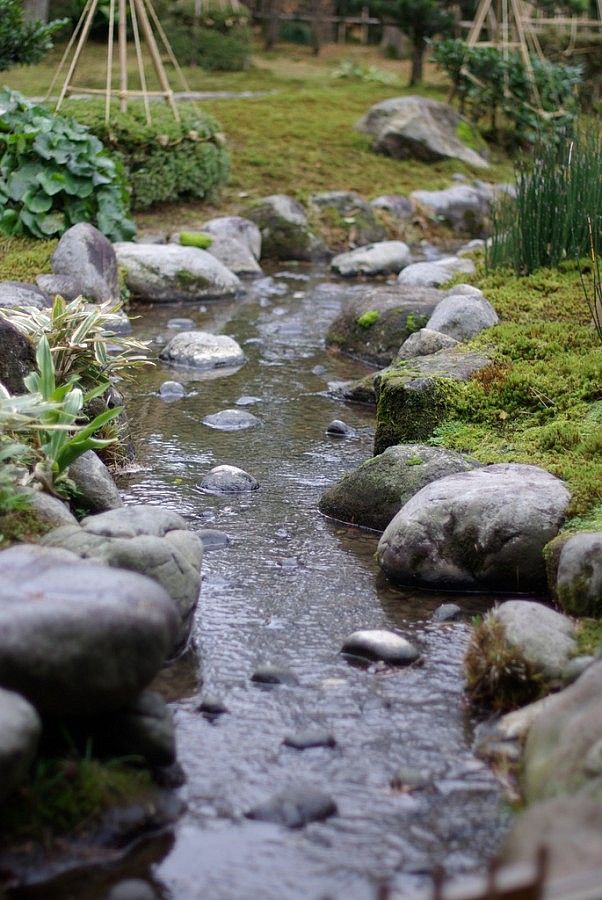
From here you can keep going straight up to the top of Yamazaki Yama, or turn right and follow the stream through the greenery around you. In summer this area is bursting with color thanks to the masses of irises that cover it. In spring, stop at the hanami bridge, where the cherry blossoms make a beautiful scene that’s perfect for photos!
On your left, just outside the garden, is one of the most beautiful and best-preserved buildings in Kanazawa, the Seisonkaku villa. Here you can picture the Maeda wives going about their daily lives, and admire the sliding doors decorated with painted glass.
Heading south takes you back in time to the oldest part of the garden. At the foot of Sazae Yama there’s a teahouse where you can take a break and try the local specialties. Farther on you’ll find yourself in the plum garden, and if you turn right you can get to the famous Shigure-tei teahouse. Here you can sit looking out over the garden with a cup of matcha and a traditional sweet, and on cold days it’s the perfect stop to catch your breath before you set off again.
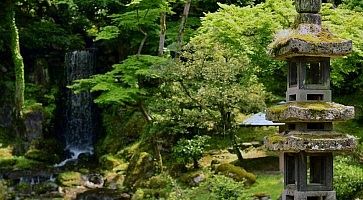
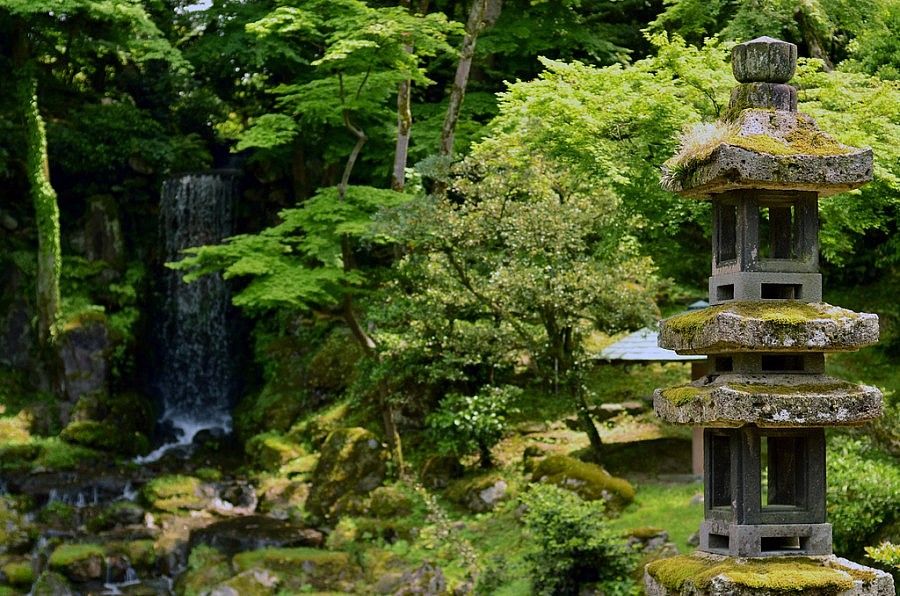
Keep going and you’ll come to a large pond called Hisago-ike. The quiet here is broken by the sound of the Midori waterfall, which drops nearly 7 meters onto the rocks in the pond. On the shore stands another lovely old teahouse, Yugaotei.
If you can pick when to come, keep in mind that every season makes this a completely different place. The garden’s year begins in late winter with the plum garden, which blooms while it’s still cold and the paths are nearly empty. Then come the cherry trees: hundreds of them transform the whole area around Kasumiga-ike between late March and early April.
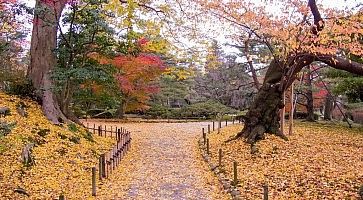
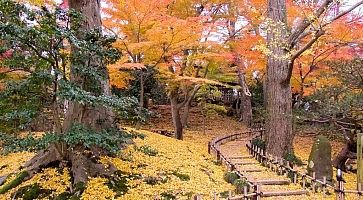
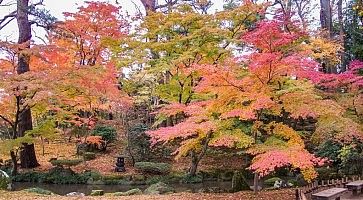
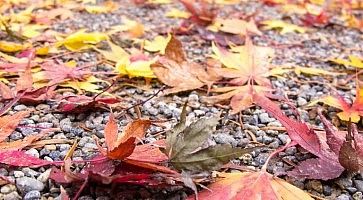
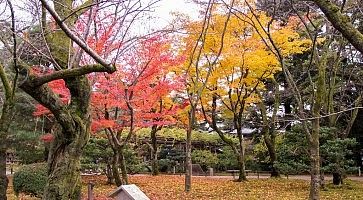
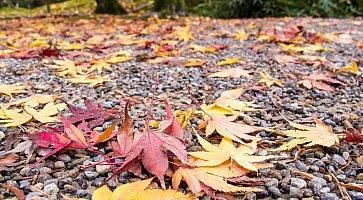
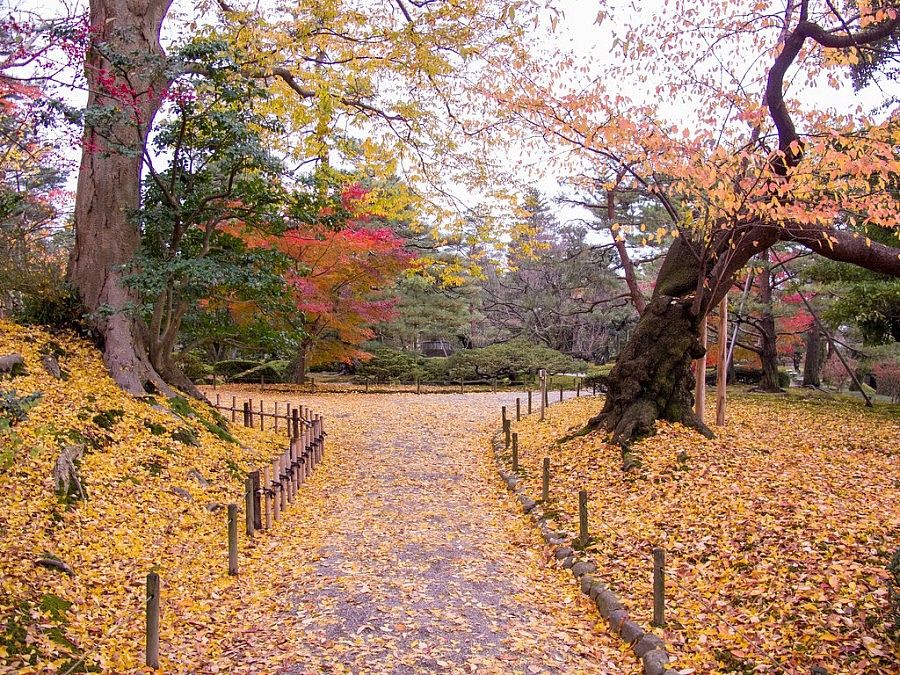
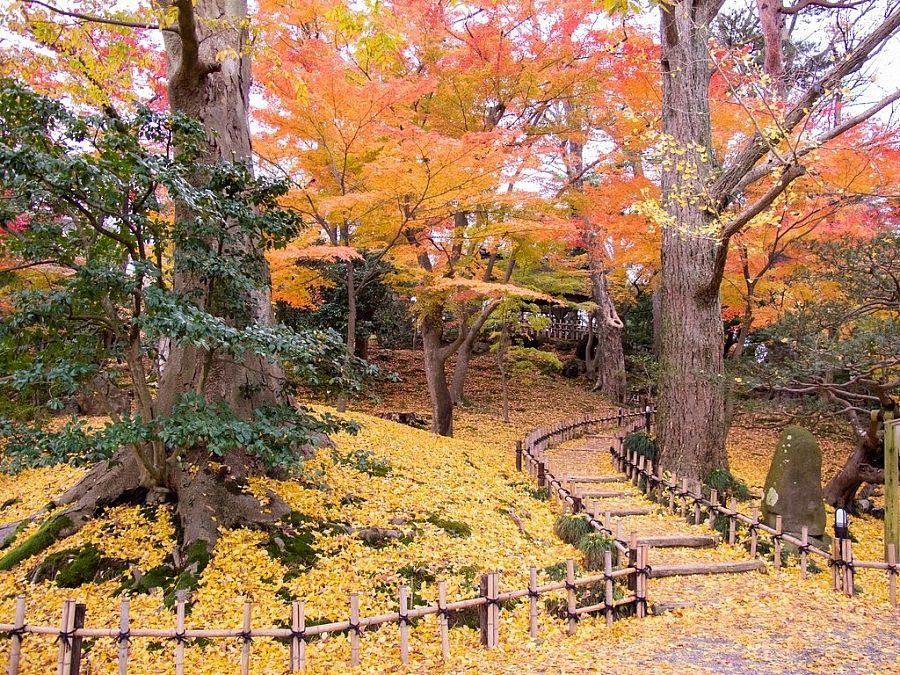
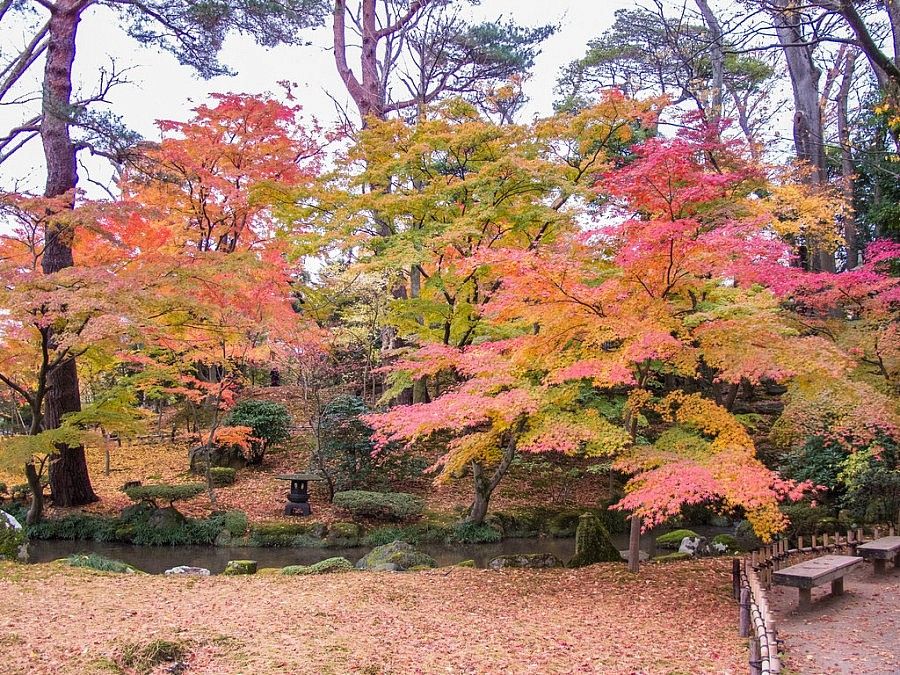
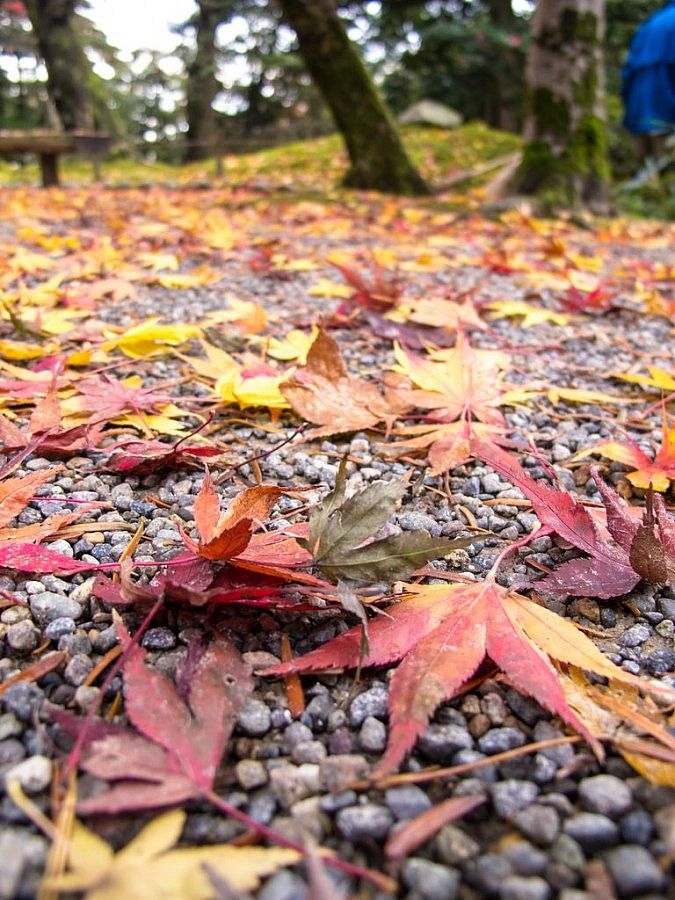
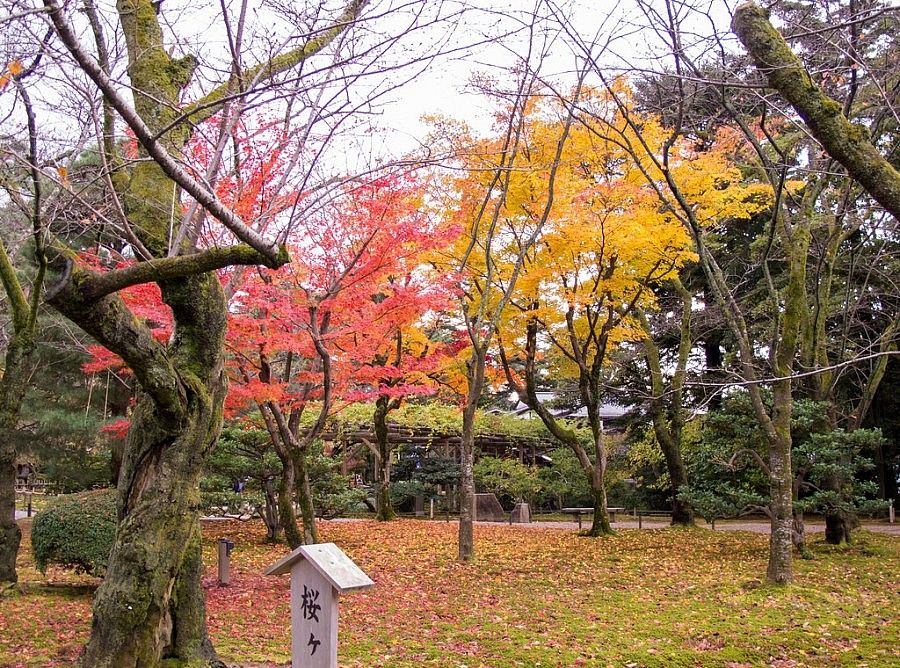
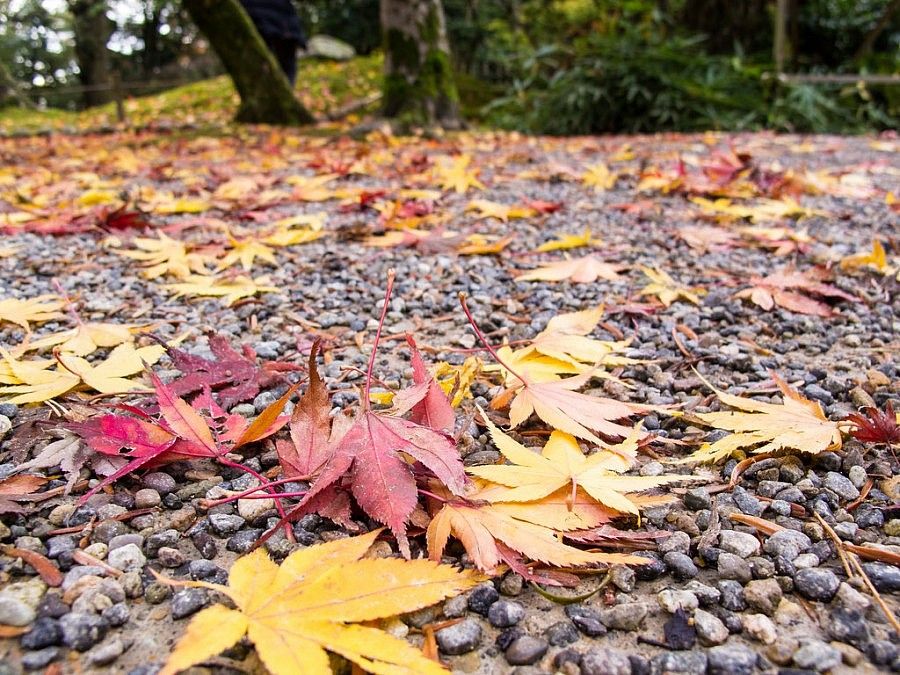
In June the purple irises bloom along the stream, and in November the maples turn the upper part of the garden red.
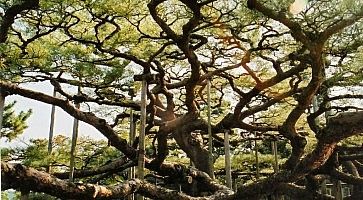
Winter, though, is still the most photographed season. In early November the gardeners put up the yukitsuri, the umbrella-shaped ropes that hold up the pine branches, and they don’t take them down until mid-March. On certain evenings during the year the garden also stays open after dark for the night illuminations, and the Kotoji lantern and the great Karasaki pine lit up in the dark look completely different from the way they do by day.
Kenroku-en Garden - nearby you will find:
411 mA good way to really understand this art form.
 415 m
Interesting and full of history.
 437 m
Really interesting and quirky.
 763 m
Unbeatable tonkatsu.
 842 m
A store that sells everything. Great.