Kinosaki Onsen
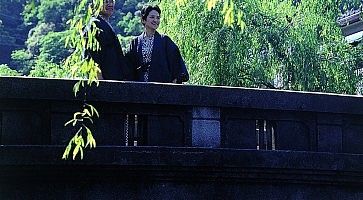
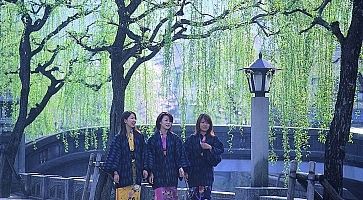
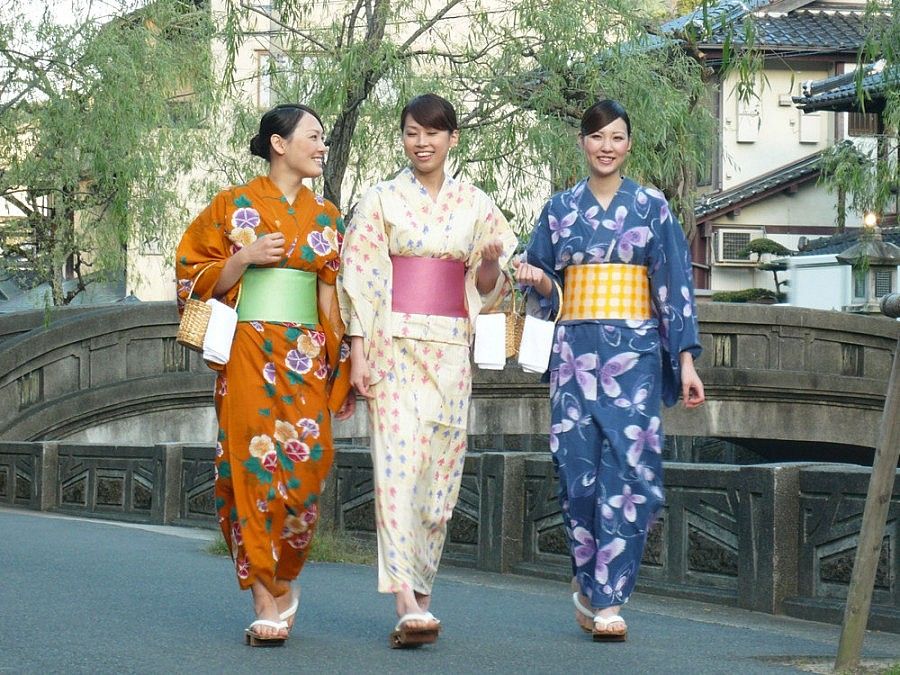
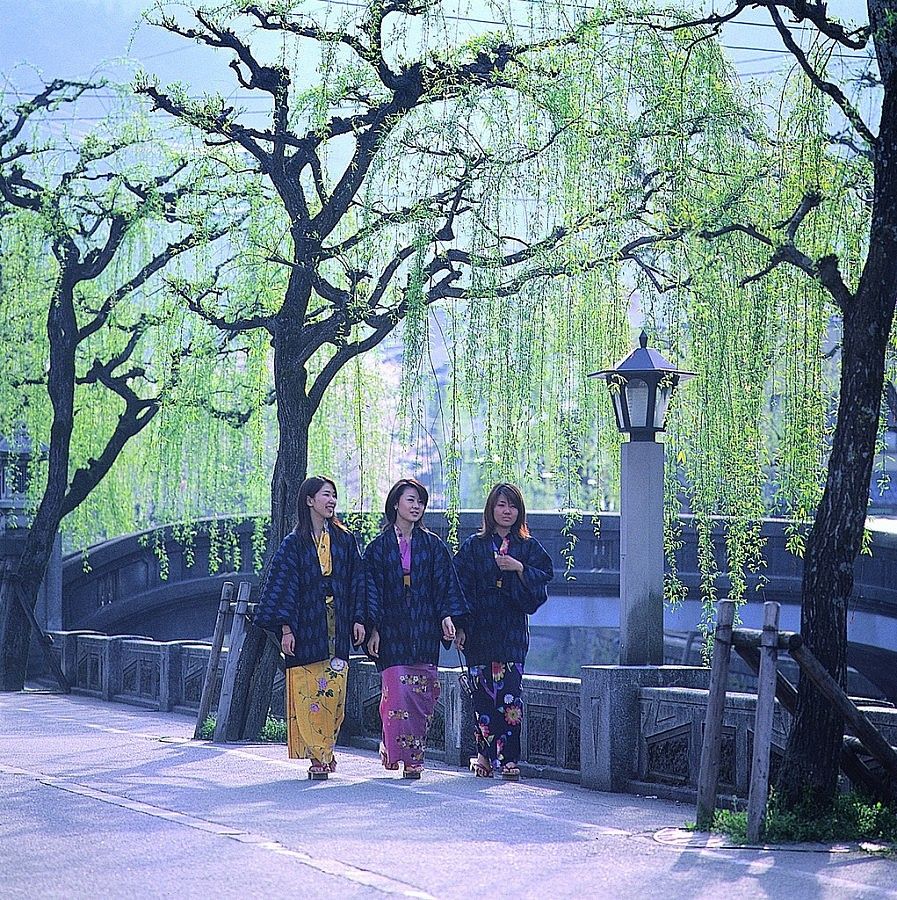
A lovely little town that slowly emerges from clouds of hot spring steam, Kinosaki Onsen still proudly holds on to traditions and architecture from another era. Locals and visitors stroll around without a care in colorful kimono and traditional Japanese wooden sandals, hopping from one onsen to the next, and you’d think nothing had changed in the last few centuries. It all gives the town a nostalgic, evocative atmosphere.
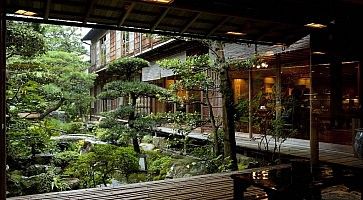
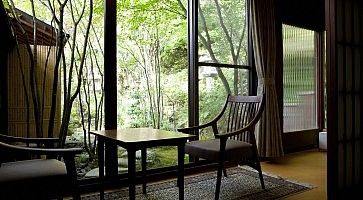
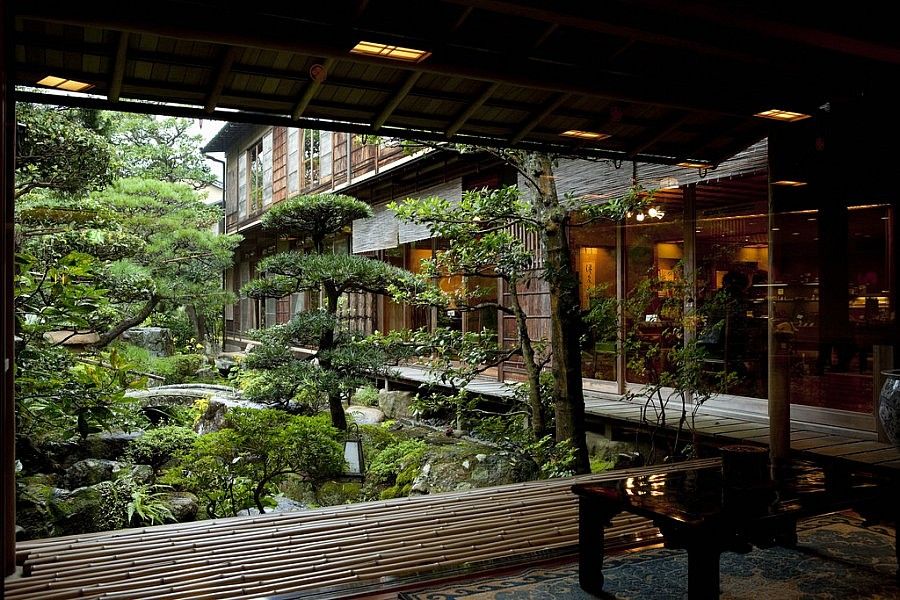
Kinosaki Onsen sits in the north of Hyogo Prefecture, on the Sea of Japan coast. It’s one of the best-known hot spring towns in the Kansai region and one of the oldest in the country, with a history going back about 1,400 years. Other towns have grown as big modern hotels moved in, but Kinosaki has stayed small, so you can explore it on foot, and it’s kept its traditional charm, with ryokan and wooden buildings lining the streets in the center of town. It’s easy to reach by train from Osaka and Kyoto, so it’s perfect for a restful weekend of total relaxation, a stop to add to your itinerary when you need a break from the big cities and want to see a more traditional side of Japan.
Contents
Soaking in the onsen
The hot springs are Kinosaki’s main draw. People have known about the healing power of the water here since ancient times, when a legend spread about an Oriental white stork, a bird native to the area, that healed its injured leg in the hot spring water. The onsen were later built around those springs.
Today the town is full of ryokan, each with its own onsen, but what Kinosaki is proudest of are the seven public onsen scattered around town, along with a number of ashiyu, the small foot baths, and a few fountains where you can drink the hot spring water. If you’re staying at a local ryokan, you can get into all seven onsen free with a special pass from the front desk. If you’re only here for the day, you can buy a one-day pass called Yumepa, which gives you unlimited entry to the public onsen. You buy it right at the bathhouses.
Each of the seven onsen has its own character and its own hot spring water, so here’s a look at them one by one.
Satono-yu
Satono-yu, the bathhouse next to the train station, is closed while the building is being rebuilt, which leaves six public onsen you can visit.
Jizo-yu
Jizo-yu is a local favorite, near the spot where the main street leading to the station crosses the river. Lots of neighborhood families come here because they love its retro feel. The building has an unusual shape, inspired by a lantern.
Yanagi-yu
Yanagi-yu is the smallest bathhouse in town, with a relaxed, intimate atmosphere and traditional interiors throughout. The wood used for the building and the tubs gives it a rustic, cozy touch. Outside, next to the entrance, there’s also a small foot bath.
Ichino-yu
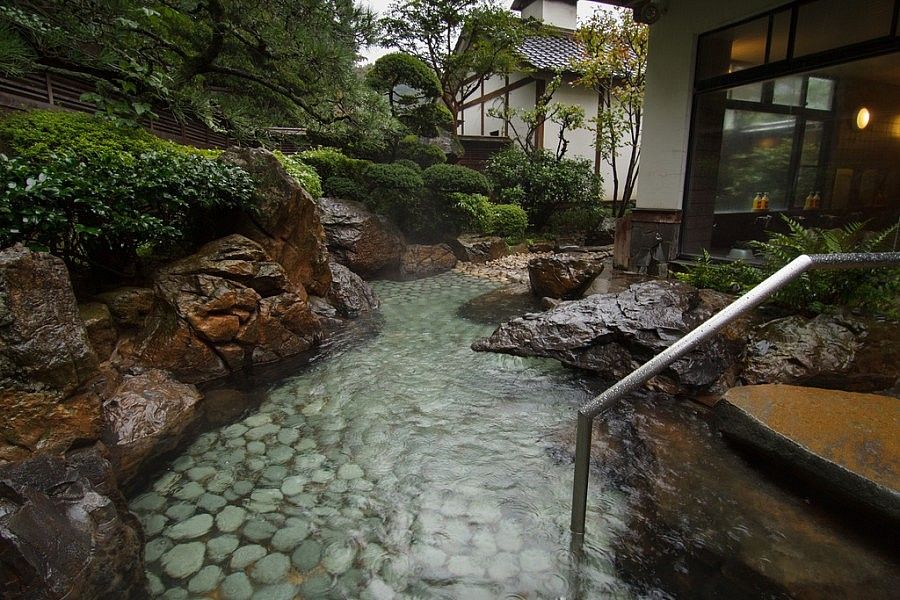
Ichino-yu, right in the center of town, is designed to look like a traditional Japanese theater and is very popular with tourists. The indoor baths are modern, while the outdoor area is especially striking, with baths set inside caves.
Goshono-yu
Goshono-yu was modeled after Kyoto’s Imperial Palace and is one of the largest onsen in Kinosaki. Its outdoor baths are laid out on several levels, surrounded by beautiful gardens with a waterfall, and there’s a sauna too. The decorative details are gorgeous, with paintings adding color to the sliding doors and ceilings.
Mandara-yu
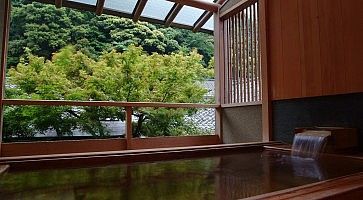
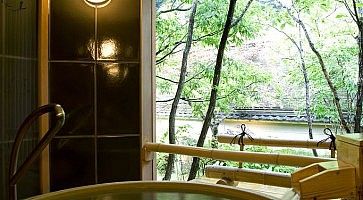
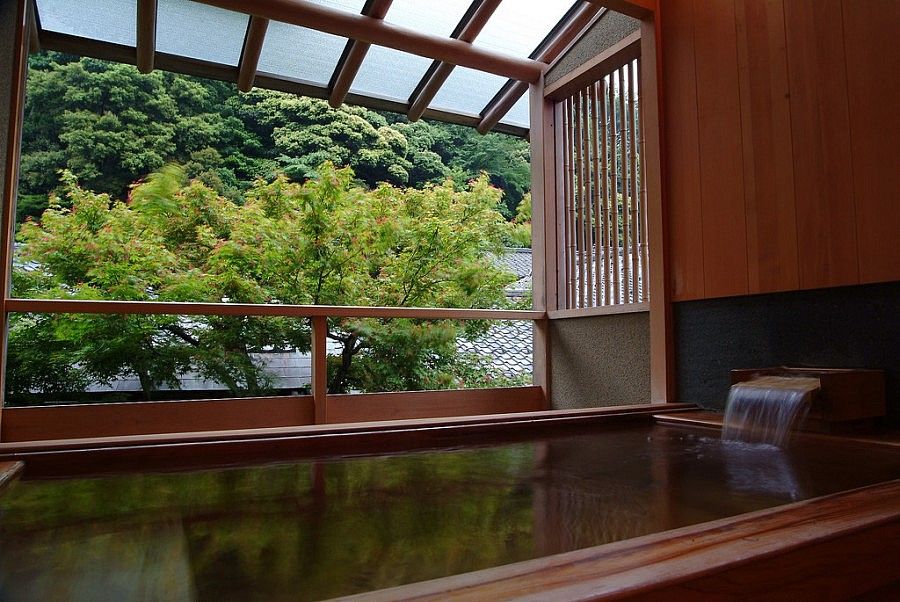
Mandara-yu is a bit outside the center, south of the main street, Yunosatodori, but it’s considered one of the most charming onsen in town, mainly for its outdoor bath made of cypress wood, which gives off a soft, relaxing scent. From the rotenburo you get beautiful mountain views.
Kono-yu
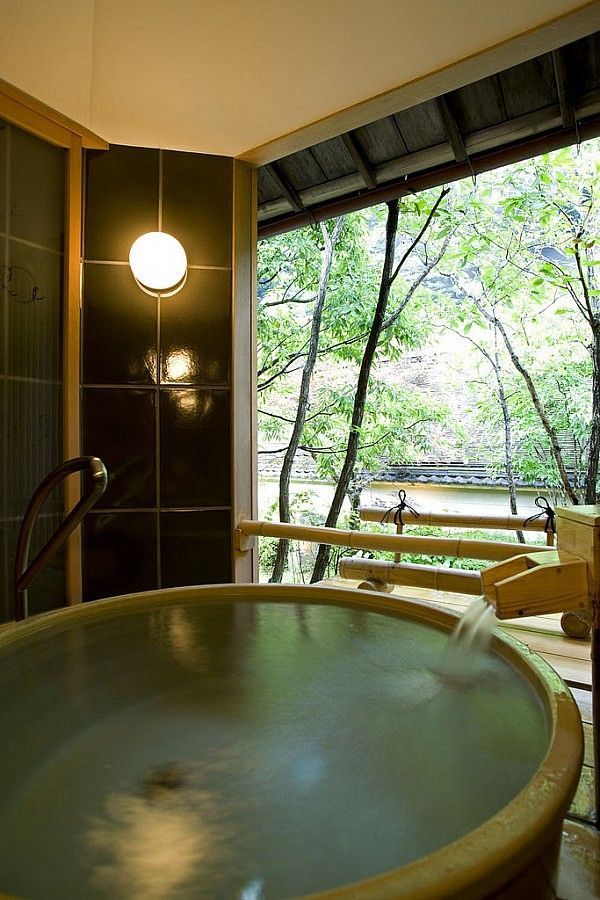
Kono-yu, just off the main street, has a laid-back, old-fashioned atmosphere. It’s Kinosaki’s oldest onsen, the one the whole town grew around, even though it’s been rebuilt several times. The rotenburo, the outdoor bath, is lovely, framed by beautiful natural scenery.
Walking around town
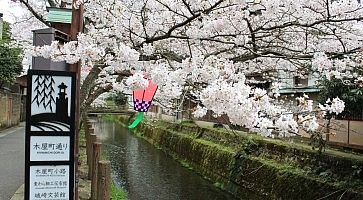
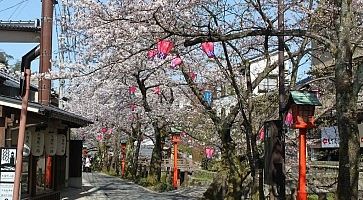
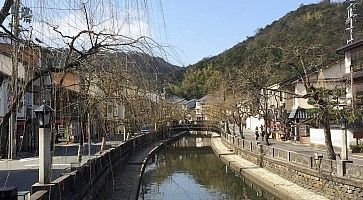
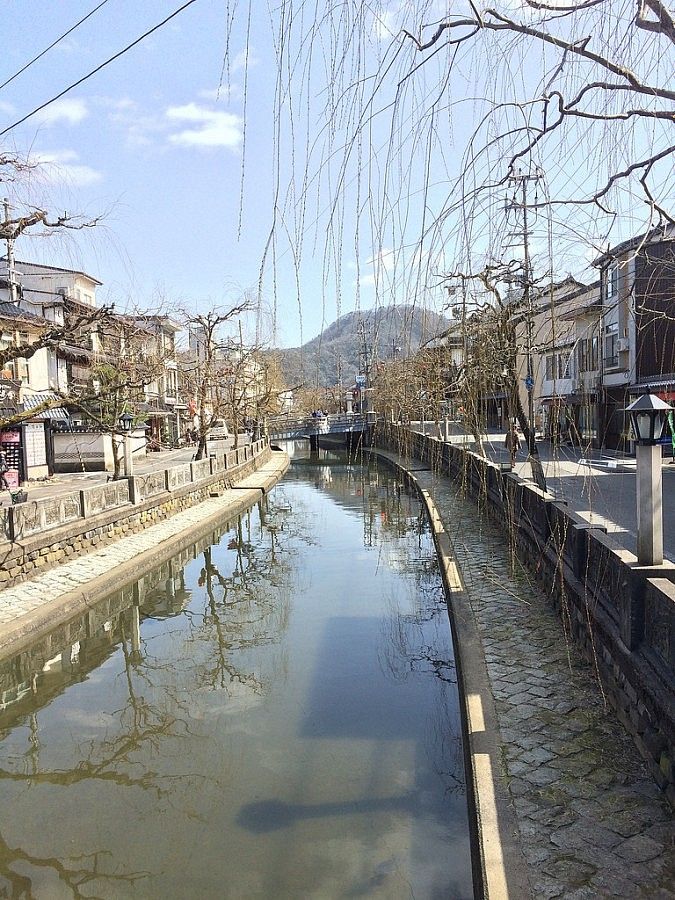
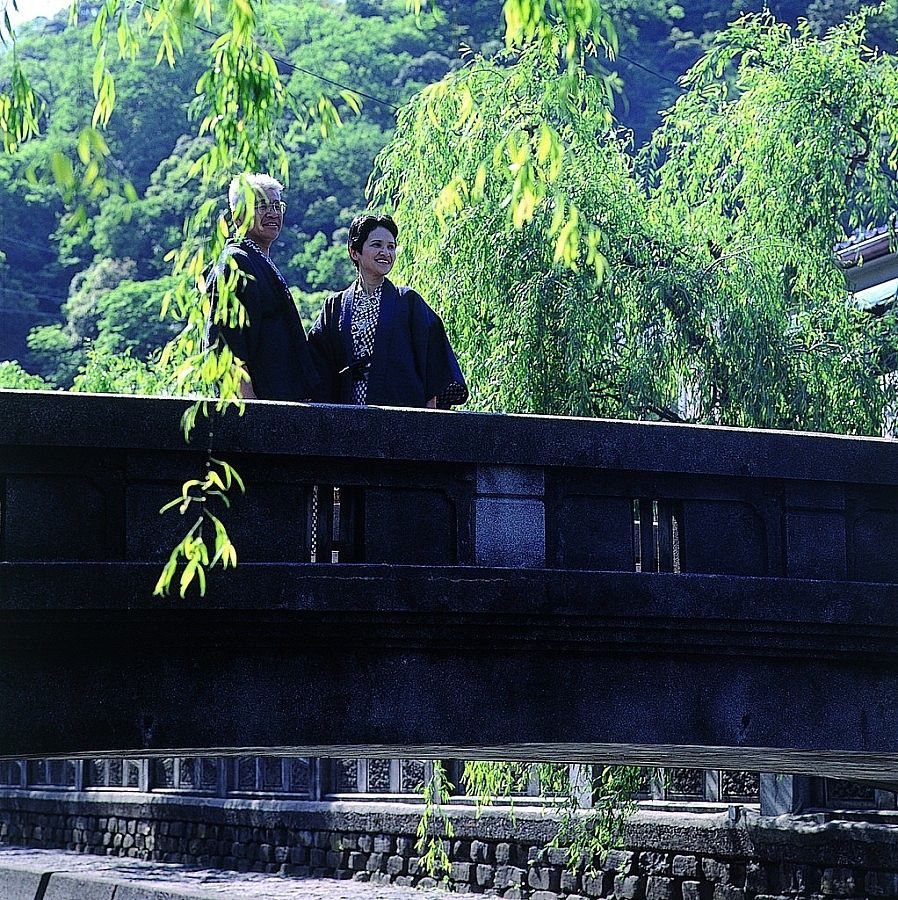
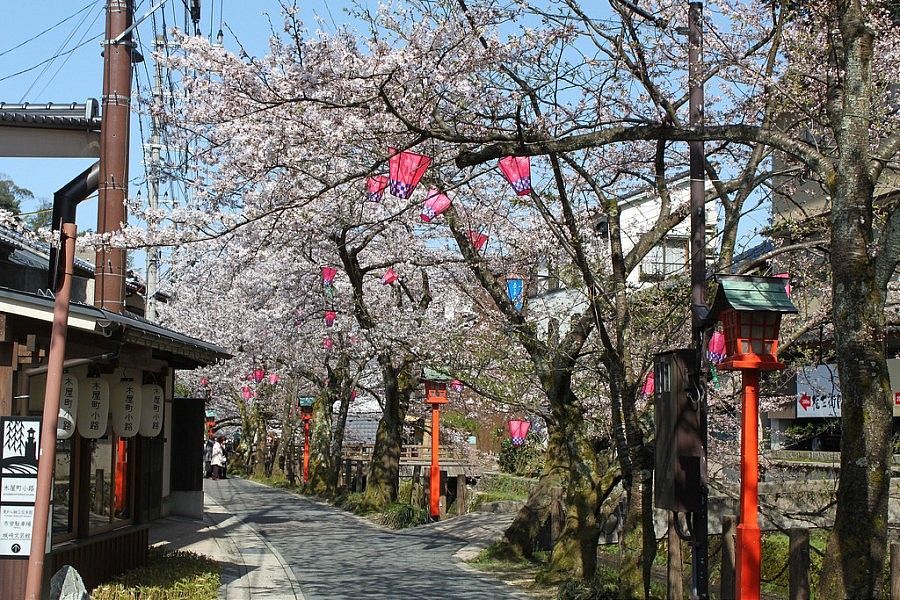
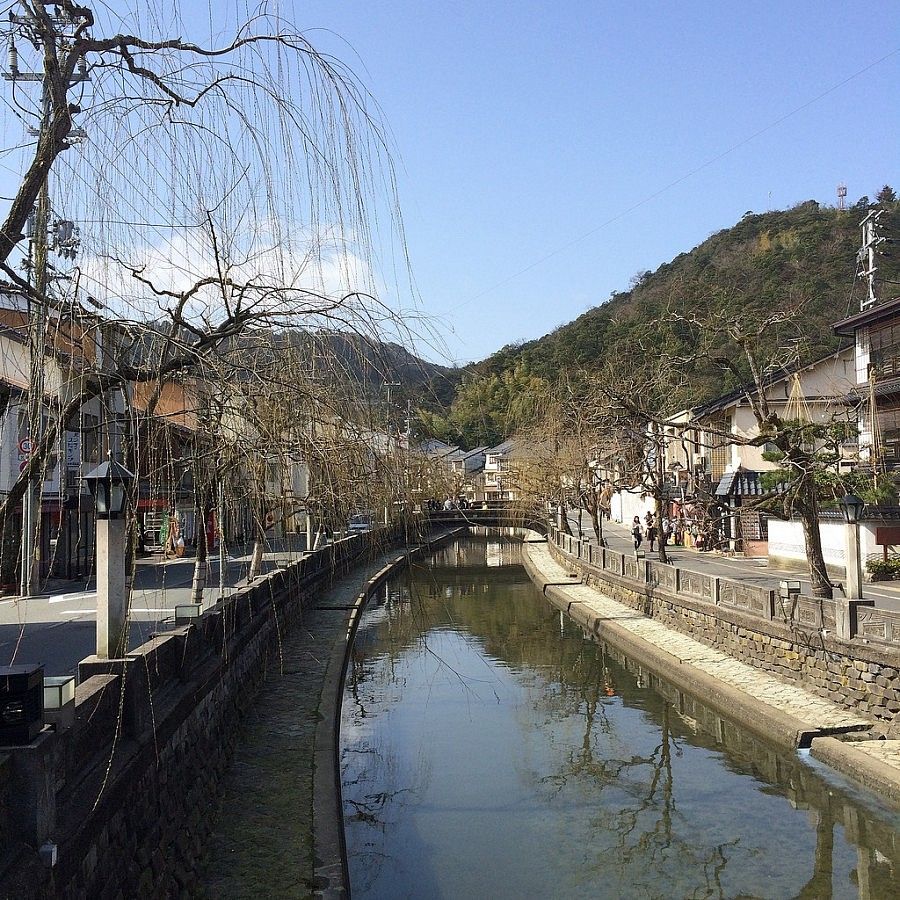
When you walk out of Kinosaki Onsen Station, you’re right on the town’s main street. It’s lined with restaurants, shops selling local food, souvenirs and crafts, and stalls with street food like skewers, fresh fish and eggs cooked in the hot spring water. The game arcades are a lot of fun too, with old-fashioned games that feel like a trip into the past. The street ends at the Otani River, which runs through town and makes for lovely walks: willows and cherry trees line its banks, and when the cherry trees bloom in spring they’re great for photos. One of the things visitors love most is walking around in the yukata borrowed from their ryokan. If you’re only here for the day, you can rent traditional outfits at the small shops in the center.
What to eat in Kinosaki Onsen
Kinosaki faces the Sea of Japan, and you can tell from what’s on the table. From November to March the undisputed star is matsuba crab, the snow crab caught off the Tajima coast. Ryokan serve it boiled, grilled and in nabe, while the small restaurants in the center have simpler, more affordable versions.
Out of season, the spotlight moves to Tajima beef, which comes from the same breed of cattle as the more famous Kobe beef. Here you can try it as steaks, skewers and croquettes to eat on the go.
Along the main street, it’s also worth stopping at the stalls for eggs cooked in the hot spring water, grilled fish and steamed sweets. They’re the perfect snack between baths, something to eat in your yukata on the way to the next onsen.
Temples and museums
Besides the baths and the shopping, Kinosaki has a few cultural sights where you can learn more about the area’s customs and traditions.
At the western end of town, on the slopes of Mount Daishi, stands Onsenji Temple, the town’s main place of worship. According to legend, the monk who founded it prayed for a thousand days for the well-being of the local community, and when he finished, the hot springs began to well up from the ground. People used to pray at the temple before going into the onsen, a custom nobody follows anymore, but the temple is still worth a visit. It’s surrounded by greenery, which makes it feel peaceful, and since it sits high above town, you get beautiful views from up there. You can walk up in 15-20 minutes or take the Kinosaki Ropeway, which runs to the top of the mountain from the station at its foot, next to the temple’s entrance gate.
Near the temple there’s a small art museum with historical artifacts and treasures connected to the temple.
Also worth a visit are Gokuraku Temple, known for its zen rock garden, and the Bungeikan, a museum dedicated to literature and to the famous Japanese writers who grew up in the area.
Hiking
The forests and mountains around Kinosaki give you plenty of chances to get out into nature. If you’re up for a climb, a hiking trail takes you all the way to the top of Mount Daishi. If you’re short on time or don’t like walking, you can take the ropeway from the foot of the mountain up to an observation deck at the top, with a stop halfway at Onsenji Temple. The view from the summit is spectacular: you can see the whole town, the river and the surrounding valleys, all the way to the Sea of Japan.
The Oriental white stork park
The last two Oriental white storks in Japan died near Kinosaki in 1971. The species’ extinction in Japan was caused by modern farming practices that destroyed the storks’ habitat.
Konotori no Sato Park was created to bring storks back to Japan, using birds imported from Russia. Today the storks are a protected species and have become the symbol of the region. The park is 10 km south of town, near Toyooka, and it’s a nice place to get a close look at these beautiful birds and learn more about them and their habitat. There’s also a museum where visitors can find out about the history and habits of Oriental white storks and get a better idea of the park’s conservation and breeding program.
When to go to Kinosaki Onsen
Winter is the favorite season. When snow covers the willows along the river, a walk in yukata past the lanterns looks like something off a postcard, and the outdoor baths are at their best. It’s also the busiest time of year, though, and ryokan prices hit their yearly peak.
In spring the banks of the Otani River fill with cherry blossoms, usually between late March and early April, while fall brings colorful leaves to the mountains around town and ideal temperatures for onsen hopping. Summer is the least appealing season, because the heat and humidity really get to you, although evenings by the river are still pleasant.
Photo Gallery



Getting There
From Kyoto the easiest train is the Limited Express Kinosaki, which gets you to the station with no transfers in about two and a half hours. From Osaka the Limited Express Konotori takes a little longer. Both trips are covered by the Japan Rail Pass.
If you're coming from Tokyo, take the shinkansen to Kyoto and switch there to the direct train to Kinosaki. The whole trip takes 5-6 hours.
The station opens right onto the town's main street, and the river, the shops and the onsen are all a few minutes' walk away, so you won't need any other transportation.
Useful Info
If you stay at a ryokan in the area, you get into the onsen free with the ryokan's pass
The ropeway doesn't run on the second and fourth Thursday of the month
- Kinosaki Onsen Station (JR Sanin Line): last stop for Limited Express trains from Kyoto and Osaka
- Konotori Tajima Airport: flights from Osaka Itami, then a bus into town in about 45 minutes
Map
This place is on MarcoMaps
Kinosaki Onsen
My map of Japan: over 4,000 places I've tried myself, each with photos, rating, and hours. Filter by category and rating, find veg-friendly spots and places near you with GPS. No sign-up, right from your phone.
- 4,000+ places
- Rating, photos, and hours
- Veg friendly
- Near me (GPS)
- Favorites without login
- Works offline

