Kissaten in Japan
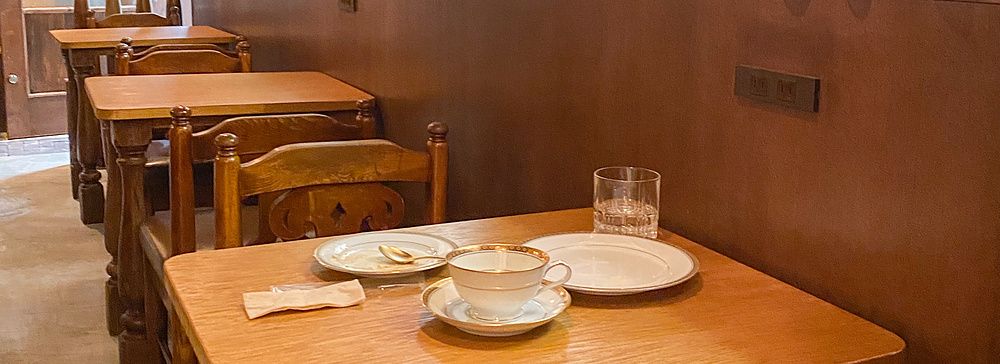
Kissaten are one of the reasons it’s worth slowing down now and then on a trip to Japan. They’re the neighborhood coffee shops that opened between the 1930s and the 1970s, with velvet armchairs, a dark wood counter, coffee made one cup at a time, and a man behind the counter who has often been doing the job his whole life.
Not all of them are easy to get at first glance, though. Some are beautiful and win you over right away, while others just look like a tired old café. If you walk in without knowing what you’re looking at, you might walk out disappointed, but with a bit of background you’ll see even the plainest place in a different light.
Contents
What kissaten are
The word kissaten is written with three characters that mean roughly drink, tea and shop, but in practice a kissaten is where you go to sit down for coffee and take your time. It isn’t a modern coffee shop with latte art and Wi-Fi. It’s something else, born when Japan started picking up Western habits and reinventing them in its own way.
Many Japanese people just call it a kissa, and that’s the name you’ll see on lots of signs and hear in everyday conversation.
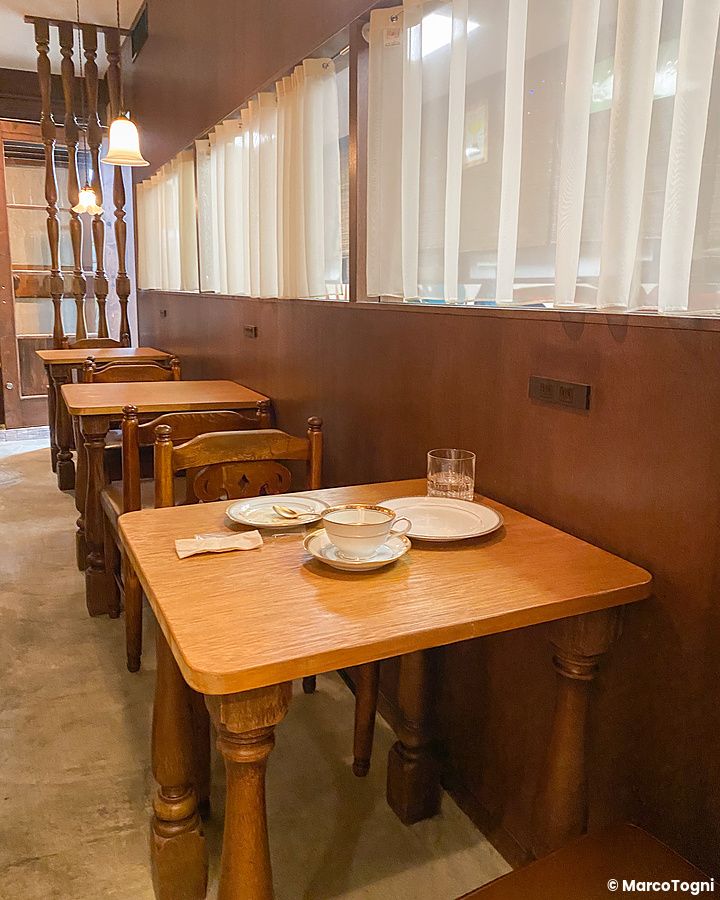
You can tell a kissaten from the modern coffee shops people here call cafes as soon as you open the door. The lighting is low, the cups are porcelain and often don’t match, the menu is handwritten or was printed decades ago, and the standard coffee is almost always a dark-roast blend, made with a cloth filter or a siphon.
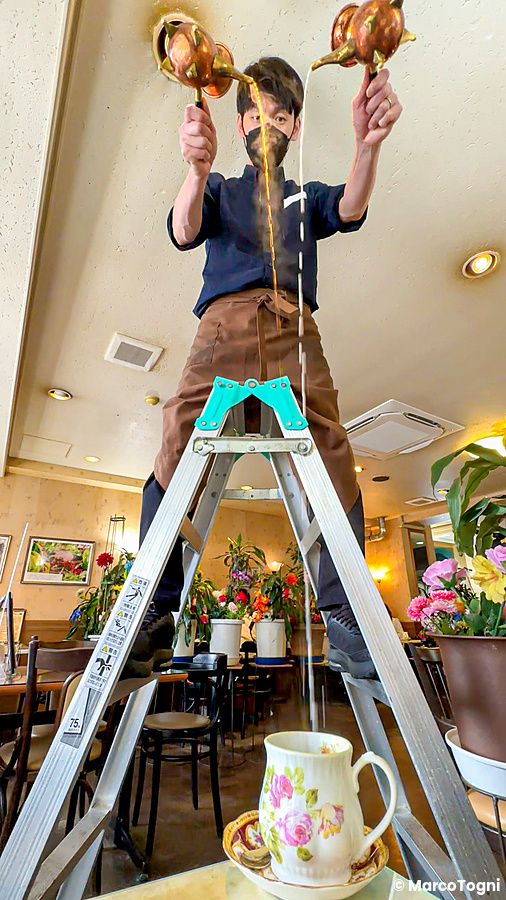
The service is slow on purpose. The owner, known here as the master, makes one cup at a time, and trust me, watching him work is part of what you’re paying for.
A bit of history
The first place of this kind opened in Ueno, in Tokyo, in the late 19th century, and closed after a few years because it was too far ahead of its time. The real boom came later, in the early decades of the 20th century, with places like Café Paulista in Ginza, which is still around, and then, above all, after the war.
From the 1960s to the early 1980s kissaten were everywhere, more than 150,000 across the country. They were where people read the newspaper before work and had job interviews, where students spent their afternoons and where couples met up.
Then the chains arrived, first the cheap Japanese ones and later Starbucks, and the numbers collapsed. Many masters grew old with no one to hand the place over to, and every year quite a few kissaten close.
At the same time, there’s been a strong revival of interest among young Japanese people in all things Showa retro, the style of the Showa era, which ran from the late 1920s to the late 1980s. So today some famous kissaten have lines of young people who’ve come to photograph the cream soda, while the one two blocks away has just three retirees reading the paper.
The right mindset
When people ask me for advice, the one thing I always stress is going in with the right mindset. You shouldn’t judge a kissaten by the standards of a modern café, because it isn’t trying to be pretty or comfortable in the way we think of those things today.
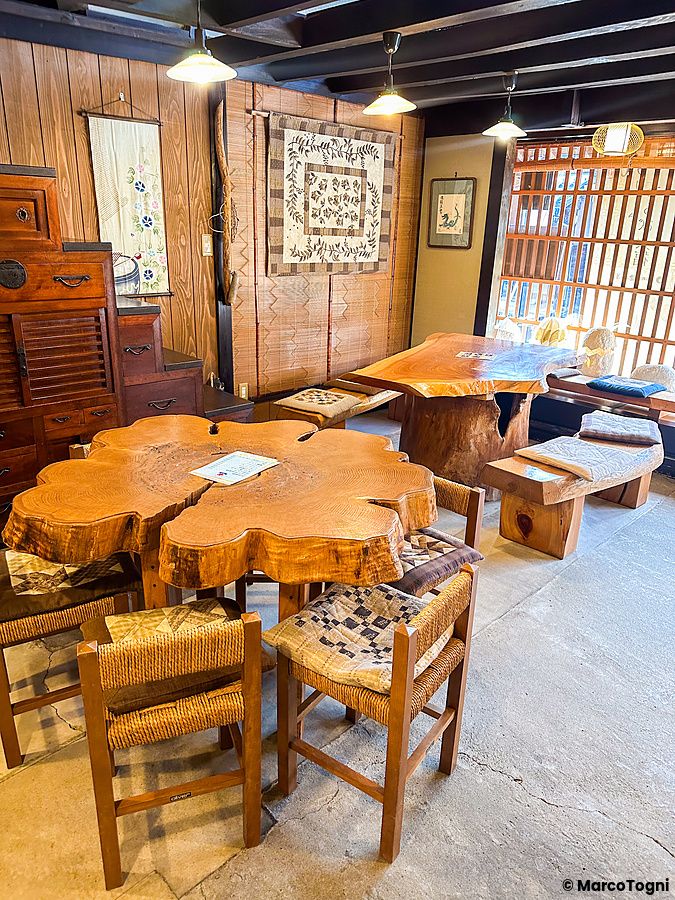
Some are easy to appreciate even if you know nothing about them: dark wood furniture, colored glass lamps, fine cups lined up on the shelves, the master in a white shirt and vest. You walk in and know right away you’re somewhere special.
Others, I’ll be honest, just look like a slightly neglected old café at first. The upholstery is worn, a TV is on in a corner, the curtains are yellowed by smoke, the prices on the menu have been corrected in marker, and the lady behind the counter doesn’t speak English.
If you’ve never been to one and show up with social media photos in mind, you can end up really disappointed. Yet these are often the most interesting places, because they haven’t changed in forty years, and nobody’s keeping them that way for tourists. Their value isn’t in the decor but in the fact that they’re still alive, and the same people from the neighborhood still come in.
What to order
Coffee is obviously the main event, but don’t expect espresso. What you usually get is a bigger cup of filter coffee with a roasty, slightly bitter flavor. It comes with a saucer, sometimes with a small pitcher of cream, and the sugar on the side.
Many kissaten have a house blend, called simply blend, plus a few single origins like Brazil, Colombia, Mocha or Mandheling. Some ask whether you want it lighter or stronger, while others pick the cup for you based on their impression of you. It’s a small thing, but I love it because it reminds you there’s a person on the other side of the counter.
Then there’s the whole kissaten menu, which is a world of its own. A few dishes show up almost everywhere:
- Napolitan, spaghetti stir-fried with ketchup, onion, green pepper and hot dogs, a dish born in Japan that has nothing to do with Naples but is a real classic here.
- Pizza toast, a thick slice of white bread topped with sauce, melted cheese and a few vegetables, which you can finish in minutes when you need a quick lunch.
- Cream soda, a bright green soda topped with a scoop of vanilla ice cream and a cherry, which has more or less become the symbol of kissaten in photos.
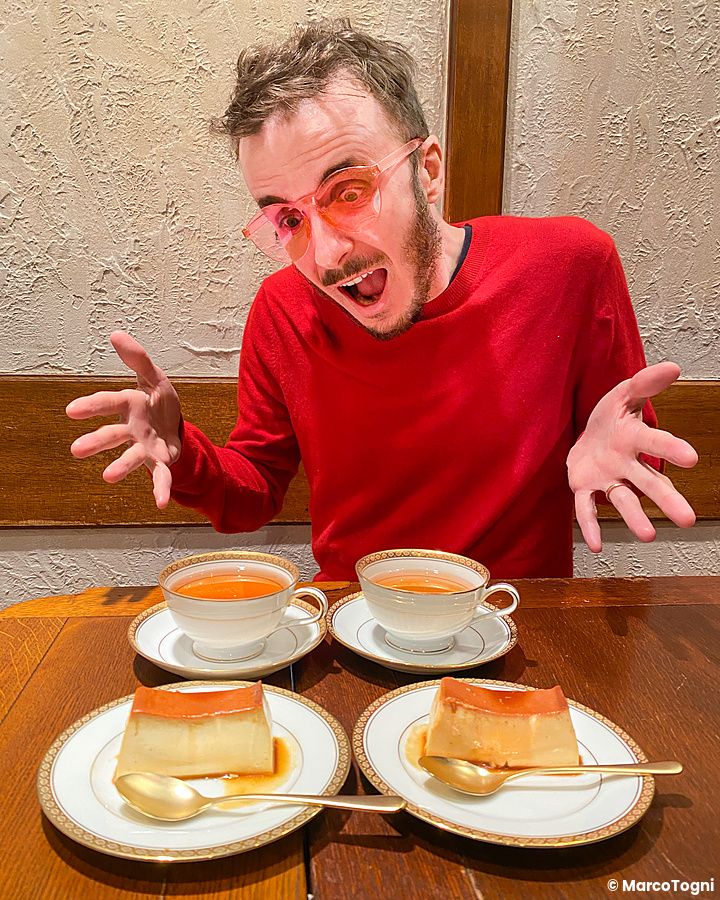
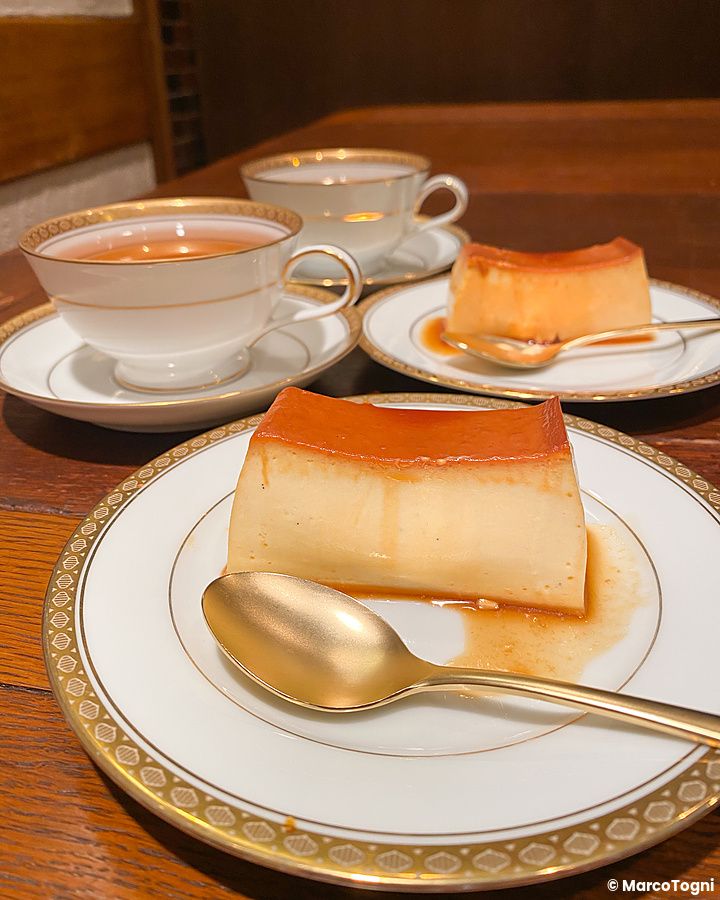
- Purin, a vanilla custard pudding with caramel, usually firmer than the store-bought kind and sometimes dressed up with fruit and cream.
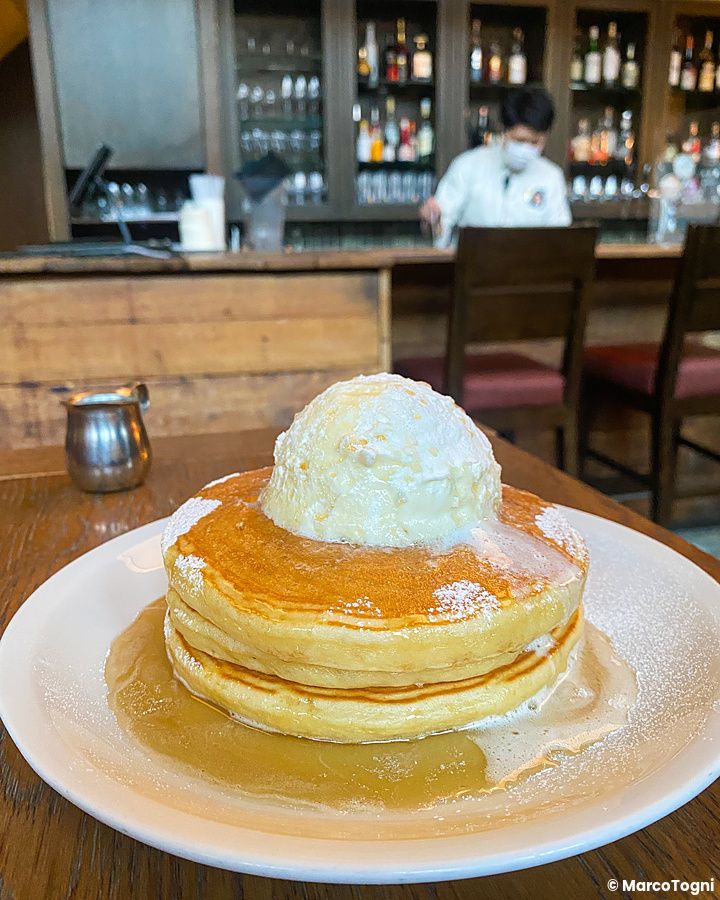
- Hot cakes, thick, soft pancakes with butter and syrup, which some places still make on copper griddles.
You’ll often find egg sandwiches, curry, iced coffee that comes already sweetened, and what’s known as coffee jelly, a coffee gelatin served with cream. This isn’t refined cooking. It’s Japanese coffee shop food from fifty years ago, and you should take it for what it is.
Morning service
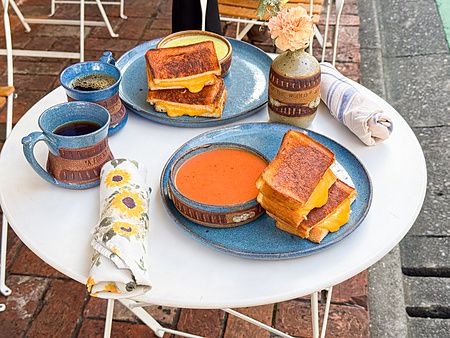
Go to a kissaten early in the morning and there’s very often a morning service, a breakfast deal where the price of the coffee also gets you buttered toast, a hard-boiled egg and sometimes a small salad. You’ll find it all over Japan, but its real home is Nagoya and the whole Aichi area around it, where some places give you almost a full meal for the price of the drink.
In Nagoya, going out for morning service is something locals just do. Families go on Sunday mornings, older people every day, and the best-known places already have a line at opening time. Komeda, a chain that started there and is now all over the country, is a good way to try it if you don’t have time to track down a historic kissaten, although of course it feels like a chain.
In Tokyo and Osaka the morning service is simpler, but it’s still worth it. Walking into a neighborhood kissaten as it opens, with the regulars reading the paper and the master switching on the machines, is one of the best ways to see everyday Japanese life as it really is.
Types of kissaten
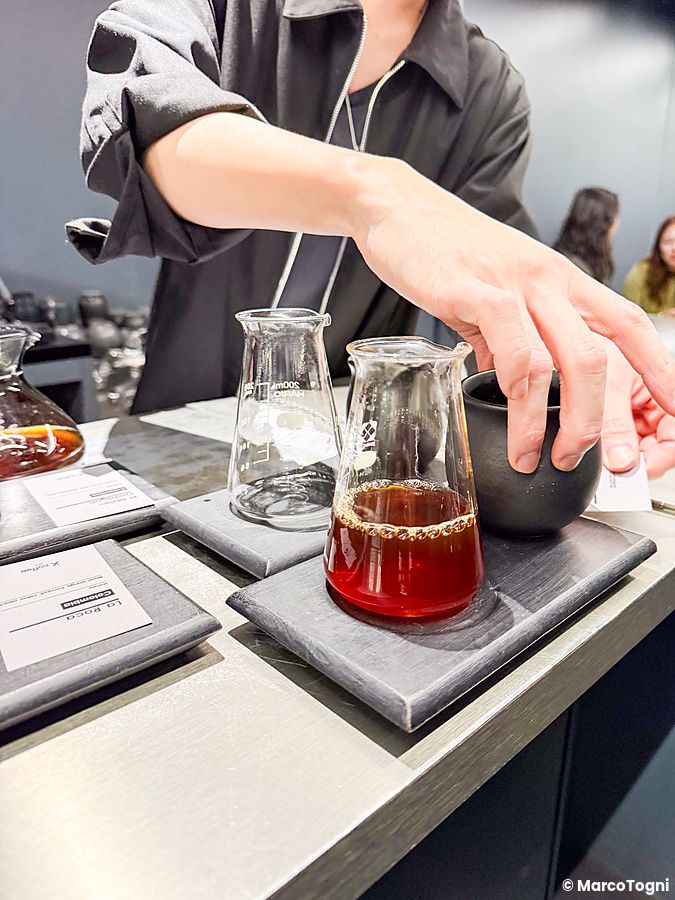
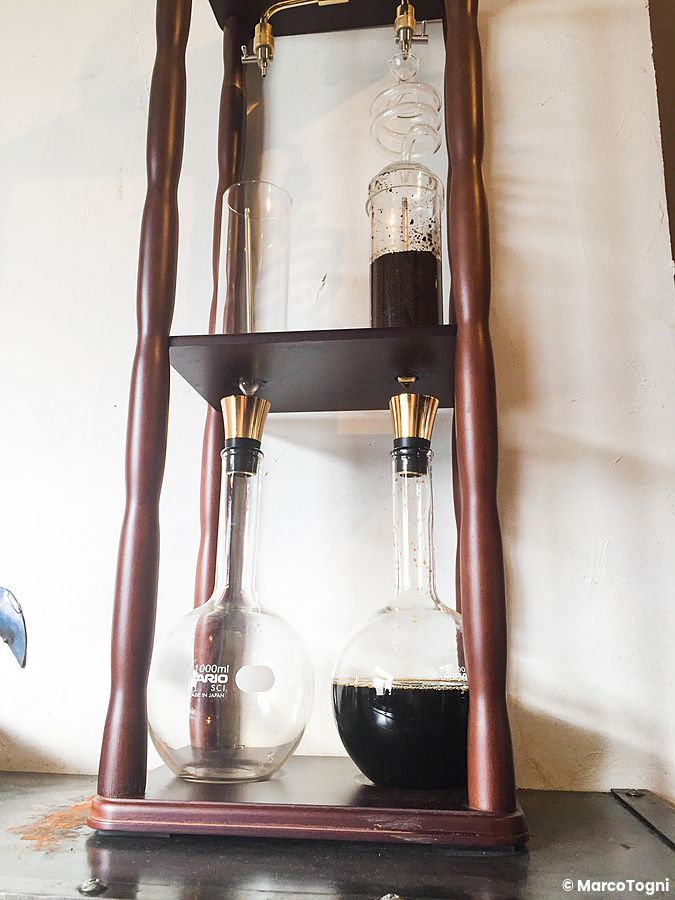
Kissaten aren’t all the same, and knowing the main types helps you choose. There are coffee-first places, where you go just for the cup and the master roasts the beans himself and brews them with a cloth filter, a method known in Japan as nel drip. Café de l’Ambre in Ginza is the best-known example, with beans aged for years before roasting.
Then there are kissaten you go to for the food, mainly the Napolitan, the curry or the toast, where the coffee is almost secondary.
Themed kissaten are a category of their own. The music ones had their heyday after the war, when a record or a stereo cost too much for an ordinary family.
- Jazz kissa, where you listen to jazz records on huge sound systems, often turned up loud, and hardly anyone talks.
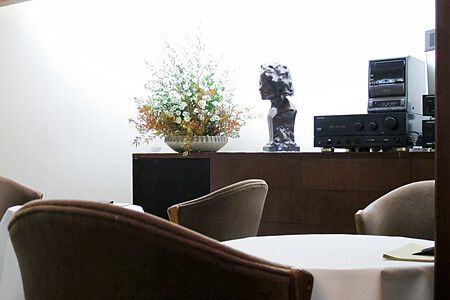
- Meikyoku kissa, devoted to classical music, like Lion in Shibuya, which opened in the 1920s and was rebuilt after the war. The seats face the speakers as in a theater, and you’re asked to keep quiet.
- Literary kissaten, like the ones in Jimbocho, Tokyo’s used-book district, where you go with a book you’ve just bought and stay for hours.
The music places take their rules seriously, so if you’re going as a group and want to chat, I’d pick somewhere else.
Kissaten etiquette
Kissaten don’t have complicated rules, but a few small things make a difference. You walk in, wait a moment for someone to show you to a seat or wave you toward any free one, and you order from your seat. The check usually comes on a slip of paper left on the table, and you pay at the register by the exit.
Many historic places take cash only, so always keep a few bills on you. Coffee usually runs about 500–1,000 yen, more at famous places or for special coffees, while a meal with a drink stays around 1,200–2,000 yen.
There are also a few things to know before you sit down:
- Some kissaten still allow smoking, because small, long-established places are still allowed to let customers smoke. If smoke bothers you, check the sticker on the door before going in.
- Always ask permission before taking photos, especially from the master and the other customers, since many places stopped allowing photos after lines of people started showing up just to take pictures.
- Order at least one thing per person. It’s a common rule even where it isn’t posted.
- Don’t walk in with a big group without asking, because many kissaten have only a few seats and the tables are meant for one or two people.
The pace is slow, and you should respect it. Spending an hour over a coffee and a book is normal; in fact, it’s the whole point. Talking loudly on the phone, on the other hand, is one of the few things that will get you dirty looks.
Where to find them
Some parts of Tokyo have held on to more of their kissaten than others. Jimbocho, Kanda and Ochanomizu are probably the best area to start. That’s where you’ll find Sabouru, known for its plant-covered entrance and wood-paneled interior, and Ladrio, one of the oldest in the area.
Ginza has some of the most elegant kissaten in the city, while the ones in Asakusa and Ueno are more down-to-earth, with menus full of toast and pudding. Just north of Ueno, in Yanaka, Kayaba Coffee sits in an old wooden building from the 1910s that has become one of the symbols of the neighborhood.
Outside Tokyo, my top pick is Kyoto, where the tradition is still very strong and has barely changed. François, with its European-style interior, Smart Coffee and the long-running Inoda Coffee chain are three names everyone in Kyoto knows.
Osaka has its own louder neighborhood places. Nagoya, as I mentioned, is the city of the morning set, and Kobe has a long history with coffee thanks to its port. Wherever you are, when you walk through the covered shopping streets, the shotengai, look up at the old signs on the second floor. A lot of the best kissaten are up there, a little out of sight, with no advertising at all.
Famous or local?
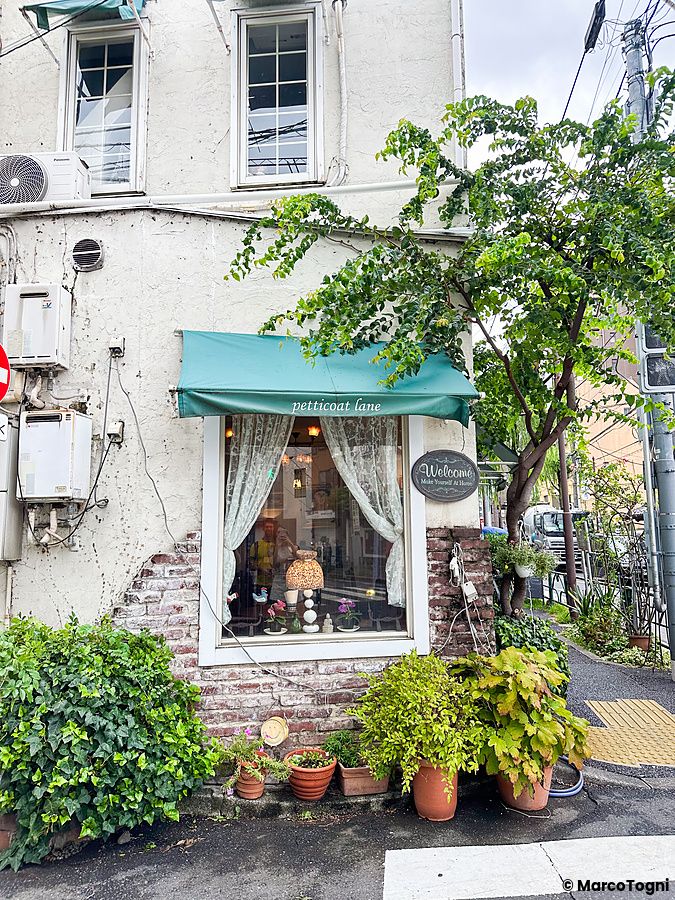
This is the choice you’ll face most often, and the answer depends on what you’re after. The famous kissaten are beautiful, win you over right away and often serve really good coffee. On weekends and at peak times, though, you’ll have to line up, sometimes for half an hour or more, and the calm you were hoping for may not be there.
The neighborhood ones are often empty or close to it and cheaper, and they give you a much truer sense of what a kissaten is in everyday life. What you give up is the wow factor, and if you pick the wrong one you could end up with mediocre coffee in a room with the TV tuned to horse racing.
Honestly, I’d tell you to try both. Go to a famous one, ideally early on a weekday morning to skip the line, so you see a kissaten at its best. Then pick one at random while you’re walking around, just because the sign caught your eye. I recommend this combination a lot, and the people who try it usually come away understanding the difference between a picture-postcard place and one that people actually use every day.
Are they worth it?
If you like the idea of sitting for an hour doing nothing, watching someone make a cup of coffee with real care, and eating a plate of Napolitan that back home would count as a crime, then yes, absolutely. Kissaten are among the things disappearing fastest in Japan, and every time one closes, the neighborhood loses a piece of itself.
If what you want is specialty coffee, minimalist design and an outlet to charge your phone, you’re better off at the modern coffee shops. Japan has a huge number of them, and they’re often gorgeous.
When I need a break from the city, I usually don’t go to a park. I go to a kissaten, sit at the counter and order the house coffee. Nothing in particular happens, and that’s exactly the point. My advice is to try, at least once, one of the places that look a bit old and a bit odd, and to walk in with no expectations. You might not like it. But you might also finish your cup and realize you don’t want to get up at all.