Kita-Senju
Kita-Senju is one of those places where you can eat and drink well for not much money, with no tourists around, and that alone makes the trip north worth it.
It’s in Adachi Ward, where Tokyo spreads out between the Arakawa and Sumida rivers, a long way from Ginza’s shop windows.
The station is huge, the kind of place where thousands of commuters change trains. Yet as soon as you walk out you’re in narrow streets, small covered markets and alleys packed with izakaya. I come here when I want an ordinary night out, with tables outside and cheap beer.
Contents
Restaurants
Shops

Nearby neighborhoods

Oshiage
Uguisudani
Five train lines
Five lines meet at the station, and that alone explains why so many people live here even though it’s far from the center. You can get to Otemachi, Ueno, Akihabara and Ginza without changing trains, and in a few minutes you’re also at the foot of Tokyo Skytree.
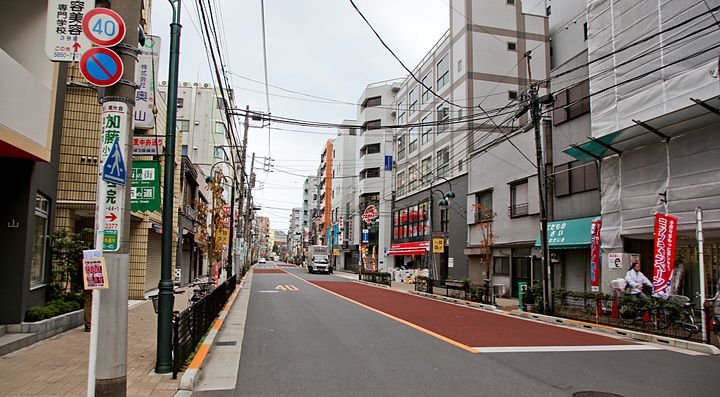
Once you’re through the ticket gates, you have two very different sides to choose from. The west exit is the one for shops and alleys. The Lumine department store is attached to the station, and the shopping streets start right outside.
The east exit opens onto the Tokyo Denki University campus, with a wide plaza, lights everywhere, lots of students and a calmer feel even at night. If you’re coming to wander around and eat, I’d just take the west exit without thinking twice. On that side four shopping streets run one after another, following the route of the old road to Nikko. You can walk for a good kilometer with arcades and shop signs all the way, and one stretch is even covered, which helps when it rains. Along the way there are still senbei shops, butchers and shoe stores selling off old stock, mixed in with new cafes and bakeries.
The old road to Nikko
On the west side, the main street follows the road that once led to Nikko, the old Nikko Kaido.
This is where Senju-juku stood, the first post station for anyone leaving Nihonbashi and heading north. It was a walk of just over eight kilometers, about right for a first stop. By the late Edo period it was one of the largest post towns near the capital, a town of something like 10,000 people, with inns, fishmongers, blacksmiths and craftsmen.
Not much is left of the inns today, but the street has kept its narrow layout from those days, along with a few wooden houses that survived. Matsuo Basho set off on his journey of Oku no Hosomichi from near here, at Senju Bridge over the Sumida, and there’s still a little square with his statue and the poem he wrote before he started walking. It’s the kind of detail that changes the way you look at an ordinary shopping street.
The fish market
On the same old road, just before Senju Bridge, you’ll find the Adachi fish market, the only wholesale seafood market left in Tokyo besides Toyosu. Locals still call it Senju’s fish port, and it’s the direct heir to the fishmongers’ trade that supplied the post town.
You can walk in and wander freely among the stalls, though by mid-morning they’re already being cleaned. The restaurant building has sushiya and simple eateries open to anyone, so you can eat food from the market at neighborhood prices. On a few Saturdays a year the market also sells to the public, and on those days the place fills up with local families.
Evenings around the grills
In the evening the alleys behind the station look completely different. Lanterns come on, people just off work crowd in alongside students from the university next door, and the tables spill out onto the street.
Eating and drinking here is cheap: yakitori, izakaya dishes and mugs of beer at the prices of a working-class neighborhood, not central Tokyo. Don’t expect anything polished up for tourists, because you won’t find it. This is everyday Tokyo, a bit noisy and with no frills.
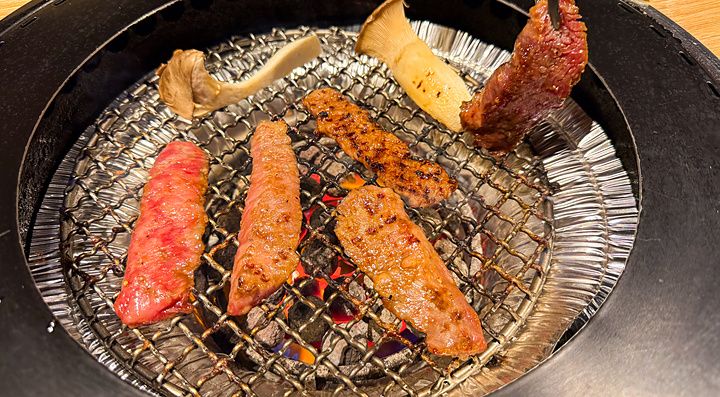
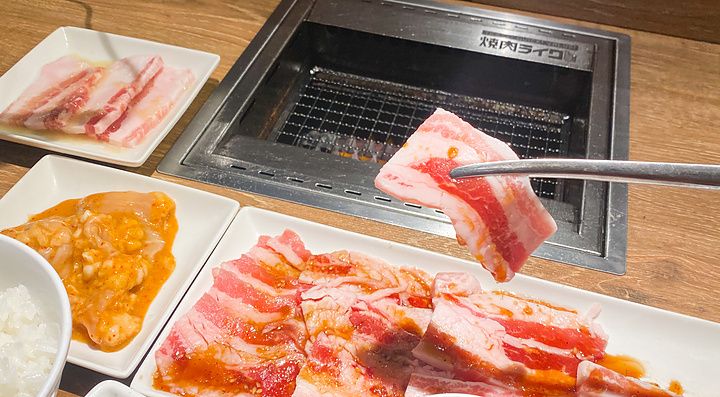
At the end of May the Arakawa hosts the big fireworks festival, the first major show of the season in Tokyo and one of the most popular, and that night the streets fill with families in yukata. If I had to tell you when to come, though, I’d pick any ordinary weeknight. I let the smell of the grills lead the way and sit down wherever I find room. One thing to know is that pork is king here. You’ll see more yakiton than chicken on the counters. Yakiton means pork skewers, and every place has its own sauce and its own way of serving them. The most photogenic spot is the izakaya alley on the Chiyoda Line side. It’s a short row of shacks with lanterns and corrugated metal walls, and it looks the same as it did fifty years ago.
A sento with a garden
If you have some time to spare before sitting down to eat, Kita-Senju has one of the most beautiful public baths in Tokyo. It’s called Takarayu, and it’s a bit away from the alleys, toward the Arakawa. The building with the hipped roof dates from the 1930s, and the bathwater is well water heated over a wood fire.
People come from other neighborhoods for the wooden veranda, which looks out onto a Japanese garden with carp in the pond and maple trees. After your bath you sit out there, with the tubs behind you and nothing but quiet in front of you. There’s also an herbal bath that changes every day.
Getting There
From Ueno it takes about ten minutes on the JR Joban Line or the Hibiya subway line. The Hibiya Line also runs up here from Ginza and Akihabara. Once you're through the ticket gates, take the west exit. The alleys and shopping streets start right by the station, while the east exit leads to the university campus and the quieter side.
To reach the stretch of the old Nikko Kaido and the little square with Basho's statue, walk south along the old road. It's about twenty minutes to Senju Bridge. If you'd rather go straight there, get off at Senju-Ohashi Station on the Keisei Line and you're there in three minutes on foot.
Useful Info
Name: Kita-Senju
Time needed: Two or three hours for the alleys and dinner, half a day if you add the walk along the old Nikko Kaido to Senju Bridge
Tips: Bring cash: in the alleys off the west exit, many izakaya don't take cards and the menus are only in Japanese. Sit down around 18:00, while the outdoor tables are still free, and order by pointing at whatever's on the grill.
Getting there:
- Kita-Senju Station (JR Joban, Tokyo Metro Hibiya and Chiyoda, Tobu Skytree Line, Tsukuba Express): west exit for the alleys and shops
- Senju-Ohashi Station (Keisei): the most convenient for the bridge over the Sumida and the fish market
Map
MarcoMaps100% free
This place is on MarcoMaps
Kita-Senju
My map of Japan: over 4,000 places I've tried myself, each with photos, rating, and hours. Filter by category and rating, find veg-friendly spots and places near you with GPS. No sign-up, right from your phone.
- 4,000+ places
- Rating, photos, and hours
- Veg friendly
- Near me (GPS)
- Favorites without login
- Works offline

