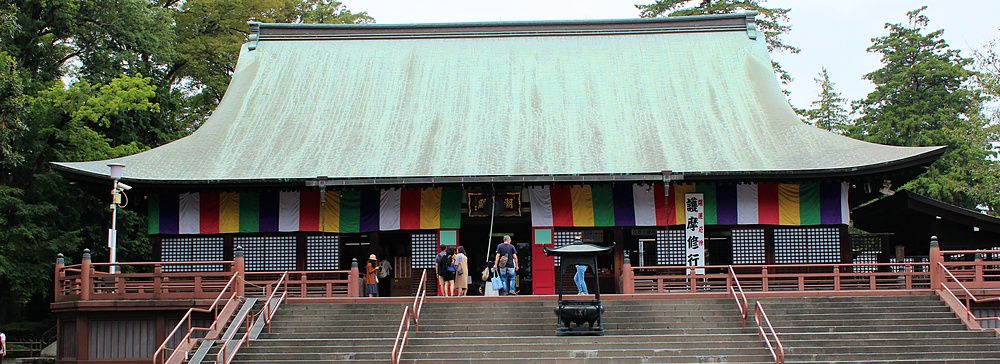
Kitain Temple
A Buddhist temple in Kawagoe where more than five hundred stone monks, each with a different face, crowd together inside a stone enclosure, and where you walk with your shoes off through rooms that came from the shoguns’ castle in Edo. Kitain is the city’s most important temple, and everyone here calls it Kawagoe Daishi. Besides the statues and the rooms, there’s a garden you look at sitting on the tatami, a wooden pagoda, and wide open grounds with big trees and several buildings.
It’s the right place if you’re coming to Kawagoe on a day trip from Tokyo and want something more than the streets lined with old storehouses. And if you have kids, the statues turn into a game.
What you’ll see
The temple grounds are open and you can wander freely. The visitor route starts in the temple’s old kitchen, goes through the castle rooms and ends in the enclosure with the statues. Here’s what to see:
- The Edo Castle rooms: three wooden buildings connected by corridors. They include the room where one of the shoguns was born and his wet nurse’s room.
- The guest hall garden: you look at it from inside, sitting on the tatami, with the paper sliding doors framing it like a painting. There are maples, moss and a small pond.
- The corridor to the main hall: a covered, raised walkway. From up there you look down on the maples, and in the fall it’s the stretch where everyone slows down.
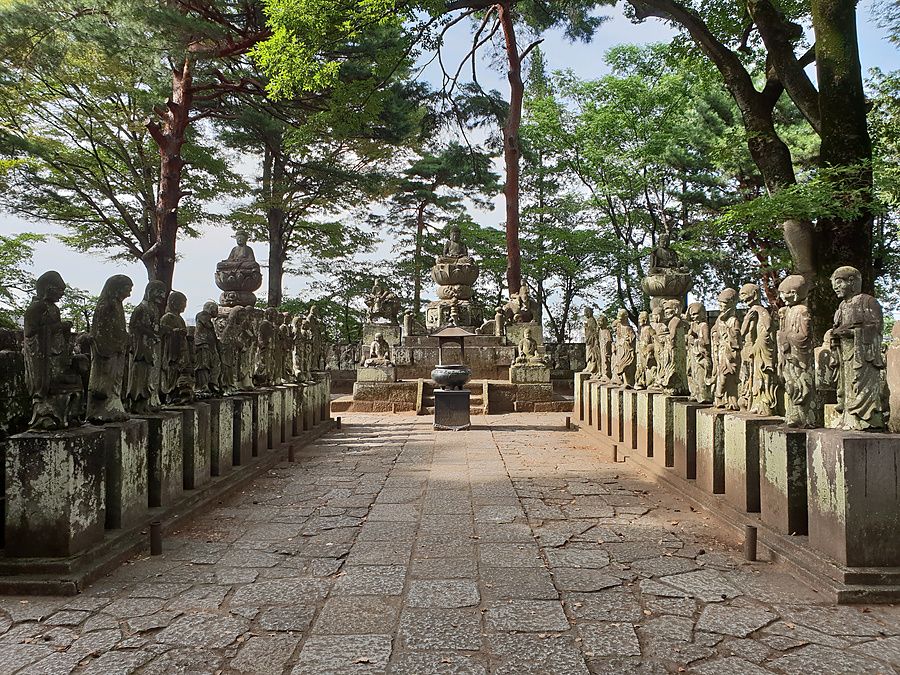
- The five hundred rakan: 538 stone statues of the Buddha’s disciples. Some are laughing, some look dead tired, some are lost in thought with their eyes closed, and some seem to be chatting with their neighbor. The larger figures stand in the middle, on a raised area.
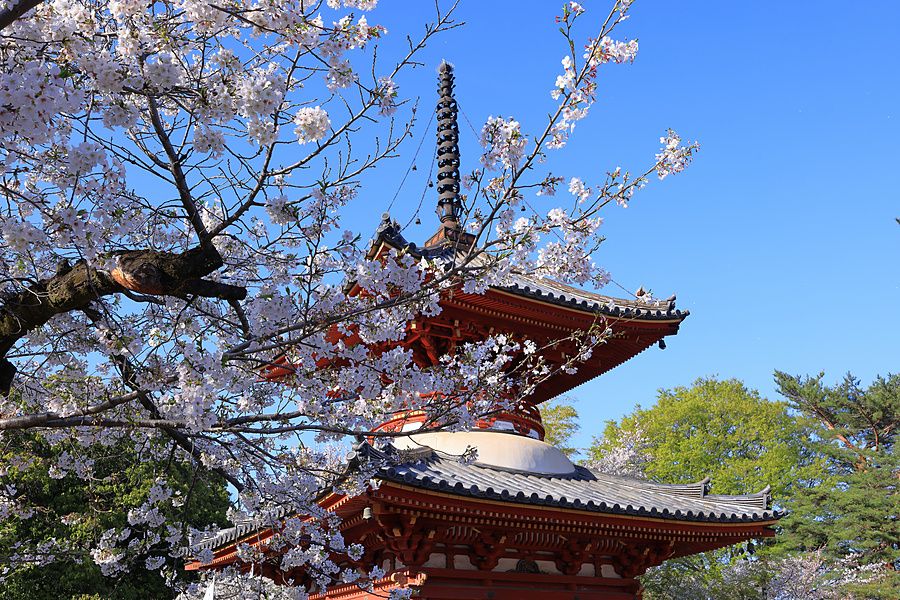
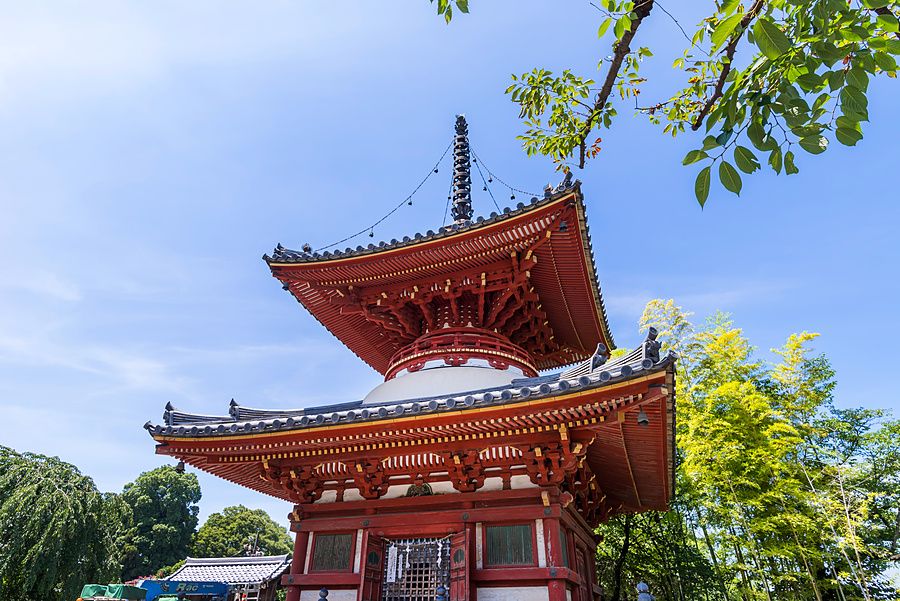
- The pagoda and the Jigen-do mound: the pagoda is a two-story wooden one, and you spot it right away. Jigen-do sits on a small rise under a huge ginkgo that turns completely yellow in late fall.
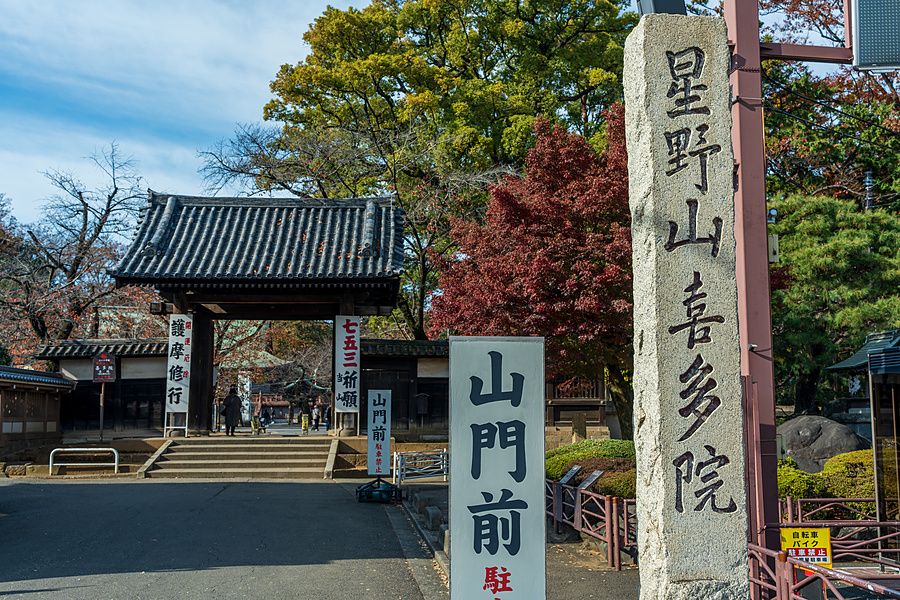
- The bell gate and the thieves’ bridge: the entrance gate has its bell on the upper floor. Behind the temple there’s a little bridge that’s actually called the thieves’ bridge, and few people bother to look for it.
You can’t take photos in the rooms, not even with your phone. You take the garden and the shogun’s room home only in your memory, and I think that’s fine. With nobody hunting for the right shot, you actually sit down and look.
These are the only rooms of the Edo Castle palace that have survived to this day. In Tokyo only walls, gates and a few turrets remain. The shoguns’ living quarters were lost to fires, earthquakes and war, so to see the rooms they lived in, you come here to Kawagoe, not to the Imperial Palace. They ended up here because in 1638 a great fire destroyed almost the entire temple. Shogun Iemitsu was very attached to Kitain, since Tenkai, the monk who headed it, was his personal advisor, and to rebuild it Iemitsu had part of the palace taken apart and put back together in Kawagoe. That’s why the shogun born in that room is Iemitsu himself.
The rakan enclosure is where people linger the longest, and it’s easy to see why. The statues aren’t lined up neatly like toy soldiers. They’re packed in with their shoulders almost touching, covered in lichen, and each one is doing its own thing. One is scratching its back, another is resting its head on its hand.
An old local story says that if you go around at night touching the statues one after another, only one is warm. In the morning, when you look at it closely, it has the face of someone you loved who has passed away. These days you can’t touch the statues, but everyone, adults and kids alike, still plays the game of looking for a face they know.
I don’t know anywhere else in Japan that puts two such different things so close together: the rooms where the most powerful family in the country lived, and a courtyard full of stone statues that look like people at the market. When someone comes to visit me and wants to do the Kawagoe day trip, I bring them here even before the old town. I do it because in front of the rakan, even people who say they can’t stand temples start searching for the one that looks like their uncle, and after a while you can’t get them out of there.
When to go
The best time is a weekday morning. Local women stop by to pray in front of the main hall, and only a few people are wandering among the statues. You can hear the gravel crunching under your shoes and the crows calling from the trees.
On weekends Kawagoe fills up with people from Tokyo, and part of that crowd makes it here too. You end up walking single file through the corridors, and there’s always someone holding up a phone in front of the funniest rakan.
The seasons really change the place. In spring there are weeping cherry trees near the main hall, with branches that hang all the way to the ground. In late November and early December the maples in the garden and along the corridor turn red and the ginkgo on the mound lights up yellow. It’s the most beautiful time of the year here, but also the most crowded apart from New Year’s.
The first few days of January, on the other hand, are best avoided if you’re looking for some peace. The temple is one of the busiest in the area for the first prayer of the year, and on the day of the daruma market the grounds fill up with stalls selling the red dolls and with crowds that can barely move.
Overcast skies or light rain aren’t a problem here. If anything, they help. In flat light the statues’ faces are easier to read, and when it’s wet the moss in the garden turns bright green. In the strong early-afternoon sun, on the other hand, harsh shadows fall across the statues.
What the visit is like
You go into the rooms without shoes, leaving them at the entrance to the old kitchen. Keep in mind that the wooden floors are freezing in winter, so a pair of thick socks helps a lot. The corridors are narrow and low in a few spots, and when it’s busy everyone moves along slowly, one behind the other.
Other than that, the visit isn’t tiring. The grounds are almost entirely flat and the rakan enclosure is a courtyard of gravel and dirt. The only real steps are the few short ones up the Jigen-do mound.
If you have kids, the statue enclosure is the part that keeps them hooked. Give them a mission, like finding the rakan that’s laughing the hardest or the one that’s asleep, and they’ll go around on their own.
The inner rooms, with the silence and the no-photo rule, bore them faster, so it’s a good idea to do those first, while they still have some patience.
At a glance
- The highlight: the 538 statues, each with a different face, and the rooms that came from Edo Castle.
- When to go: a weekday morning; late November for the red maples; stay away in the first few days of January.
- Best for: anyone doing the Kawagoe day trip from Tokyo, families with kids, people who’ve already seen plenty of temples and want something different.
- Atmosphere: gravel, moss and stone, locals stopping to pray, laughter in front of the statues.
Final thoughts
Kitain is the part of the Kawagoe day trip you’ll remember most, more than the old storehouse streets. You get an actual piece of the shoguns’ castle to walk through in your socks and a courtyard of stone monks to look over one by one. It’s worth the detour from the old town for the rakan alone, and leaving it out means missing the best part of the day. If you’re after gold, bright colors and grand halls, though, you won’t find any of that here. You come for the wood, the tatami and five hundred stone faces. And to come back in the fall.