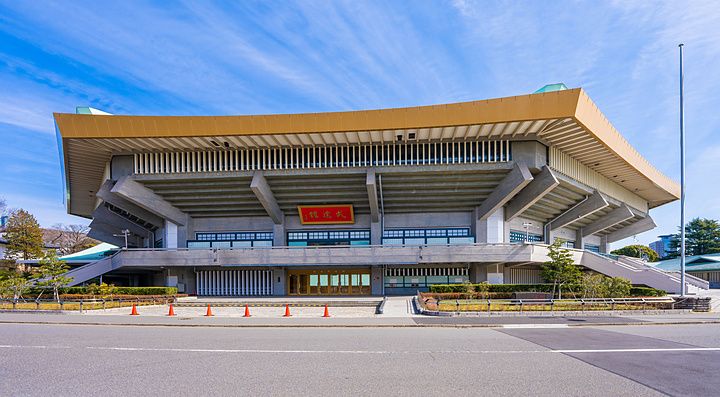
 142 m
Nippon Budokan142 m
Concerts and judo competitions.
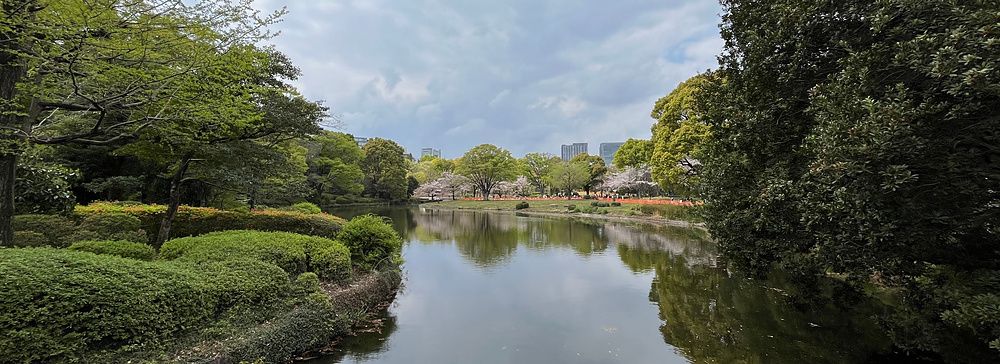 ©Shunskee - Shutterstock
A big park on the north side of the Imperial Palace grounds, with a pond, real woods and two gates from the old castle that are still standing. Kitanomaru Park is what’s left of the northern part of Edo Castle, and today it has lawns where you can sit and eat, dirt paths under the trees, the Nippon Budokan with its eight-sided roof, and a couple of museums.
It’s the right place if you’ve already walked through the Imperial Palace East Gardens and want to keep going without the crowds, if you’re traveling with kids who need to run around, or if you want some green that isn’t just another city park.
The red brick building with the little tower, over by the museums, is something you can only look at from outside the fence. You can’t go in, so if you’ve put it on your list as a museum, change your plans. The science museum is for kids, with hands-on experiments; if you don’t have children with you, just walk past it.
People bunch up in just two places, the lawn and the path to the Budokan. Head down to the pond and go around toward Momijiyama, and you’ll find stretches with nobody around for minutes at a time, even on an ordinary afternoon.
I come back every time I’m in the area, because it’s the one place in Tokyo where, 200 meters from an intersection full of trucks, all you hear is the water falling and the gravel under your shoes. It isn’t a garden designed to impress. There are no lacquered pavilions and no stone lanterns set out just for show. What you get is a forest with a dismantled castle inside it and two gates still standing, and that means more to me than a lot of famous gardens.
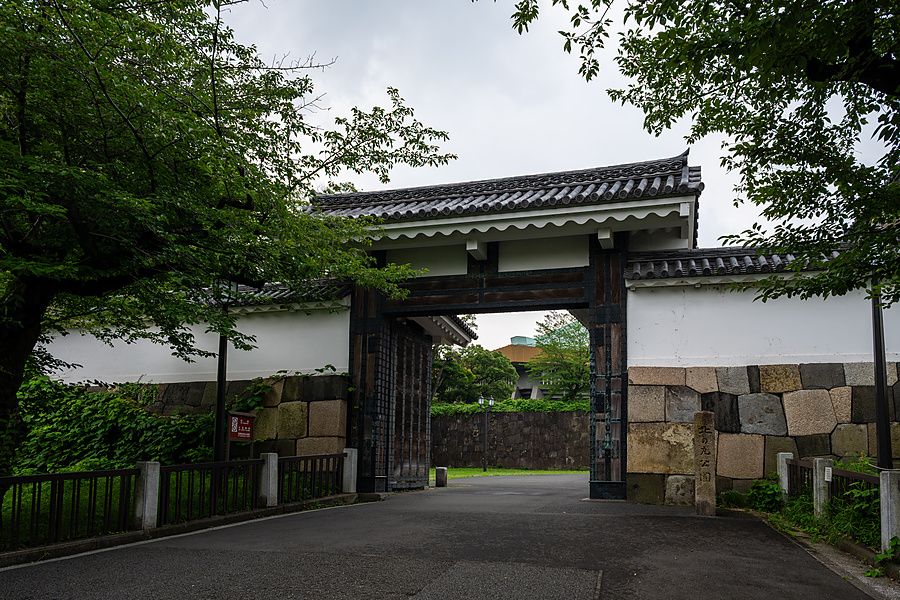
The two gates gave their names to the Tayasu and Shimizu branches of the Tokugawa family, who had their residences right here. After the shogunate fell, the area became barracks for the Imperial Guard, and the red brick building was their headquarters. The woods only opened to the public as a park in 1969, to mark Emperor Showa’s 60th birthday.
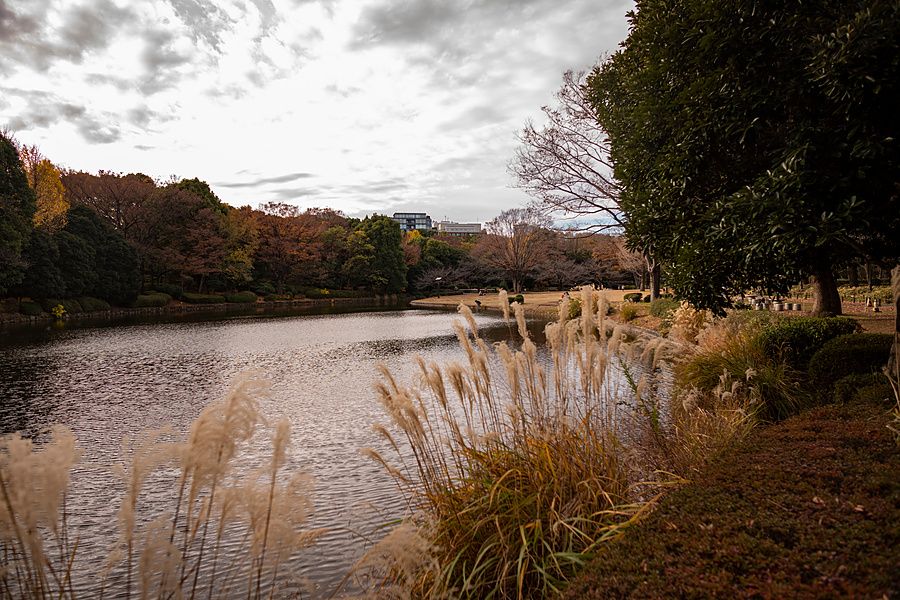
Early morning is when the park is at its best. You’ll see runners doing the loop around the Imperial Palace and a few men with binoculars standing quietly by the trees, and the pond is smooth and clear before the wind picks up.
Mid-afternoon on weekdays is fine too: a few office workers sitting on the lawn, school groups near the museums, and no lines anywhere.
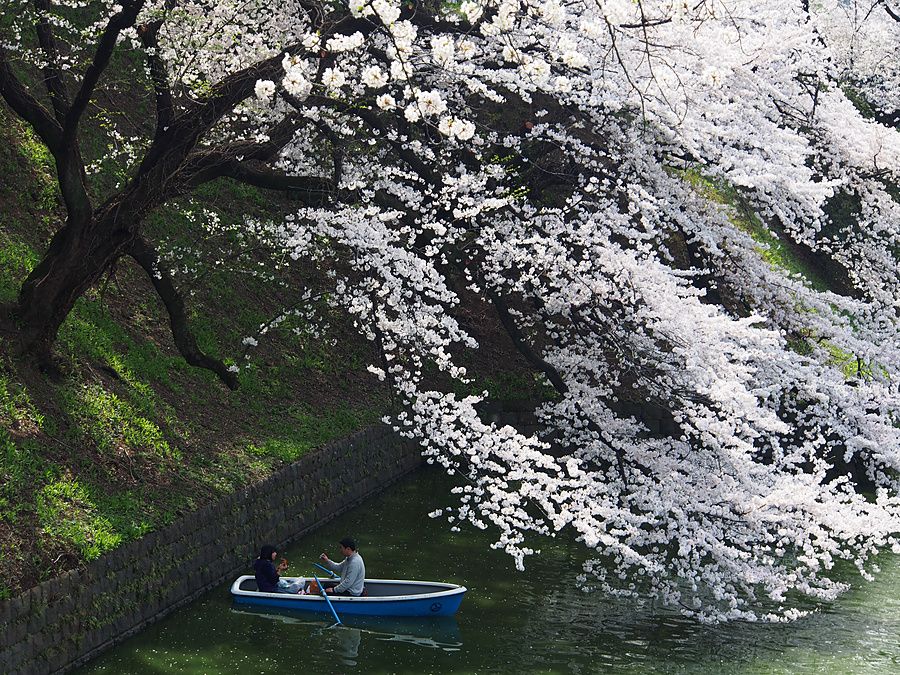
Cherry blossom season is the time to plan around. Between late March and early April, half the city pours in here and along the moat next door. You move along the path at a crawl, and the lawns disappear under picnic blankets. If you go then, get there before the city wakes up, because two hours later it’s a different place.
The best week for the maples is the one that straddles the end of November and the start of December, and that’s when Momijiyama is the reason to come.
Winter is underrated. With the leaves gone, you can see the birds on the branches. The water is clear and the paths are empty. In summer you’ll sweat quite a bit, but at least the walk around the pond is almost all under the trees.
When it rains the dirt paths turn soft and fill with puddles, so if it’s pouring, skip it and go to the museums instead. One last thing: on days when there’s a concert at the Budokan and a big name is playing, the road between the north gate and the arena turns into a river of people waiting in line, while the rest of the park stays quiet.
The ground isn’t flat, because the land still follows the shape of the old castle. You’re constantly going up and down, on gentle ramps with a few steps here and there. Nothing exhausting, but it’s not the flat stroll you’d expect from looking at the map.
The staircase behind the east gate is the tough part. The steps are twice the usual height, the stones are uneven and slippery in the rain, and there are no handrails. If you have bad knees, a stroller or a wheelchair, skip that part and go around the other way.
Everything else is easy, even with a stroller or wheelchair: the main paths are wide and smooth, there are benches everywhere and restrooms spread out across the whole park. The smaller trails around the pond, though, are narrow and made of packed dirt and gravel, with roots sticking out of the ground. In good shoes you’ll be fine; in dressy sandals you won’t.
If you’re traveling with small kids, you’ll find it easier than almost any historic garden in Tokyo, because there are no signs telling you to keep off the grass and nobody gives you a dirty look if a child runs around. Bring water and something to eat with you, because there isn’t much to buy inside.
The spot to shoot from is the edge of the pond on the lawn side, early in the morning or in the last hour of light. With the water still, you get the trees, the sky and the carp under the surface all in one frame, and in autumn you get the red of the maples twice, above and below.
Nobody lines up to stand there, and that’s the biggest difference from the city’s famous gardens.
The other good spot is the bridge in front of the north gate. From there you can frame the moat with the cherry branches hanging down over the water and the Budokan roof poking up behind. In spring that bridge is crowded, but you can still get your shot because people walk through without stopping.
The old staircase behind the east gate only works from the bottom, looking up toward the dark wood of the gate. From the top it looks like any other set of stairs and the photo falls flat.
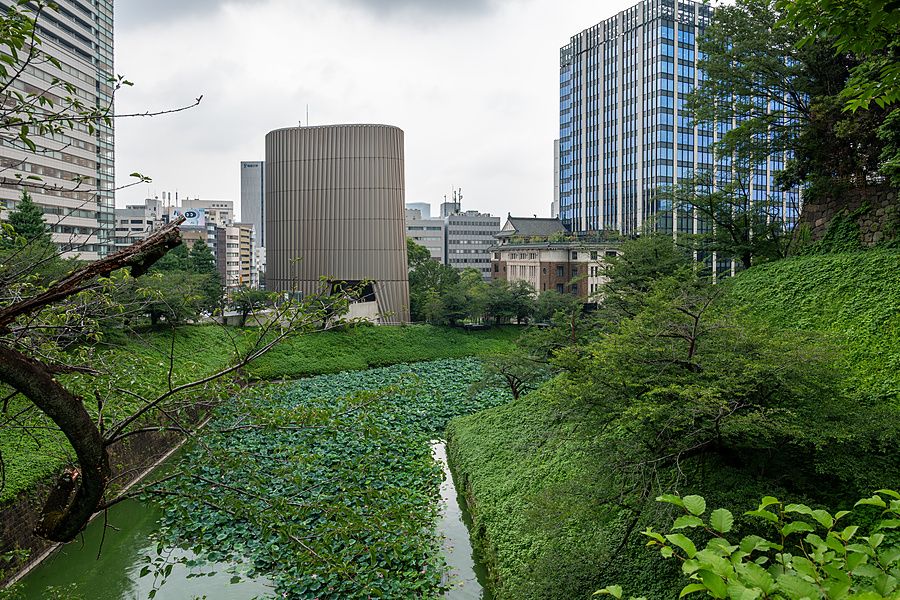
You don’t come here for a monument. You come to actually walk through a forest that sits inside a castle. The wooden gates and the moat stones are the frame; what matters is the water, the trees and taking your time to look at them. It’s worth the detour for the stretch between the little waterfall and Momijiyama, which in autumn is the most beautiful view I know in central Tokyo.
If you’re after pavilions, gold statues and one photo op after another, this isn’t your place and you’ll come away empty-handed. Go with the mindset of someone out for a walk, not someone ticking off a list.
The easiest way in is from Kudanshita Station: take Exit 2, walk a short way up the Kudan slope, and in about 5 minutes you reach the bridge at Tayasumon gate, which leaves you right in front of the Budokan.
If you're coming from the Imperial Palace East Gardens or the Otemachi area, get off at Takebashi instead: cross the bridge over the moat and walk up toward the science museum, entering from the Shimizumon side.
This place is on MarcoMaps
Kitanomaru Park
My map of Japan: over 4,000 places I've tried myself, each with photos, rating, and hours. Filter by category and rating, find veg-friendly spots and places near you with GPS. No sign-up, right from your phone.


Kitanomaru Park - nearby you will find: