224 m
Hands224 m
A store that sells everything. Great.
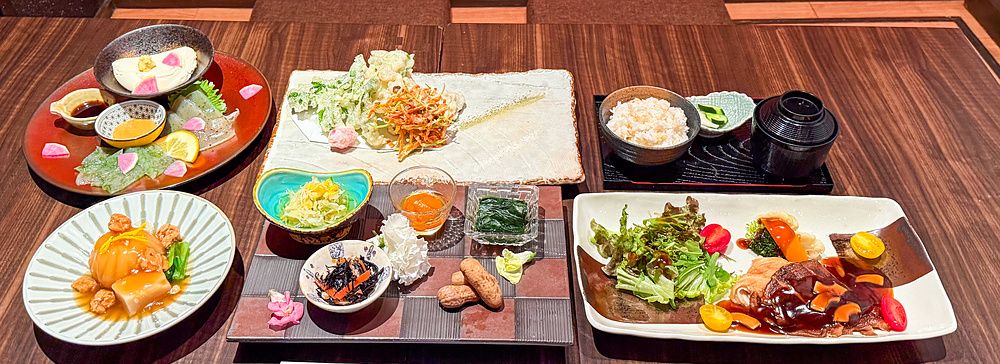
A Japanese restaurant in Hakata, Fukuoka, where almost everything on your plate comes from Itoshima, the stretch of seaside countryside just outside the city: fish from the Genkai Sea, vegetables, meat.
In the evening Kiyu is all about set courses and private rooms, but at lunch it also serves à la carte dishes and a tray with thirty different ingredients. If you need it, they’ll make the whole course vegan or vegetarian, broth included.
If you want proper Japanese food without ending up in a chain, or you have dietary restrictions and usually just give up, it’s one of the first places I think of in the city.
The menu depends on what the owner finds that morning, so the exact lineup is never the same two days in a row. A few dishes never change, though, and you’ll always find those.
The sesame sauce is thicker than what usually comes with raw fish. On the first bite it smothers the bream and feels like almost too much. Then the hot broth goes in, the sauce melts, and the fish comes through again. If you like your sashimi plain with just soy sauce, this isn’t the dish to start with.
Overall the flavors lean sweet, and the fish cooked in soy sauce is where you notice it most.
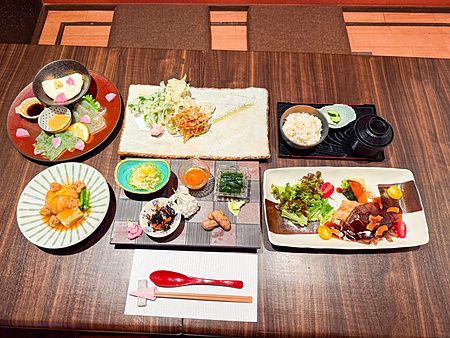
At lunch you don’t pay much for what you get: around 1,200–1,800 yen for a rice bowl with fish or the tai chazuke, and around 3,000 yen for the lunch kaiseki with small dishes, sashimi, and tempura. In the evening it’s a different story, and prices move into the mid-to-high range. Ordering à la carte you’ll spend around 5,000–6,000 yen per person, while courses start at 6,000–6,500 and go up to 14,000–15,000 with the chef’s omakase and drinks included.
At the top end, this is a special-occasion dinner, not just any night out. At lunch, though, you get the kind of value for money you won’t find in Tokyo.
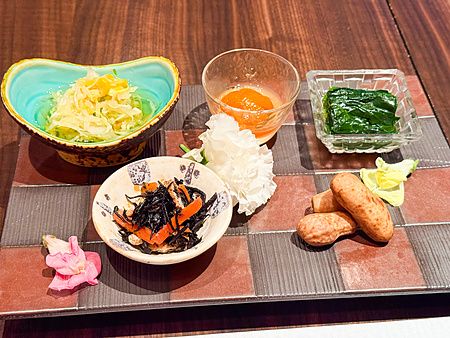
When I’m in Fukuoka and want a varied Japanese lunch without committing to an evening course, the thirty-ingredient tray is the first thing I think of. For under 2,000 yen I get about ten different small dishes, all cooked that day.
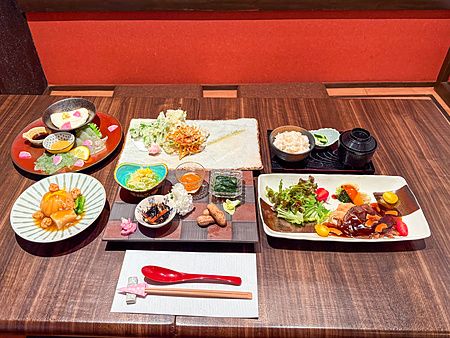
They do a fully plant-based course, and it isn’t the usual cut-down version with boiled vegetables where the fish should be. It’s a Japanese course built from scratch, starting with the broth.
Broth is where almost every Japanese restaurant fails vegans, because without dried bonito flakes they don’t know what to do. Here they make the dashi from Itoshima vegetables, and it has enough punch to carry the dishes served in broth without tasting like flavored water.
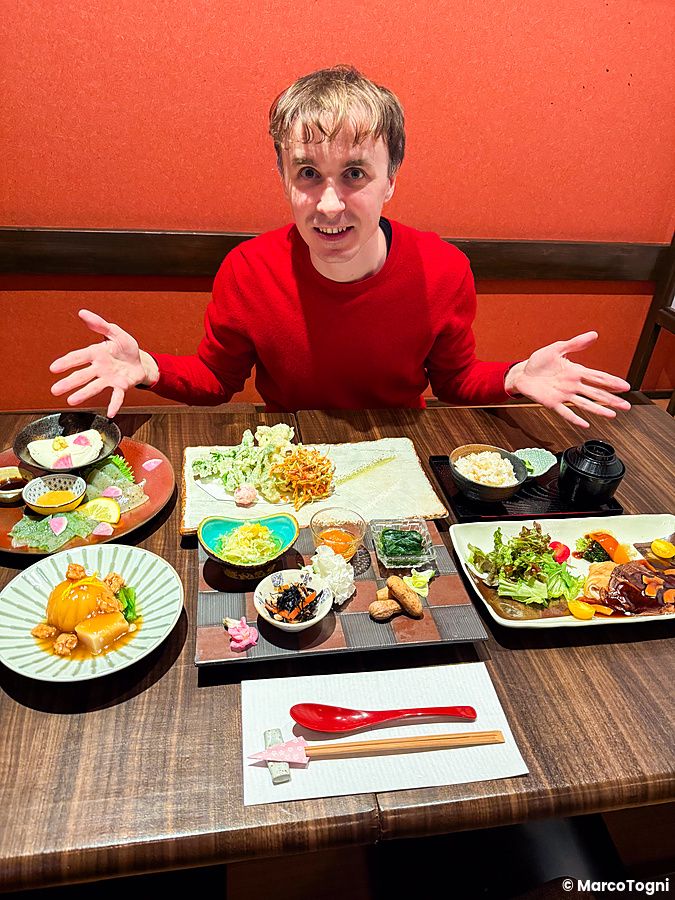
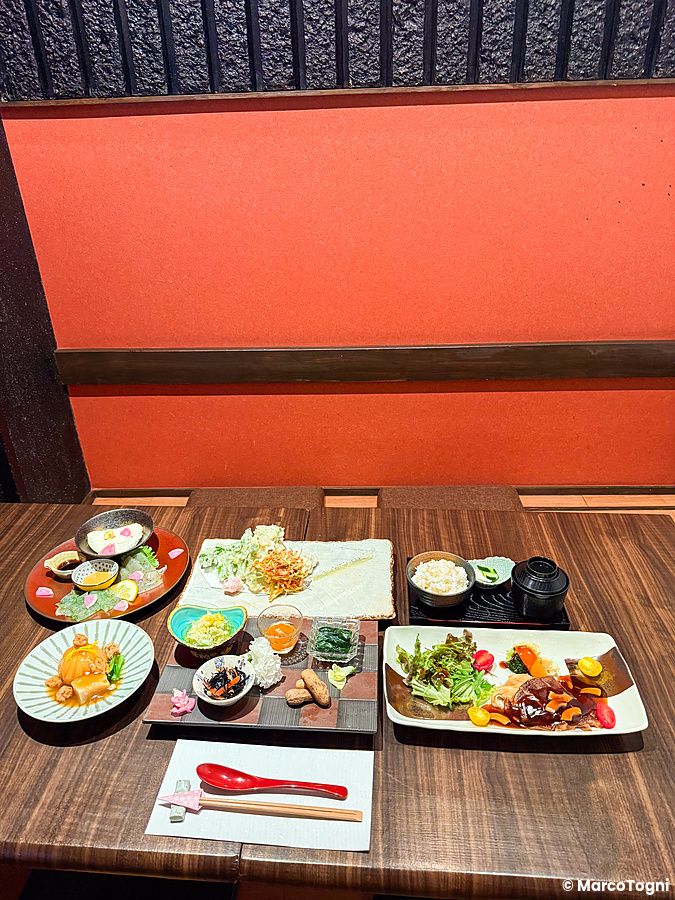
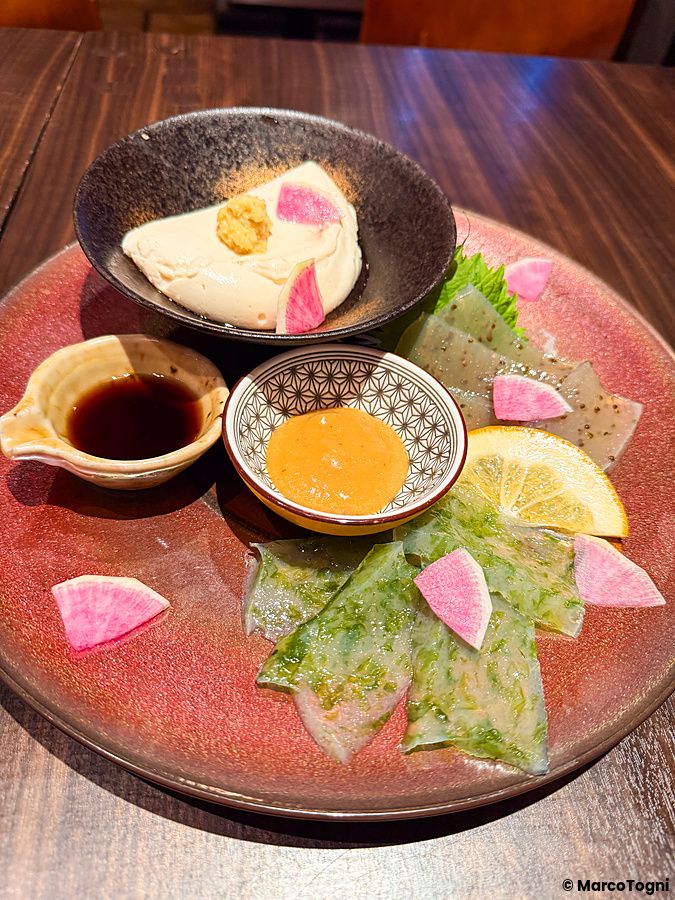
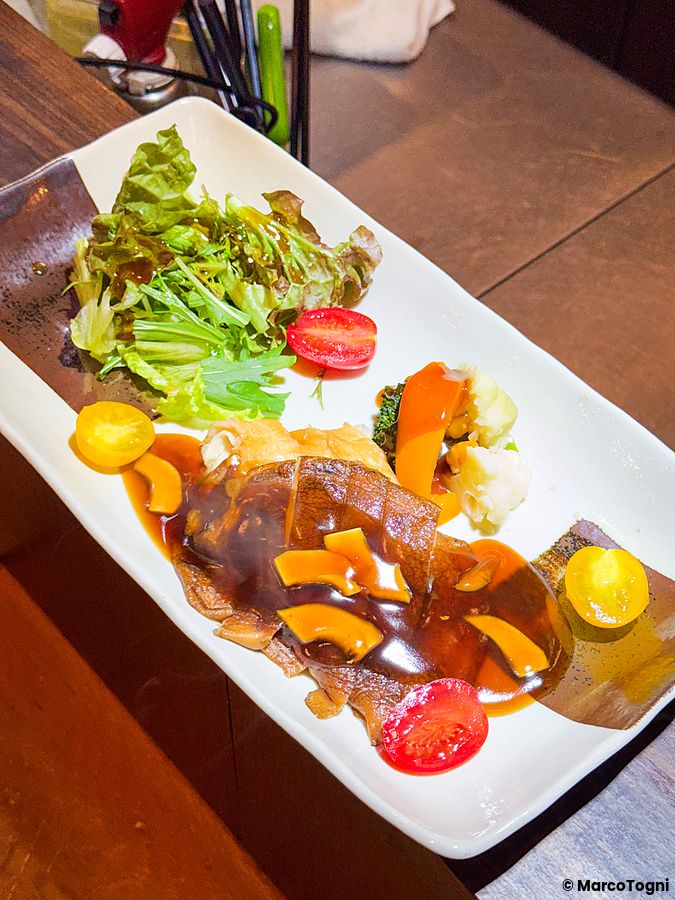
The course includes tofu served in a bamboo basket, seasonal vegetable tempura, and a series of dishes that change with the month. They make their own ponzu and dessert syrups from scratch, and you notice it most in the desserts, which aren’t cloying the way they are in so many other places. Among the other dishes are konnyaku sashimi with yuzu and aosa seaweed and a mushroom and fu steak, fu being wheat gluten. To finish, there’s eighteen-grain rice with akamoku seaweed miso soup.
They plate the vegan dishes with the same care they put into the fish courses, and for vegans in Japan that’s half the pleasure. Usually you’re the one who gets the sad, ugly plate while everyone else gets the nice ceramics.
The vegan course runs around 12,000 yen, and the vegetarian one around 6,500. That’s real money for the vegan course, and I won’t pretend otherwise. But this is one of the few places where people who don’t eat animal products sit down on equal footing with everyone else at the table, and for that I think it’s worth going out of your way.
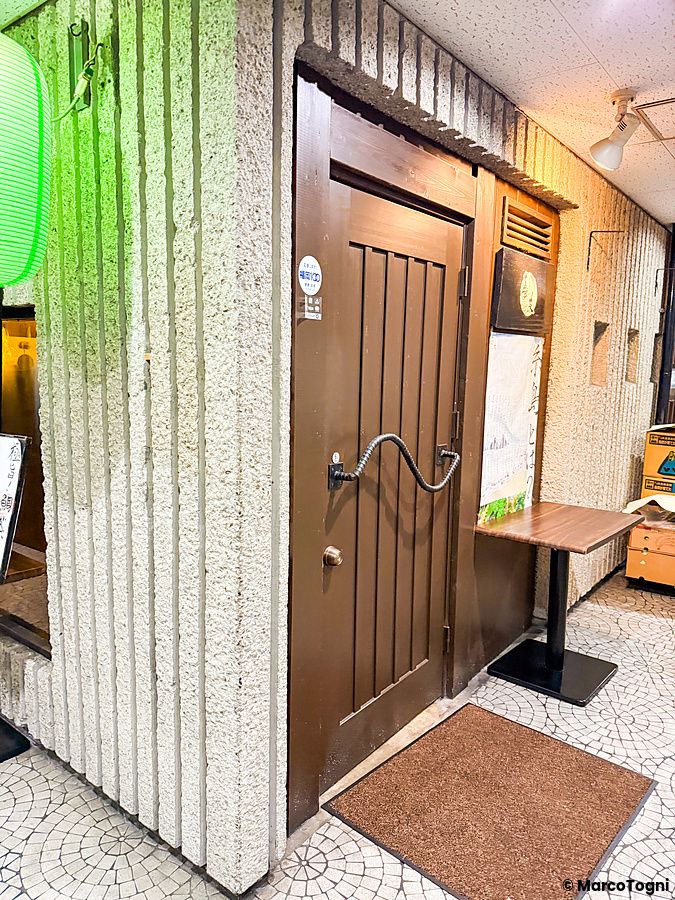
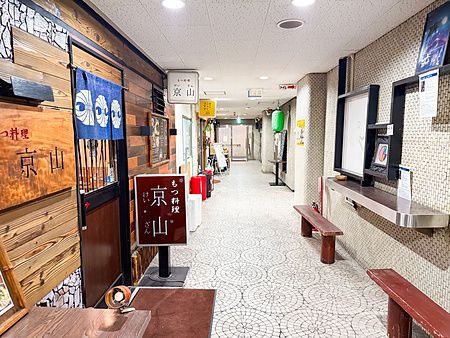
You go one floor down from street level, into a basement arcade of restaurants that feels a bit like it’s from another era, and the door is dark and easy to walk past. Inside, everything changes: dim lighting, music you can barely hear, dark wood.
There’s a six-seat counter, plus private rooms with sunken tables, the kind with a well underneath for your legs, so you sit as if you were on a chair without folding yourself up. Big groups of about thirty people can fit.
At lunch it fills up with people from the offices nearby, many of them eating alone, and there’s practically no sign of tourists. In the evening the pace slows down and it turns into a place for business dinners and more formal group meals, with each course plated individually instead of served on shared platters in the middle of the table.
That makes a real difference when there are six or eight of you: nobody reaches across their neighbor with chopsticks, and you can talk without raising your voice.
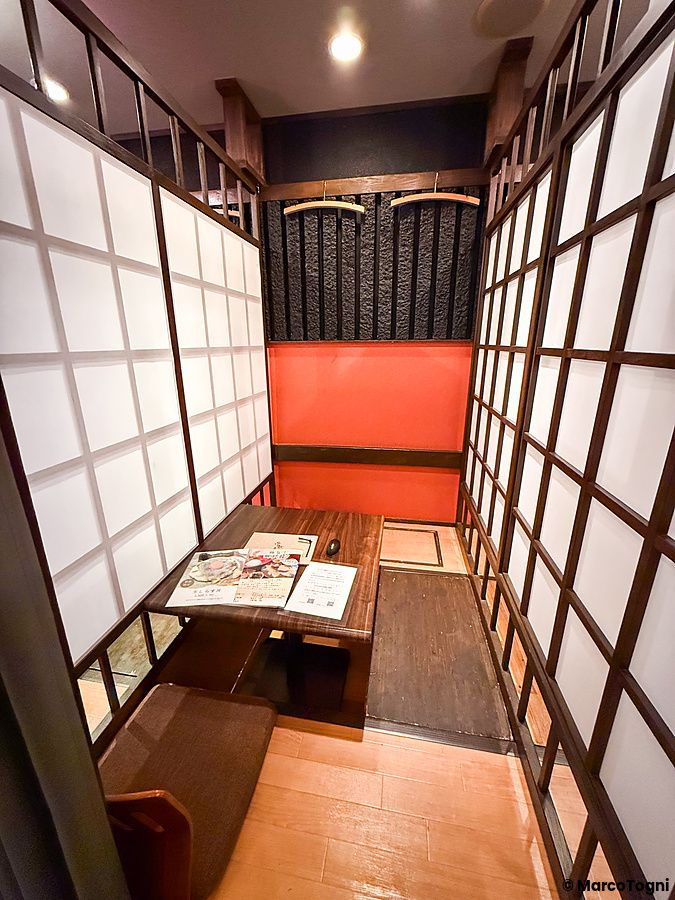
The service is attentive but takes its time, and that’s the thing to know before you sit down. There’s a gap between courses, and if you order à la carte you’ll feel the wait, so plan on a long meal.
At the counter you can have the same sake warmed to different temperatures and taste how it changes, which on its own is a reason to sit there rather than in a private room.
If you’re traveling with someone who doesn’t eat fish or meat and you’re tired of making do with yet another bowl of vegetables at dinner, this place takes care of dinner for everyone. The one who eats everything gets the Genkai Sea fish, and the other gets a full course of their own.
It also works if you’re eating alone and want a seat at the counter, or if you’re having a group dinner and need a private room where nobody has to shout.
It’s not the right place if you’re in a hurry or just want a no-frills meal. The pace is that of a classic Japanese restaurant, not an izakaya where you fire off one order after another.
Pros:
Cons:
Best for: a relaxed sit-down dinner in Fukuoka when someone in your group is vegan, or a varied Japanese lunch on your own
Atmosphere: one floor below the street, soft lighting, dark wood, a counter and private rooms with sunken tables, local office workers at lunch
When I walk out of Kiyu, what stays with me is a meal that tastes of Itoshima from start to finish: the Genkai Sea bream, the red hens’ eggs in the omelet, the vegetables that make it all the way to dessert. If you only go once, get the tai chazuke and a dashimaki to share, and let the chef bring you whatever he found that morning.
Fukuoka has plenty of places where you can eat well, but this is the one I recommend without a second thought. Go.
This place is on MarcoMaps
Kiyu
My map of Japan: over 4,000 places I've tried myself, each with photos, rating, and hours. Filter by category and rating, find veg-friendly spots and places near you with GPS. No sign-up, right from your phone.