Kobe Beef
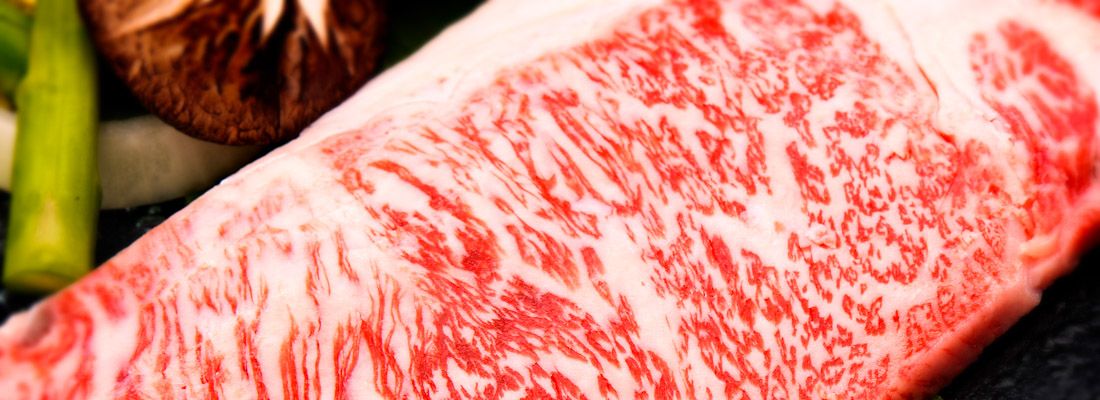
Kobe beef is considered a true delicacy, prized for its flavor and its tender texture, which make it perfect for cooking in all sorts of ways. It’s easy to see why it took off outside Japan too.
The name stands for a lot more than an expensive steak, though. It means a specific breed, a protected brand and strict standards that very few cattle meet. Here I’ll tell you where to eat it, how to spot the real thing and why its reputation has grown so much.
Contents
Where to eat it
The best place is definitely Misono, a teppanyaki restaurant where the Kobe beef is so good you’ll be thinking about it long after the meal. Misono has restaurants in Tokyo, Kyoto, Osaka and Kobe.
Plan on spending at least 10,000 yen per person.
How it’s eaten
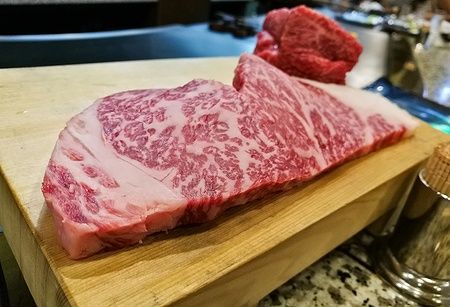
In Japan, Kobe beef sometimes shows up in sushi, but it’s more often cooked as a steak. Cooking it over high heat is one of the best ways to bring out what makes it special. The fat is what gives Kobe beef its exquisite flavor, so you want the meat as rare as possible to keep that fat from melting away. Most recipes call for cooking the steak on the grill or in a cast-iron pan, with nothing but salt and pepper.
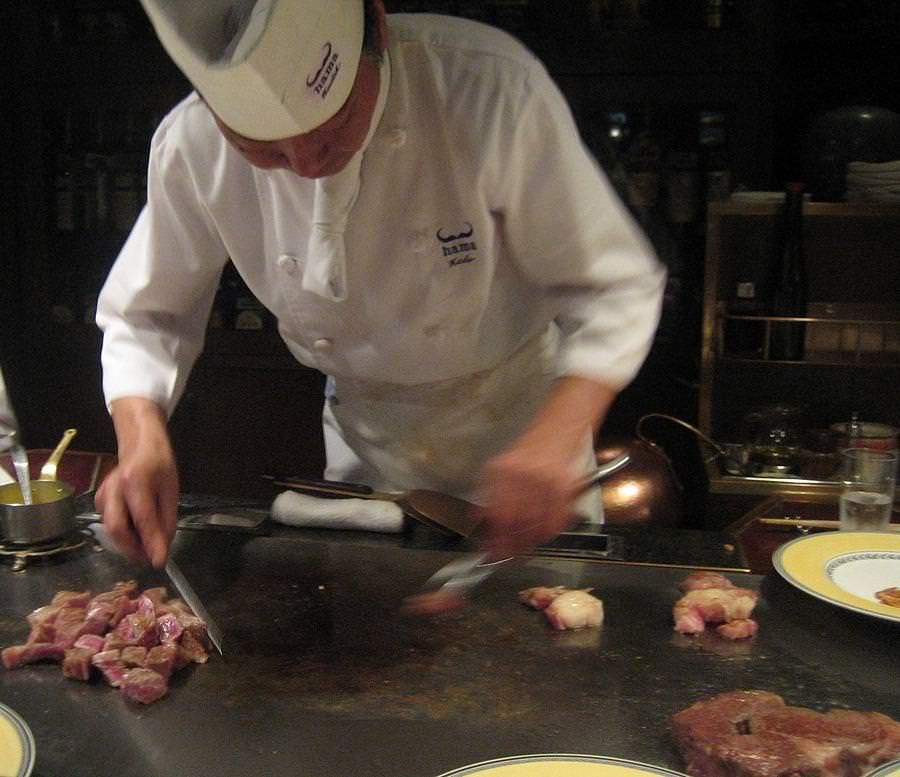
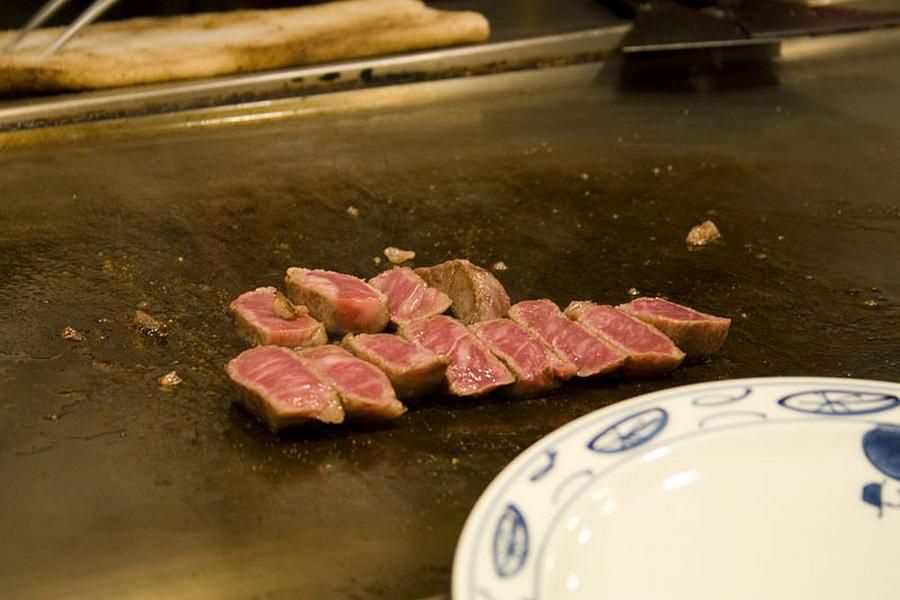
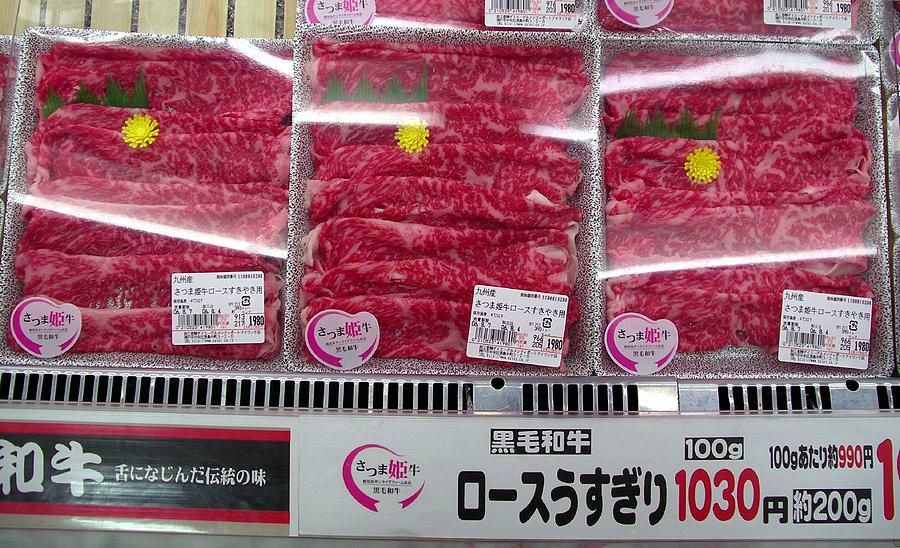
In Japan, though, you’re unlikely to be served it as a Western-style steak. People mostly eat Kobe beef at teppanyaki restaurants, where the chef cooks it on the griddle right in front of you and serves it already cut into cubes. The other common way to eat it is sliced paper-thin, in sukiyaki and shabu shabu. Portions are always very small, often only a little over a hundred grams. That’s not the restaurant being stingy: with all that fat, a big serving would be really hard to finish.
A bit of history
Until 2012, Kobe beef wasn’t exported. The first shipments went to Macau in February 2012, and exports to Hong Kong and the United States followed. As Japanese beef caught on in the US, a whole “Kobe style” of producing beef grew up around it. Many farms in the United States and Britain have tried to copy the Kobe tradition, claiming the only difference between real Kobe beef and their own (cheaper) beef was purely cosmetic. The spread of meat passed off as “Kobe beef” outside Japan is a real problem for Japanese farmers. Some countries don’t legally recognize the trademark “Kobe beef,” so sellers there can label meat as Kobe beef even when it doesn’t come from Kobe. Many American ranchers, for example, are starting to register “Wagyu” and “Kobe beef” as trademarks so they can sell their meat under those names.
To fight this as best it can, the Kobe Beef Marketing and Distribution Promotion Association has put out a brochure in foreign languages explaining what real Kobe beef is.
Its popularity keeps growing around the world, but the Kobe beef market is still mostly limited to the wealthy. In most cases the high prices keep many people from buying and eating it, except of course on truly special occasions.
Cattle were brought to Japan in the second century as work animals, used mostly in rice farming. The geography of the Japanese islands created small, isolated regions that were ideal for raising herds, and those herds played a big part in supplying high-quality meat.
Some accounts say Kobe beef production started in the Middle Ages. Others say it came later, when Japan began a program to register genetically superior cattle.
Buddhist influence and other cultural factors had made beef off-limits for more than a thousand years, until the Meiji Restoration in 1868. Before that, the story goes, Japanese soldiers in various conflicts were fed beef to make them stronger in battle. Many of them came home wanting to keep eating beef, even though village elders believed that eating meat inside the house was sacrilege and an insult to their ancestors. The men had to cook their beef outdoors until the Meiji Restoration finally let them eat it freely. After that, beef consumption rose steadily, especially after World War II (probably because of American influence), when a better economy meant many families could afford beef more often.
Starting in the second half of the 19th century, native Japanese cattle were crossed with several European breeds, including Brown Swiss, Shorthorn and Devon. The result was four breeds officially recognized by the national government, one of them the “Japanese Black.” In 1983 the Kobe Beef Marketing and Distribution Promotion Association was founded to set the standards that identify real Kobe beef.
Breed, origin and trademark protection
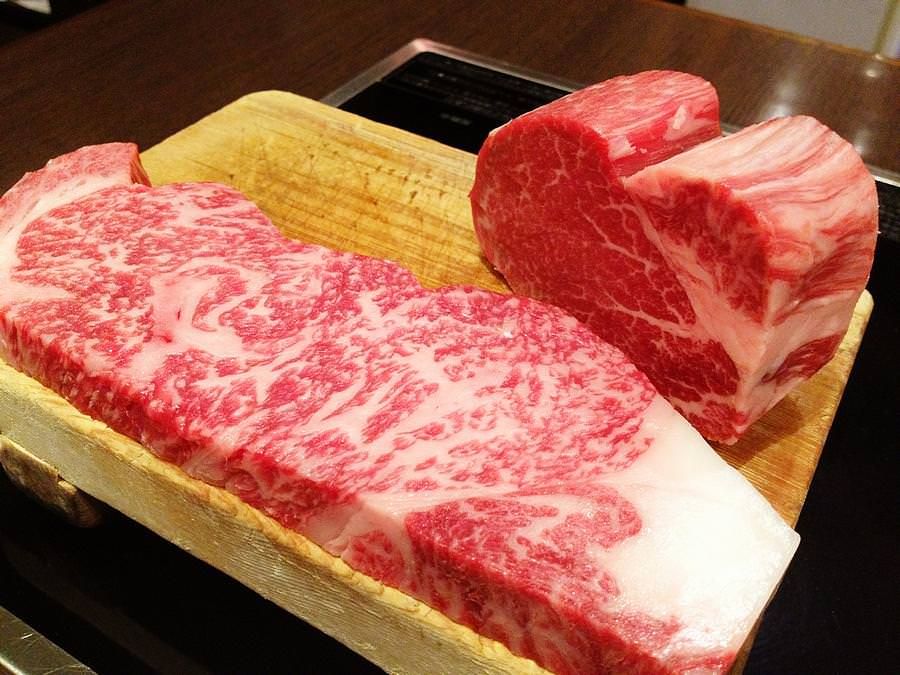
Real Kobe beef comes only from Hyogo Prefecture, whose capital is Kobe, and from a type of cattle called Wagyu. The meat is red and glossy. There are four Wagyu breeds: Japanese Black, Japanese Brown, Japanese Shorthorn and Japanese Polled, the hornless one. Kobe beef usually comes from the Tajima line of Japanese Black.
Many people say these breeds are native, but Japanese cattle were in fact crossed with European breeds, a practice that only began in the second half of the 1800s, when Japan opened up to the West.
Around Kobe the land is mountainous and rocky, and since it was hard to move cattle out of the region, breeding there became more selective. That’s what gave the beef its distinctive flavor and the qualities that made it famous in Japan and beyond. Breeders also use a special secret process to raise their cattle, which adds even more to Kobe beef’s quality and flavor.
Today Kobe beef is a registered trademark in Japan and has to meet a number of conditions. The cattle must be born in Hyogo Prefecture and slaughtered only at slaughterhouses in Kobe, Nishinomiya, Sanda, Kakogawa or Himeji, and the gross weight of the meat from a single animal can’t exceed 499.9 kg.
Government rules protect the “Kobe beef” name. Wagyu, on the other hand, is defined only by bloodline, so Wagyu beef can come from cattle born and raised anywhere, as long as they descend from Wagyu stock.
What A5 means
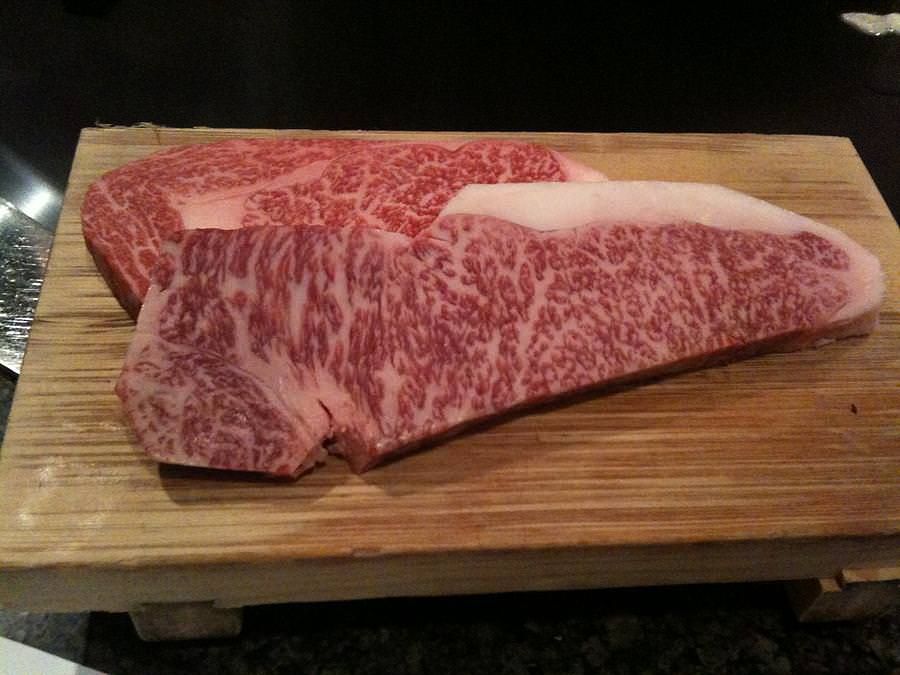
On Japanese menus, beef almost always comes with a grade like A5, and it helps to know what that means. The letter, from A to C, is the carcass yield grade, meaning how much usable meat the animal gives. The number, from 1 to 5, is about quality and mostly reflects marbling, which has its own scale that goes up to 12.
Wagyu isn’t automatically Kobe beef. To earn the name, it also needs very high marbling and an A or B yield grade, which in practice almost always means A4 or A5. Just don’t flip the logic around: all Kobe beef is A4 or A5, but not all A5 is Kobe beef. That’s why so many signs show the grade front and center and say nothing about where the beef comes from.
What the breeders keep secret
Kobe cattle breeders are especially protective of how they raise and slaughter their animals. Much of their success comes down to things like what the cattle eat. According to some rumors, breeders add beer to the Wagyu cattle’s diet to boost their appetite. Eating more would mean more meat and more marbling, one of the hallmarks of Kobe beef. Legend also has it that the cattle’s coats get rubbed with sake, the well-known rice wine, to soften the skin, which would improve the meat even further.
Wagyu cattle also traditionally get special massages. These make up for how little they’re allowed to move, working their muscles and easing stress and stiffness, on the idea that a more relaxed cow makes better beef.
Few breeders are willing to share their secrets (or confirm the rumors already going around), so Kobe beef is effectively impossible to reproduce anywhere else in the world. American ranchers keep producing Kobe-style beef, but they haven’t managed to match the real thing’s extraordinary qualities.
The tradition behind raising Kobe cattle is part of what makes this beef so special. The legends about how it’s produced also make people curious and lead plenty of them to try it at least once in their lives, despite the steep price.
How to spot real Kobe beef
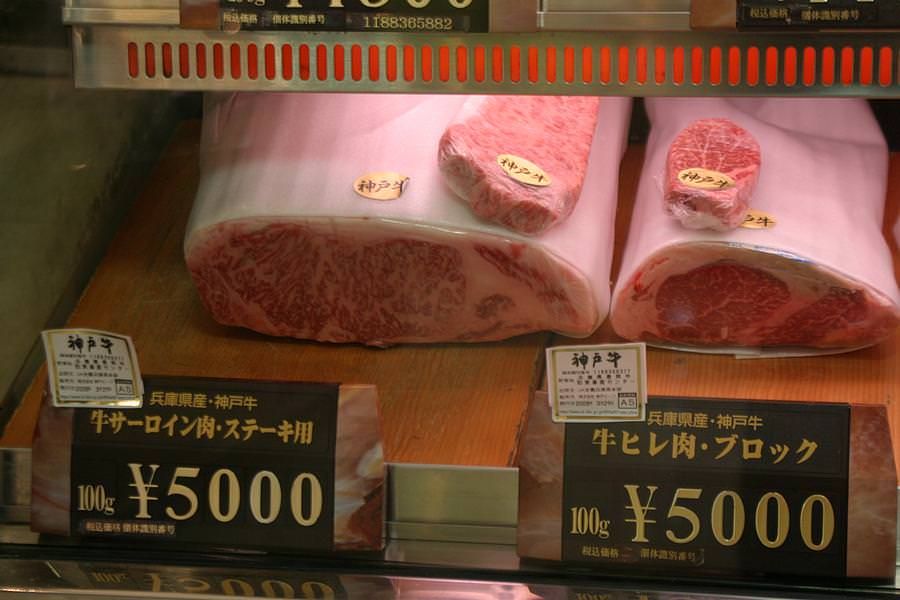
Spotting real Kobe beef is easier than it sounds, because every certified animal leaves a trail of evidence. The carcass is stamped with the Japanese chrysanthemum seal, the nojigiku, which is the association’s mark of authenticity. Every animal also has a ten-digit ID number that traces it back to the farm where it was born and raised.
Authorized shops and restaurants display a bronze figurine of Tajima cattle, often next to the certificate with the number of the animal you’re about to eat. If you see none of these, you’re very likely being served excellent wagyu, but not Kobe beef: only a few thousand animals pass every check each year.
Creative Commons cincomomo
Creative Commons Maarten Heerlien
Creative Commons Karl Baron
Creative Commons Paul Downey
Creative Commons adrian8_8
Creative Commons T Chu


