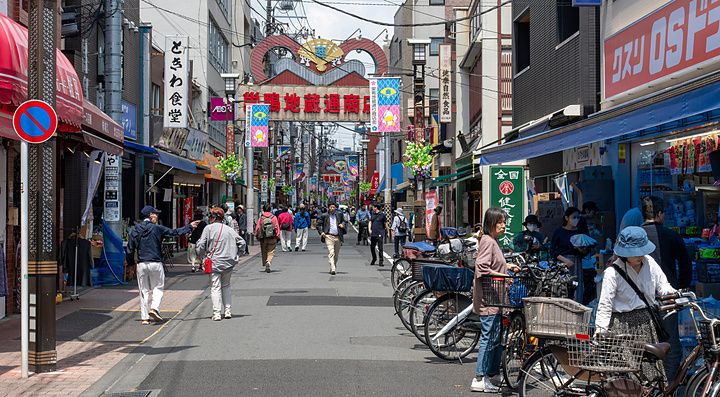
Komagome
Komagome is one of those parts of Tokyo where you can catch your breath and slow down. It’s on the Yamanote Line between Sugamo and Tabata, and almost everyone who gets off here comes for one thing: the gardens.
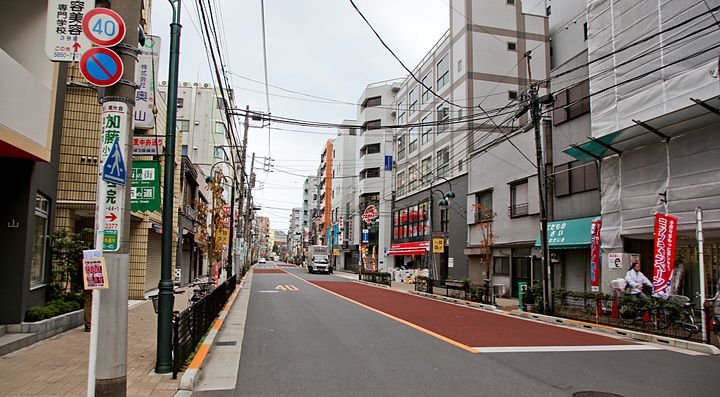
I like coming here when I want real greenery and quiet streets, with no crowds and no signs screaming at you. It’s a residential area with calm streets and not much nightlife, and yet it isn’t far from the center. A few minutes’ walk from the station, you’re standing in front of two of the city’s most beautiful gardens, one Japanese to the core and one half European, and that’s pretty much the whole reason to come out here.
Contents
Nearby neighborhoods
Around the station
The station is small and easy to find your way around. Right outside the ticket gates there are two handy things to know about before you head into the gardens:
- If you have luggage: near Exit 3 there are large lockers that can take a suitcase.
- Inside the station: you’ll find the usual konbini, good for picking up water and onigiri before you go into the gardens.
Just outside on the north side there’s also a small park dedicated to cherry trees. On the opposite side, down to the left of the station, a narrow street lined with restaurants, shops and bars comes alive in the evening.
Rikugien, the poetry garden
Rikugien started out in the late 1600s as the country estate of Yanagisawa Yoshiyasu, a trusted adviser to the shogun Tokugawa Tsunayoshi. He spent seven years digging the pond and building up the little hills. In the 19th century the garden passed to the Iwasaki family behind Mitsubishi, who kept it as a private residence before donating it to the city.
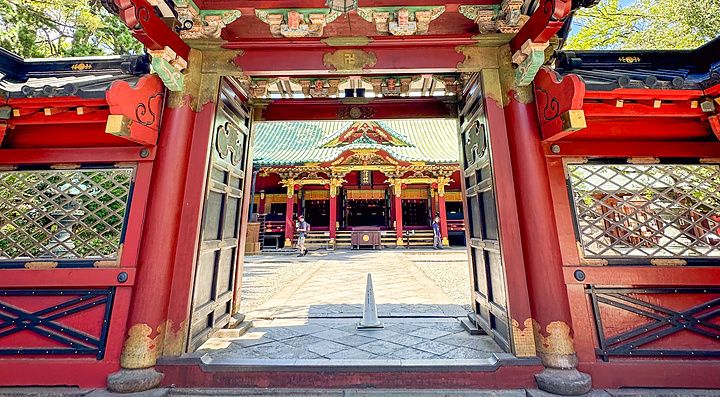
The name refers to the six principles of classical poetry, and it isn’t just for show. The garden recreates eighty-eight scenes from famous landscapes and poems, and small engraved stones still mark some of them.
That’s why walking through it feels like being in a place meant to be read rather than just looked at. You climb the little hill, circle the water, and every bend opens up a different view.
The Somei cherry trees
This area has a claim to fame that a lot of people don’t know about, and once you know it, it changes how you see the place. Until the end of the 19th century, the strip between Komagome and Sugamo was Edo’s big nursery district, full of gardeners and plants. This is where the somei yoshino came from, the most common cherry tree in Japan. It’s a cross between edohigan and oshimazakura, and it takes its name from the old village of Somei that used to be around here.
What always gets me is that just outside the North Exit there’s a little park that tells this story, planted with the two cherry trees that started it all. I walk past it often and stop to read the sign. The idea that the cherry tree you see everywhere in spring has such a specific origin, in an ordinary corner of Tokyo, makes it worth the short detour in my book.
The Kyu-Furukawa villa and rose garden
Kyu-Furukawa is the strangest and most beautiful spot in the area. Its villa, built of dark stone, was designed by Josiah Conder, the English architect whose Western-style buildings are all over Tokyo. The ground floor is European-style, while the upper floor is made up of tatami rooms.
In front of the villa, the rose garden steps down the slope in a terraced garden, with about a hundred varieties laid out in geometric beds. Keep going down, past a strip of trees, and you suddenly come out into a Japanese garden with a pond and stone lanterns, the work of the great Kyoto garden designer Ogawa Jihei. Going from one world to the other in just a few steps is what this place is all about.
When to go
Komagome is at its best when the gardens are at their peak. In spring, Rikugien’s most famous sight is a big weeping cherry tree, and during certain periods the garden also opens in the evening, lit up.
In fall it’s the same story with the red leaves, while just up the road Kyu-Furukawa combines a rose garden and a Japanese garden around a Western-style villa from the Taisho period, with the roses at their best in spring and fall.
Costs are low, so this won’t empty your wallet. Both gardens cost pocket change to get into, and if you’re seeing both, there’s a combined ticket that saves you money.
Other than that, don’t expect nightlife or big shopping malls. It’s quiet in the evening and not a very international area. I’d set aside a couple of hours or a little more to see both gardens without rushing, grab a bite and wander the streets.
If you have time left over, Sugamo is one stop away, the neighborhood people call Grandma’s Harajuku. It’s a total change of scene, and you can walk there. Honestly, I’d recommend Komagome to people who want a slow day out among the greenery, in no rush, not to anyone looking for bright lights and shop windows.
Getting There
Komagome is a stop on the Yamanote Line, so you can get there without changing trains from Tokyo, Ueno, Ikebukuro or Shinjuku, and the same station is also served by the Namboku subway line.
For Rikugien, leave the JR station from the south side, or take Exit 2 from the subway, and walk about seven minutes.
For Kyu-Furukawa, take the north side instead and walk up the main street for a little over ten minutes. If you're coming by subway, the closest stop to its entrance is Nishigahara.
You can also easily walk there from Sugamo, one stop over.
Useful Info
Name: Komagome
Cost per person: Rikugien: 300 yen - Kyu-Furukawa: 150 yen - Combined ticket for both gardens: 400 yen - Furukawa villa interiors: 500 yen on top of garden admission - Rikugien evening openings: 1,000 yen in advance online, 1,200 yen at the ticket office
Time needed: A couple of hours or a bit more for both gardens and a short walk around the area
Closed: Both gardens are closed from December 29 to January 1. Guided tours of the Furukawa villa interiors are suspended from mid-July to early September because of the heat.
Booking: You don't need a reservation for the gardens, but to tour the villa at Kyu-Furukawa with a guide you have to book online. Slots open two weeks ahead and each one takes only a few people. For the Rikugien evening openings, it's better to buy your ticket online in advance: it's cheaper and gets you in through the priority lane.
Tips: If you plan to see both gardens, ask for the combined ticket at the first ticket office. It costs less than two separate tickets and doesn't expire, so you can visit the second garden in a different season if you like.
Getting there:
- Komagome Station (JR Yamanote, Tokyo Metro Namboku): South Exit or Exit 2 for Rikugien, North Exit for Kyu-Furukawa
- Nishigahara Station (Tokyo Metro Namboku): the most convenient for Kyu-Furukawa
- Kaminakazato Station (JR Keihin-Tohoku): an alternative on the north side
Map
MarcoMaps100% free
This place is on MarcoMaps
Komagome
My map of Japan: over 4,000 places I've tried myself, each with photos, rating, and hours. Filter by category and rating, find veg-friendly spots and places near you with GPS. No sign-up, right from your phone.
- 4,000+ places
- Rating, photos, and hours
- Veg friendly
- Near me (GPS)
- Favorites without login
- Works offline

