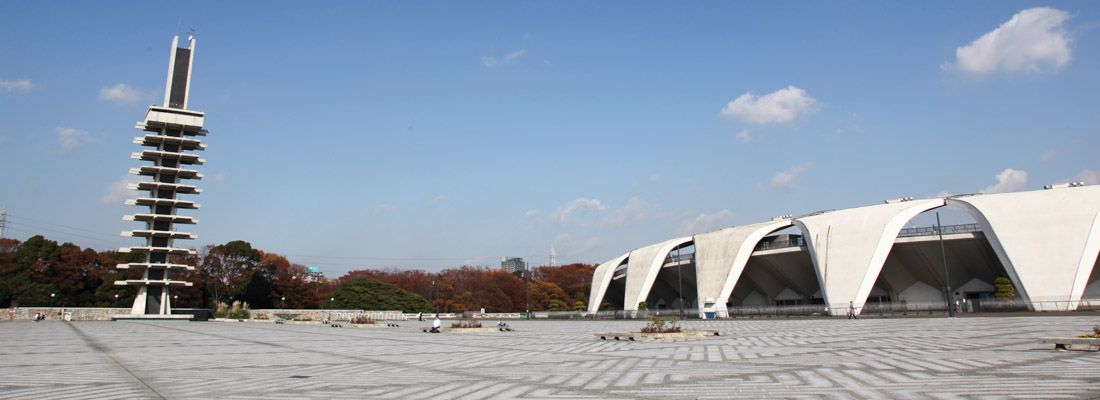
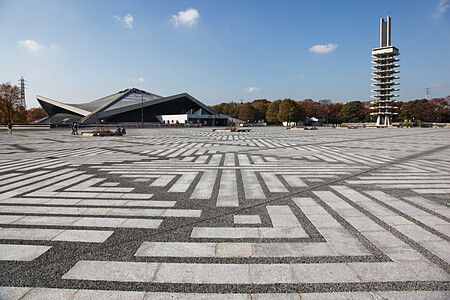
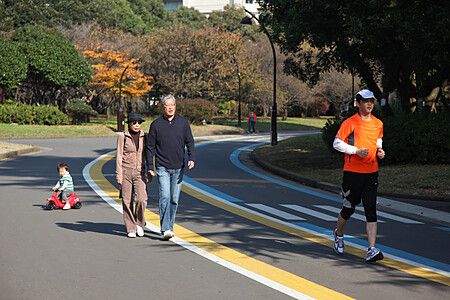
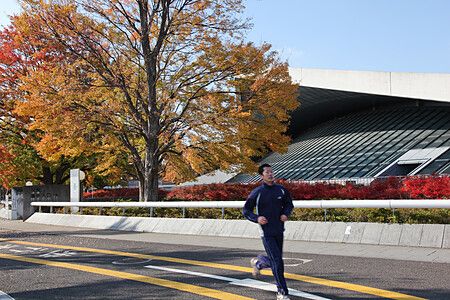
A few minutes by train from Shibuya, Komazawa Olympic Park was designed for the 1964 Tokyo Olympics, and you can still admire its beautiful buildings, like the Olympic Tower and the Olympic Stadium. It’s a perfect place to get a feel for the past and picture how packed with people this area was more than half a century ago. The facilities are still in use today, and the park has a running loop where lots of people come to stay in shape by running.
At the 1964 Tokyo Olympics, Komazawa was the second hub of the Games after the National Stadium, hosting soccer, wrestling, volleyball and field hockey.
Wrestling was held in the gymnasium, and the soccer matches were played in the stadium.
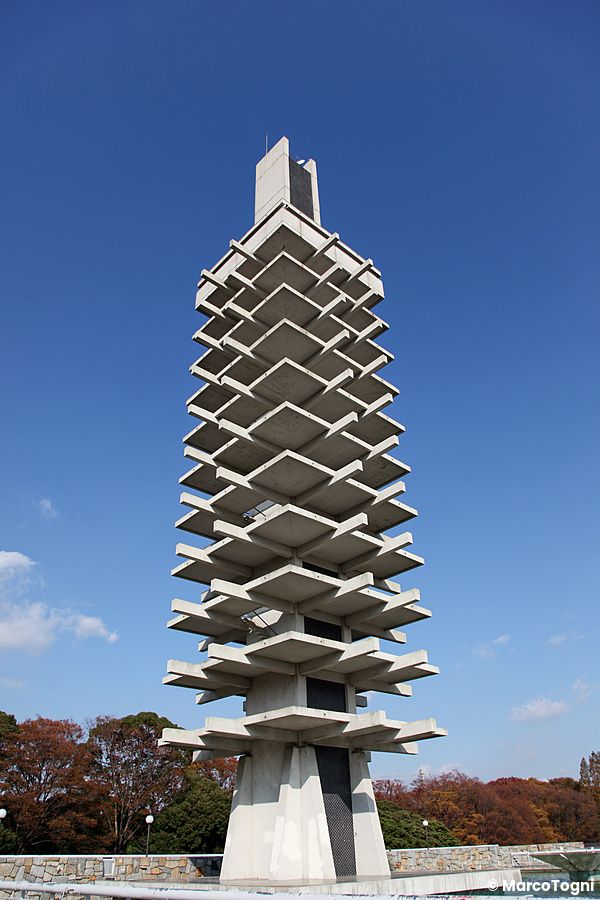
The Olympic Tower, about 50 meters tall, was designed by architect Yoshinobu Ashihara, who also designed the gymnasium. The tower takes its cue from the traditional pagoda, reworked in the language of Japanese Metabolism, the architectural movement that envisioned the future of Japanese cities at the time.
Getting There
From Shibuya, take the Tokyu Den-en-toshi Line to Komazawa-daigaku Station. It's a couple of stops, about 7 minutes by train. Take a local train, because express trains don't stop at Komazawa-daigaku. When you come out of the station, follow the signs for the park and walk about 15 minutes to the big central plaza with the tower.
Useful Info
Name: Komazawa Olympic Park
Hours: Every day: open 24 hours
Time needed: I'd allow 1 hour to see the Olympic facilities. Plan on 2 hours if you want to walk the whole park and its grand walkways.
Tips: Don't stop at the outside of the buildings. In the basement of the gymnasium is the Olympic Memorial Gallery, with free admission, full of memorabilia and photos from the Games. A few minutes in there are enough to understand what this area was like in 1964.
Getting there:
Komazawa-daigaku Station (Tokyu Den-en-toshi): about 15 minutes on foot
There are also buses from the station to the Komazawa Koen stop
Address: 1-1 Komazawakoen, Setagaya City, Tokyo 154-0013, Japan
My map of Japan: over 4,000 places I've tried myself, each with photos, rating, and hours. Filter by category and rating, find veg-friendly spots and places near you with GPS. No sign-up, right from your phone.
The huge geometric plaza frames the tower and the gymnasium. Notice how the concrete from 1964 blends with the autumn foliage in the background.
The control tower looks like a stylized reinforced-concrete pagoda. Stand right at its base to appreciate the symmetry of the stacked modules.
The exposed beams form a dense geometric grid. Up close, you can still see the marks left by the original wooden formwork on the brutalist surfaces.
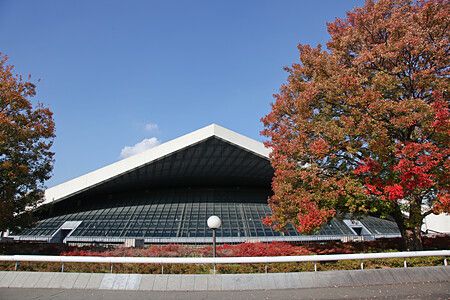
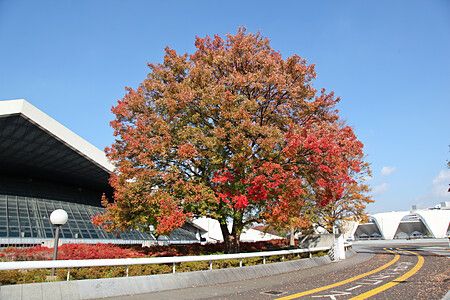
The large windows on the main facade reflect Tokyo's clear sky. In autumn, the contrast between the cold concrete and the red leaves is stark.
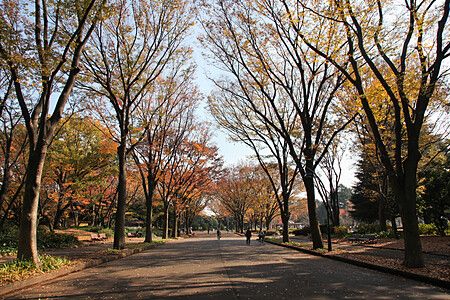
The long tree-lined avenues leave plenty of room to walk without crowds. Stop for a rest in the shade on the wooden benches along the edge.
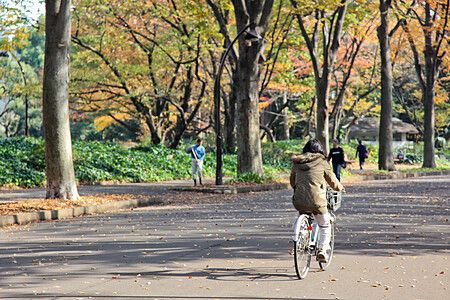
Many locals ride through the area on their bikes to run daily errands. Be careful not to take up the whole paved path when you walk.
The greenery is tended so it works with the shapes of the stadiums. Follow the yellow lines on the pavement to find your way around the different parts of the sports complex.
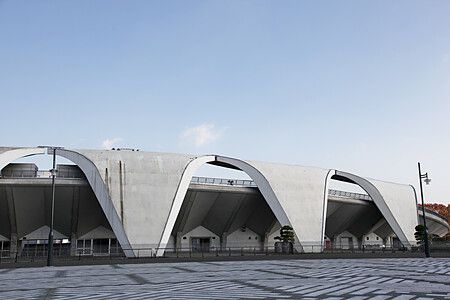
The massive arched roofs dominate the view from street level. The space is so vast that the people in the background look almost tiny.
The gymnasium's angular lines rise from the interlocking pavers. All these parked bikes are a sign that an event is going on inside.
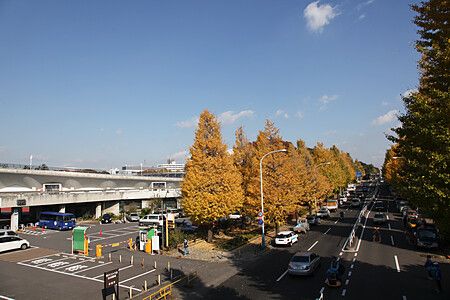
From above, you can clearly see the line between the parking lot and the city street. The yellow ginkgo trees form a natural visual and sound barrier for pedestrians.
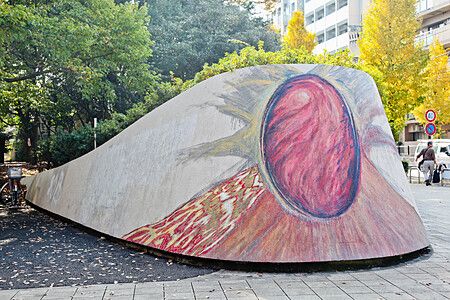
A curved concrete structure has a mural in shades of red and purple. Stick to the speed limit if you're riding through the shared sections.
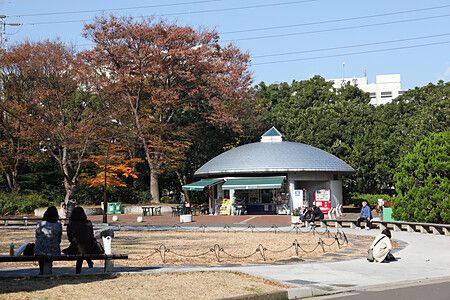
The small round pavilion is where the drink vending machines are clustered. It's the perfect spot to grab a hot tea and rest on the benches next to it.
The stadium's white concrete arches trace the outline of the stands. Walk up to the dark fence to take in the proportions of the structure.
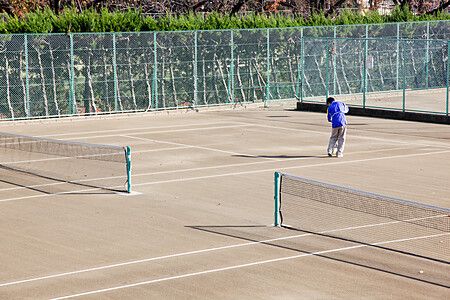
Locals use the park's tennis courts all year round. You'll often see players training hard from early in the morning.
Colored lines divide the pavement to keep runners and walkers apart. It's a practical system that lets families with strollers get around safely.
The running loop passes right next to the Olympic buildings. Always stay in your lane so you don't get in the way of local runners.