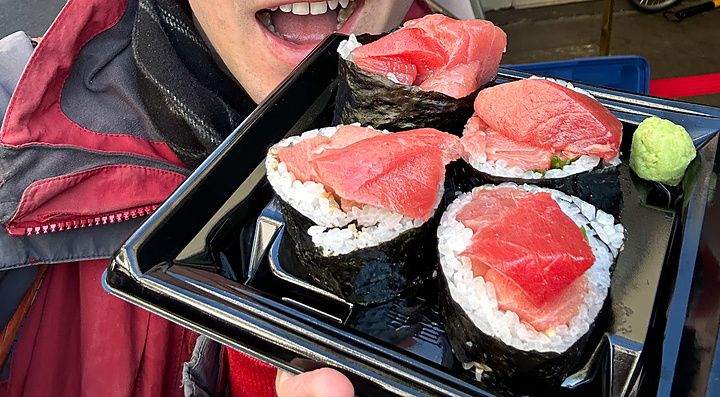
 8 m
Maguroya Kurogin8 m
Bluefin tuna counter.
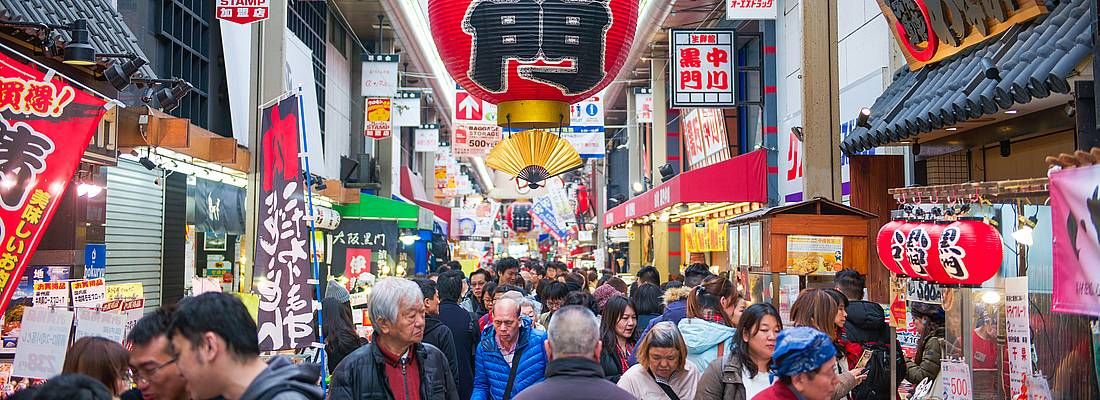
With nearly 200 years of history and tradition behind it, Kuromon Market is one of Osaka’s best-known places for food. People affectionately call it “Osaka’s kitchen,” a nickname that shows how closely it’s tied to the city and its traditional cooking. Locals and tourists come here, and so do restaurant owners, who can buy a huge range of fresh food. The market is especially famous for fish. Lots of stalls sell the day’s catch, and the places to eat serve sushi, sashimi, and the classic bowls of rice topped with raw fish, among other things. If you want a cheap snack made with fresh local ingredients, it’s definitely a great stop.
The market is in the southern part of Chuo Ward and runs along a 580-meter covered arcade with about 150 shops and stalls. Most of them sell fresh fish, meat, fruit, and vegetables, but you’ll also find packaged and dried foods, sweets, clothing stalls, and several supermarkets. It’s a colorful place, with lanterns and sculptures of fish and sea creatures hanging from the ceiling, and it’s always lively. Locals still shop here all the time, and in recent years the market has also become quite popular with tourists, thanks to its 25 places to eat where you can try all sorts of dishes. The options range from fish and shellfish specialties to noodle soups, curry, and prized Kobe beef. There are plenty of sweets, cookies, mochi, and other treats if you have a sweet tooth. At Yamaguchien, a tea shop that’s been open since 1937, you can buy different kinds of tea and try a delicious tea-flavored ice cream, while the Mitoya sweet shop has a wide selection of regional treats. As you wander around the stalls, you’ll notice that alongside the tourists there are still people shopping for work. Local cooks and restaurant owners do their shopping while the arcade is still quiet and the fish that’s just come in is being laid out on ice. It’s these demanding customers who earned Kuromon the nickname “Osaka’s kitchen.” With buyers like them, the stalls can’t afford to sell second-rate goods.
At the souvenir and clothing stands you’ll also spot some unusual things that make distinctive gifts, like inexpensive secondhand kimono, kitchen tools, slippers, and much more.
The best way to do the market is to graze your way through it, a bite at each stall. Many fish shops have a grill going out front. Point to the scallops, jumbo shrimp, or oysters you want, wait a few minutes, and they’ll hand them to you hot off the grill.
Other stalls focus on sea urchin, sashimi platters, and tuna cut right in front of you, and there are eel skewers grilled on the spot too. Portions are almost always small, because the whole idea is to try something and move on. Three or four stalls are enough for a full lunch.
The market was officially founded in 1902, but the first fish stalls appeared in the area back in the early 1800s. It was originally called Enmyoji, after the nearby temple of the same name, which was known for its black-painted entrance gate. That gate is where the market’s later name came from: Kuromon Ichiba, or “black gate market.” In 1912 a fire destroyed the temple and its gate, and neither was ever rebuilt, but the name and the history of the place live on in the market.
At Nipponbashi Station, take exit 10 and you'll come out practically right at the entrance to the market, on the south side of the street. From there, just head into the arcade and walk it from one end to the other.
If you're on the Kintetsu line, it's a three-minute walk from Kintetsu Nipponbashi Station.
If you're staying around Namba, you can easily walk here. It's about ten minutes east along Sennichimae-dori.
This place is on MarcoMaps
Kuromon Market
My map of Japan: over 4,000 places I've tried myself, each with photos, rating, and hours. Filter by category and rating, find veg-friendly spots and places near you with GPS. No sign-up, right from your phone.


If one product matters more than any other at Kuromon Market, it’s fugu, the pufferfish. About one fish shop in ten is a fugu specialist, and you can tell by the sign and the puffed-up fish shapes hanging at the entrance, which have become one of the market’s signature sights.
Osaka has a relationship with this fish all its own. In winter, families come here to have a whole fish prepared so they can make tecchiri, the big fugu hot pot, at home. In summer the spotlight shifts to hamo, the pike conger, which is the other great seasonal specialty of Osaka cuisine.
On a normal day about 18,000 people walk through the arcade, but in the last days of December Kuromon Market turns into a different place, with up to 150,000 a day. Most of them are Osaka families buying ingredients for osechi, the New Year’s meal: crab, shrimp, fish roe, and fugu cleaned and ready to take home.
During those days the main aisle is like a packed train car. You shuffle forward in tiny steps while the vendors shout to customers from their stalls. It’s the most chaotic time of the year, but it’s also when the market feels most like itself.
Kuromon Market - nearby you will find:
8 mBluefin tuna counter.
 289 m
Great okonomiyaki chain.
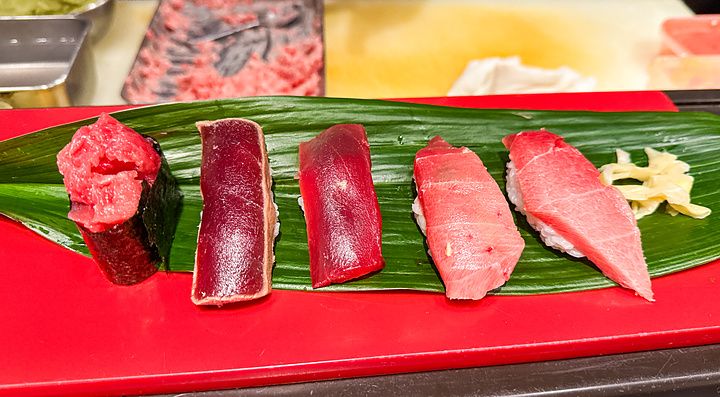 320 m
Rare cuts of tuna at the counter.
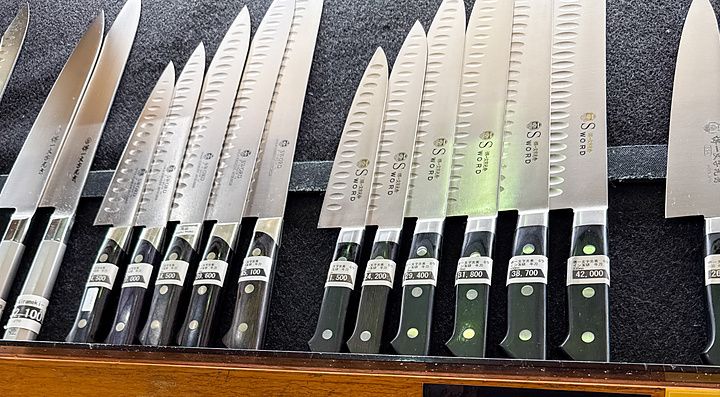 333 m
Handmade kitchen knives.
 362 m
Open 24 hours, and you can find anything.
 476 m
Otaku district, similar to Akihabara.