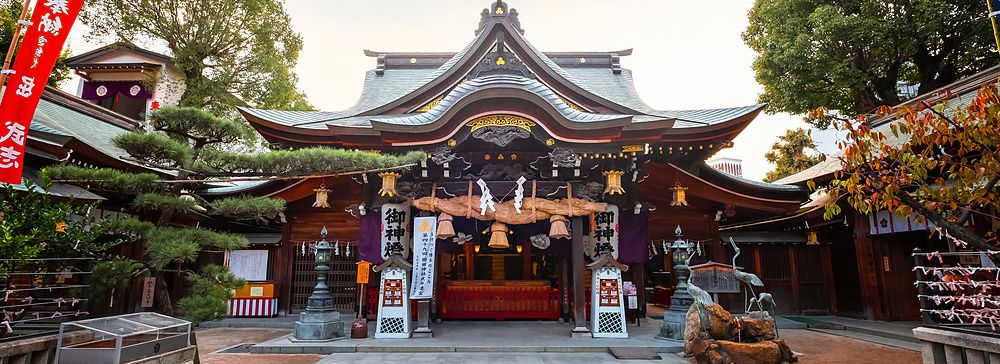
Kushida Shrine
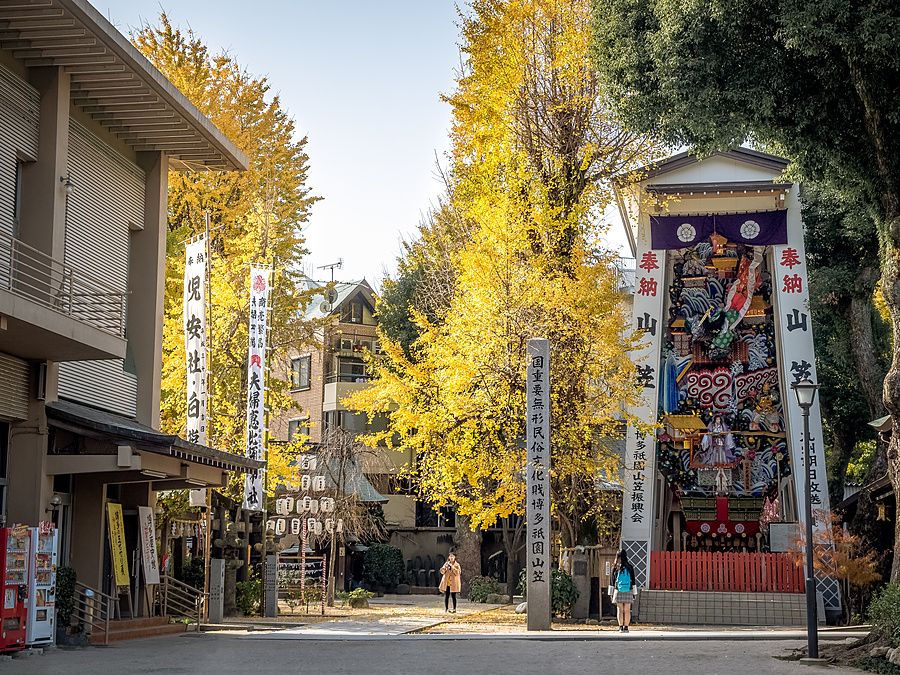
A Shinto shrine in Hakata, Fukuoka’s old town, where a festival float taller than a three-story building stands inside the grounds all year round, covered in samurai, castles and horses. Locals call it Okushida-san, and Kushida Shrine is where you start to understand what Hakata means to the people born here.
Besides the float, there’s a huge ginkgo, a gate with a zodiac wheel painted on its ceiling, and lots of little corners worth exploring slowly. It’s the place to start if you’ve just arrived in Fukuoka and want to get a feel for the city, and it fits easily into any walk around downtown.
A bit of history
According to tradition, the shrine was founded in 757. It’s dedicated to three deities: Ohatanushi; Amaterasu, the sun goddess; and Susanoo, the storm god, who is worshipped here as Gion. This is Hakata’s guardian shrine, the one the city has turned to for more than a thousand years.
The main hall you see today dates from 1587, when Toyotomi Hideyoshi had it rebuilt while he was putting the city back on its feet after the wars had destroyed it. The Hakata wall comes from the same period.
The float has a story of its own. The story goes that during an epidemic in 1241, the monk Shoichi Kokushi had himself carried through the streets, sprinkling holy water to drive the disease away, and that’s how the Yamakasa began.
That’s why the festival is tied to the shrine, and why the float stays here all year.
What you’ll see
The shrine grounds aren’t big, but a lot is packed into them. Everywhere you turn there’s something to look at, and this isn’t the kind of shrine where you bow and leave.
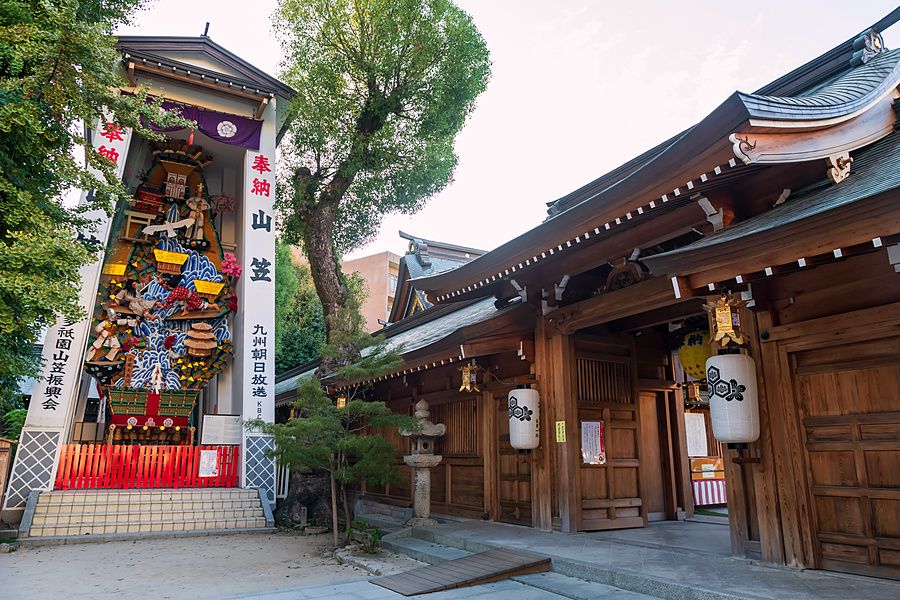
- The decorated Yamakasa float: a thirteen-meter tower of wood and cloth, with warriors, dragons and battle scenes on the front and on the back, each telling a different story.
- The entrance gate: look up under the roof and you’ll see a large colorful wheel with the twelve zodiac animals and an arrow in the middle, which gets turned at New Year’s to point toward the year’s lucky direction.
- The sacred ginkgo: a tree more than a thousand years old, with a trunk too thick for two people to get their arms around and bark covered in knots.
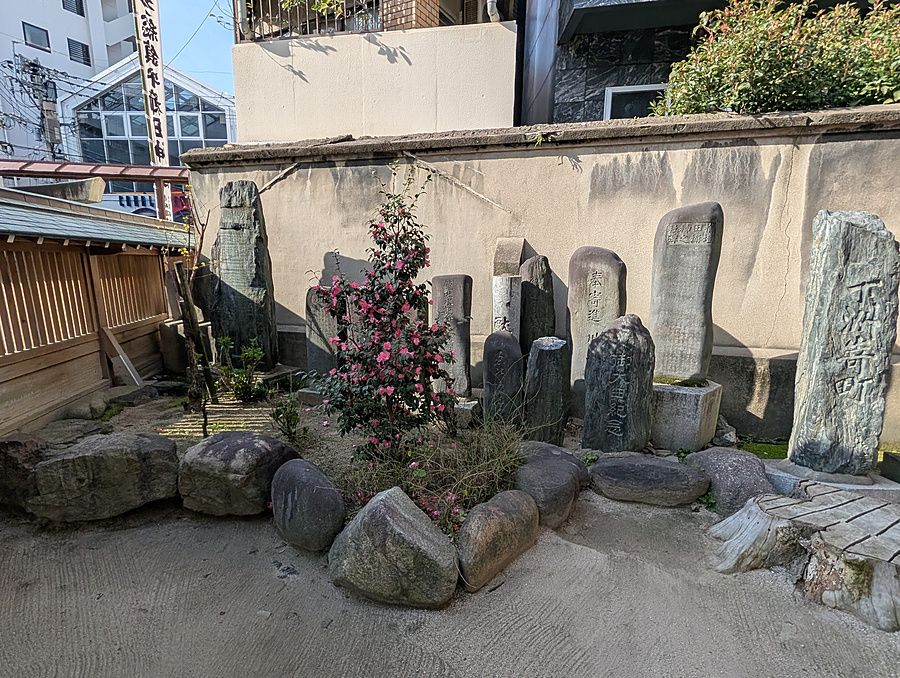
- The strength stones: blocks carved with the names of the sumo wrestlers and strongmen who managed to lift them.
- The Hakata wall: a stretch of wall built from stones and roof tiles salvaged from the city’s rubble after the wars, with the fragments packed in layers.
- The main hall: look up at the roof and you’ll find the gods of wind and thunder carved in wood, one of them sticking his tongue out at the other.
The float is bigger than the photos lead you to expect. You end up standing right underneath it and have to take a step back to see the whole thing. The figures are made by Hakata doll artisans, and up close you can see the warriors’ faces, their armor, every single strand of hair.
The front is where the crowd gathers, because it’s the first thing you see and everyone stands in front of it for a photo. Hardly anyone looks at the back, which is a shame, because it shows a different scene.
Most people walk under the zodiac wheel without looking up. Stop for a moment before you go in and find your animal.
The Hakata wall and the strength stones are also a little off to the side, so anyone who rushes in for the float and the main hall misses them. And yet they tell you more than anything else about the city and the fires and rebuilding it went through, without needing a single sign.
In one corner there’s also a small museum of shrine artifacts, including stone anchors from the Mongol ships that came here by sea in an attempt to invade Japan. It’s for history buffs; everyone else can skip it with no regrets.
What you can’t tell from photos is how lived-in this shrine is: office workers in suits and ties stopping to pray on their way to work, neighborhood grandmas with their grocery bags, school kids on field trips gathered in front of the float.
It’s easy to get around, with no flights of steps and no uphill stretches, and a stroller is no problem either. When I have friends from Italy in Fukuoka, I bring them here first: a walk past the float and among the stones teaches them more about Hakata and its people than a day of museums. And I stop by every time I’m in the area, even if it’s just to say hi to the ginkgo.
When to go
Early in the morning, the shrine belongs to the locals. Someone’s sweeping up leaves, someone else is clapping in front of the main hall, and you have the float in front of you with nobody in the way.
From mid-morning to mid-afternoon the tour groups and cruise ship passengers show up, and there’s a line in front of the float for photos. On weekends people come and go nonstop; weekdays are much better.
At sunset and into the evening the lanterns come on, the light turns warm and the float looks completely different. That’s my favorite time to come back.
The seasons here make a real difference. In fall the ginkgo turns golden yellow and the courtyard fills with fallen leaves, which makes it the best time to photograph the tree.
In February, for Setsubun, a giant mask of Otafuku, the chubby-cheeked woman who brings good luck, goes up at the entrance, and you walk in through her mouth. The whole city turns out for it, and it’s just as crowded in the first days of the year, when there are hours-long lines to pray.
July is Yamakasa month, Hakata’s biggest festival: men in loincloths running with floats on their shoulders, noise, crowds everywhere. It’s quite a spectacle, but a completely different thing from a regular visit. Keep in mind that in June the display float is taken down to make room for the new one.
Getting the best shot
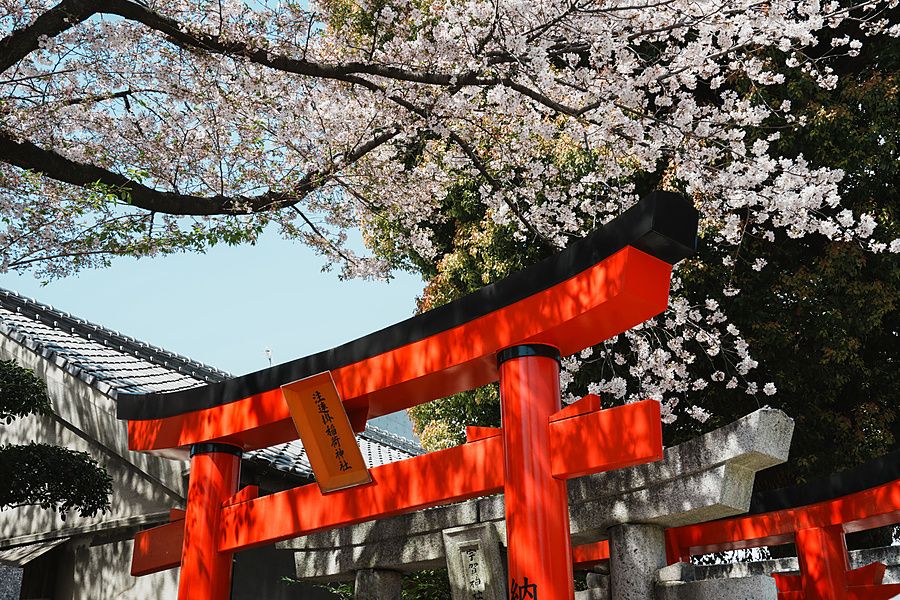
Shoot the float with your phone held vertically, or the top gets cut off. If you want it without people, come at dawn or in the evening.
In fall, the ginkgo looks best from below, with the trunk in the foreground and the yellow leaves filling the sky. Shoot the zodiac wheel from underneath, standing right in the middle of the gate.
At a glance
- The highlight: the Yamakasa float, as tall as a building, on display year-round.
- When to go: at dawn, or in the evening with the lanterns lit; in fall for the yellow ginkgo; on weekdays, not weekends.
- Best for: anyone arriving in Fukuoka who wants to understand Hakata, anyone exploring downtown on foot, families with kids.
- Atmosphere: locals praying, school groups in front of the float, everything close at hand.
Final thoughts
Kushida Shrine has neither the scale of Kyoto’s temples nor the endless stairs of mountain shrines, and if that’s what you’re looking for, you’ll be disappointed. What it does have is something you won’t find anywhere else: the Yamakasa float standing all year, its warriors an arm’s length from your face, and the city passing through every day.
Even if you only have one day in Fukuoka, start here, before anything else. This is where you see up close why the people of Hakata are so proud of their city.