A modern French restaurant in central Osaka, near Honmachi, where lunch lasts three hours and takes you through a very long run of small bites.
La Cime is chef Yusuke Takada’s place. It holds two Michelin stars and has been near the top of Asia’s restaurant rankings for years. Expect French technique, Japanese ingredients and dishes designed to surprise, served in a simple, elegant dining room.
It’s the place for a day to remember, when you want to sit back, take your time and let the chef decide.
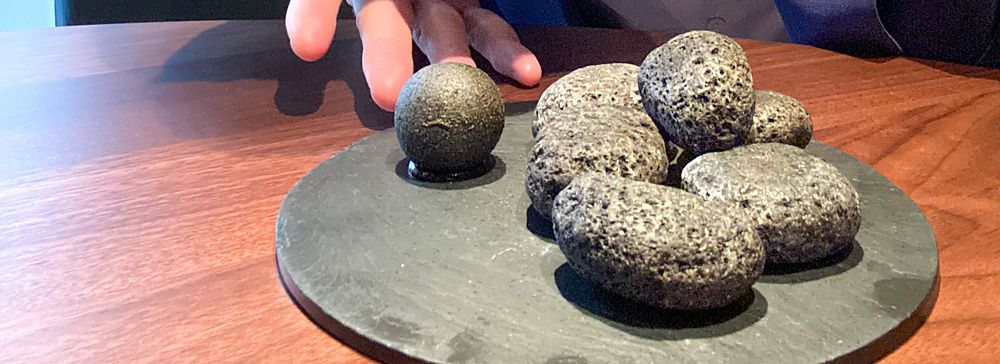
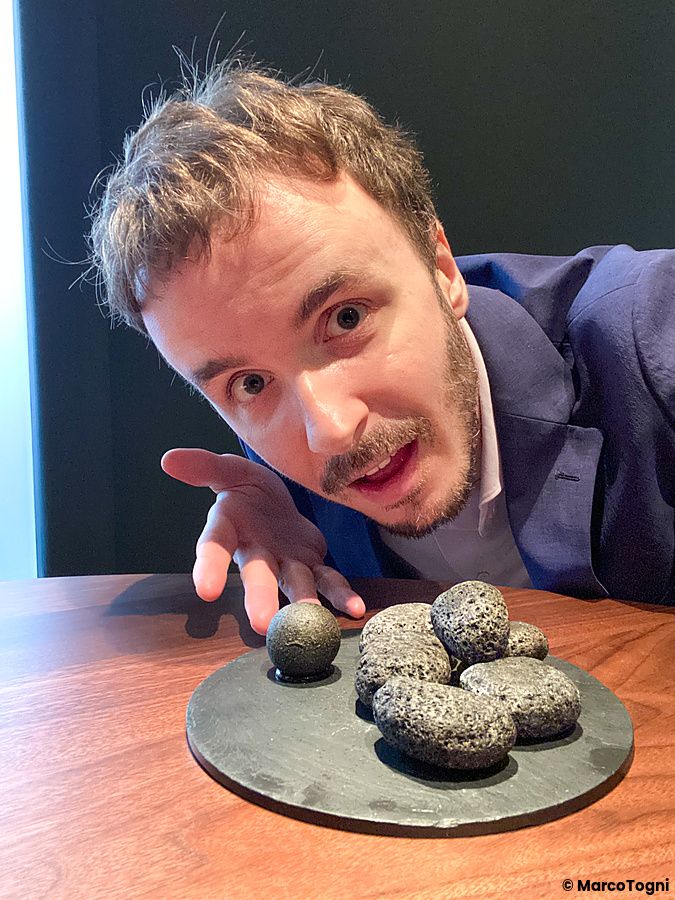
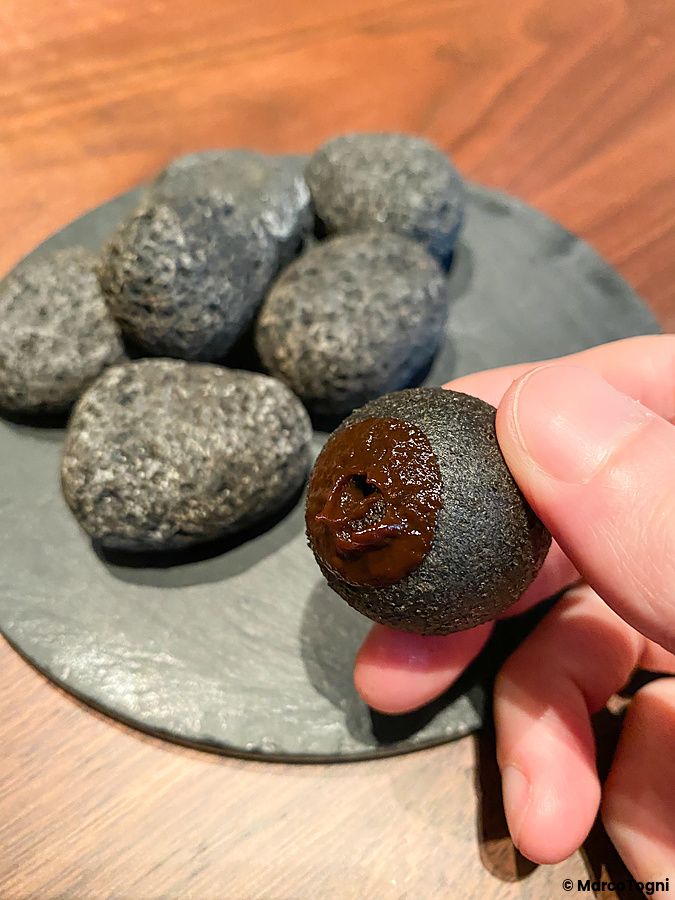
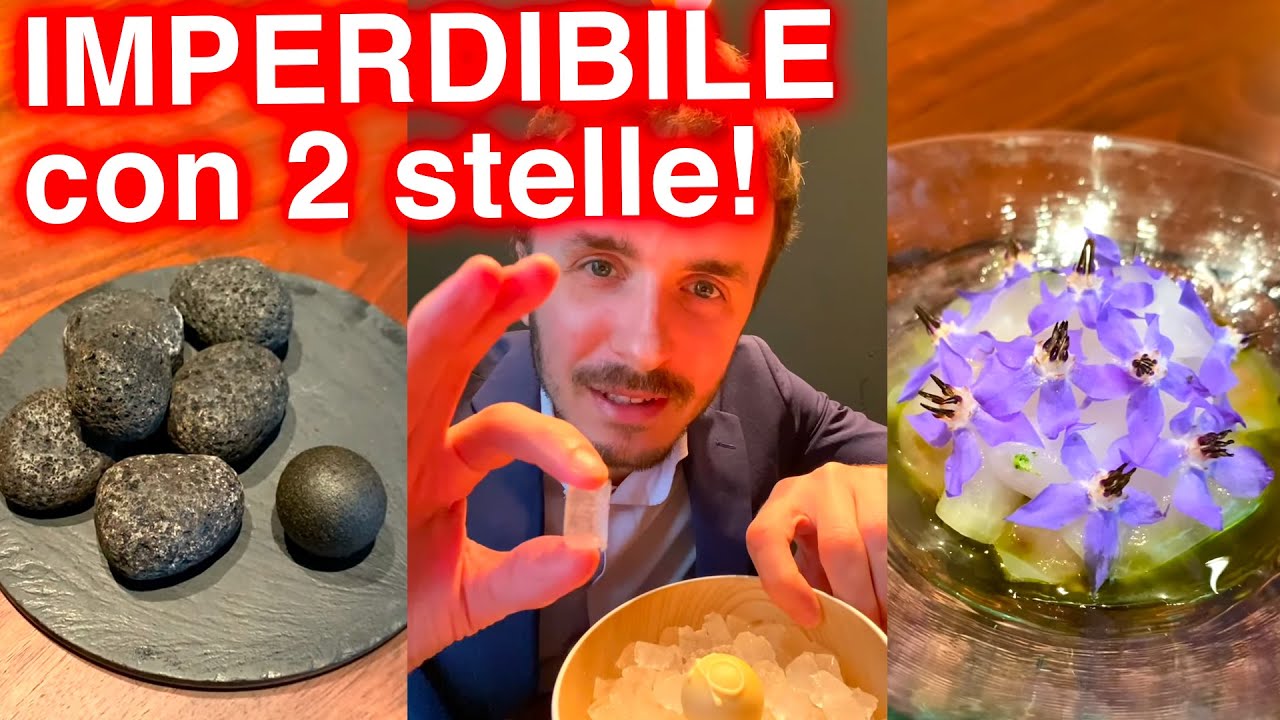
I'm about to try the restaurant's signature amuse-bouche, a fake stone made of boudin noir, hidden among real volcanic rocks coated in vegetable charcoal.
I pick up the only edible piece in the arrangement. You find it by touch before you find it by sight, so be ready to get your fingers a little dirty.
Chef Yusuke Takada
Takada grew up on Amami Oshima, the subtropical island between Kyushu and Okinawa, and discovered French cooking as a teenager watching TV.
After culinary school he left for Paris, first working at Taillevent and then at Le Meurice under Yannick Alleno. He arrived without speaking French and stayed on in the kitchen until he’d made a name for himself.
When he came back to Japan he opened this restaurant. The first star came after a year, the second six years later, and he’s kept it ever since.
He still cooks with Amami citrus and Kagoshima black chicken from the island where he grew up, and you’ll find both in the dishes. If you come back after a while, the kitchen keeps track and tries not to serve you the same dishes again.
There’s only one tasting menu, the same at lunch and dinner, and it changes with the seasons and with whatever comes in from the market.
It starts with a series of one-bite dishes and goes on for quite a while, through fish and meat to a pre-dessert and petits fours at the end. Of the many, many dishes that arrive, these are the ones that stayed with me:
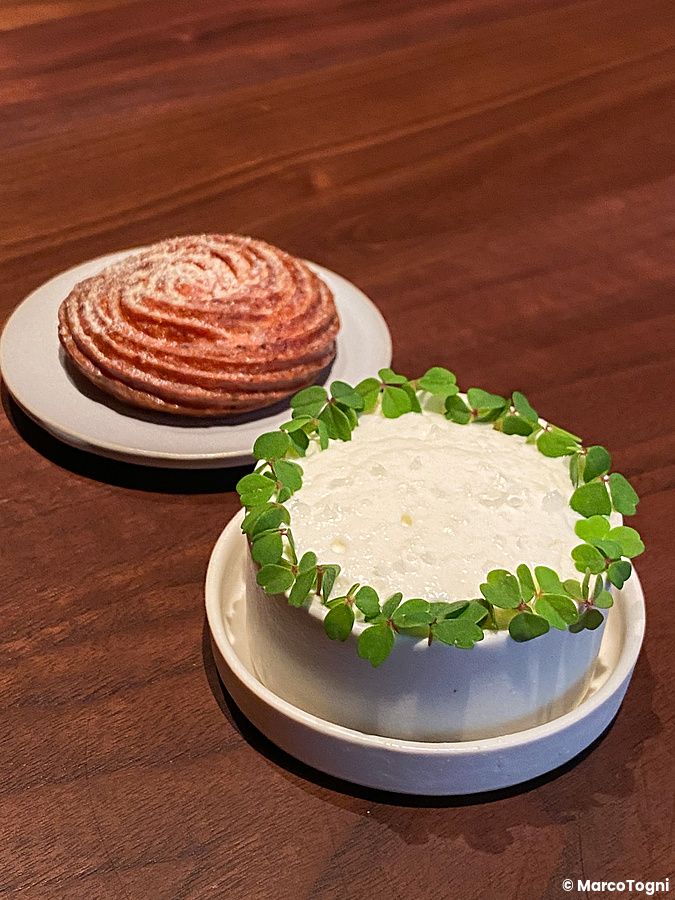
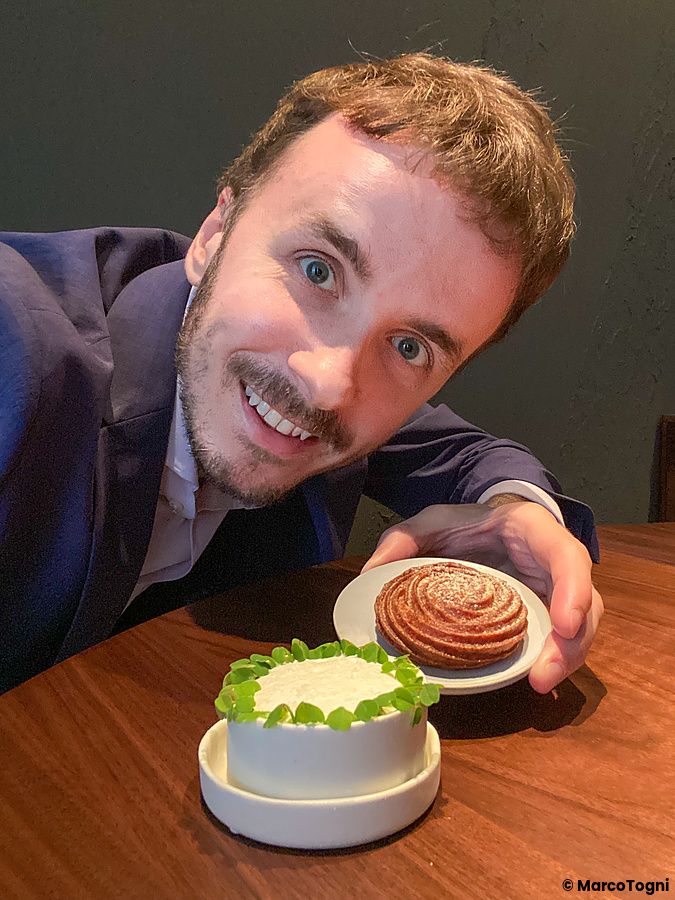
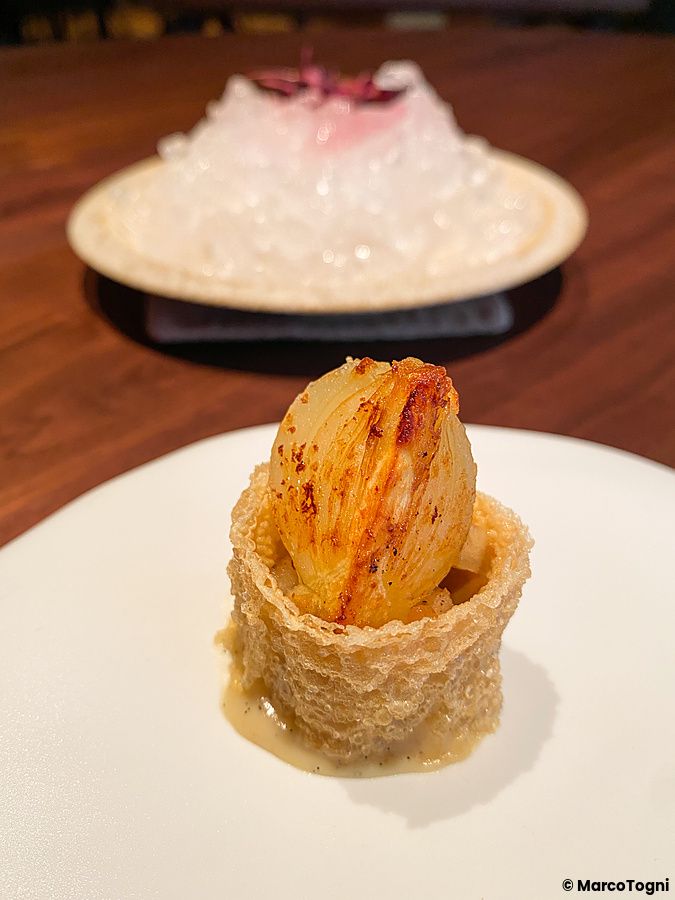
On the right, parsnip purée wrapped in yogurt. On the left, a savory pinwheel with a ridged top. Eat the vegetable first so nothing masks its delicate flavor.
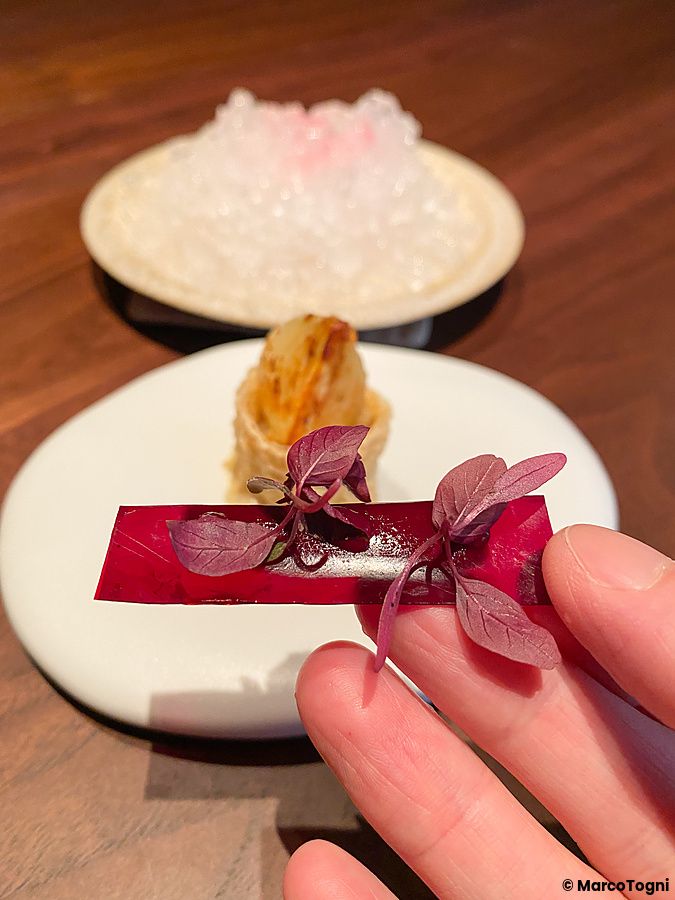
I'm holding a thin beet crisp topped with amaranth flowers. It's crunchy and melts on the tongue right away.
Boudin Dog, the edible stone: the house signature bite. It’s a small ball of blood sausage painted black with bamboo charcoal that looks just like a gray stone on the plate, and it’s meant to go down in one go.
Savory yogurt with a pinwheel: the pinwheel sits halfway between sweet and savory, and for me it was one of the best moments of the meal.
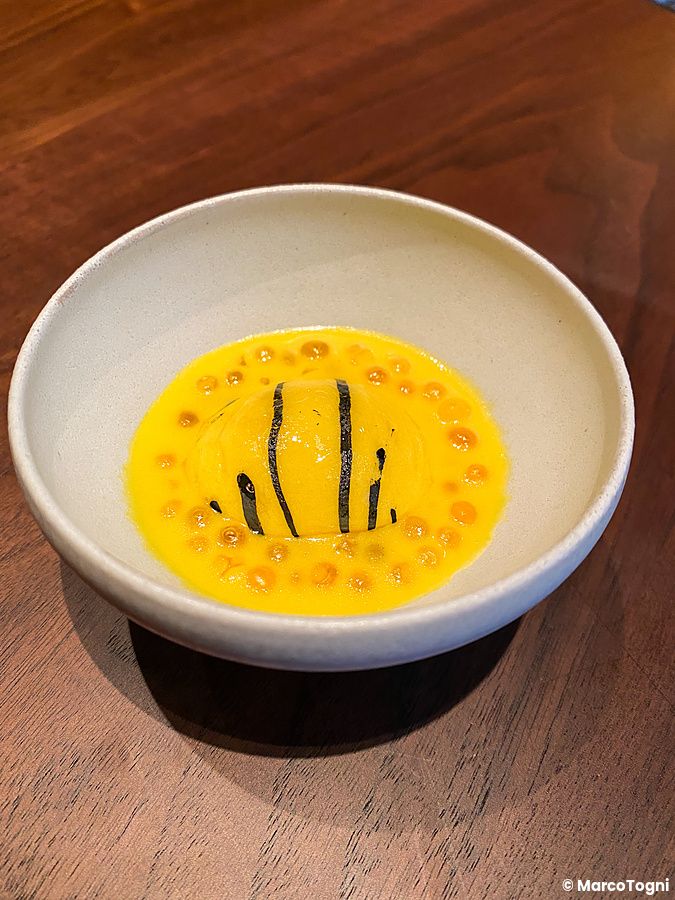
Sole with fish roe and saffron sauce: delicate fish in a sauce that gives the whole dish its aroma and its color.
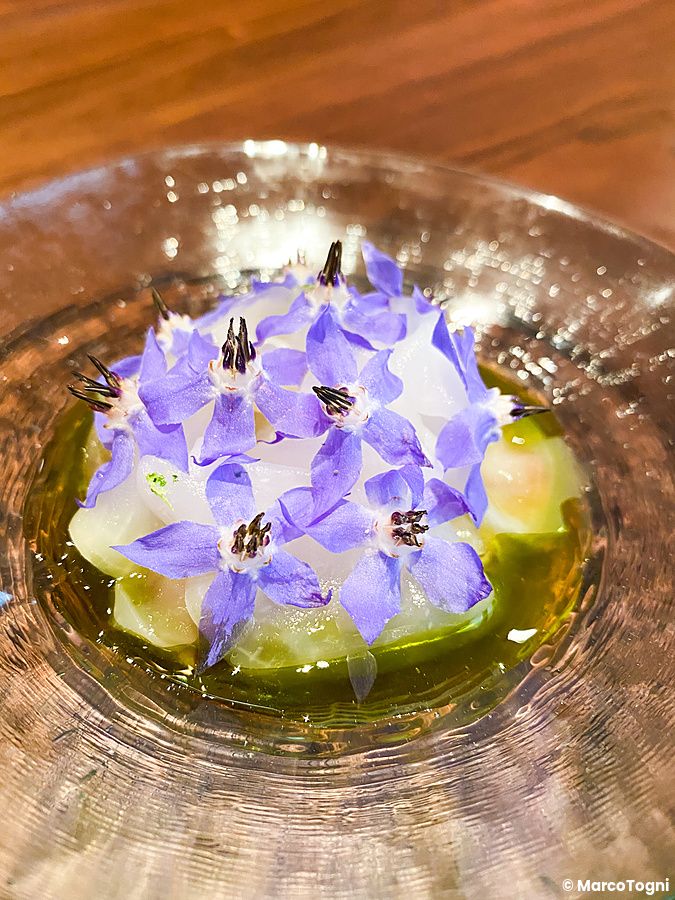
Sea cucumber with borage flowers: flavors of the sea with a green note you don’t see coming.
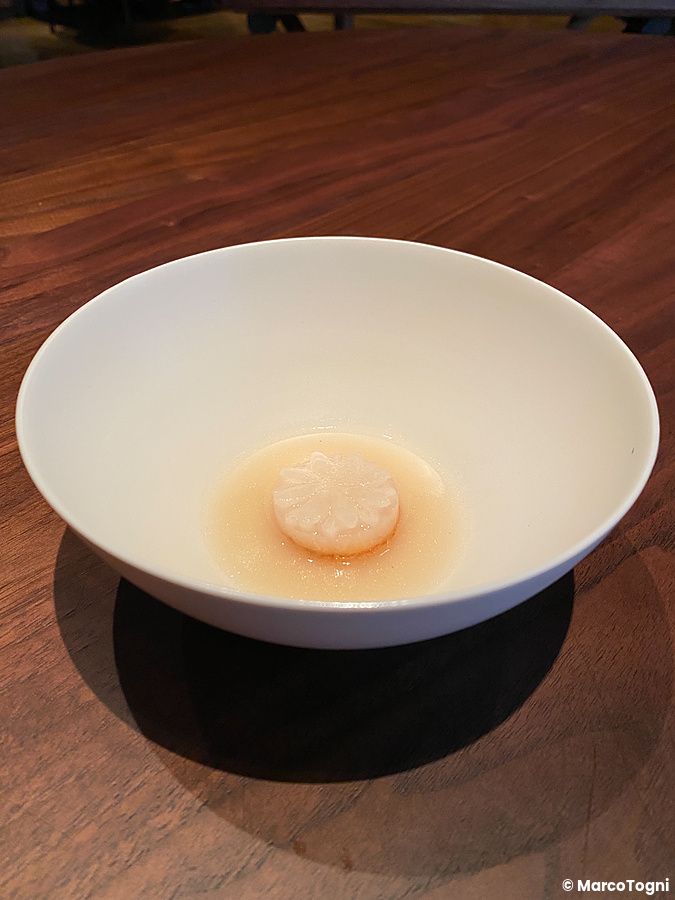
A piece of daikon carved into a flower sits in clear broth. The technique is Japanese, but the dish arrives with the precision of fine dining.
The sole sits in a thick, saffron-colored sauce loaded with fish roe. The little pancake is there to mop up every last drop.
The courses are tiny, but so many of them come out that by the end of lunch you leave genuinely full.
This is truly creative cooking, with combinations that catch you off guard. If you’re after classic French food and big, generous plates, this is something else entirely. The stone at the start sets the tone right away. The Japanese side of the menu comes through in the details: crispy yuba filled with tofu cream, carved daikon in clear broth, soy butter for the bread, maitake inside French toast.
You’d never find these ingredients in a traditional French restaurant, but here they’re prepared with French sauces and French cooking methods, and that’s what gives the menu its own identity.
For the menu, budget around 35,000 yen per person, tax and service included. It’s expensive, no point pretending otherwise, and it’s not a place you go every day. But given the level of the cooking, the number of dishes and the three hours at the table, I think it’s worth every yen.
I go back when I have something to celebrate and want a lunch that becomes the main event of the day, because Osaka doesn’t have many places like this.
Sea cucumber and turnip sit in the middle of a clear glass plate. The vinegary liquid at the bottom balances the strong flavor of the seafood.
A flan with oyster and celery, French toast with maitake mushrooms, shrimp and wagyu beef, and cabbage leaves wrapped around a hidden scallop.
The menu is fixed, but when it comes to drinks the choice is yours. The wine list is mostly French with a few Japanese labels, and the staff can pair a glass with each course.
Those glasses add up faster than you’d think, though. If there are two of you, asking them to recommend a bottle makes more sense.
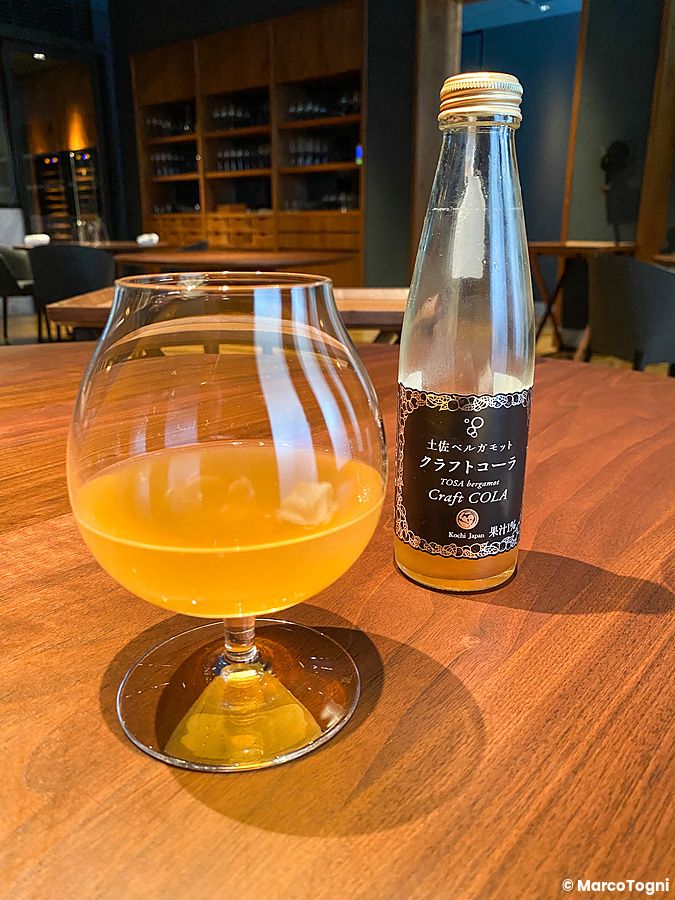
If you don’t drink alcohol, they won’t just pour you water. They have Japanese craft soft drinks, like a bergamot cola from Tosa, which cut through the richness between bites without covering up the flavors of the dishes.
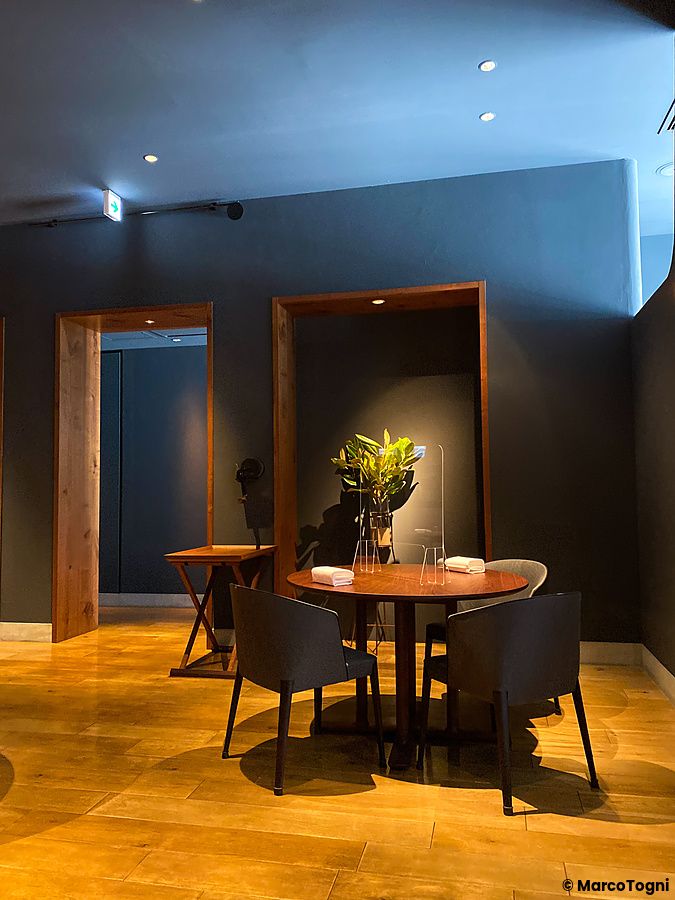
In the main dining room, dark wood and spotlights set each table apart. It's the kind of room where you naturally keep your voice down all through dinner.
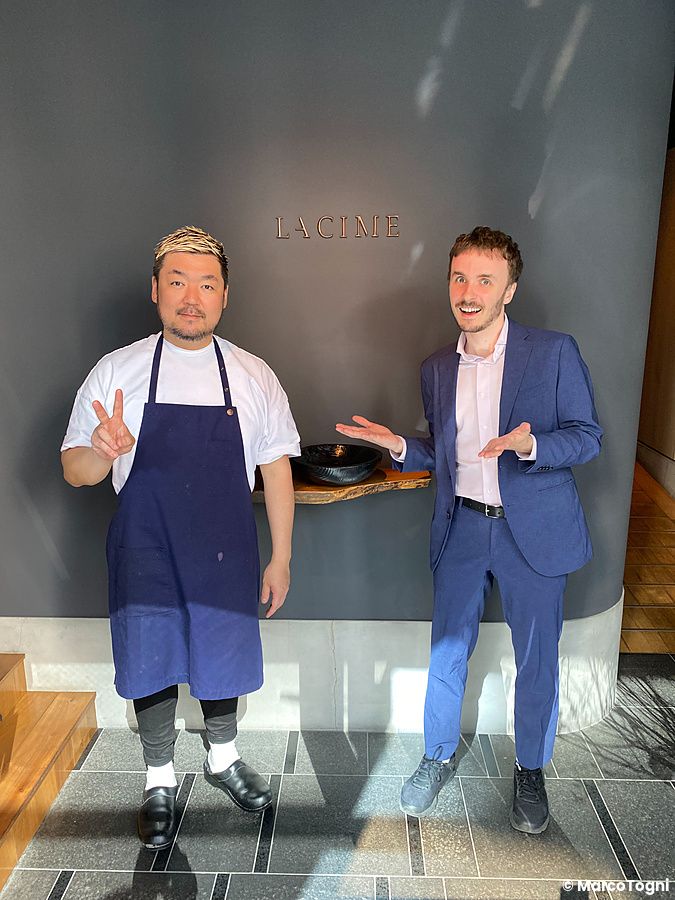
I stop to say hello to chef Yusuke Takada under the restaurant's sign. He's in his chef's uniform and carries himself with the serious, formal bearing you see in Japan's top kitchens.
Inside, everything is very understated: a few tables, light colors, nothing to pull your attention away from the food.
There are about twenty seats in all, so you can eat at a relaxed pace and the staff look after you closely. They speak good English and explain every dish.
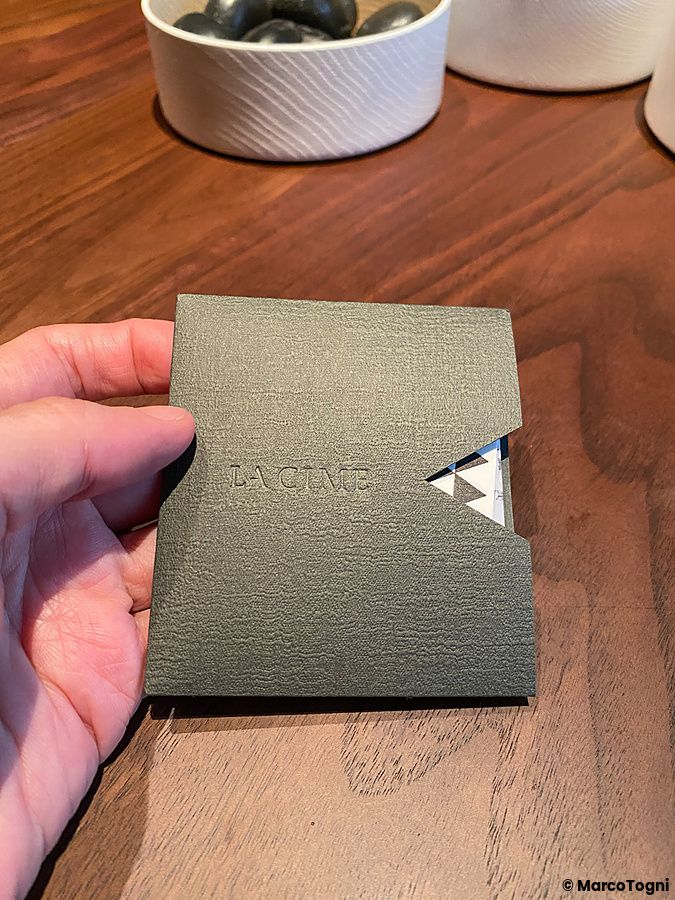
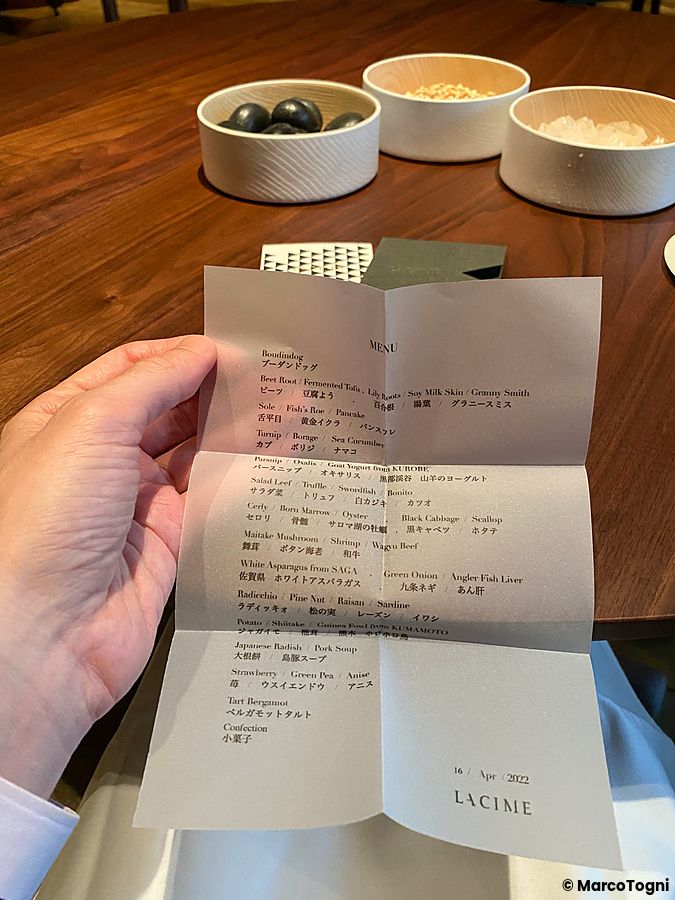
The dark card menu holder matches the minimalist look of the dining room. The restaurant's visual style carries through to the graphics of its printed materials.
I read the list of courses, which mixes classic French ingredients with local ones like wagyu beef and maitake mushrooms. It gives a clear idea of the flavors to come.
The short version
Pros:
A very long menu of small, unconventional dishes, and by the end you’ve had plenty
French technique and Japanese ingredients, with combinations that surprise you
Attentive service in English and a quiet room with about twenty seats
Cons:
A high bill, best saved for special occasions
Three hours at the table, so you need the day free
Best for: a special-occasion lunch or dinner when you love creative cooking and can spare three hours at the table
Atmosphere: bright, understated dining room, only a few tables, elegant but relaxed
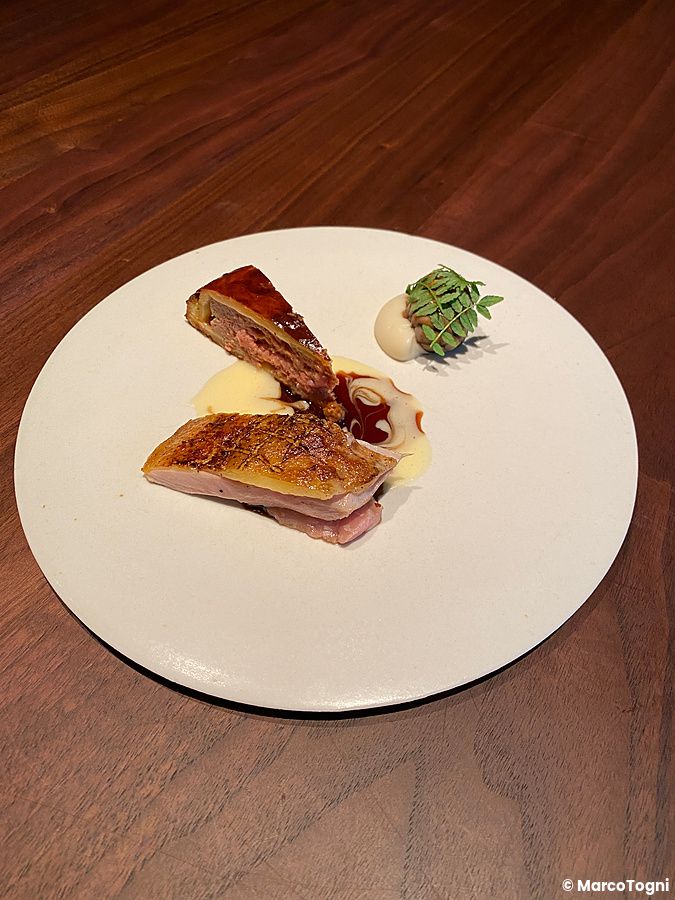
The guinea fowl comes two ways, one piece roasted and one wrapped in crisp pastry. The two sauces underneath tie the different cooking methods together.
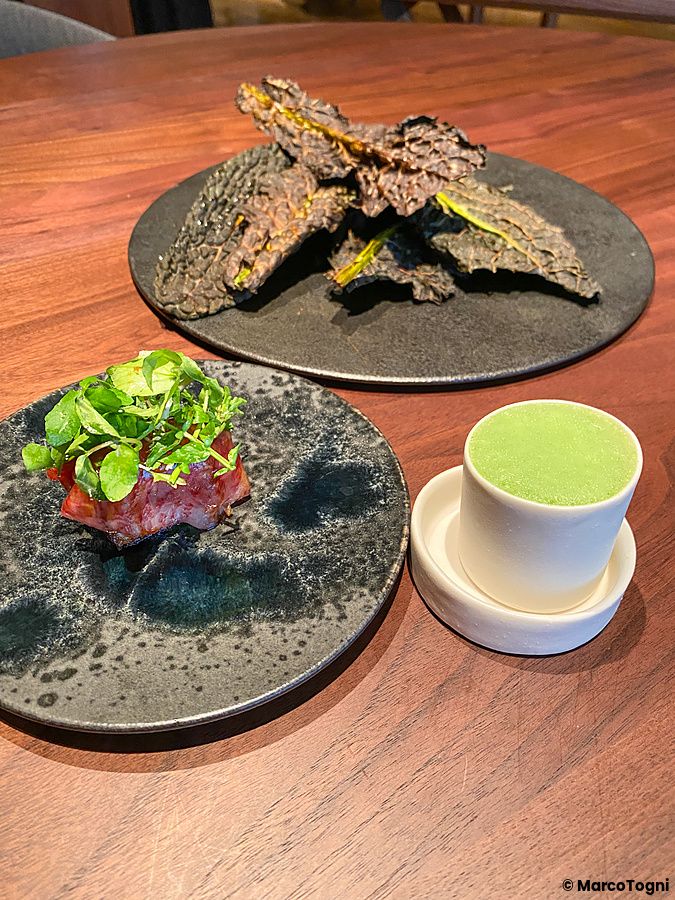
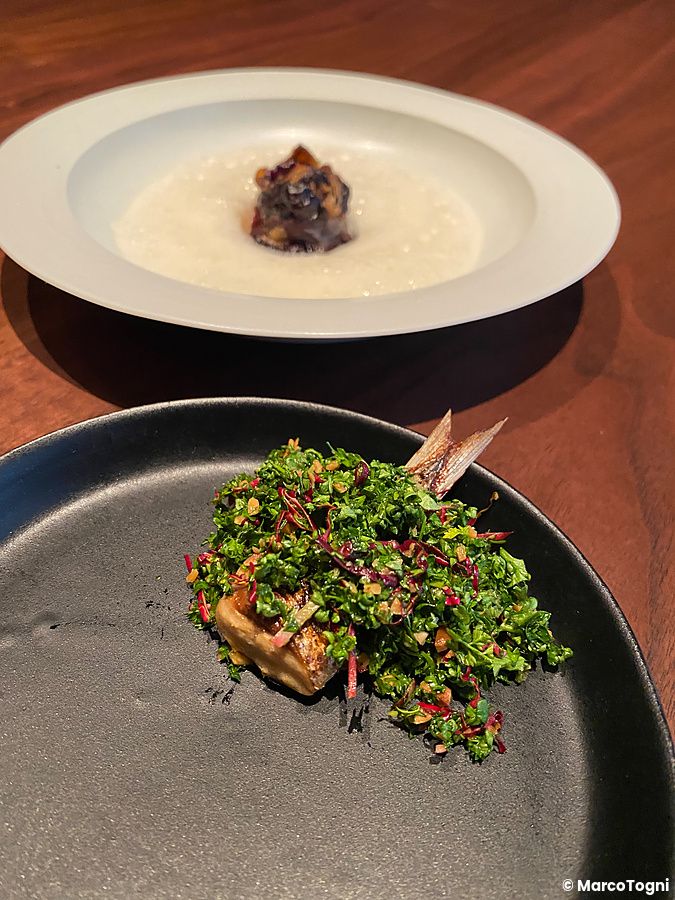
A grilled sardine covered in fresh parsley stands out on the dark plate, with a bed of radicchio behind it. The bitterness balances the strong flavor of the fish.
Final thoughts
What stays with me when I walk out is the first bite: a gray stone sitting on the plate. You stare at it for a few seconds before you realize you can eat it. Start there, then stop trying to guess what’s coming next, because that’s the whole game, and it lasts the entire lunch.
If you only go once, don’t skip the yogurt. That sweet-and-savory pinwheel is the dish you’ll be talking about on the way home, along with the sole in saffron sauce. Keep the whole day free with nothing scheduled afterward, because it would be a shame to get up from that table and rush off somewhere else. Put it at the top of your Osaka plans and build the rest of your trip around it.
I'm waiting to start on the first small dishes, with the savory goat's milk yogurt front and center. White ceramics against dark wood show up all through the meal.
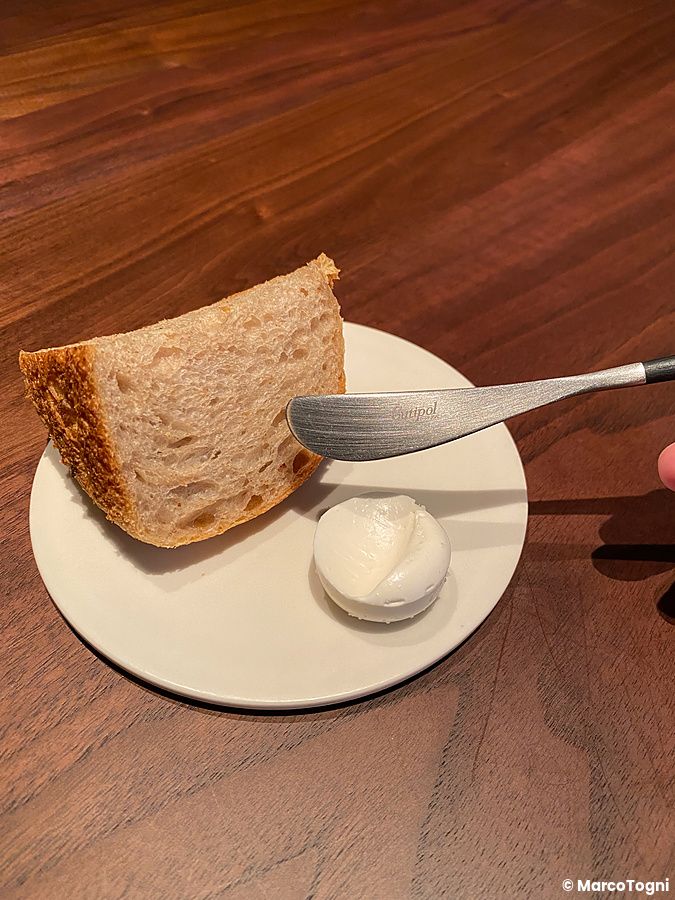
I spread soy butter on a slice of thick-crusted bread. Note the Cutipol flatware, which keeps turning up in restaurants that go for a contemporary look.
A crispy yuba filled with tofu cream and caramelized apple sits on a white base. The first bite reveals layers of very different textures.
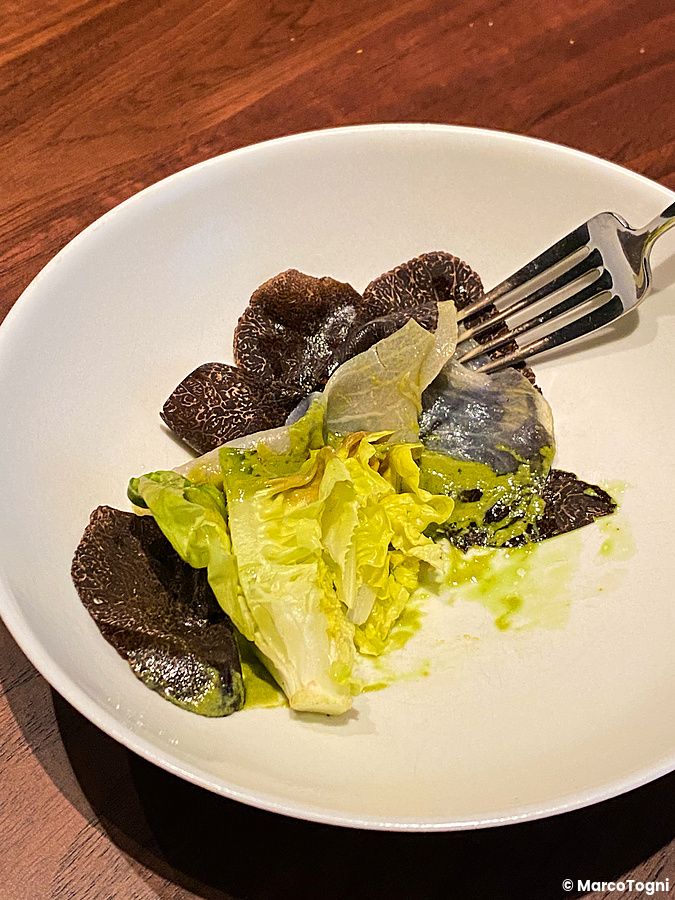
I move the grilled salad greens aside to uncover the swordfish underneath. Slices of black truffle add an earthy note to the very concentrated green sauce.
I order a craft bergamot cola from Tosa. It's a good alcohol-free option that cuts through the richness between courses without changing the flavors.
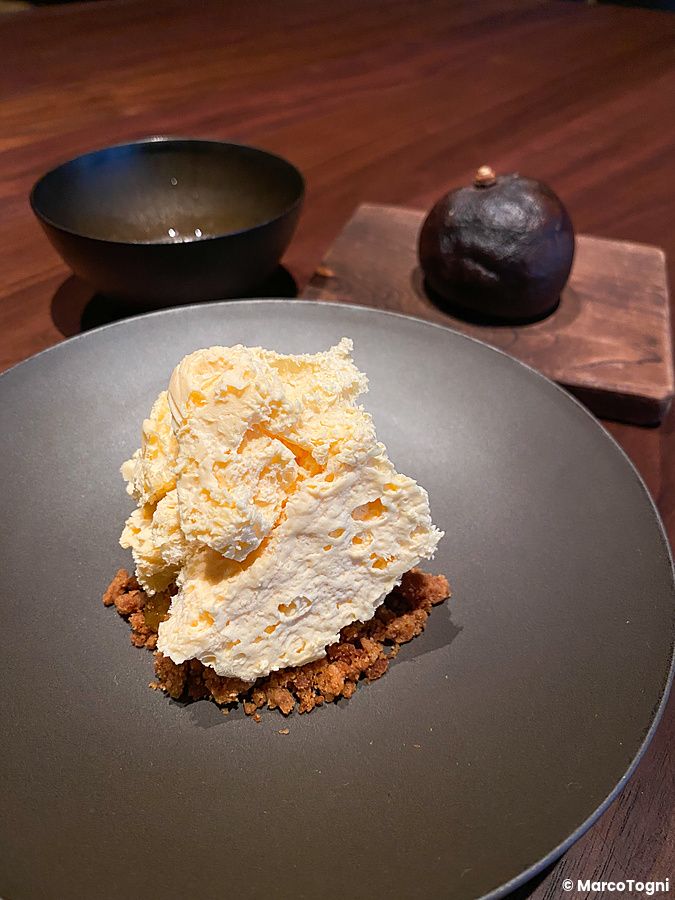
An elegant bergamot dessert with meringue.
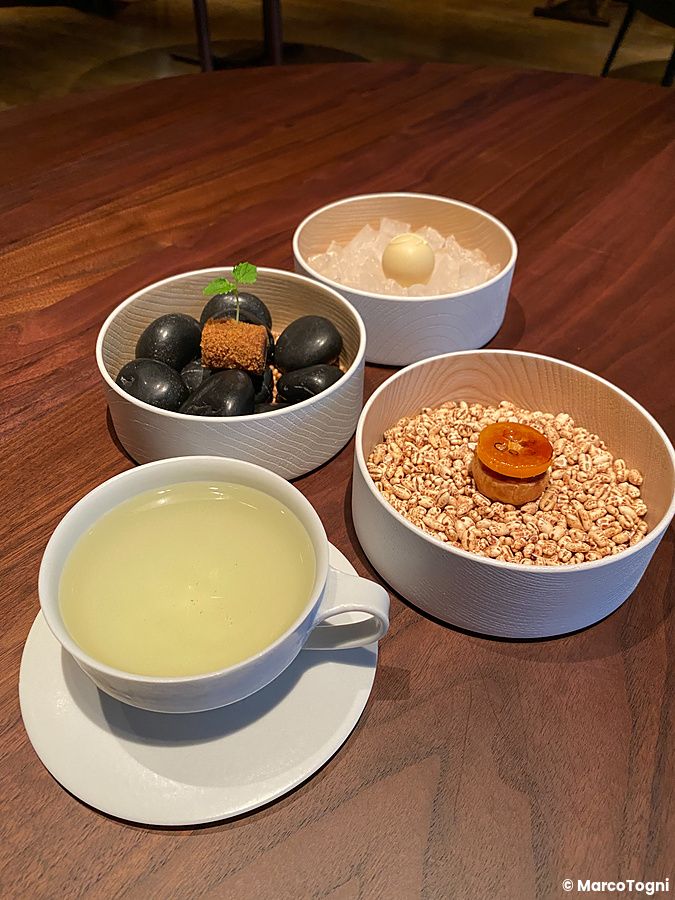
The petits fours come in three wooden cylinders, served with a hot herbal tea. Take your time over every last bite.
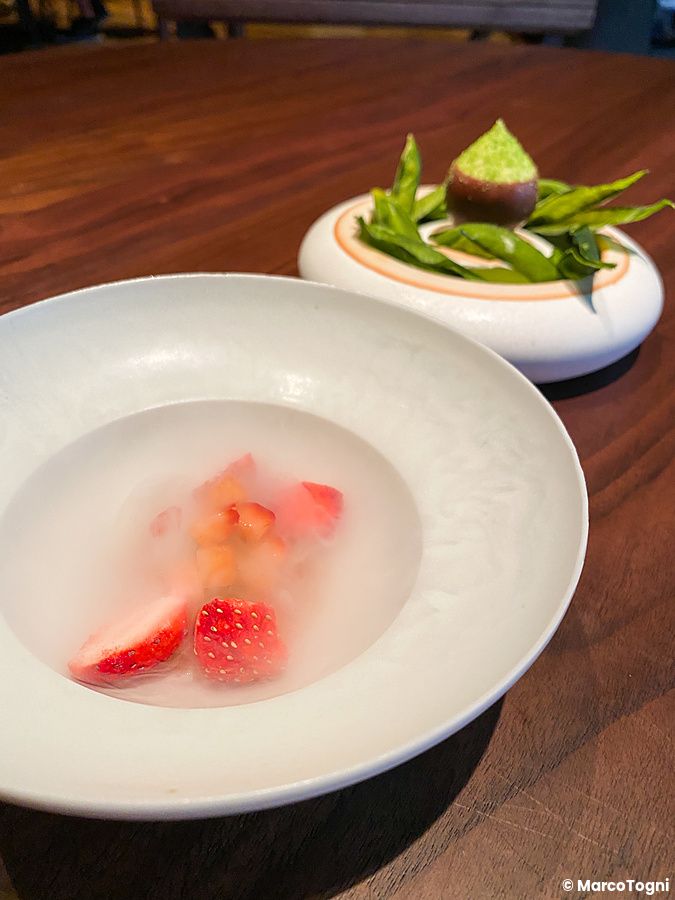
The desserts are strawberries in cocoa vinegar and a mix of green beans, anise and chocolate. The pairings are bold and designed to leave your palate clean at the end of the meal.
Getting There
The Midosuji Line runs between Namba and Umeda. From its Honmachi Station, take Exit 1 and walk five minutes past the office buildings of Kawaramachi. If you're on the Sakaisuji Line, get off at Sakaisuji-Honmachi. The walk from there takes two minutes longer.
The entrance is easy to miss, on the ground floor of an ordinary building on a quiet street, so have the address saved on your phone before you set off.
Time needed: About 3 hours at the table, at both lunch and dinner. There's only one tasting menu, with around fifteen courses.
Closed: On top of the regular weekly closing day, the restaurant closes one day a month on a rotating basis. It also closes for a year-end break and a summer vacation, so check the dates when you book.
Booking: Required: reservations only. You can book online on the official website or by phone. Dates open one month ahead, and with only about twenty seats they go fast. Mention any allergies or food intolerances when you book, because nothing can be changed on the day. Groups of five or more are seated in a private room, with a 15% surcharge.
Tips: Don't fill up on the first bites. The menu is very long and the petits fours at the end are almost a course of their own, so go easy on the bread and butter. And when the black stone arrives among the rocks, touch it: finding the one edible piece is part of the game.
Getting there:
Honmachi Station (Midosuji, Chuo and Yotsubashi subway lines): Exit 1, 5-minute walk
Sakaisuji-Honmachi Station (Sakaisuji and Chuo subway lines): 7-minute walk
Address: 3-chome-2-15 Kawaramachi, Chuo Ward, Osaka, 541-0048, Japan
My map of Japan: over 4,000 places I've tried myself, each with photos, rating, and hours. Filter by category and rating, find veg-friendly spots and places near you with GPS. No sign-up, right from your phone.

 332 m