 284 m
Toyosu Market284 m
Less charming than Tsukiji.
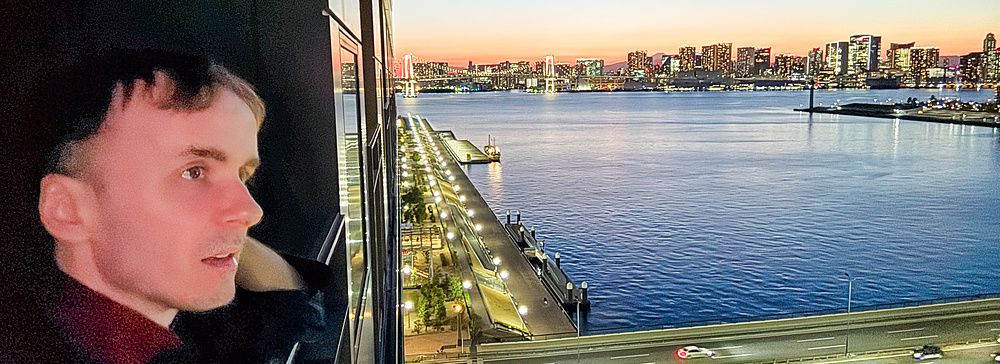
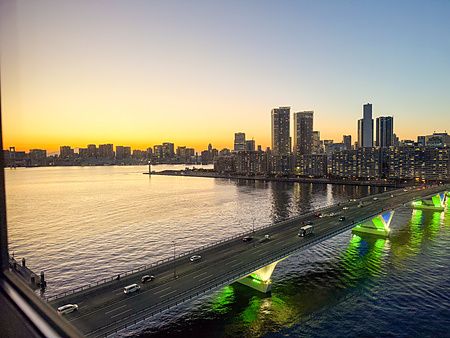
A hotel with an onsen in Tokyo’s Toyosu area, on the bay right across from the fish market, where you can see the water from almost every window. La Vista Tokyo Bay is named for that view: the Rainbow Bridge, the Skytree and, on clear days, Mount Fuji at sunset.
The rooms are big for Tokyo, there’s an onsen with a sauna on the top floor looking out over the city, and breakfast comes with plenty of raw fish. It’s the right place for a special night for two, for an early-morning visit to Toyosu Market, or for feeling like you’re on vacation without leaving Tokyo.
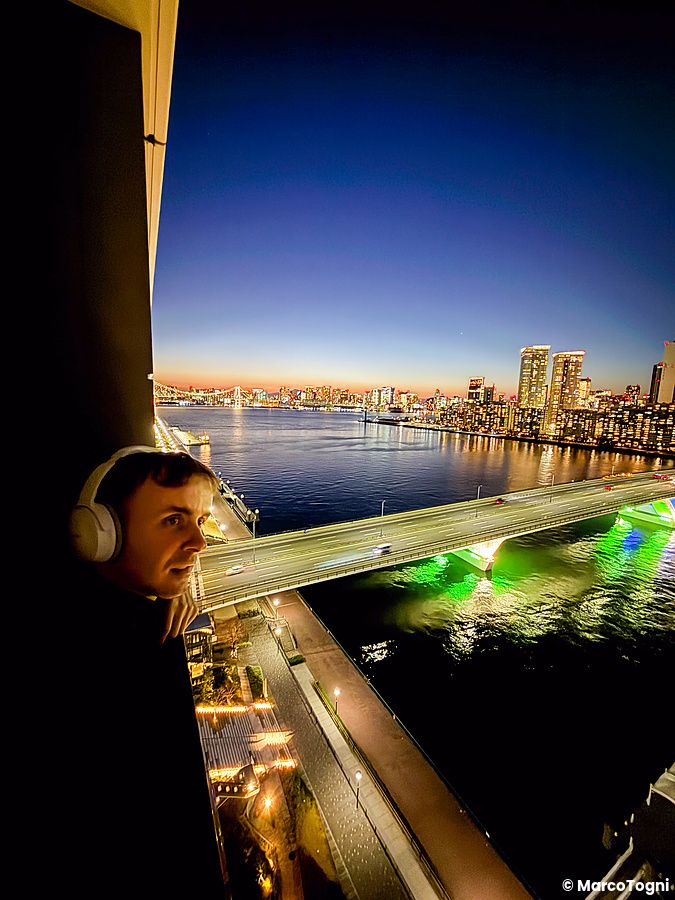
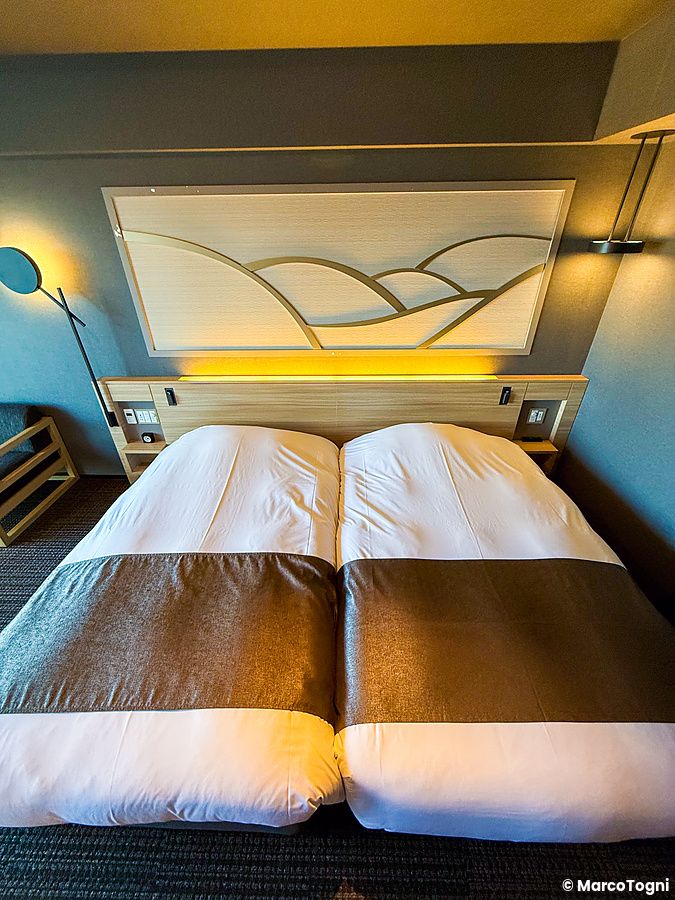
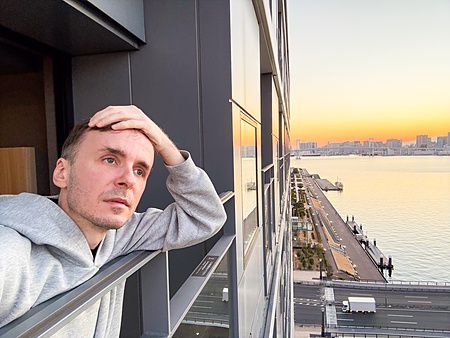
I picked the La Vista Twin with a panoramic bath and balcony, one of the hotel’s best rooms, on the upper floors. It’s spacious by Tokyo standards, with two wide single beds, a sitting area and a window that takes up the whole wall on the bay side. From there you step out onto a balcony that’s a real balcony, not a ledge. In the evening there’s room for two of you to stand out there, with the city lights in front of you and the sea air in your face.
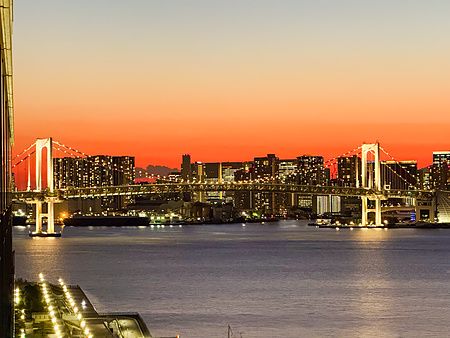
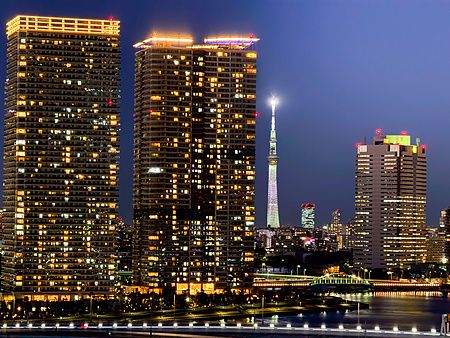
From that room, when the sky is clear, Mount Fuji peeks out from behind the skyscrapers, and at sunset it stands out black against the orange sky. Turn your head and there’s the Rainbow Bridge, which lights up in the evening, and on the other side the Skytree, standing among the lit-up buildings at night like a colorful antenna. Seeing all three from the same window seems almost impossible, but there they are.
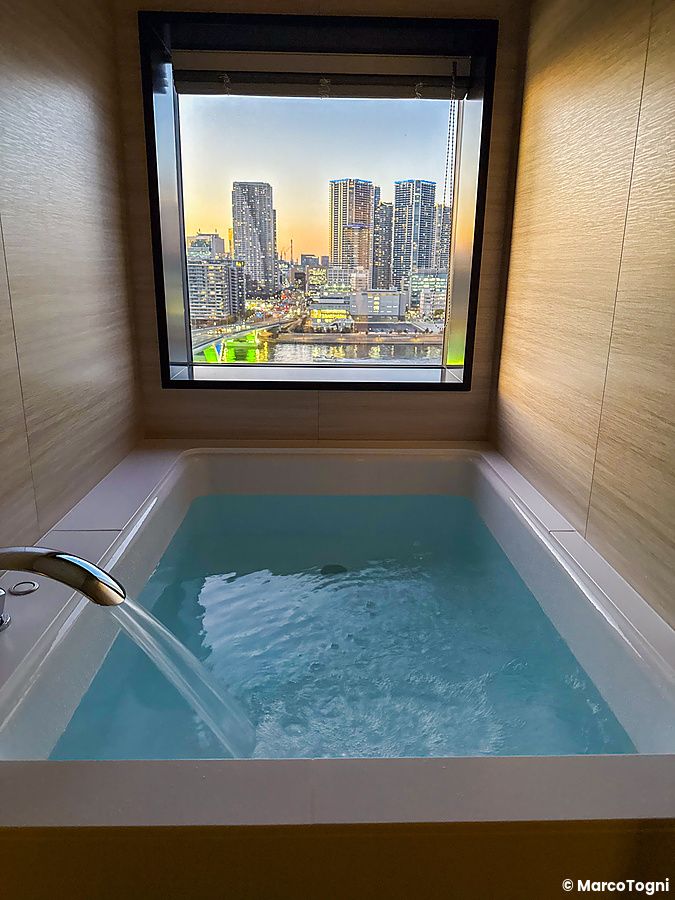
The bathroom is my favorite part. It’s separate from the bedroom and has its own window, and the bath is built in right under the glass. You sit in the hot water looking out at the waterfront, the canal and the buildings lighting up one after another. At sunset it’s the best spot in the room, even better than the balcony.
It’s regular water, not hot spring water, but the real onsen is up on the top floor.
These are the rooms you can choose from:
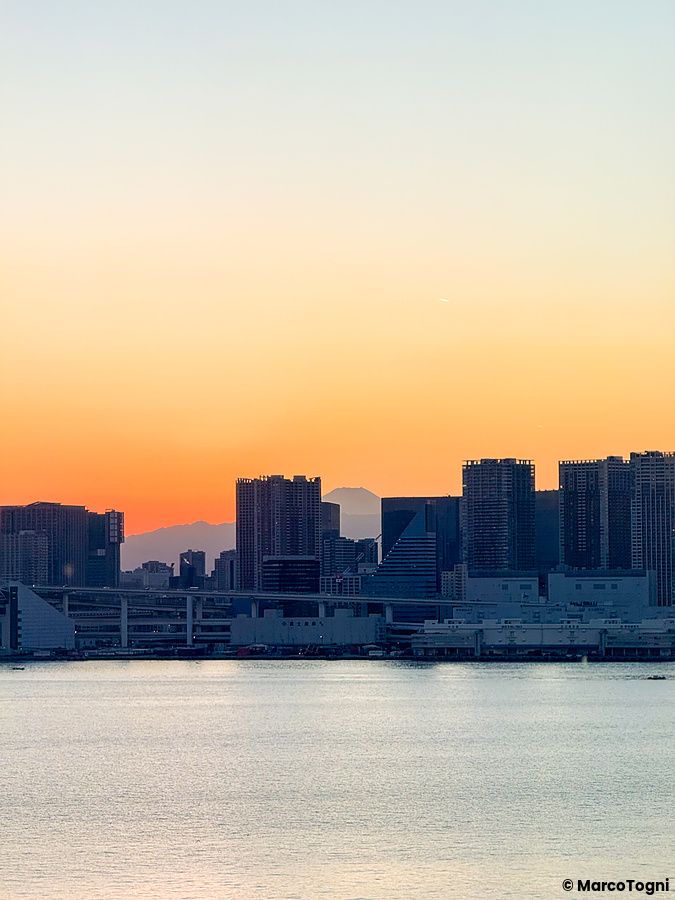
Not all the basic rooms face the bay, and some look out on the canal or the buildings nearby. If the water and the bridge matter to you, ask for a bay-facing room on a high floor when you book. If Mount Fuji is the reason you’re coming, pick a winter day. The sky is clear, the air is dry, and at sunset the mountain stands out sharply.
Two people with two big suitcases fit in the La Vista Twin without any juggling: you can leave them open on the floor and still move around. If you’re looking for the feel of a ryokan with tatami, though, you won’t find it here. It’s a modern hotel, with neutral colors and clean lines, and it feels more like a small seaside resort than a traditional Japanese house.
I wouldn’t put it in the luxury class with the big-name hotels downtown, but it’s very high quality. Prices are upper mid-range, and the room with the bath and balcony costs noticeably more than the basic ones. For what you get, though, it’s good value for Tokyo: a room with that view, a real onsen and a breakfast like this usually cost a lot more in the city.
It’s for people with a big budget, but also for anyone who isn’t rich and wants to treat themselves to a special night or celebrate an anniversary or the end of a trip. There are only a few rooms with the panoramic bath and they sell out fast, so book early and avoid cherry blossom season, Golden Week, Obon, New Year’s and long weekends, when prices go up.
When someone asks me where to spend a night in Tokyo to celebrate something, it’s the first place I suggest. I take the room with the bath, go up to the onsen before dinner, and in the morning have a slow breakfast before heading out.
The onsen is on the 14th floor, the top floor of the hotel, and it’s included in your stay. The water is real hot spring water, dark in color, and the indoor bath is long and lined with stone, with a huge window looking out over the bay. At night you soak up to your neck, looking out at the lit-up skyscrapers, the bridge and the colored reflections on the water.
There’s also an outdoor bath, where you can feel the cool air up there, and a small round bath for one person where you can sit and look out at the city. There’s room to move even when it’s busy, and it’s one of the best city onsen I know.
The sauna is the reason I go up twice every evening. It fits quite a few people, it’s nice and hot, it has a window onto the bay, and right next to it there’s a cold plunge for afterward. You can go through the classic cycle of sauna, cold plunge and rest at your own pace without having to wait.
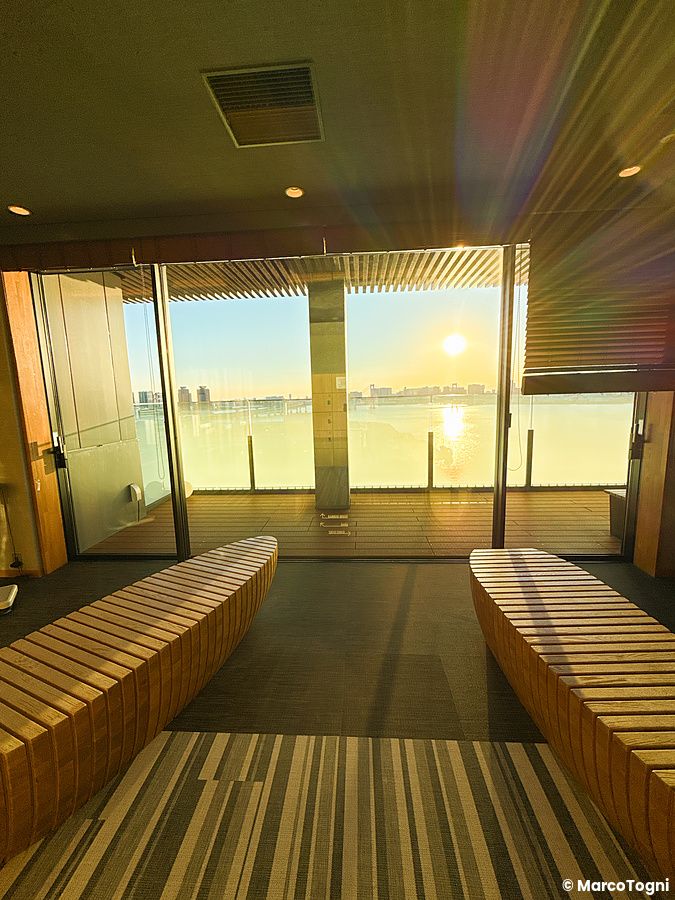
The changing room is nicely done too, with two long wooden benches in front of the windows where you can sit and catch your breath at sunset as the orange light comes through the glass. On the way out there’s free ice cream. It’s a small thing, but after the sauna it’s the thing that makes you happy.
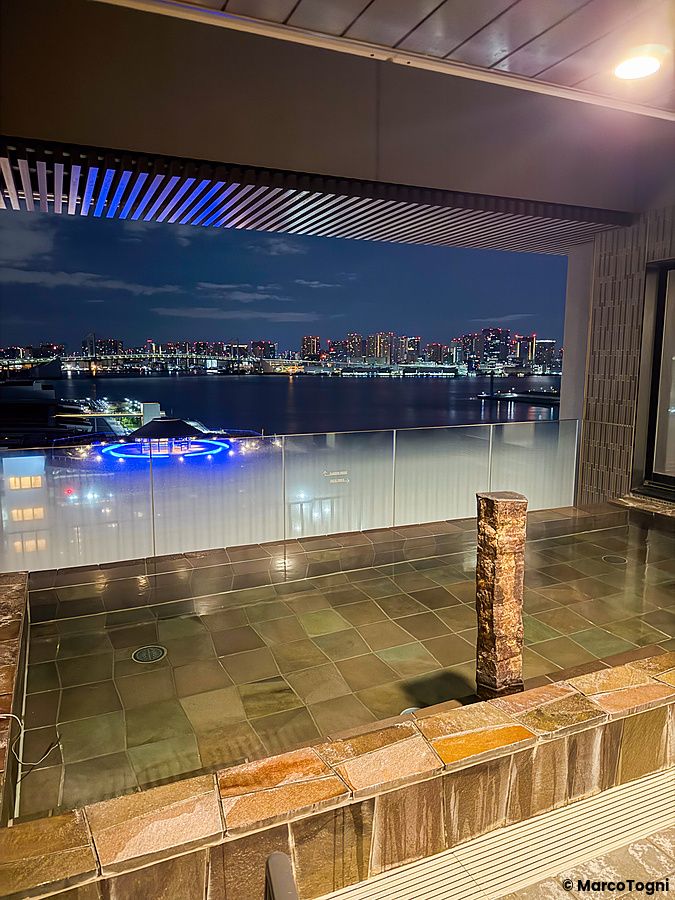
There’s also free soba, a bowl of buckwheat noodles in broth that’s a tradition at this chain’s hotels: you come down in your yukata, eat a hot bowl and head back to your room. If you’re new to onsen, the usual rules apply. You wash sitting down before getting in, you go in naked, men and women bathe separately, and nobody pays any attention.
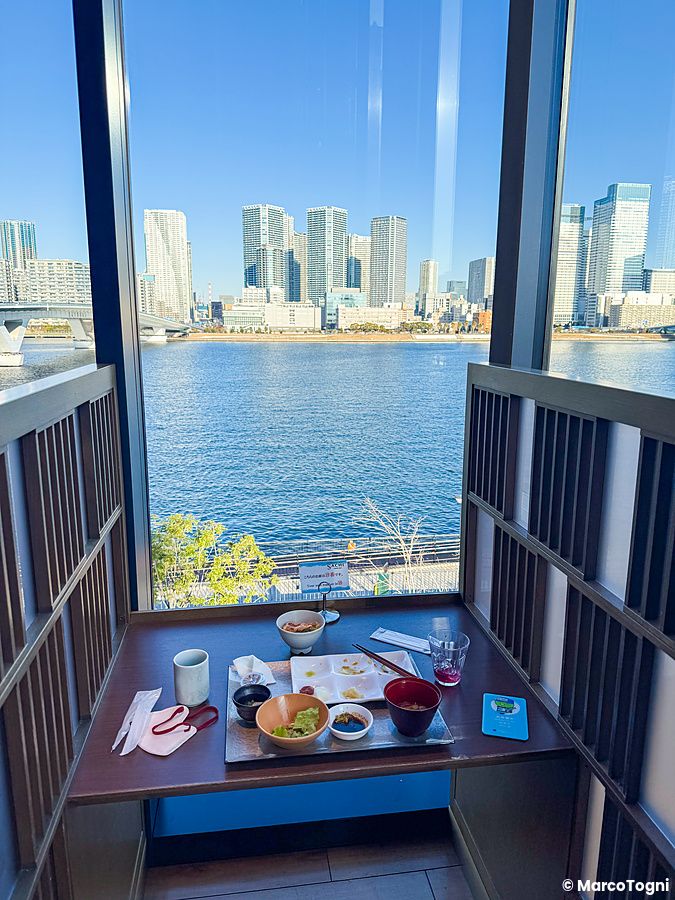
Breakfast is at Sachi, the restaurant on a lower floor, with windows onto the canal and wooden tables along the glass. In the morning the light pours in, and from your table you can see the water, the bridge and the buildings nearby. You take your time eating and looking out.
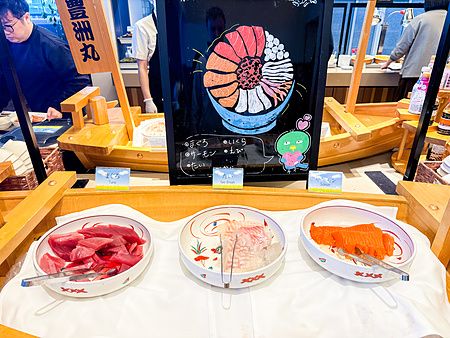
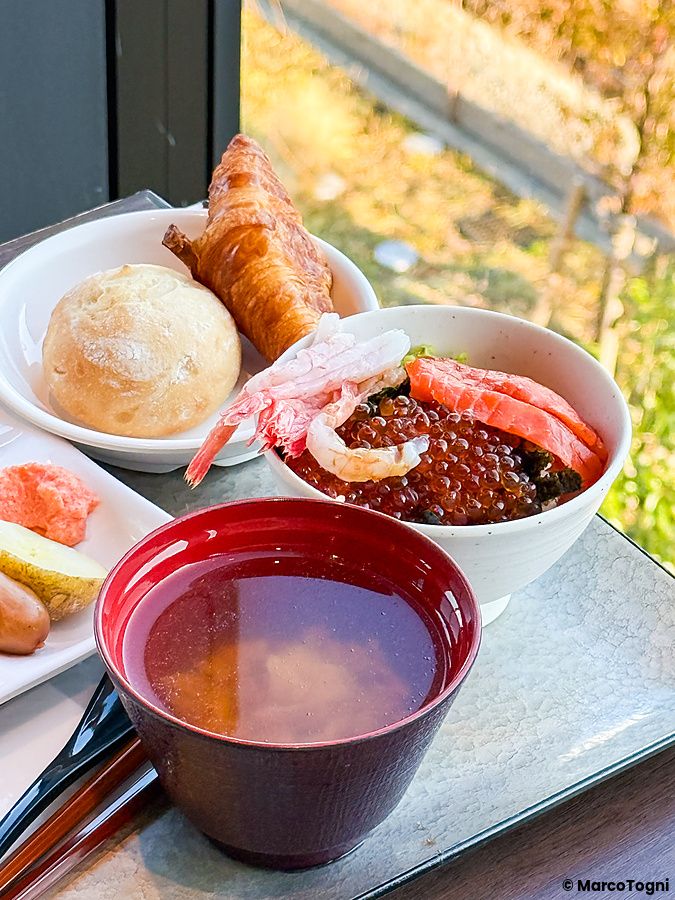
The buffet has a huge spread of Japanese and Western food, but the part not to miss is the fish. There’s a corner with all-you-can-eat raw fish where you top a bowl of rice to make your own kaisendon, with salmon, tuna, shrimp and as much salmon roe as you like.
Given where the hotel is, fish in the morning is the obvious choice. If you don’t want it, you’ll also find bread, eggs, salads, desserts and a small counter serving oden, the Japanese simmered stew usually eaten in winter at street stalls.
It’s easy to overdo it. After a bowl of raw fish and a plate of oden, lunch won’t even cross your mind.
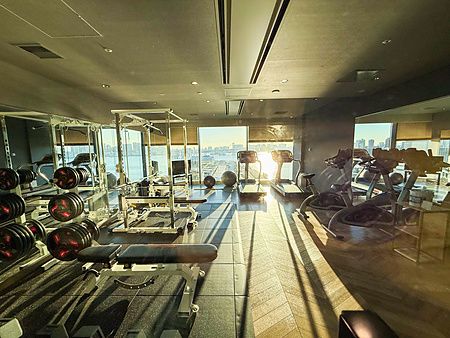
The gym is big and well equipped, with a full range of machines instead of just the two treadmills you find in so many city hotels, and there’s also an indoor pool, open only to guests of middle school age and up. Unlike the onsen, both cost extra.
If you work out when you travel, you’ll find everything you need here. If you just want to relax, I think you’re better off spending your time between the sauna and the baths on the top floor.
Toyosu is built on land reclaimed from the bay, with wide streets, tall apartment buildings, canals and a waterfront with walking paths. In the evening the area is quiet, with none of the nightlife crowds, and you come back to the kind of silence you never get in Shinjuku or Shibuya.
The downside is that the hotel is a bit out of the way for Tokyo’s best-known neighborhoods, since it’s on the bay and not downtown. Getting to Ginza, Asakusa or Shibuya takes a bit longer. If you want to walk back to your room after a night out, it’s not the right choice.
On the plus side, Toyosu fish market is right across from the hotel, and that’s why a lot of people stay here. You head out early in the morning, watch the tuna auction from the galleries, have sushi at one of the market restaurants and come back to the hotel for the onsen.
The guests are mostly Japanese, couples and families who want to spend a night away from home somewhere nice without taking a train to a hot spring town. They’re most of the people you see in yukata in the hallways and at breakfast, and staying here feels more like a short getaway than a night in a city hotel. The staff are friendly and cheerful, and they’re happy to explain how the onsen and the other facilities work even if you don’t speak Japanese.
Pros:
Cons:
Best for: couples who want a special night in Tokyo, people who want to visit Toyosu Market at dawn
Room to ask for: La Vista Twin with bath and balcony, on the bay side
Atmosphere: a seaside getaway in the city, Japanese couples in yukata, water and lights from every window
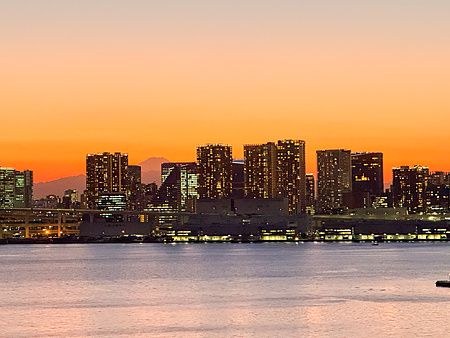
In the evening the light fades slowly over the bay, Mount Fuji disappears into the dark, and the Rainbow Bridge lights up while you’re still soaking in the tub. Then you head up to the top floor for the sauna and go back to your room in a yukata, with the city lit up below your balcony.
The whole night feels like a beach vacation, except that Tokyo is right outside. Get the room with the tub, and book it for the night you want to celebrate something.
The hotel is directly connected to Shijo-mae Station on the Yurikamome. A pedestrian walkway runs from the station exit to the entrance, so you're there in a minute without going down to the street.
From central Tokyo, the best way is to get to Shinbashi and take the Yurikamome from there. It runs over the bay and Odaiba, so you get a great view on the way.
If you're coming on the Yurakucho Line, get off at Toyosu and transfer to the Yurikamome for two stops.
This place is on MarcoMaps
La Vista Tokyo Bay
My map of Japan: over 4,000 places I've tried myself, each with photos, rating, and hours. Filter by category and rating, find veg-friendly spots and places near you with GPS. No sign-up, right from your phone.


La Vista Tokyo Bay - nearby you will find:

