Love Hotels in Japan
Love hotels are everywhere in Japan, yet few travelers know what to expect. You’ve probably noticed those buildings with colorful lights and slightly retro signs, maybe in Shibuya or Kabukicho, and wondered what goes on inside, whether they’re worth trying, and whether they’re safe.
They’re not just “places for couples.” Over the years they’ve turned into themed hotels, and some have become real attractions. It’s a world that’s far more varied than you’d imagine, so I’ll walk you through how they work, what they cost, what to expect, and how to pick the right one if you want to try this unusual experience for yourself.
Contents
- How love hotels work
- Who uses love hotels
- Prices and hours
- What the rooms are like
- Do theme rooms really exist?
- Extras
- Where to find love hotels
- Love hotels in Shinjuku
- Love hotels in Shibuya
- Love hotels in other cities
- How to book a love hotel
- Love hotels and foreign visitors
- Safety and privacy
- Who should try one
- Love hotels and luggage
- Luxury love hotels
- Getting turned away
- Love hotel quirks
- A short history of love hotels
- Etiquette and unwritten rules
- Love hotels vs. business hotels
- Final advice
- Video: Love hotels in Shinjuku
- Video: Love hotels in Shibuya - Dogenzaka
How love hotels work
The whole idea comes down to maximum privacy. Love hotels are for people who want a room for a few hours or for the night without going through a normal check-in. As a rule, nobody will ask for your ID, or even your name.
Right inside the entrance there’s a panel with photos of the available rooms and their prices. You press a button to choose a room, get a ticket or a key, and go in. Some modern hotels are fully automated, and you pay at a machine in the room.
On the panel, a lit-up photo means the room is available and a dark one means it’s taken, so if a photo goes dark while you’re making up your mind, someone just beat you to it by a few seconds. You can’t see the room before choosing it, and once you’ve pressed the button, switching is almost always out of the question, so look at the photos carefully. On weekends you’ll sometimes find the panel almost completely dark. When that happens, try the hotel next door: in the right neighborhoods there’s another one every few steps.
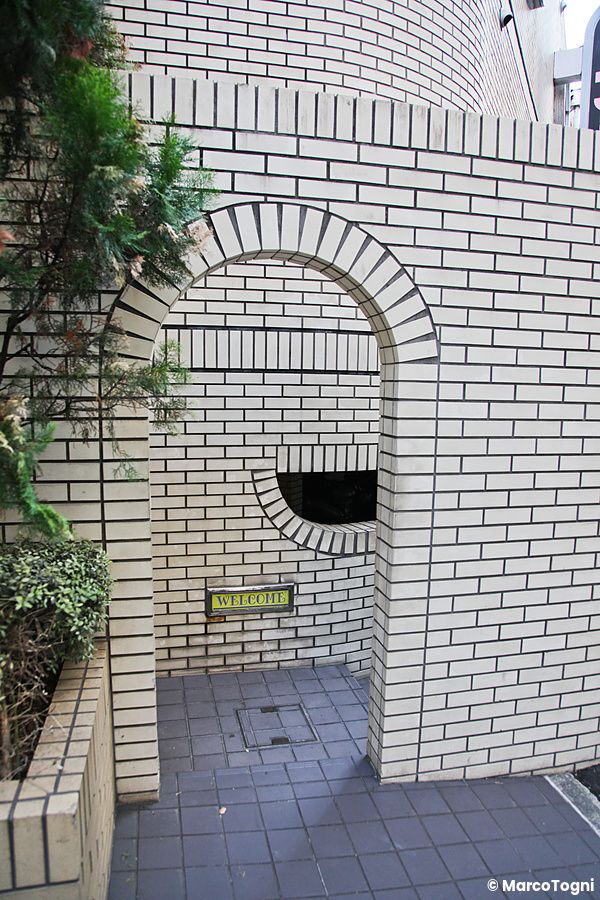
Everything is designed to avoid unnecessary contact. Hotels often have several discreet entrances, separate elevators and corridors laid out so that guests never run into each other.
Who uses love hotels
Love hotels came about to meet a very simple need: a place for some privacy. Their customers are still a mixed crowd today. They’re not brothels, meaning you don’t walk in and find prostitutes there. They’re just hotels that rent rooms by the hour.
Most of the customers are:
- Japanese couples, often married, who use love hotels to carve out some time for themselves away from home
- young couples who maybe don’t live together yet and have no place of their own. Nobody under 18 is allowed in, though.
- couples having an affair, who need a discreet place to meet
- single men who take a paid escort up to the room, or wait for her there after calling a “delivery” service that sends her to the hotel by appointment. This is part of how things work in Japan and it’s perfectly legal, although the love hotels themselves obviously don’t say so openly.

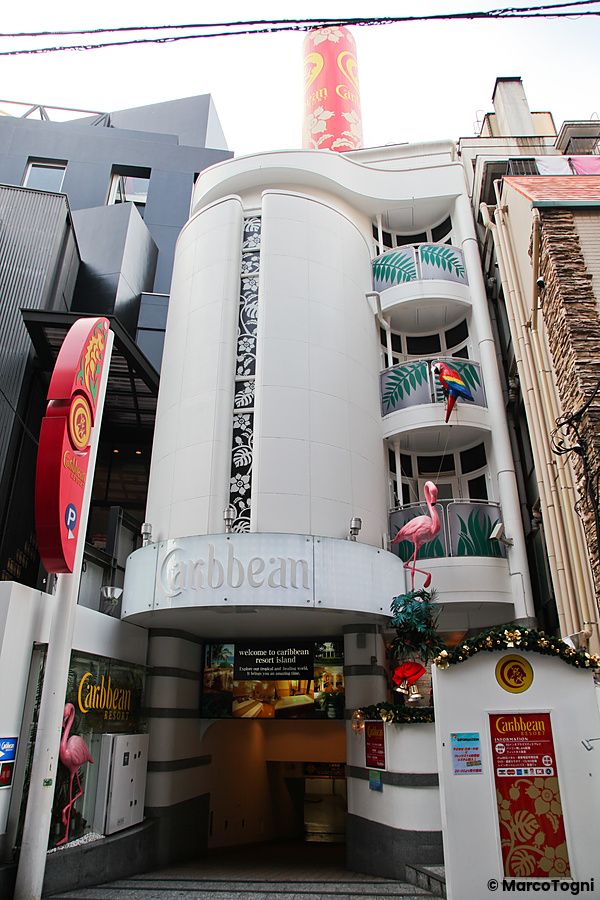
Lastly, in recent years a small share of the customers have been curious tourists who want to try a love hotel for fun or just to see what one is like.
One thing to understand is that Japanese people don’t see love hotels as sleazy. Quite the opposite: they see them as a normal, practical service. Nobody will judge you for going, and sometimes it’s even seen as a romantic thing for a couple to do.
Prices and hours
Love hotels give you a few options for how long you stay. Prices vary, but the system is very clear.
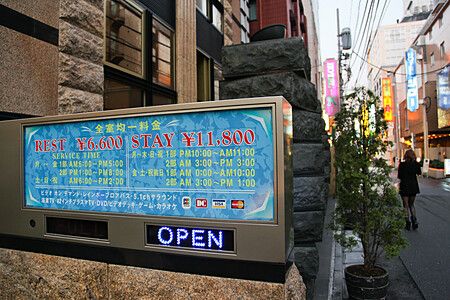
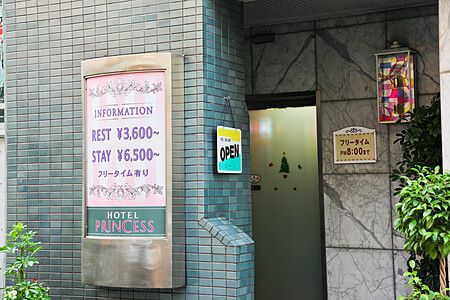
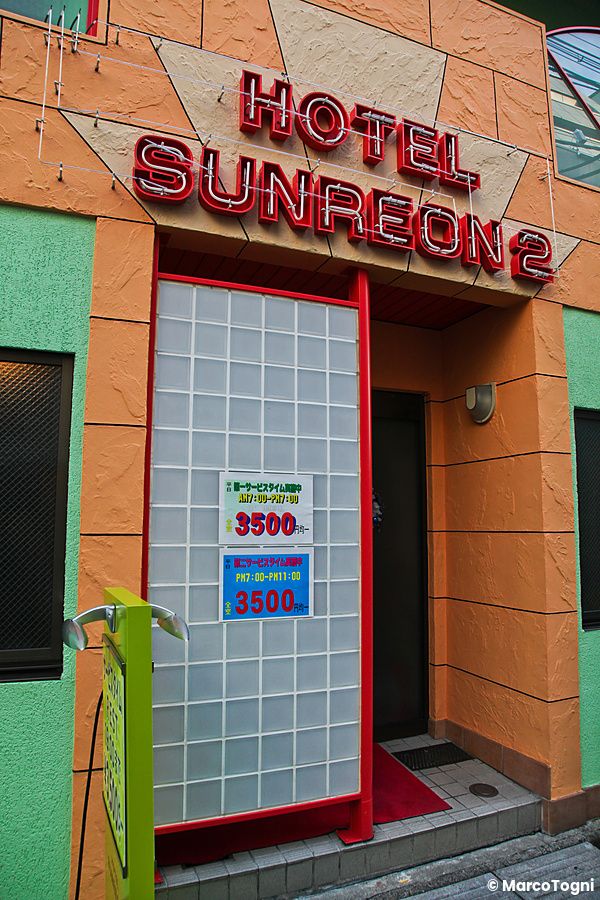
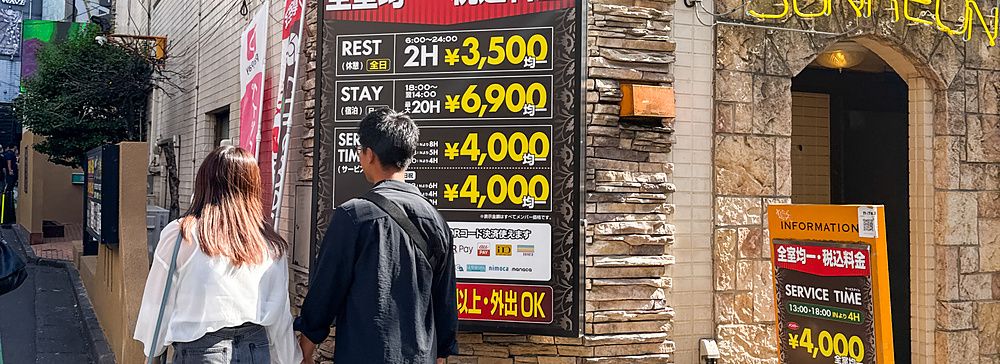
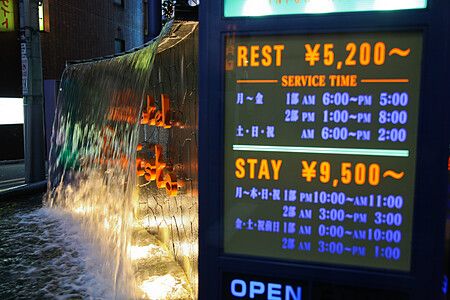
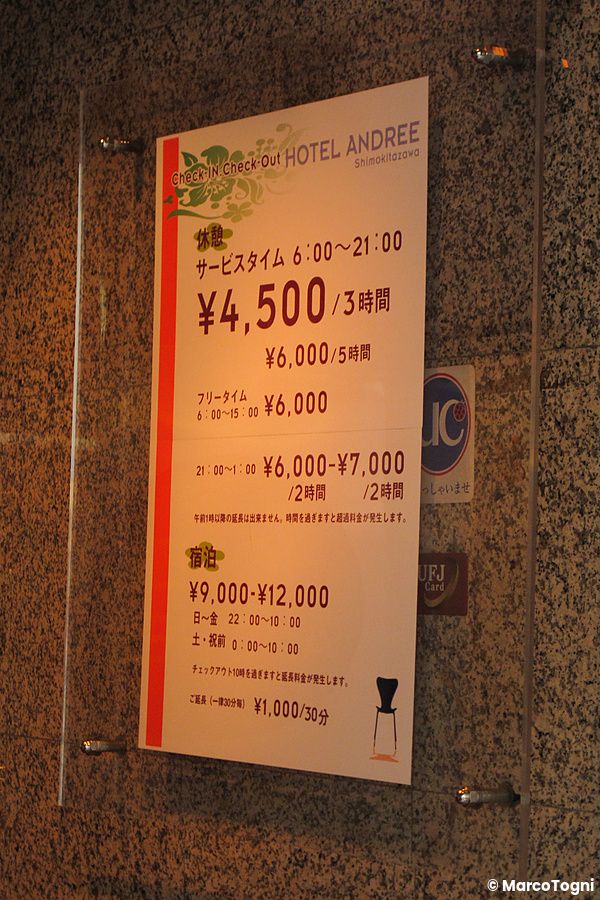
The most common option is the “rest,” which means renting the room for a few hours. You usually choose a block of 2-3 hours, with prices from around 4,000 yen up to 7,000 yen (or more) depending on the room and the area. On weekdays during the day there aren’t many customers because people are at work, so to draw them in, many love hotels offer “service time,” which lets you stay for many more hours at the same price.
If you want to spend the night, you go for the “stay.” Check-in is in the evening, often after 21:00 or 22:00, and you stay until morning (check-out around 10:00-11:00). A stay starts at around 8,000-10,000 yen, but the best rooms can cost over 15,000 yen.
Many hotels also have a third option called the “short rest,” which gets you the room for 30-60 minutes at a lower price, often between 2,000 and 3,000 yen. It’s hugely popular with office workers on their lunch break.
The price you see is always per room, not per person. Whether there are two of you or more (where allowed), the rate stays the same.
Payment is set up for discretion too. At some love hotels you pay up front at reception through a small opening; at others, you pay when you leave. The more modern ones have an automatic payment machine in the room that takes cash or cards.
Be careful not to go over your time. If you stay past the end of your rest, a surcharge kicks in automatically, usually in 30-minute or one-hour increments, and it shows up on your bill when you leave. In many rooms a display tells you when you have to be out, and at several hotels the phone rings to warn you that your time is running out. If you already know you want to stay longer, you’re better off picking the next tier up from the start.
What the rooms are like
This is where it gets fun. Forget the tiny rooms of Japanese business hotels: love hotel rooms are often very spacious and full of surprises.
Almost all of them have:
- a king-size bed, often with soft or LED lighting
- a jetted tub, sometimes a proper jacuzzi
- a central control panel for the lights, air conditioning and TV
- a giant TV with regular channels and adult channels
- speakers for streaming music or playing CDs
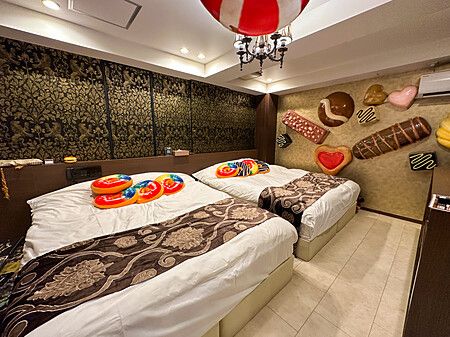
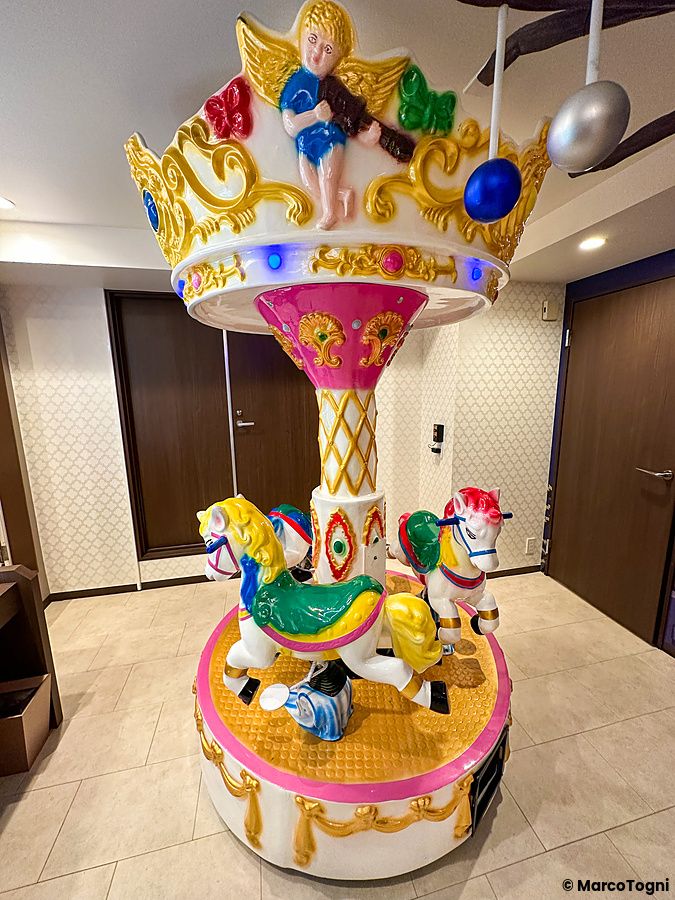
Some of the more creative rooms also have special themes: rooms made to look like a train, a prison or a tropical forest, or with ’80s or anime-inspired decor.
One odd detail is that many rooms have no windows, or have heavy curtains that block out the light completely. This is for maximum discretion and to keep you from noticing the time passing.
The rooms are always well soundproofed. You’ll never hear noise from outside, and nobody will hear yours.
Do theme rooms really exist?
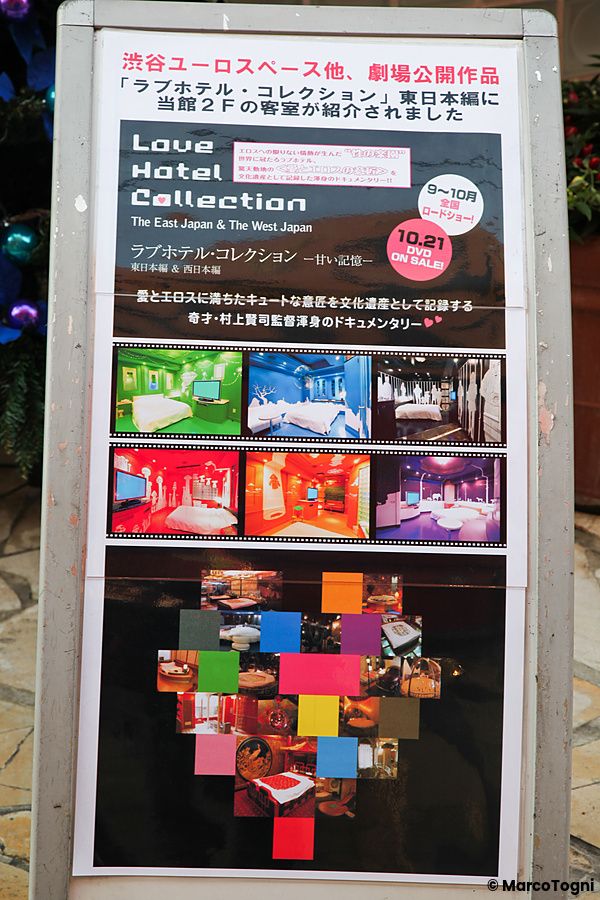
Online you’ll find tons of photos of love hotels with wildly over-the-top rooms: rooms that look like spaceships, medieval dungeons, tropical forests or even operating rooms.
The photos are real, and rooms like that do exist, but they’re a rarity.
Most love hotels have fairly normal rooms, maybe with a few nice touches: LED lighting effects, a strategically placed mirror or two, sexy furnishings or unusual beds. The truly extreme theme rooms are few and far between.
A love hotel with 20-30 rooms will often have just 1 or 2 theme rooms, or none at all. So if you show up without a reservation, you also need to be a bit lucky to find one free.
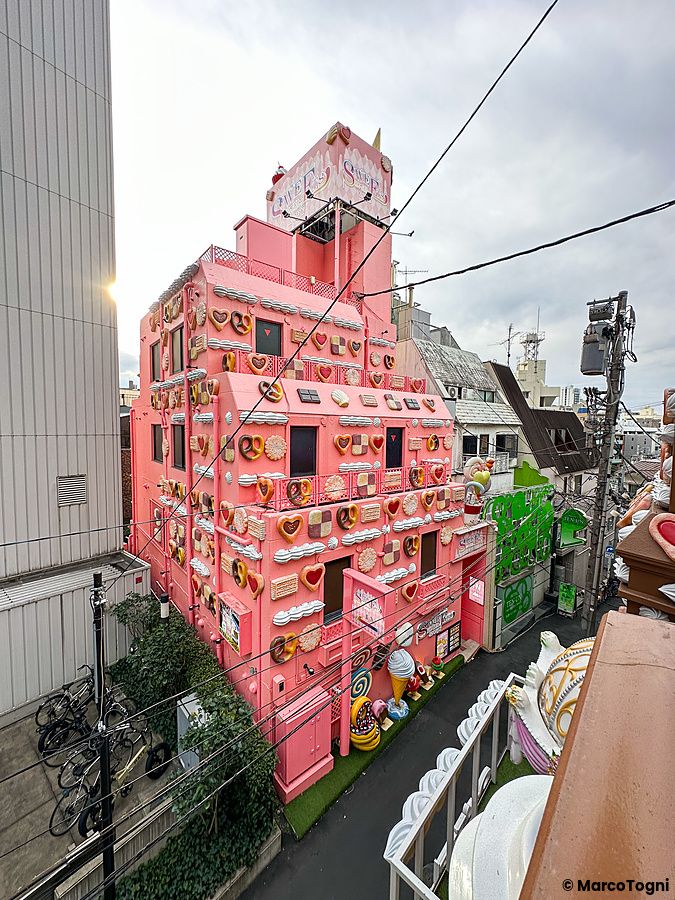
Modern love hotels lean more toward rooms with a designer look or an elegant feel than toward amusement-park themes. If you really want the theme room experience, I recommend checking ahead of time which hotels in the area actually have them.
Extras
Japanese love hotels are meant to give you the full experience, and besides the room there are several extra services you can use.
In the room you’ll always find:
- a full set of toiletries: toothbrush, razor, shampoo, conditioner, body wash, hairbrush
- disposable slippers
- a kettle with tea and coffee
- 1 or sometimes 2 condoms (but bring your own!)
There’s often a digital menu for ordering food and drinks to the room. They’re usually left at the door, so there’s no contact at all. There are more playful extras too: at many love hotels you can rent costumes of every kind (schoolgirl, maid, cosplay, fantasy characters) or buy sex toys from a vending machine.
Where to find love hotels
Love hotels are everywhere in Japan, but naturally some areas have a lot more of them than others.
Don’t use Google Maps to find them, because it can also show regular hotels, not just love hotels. I recommend the Happy Hotel map instead, which lists every love hotel in Japan.
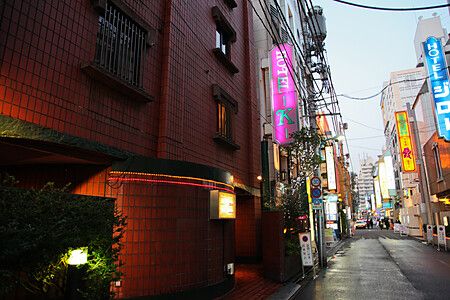
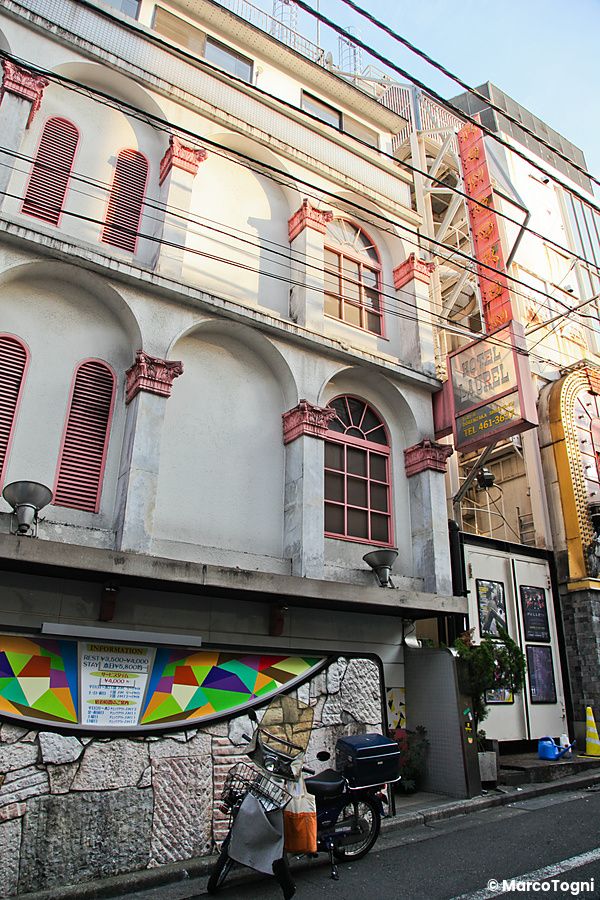
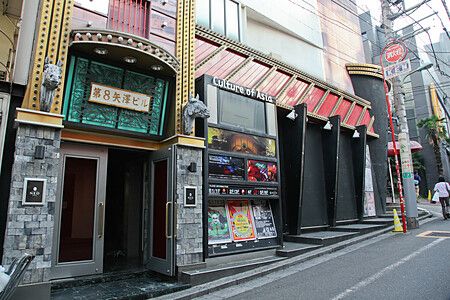
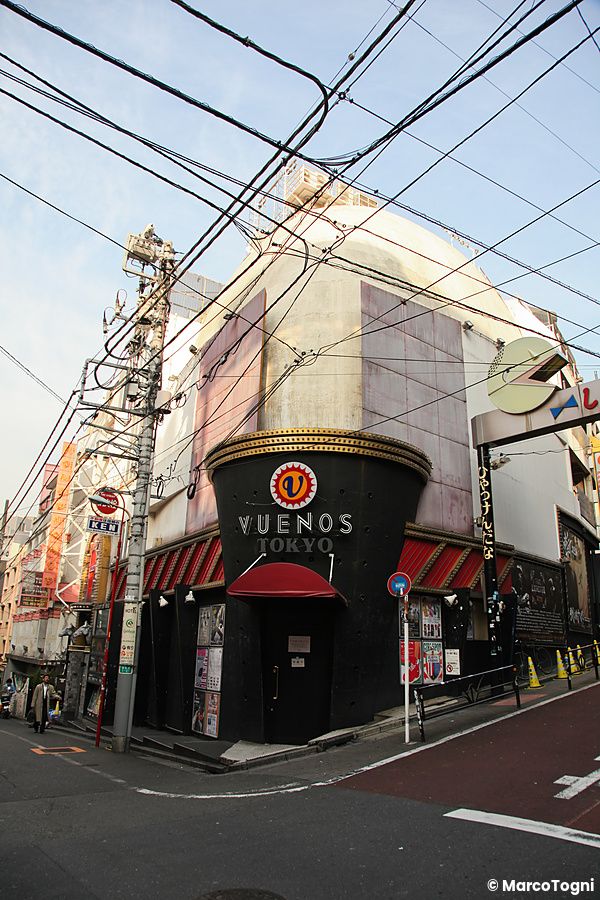
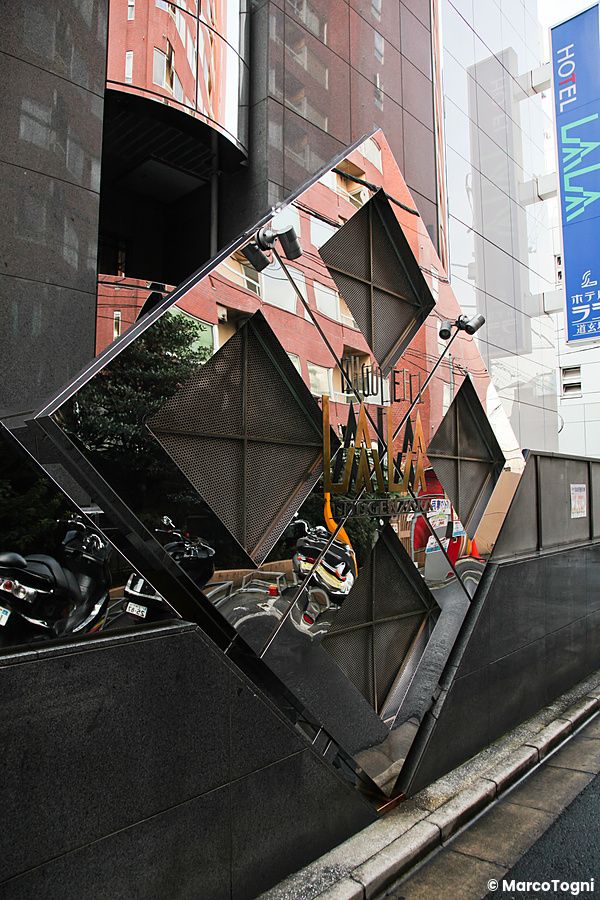
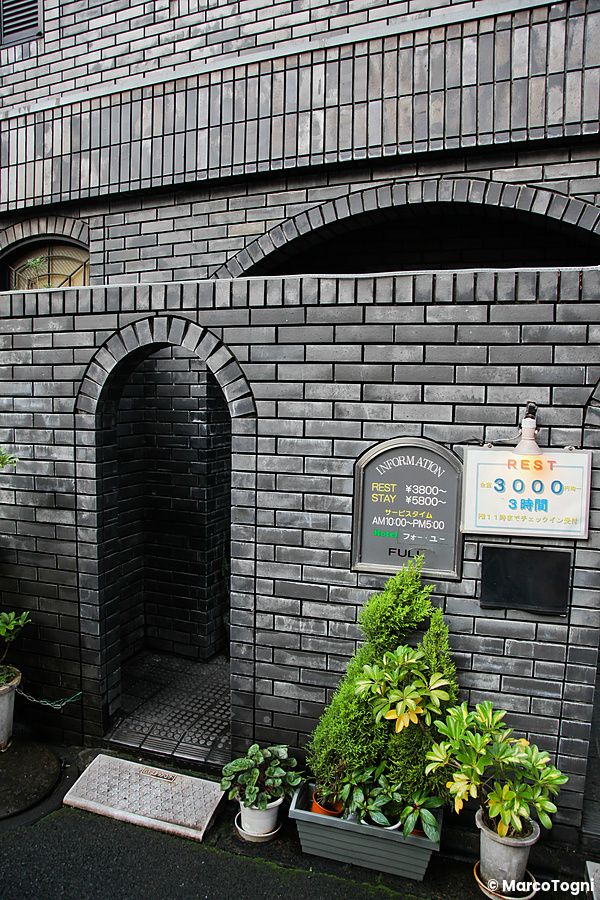
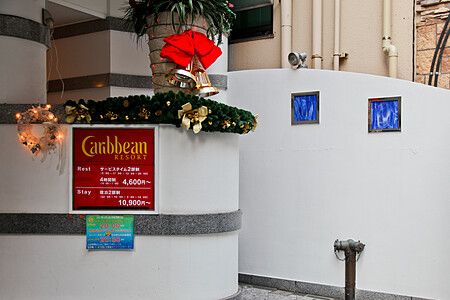
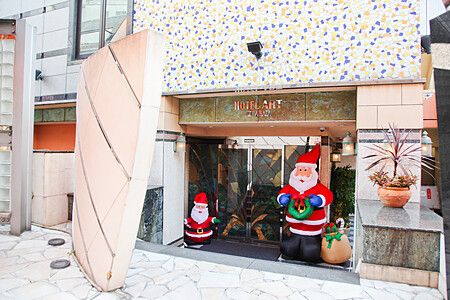
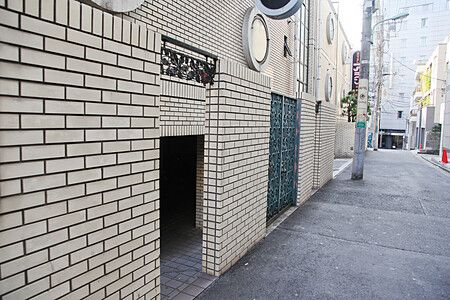
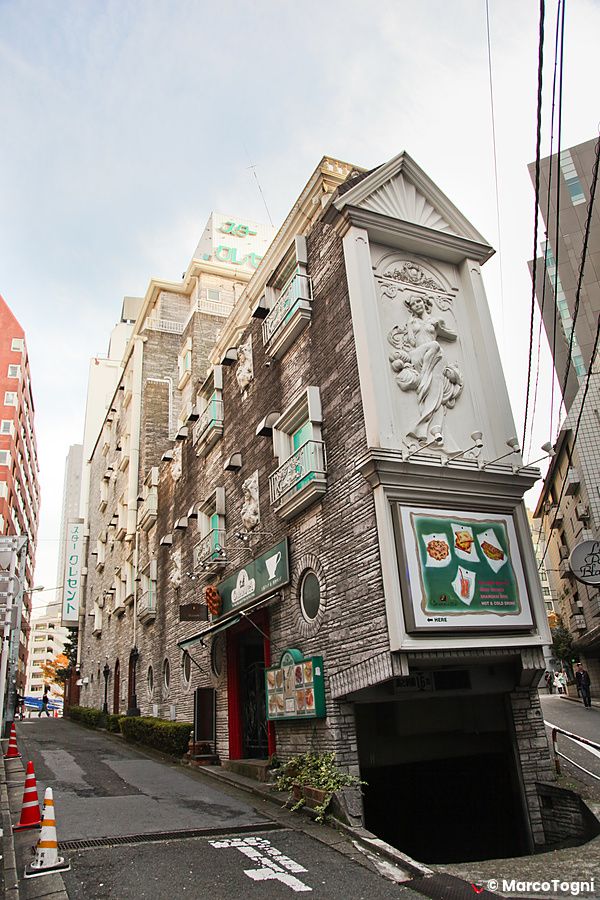
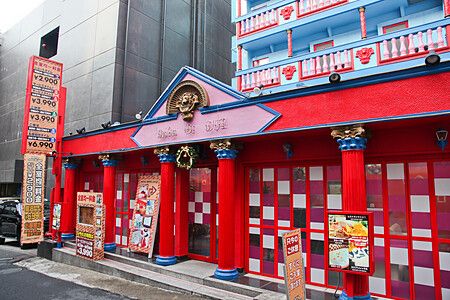
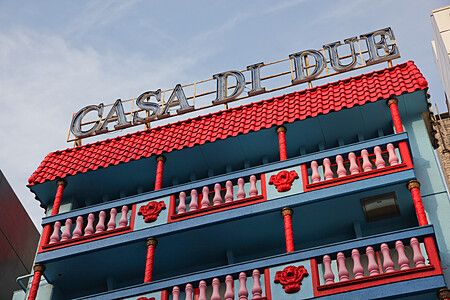
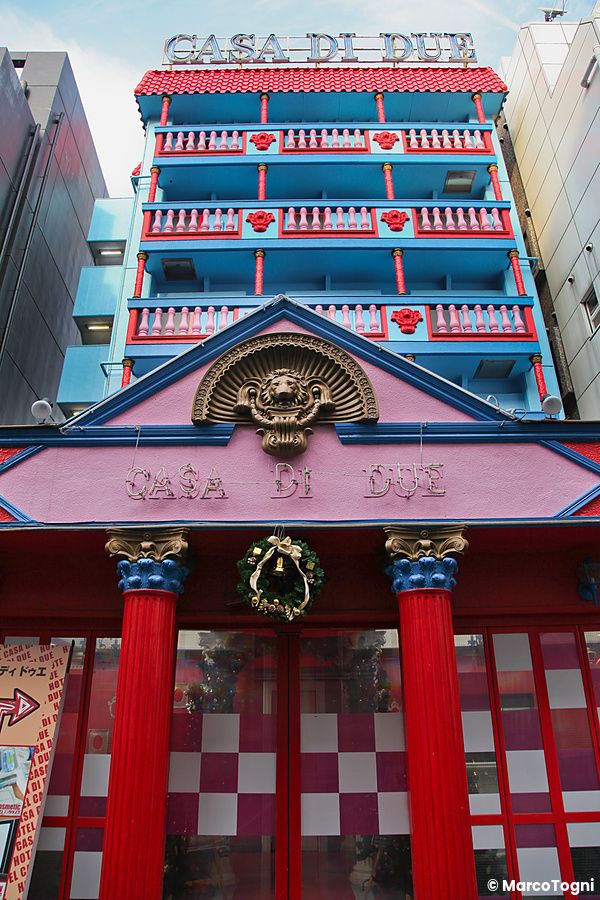
More generally, just look around the big stations or in neighborhoods with lots of nightlife. If you spot buildings with slightly quirky names and signs with hourly prices, you’re in the right place. The two words to look for on the price board are kyukei, the short stay of a few hours, and shukuhaku, the overnight stay: if they’re there, you’re looking at a love hotel and not an ordinary hotel. The building itself gives you clues too: no storefront windows on the ground floor, an entrance set back or hidden behind a curtain, and at drive-in love hotels, covers over the license plates of the parked cars.
Japan has over 30,000 love hotels, so there’s certainly no shortage.
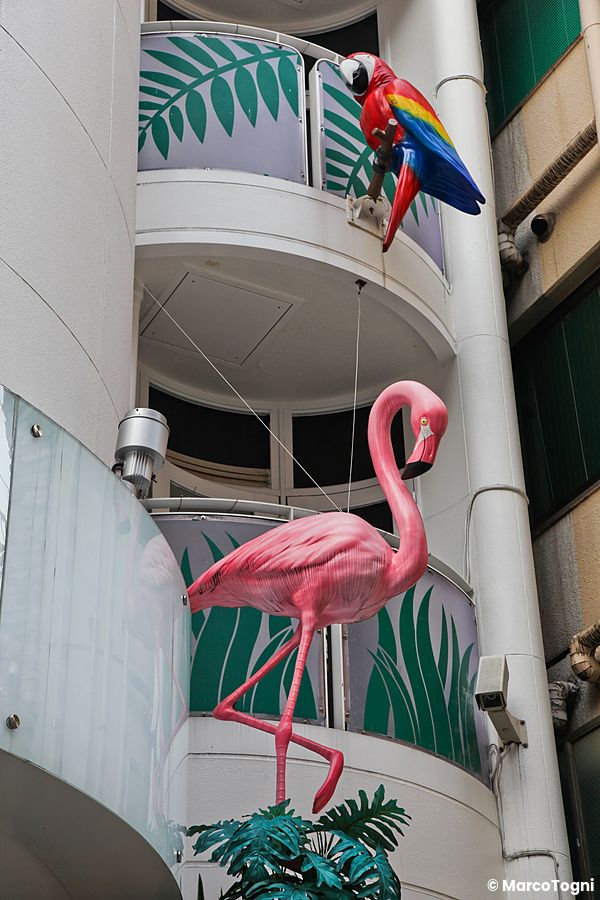
Love hotels in Shinjuku
Kabukicho is Tokyo’s love hotel capital, no contest. There are dozens and dozens of them here, with plenty of variety.
Love hotels here are generally more flexible with their hours. A “rest” can even last all day, and for a “stay” you can often check in from 21:00, which is handy if you want the room for more than just sleeping.
To get your bearings, go in through the Kabukicho Gate and follow the main street until you reach the Humax building. From there, turn left or right and start exploring. Within a few steps you’ll be surrounded by love hotels.
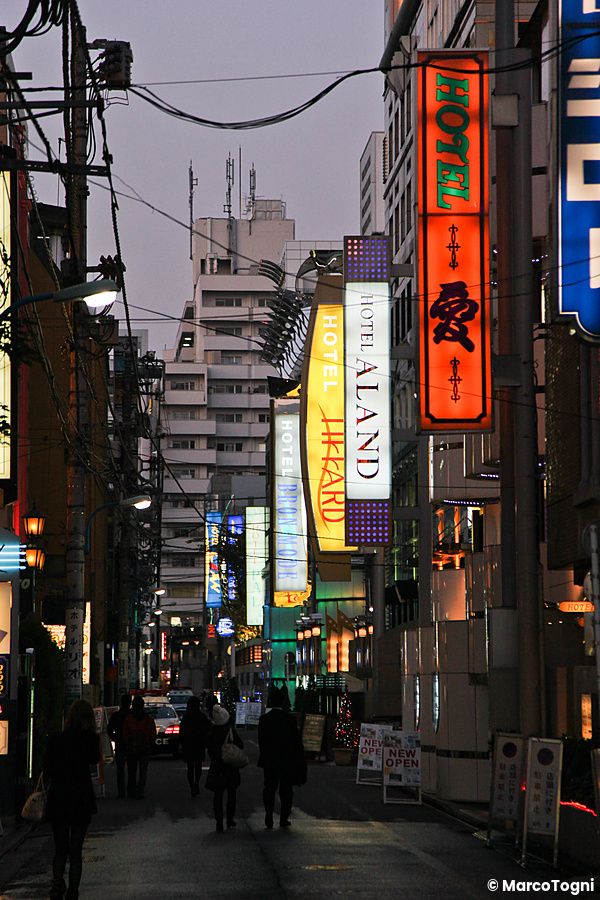
Love hotels in Shibuya
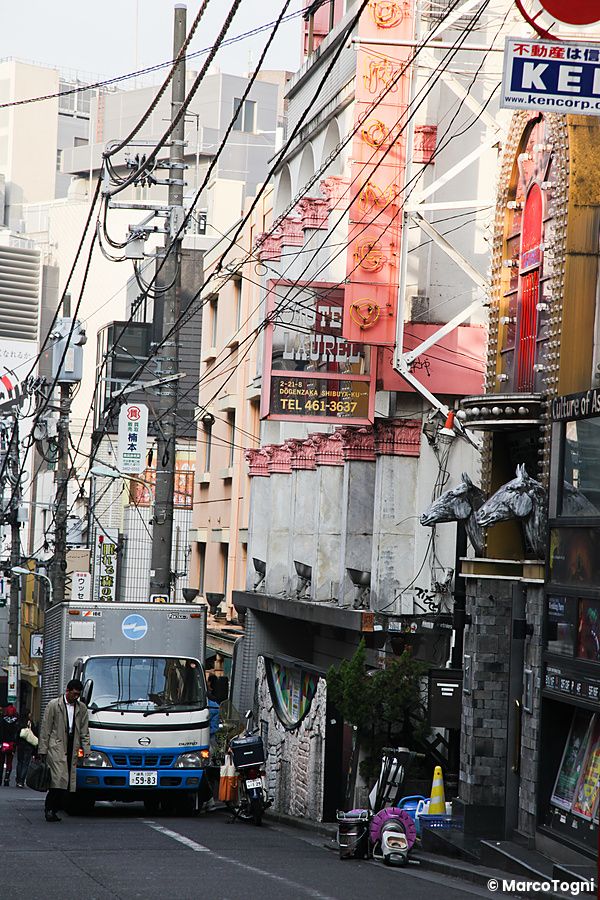
Shibuya’s Love Hotel Hill is probably the best-known love hotel area in Tokyo.
It’s only a few minutes from the station. Take the Hachiko Exit, cross the big intersection and head toward 109, then keep going past it with the building on your right. After about 500-600 meters, turn into one of the alleys on the right and you’re there.
The love hotels here are often more stylish, and a handful of rooms are themed.
Prices are slightly higher than in Kabukicho, especially for the themed rooms. A “rest” starts at around 5,000 yen and a “stay” at 10,000 yen.
In Shibuya, unlike Kabukicho, check-in for a “stay” often starts at 23:00 or even later. If you want a “rest” in the evening, keep an eye on the times.

Love hotels in other cities
Outside Tokyo, love hotels work exactly the same way.
In Osaka, the Ura Namba area is packed with love hotels, and there are plenty around Nipponbashi too.
Kyoto is more low-key. The love hotels are there, but they keep a lower profile, often on back streets. You’ll still find several around the station and toward Shijo-Kawaramachi.
Love hotels are extremely common in mid-sized and small cities as well. You’ll usually find them near the station or along the main roads leading out of town. In the countryside, on the other hand, there are lots of drive-in love hotels, designed for people arriving by car.
How to book a love hotel
The question I get asked most is whether you can book a love hotel. It depends. Most love hotels still work on a walk-in basis: you show up in person and pick a room on the spot.
That’s because love hotels were originally created to guarantee total privacy. You’re not expected to leave your name or make a formal reservation, and even today, in many cases, there isn’t even an official website.
That said, some of the more modern or tourist-oriented love hotels now take online bookings too. On sites like Booking or Rakuten Travel you’ll occasionally find love hotels that let you book a “stay.”
My advice: if you really want a particular room, or you’re going at a busy time, book one of the places that take reservations. But if the classic Japanese love hotel experience is all you’re after, just go to the area and choose when you get there.
Love hotels and foreign visitors
Not long ago, almost all love hotel customers were Japanese. In recent years, though, more and more tourists have gotten curious, and today many hotels have become more foreigner friendly.
In practice, they’re more willing to take foreign guests, they provide instructions in English too, and they’ve made their booking and payment systems easier to understand. That’s not always the case, though.
In less touristy areas you may still come across love hotels that would rather not take foreign guests who aren’t accompanied by a Japanese person. It isn’t about racism. More often they want to avoid misunderstandings or guests not following the rules.
If you’re a couple (one Japanese and one foreign, or both foreign), you’ll generally be fine. To be on the safe side, look for love hotels that have information in English or take online bookings.
Safety and privacy
I want to reassure you on this one. Love hotels in Japan are extremely safe. There’s nothing shady or risky about them, and the whole system is tried and tested.
The rooms are always spotless, and in fact they’re much better kept than the rooms at plenty of business hotels. Turnover is very high, so the rooms get sanitized very carefully.
As for privacy, it really is total. Nobody will ask you any questions and you won’t have to leave any personal details. The only thing you might have to do is show ID if you pay by credit card, and only at some hotels.
Who should try one
Honestly, a love hotel can be a lot of fun even if you’re just curious.
If you’re a couple and want a different kind of night, it’s perfect. Some love hotels have rooms so weird that they’re worth trying just to take photos and have a laugh together.
Solo travelers, on the other hand, generally can’t use the classic love hotels (with a few exceptions). Many hotels turn away single guests, at least in theory. In practice, if you walk in saying “my girlfriend is coming later,” nobody’s going to kick you out when she doesn’t show up.
Finally, if you’re looking for a cheap place to sleep, a “stay” at a love hotel can sometimes cost less than a regular hotel, especially if you book at the last minute. Keep it in mind if you’re ever stuck without a room in an emergency.
Love hotels and luggage
If you’re thinking of using a love hotel as a stop on your trip, there’s one thing almost nobody tells you: luggage is a problem here. There’s no front desk where you can leave your bags, there’s no luggage storage, and at quite a few places the staff frown when they see you roll in with a suitcase, because it makes it obvious you’re using the room like any other hotel.
Some will let you in without a word, others will say no. The easy way to avoid the awkwardness is to leave your bags in a coin locker at the station and show up empty-handed. And remember to take everything with you when you leave, because coming back for something after you’ve checked out isn’t an option.
Luxury love hotels
Don’t imagine it’s all small, bare-bones rooms. Japan also has full-on luxury love hotels.
Some hotels have rooms with:
- a private terrace
- a private sauna
- an outdoor bath
- an in-room movie theater
- an indoor pool
At these places prices go up quite a bit. A “stay” can easily go over 20,000 yen, or even higher, but the experience is genuinely top-notch.
Getting turned away
Although it’s getting rarer, some love hotels may still turn away couples if both partners are foreign. It isn’t an official rule, but in some cases the staff say no out of fear of misunderstandings, or simply because they don’t want to deal with complicated situations with guests who don’t speak Japanese. This happens more often at small love hotels and older ones.
In the more touristy areas like Shibuya or Shinjuku, on the other hand, most hotels are now used to tourists. If you show up as a couple, you’ll almost never have a problem.
One more thing to know: some love hotels don’t accept same-sex couples. Unfortunately that’s still true in some cases, although things are getting better. The more modern love hotels that try to cater to everyone usually accept any kind of couple.
Love hotel quirks
There are lots of little quirks that make the world of love hotels unlike anything else.
Many love hotels are designed so that you never run into anyone. It’s not unusual to find:
- two sets of elevators
- separate hallways
- automated systems for payment and key pickup
Some love hotels have truly absurd themed rooms:
- a tropical jungle
- a medieval castle
- the inside of a bus
- a spaceship
A short history of love hotels
The idea behind love hotels goes back much further than you’d think.
The first real modern love hotels appeared around the 1960s, at a time in Japan when:
- lots of homes were tiny
- whole families lived in a single room
- couples had no space and no privacy
So the first hotels built to meet this need started to appear, with the added advantage of complete discretion.
The name “love hotel” comes from one of the first well-known examples, Hotel Love in Osaka.
In the 1980s and 1990s love hotels went through a real boom, with ever more elaborate rooms and more and more amenities. In the 2000s their numbers started to drop because of social changes, but there are still a lot of them.
Etiquette and unwritten rules
Getting into a love hotel is easy, but there are a few small rules of etiquette worth knowing.
- If you see another couple at the room selection machine or the front desk, don’t walk up beside them. Wait until they’re done.
- Don’t take photos in the common areas. In your room, of course, you can shoot whatever you like.
- Don’t try to go in as a group of three. Most love hotels only allow couples, although some do let in more people.
- Treat the staff with the utmost respect. Even if you’ll hardly ever see them, remember there’s someone working behind every machine.
- Don’t go in and out several times during your stay. If you need to, ask at the front desk first whether it’s allowed.
Love hotels vs. business hotels
People often ask me why not just stay at a business hotel.
There are a few key differences.
At a love hotel:
- there’s no formal check-in
- you don’t need to show ID (unless you pay by card)
- the rooms are much more spacious
- the amenities are geared more toward relaxation and intimacy
- the hours are very flexible
- privacy is absolute
At a business hotel, on the other hand:
- the rooms are often very small
- you go through the standard procedures of any regular hotel
- they’re designed mainly for business travelers
Final advice
I’d really encourage you to consider trying a love hotel at least once in Japan. It’s one of the many unique experiences this country has to offer, and it shows you a side of Japanese culture that often stays hidden.
Go in with the right attitude and without any strange expectations. For Japanese people, a love hotel is simply a practical place to find a bit of privacy.
If you want to dig deeper, my site has plenty of other articles about the quirkier sides of Japan. Have a look through them to make your trip even richer and more unusual.