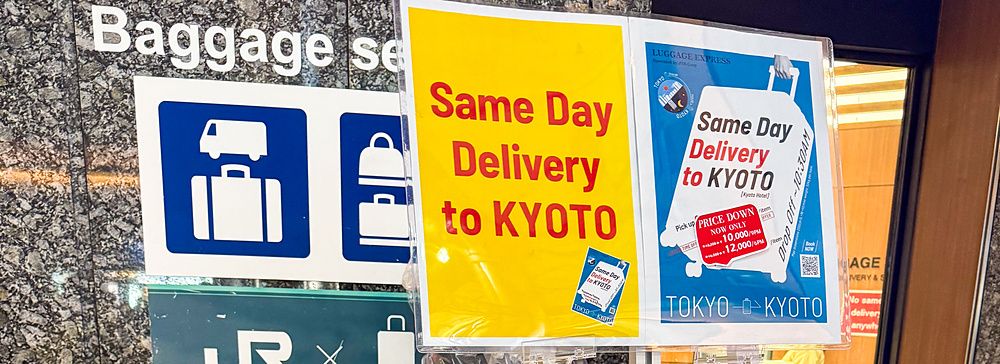
Luggage Forwarding in Japan
One of the most convenient services for tourists in Japan is also one most of them have never heard of: luggage forwarding. You can ship your bags from one Japanese city to another, which saves you a lot of effort and spares you any logistical headaches.
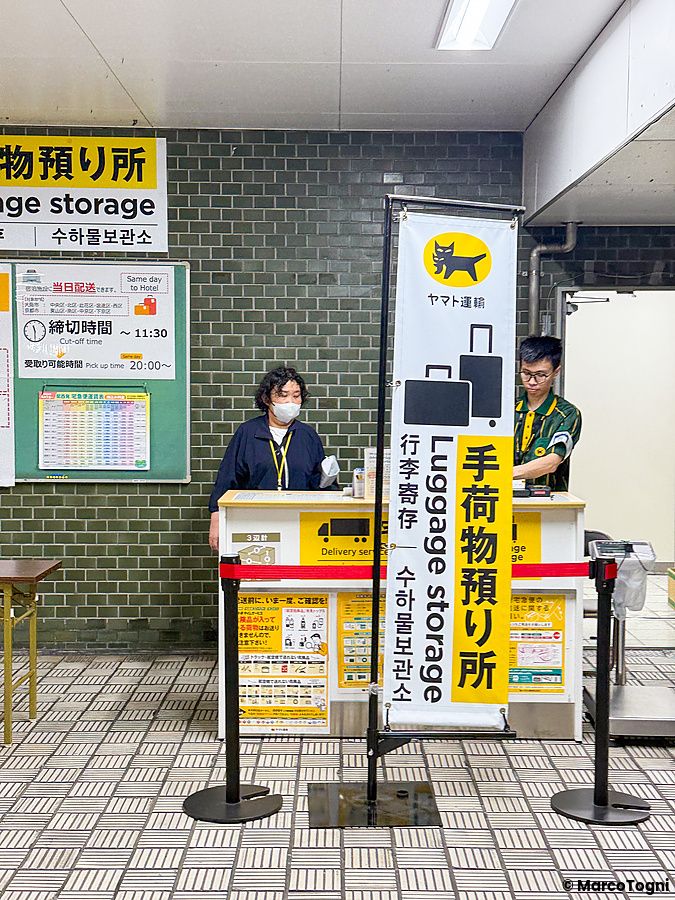
In Japanese the service is called takkyubin, and the company most people use is Kuroneko Yamato. Its logo is unmistakable, and you’ll spot it again and again during your trip. This being Japan, of course, you can expect punctual, efficient and safe service.
Contents
Where to arrange luggage forwarding
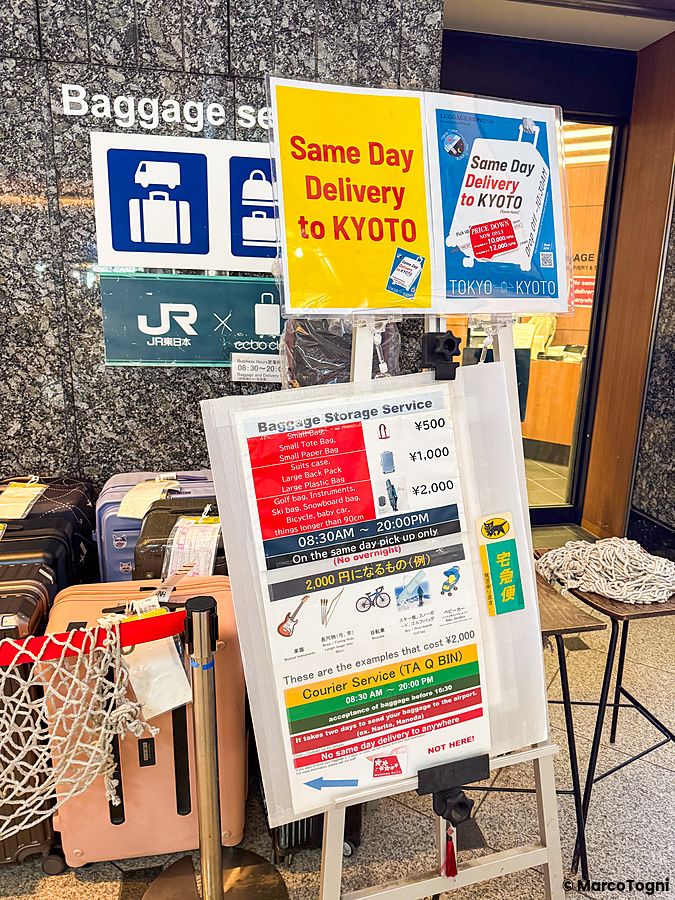
You can start as soon as you land: ask at the airport information desk about takkyubin, which goes by the English name “Luggage Delivery” there.
You can also go straight to your hotel’s front desk. They’ll give you a form to fill out, or help you fill it out if you’re not sure how.
Another option is a conbini, but things can sometimes get complicated there if you don’t speak Japanese. Wherever you go, you’ll fill out a simple form with your details and the recipient’s, and they’ll give you a receipt with the tracking number. Hold on to it until your suitcase is back in your hands, because it’s what lets you track the shipment and get them to look for it if something goes wrong.
Why send your luggage ahead
Trust me, sending your luggage ahead costs very little and it’s fantastic, because it saves you time and effort.
Say you have to go from Tokyo to Kyoto. If you don’t ship your suitcase, you have to haul it through stations where finding an escalator isn’t always easy and drag it around for a long time. Then, when you finally get there, you have to waste time taking it to your new hotel, when you could be out exploring the city right away.
Luggage forwarding also comes in handy when you’re visiting several cities. On a Tokyo–Hakone–Kyoto trip, for example, you can have your luggage sent from Tokyo straight to Kyoto and take only a small carry-on with a few essentials to Hakone. For everything to go smoothly, though, you need to know in advance where you’ll be staying. The courier needs the name and exact address of the hotel your bag is going to, so you have to book before you ship it. It’s a good idea to message the hotel you’re heading to: almost all of them will hold on to your suitcase even if it gets there before you do, but it’s better to let them know a bag is on its way for you.
- Tokyo: leave your suitcase at the front desk, addressed to your hotel in Kyoto.
- Hakone: go there with just the few things you need in a small carry-on.
- Kyoto: your suitcase is waiting at the hotel. You have to book before you ship it, and it’s a good idea to message the hotel to let them know.
Delivery times
Your luggage usually arrives the next day. Within the same city it may even arrive the same day, while delivery to places as far away as Hokkaido or Okinawa can take 2 days.
The best hotels will have your bag waiting right in your room when you arrive.
What to keep with you
Shipping your suitcase means spending at least one night without it, so pack a small backpack with everything you’ll need until the next day: a change of clothes, your toothbrush, your chargers, and any medication you take.
Your passport, cash, and valuables stay with you at all times, and convenience is only part of the reason. Takkyubin won’t take money, cards, or documents, and compensation is limited anyway if something goes wrong. Cameras, computers, and jewelry are also better off traveling with you, while clothes, shoes, and souvenirs can go in the suitcase without a second thought.
- Passport, cash, and valuables.
- Camera, computer, and jewelry.
- A change of clothes, your toothbrush, chargers, and medication.
- Clothes, shoes, and souvenirs, without a second thought.
- No money, cards, or documents, since takkyubin won’t take them.
How much it costs
The price depends on the size of your suitcase, but expect each shipment to cost somewhere around 1,500–2,000 yen. Some hotels may also charge a small fee for handling it, roughly 300 yen.
Luggage on trains
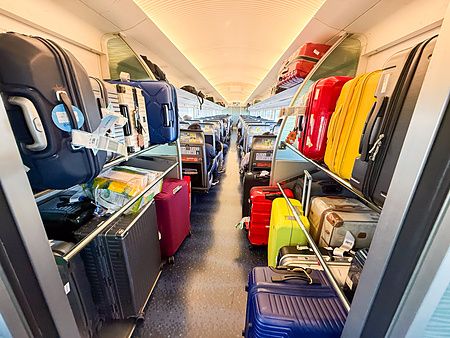
If your suitcase is very large, finding somewhere to put it on the shinkansen can be a struggle. On the Tokaido, Sanyo, Kyushu, and Nishi Kyushu lines, the ones you’ll use for Kyoto, Osaka, and Hiroshima, bags whose height, width, and depth add up to more than 160 cm are only allowed on board if you’ve made an advance reservation for one of the seats with luggage space, which are in the last row of some cars. Reserving doesn’t cost anything extra, but if you board without a reservation, you pay a 1,000-yen surcharge. Anything over 250 cm isn’t accepted at all.
At 160 cm or under, it’s not an issue: the suitcase fits on the overhead rack or at your feet, and the rule doesn’t apply on the other shinkansen lines. Contrary to what you may have read online, though, the space behind the last row of seats isn’t freely available, so don’t count on leaving your suitcase there.
Still, I’d seriously consider shipping your luggage instead. It’s incredibly convenient.
| Height + width + depth | What to do | Cost |
|---|---|---|
| up to 160 cm | on the overhead rack or at your feet | nothing |
| 160–250 cm | reserve a seat with luggage space, in the last row of some cars | nothing if you reserve, 1,000 yen if you don’t |
| over 250 cm | not accepted on board | better to ship it |
Applies on the Tokaido, Sanyo, Kyushu, and Nishi Kyushu lines, the ones for Kyoto, Osaka, and Hiroshima. The other shinkansen lines don’t have this rule.
Shipping your suitcase to the airport
Takkyubin works just as well in the other direction, when you’d rather not haul your suitcase around before your flight home. You send it from the hotel to the airport counter, pick it up there shortly before check-in, and spend your last day with your hands free.
The only catch is that shipping to the airport takes longer than a regular transfer between two hotels, so ask at the front desk how far ahead you need to send it to be sure it’ll be waiting for you. It’s the best way to make the most of your last day without dragging your suitcase from one temple to the next.