Mashu Maru
An old ferry moored in Hakodate’s harbor and turned into a museum, where you climb up to the bridge and get your hands on the wheel, the pale green radios and the rotary phones, all left the way they were the day the crew went ashore. For years the Mashu Maru shuttled between Hakodate and Aomori carrying passengers and railroad cars, and once you’re aboard you can see how the ship was laid out and what traveling on it was like.
It’s the right place if you have a soft spot for trains, ships and vintage machinery, but I’d also bring people who know nothing about ships, kids included. Once they reach the bridge, nobody just stands around with their hands in their pockets.
Contents
The ship’s history
The Mashu Maru ran on the Seikan route between Hakodate and Aomori from 1965 to 1988, the year the undersea tunnel linked Honshu and Hokkaido by rail and put the ferries out of service.
Crossing the Tsugaru Strait took almost four hours. Passengers traveled on the upper decks, while freight cars rode below, loaded straight from the tracks on the pier.
Today the ship is moored right at the old pier it used to sail from, and that makes a difference: when you look out from the bridge, you see the same pier the captain saw.
What’s on board
The ship has several floors, like a building, and each one has its own theme. The entrance and a few big pieces of the ship’s equipment are at the bottom, the museum proper is on the third floor, the bridge and radio room are on the fourth, and the open-air top deck is above that.
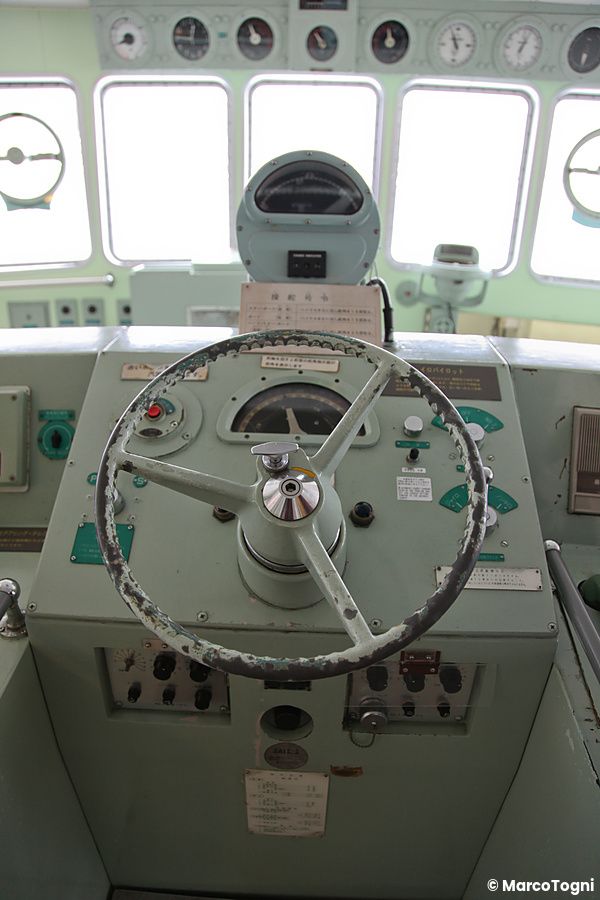
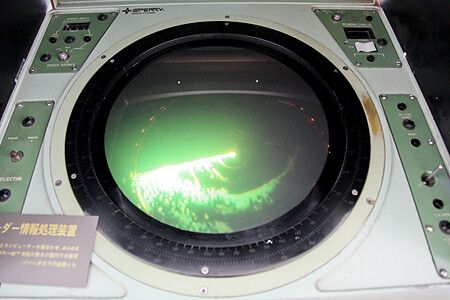
- The bridge: the wheel in the middle, aqua-green consoles covered in knobs and dials, Sperry radars with round screens that light up green, a Seiko clock on the wall, the chart table with a nautical chart under the glass, and windows looking out over the bow and the pier.
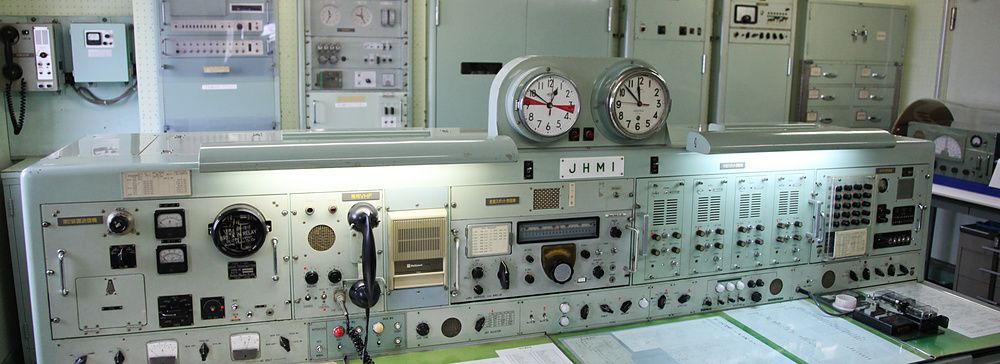
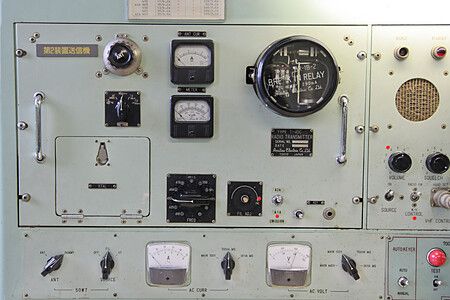
- The radio room: a wall of light green equipment with black knobs, toggle switches, glowing red indicator lights, and labels in English and Japanese. It looks like the operator just stepped out for a coffee.
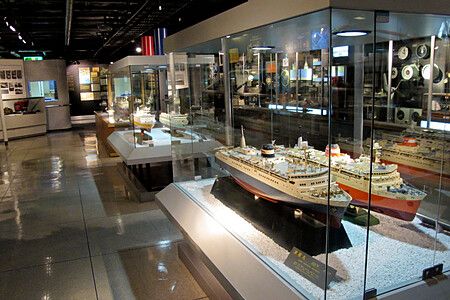
- The ferry history room: a wall of models of the ships that worked this route, lined up along a blue timeline, lit display cases with more scale models, and a dark wall covered in small backlit images arranged in a zigzag.
- The original passenger seats: standard-class and first-class seats, set up the way they were, footrests and reclining backs included.
- The third-floor lounge with windows overlooking the harbor: you can sit down, look out toward Mount Hakodate and rest your legs.
- The open-air top deck, the compass deck: it’s the highest point on the ship, and from up there you can see the harbor, the city and all of Mount Hakodate.
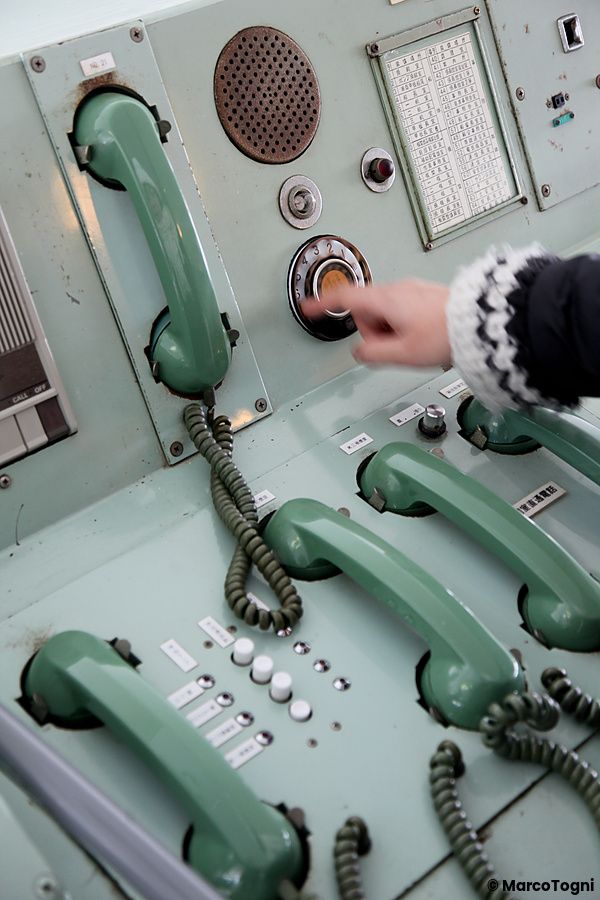
The bridge is the best part, hands down. There’s no rope keeping you back: you can touch the consoles, turn the crank on an old switchboard, or pick up a handset and pretend to call the engine room.
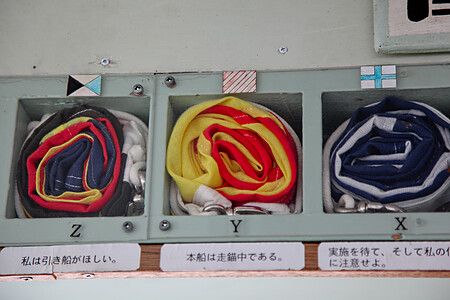
There are also mounted binoculars as big as two bottles, aimed at the harbor, and cubbyholes holding folded signal flags, each marked with its letter (X, Y, Z) and the matching little flag above it. In a regular museum all this stuff would be behind glass. Here you get to use it.
In one corner there’s a fire alarm panel with a cross-section of the ship and a light for each zone, and it shows you better than any sign how complicated it was to run a ferry like this. In the radio room next door there’s also a telegraph key, so you can try tapping out a message in Morse code the way the operators did during crossings.
You can’t visit the lower deck where the rail cars were loaded, and that deck was the most unusual thing about these ships. The only way to see it is on monitors in the exhibition area, and the same goes for the engine room. If you’re a train fan hoping to walk among the tracks in the belly of the ship, lower your expectations.
The history section on the third floor is well done but very text-heavy, and not everything is translated. If you can’t read Japanese, the models and the seats still make sense, but the panels much less so. Keep your phone handy for translating.
There are no elevators. You get from one floor to the next on the ship’s steep stairs, and even boarding means climbing metal steps, so a stroller or a wheelchair is a real problem.
On paper it’s a transportation museum, the kind you hurry through, reading every other panel. In reality it’s an entire ship: you go up, you go down, you open a door and you’re standing in a workplace frozen decades in the past, with pale green industrial paint everywhere and the smell of metal.
When I have guests in Hakodate, I always take them here, even the ones who make a face at the idea of a museum. Once they reach the bridge they start turning the wheel and peering through the binoculars like kids, and then I have to drag them out.
When to go
Nearly everything you visit is indoors, so it holds up well in rain and cold. The only part that suffers in bad weather is the top deck. It can be closed in strong winds or bad weather, and under a cloudy sky it isn’t much fun anyway, because Mount Hakodate disappears.
The best time to go is a clear day, either midmorning or in the afternoon, when light comes in through the bridge windows and falls across the consoles.
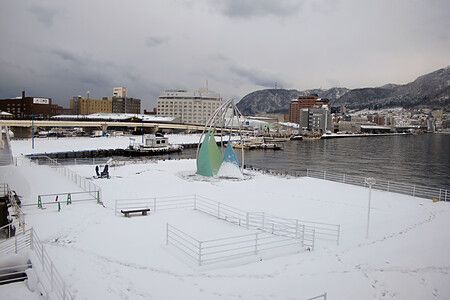
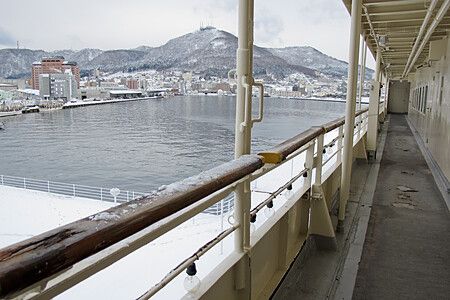
In winter, when it snows, the wooden handrail on the top deck gets coated in white, the plaza in front of the pier with its geometric sculpture and railings turns completely white, and from the bridge windows you see the snowy harbor just as the captain did on December crossings. It’s freezing up there, so bring a scarf and hat, but that’s when I like it best.
In summer and on long Japanese holiday weekends, families and groups show up, and since the bridge is the most popular spot, you wait your turn to get your hands on the wheel. On off-season weekdays, though, you might have the radio room all to yourself, with nothing but the hum of the equipment and your footsteps on the metal floor.
With kids
This is one place where you won’t spend the whole visit telling kids not to touch. The wheel, the phones, the binoculars, the knobs: everything is there to be turned and pressed, and there’s even a captain’s uniform to put on for a souvenir photo.
On the fourth floor there’s a corner set up specifically for little ones, and in the third-floor lounge you can take your time catching your breath while watching the boats in the harbor.
The catch is the stairs. If you’re carrying very small children, you’ll feel the climb to the top deck.
For slightly older kids, though, the ship is a playground. They run up and down the corridors, look out the windows, and hunt for the flag with their initial in the flag cubbyholes.
Best photo spots
There are two shots worth getting. The first is from the bridge, with the wheel in the foreground and the windows behind it looking out on the bow and the pier. Daylight comes in from the side and brings out the green of the consoles. There’s always someone on the bridge, so be patient.
The second is from the top deck, leaning on the wooden handrail, with the harbor in front of you and Mount Hakodate in the background. When there’s snow, it’s the most striking view of the whole visit.
For close-ups, the radar with its glowing green screen and the lettered flag cubbyholes come out well even if you’re shooting with a phone, because they’re already lit.
At a glance
- Highlight: the original bridge, wheel and radios included, and you can touch all of it.
- When to go: a clear day for the top deck; it’s at its best in winter with snow; avoid summer and holiday weekends.
- Best for: ship and train fans, families with kids, and anyone passing through Hakodate who wants something different from the usual museums.
- Atmosphere: metal corridors, pale green consoles, steep stairs and windows overlooking the harbor.
Final thoughts
What makes the Mashu Maru worth it isn’t the history on the panels, which you’ll only half follow without Japanese. It’s that a whole ship has been left the way it was and they let you use it. If you’re in Hakodate, the bridge alone is worth the detour, and the top deck with Mount Hakodate in front of you wraps up the visit just right.
It’s not for anyone who struggles with stairs or wants a museum they can see sitting down, and if you’re dreaming of tracks in the hold, all you’ll find is a monitor. For everyone else, it’s the place in Hakodate you’ll remember long after the names of the churches and the harbor warehouses have blurred together.
Getting There
From JR Hakodate Station, walk toward the harbor for about 4-5 minutes. The ship is moored at the old ferry pier, right behind the station.
If you're coming by tram, get off at Hakodate-ekimae and walk about 5 minutes in the same direction.
If you drive, you can use the parking lots in front of the station. Museum visitors get 2 hours free.
Useful Info
Over the New Year break, from December 31 to January 3, it's either closed or open for shorter hours. There can also be maintenance closures, usually in spring for the ship's inspection, and the museum closes immediately if there's a tsunami warning.
- JR Hakodate Station (Hakodate Line, Hokkaido Shinkansen via Shin-Hakodate-Hokuto): 4-5 minute walk
- Hakodate-ekimae tram stop (lines 2 and 5): 5-minute walk
Map
This place is on MarcoMaps
Mashu Maru
My map of Japan: over 4,000 places I've tried myself, each with photos, rating, and hours. Filter by category and rating, find veg-friendly spots and places near you with GPS. No sign-up, right from your phone.
- 4,000+ places
- Rating, photos, and hours
- Veg friendly
- Near me (GPS)
- Favorites without login
- Works offline

