 57 m
Tsukiji Itadori Bekkan57 m
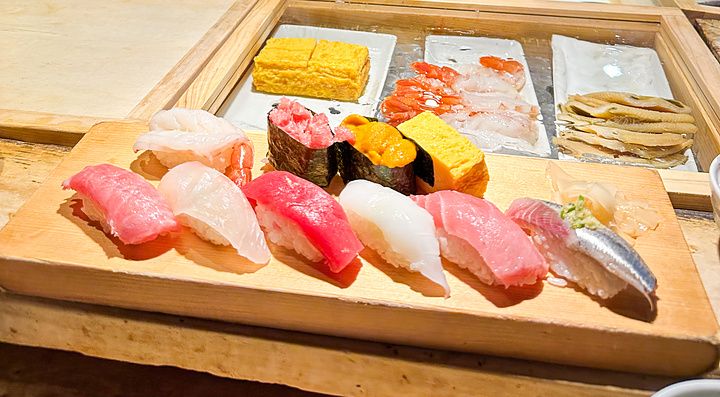
Counter nigiri and kaisen-don.
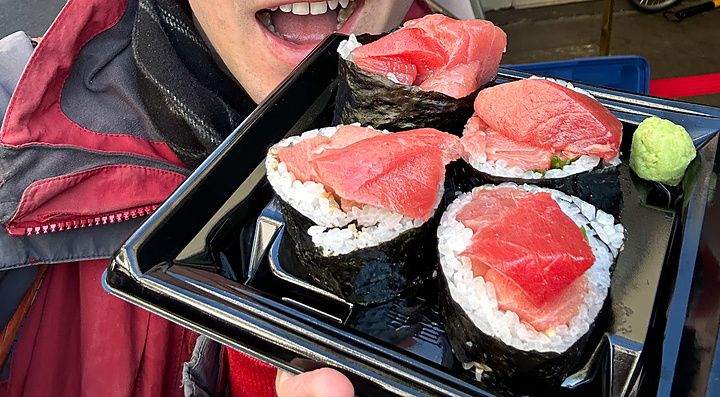
A Japanese sushi chain that buys its tuna at the market in the morning and serves it a few hours later, with branches inside Haneda Airport and in the city. Matakoiya’s locations aren’t all the same: at some you eat standing at the counter and order out loud, one piece at a time, while at others the main event is a bowl of rice topped with tuna.
This is where you go when you’re short on time and don’t want to settle for a cold sandwich. You order, the piece lands in front of you within a minute, and you eat and leave. It’s perfect if you’re traveling solo, because nobody at the counter gives you a funny look if you’re only there ten minutes.
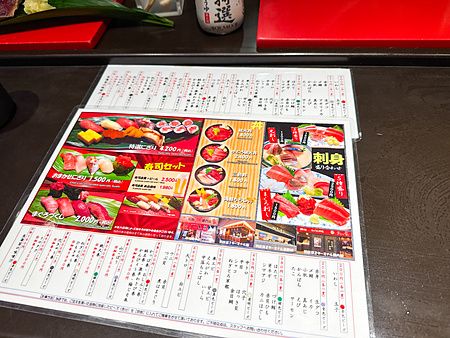
The menu is short, built around tuna plus a handful of other fish. At the counter you pick what you want from the display case in front of you, and if you don’t feel like choosing, the sets are the quickest way to see what they do.
À la carte prices are for a single piece, not a pair like at conveyor-belt places, so if you get carried away and keep ordering, the bill climbs without you noticing.
Paying is actually kind of fun. As you order, they set colored glass marbles in front of you, one for each piece, with a different color for each price. At the end they count them up and tell you the total.
The tuna is in a different league from the other fish. The chutoro is so soft it melts without any chewing, while the squid and octopus are fine but won’t stick in your memory.
At the airport counter you’ll spend around 2,000–3,000 yen per person for a set plus a few extra pieces, and a tuna rice bowl runs about 1,500–2,000 yen. Put bluntly, that’s mid-range, which counts as almost cheap given where you are. In a Japanese airport, that kind of money usually gets you a sad plate of curry or some thawed-out ramen.
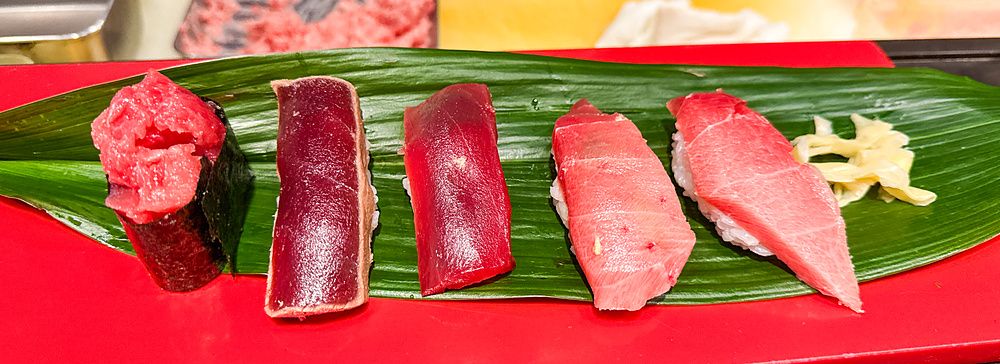
You get the most for your money if you stick to the tuna and skip the rest. Order five random pieces, add up the bill, and you might be disappointed. Order five pieces of tuna from different parts of the fish and you’ll taste the difference right away.
Whenever I fly out of Haneda with twenty minutes to spare, I always stop by, because for just over 2,000 yen I get fish cut right in front of me instead of a cold bento grabbed in a rush.
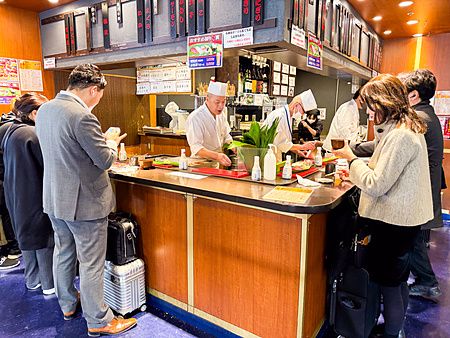
These are small places with a high counter where you eat standing up, a few tall tables behind it, and the chef working within arm’s reach. You step up, they ask what you want to drink before anyone mentions fish, and then you’re off.
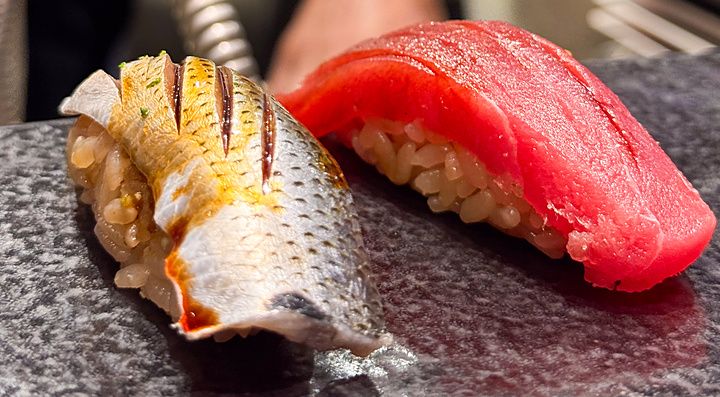
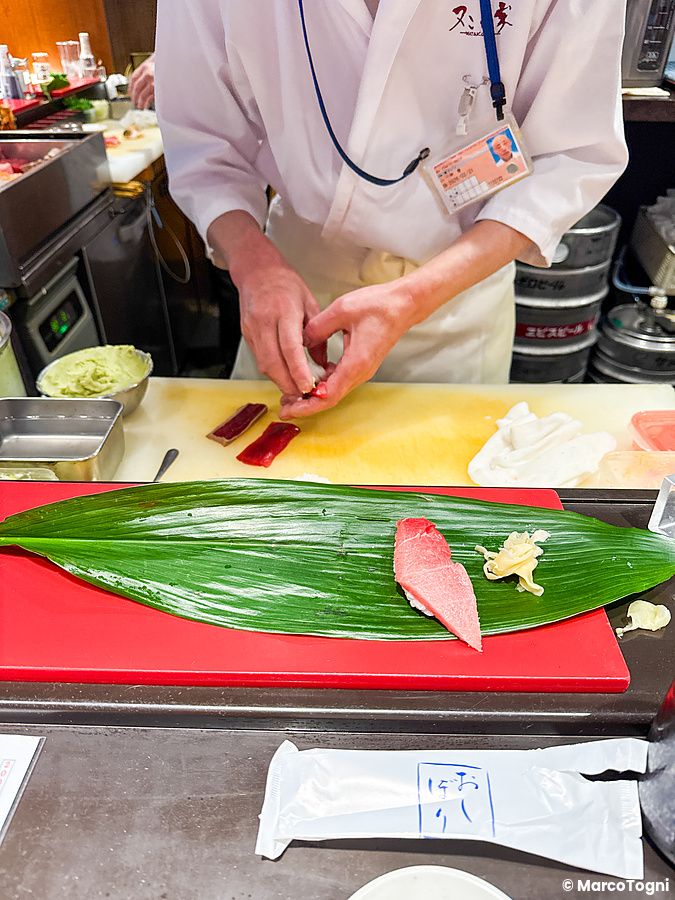
Things move fast. You name the fish, the chef slices it, presses the rice and sets the piece down in front of you, ready to eat with your fingers. Many pieces come already brushed with soy sauce.
The faces next to you keep changing. Men in suits eat three pieces while staring at the departures board, foreign tourist couples point at the fish and smile, and people with roller bags propped against their legs keep checking the time.
Nobody sits down and nobody lingers to chat, which changes the whole way you eat. There’s no sushi ceremony here, just a chef working fast and a counter that empties and fills up again nonstop.
The most useful thing you can do is order a little at a time instead of firing off your whole order at once. That way you keep the bill under control, you eat every piece the moment it’s made, and you can change your mind as you go if something wins you over.
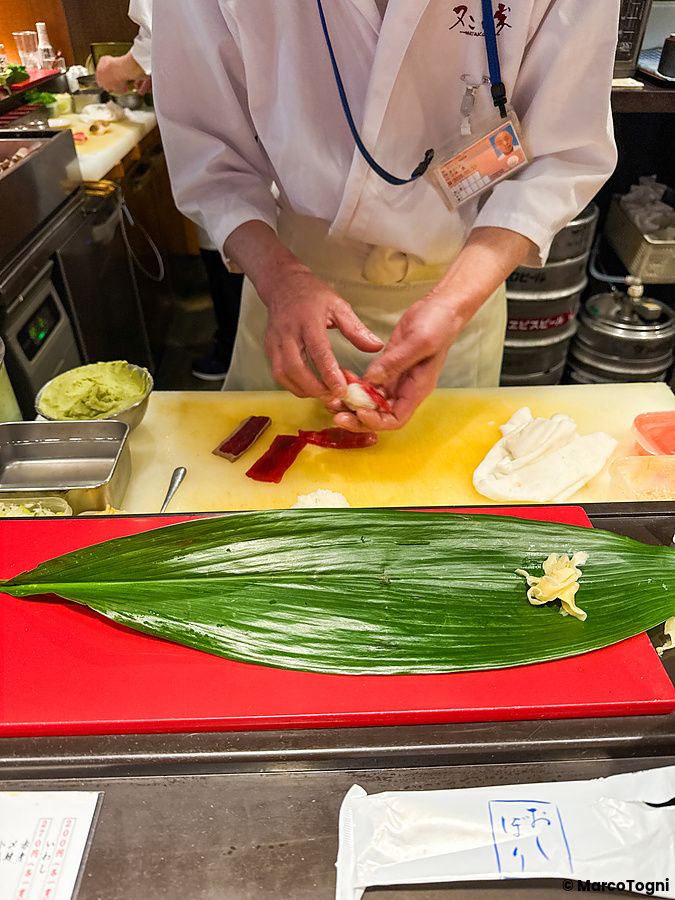
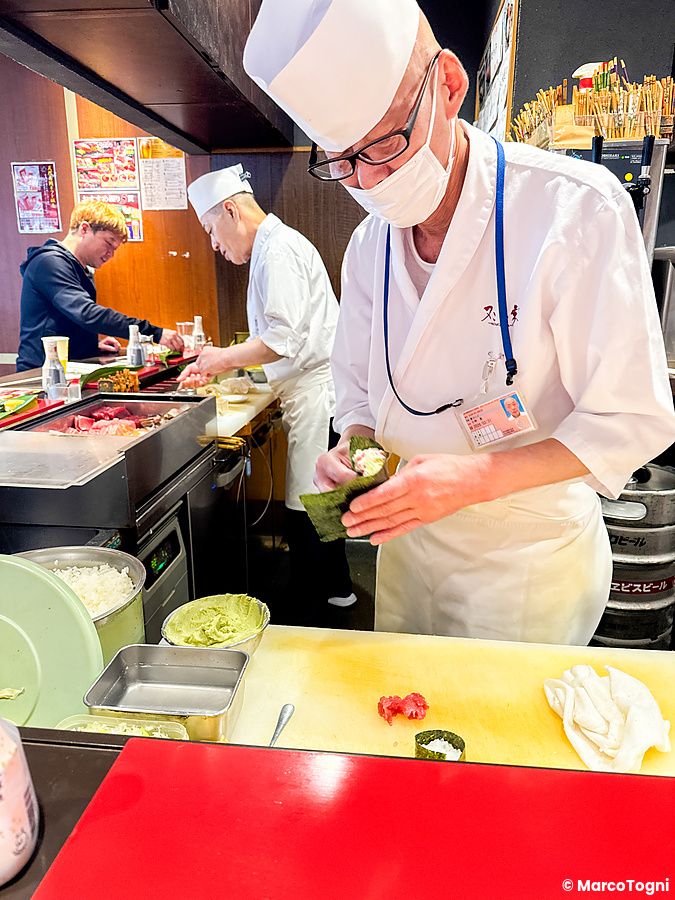
The fish comes from the market every morning, and you can tell mostly from the texture. The lean tuna still has the firm bite of fresh fish instead of the mushy feel of badly thawed tuna.
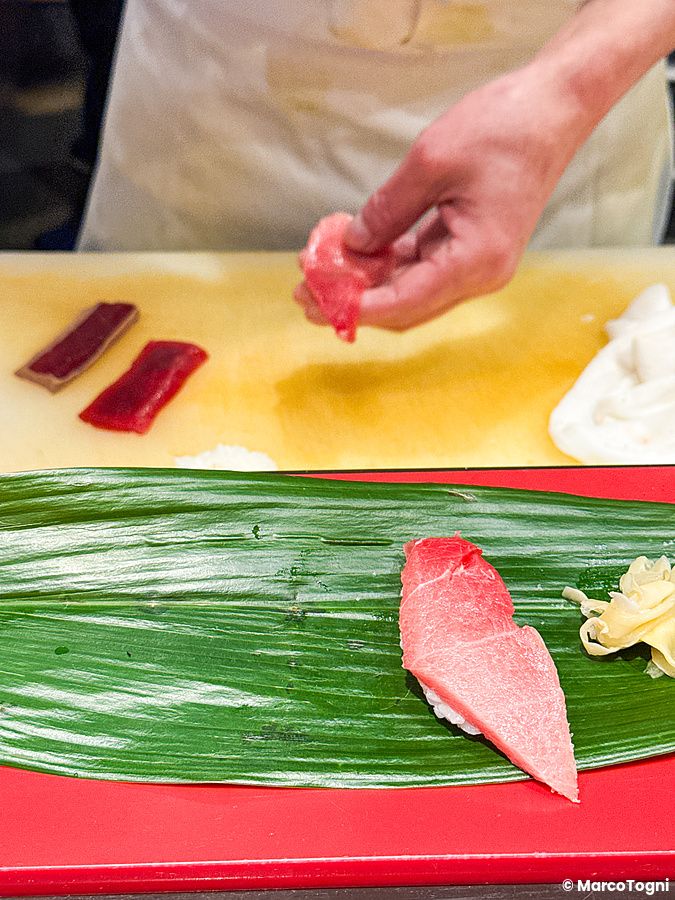
Their signature fish is southern bluefin tuna, prepared and kept on ice, and they treat it as the top piece on the menu. It’s fattier and sweeter than regular lean tuna, and it works beautifully as nigiri because the rice isn’t overly sweet and doesn’t drown anything out.
Then there are cuts you usually only find at neighborhood restaurants, never in the display cases of tourist places: the parts from the head and the meat clinging to the backbone. These pieces have more chew and more flavor, and if you really want to see how well they know their tuna, that’s where you should start.
The rice is slightly warm and shaped by hand, not packed tight like a brick. That’s why the grains loosen as soon as it’s in your mouth instead of sitting there in a lump, and it’s also why you need to eat it right away, not leave it on the plate to cool while you finish your conversation.
Asking for recommendations pays off more than reading the menu. Just tell them what you like and they’ll point you to the best of what came in that day.
The most important thing to know about the Haneda branches is that they’re past security, in the departure area, so you can only eat there if your flight leaves from that terminal. You don’t make a special trip to the airport counter. Either you happen to end up there or you don’t.
If you do, though, make the most of it, because eating freshly cut sushi a short walk from your gate isn’t something that happens every day.
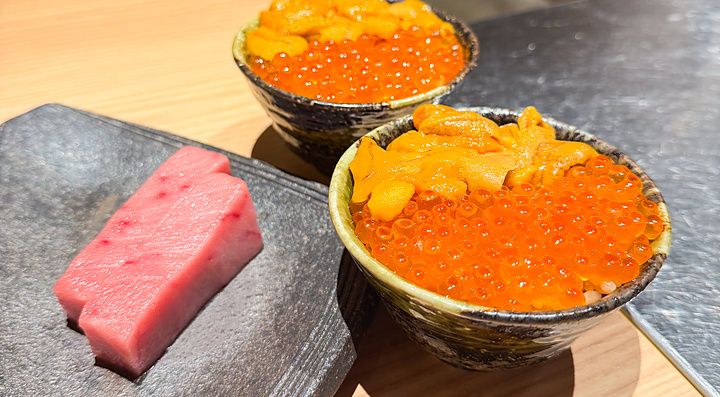
If your flight leaves from a different terminal, there’s the main branch in Tsukiji’s outer market, where Matakoiya started. Here nigiri takes a back seat and rice bowls rule, topped with wild-caught tuna, never farmed.
This is where the less common cuts really get their moment. Eye, cheek and jaw go into bowls made in limited numbers, along with chutoro, otoro and negitoro. It’s a morning place, best paired with a walk around the outer market stalls, and you can take your time instead of eating with one eye on the gate.
There are other drawbacks too. The selection of fish is limited, so if you’re after the twenty different kinds of fish you’d find at a traditional sushiya, you won’t get them here. You eat in a hurry, surrounded by suitcases with the PA announcements ringing in your ears, and nobody’s going to treat you the way they would at an omakase place.
One more practical point: if tuna isn’t your thing, half the reason to stop here disappears. The rest of the fish is fine, but it’s not what makes this place special, and at that point you might as well eat something else.
Pros:
Cons:
Best for: anyone with half an hour before a flight who doesn’t want to give up fresh fish
When to go: when the counter is half empty and you can talk to the chef without rushing
Atmosphere: a high counter, the chef within arm’s reach, people with roller bags coming and going
What stays with you as you board the plane is the way the chef picks up the tuna cheek, lays it on the rice and sets it in front of you without any fuss, one piece at a time, with flight announcements overhead. If you only go once, skip the assortment and ask for the odd cuts, the ones near the backbone and above the eye, then finish with a fatty tuna nigiri.
It’s the place I think of when I picture what airport food should be and almost never is: a freshly made nigiri instead of yet another thing in a wrapper. If your flight leaves from that terminal, don’t walk past it. Find the counter and stop for ten minutes.
This place is on MarcoMaps
Matakoiya Honten
My map of Japan: over 4,000 places I've tried myself, each with photos, rating, and hours. Filter by category and rating, find veg-friendly spots and places near you with GPS. No sign-up, right from your phone.