Matsue
Matsue is an elegant, quiet city on the water and the capital of Shimane Prefecture.
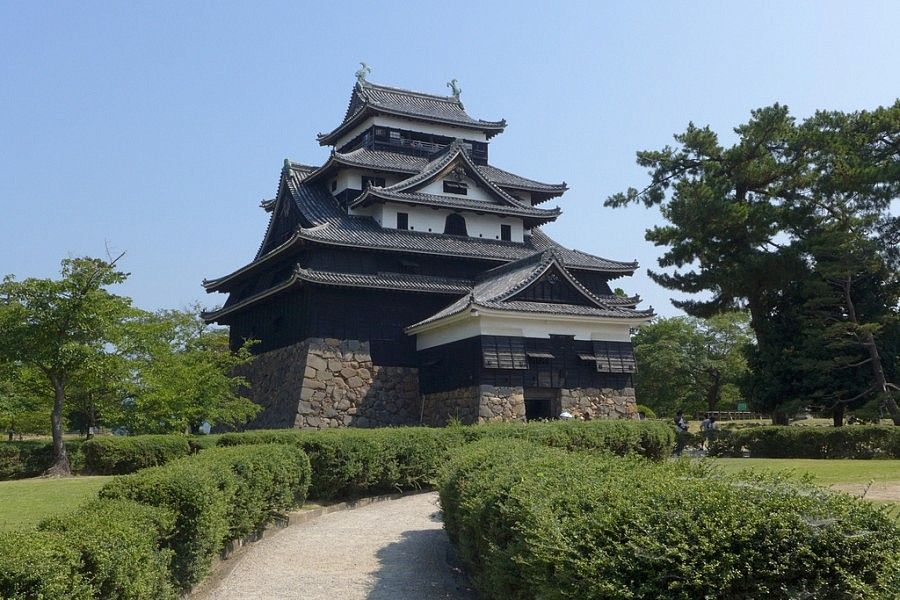
It sits between Lake Shinji and Lake Nakaumi, which are linked by the Ohashi River, and the network of canals dug in 1611 to defend the castle still shapes the city today. At its center stands Matsue Castle, the “Black Castle,” one of the 12 castles in Japan that still have their original keep.
The writer Lafcadio Hearn taught here, and you can visit his house. All around you’ll find samurai residences, old teahouses, shrines tied to the Izumo myths and postcard-perfect sunsets over Lake Shinji.
Contents
- Sada Jinja
- Matsue Castle
- Matsue City Warrior Parade
- Suigo-sai Festival
- Matsue Suitouro
- Kanden-an teahouse
- Meimei-An teahouse
- Shiomi Nawate
- Buke yashiki
- Gesshoji
- Tanabe Art Museum
- Hot springs
- Lake Shinji
- Yaegaki Shrine
- Fudoki no Oka
- Kamosu Shrine
- Ohashi River
- Lafcadio Hearn's former residence
- Lafcadio Hearn Memorial Museum
- Shimane Art Museum
- Getting There
- Useful Info
- Map
Sada Jinja
Sada Jinja is the home of Sada Shin Noh, a sacred dance that includes a series of purification rituals. During the dance, the performers hold small mats, which are then offered to the gods so they have somewhere to sit. The different dances are performed on a stage set up inside the shrine, accompanied by singing, flutes and drums, and they’ve been handed down from generation to generation. In November 2011, Sada Shin Noh was added to UNESCO’s list of the Intangible Cultural Heritage of Humanity.
Matsue Castle
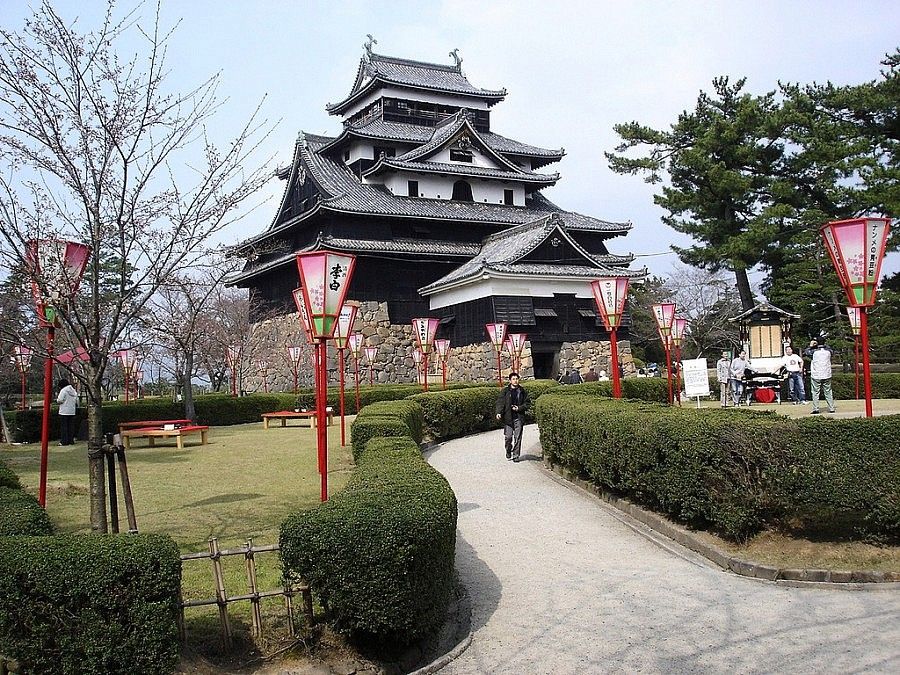
Matsue Castle dates from the feudal era and is also known as the “Black Castle,” because most of its walls are clad in black wooden boards. It’s one of the few medieval castles left in Japan that still have their original wooden structure and have never been rebuilt in concrete.
Construction began in 1607 under the local lord Horio Yoshiharu and was finished four years later. In 1638 the domain and the castle passed to the Matsudaira clan, a new branch of the Tokugawa clan, which was in power at the time.
Matsue Castle has the only keep left anywhere in the San’in region, and from the top you get a panoramic view over Lake Shinji and the city.
In 1875 every building inside the castle grounds was destroyed except the keep, which went through a major restoration between 1950 and 1955. From the outside it looks like it has five stories, but inside there are actually six floors. In 2015 the castle was declared a National Treasure, and the decisive evidence was the discovery of two votive tablets dated 1611, which settled once and for all when the keep was built.
The area around the castle is now Shiroyama Park, a large green space where locals come to relax.
Along the north moat, facing Shiomi Nawate, the residence of an 18th-century samurai still stands, with white walls, wooden fences and a row of old pine trees.
You can also visit the former home of the novelist Lafcadio Hearn, who became a Japanese citizen.
By: GanMed64
Matsue City Warrior Parade
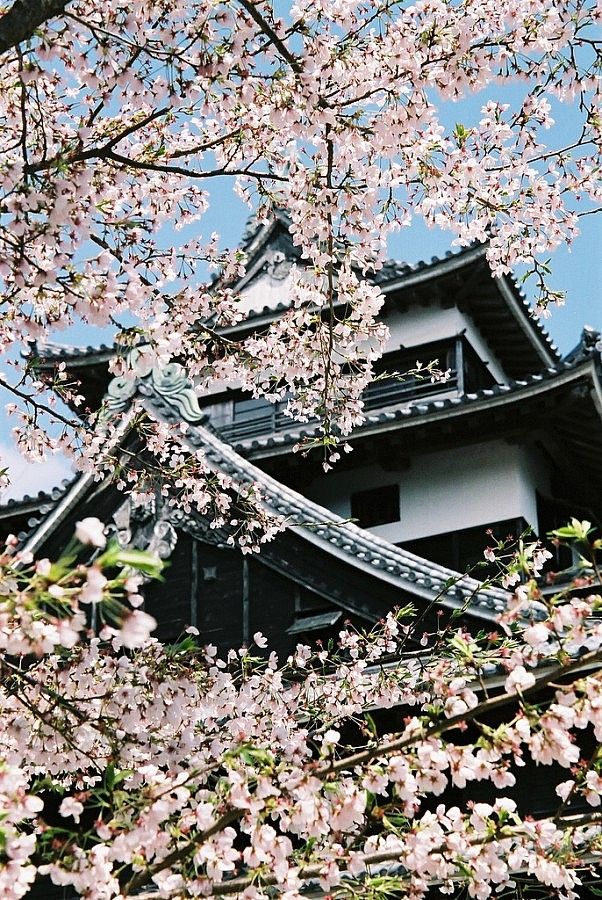
This parade takes place on the first Saturday of April, when the cherry trees are in full bloom. About 200 people in costume reenact the arrival of Horio Yoshiharu, the castle’s founder, and his retinue in the new town, bringing the figures of the early 17th century back to life. Everyone taking part wears period costume and marches through the city: princesses, noblewomen, ladies-in-waiting, armored warriors and court nobles.
The parade often includes traditional dance and music performances, plus archery demonstrations.
Suigo-sai Festival
This festival is held every year over two days between late July and early August, and it’s probably the summer festival that best captures Matsue as a “city of water.” It goes back to 1929. The highlight is the fireworks, which light up the night sky and reflect off the surface of the water.
Matsue Suitouro
This festival takes place in the fall, usually on weekends and holidays in October.
Matsue Suitouro is a festival of water and light, and the draw is the magical sight of the waterways lit by lanterns around the castle and along Shiomi Nawate. Food stalls sell local specialties, and you can hop on one of the Horikawa Sightseeing Boats for a relaxing night tour of the city.
Kanden-an teahouse
Lord Matsudaira Fumai, a tea master and the daimyo of Izumo Province, often came to this mountain retreat owned by the Arisawa family to get away from his everyday worries. In 1792 the Kanden-an teahouse, named after the villa it belongs to, was built to Lord Fumai’s specifications.
Kanden-an is one of the most important teahouses in all of Japan and has also been designated a national cultural property. What sets it apart is its thatched roof, its compact size and the skillful way it plays with light and shadow.
Meimei-An teahouse
Meimei-An is one of the two oldest teahouses in Matsue. It was commissioned in 1779 by Lord Fumai, the daimyo who founded the Fumai school of tea ceremony, and for many years it was looked after by one of his closest followers. Meimei-An has stood on its current site since 1966, and its most distinctive feature is its thick thatched roof.
Shiomi Nawate
This row of samurai residences stands near the north moat of Matsue Castle. The walls of the houses are covered with gray tiles.
Buke yashiki
This samurai residence was built in the middle of the Edo period and is still preserved in its original state. Compared with similar homes, it’s fairly large and austere, a sign that its owner didn’t go in for extravagance and chose a simple life. Inside, you’ll find various everyday objects on display.
Gesshoji
Gesshoji was the family temple of the Matsudaira clan. Its main hall was dismantled in the Meiji era and never rebuilt, but the tombs of nine generations of the Matsudaira are still here, with finely carved wooden doors that each reflect a different stage in the development of Edo architecture.
The largest tomb belongs to Naomasa, Tokugawa Ieyasu’s grandson and the first Matsudaira daimyo of Matsue.
Every gate has its own decorative motif. The grapes on the gate leading to Lord Fumai’s tomb stand out in particular; they were carved by his friend, the master craftsman Kobayashi Jotei. Look out too for the large turtle-shaped stone in front of the tomb of the sixth Matsudaira lord. Legend has it that the turtle used to wander the grounds at night and stop to drink from the pond in the main courtyard.
Tanabe Art Museum
This museum was founded in 1979 by Choemon XXIII, then governor of the prefecture, and it displays family treasures handed down through twenty-five generations of the Tanabe clan, including tea bowls and other utensils used in the tea ceremony. The building, designed by Kikutake Kiyonori, makes the most of light and shadow to create a calm, understated space that feels open and roomy.
Hot springs
Matsue’s hot springs are on the north shore of Lake Shinji, and the water comes out at a scorching 76°C. This is also where you’ll find the well-known O-Yu-Kake Jizo; many people come here to boil eggs or to pray for good health by pouring hot water over a statue of Jizo, the Buddhist deity.
Nearby is the Matsue Folk Art Center, which displays a range of regional products.
Lake Shinji
For a long time Lake Shinji worked as a kind of clock, telling people the time of day through the ebb and flow of its tides. The lake is full of aquatic life, and fishermen head out on it every morning, carrying on a tradition that goes back centuries. The best-known catch is shijimi, small brackish-water clams; the lake is one of Japan’s biggest producers, and you’ll find them all over town, especially in miso soup.
Even under a gray sky, Lake Shinji can be beautiful, especially at sunset, when the whole scene looks straight off a postcard.
Yaegaki Shrine
This shrine is dedicated to the gods of marriage. In particular, it commemorates the union of Princess Inata and Lord Susano, after he bravely defeated Yamatano Orochi, the fearsome eight-headed serpent.
Every year the shrine draws plenty of visitors hoping to find a partner or looking for a blessing on their future love life. The treasure house next to the shrine holds an ancient depiction of Princess Inata.
The most popular ritual takes place at the Mirror Pond, in the grove behind the shrine. You lay a fortune slip on the water with a small coin on top and wait for it to sink. If it sinks quickly, you’ll meet the right person soon.
Fudoki no Oka
Fudoki no Oka takes you deep into Japan’s ancient past. It’s an important archaeological site with burial grounds and all kinds of artifacts from the Kofun period, mostly from the 6th century; the artifacts are now on display in the site’s museum.
Right next to Fudoki no Oka are the Okadayama burial mounds, which have given archaeologists a large haul of jewelry, swords and other objects. The most exciting find came in 1984, though, when they dug up a sword inscribed with the name of its owner, Nukatabe no omi. The discovery was a big help in piecing together some of the historical events that took place in the area.
Kamosu Shrine
This ancient shrine is a little past Fudoki no Oka. Its main hall, built in 1583, is the oldest surviving example of the Taisha-zukuri architectural style and has been declared a National Treasure. In spring, don’t miss the cherry blossoms.
Ohashi River
The river runs through Matsue and splits it in two: the north side has a more aristocratic feel, while the south side is livelier.
A sad legend tells of Gensuke, a local man who was buried alive in the riverbed under the central pillar of the Ohashi bridge to calm the anger of the river’s kami. While daimyo Horio Yoshiharu was having the bridge built, the rough currents brought it down several times, until he made the drastic decision to sacrifice a man as a human pillar.
Lafcadio Hearn’s former residence
Hearn spent the happiest days of his life in this house, devoting himself to writing, and in his work he also paid tribute to the house itself. One of his best-known essays is “In a Japanese Garden.” The house and its gardens still have an old-world charm today.
Lafcadio Hearn Memorial Museum
This museum displays objects that belonged to or are connected with Lafcadio Hearn, one of western Japan’s most prolific writers. The highlight is a desk Hearn designed himself to make writing easier.
Other items on display include his quill pen and his favorite inkwell, as well as several pipes.
The building is also used by the Hearn literary society, “Yakumo-Kai.”
Shimane Art Museum
The Shimane Art Museum opened in 1999. It was designed by Kiyonori Kikutake, covers a total of 12,500 square meters and houses a collection of Japanese and Western art, from Momoyama folding screens to paintings by Corot, Sisley, Monet and Gauguin.
By: Peter Broster
By: Kate Nevens
Getting There
From Okayama, where the shinkansen stops, take the JR Yakumo limited express. It crosses the Chugoku mountains and gets you to Matsue Station in about 2.5 hours.
If you're flying in, a shuttle bus runs from Izumo Airport to Matsue Station in about 35 minutes.
The easiest way to get around town is the Lake Line, the sightseeing loop bus that leaves from the station and stops at the castle, the samurai residences and the lakeshore.
Useful Info
- JR Matsue Station (JR San'in Line, Yakumo limited expresses from Okayama)
- Matsue Shinjiko Onsen Station (Ichibata Railway, for Izumo Taisha)
- The Lake Line sightseeing loop bus runs around the city
Map
This place is on MarcoMaps
Matsue
My map of Japan: over 4,000 places I've tried myself, each with photos, rating, and hours. Filter by category and rating, find veg-friendly spots and places near you with GPS. No sign-up, right from your phone.
- 4,000+ places
- Rating, photos, and hours
- Veg friendly
- Near me (GPS)
- Favorites without login
- Works offline

