 677 m
mipig cafe677 m
The mini pig cafés.
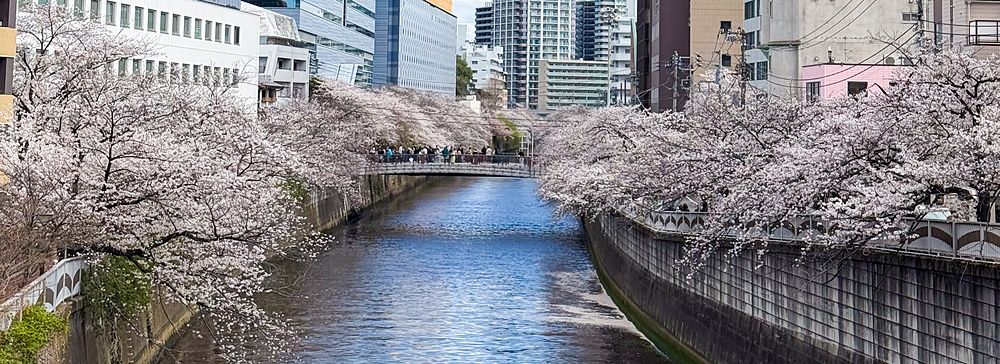
A riverside walk in Nakameguro, Tokyo, that turns into a tunnel of cherry blossoms over the water at the end of March, where the branches from both banks almost touch. The Meguro River is one of the city’s best-known spots for hanami, or viewing the cherry blossoms. It’s a nice place any time of year, though, because the bank is lined with cafés, little bars and shops one after another.
It’s a good pick if you’re in Tokyo in spring, but also if you just want a walk with no particular plan, maybe in the evening, ending with dinner.
It’s a canal with stone embankments, a footpath on both sides and about 800 cherry trees along a few kilometers of riverbank. The best-known stretch is the one in Nakameguro, but the river continues north to Ikejiri Ohashi and south to Meguro and beyond.
There are no monuments to visit. You walk, stop on the bridges and go into whatever catches your eye.
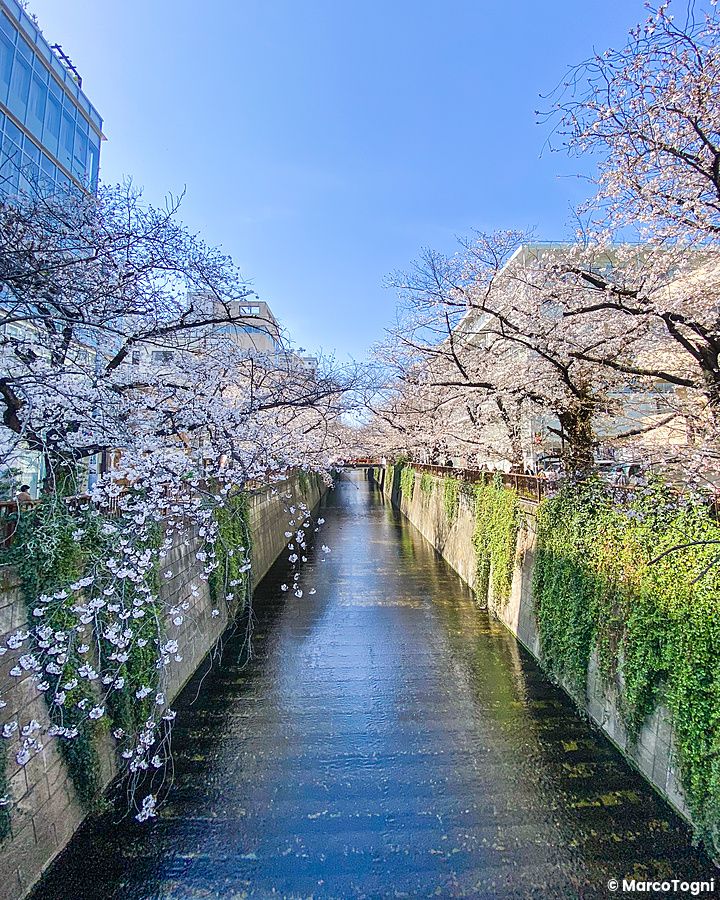
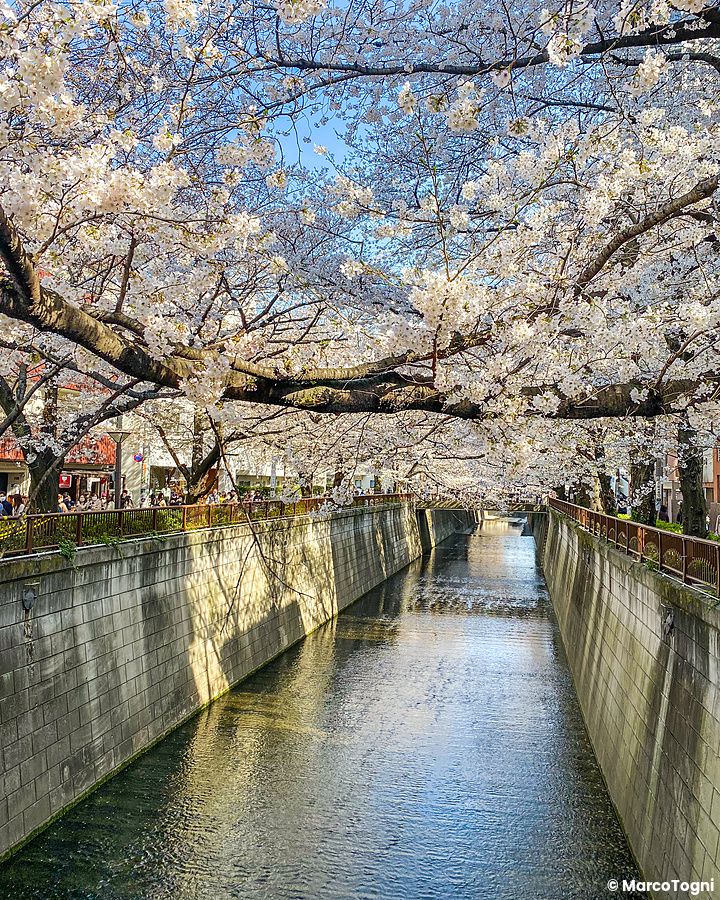
At peak bloom you don’t so much stroll the Nakameguro stretch as shuffle along in a line. The path is one way only, signs ask you not to drink while walking and to keep your voice down, and nobody spreads out picnic blankets the way people do in other parks. There are stalls selling beer and a few things to eat, though.
Once you head south past the famous part, the crowds thin out a lot. The trees are the same, there are fewer places to eat and drink, and you have much more room to stop.
If you have trouble walking, the route is completely flat. The path is narrow, though, and in spring, with all the strollers and tripods, it turns into an obstacle course.
The places to eat are what make the river worth a visit the rest of the year. On the side streets behind the bank you’ll find tiny restaurants, cafés with windows facing the water, bars with bare concrete walls and warm lights in the evening, and even a focaccia shop with Italian-style fillings (prosciutto, gorgonzola and figs, or mortadella and pistachio) where you eat standing up and watch the street.
Toward Meguro, not far from the river, is the Parasite Museum. It has a white rope almost nine meters long, the same length as the tapeworm on display next to it, and anyone with a strong stomach will happily drop in.
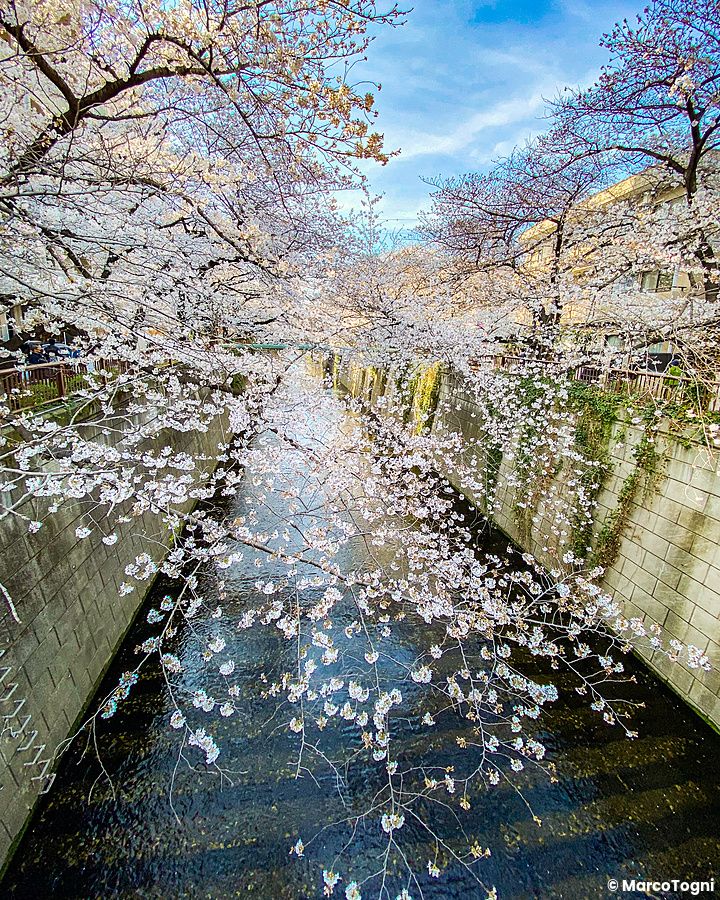
The Meguro River lives up to its reputation. From the bridge it really does look like the photos, with the water below and the branches closing in overhead.
I go back even out of season, because it’s one of the few walks in Tokyo you can take without a destination, and it always ends at a little table with something good in front of me. And when friends come over from Italy at the end of March, it’s the first thing they ask to see, and they’re right.
Spring is what it’s famous for: the end of March or early April, depending on the year. On a sunny weekend at peak bloom, the Nakameguro path is as packed as a rush-hour train, and even on the surrounding streets it’s hard to walk in a straight line. Weekdays are less crowded, and early in the morning you see the same things with a tenth of the people.
During the bloom, lanterns light up along the banks in the evening and the blossoms take on a pink glow against the dark water. It’s the most beautiful time, but also the most crowded. If you really want to enjoy it, go late, when the stalls have closed and the crowds start to thin out.
It’s still worth going after the blossoms are gone. In mid-April the new leaves come out and the water is still covered in petals, and in summer the trees make a green tunnel that gives the path a bit of shade. In fall the leaves along the bank turn yellow and orange, including on the stretches toward Osaki, among glass buildings and walkways over the water. In winter there are holiday lights around Gotanda.
On any evening of the year, the river belongs to runners and couples heading out to dinner, the restaurant and bar windows are lit up, and you can barely hear the city. Don’t bother going in the rain: there’s no cover along the banks, and the whole point is the walk.
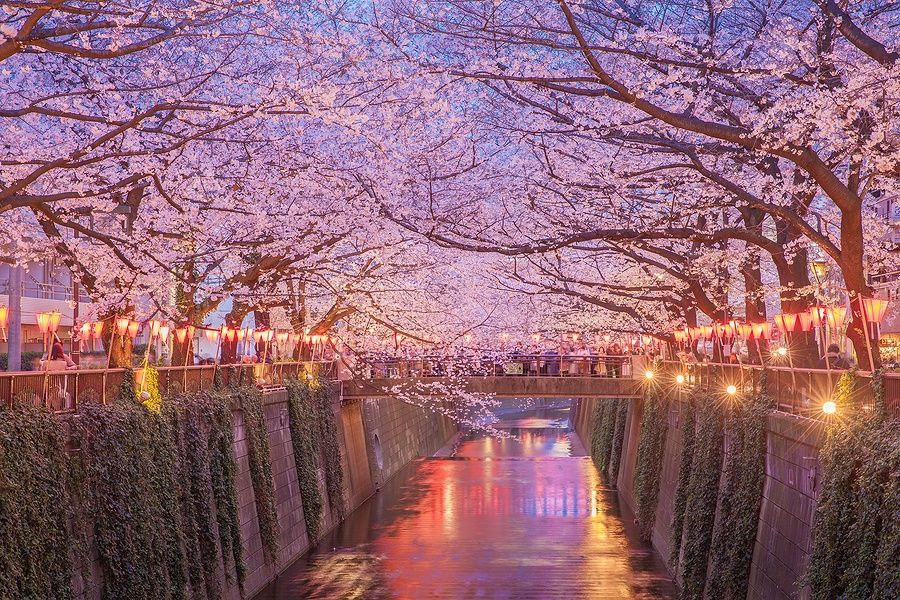
The classic photo is taken from the middle of a bridge, looking down the river, with the canal stretching away and the branches closing in over the water. At peak bloom you’ll have to wait a bit to get a spot in the middle and then shoot quickly, because there are people behind you waiting their turn.
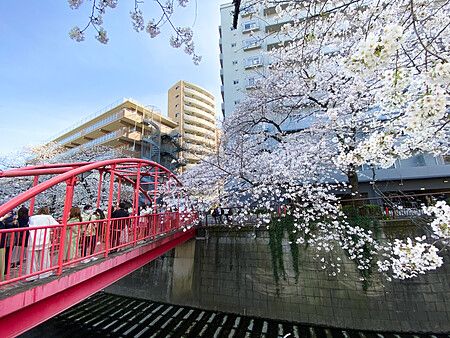
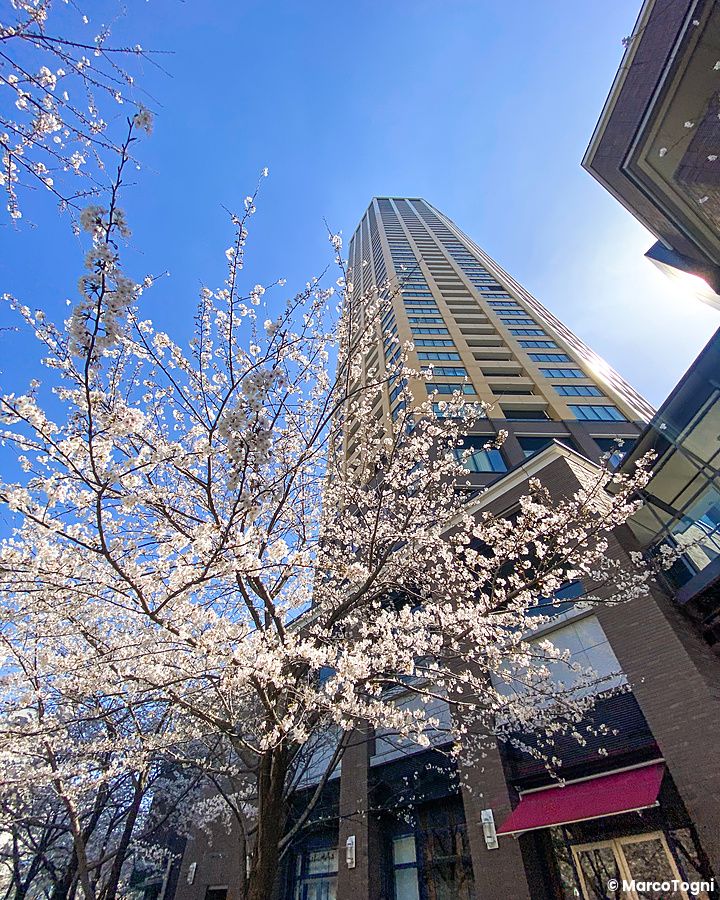
Photograph the red bridge from the bank, not from on top of it, since the red among the white blossoms only works from a few meters away. Another shot I like is from low down, with a cherry tree in the foreground and Nakameguro’s modern apartment buildings behind it, because it really shows a river of blossoms running through a real city.
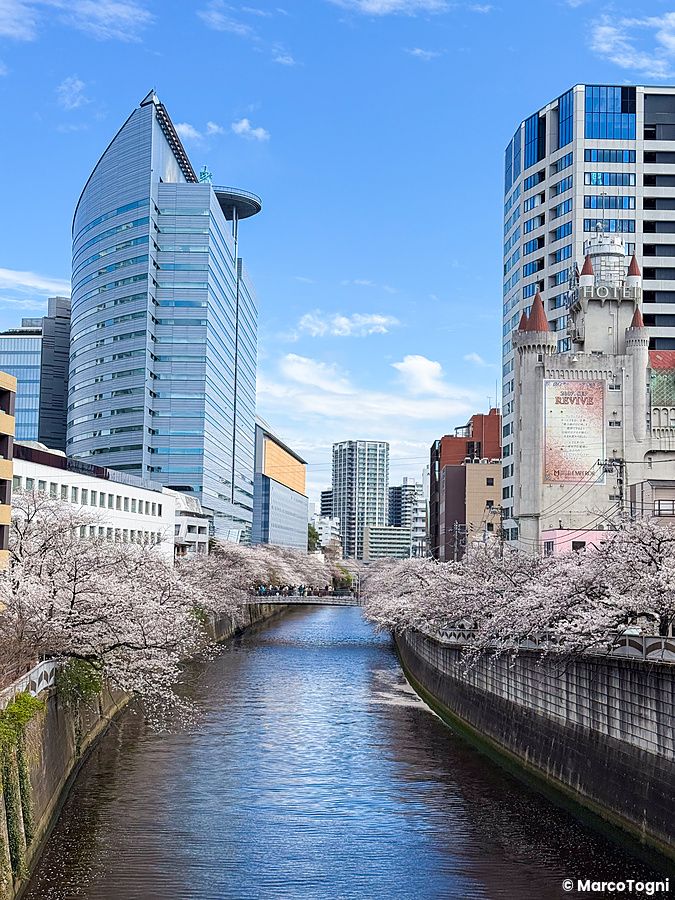
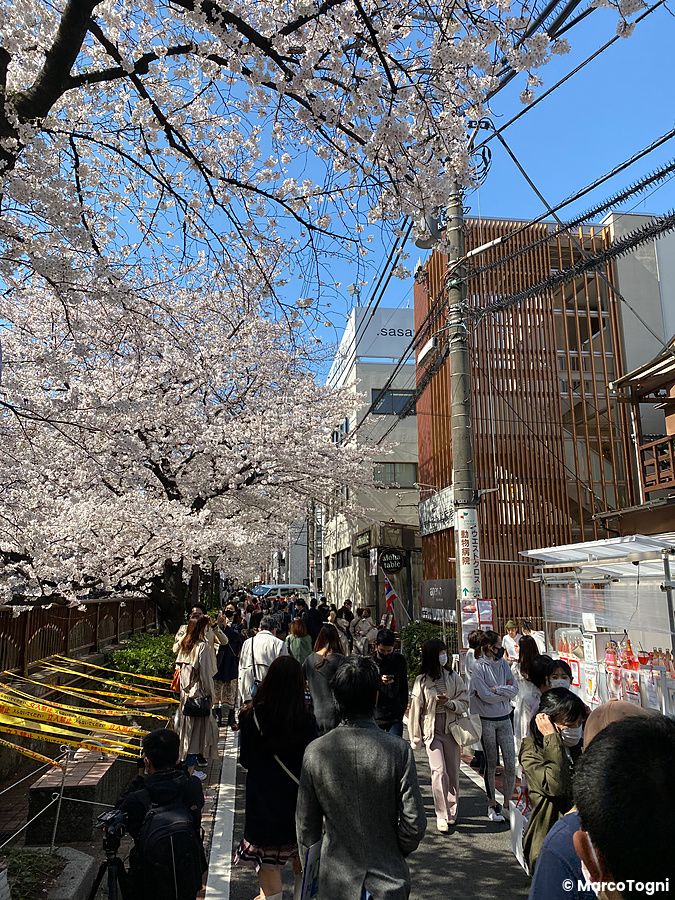
If you’re in Tokyo while the cherry trees are in bloom, go out of your way to see it. Nowhere else in the city does the water disappear under cherry blossoms for such a long stretch. The crowds are the price you pay, but you only have to go a few bridges farther south or north to find more room.
The rest of the year it’s a nice neighborhood walk, not a sightseeing attraction. Go if you like walking and eating well, not if you have a list of things to check off.
This place is on MarcoMaps
Meguro River
My map of Japan: over 4,000 places I've tried myself, each with photos, rating, and hours. Filter by category and rating, find veg-friendly spots and places near you with GPS. No sign-up, right from your phone.

