Meguro
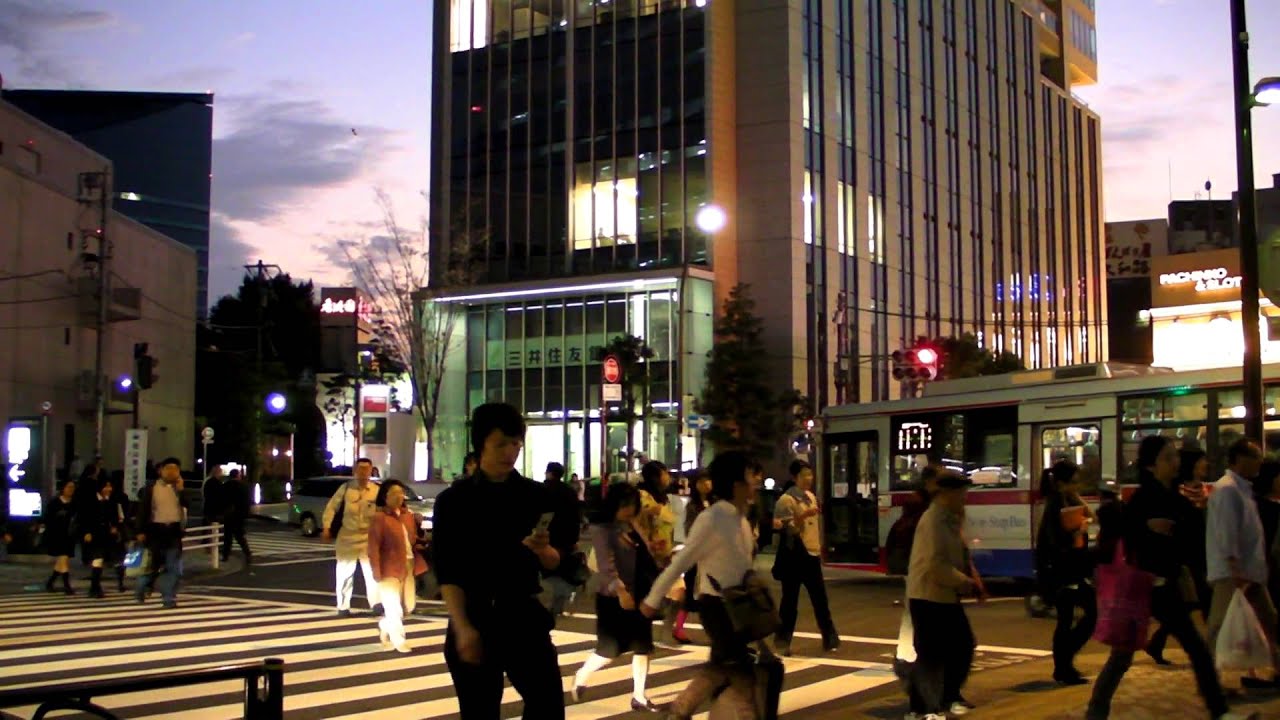
Meguro is one of the parts of Tokyo where people actually live, and that’s exactly why I like it: it has nothing to show off.
It’s on the Yamanote Line between Ebisu and Gotanda, a short walk from Nakameguro, but the mood changes the moment you leave the station. The streets slope downhill, the buildings are low, and there are furniture shops and cafés where people sit for hours.
You don’t come here to tick things off a list. You come to take your time walking through an ordinary slice of the city. I’ll tell you how to get around, when it makes sense to stop by, and a couple of places that give you a good sense of what kind of neighborhood this is.
Contents
What to see
Nearby neighborhoods
Shinagawa
Osaki
On top of a hill
The first thing to know is a little geographic quirk. Meguro Station isn’t in Meguro ward at all. It’s in Shinagawa, right on the border with Meguro.
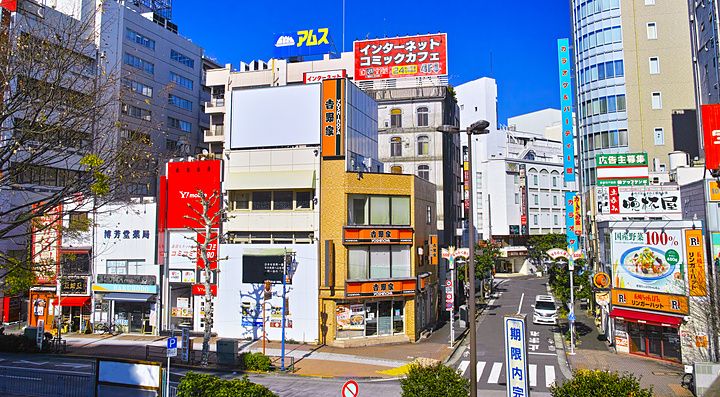
From the station, the neighborhood runs downhill. Follow Meguro-dori down and you reach the furniture shops, a long row of stores selling American furniture from the fifties and sixties, Eames designs, English and French antiques, Scandinavian pieces and natural wood furniture.
You come to look as much as to buy. Walk in and browse, and on the back streets you’ll find small cafés where you can rest your legs.
The Fudo behind the name
The neighborhood is named after a temple, not the other way around. Ryusenji, which everyone here calls Meguro Fudo, holds a statue of Fudo Myoo with black eyes, and that’s where the area got its name.
According to tradition, the temple dates back to 808, and it’s one of the five Fudo of Edo, the temples that marked the cardinal points of the old city.
You reach it by climbing a wide flight of stairs, but my favorite part comes before the steps. There’s a small waterfall where water pours from the mouths of two dragons, and some people still stop there to wet their hands.
If you’re here on the 8th, 18th or 28th of the month, you’ll find the temple market. The 28th has the most stalls, and it’s the day you see the place at its best.
When to come
Fall is when Meguro gets the loudest.
A neighborhood shrine near the station hosts the sanma festival, named after the saury, the fish that marks the start of the cold season. There’s smoke everywhere, stalls outside the station and crowds on the streets. You can’t just line up for the grilled fish anymore, though. When there is fish, the organizers hand it out through a lottery you have to sign up for, and some years they don’t hand it out at all.
Besides the fish there’s rakugo, games for kids and local products, and it’s one of the most genuine looks you’ll get at the neighborhood coming together.
The rest of the year, the pace is completely different. If you’re looking for somewhere to slow down, I’d go to the Teien museum. It’s Prince Asaka’s former residence, turned into a gallery in 1983, and one of the few examples of Art Deco in Tokyo. It’s surrounded by a garden where you can sit without hearing the traffic.
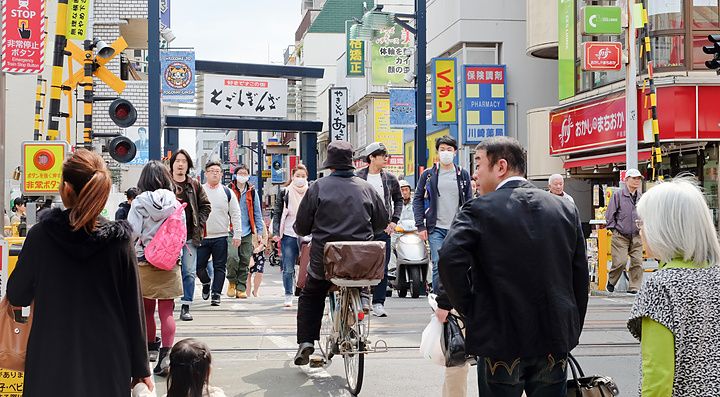
In the evening Meguro empties out and goes back to being residential, with few lights and a scattering of bars and restaurants. It’s nothing like the buzz of Ebisu next door. To me it works best during the day, together with a walk along the river or over to the next neighborhood, as an unhurried stop rather than a place to spend the evening.
The parasite museum
Also on Meguro-dori, there’s a museum that has nothing to do with the rest of the neighborhood. It’s the parasite museum, two narrow floors full of worms, larvae and infested animals preserved in jars of formalin.
It isn’t a tourist gimmick. It’s a real research institute, founded after the war, when parasitic diseases were still an everyday problem in Japan.
The star of the collection is a tapeworm almost nine meters long, displayed in full. Next to it hangs a rope of the same length, so you can get a sense of how long that really is.
Upstairs there’s also a small shop selling T-shirts and keychains. It’s one of those places you’d never expect in such a quiet neighborhood.
The Gajoen
At the bottom of the slope, a few minutes from the station, there’s a place that’s worth the detour, even if you only go out of curiosity: the Gajoen.
It opened in the 1930s as a wedding hall, and today it’s a hotel with event spaces and restaurants. Its most famous part is the Hyakudan Kaidan, the hundred-step staircase. It actually has ninety-nine original wooden steps, with frescoed rooms on either side.
People come for the exhibitions and events, but even walking through the lobby shows you how seriously this place took old-school luxury. Each room along the staircase has its own name and was decorated by a different painter, with every inch of the ceilings and walls covered.
The Hyakudan Kaidan is the only wooden part of the original Gajoen still standing, and you take your shoes off to climb it, the way you would in a Japanese home.
Staying in Meguro makes sense if you want a quiet base that’s also well connected. The Yamanote takes you everywhere, and hotels cost less than in the more central areas.
Just don’t expect big attractions or lit-up signs. Meguro is a nice place to be even when not much is going on, and the best part is still walking its sloping streets. If I had to tell someone why they should come, I’d say for the pace, not the list.
Getting There
Meguro Station is on the Yamanote Line, between Ebisu and Gotanda. Take the main exit and you're right at the top of the slope, with Meguro-dori heading down toward the furniture shops.
The three exits are very close to each other, so whichever one you take, you end up in roughly the same spot.
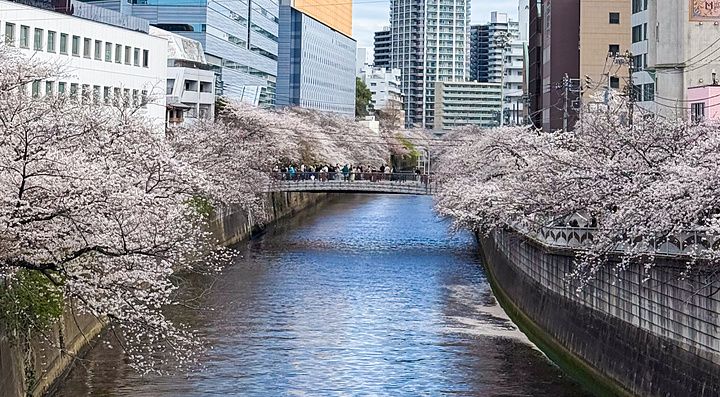
If you're staying in Nakameguro, it's a fifteen-minute walk along the river, and from Ebisu it's about twenty minutes on foot.
Useful Info
Name: Meguro
Time needed: Two or three hours for the walk down Meguro-dori and the furniture shops, or a good half day if you add the Gajoen or the Teien museum.
Closed: Several furniture shops on Meguro-dori close on Wednesdays, and the parasite museum is closed on Mondays and Tuesdays.
Tips: Anyone can walk into the Gajoen. Even without a ticket you can go through the lobby and hallways, which are covered in decorations. To climb the hundred-step staircase, though, you need a ticket for the current exhibition, which changes several times a year.
Getting there:
- Meguro Station (JR Yamanote, Tokyo Metro Namboku, Toei Mita, Tokyu Meguro): main exit
- Nakameguro Station (Tokyu Toyoko, Tokyo Metro Hibiya): about a 15-minute walk
Map
MarcoMaps100% free
This place is on MarcoMaps
Meguro
My map of Japan: over 4,000 places I've tried myself, each with photos, rating, and hours. Filter by category and rating, find veg-friendly spots and places near you with GPS. No sign-up, right from your phone.
- 4,000+ places
- Rating, photos, and hours
- Veg friendly
- Near me (GPS)
- Favorites without login
- Works offline