




 581 m
Anakuma Cafe581 m
Café with a bear paw sticking out of the wall.
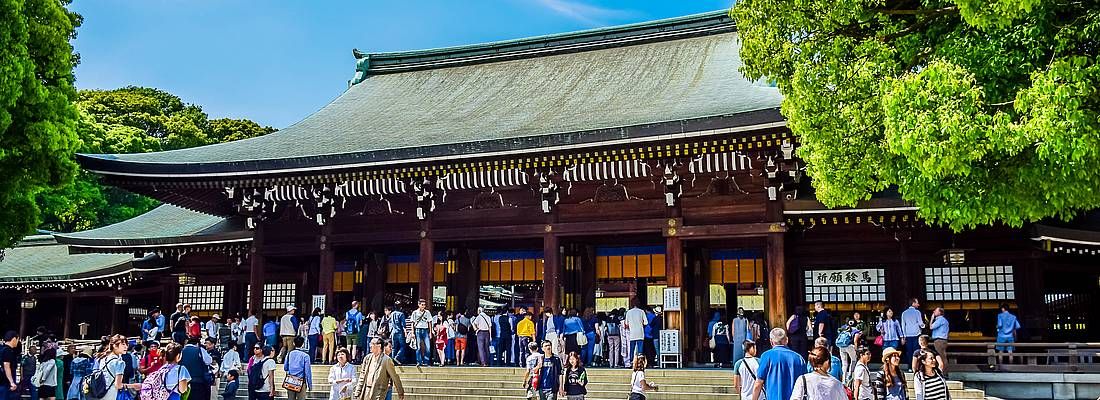
Set in a large green space in the middle of hectic Tokyo, Meiji Shrine is a Shinto treasure that gives you a quiet, peaceful escape just a short walk from busy Harajuku Station and the shopping streets of Shibuya.
It’s easily one of Tokyo’s most symbolic sacred sites and one of the shrines Japanese people love most, because it honors Emperor Meiji and his wife, Empress Shoken. The woods of nearby Yoyogi Park and the shrine’s gardens, with their walking paths, are in sharp contrast to the skyscrapers around them, and you feel like you’re a long way from Tokyo. The place is beautiful, but it’s also worth visiting to learn its history and understand how much it matters to the people who live here.
The shrine is fairly recent. It was completed in 1920, eight years after Emperor Meiji died, but the buildings you see today date from 1958, because the shrine was destroyed during World War II and then rebuilt.
Meiji played a very important role in the history of Japan as the first emperor of the modern era. He was born in 1852 and took the throne in 1867 at just 15, when the country’s feudal period, known as the Edo period, came to an end. The shoguns lost their power and control of the country went back to the emperor. Under Meiji, Japan began a radical modernization: the old system was dismantled, the country opened up to the outside world and the capital moved to Tokyo. That’s why his death was met with deep sorrow and an outpouring of emotion across the country, and it was the wish to honor him that led to the creation of the shrine and the park around it. The roughly 100,000 trees surrounding Meiji Shrine were donated by people from all over Japan, and today they make up a large wooded area where you can walk after visiting the shrine. Don’t confuse it with nearby Yoyogi Park, which is a separate green space and much more recent.
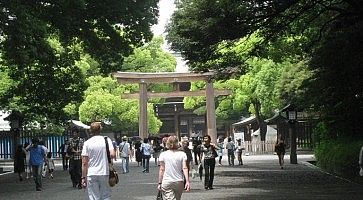
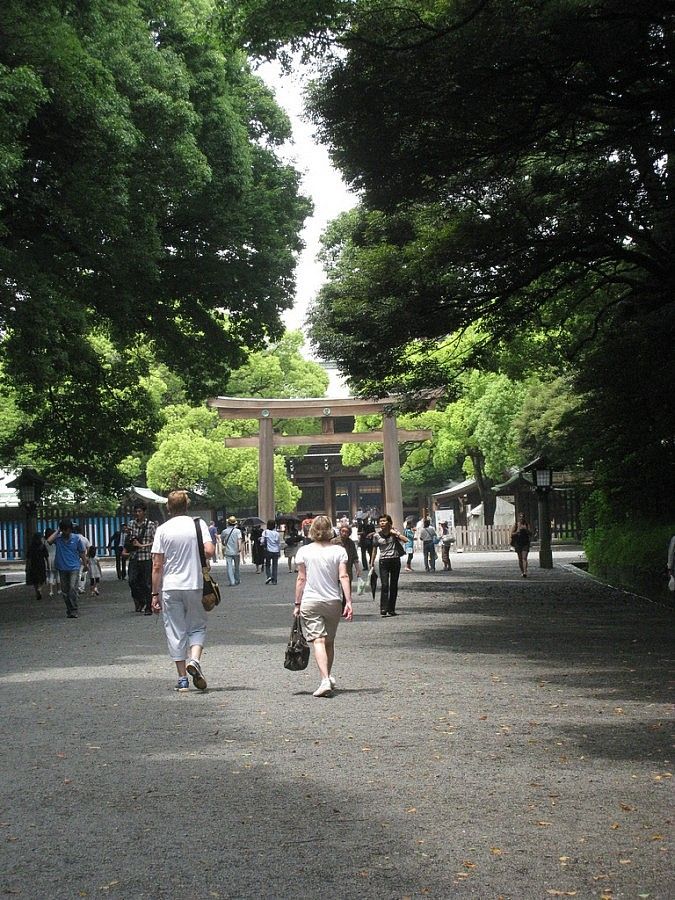
As with every Shinto shrine, a massive wooden torii gate marks the entrance to the sacred area. It’s made of cypress and left unpainted, without a trace of the red you’d probably expect. Once you pass through it, you walk along a gravel path through the trees and leave the noise of the city behind.
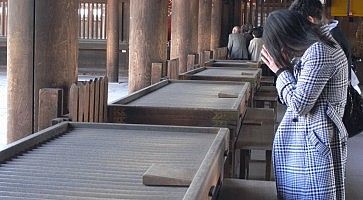
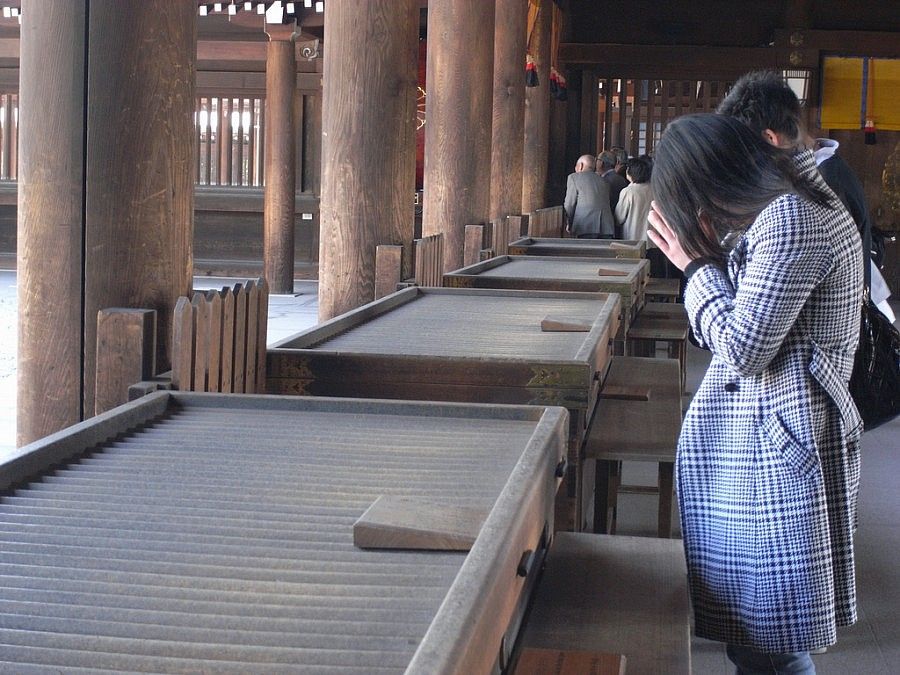
The shrine is a complex of several buildings, including a traditional-style main prayer hall that faces the central courtyard. You’ll often find worshippers lined up in front of it, waiting their turn.
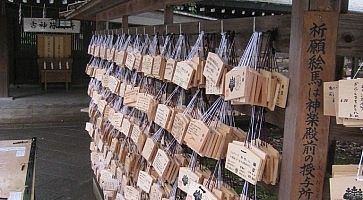
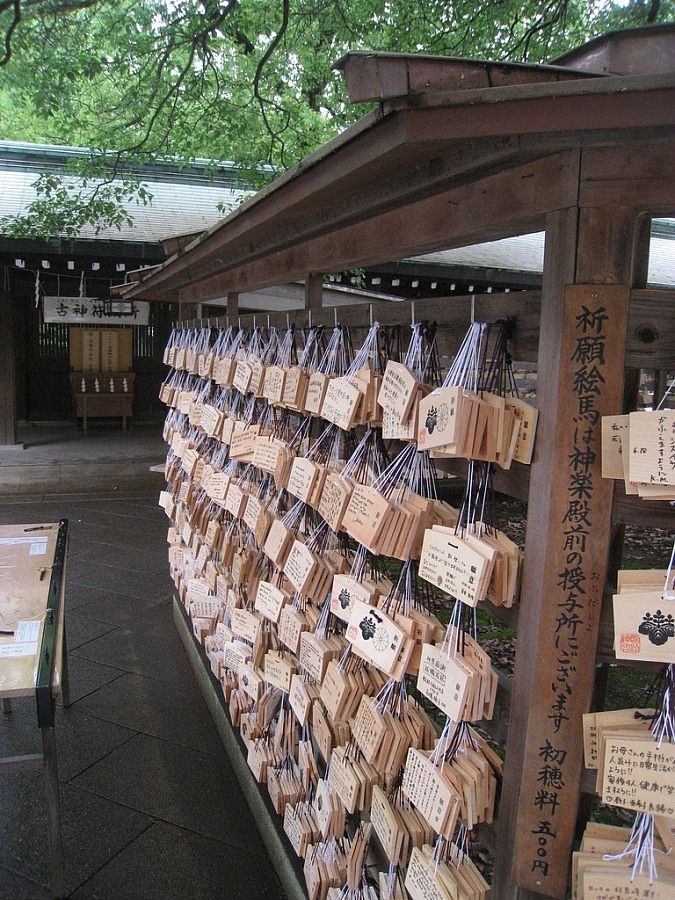
In the same courtyard there are a few buildings where you can buy amulets, good luck charms or ema, the wooden plaques people write their wishes on. You can also make offerings and do everything else you’d do at a typical Shinto shrine. The imperial couple’s belongings are now kept in the Meiji Jingu Museum, the low wood-and-glass building by architect Kengo Kuma that you’ll come across shortly after the big torii. Inside there’s a collection of personal items, clothing and historical artifacts, including the carriage the Emperor used. The historic Treasure House, on the other hand, is open only for limited periods of the year. It was built a year after the shrine was completed and sits tucked away in the northern part of the park.
In the southern part of the complex, the main draw is the private gardens, which have an entrance fee. If you’re traveling in June, don’t miss them: the irises are in full bloom and make the scenery even more spectacular. The garden also has an old well, dug about 400 years ago. It’s considered a place of great spiritual significance because the Emperor and Empress liked to stop here on their walks. After all, the garden was a gift from the Emperor to his wife. Meiji had the iris field planted with Empress Shoken’s taste in mind, and today more than 150 varieties are grown in the marsh. A little further on you’ll find the teahouse the Emperor had built for her, overlooking the pond. It’s worth stopping here for a few minutes rather than heading straight for the exit.
One last building to look out for is the Kaguraden hall, the most modern structure in the complex, where traditional dances are performed during festivals.
What looks like an ancient forest is actually entirely man-made. Before the shrine was built, this was mostly bare land, and it was a group of forestry experts who came up with a plan to fill it.
Politicians at the time wanted neat rows of cedars, but the experts chose to mix species instead and to plan 150 years ahead. They sketched out what the forest would look like after 50, 100 and 150 years, then let nature finish the job.
The principle is still the same today. Fallen leaves aren’t swept up; they stay on the ground to feed the soil. Fallen trunks are left to rot, and the trees reseed themselves. That’s why the greenery on both sides of the path is so dense and untidy, and it’s also why, so close to Harajuku, you feel like you’re up in the mountains.
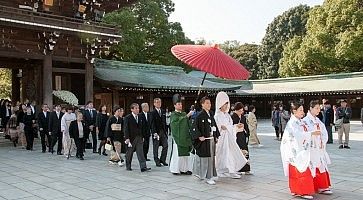
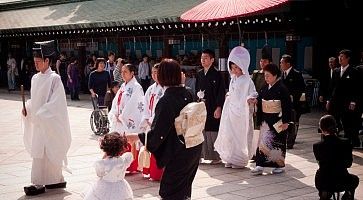
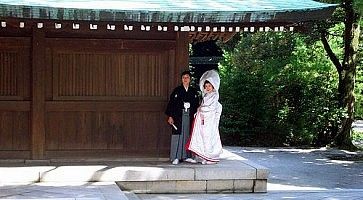
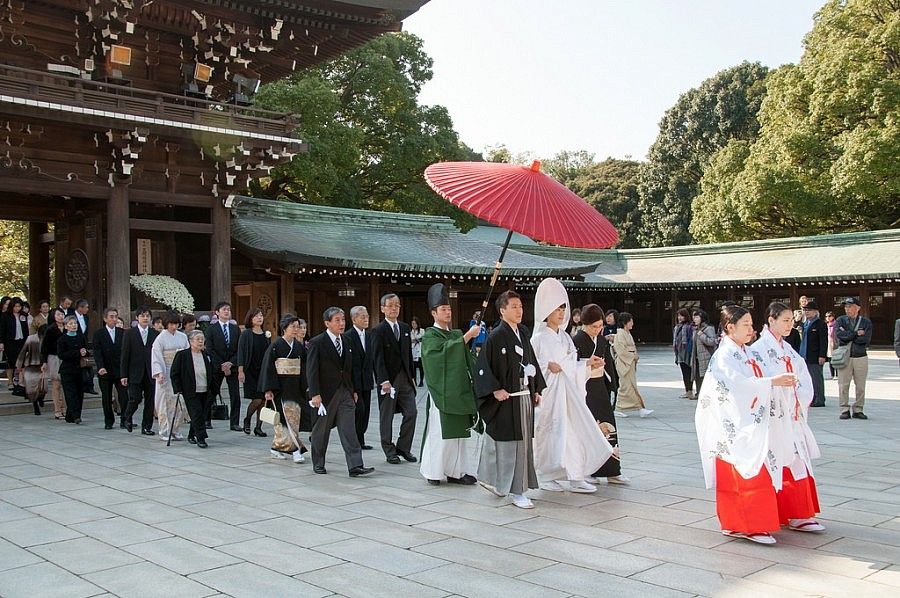
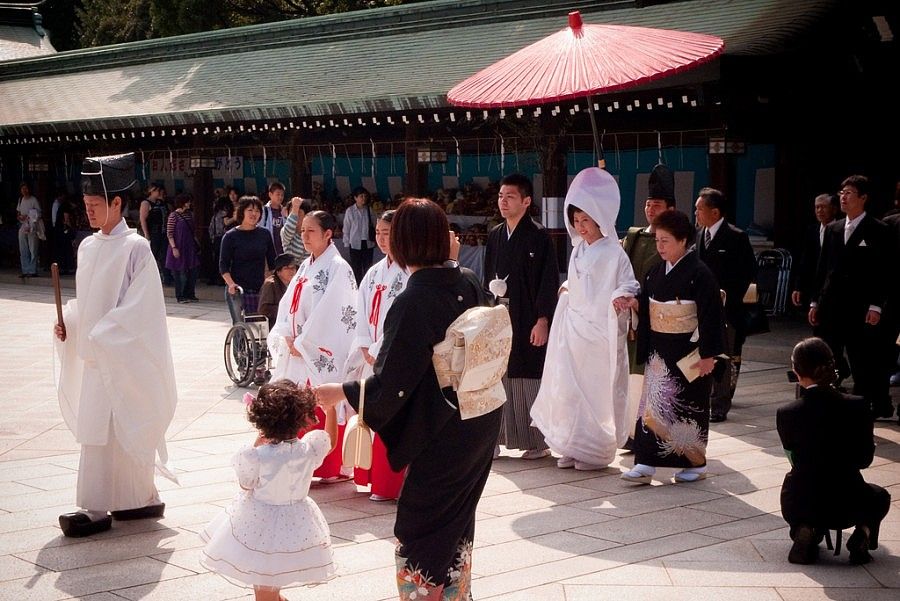
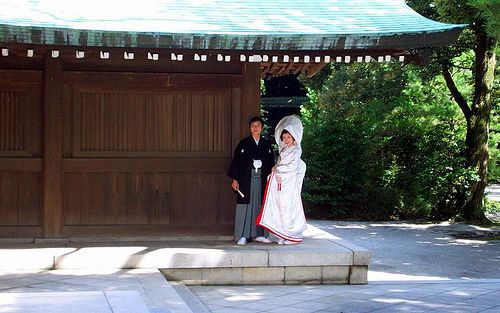
Despite its solemn atmosphere, Meiji Shrine is a very lively place. Festivals are held throughout the year, and it’s not unusual to see a Shinto wedding ceremony. The autumn festival is a magical time, when the buildings are wrapped in the warm reds and golds of the season, so the shrine gets pretty crowded then. Another very common custom is to visit the shrine in the first few days of the year, when worshippers pray and make offerings for good luck in the year ahead. Here it’s a big deal: Meiji Shrine is the most visited shrine in Japan for hatsumode, with around three million people visiting in the first three days of the year. The gravel path turns into a slow river of people shuffling toward the courtyard, and the route is split into lanes to handle the crowds. It’s worth experiencing at least once, but it’s nothing like the quiet of a normal day.
The easiest way is to get off at Harajuku Station. Take the exit toward Jingubashi Bridge and you'll be right in front of the big torii at the south entrance, which is the same one you reach from exit 2 of Meiji-jingumae subway station.
If you're coming from Shinjuku, you're better off using the north side, a five-minute walk from Yoyogi or Kita-sando stations.
Whichever entrance you use, allow about ten minutes of walking along the gravel path before you reach the shrine buildings. It isn't wasted time. It's the best part of getting there.
This place is on MarcoMaps
Meiji Shrine
My map of Japan: over 4,000 places I've tried myself, each with photos, rating, and hours. Filter by category and rating, find veg-friendly spots and places near you with GPS. No sign-up, right from your phone.


Meiji Shrine - nearby you will find:
581 mCafé with a bear paw sticking out of the wall.
 627 m
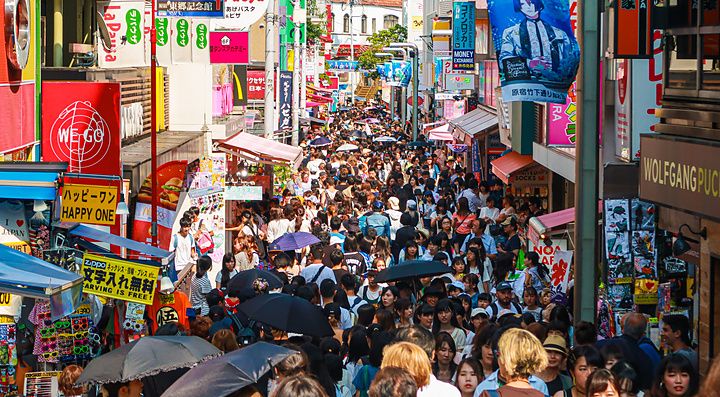
Harajuku's street for youth fashion shopping.
 630 m
Roasts its own coffee and makes its own pies.
 738 m
The mini pig cafés.
 770 m
A pond, carp and turtles.
 816 m
Dog cafes with miniature shiba.